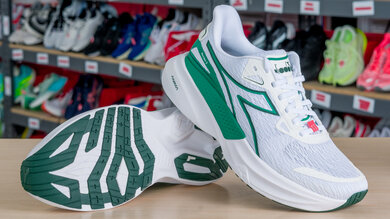
The Diadora Nucleo 2 is a good daily trainer with mild stability features, best suited to recovery runs and easy days when pace doesn’t matter. Its firm midsole uses raised sidewalls and an asymmetrical shape to keep the foot secure through landing and transition, making the ride amazingly stable underfoot. However, the shoe is heavy and provides very little rebound, so it isn’t suited to racing. Though it's expensive for the performance you get, it's still a good pick if you want a stylish and stable shoe.
| ✅ Buy If: | ❌ Skip If: |
|
|
Our Verdict
The Diadora Nucleo 2 isn’t a good option for marathon racing. Though it’s very secure underfoot and the midsole won’t bottom out, its heavy build is cumbersome to turn over. The midsole also returns little of the energy you put into it, forcing you to work much harder to hold race pace and making the shoe deeply inefficient over the distance.
Amazing stability keeps the ride secure when fatigued.
Midsole offers just enough protection without bottoming out.
Heavy build is cumbersome to turn over.
Lack of rebound makes holding pace hard and tiring.
The Diadora Nucleo 2 isn’t a great pick for 5K and 10K racing. Its remarkably firm forefoot provides a planted base through toe-off, and it takes a decent amount of force to bend, giving you some leverage as you push forward. However, the rocker flattens too easily under load and returns hardly any energy when the forefoot unbends, so toe-off lacks punch. Its heavy build is also hard to turn over quickly, making the shoe inefficient at race pace.
Firm forefoot keeps toe-off planted and secure.
Forefoot provides some leverage when pushing off.
Heavy build is cumbersome to turn over.
Lack of energy return makes it very inefficient underfoot.
The Diadora Nucleo 2 does an okay job on long runs. Its amazing stability keeps the ride trustworthy as fatigue sets in, while the midsole provides just enough protection to keep longer efforts manageable for the legs. Though the forefoot rocker adds some smoothness through toe-off, it's much too compliant, so it limits how effectively it rolls. Its heavy build and minimal rebound also make it tiring to settle into a rhythm.
Amazing stability keeps the ride secure when fatigued.
Midsole offers just enough protection without bottoming out.
Heavy build is cumbersome to turn over.
Lack of rebound makes holding pace hard and tiring.
The Diadora Nucleo 2 is a good daily trainer for recovery runs and easy days. Its amazing stability makes it very trustworthy underfoot, and it offers the most protection underfoot for heel strikers or lighter forefoot strikers moving at easier paces. However, the heavy build makes it cumbersome to turn over, and the minimal rebound means it’s best suited to relaxed miles rather than picking up the pace.
Amazing stability makes the ride very trustworthy.
Well suited to heavier heel strikers and lighter forefoot strikers at easier paces.
Heel provides very planted base for landings.
Heavy build is cumbersome to turn over.
Lack of rebound makes holding pace hard and tiring.
Changelog
-
Updated Sep 17, 2026:
We've updated this review to add a link to the newly reviewed Tracksmith Eliot Ryder to the Weight box.
-
Updated Sep 10, 2026:
We've updated this review to add a link to the newly reviewed Diadora Corsa to the Foam box.
- Updated Aug 20, 2026: Review published.
- Updated Aug 18, 2026: Early access published.
- Updated Aug 07, 2026: Our testers have started testing this product.
- Updated Jun 29, 2026: The product has arrived in our lab, and our testers will start evaluating it soon.
- Updated Jun 22, 2026: We've purchased the product and are waiting for it to arrive in our lab.

We've bought and tested more than 250 running shoes. Every pair purchased with our own money, never supplied or sponsored by brands. Our data-driven tests are designed to go beyond marketing claims, and since every shoe goes through the exact same methodology, you can directly compare results to find the right pair for your needs.
Test Results
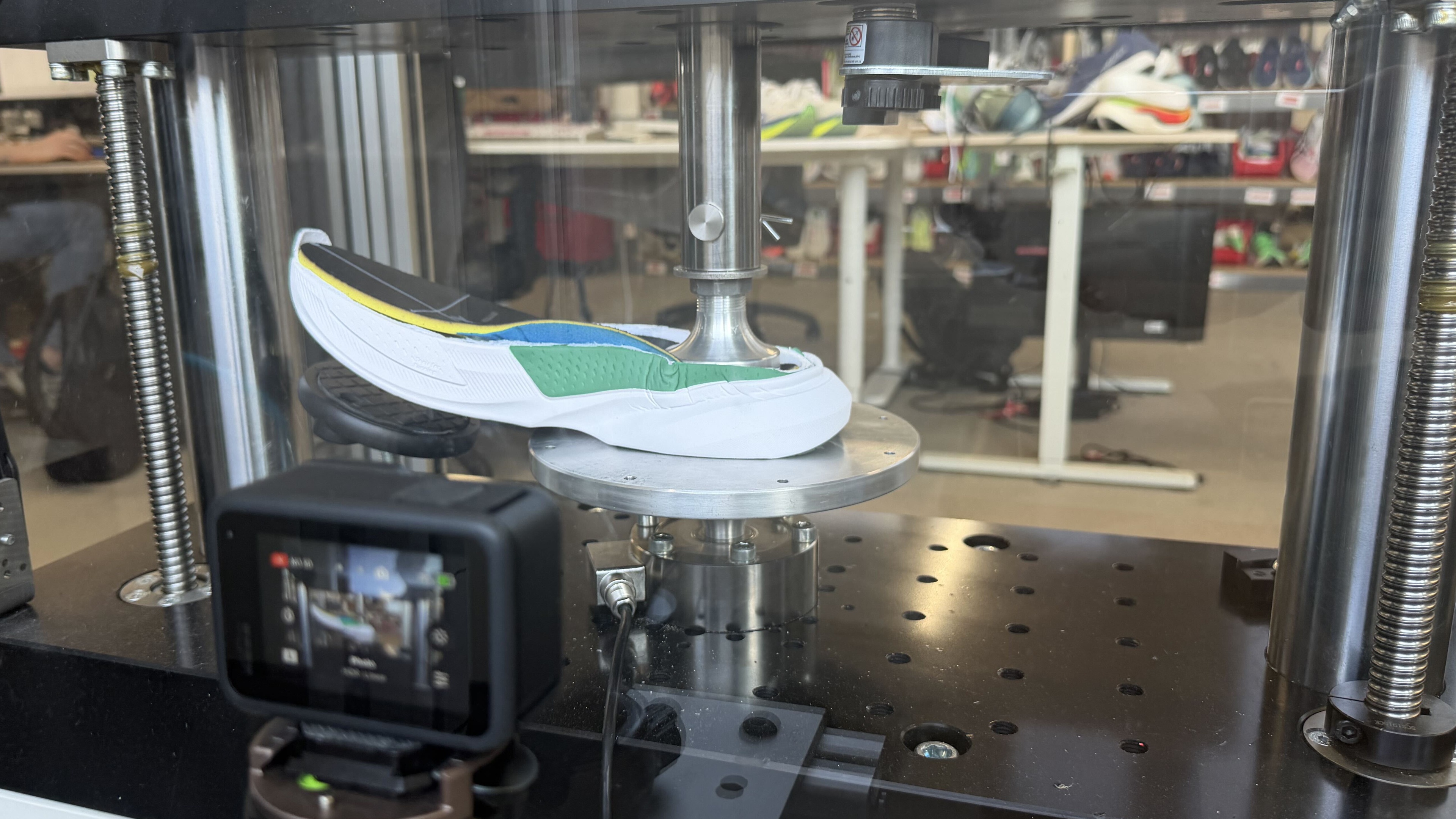
Energy Return
The Diadora Nucleo 2 has terrible energy return overall. Very little energy comes back through either end of the midsole, so the ride feels flat rather than lively. That suits its focus on slower recovery running, but it offers little assistance when you want to pick up the pace.
Heel feels flat and lifeless.
Forefoot is a terribly dull experience.

The Diadora Nucleo 2 has terrible forefoot energy return. Very little of the energy put into the midsole comes back after each landing, so toe-off feels flat rather than propulsive. That suits the shoe’s focus on slower recovery running, but runners who want to pick up the pace and still need support should get the Saucony Hurricane 26.

Stability
The Diadora Nucleo 2 is an amazingly stable shoe. Its very firm forefoot and heel keep landings and toe-off planted, while the raised sidewalls and broad platform help keep the foot secure through the stride. The outsole narrows through the arch, so midfoot strikers may find initial contact slightly less secure, but not enough to undermine the shoe’s overall stability. The fully gusseted tongue also helps keep the foot locked down.
Very firm heel and forefoot keep landings planted.
Wide heel and forefoot provide a secure base.
Fully gusseted tongue helps keep the foot locked down.
Midfoot strikers may find the shoe a little less secure when landing.


The heel of the Diadora Nucleo 2 is very firm, giving heel strikers a solid, secure base on landing, though this also means it can feel harsh underfoot.


Cushioning
The Diadora Nucleo 2 has decent cushioning overall, with some caveats. The heel becomes more protective as force increases, so faster or heavier heel strikers get the best protection from the road. The forefoot works the opposite way, providing good protection for lighter runners at easier paces but can feel harsher as force increases. The midsole also holds up just enough over longer efforts, but the level of protection depends heavily on your weight, pace, and strike pattern.
Heel gives most protection to faster or heavier heel strikers.
Forefoot protects lighter runners well at easier paces.
Heavier or faster forefoot strikers get less protection from the road.
Lighter heel strikers get noticeably less protection at easy paces.


The Diadora Nucleo 2 has decent heel cushioning overall, but the protection depends heavily on how much force you put through it. It’s unremarkable at lighter loads, then improves considerably as the rearfoot is loaded harder. That makes the heel better suited to moderate or heavier runners, or anyone picking up the pace, rather than light runners at easy paces.


The Diadora Nucleo 2 has good forefoot cushioning at lighter forces, making it well suited to lighter runners at easy paces. However, its protection lags behind that of other mild-stability shoes like the Saucony Hurricane 26, so heavier or faster forefoot strikers may find it harsh underfoot.

The Diadora Nucleo 2 does a mediocre job of protecting your legs over the course of a long run. Though it doesn't bottom out, it delivers far less protection than daily trainers like the Saucony Ride 19.
Bounciness
The Diadora Nucleo 2 isn’t a bouncy shoe. Neither end of the midsole compresses much under load, and it does an awful job of returning energy, so the ride is flat and rigid.
Midsole compresses very little, so landings are flat rather than springy.
Minimal rebound means you get almost no help carrying momentum through the stride.


Snappiness
The Diadora Nucleo 2 isn’t a snappy shoe at all. Though its firm forefoot provides a planted base through toe-off, and it takes a decent amount of force to bend, giving you some leverage, very little of the energy stored through that bend comes back when the forefoot unbends. The gentle rocker angle does little to drive you onto the toes, either, so push-off lacks punch.
Gentle rocker angle limits propulsion.
Very little stored energy comes back when the forefoot unbends, limiting propulsion.

This shoe does an awful job of returning the small amount of energy stored when bent as it unbends. This makes it better suited to relaxed paces than propulsive training.


Though not very stiff, the forefoot of this shoe takes a lot of force to bend, so while it's not snappy by any stretch, it still provides an amazing amount of leverage through toe-off.

The Diadora Nucleo 2 has good forefoot rocker geometry. Its high toe spring and early apex help the foot roll forward through late stance, reducing how much the forefoot has to flex during push-off. However, the rocker angle is too gentle to transfer load onto the toes quickly, so it doesn't add much propulsion when you pick up the pace.
Roll
The Diadora Nucleo 2 rolls adequately overall. Its good forefoot rocker geometry helps guide you through late stance, while the forefoot takes a decent amount of force to bend, giving you some leverage through toe-off. However, the rocker itself is much too compliant and flattens easily under load, reducing how much forward assistance that geometry can provide. The heel rocker offers little help moving you smoothly into midstance, either.
Forefoot rocker helps smooth late-stance transitions.
Forefoot provides some leverage through toe-off.
Compliant rocker reduces forward assistance under load.
Heel rocker offers little assistance moving into midstance.

The rocker of this shoe is very compliant, flattening too easily to provide much assistance to roll you through toe-off.

The Diadora Nucleo 2 has a moderately high stack with a traditional drop. The foam underfoot provides a decent buffer from the road.

There isn't much rise at the heel of the Diadora Nucleo 2, and the apex positioning does little to smooth the transition from heel strike into midstance. The rocker angle is okay, so heel strikers still get some rollover, but the shoe offers little assistance moving forward early in the stride.
True To Size
The Diadora Nucleo 2 fits true to size overall. The length is spot on, while the forefoot and arch are generous enough for most runners. The toe box is a little low, so runners with taller toes or who lift them on landing may get some rubbing. However, it isn’t enough of an issue to size up, so we recommend going with your usual size. A wide version is also available if you prefer more room.
Length is spot-on.
Forefoot and arch width is generous enough for most runners.
Wide version available if you need more room.
Low toe box may rub if you have taller toes.


The Diadora Nucleo 2 is on the heavier side for a daily trainer. It's heavier than the max-cushion Tracksmith Eliot Ryder, and among similar stability-focused shoes, it sits between the lighter Saucony Hurricane 26 and the heavier Nike Structure Plus.


The Diadora Nucleo 2 uses ANIMA foam, Diadora's entry-level EVA compound. It isn't as protective as the ANIMA 2 found in the Diadora Corsa, or as energetic as the ANIMA PBX foam used in the carbon-plated Diadora Gara Carbon 3, but it still provides decent protection underfoot.

Popular Running Shoe Comparisons
Though the Diadora Nucleo 2 is marked as a "lightweight training tool for fluid long runs", we found it much better suited as a stylish shoe for easy and recovery runs. Shoes like the ASICS GEL-EXCITE 11 perform remarkably similarly on the road and cost significantly less, however, and it's the better pick if you want a stable, basic daily trainer and don't mind giving up some style. If running matters more, however, the Saucony Ride 19 costs less than the Diadora and is better in almost every respect. It’s lighter and far more energetic, while offering better protection for daily miles and long runs. Though it's less stable, it's still impressively secure whether you have dedicated support needs or not, so it's the better pick if you plan on running regularly.
If you're new to running and looking for your first pair, check out our top picks for the best running shoes for beginners. If you're looking for the best shoe for your needs, check out our recommendations for the best running shoes.
The ASICS GEL-EXCITE 11 and Diadora Nucleo 2 perform very similarly overall, but the ASICS is a much better value for money. It's significantly cheaper and has a more even cushioning profile, making it more protective for a wider range of runners. The Diadora is undeniably more stylish, but unless looks matter enough to justify the extra cost, get the ASICS.
The Saucony Ride 19 is a much better running shoe than the Diadora Nucleo 2. It's lighter, far more energetic, and better cushioned for daily training and long runs, while still being impressively stable. Get the Diadora if you prefer its styling or want the more stable ride; otherwise, the Ride 19 offers much better running performance for less
The Nike Structure Plus and Diadora Nucleo 2 are very similar stability-focused shoes that use sidewalls to guide the ride, but the Nike is the better daily trainer overall. It's much more cushioned underfoot, especially for heel strikers, and though it isn't lively, the ride is much less dull than the Diadora. The Diadora is lighter and more stable, however, rolling more smoothly through the whole stride, so if you want the most secure shoe in a less cumbersome package, it’s the one to get.
The Diadora Corsa is a better daily trainer than the Diadora Nucleo 2. It's significantly lighter, offers more impact protection, and is far more capable across paces and distances than the Nucleo 2. Even though the Corsa is less stable, it's still a secure shoe, and the Nucleo 2 really only makes sense if you want to sacrifice performance for even more support.
Differences Between Sizes And Variants
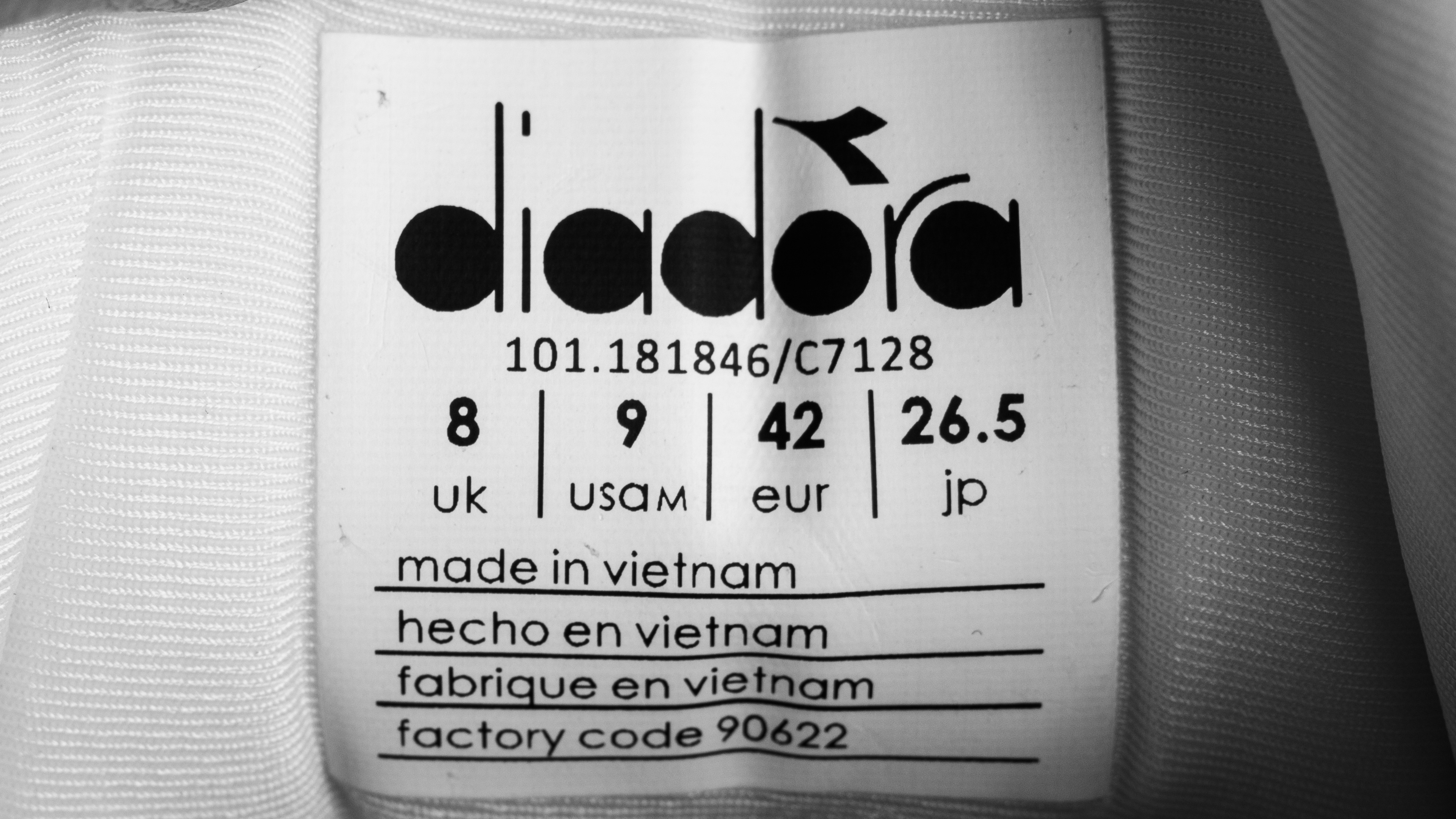
We tested the Diadora Nucleo 2 in men's U.S. size 9, as indicated on the label of our pair. The color featured on the shoe we tested is White/Bosphorus, which takes its name from Ancient Greek for "cattle passage" and refers to a natural strait in Turkey that connects the Black Sea to the Sea of Marmara, separating Europe from Asia. You can also get the shoe in other colors, depending on the region. This shoe is available in both Regular and Wide sizing. The design section applies only to the exact model we tested, but we expect other sizes to perform similarly.