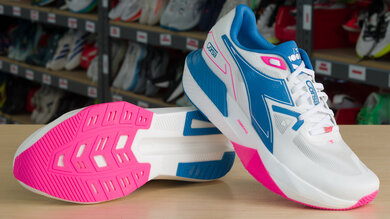
The Diadora Corsa is a high-stack daily trainer for runners who want one very good shoe to cover all weekly miles. Its lightweight build is trustworthy underfoot, and its deeply cushioned platform offers very good impact protection. It thrives on easy, relaxed miles, but can handle some faster running and even get you through a marathon if finishing is the goal. However, the ride isn't bouncy or energetic, which means it’s most at home during easy paces where comfort matters more than speed.
| ✅ Buy If: | ❌ Skip If: |
|
|
Our Verdict
The Diadora Corsa is a decent pick for marathon racing if you're looking to finish rather than compete. Its stable platform is very reliable, even when the form breaks down when fatigued. Its cushioning does a very good job of taking the sting of the road and offers adequate impact protection over the marathon distance. Though it's not light for a competitive racer, it’s still a lightweight shoe, so the weight doesn't make it cumbersome to turn over. However, the shoe's lack of energy return means it's not particularly fast or efficient, especially if you rely on rebound to hit and sustain paces.
Good stability keeps ride secure when fatigued.
Very good cushioning keeps legs adequately protected as miles build.
Lightweight helps make turnover unburdensome.
Lack of energy return makes sustaining pace inefficient.
The Diadora Corsa is a decent pick for short-distance racing if you're not looking to set PBs. It's light enough to turn over at speed, and the firm forefoot provides a very structured platform for toe-off. Its rocker geometry also helps move you through your stride, but the poor rebound limits how energetic and efficient it is when running fast.
Light enough to turnover at speed.
Firm forefoot gives toe-off a structured base.
Dull midsole makes faster paces inefficient.
The Diadora Corsa is a satisfactory long-run pick. Its good stability keeps the shoe easy to trust when fatigued, and the midsole does a very good job of reducing impact from the road without bottoming out. However, though the forefoot rocker offers a decent amount of guidance, it's quite compliant, reducing the amount of assistance it provides through stride. Its dull midsole also means it's hard to settle into a pace or tackle progressive efforts, so it's best reserved for easy long runs.
Good stability keeps ride secure when fatigued.
Very good cushioning keeps legs adequately protected as miles build.
Lightweight helps make turnover unburdensome.
Lack of energy return makes sustaining pace inefficient.
The Diadora Corsa is a very good daily trainer. Its lightweight build works well for regular mileage, while the good stability makes the platform easy to trust. Its cushioning offers very good impact protection, and the heel rocker also does a good job of transitioning you into midstance. However, the heel is on the softer side, which may cause some issues upon landing for heel strikers with dedicated support needs. The dull midsole also means it performs best on relaxed miles.
Stable build makes it dependable for daily miles.
Very good impact protection.
Rearfoot offers good assistance for heel strikers.
Light for a daily trainer.
Softness of heel makes rearfoot landings less secure.
Ride is very dull.
Changelog
- Updated Sep 10, 2026: Review published.
- Updated Sep 08, 2026: Early access published.
- Updated Aug 31, 2026: Our testers have started testing this product.
- Updated Aug 27, 2026: The product has arrived in our lab, and our testers will start evaluating it soon.
- Updated Aug 14, 2026: We've purchased the product and are waiting for it to arrive in our lab.
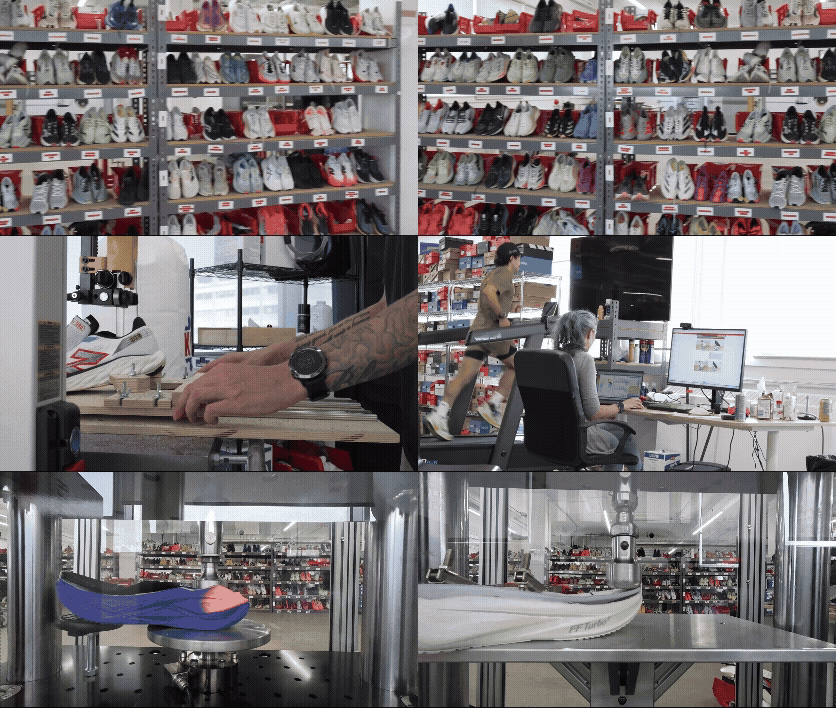
We've bought and tested more than 300 running shoes. Every pair purchased with our own money, never supplied or sponsored by brands. Our data-driven tests are designed to go beyond marketing claims, and since every shoe goes through the exact same methodology, you can directly compare results to find the right pair for your needs.
Test Results
Energy Return
The Diadora Corsa has poor energy return. Though the forefoot returns more than the heel, there's no hiding the fact that this is a shoe that prioritizes impact protection over rebound.
Forefoot rebound is disappointing.
Heel rebound is awful.


Stability
The Diadora Corsa has good stability. The firm forefoot keeps toe-off very secure; the semi-gusseted tongue helps keep lockdown secure; and there's ample width across the heel and forefoot to make landings and push-off trustworthy. However, though the outsole has decent width overall, runners who overpronate may find it less supportive at controlling inward ankle roll, especially with the softer heel.
Firm forefoot keeps toe-off secure.
Ample width across heel and forefoot makes landings and push-off secure.
Semi-gusseted tongue helps lockdown foot.
Soft heel and narrower arch could be problematic for overpronators.


Cushioning
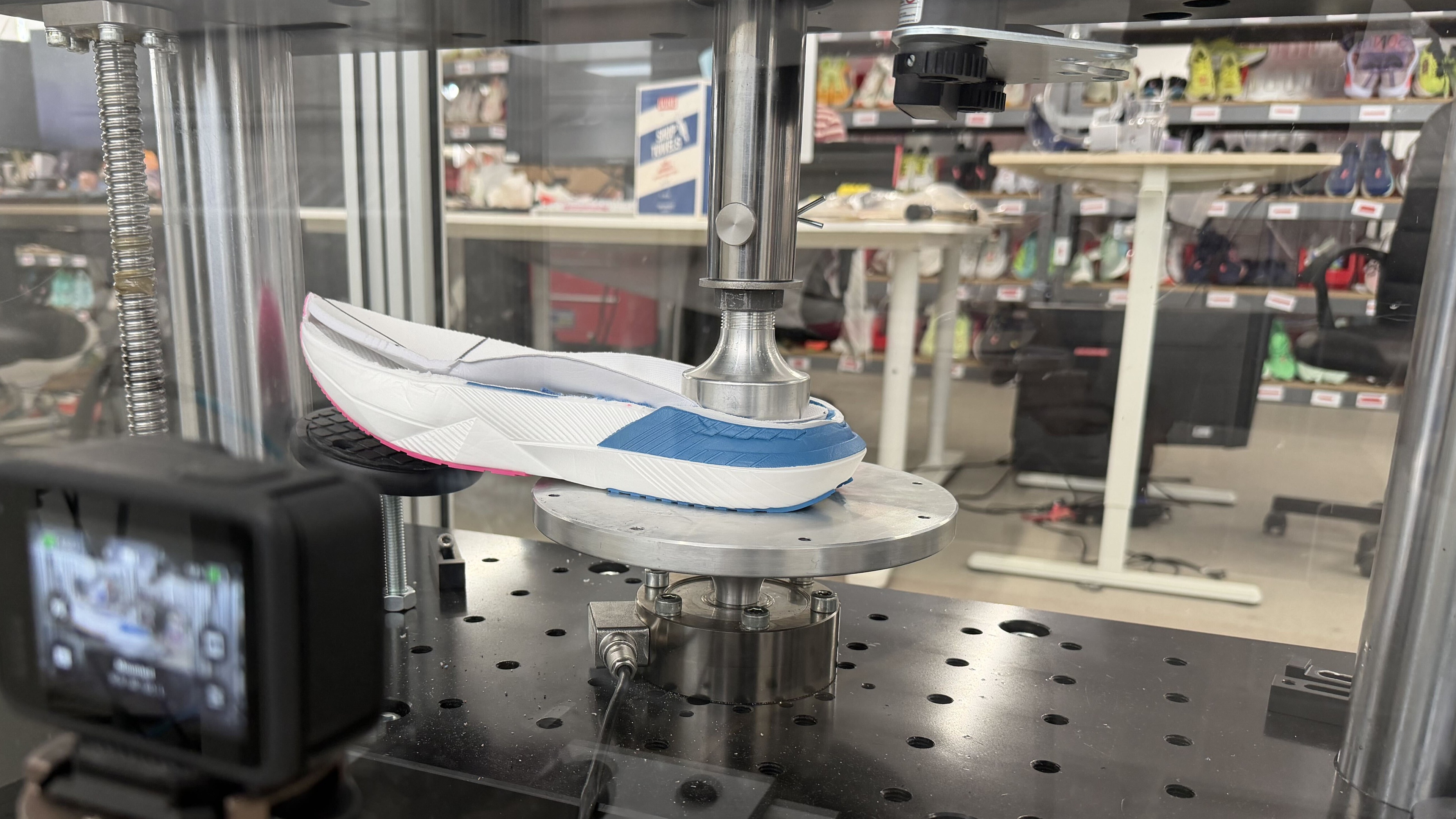
The Diadora Corsa is a very well-cushioned shoe. The forefoot offers good protection overall, with the most protection at light and moderate forces. The heel outshines it, however, with even more impressive impact absorption, though again, it performs best at light and moderate forces. The midsole also offers adequate protection across the marathon distance.
Forefoot protection is good overall.
Heel protection is great.
Protection drops drastically under highest loads.


The heel provides impressive impact protection overall, though it is heavily biased towards lighter and moderate forces. Lighter runners will be well protected at all paces, but protection degrades at the highest loads.


The forefoot has good cushioning overall, with a similar profile to the heel. It delivers excellent protection at the lightest loads and diminishes as you load the shoe with more force.

The cushioning of this shoe drops notably through the first 20 km and continues to decline thereafter. Though it won't bottom out over the course of a marathon, compared to the HOKA Clifton 11, it falls behind by a steadily widening margin as distance increases.
Bounciness
The Diadora Corsa isn't a bouncy shoe. The midsole doesn't compress deeply enough to turn the poor energy return into spring.
Poor energy return delivers a dull experience.
Midsole doesn't compress deep enough to turn energy into spring.


Snappiness
The Diadora Corsa has a reasonable amount of snap. The firm forefoot takes a reasonable amount of force to bend, so it provides some leverage at toe-off. However, the forefoot isn't stiff enough to provide an aggressive snap. It also doesn't return much of the energy stored when it bends as it unbends, making it very inefficient. The gentle rocker angle also limits how much assistance it provides at push-off.
Firm forefoot provides solid base for toe-off.
Forefoot provides a decent amount of leverage at push-off.
Tame rocker angle limits overall assistance.
Forefoot loses too much stored energy, reducing efficiency through toe-off.


The forefoot takes a reasonable amount of force to bend, providing some leverage through toe-off. However, the forefoot itself is too compliant to provide much outright snap.


Roll
The Diadora Corsa rolls adequately through stride. The heel offers good assistance in pushing you into mid-stance, and the forefoot does a decent job of rolling you smoothly through toe-off. However, the forefoot rocker is quite compliant, reducing the amount of overall assistance it provides.
Heel does a good job pushing you into midstance.
Forefoot offers decent assistance through toe-off.
Rocker flattens too easily under load, reducing assistance through the stride.

The rocker of this shoe takes more force to flatten than the HOKA Clifton 11, but it's still much too soft to provide much assistance through stride.


The heel rocker of this shoe provides good assistance for heel strikers into midstance. It's a bit more assistive than the adidas Adizero Evo SL, but nowhere near as assistive as in the HOKA Clifton 11.
True To Size
The Diadora Corsa fits true to size overall. The forefoot and arch provide ample width for most runners, though the toe box tapers early, so the shoe can run a bit short at the front. It also sits quite low above the toes. That said, it won't be an issue for most runners, so we confidently advise going with your usual size.
Accommodating arch width.
Forefoot width is roomy.
Tapered toe box could feel restrictive for wider feet.
Low toe-box height may cause some chafing for taller toes.


The Diadora Corsa is light for a daily trainer, especially for a shoe with so much cushioning. It's much lighter than cushioned classic daily trainers like the HOKA Clifton 11, but not as light as more performance-focused shoes like the adidas Adizero Evo SL.


The Diadora Corsa uses Diadora's ANIMA N2 EVA compound. It provides considerably more cushioning than the standard ANIMA used in the Diadora Nucleo 2, though rebound remains poor.

This shoe uses standard flat laces with moderate stretch. They kept the lockdown very secure during our testing.


The upper of this shoe runs a bit warm, so if you're wearing thick socks or running in warm weather, your feet may overheat.

The Diadora Corsa takes just over a full day to dry. That's significantly more time than shoes like the adidas Adizero Evo SL, though it's not bad for a daily trainer. If you plan to run twice a day in bad weather, or two days in a row, we advise placing the shoe in front of a fan.


The Diadora Corsa gains over 100g of water when completely soaked. This is significantly more than the adidas Adizero Evo SL, so if you're running in the rain or snow in this shoe, it will feel more cumbersome than a dry Brooks Glycerin Max 2.
Popular Running Shoe Comparisons
Though the Diadora Corsa is marketed as an "energetic daily trainer" in a similar fashion to the adidas Adizero Evo SL, we found it to be much better suited to easy daily miles than to performance. Indeed, whilst the Corsa can handle some faster running, the midsole is very dull, and it's nowhere near as light or lively as the Evo SL, prioritizing protection and stability over speed. It's much closer in spirit to the HOKA Clifton 11, with both shoes sacrificing bounce and excitement for shock absorption and reliability. Indeed, they cost the same, and it's hard to separate them cleanly: the Clifton 11 offers a more supportive ride, especially for those with ankles that roll inward, and its superior cushioning in the heel plus its much higher drop make it the better pick for heel strikers; the Corsa is significantly lighter with a more balanced cushioning profile across all strike patterns, however, so it's the better pick for midfoot and forefoot strikers.
If you're new to running and looking for your first pair, check out our top picks for the best running shoes for beginners. If you're just looking for a comfortable pair, check out our recommendations for the most comfortable running shoes.
The adidas Adizero Evo SL is a better performance shoe than the Diadora Corsa. Its lighter build and much livelier ride make it better for faster running. The Corsa is more stable and provides deeper impact protection, so it's the better pick if you're mainly running easy miles.
The Diadora Corsa is a better daily trainer than the Diadora Nucleo 2. It's significantly lighter, offers more impact protection, and is far more capable across paces and distances than the Nucleo 2. Even though the Corsa is less stable, it's still a secure shoe, and the Nucleo 2 really only makes sense if you want to sacrifice performance for even more support.
Differences Between Sizes And Variants
We tested the Diadora Corsa in men's U.S. size 9, as indicated on the label of our pair. The color featured on the shoe we tested is LUCENT WH/MEDITERRANIAN/PK FL, though you can also get the shoe in other colors, depending on the region. This shoe is not available in wide sizing. The design section applies only to the exact model we tested, but we expect other sizes to perform similarly.
