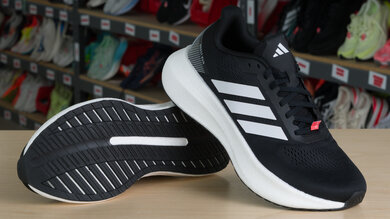
The adidas Boost Run is a budget-friendly cushioned trainer designed for runners seeking a comfortable, reliable shoe for their weekly miles. It sits below the adidas Hyperboost Edge, adidas' max-cushioned option, but is a much more capable shoe than the shorter-run-focused adidas Zenboost. Its broad platform provides great stability, making it easy to trust for regular runs, while its deeply cushioned heel absorbs plenty of road impact. The great energy return also helps you maintain a consistent pace without tiring as quickly. However, the ride isn't particularly smooth, and the firmer forefoot becomes increasingly harsh under heavier loads and efforts beyond 10 km. Your feet are also likely to overheat on hot days.
| ✅ Buy If: | ❌ Skip If: |
|
|
Our Verdict
The adidas Boost Run is an okay choice for half- and full-marathon racing if you're more focused on completing the distance than on all-out speed. Its great energy return helps you maintain a steady pace efficiently, while its broad, stable platform provides a reliable base when fatigue sets in. However, although it's relatively light for a daily trainer, it's heavy compared to dedicated marathon racers, and you'll likely notice its weight more as the miles build. Its cushioning also becomes increasingly harsh over longer distances, and it doesn't roll very smoothly, making it harder to settle into a rhythm over the distance.
Great energy return makes maintaining a steady pace very efficient.
Impressive stability provides a dependable base when fatigued.
Too heavy for fast marathon racing.
Cushioning becomes quite harsh after the first 10 km.
The adidas Boost Run isn't a bad choice for 5K and 10K racing, though it's much better suited to a weekly parkrun than chasing an all-out personal best. Its very firm forefoot provides a planted base for pushing off, while its great energy return helps you maintain a consistent pace efficiently. However, the forefoot isn't particularly stiff, so you don't get the forceful snap of a dedicated racer. Its shallow forefoot rocker also provides little assistance in moving you onto your toes, making quick turnover more difficult.
Very firm forefoot provides a planted base to push off.
Great energy return makes maintaining pace efficient.
Lacks propulsion of a dedicated racer.
Shallow forefoot rocker provides little assistance with quick turnover.
The adidas Boost Run is a decent choice for long runs overall. Its impressive stability provides a trustworthy platform as fatigue builds, and its good cushioning absorbs plenty of road impact. However, its cushioning becomes less protective beyond 10 km. Longer efforts will start to feel increasingly harsh on your legs. Its shallow forefoot rocker also provides little assistance in guiding you through each stride, making it harder to settle into a comfortable rhythm over extended distances.
Great energy return makes maintaining a steady pace very efficient.
Impressive stability provides a dependable base when fatigued.
Cushioning becomes quite harsh after the first 10 km.
Forefoot rocker makes it hard to settle into a rhythm through full stride.
The adidas Boost Run is a great option for daily training. Its broad platform is impressively stable, providing a very planted base from landing through toe-off. Its good cushioning keeps your legs well protected over daily runs, while the heel rocker does a very good job of moving you smoothly from landing into midstance. It's also relatively light for a daily trainer, so it never feels cumbersome underfoot. However, the shallow forefoot rocker is quite compliant, so you get little assistance rolling through toe-off.
Impressive stability provides a dependable base for daily miles.
Good cushioning protects your legs from road impact during regular runs.
Heel rocker does a great job of transitioning you into midstance.
Forefoot rocker provides little assistance through toe-off.
Changelog
- Updated Oct 26, 2026: Review published.
- Updated Oct 23, 2026: Early access published.
- Updated Oct 15, 2026: Our testers have started testing this product.
- Updated Oct 08, 2026: The product has arrived in our lab, and our testers will start evaluating it soon.
- Updated Oct 02, 2026: We've purchased the product and are waiting for it to arrive in our lab.

We've bought and tested more than 300 running shoes. Every pair purchased with our own money, never supplied or sponsored by brands. Our data-driven tests are designed to go beyond marketing claims, and since every shoe goes through the exact same methodology, you can directly compare results to find the right pair for your needs.
Test Results
Design


The adidas Boost Run is on the lighter side for a daily trainer, weighing less than classic daily trainers like the HOKA Clifton 11, though more than its sibling, the adidas Zenboost.


Though the adidas Boost Run belongs to the "Boost" family alongside the adidas Zenboost and the adidas Hyperboost Edge, it uses a different foam from those shoes. While the Hyperboost Edge uses "Hyperboost Pro" and the Zenboost uses "BOOST+," this shoe uses standard "Boost" foam. That said, it still provides good cushioning and great energy return.

Energy Return
The adidas Boost Run has great energy return overall. Both the forefoot and heel provide impressive rebound, helping you maintain a steady pace efficiently.
Impressive forefoot rebound.
Great heel rebound.

The forefoot provides great energy return, giving you plenty of rebound through toe-off. It even outperforms the adidas Zenboost.

The heel returns a great amount of energy, providing plenty of rebound after landing and making running more efficient for heel strikers. It's significantly more energetic than the Nike Winflo 12.
Stability
The adidas Boost Run has great stability overall. Its firm heel provides a planted base on landing, while the even firmer forefoot keeps you secure when pushing off. Its broad platform also provides excellent stability around corners, so you don't have to worry about wobbling when changing direction. The gusseted tongue helps keep your foot securely in place without slipping. Though the arch is slightly narrower than the rest of the shoe, it shouldn't cause significant problems for most runners.
Firm heel and forefoot provide a planted base from landing through toe-off.
Broad platform is very stable when cornering.
Gusseted tongue prevents your foot from slipping inside the shoe.
Narrower arch provides less support through midstance.

The forefoot is very firm, providing a planted and stable base when pushing off. However, that firmness can also make toe-off feel quite harsh.


Cushioning
The adidas Boost Run has good cushioning overall, though it's much better suited to heel strikers than forefoot strikers. The heel provides good shock absorption under lighter loads and performs amazingly under heavier impacts, keeping heel strikers well protected regardless of weight or pace. However, the forefoot only provides great protection for lighter runners at relaxed paces, becoming significantly harsher under heavier impacts. Cushioning also becomes less protective over longer distances, making it less suitable for high-mileage running.
Impressive heel cushioning keeps rearfoot landings very well protected.
Forefoot provides great shock absorption for lighter runners at easy paces.
Forefoot cushioning becomes harsh under heavier impacts.
Cushioning becomes less protective on longer runs.


The adidas Boost Run has great heel cushioning overall. It provides good shock absorption under lighter loads, but performs amazingly well as more force is applied, keeping heavier runners and heel strikers running at faster paces very well protected. While it doesn't match the superb cushioning of the adidas Hyperboost Edge, it provides significantly better impact protection than the adidas Zenboost and Nike Winflo 12.


The forefoot provides great impact protection under lighter loads, making it comfortable for lighter runners at relaxed paces. However, cushioning decreases significantly as more force is applied, leaving heavier runners and those running quickly with considerably less protection. If you're a heavier runner looking for a budget shoe, the Nike Winflo 12 does a better job.

The adidas Boost Run's long-distance cushioning isn't bad, but it's not great. It falls behind other budget trainers like the Nike Winflo 12 and is nowhere near as protective as the adidas Hyperboost Edge. As a result, you'll notice more road impact as miles add up, making it less suitable for high-mileage running.
Wet & Warm Weather
The adidas Boost Run's performance in wet and warm weather isn't great overall. Its breathability is passable, allowing enough airflow to keep your feet comfortable during regular runs, though they may get sweaty on hotter days. It does a decent job of resisting water absorption overall; however, it takes well over a day to dry completely after getting soaked, meaning it won't be ready for your run the following day.
Decent resistance to water absorption.
Limited airflow can leave your feet sweaty on hot days.
Takes over a day to dry, so will still be damp if you plan to run again the next day.


The adidas Boost Run has mediocre breathability. There's enough airflow to keep your feet reasonably comfortable during regular runs, but they're likely to get sweaty on particularly hot days or during longer efforts.


Bounciness
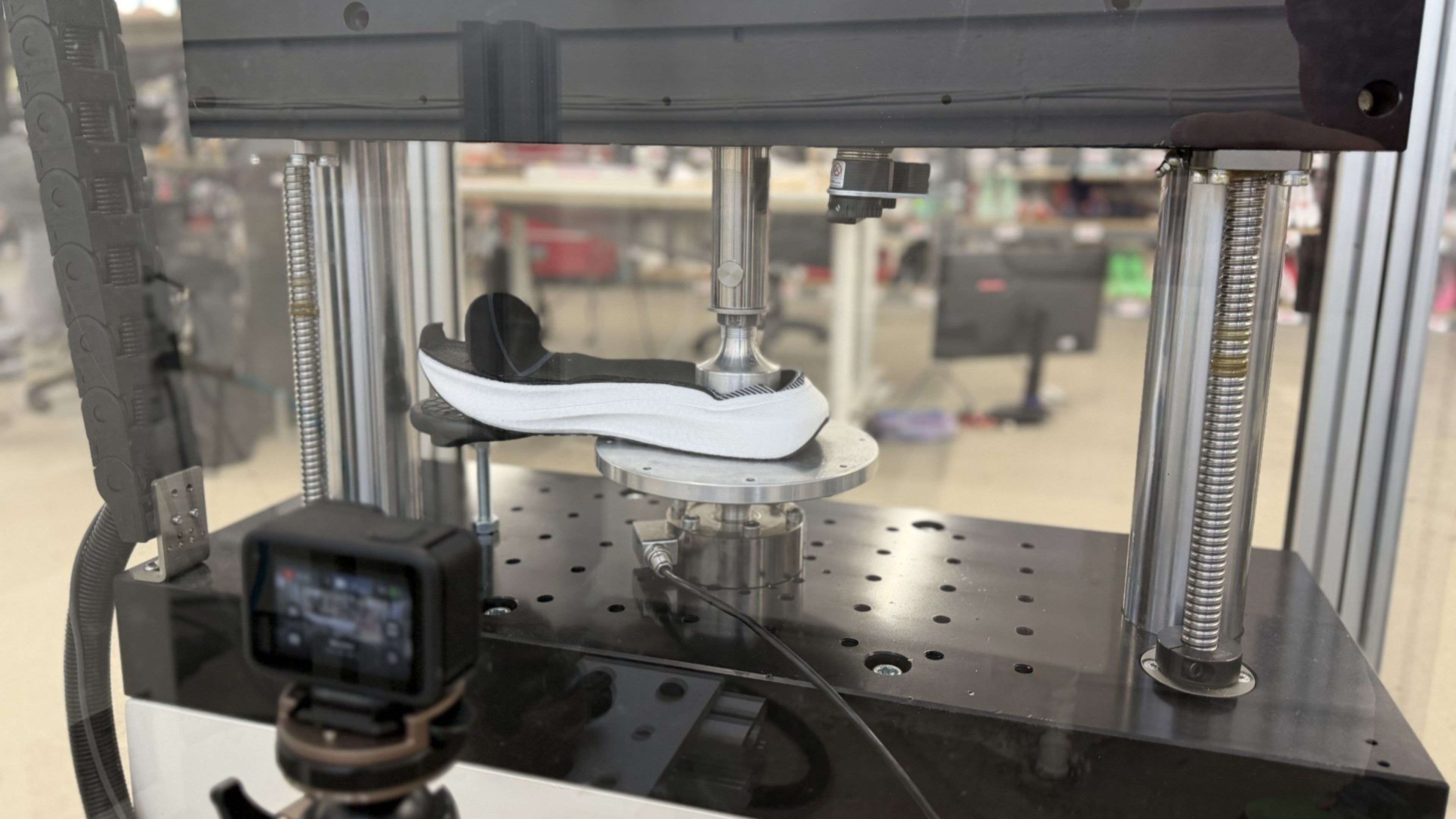
The adidas Boost Run has a reasonable amount of bounce overall, though it depends on where you land. The forefoot compresses quite shallowly, so despite its great energy return, it doesn't provide the springy toe-off you might expect. The heel compresses significantly more deeply, offering a bit more bounce after rearfoot landings. However, neither end provides particularly deep compression, so this isn't an especially springy shoe overall.
Heel compresses deep enough to provide a bit of spring.
Shallow forefoot compression limits how springy push-offs feel.


Snappiness
The adidas Boost Run has an okay amount of snap. Its very firm forefoot provides a planted base for pushing off, while the front of the shoe takes a reasonable amount of force to bend, giving you some leverage through toe-off. However, it isn't particularly stiff and doesn't return much energy when it springs back, so toe-off isn't very efficient. The shallow forefoot rocker also means the shoe offers little assistance in moving you quickly onto your toes.
Very firm forefoot provides a planted base for pushing off.
Forefoot offers a good amount of leverage through toe-off.
Forefoot lacks stiffness needed to be truly propulsive.
Shallow forefoot rocker provides little assistance with quick turnover.


The forefoot isn't very stiff, so it doesn't provide a snappy feel. However, it still takes a reasonable amount of force to bend, giving you some leverage when pushing off.


Roll
The adidas Boost Run has sub-par rolling performance overall. The heel rocker does a very good job of moving heel strikers from landing into midstance, but the forefoot rocker is much less effective. Its shallow angle provides little assistance in moving you onto your toes, while the compliant rocker flattens easily under load rather than maintaining its shape. As a result, you don't get much help rolling through the final part of your stride.
Heel rocker does a very good job of moving you into midstance.
Shallow forefoot rocker provides little assistance through toe-off.
Compliant rocker flattens easily, limiting smoothness through the stride.

The rocker is very compliant and flattens much too easily under load. As a result, it provides little assistance in moving you forward and doesn't help you roll particularly smoothly through your stride.


True To Size
The adidas Boost Run fits true to size overall. Its length is bang on, while the forefoot and arch offer ample width to accommodate most runners comfortably. However, the toe box height is quite shallow, so runners with taller toes or those who lift them on landing may experience some chafing. There's also no wide sizing available, though most runners should be comfortable sticking with their usual size.
Length is bang on.
Roomy forefoot gives your toes plenty of space to spread.
Generous arch width accommodates most runners comfortably.
Shallow toe box may cause chafing for runners with taller toes.


Popular Running Shoe Comparisons
The adidas Boost Run is an affordable, cushioned daily trainer that takes some of the adidas Hyperboost Edge's supreme comfort and puts it into a cheaper, more accessible package. It's not nearly as cushioned or versatile as that shoe, but its impressive stability and great energy return make it a great choice for daily runs. It's also more cushioned and better suited to longer runs than the adidas Zenboost, though the latter is significantly lighter and better suited to shorter, faster efforts. Outside adidas' lineup, the similarly priced Nike Winflo 12 is another solid daily trainer, with better stability and a decent amount of cushioning for relaxed running, and it protects your legs better over longer distances. It's considerably heavier, though, so more cumbersome to turn over, and it doesn't provide anywhere near the same shock absorption for shorter runs as the adidas does.
For more options, check out our recommendations for the best adidas running shoes, the best cheap running shoes, and the best cushioned running shoes.
The adidas Boost Run is a better running shoe overall than the Nike Winflo 12. It's significantly lighter, with much better energy return and better cushioning, making it more efficient and easier to turn over during regular miles. It's also better suited to faster running, while still being a great option for daily training. However, the Nike is a bit more stable despite its much taller stack, making it a good alternative for runners who prioritize a secure platform over weight and efficiency.
The adidas Hyperboost Edge is a better running shoe overall than the adidas Boost Run. Its remarkable cushioning absorbs considerably more road impact and remains protective over longer distances, making it much better suited to high-mileage training. It's also noticeably bouncier and rolls much more smoothly through the stride, providing more assistance over extended efforts. That said, the Boost Run is significantly more stable and much more affordable, making it a better choice for runners who want a dependable daily trainer without breaking the bank.
The adidas Boost Run is a better running shoe than the adidas Zenboost for most runners. Its deeper cushioning absorbs more road impact, while its slightly better stability makes it more dependable for regular miles. It also returns more energy and provides better protection over longer distances, making it the more all-round daily trainer. However, the Zenboost is significantly lighter, so it's the better pick if you mainly run shorter distances or want an affordable shoe for 5K and 10K racing.
Differences Between Sizes And Variants
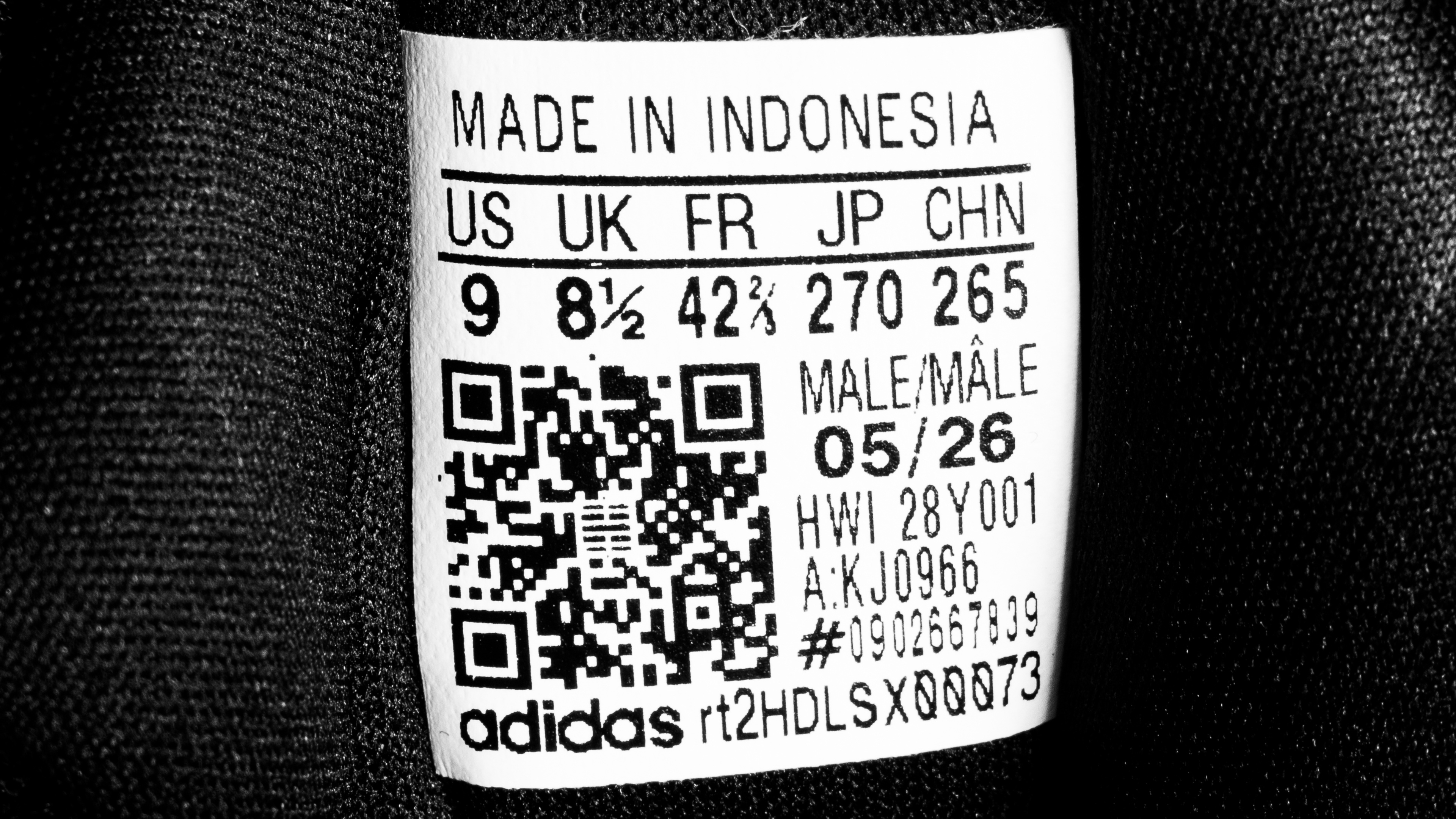
We tested the adidas Boost Run in men's U.S. size 9, as indicated on the label of our unit. The colorway shown here is Core Black/Dash Grey/Cloud White. As of October 2026, adidas only offers this colorway for men. They also only offer one colorway for women: Core Black/Dash Grey/Semi Flash Aqua. This shoe isn't available in wide sizing for either gender. The design section applies specifically to the version we tested, but we expect other sizes to perform similarly.