The Bose Smart Soundbar 700 is a 3.0 setup released in 2019. It's a sleek and premium soundbar with built-in voice assistant support for hands-free control right from the comfort of your couch. You can use it as a standalone bar, or you can upgrade it to the full Bose Smart Soundbar 700 with Speakers + Bass Module for improved performance. Unlike the Bose Smart Soundbar 900, there's no support for object-based audio formats like Dolby Atmos, but it still offers some premium features, such as the ADAPTiQ room correction tool.
Our Verdict
The Bose Soundbar 700 is decent for mixed usage. Overall, it's a really premium and well-built soundbar with built-in voice assistant support, and it has a great sound quality that's suitable for lots of different audio content. Dialogue in movies and TV shows is reproduced with clarity, and instruments in your favorite tunes are detailed in the mix. Without a sub, you don't get a deep rumble in the low-bass, and without satellites, its surround sound performance isn't the best, but you can add on both of these components separately. There's no support for object-based formats like Atmos, though.
- Very well-built design.
- Neutral sound profile.
- Easily upgradable setup.
- Lacks sub-bass.
- Lacks Full HDMI In ports.
- No Atmos support.
The Bose Soundbar 700 is good for dialogue-centric content like TV shows and podcasts. Dialogue is clear and present in the mix right out of the box, so you can follow along with your favorite shows with ease. Its discrete center channel improves overall vocal reproduction, and if you want dialogue to sound more crisp and clear, there's also a dialogue enhancement tool on hand. Plus, its low latency ensures that there aren't any lip-synching issues.
- Neutral sound profile.
- Very wide soundstage.
- Diffused sound due to large soundstage.
The Bose Soundbar 700 is very good for music. Like most premium setups on the market, there's a room correction feature available to optimize its frequency response based on your room's unique acoustics. The bar's sound is very even, especially in the mids, so voices and lead instruments are reproduced with clarity and detail. Aside from bass and treble adjustments, however, you don't have much ability to control its sound, and you'll need to add on a separate subwoofer to enjoy the deep rumble in the low-bass.
- Neutral sound profile.
- Very wide soundstage.
- Lacks sub-bass.
The Bose Soundbar 700 is fair for movies. While it doesn't offer support for object-based formats like Dolby Atmos, you can still playback 5.1 surround sound like Dolby Digital, which are commonly found on different streaming platforms. Without satellites, however, the bar has to downmix this content into stereo in order to play it, which doesn't sound as immersive. However, you can always add on separate satellites to improve its surround sound.
- Neutral sound profile.
- Very wide soundstage.
- Diffused sound due to large soundstage.
- Lacks sub-bass.
Changelog
- Updated Sep 24, 2024: Updated the Stereo Dynamics, Stereo Frequency Response With Preliminary Calibrations, and Surround 5.1 results with new methodology from Test Bench 1.3 and accompanying text. Added text to Audio Latency: ARC, Audio Latency: HDMI In, and Audio Latency: Optical boxes.
- Updated Sep 19, 2024: We've converted this review to Test Bench Update 1.3. If applicable, we've retested stereo sound based on the manufacturer's recommendations. Additionally, we've expanded our audio latency tests to the following boxes: Audio Latency: ARC, Audio Latency: HDMI In, and Audio Latency: Optical. You can see the full changelog here.
- Updated Nov 15, 2023: We've added a comparison between this soundbar and the Bose Smart Ultra Soundbar in Build Quality.
- Updated Jun 02, 2023: Converted to Test Bench 1.2. Updated the results for audio format support via ARC/eARC, HDMI In, and Optical. Added Video Passthrough to TV results as well.
Check Price
Differences Between Sizes And Variants
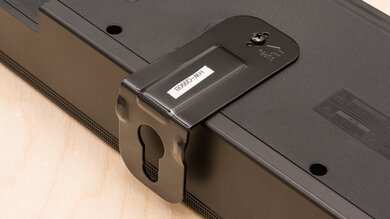
The Bose Soundbar 700 comes in two color variants, 'Black' and 'Arctic White'. We tested the 'Black' variant, and you can see the label for the model we tested here. We expect both variants to perform similarly in tests.
If you come across a variant not listed here, let us know in the discussions below so we can update our review.
Popular Soundbar Comparisons
The Bose Smart Soundbar 700 can easily be upgraded with a wireless sub and satellites to the Bose Smart Soundbar 700 with Speakers + Bass Module. By itself, the bar has an extremely wide soundstage thanks to the side-firing speakers. Though it lacks some low-bass, it has a neutral sound profile that makes it suitable for listening to a variety of audio content. It's also one of the better-built soundbars that we've tested and it has a very unique and sleek style with a glass panel.
If you want to see more options, check out our recommendations for the best soundbars, the best Dolby Atmos soundbars, and the best soundbars with a subwoofer.
The Sonos Arc is slightly better than the Bose Smart Soundbar 700, but which you prefer depends on your needs. The Sonos isn't as well-built as the Bose but supports Atmos, which is great for a more immersive listening experience. It also compresses less at max volume. However, Bose integrates more easily if you're already part of the brand's ecosystem. You can easily upgrade both setups.
When comparing the bars by themselves, the Bose Smart Soundbar 700 is slightly better than the Sonos Beam. The Bose can get slightly louder without as much compression at max volume. It feels better made and has a premium feel, with a glass plate covering. The Bose also has more inputs and can play content wirelessly via Bluetooth and Wi-Fi. On the other hand, the Sonos is smaller and easier to fit in your home theater setup.
The Bose Smart Soundbar 900 is better than the Bose Smart Soundbar 700. The 900 has a better surrounds performance, and unlike the 700, it supports Dolby Atmos content. That said, the 700 has a better-balanced stereo frequency response.
The Sonos Beam (Gen 2) and the Bose Smart Soundbar 700 are both good standalone soundbars. The Sonos has a more compact design, and unlike the Bose, it supports Dolby Atmos content and has better surround performance. That said, the Bose has a more balanced sound profile out of the box, which some users may prefer. It also gets louder and supports more wireless playback options like Bluetooth.
Test Results

This setup has no dedicated subwoofer, though you can purchase one on the side. If you're looking for a soundbar with a dedicated sub, check out the Klipsch Cinema 600.
There are no satellites with this setup, but they can be purchased separately.
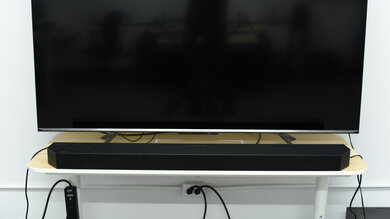
The Bose Smart Soundbar 700 has a fairly large bar that will likely not fit between the legs of a 55-inch TV stand. Fortunately, it's not very tall, so you can place it in front of the TV without blocking the screen or the IR reception, which is located at the bottom edge of most TVs.
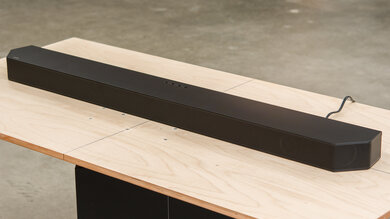
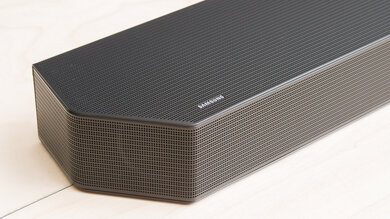
The soundbar has an excellent build quality. It has a unique design with a premium feel that's on par with the top-of-the-line Bose Smart Ultra Soundbar. Overall, the entire setup is very robust and sturdy. The soundbar is mainly made of plastic, with a metal grille that wraps around the front and sides. The top is covered in a glass plate, which can easily collect dust and attract fingerprints.
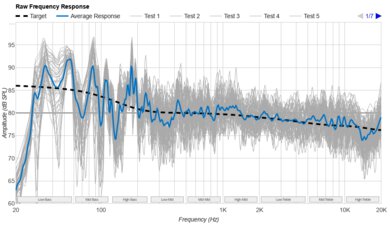
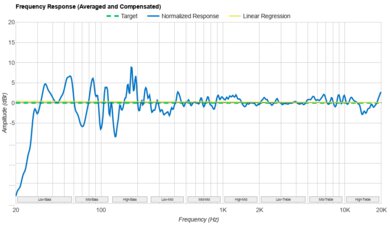
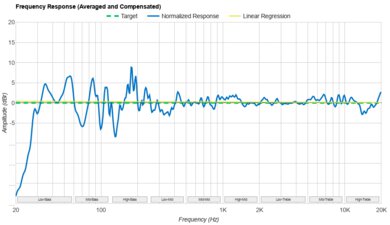
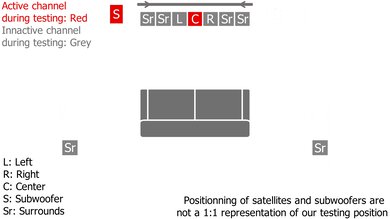
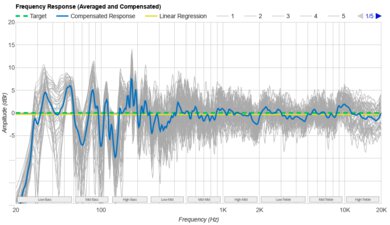
This soundbar has a good stereo frequency response. Like most premium setups, it has a room correction feature that optimizes its output based on your room's unique acoustics, which is called ADAPTiQ. Its sound profile is very even and balanced, especially in the mids, which is where most voices and lead instruments are reproduced. It's suitable for listening to lots of different types of audio content, but it doesn't bring as much low-bass as the full Bose Smart Soundbar 700 with Speakers + Bass Module.
With calibration, the bar has a good stereo frequency response. When the bass is set to +20 and the treble is set to -30, it can produce a slightly more extended bass. Its sound profile is still quite neutral overall, making it suitable for listening to most audio content.
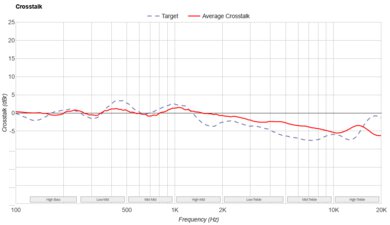
This soundbar has a very good soundstage. It has side-firing speakers that project the sound at the walls, which reflects it back to the listener. This results in an extremely wide soundstage, though it can feel a bit unnatural and overdone. Unfortunately, its focus is mediocre, and objects seem to come from a more general area rather than an accurate location.
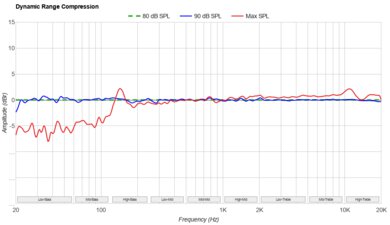
The stereo dynamics is good. This soundbar can get loud, and there isn't much compression present at max volume. It's a great choice for filling larger or more open rooms with sound. There's some compression at max volume, which can cause a bit of pumping and artifacts.
The bar is a 3.0 setup that has an excellent performance in the center channel. It has a dedicated center speaker, which results in clearer and more accurate dialogue reproduction. Also, its mid-range is well-balanced, making dialogue and vocals sound clear and present in the mix.
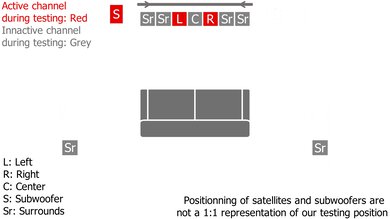
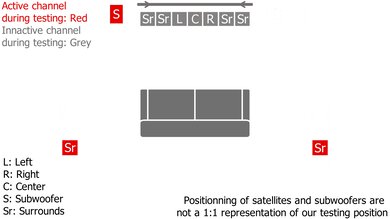
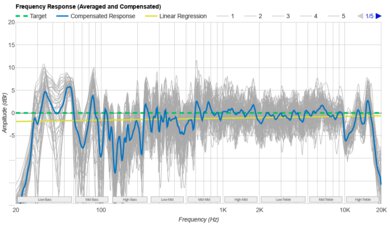
Like the Bose Soundbar 500, the Bose Soundbar 700 has a poor surround performance. Due to its 3.0 system configuration, the bar downmixes surround content to stereo, which doesn't make a clear and accurate representation of surround objects. This results in a less immersive sound since sound objects are perceived to come more from the front instead of all around you. It has a fairly bass-heavy sound profile in this configuration, which can help you feel the deep thump and rumble in action-packed movie scenes but may be too boomy for some listeners. You can always add on separate satellites if you want a better experience, though.
The bar doesn't support height content. If you want to watch Atmos from a similar smart soundbar, check out the Bose Smart Soundbar 900 or the more affordable Bose Smart Soundbar 600.
Like most premium setups, this bar has a room correction feature that you can set up using the Bose ADAPTiQ headset, which will adjust the soundbar's sound profile to the acoustics of the room it's in. It also has a Dialogue Enhancement feature, which can make dialogue in movies sound a bit clearer, even at a lower volume. On the downside, unlike the Samsung HW-S60T or Bang & Olufsen Beosound Stage, it doesn’t have a graphic EQ to help you customize the sound to your personal liking. However, there are some bass and treble adjustments on hand.
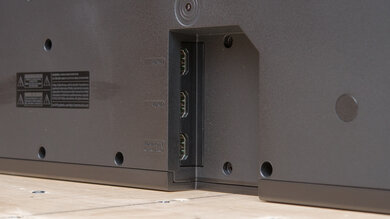
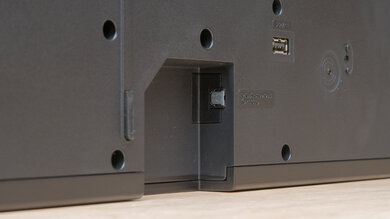
This soundbar has limited wired connectivity. You can't use it as a hub as it lacks a Full HDMI In port and there's no RCA In or Analog Audio In, which can be helpful with older devices. Unlike the Bowers & Wilkins Formation Bar, it has HDMI inputs, too. There's an 'IR' input that you can use to connect an infrared transmitter so the bar can relay the infrared signal it receives. There's also a 'BASS' port for connecting to an external subwoofer, a 'DATA' port for firmware upgrades, and the 'ADAPTiQ' port for the headset that's included to help with room calibration.
Just like the Bose Soundbar 500, this bar supports eARC. Unfortunately, it downmixes surround sound encoded in the Dolby Digital and DTS formats to 3.0 due to the bar's speaker configuration. Dolby Digital is widely available on streaming platforms, whereas DTS is usually the fallback of the higher-quality DTS-HD MA format. This bar can't offer you a more immersive sound experience, as it lacks support for object-based surround sound formats like Dolby Atmos.
The Bose Soundbar 700 can use Optical to decode surround sound content that's encoded in Dolby Digital or DTS formats. However, it has to downmix this content to 3.0 due to its speaker configuration. Dolby Digital is common in streaming platforms and Blu-rays, whereas the DTS format isn't widely available on its own, but rather serves as a fallback to the DTS-HD MA that's commonly found on Blu-ray discs.
The audio latency over ARC is outstanding. While the format support isn't exhaustive, the latency for the supported formats is low enough that audio and video ought to match up well. Keep in mind that this can vary, but it can be compensated for in AV sync settings.
The audio latency over Optical is alright. A lag between audio and video is present, so you'll notice a lipsync mismatch, but it's not exceptionally high. This can vary in real-world circumstances, but you can compensate for this with app or AV Sync settings.
The Bose Soundbar 700 has remarkable wireless playback support. You can seamlessly play music from your phone or tablet using the Bluetooth connection, which you can't do with the Sonos Arc. You can cast to this bar using Apple AirPlay, and it can connect to your Wi-Fi network, which lets you cast to it directly.
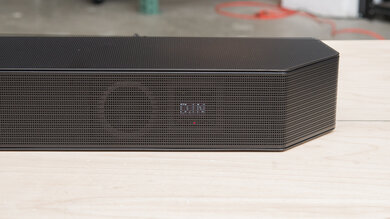
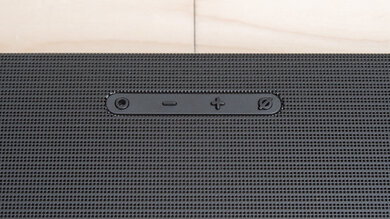
The Bose Soundbar 700 has an interface that's identical to the Bose Soundbar 500. It mainly consists of a strip of light that behaves differently depending on the action you perform. Although it looks nice, it's not immediately easy to understand what the different light patterns represent. There's a small light underneath the 'Microphone Off' button, which tells you whether or not the microphone is off.
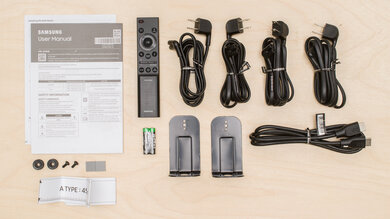
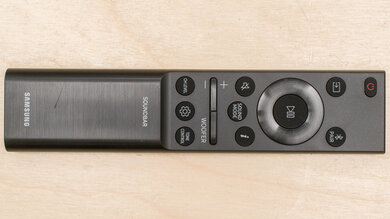
This soundbar comes with a remote that can control all the functions of the bar. It's quite large, but it can also act as a universal remote for controlling other devices in your household. If you want to control the bar from your phone, you can also use the Bose Music app, which includes TuneIn radio service.