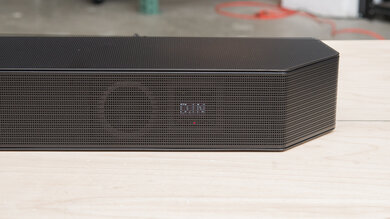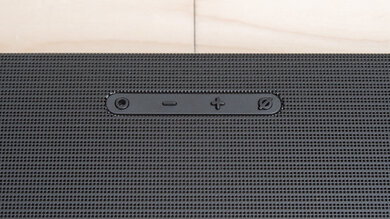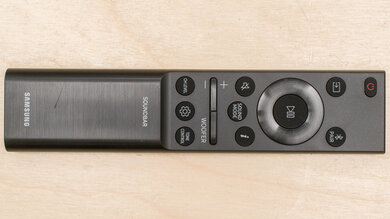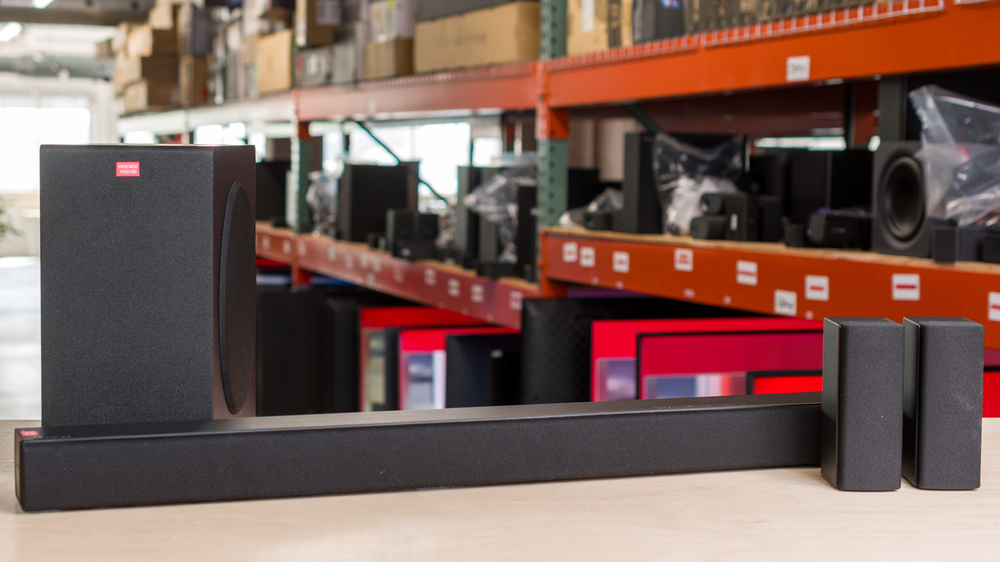
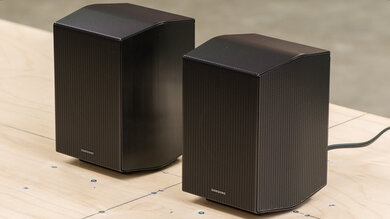
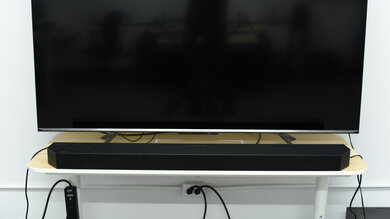
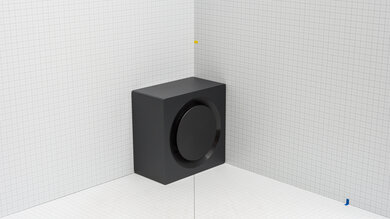
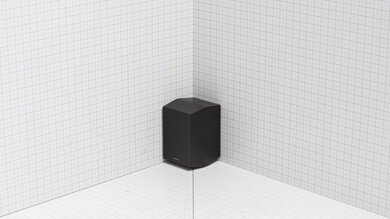
The Hisense HS5100 is a 2024 soundbar with a 5.1 configuration complete with a compact subwoofer and surrounds. It's a straightforward design without apps and constant updates meant to come in at a budget-friendly price point without cutting satellite speakers out of the equation. That said, it comes with compromises and doesn't include up-firing speakers or support for 3D audio formats like Dolby Atmos. Still, for music, TV, and older movies tuned for 5.1 Dolby Digital, the soundbar slots in well without many frills.
Our Verdict
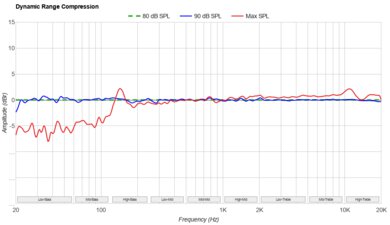
The Hisense HS5100 is decent for mixed usage. While it lacks some premium features like room correction, graphic EQ, and up-firing drivers with 3D audio format support, it's an uncomplicated soundbar with a decent soundstage and satellites on a budget. Out of the box, it provides a good sound with a few features (EQ modes and bass and treble adjustments) to enhance it via the remote. At max volume, it doesn't compress too much and retains your audio's dynamics for the most part. Your connectivity includes HDMI ARC, Optical, and interestingly, AUX In (for analog audio sources), or Bluetooth for wireless streaming. While that's sufficient for most uses like TV, music, and movies, you lose out on the immersion of formats like Dolby Atmos. It lacks app support, which is either a benefit or a downside depending on your preferences.
Low latency audio over HDMI ARC.
EQ presets and Bass and Treble adjustments.
Dialogue is clear.
Gets plenty loud with little compression.
No Dolby Atmos support.
Lacks bassy boominess and airiness.
Satellites are wired to the subwoofer, which isn't convenient.
Bluetooth is the only wireless connection.
The Hisense HS5100 is great for dialogue and TV shows. The frequency response produces speech clearly, both in the stereo and through the discrete center channel alone. You can choose from the 'News' EQ preset, which enhances voices by cutting the bass and treble somewhat, or choose 'Night' mode for late-night binge fests that won't wake the household. Disabling the surround sound mode also turns off the satellites, which can quiet down your TV watching at night, too. On the flipside, the soundbar can get pretty loud, making action-packed shows engaging, but newer shows mastered in Dolby Atmos (or other 3D audio formats) aren't supported. If you're streaming from your device, it also supports Bluetooth but lacks other wireless connections.
Low latency audio over HDMI ARC.
EQ presets and Bass and Treble adjustments.
Dialogue is clear.
Gets plenty loud with little compression.
Lacks bassy boominess and airiness.
Satellites are wired to the subwoofer, which isn't convenient.
The Hisense HS5100 is good for listening to music. The 5.1 soundbar correctly plays back multi-channel surround masters, so you can listen to surround sound concerts or conventional stereo music and expect a decently sized soundstage without holes or artificial upmixing. It features an AUX input, which is a little unusual but handy if you hook up an analog audio source like a portable CD or cassette player. Bluetooth connectivity is also available for streaming from your device, though the soundbar doesn't support other wireless audio connections like Wi-Fi, nor does it have a companion app. The soundbar sounds good out of the box, but it rolls off high-treble above 18kHz, which can cause music to sound a bit closed off and lacking in airiness; still, that's rather subtle. Meanwhile, you can adjust bass and treble or choose from EQ presets, which is sufficient for many, but if you like to tinker, it's limiting.
EQ presets and Bass and Treble adjustments.
Gets plenty loud with little compression.
AUX input lets you connect to analog audio sources.
Lacks bassy boominess and airiness.
Bluetooth is the only wireless connection.
The Hisense HS5100 is alright for watching movies. It can reach fairly loud volume levels while mostly retaining the dynamics of your audio. Its stereo frequency response sounds good, though it's not especially boomy. Since it includes satellites, you can arrange them around the room for 5.1 surround, but its tuning sounds a bit uneven out of the box. You can adjust the EQ presets (including 'Movie' mode) and bass or treble to taste. Still, room correction and graphic EQ aren't included. The soundbar also supports a somewhat limited selection of audio formats: Dolby Digital, Dolby Digital Plus, and DTS. So, if you're watching newer superhero flicks, for example, object-based formats are either downsampled or not supported. While it lacks HDMI In for video passthrough, it offers a little flexibility with different connections via Optical and HDMI Arc ports.
Low latency audio over HDMI ARC.
EQ presets and Bass and Treble adjustments.
Gets plenty loud with little compression.
No Dolby Atmos support.
Lacks bassy boominess and airiness.
Satellites are wired to the subwoofer, which isn't convenient.
Changelog
-
Updated Dec 02, 2025:
We've added a comparison of the Ultimea Skywave X70 to the Stereo Dynamics box.
-
Updated Sep 25, 2025:
The Sound Enhancements section has been corrected to explain how the 'Surr' button works for surround modes and surround volume.
-
Updated Aug 28, 2025:
The Stereo Soundstage section was updated to mention the Samsung HW-B750F.
- Updated Jul 09, 2025: Review published.
Check Price
Differences Between Sizes And Variants
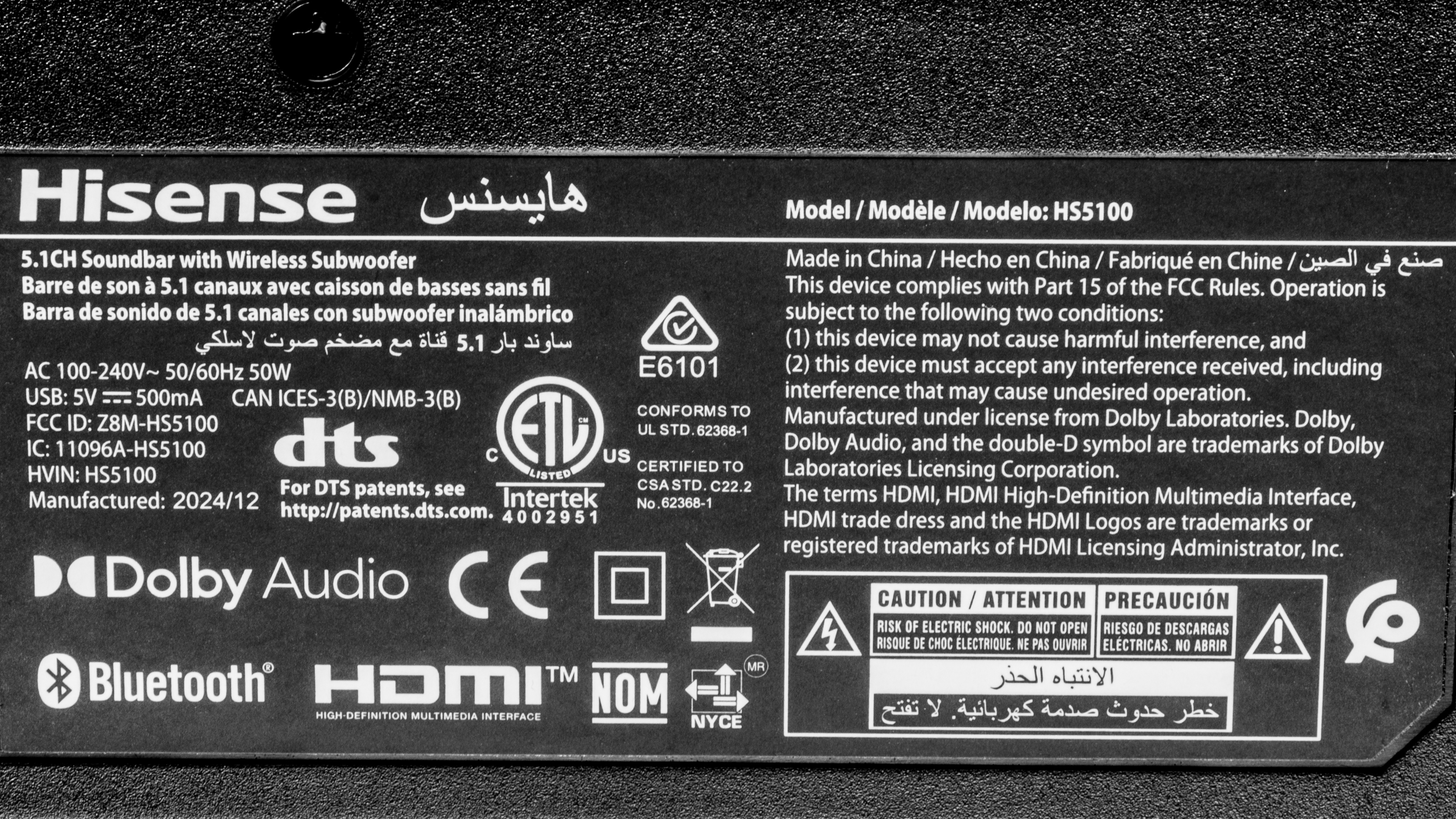
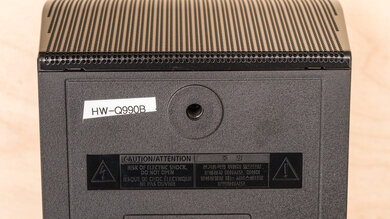
The Hisense HS5100 is available in one color, 'Black.' Here's an image of the unit's label. If you encounter another variant of this soundbar, please let us know in the comments, and we'll update the review.
Popular Soundbar Comparisons
The Hisense HS5100 5.1 setup lands as a step below the 5.1.2 Hisense AX5125H and a tier above the 2.1 Hisense HS2100. As with most budget-oriented brands, compromises tend to help decide which soundbar you ought to pick, so if you don't need the AX5125H's Atmos support, but want a more immersive experience than the HS2100's stereo offering, the HS5100 could be the perfect fit.. Widening the landscape to other brands, the Vizio SV510X-0806 is another 5.1 soundbar with surrounds that can process far more audio formats including DTS:X and Dolby Atmos, thanks to an eARC port (as opposed to the ARC on the HS5100), but it still doesn't have up-firing drivers and it lacks the HS5100's Optical and AUX inputs. The 5.1.2 Vizio Elevate SE SL512X-0806 adds up-firing speakers, which are absent on the HS5100, with a similarly expansive audio format support as the SV510X-0806. However, the Elevate SE SL512X-0806 isn't quite as accurate-sounding as the HS5100, and it ups the cost of entry. If you skip surrounds altogether and simply want a very good sounding 5.1 soundbar and sub, and can make do with the limited audio format support—no 3D audio here—the Samsung HW-B750D is also worth a look for its simplicity and nicer build. The Samsung lacks Dolby Digital Plus found on the HS5100, but adds the flexibility of an HDMI In port and a graphic EQ.
Fortunately, this competitive tier is rife with options. For more product picks worth considering, check out the best soundbars under $200, the best soundbars under $300, and the best 5.1 soundbars.
Both the TCL S55H and Hisense HS5100 are budget-oriented soundbars with outboard subs. However, the Hisense also includes satellites. They share some similarities, so it depends on your needs, but one advantage of the Hisense is its 5.1 configuration (rather than the TCL's 2.1). It sports a slightly wider soundstage, much better surround sound, and a clearer discrete center channel. On the other hand, the TCL supports a few more audio formats like Dolby Atmos, but it downmixes to stereo anyway. The upside is that it takes up less space in your home, gets plenty loud, and has virtually identical wired ports and wireless connectivity as the Hisense.
Between the Hisense HS5100 and Hisense AX5125H, the latter is the better pick if you want a soundbar with Dolby Atmos support. They share some common features and limitations: preset EQs or bass/treble adjustments only, and no room correction or apps. Both include satellites and an outboard subwoofer. However, only the AX5125H includes up-firing drivers, video passthrough, and considerably better audio format support with a fuller sound. On the other hand, the simpler HS5100 retails for less, and it still sounds good, albeit not as full in the bass. If you don't want to splurge for the AX5125H, the HS5100 is a solid contender for TV and music on a budget, so long as you're content with pared-back connectivity and audio support. It also gets louder at max volume than the AX5125H. Otherwise, the HS5100 lacks the thorough flexibility of the AX5125H's HDMI In, eARC, and extensive audio format support.
The Hisense HS5100 is a better soundbar than the Hisense HS2100, though they share similar connectivity and audio format support limitations—no Dolby Atmos. Generally, both soundbars share similar sound enhancement features, too. Due to its 5.1 configuration, the HS5100 doesn't need to downmix surround sound like the HS2100's 2.1 design. Its discrete center channel is well-tuned and ensures speech cuts through better. It also retains your audio's dynamics very well at max volume. That said, the HS2100 has a very slightly boomier and deeper bass in stereo by default, which makes it a good choice if you mainly listen to music, but it lacks the flexibility of surround sound of the HS5100.
The Vizio SV510X-0806 and Hisense HS5100 are both budget-friendly 5.1 soundbars that come with subs and satellites. Depending on your preferences and devices, either one could suit your home theater better. For much more extensive format support, the Vizio wins out, though it still doesn't have up-firing drivers to properly immerse you in 3D audio, it still can handle Atmos and DTS:X. Its stereo sound is also much bassier and a bit brighter out of the box, unlike the slightly more accurate (but not as boomy or sparkly) Hisense. 5.1 surround sound is more accurate on the Vizio, though, making it a good choice for movies. That said, while the Hisense's ARC port limits its audio format support considerably, it's the only one that includes an Optical port for use with other devices. While the Hisense only uses a remote, the Vizio only uses an app for control. Arguably, the Hisense has greater immunity to app obsolescence with the remote.
Test Results
for pictures & test results
for pictures & test results

for videos & test results