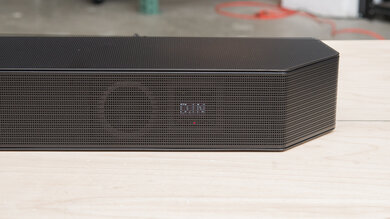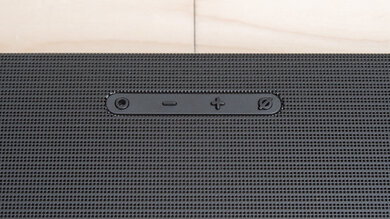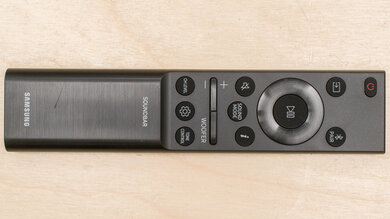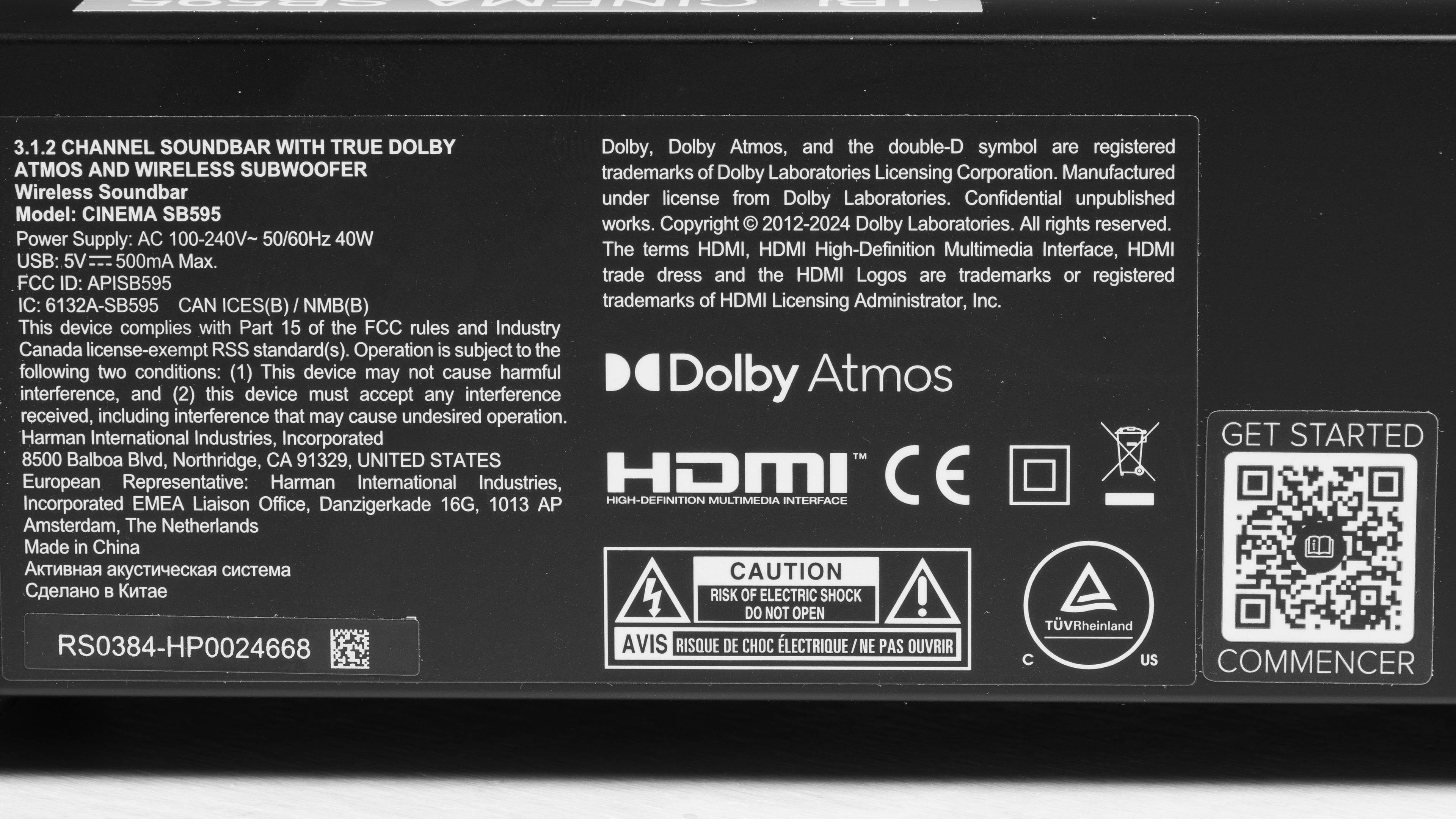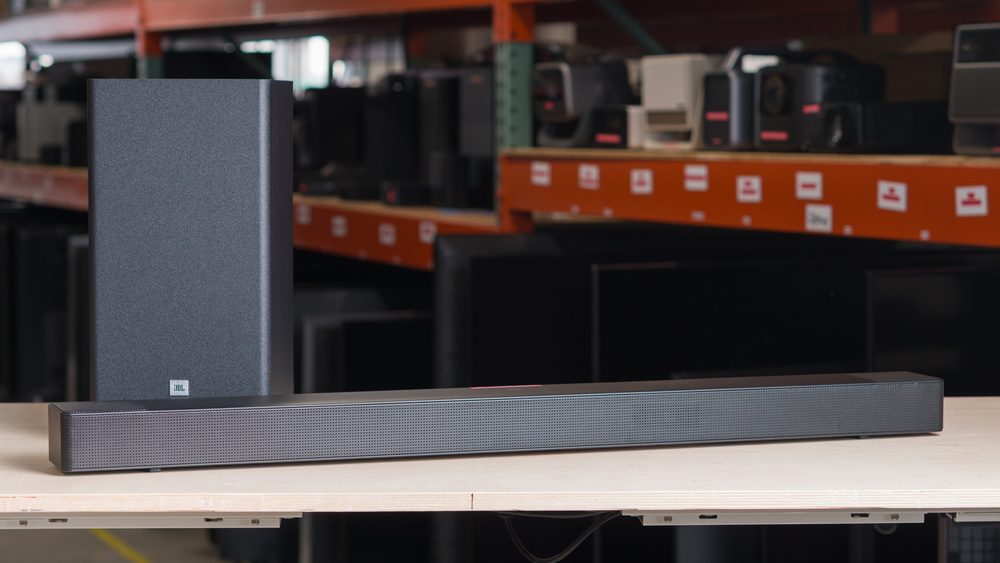
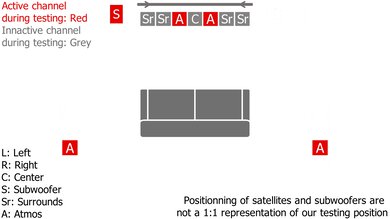
The JBL Cinema SB595 is a 3.1.2 soundbar with Dolby Atmos support, a dedicated center channel, and a wireless subwoofer. It's designed to offer a more immersive listening experience than standard TV speakers, with improved dialogue clarity and low-end punch.
Our Verdict
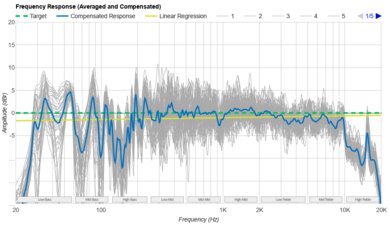
The JBL SB595 is decent for mixed use. It has a slightly warm sound with solid bass punch, a dedicated center channel that helps dialogue come through clearly, and support for the main Dolby formats, including Dolby Atmos. It also gets loud enough for most rooms and offers useful basics like HDMI In, Optical, and low audio latency. That said, it doesn't support DTS, and its surround performance is limited due to its lack of dedicated rear satellites. Its sound enhancement features are also limited, so it isn't as versatile or immersive as more fully featured bars.
Dolby Atmos support.
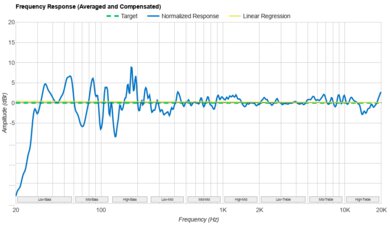
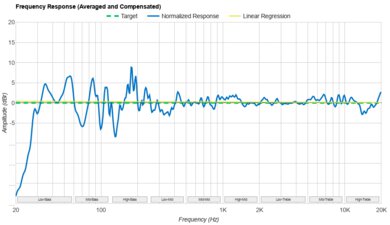
Generally balanced sound with plenty of warmth.
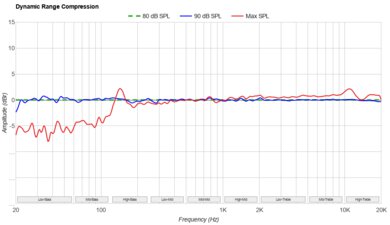
Gets loud enough to fill most rooms with sound.
No DTS support.
No room correction or graphic EQ.
No real satellites.
The JBL SB595 is good for watching TV shows and other dialogue-heavy content. Its dedicated center channel helps keep voices relatively clear in the mix, and the bar gets loud enough to fill a larger room without much trouble. That said, dialogue doesn't always sound equally clear across its sound modes: in Music mode, voices can seem a bit pushed back, while News mode does a better job bringing speech forward and making it easier to follow. This soundbar supports common Dolby formats, so a lot of streaming content will play properly, but there's no support for DTS formats. Its low audio latency helps keep voices in sync with the picture. However, there's no night mode or auto-volume feature, so it's less convenient for late-night viewing than some alternatives.
Dolby Atmos support.
Generally balanced sound with plenty of warmth.
Gets loud enough to fill most rooms with sound.
No DTS support.
No room correction or graphic EQ.
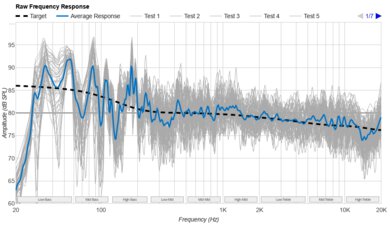
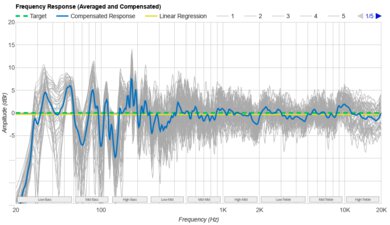
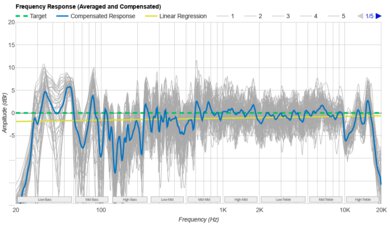
The JBL SB595 is good for listening to music. Its default sound is slightly warm, with boosted bass, balanced mids, and somewhat recessed treble, so tracks have a bit of punch and fullness, though string instruments and other bright details can sound a little dull. It also gets loud enough to fill a room and includes bass and treble adjustments if you want to tweak the tuning. That said, the soundstage isn't especially wide or immersive, and there's no room correction or fully customizable EQ, so you're somewhat limited in how much you can refine the sound. You're also limited to Bluetooth for wireless playback.
Generally balanced sound with plenty of warmth.
Gets loud enough to fill most rooms with sound.
No room correction or graphic EQ.
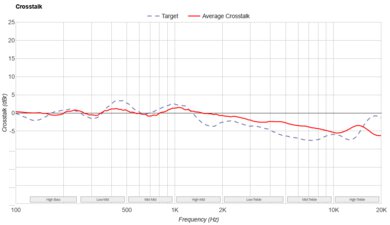
The JBL SB595 soundbar is decent for movies. It supports the core Dolby formats, including Dolby Atmos, and its dedicated center channel helps keep dialogue clear, while the sub adds a good amount of punch. That said, it doesn't support DTS, and because it downmixes surround content without dedicated rear speakers, movie audio doesn't feel especially immersive. Its Atmos performance is also limited, with height effects that only rise a little above the bar, and while Movie mode improves vocal presence, it can also make the bass sound overly boomy.
Dolby Atmos support.
Generally balanced sound with plenty of warmth.
Gets loud enough to fill most rooms with sound.
No DTS support.
No room correction or graphic EQ.
No real satellites.
Check Price
Popular Soundbar Comparisons
The JBL Cinema SB595 sits below JBL's more premium Bar lineup. Compared with models like the JBL Bar 500MK2, the JBL Bar 1000MK2, and the JBL Bar 1300XMK2, it's a more stripped-back option with fewer sound enhancement features, less immersive surround performance, and no companion app support. That said, it still offers a dedicated subwoofer and up-firing drivers, so it's a reasonable pick if you want a simpler, more affordable entryway in the world of Dolby Atmos.
Looking at other brands on the market, the Samsung HW-S60D is a compact all-in-one alternative with more sound customization features, but its lack of a subwoofer means the JBL Cinema SB595 is probably a better pick for most people, unless space is at a premium in your viewing room. On the other hand, the Samsung HW-B750F is well worth checking out. It's a bit better than the JBL overall, thanks to its more accurate sound and better surround performance. But it doesn't have up-firing drivers, so the JBL is better if you specifically want Dolby Atmos support.
For more recommendations, check out the best soundbars under $500, the best soundbars for music, and the best Dolby Atmos soundbars.
The JBL Bar 500MK2 is a better soundbar than the JBL Cinema SB595. The SB595 is a 3.1.2 setup without surround drivers, while the Bar 500MK2 has a 5.1-channel design with side-firing drivers that better reproduce surround content. The SB595 also can't put out as much low-end thump as the 500MK2, so effects like explosions feel less immersive. Finally, the 500MK2 also has more sound customization options. such as room correction, a graphic EQ, and a Night Mode. That said, if you're just looking for a quick and easy way to improve the sound of your TV speakers, the SB595 is an affordable way to do so.
The Samsung HW-S60D and JBL Cinema SB595 are both relatively affordable ways to improve upon the sound of your TV's built-in speakers, but they have different strengths. The Samsung is an all-in-one, 5.0-channel solution without a dedicated sub. It's compact and easy to use, and it also has side-firing drivers, meaning it also supports surround content without downmixing. On the other hand, while the JBL doesn't have side-firing drivers, its dedicated subwoofer means it can reproduce audio with more punch, which can make pounding taiko drum soundtracks feel more exciting. The JBL also offers up-firing drivers, so it can support Atmos content. The JBL offers a greater range of connectivity options, but the Samsung has more ways to customize its sound.
The Samsung HW-B750F is a bit better than the JBL Cinema SB595, although each bar has its strengths. The Samsung has a more accurate frequency response, so voices sound a bit clearer and more present. It also offers side-firing drivers, so it can playback 5.1 surround content without downmixing, unlike the 3.1.2 JBL Bar. That said, the JBL supports Atmos content, unlike the Samsung. But in practice, the effect of those drivers is pretty limited. On balance, the Samsung is the better bar, not least because it offers a greater range of sound customization options, including a graphic EQ. But if you're an Atmos die-hard, the JBL could be a better fit.
The JBL Bar 1300XMK2 is a much more premium alternative to the JBL Cinema SB595. The SB595 is a simpler 3.1.2 setup that offers you a bar and sub, while the 1300XMK2 has an 11.1.4 channel configuration that also has dedicated rear satellites. The 1300XMK2 is unquestionably the better soundbar, but it also costs a lot more and takes up more space. If you're looking for a simple and affordable way to improve on the sound of your TV speakers, the SB595 does the job, with support for Dolby Digital and Atmos, as well as a few different sound modes. But the 1300XMK2 adds DTS support and a companion app that lets you dial in the sound you prefer via EQ.
Test Results
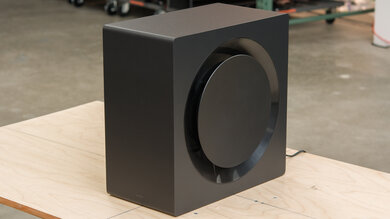
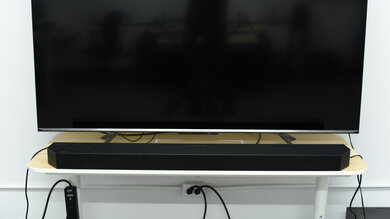
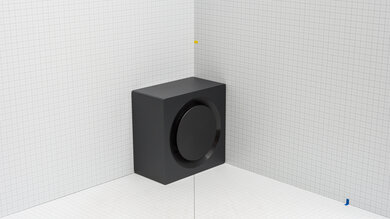
for pictures & test results
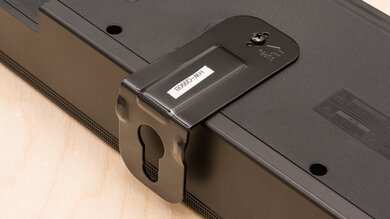
for pictures & test results
for pictures & test results
for videos & test results

for videos & test results