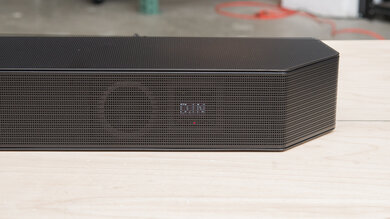
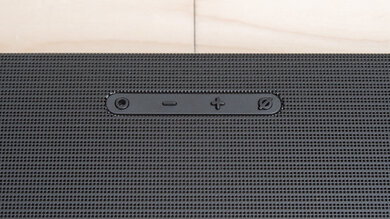
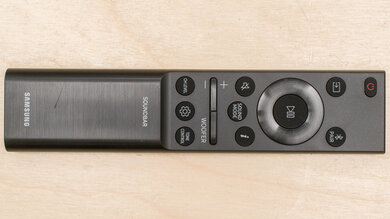
The Sony BRAVIA Theater Quad is a subwoofer-less version of the Sony BRAVIA Theater Quad with Bass Module. You get the same control box and four discrete speakers to position around your room, but not the Bass Module. What's left is an Atmos-compatible home theater system with HDMI 2.1 support, 4k passthrough at 120Hz, and support for Sony's Acoustic Center Sync technology.
Our Verdict
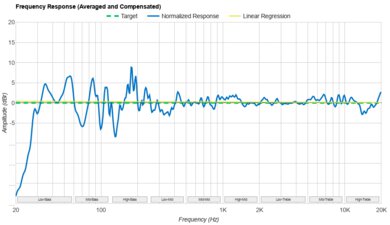
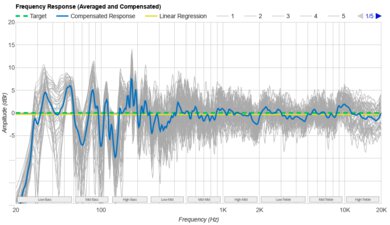
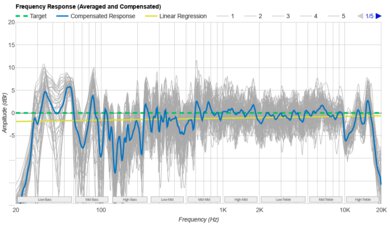
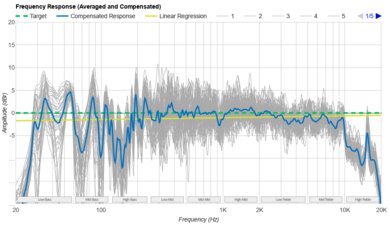
The Sony BRAVIA Theater Quad is decent for mixed usage. There's no true soundbar in this setup. Rather, four discrete speakers are placed in the room around you. As a result, this system creates a very immersive soundstage and one that you can adjust to taste by moving the speakers as you see fit. Sony's Soundfield Optimization technology also ensures the sound is optimized for your room's layout. Each speaker also has dedicated up-firing drivers which lends a sense of verticality to Atmos content. Gamers will also appreciate the HDMI 2.1 support, which lets you passthrough higher bandwidth (4k @ 120Hz signals). That said, this version of the system doesn't come with a subwoofer, so bass is lacking, and it doesn't quite get loud enough to fill larger rooms with sound.
Wide and immersive soundstage.
Balanced mid-range renders audio accurately.
Lacks a subwoofer.
No dedicated center channel, unless you own a BRAVIA TV.
The Sony BRAVIA Theater Quad is satisfactory for dialogue and TV shows. The four speakers produce a balanced sound across the mid and treble ranges, so voices sound accurate and true to life. On the other hand, since there's no center bar in this system, the center channel can lack focus and definition. If you have a compatible BRAVIA TV, you can use the Acoustic Center Sync Technology to use a compatible BRAVIA TV as the center channel. This system gets loud enough to fill most medium-sized rooms with sound but will struggle to fill larger spaces.
Wide and immersive soundstage.
Balanced mid-range renders audio accurately.
Lacks a subwoofer.
No dedicated center channel, unless you own a BRAVIA TV.
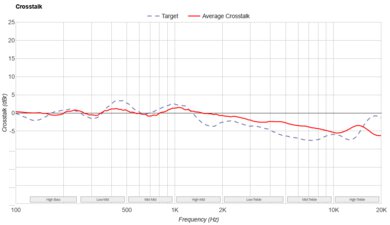
The Sony BRAVIA Theater Quad is good for music. The four discrete speakers can be placed quite far apart, which helps create a wide soundstage that lends a real sense of immersion to your audio, especially if it has been mixed with Dolby Digital or Dolby Atmos. Sony's Soundfield Optimization technology also tailors the output to the characteristics of your room. Unfortunately, since there's no subwoofer, your audio lacks thump and rumble so, as is, this system suits genres like jazz more than EDM.
Wide and immersive soundstage.
Balanced mid-range renders audio accurately.
Room correction feature to tailor the audio to your room.
Lacks a subwoofer.
No dedicated center channel, unless you own a BRAVIA TV.
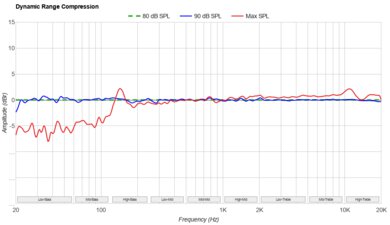
The Sony BRAVIA Theater Quad is decent for movies. The balanced mid-range ensures that instrumental scores sound accurate and dialogue lifelike. That said, this system doesn't come with a subwoofer, so explosions lack rumble and thump. The four speakers produce an immersive soundstage and don't compress your audio much at their loudest volume, but the lack of a dedicated center channel results in a phantom center that can sound a bit blurry. While the up-firing Atmos drivers are appreciated, they only add a limited sense of verticality to your audio.
Wide and immersive soundstage.
Balanced mid-range renders audio accurately.
Lacks a subwoofer.
No dedicated center channel, unless you own a BRAVIA TV.
Changelog
-
Updated Jul 20, 2026:
We've updated Popular Comparisons to mention the Sony BRAVIA Theater Trio.
-
Updated Jan 06, 2026:
The Stereo Dynamics section was updated to compare the Hisense HT Saturn.
- Updated Jan 30, 2025: Review published.
- Updated Jan 24, 2025: Early access published.
Check Price
Differences Between Sizes And Variants
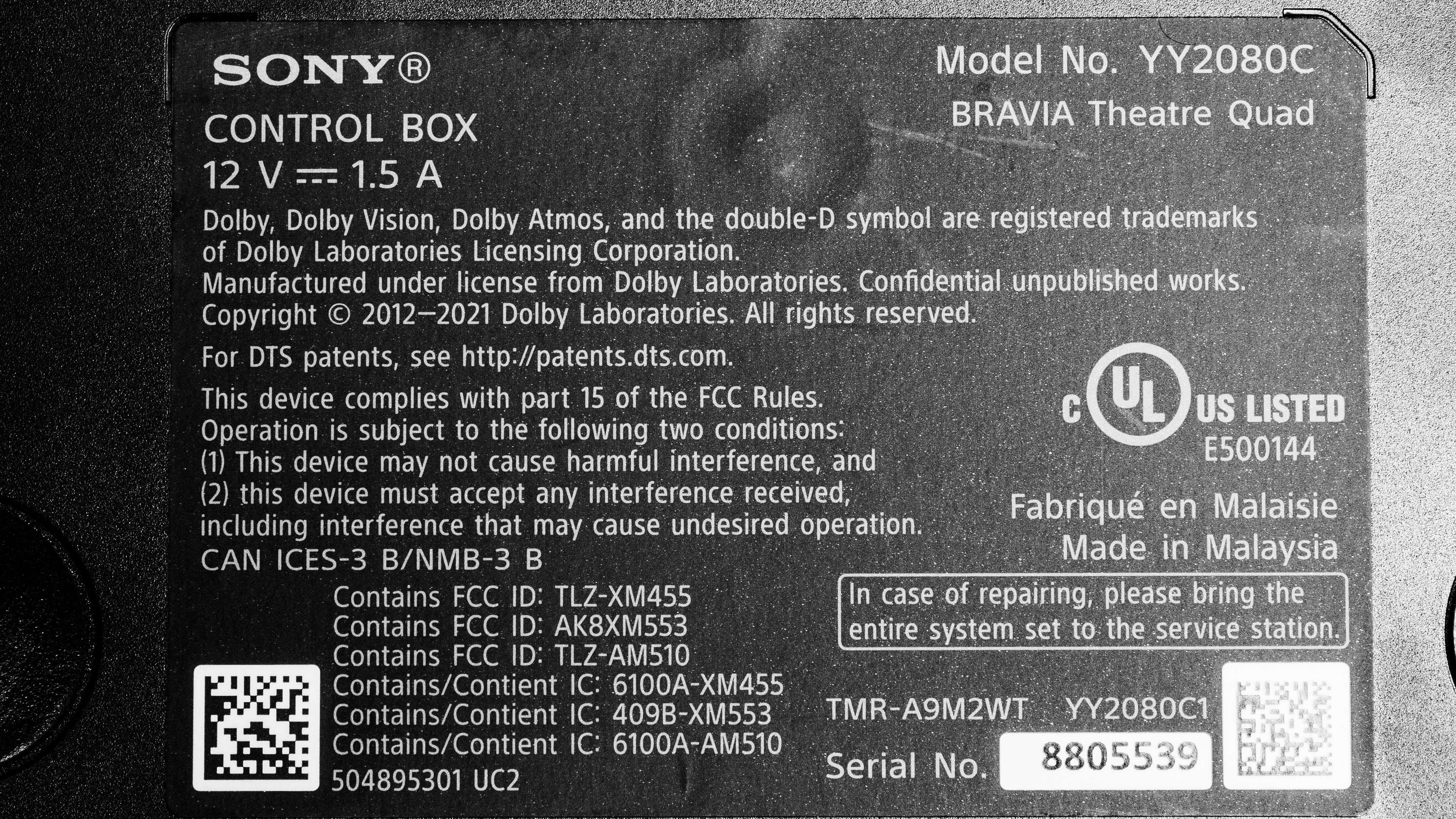
The Sony BRAVIA Theater Quad (also known as the Sony HT-A9M2) comes in one color variant 'Gray.' See our unit's label. If you encounter another variant of this soundbar, let us know in the comments, and we'll update our review.
Popular Soundbar Comparisons
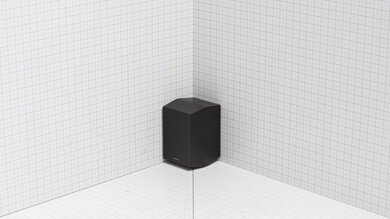
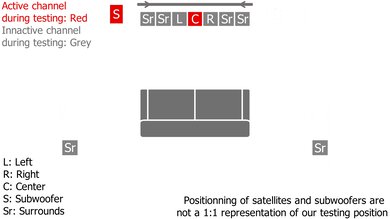
The Sony BRAVIA Theater Quad takes a slightly novel approach to soundbar design. Instead of a central bar that sits underneath your TV, you get four discrete speakers to position around your room, as well as a control box to connect everything up. It's a similar design to the Sony HT-A9 (in fact, the Theater Quad is also known as the HT-A9M2), but this time around, the speakers are thin, flat rectangles, making them a little easier to mount on walls. Like the HT-A9, the Theater Quad comes with Sony's Sound Field Optimization technology, which customizes the sound to the layout and acoustics of your room. You could also consider the Sony BRAVIA Theater Trio if you're willing part with rear surrounds for a dedicated center speaker.
That said, the Theater Quad, HT-A9, and BRAVIA Theater Trio don't come with subwoofers, so effects like explosions lack rumble. If that's important to you, you'll want to consider the Sony BRAVIA Theater Quad with Bass Module or the Sony HT-A9 with Bass Module. All of these systems offer HDMI 2.1 compatibility with 4k passthrough @ 120Hz.
See our recommendations for the best soundbars, the best Sony soundbars, and the best Dolby Atmos soundbars.
The Sony BRAVIA Theater Bar 9 with Speakers + Bass Module is a better-performing system than the Sony BRAVIA Theater Quad. That said, the Bar 9's additional bass module accounts for much of the difference. If you already have a compatible subwoofer, then you might appreciate the more immersive sound produced by the Theater Quad. But if you consume lots of dialogue-heavy content, you may appreciate the Bar 9's dedicated center channel, which keeps speech sounding clear and detailed.
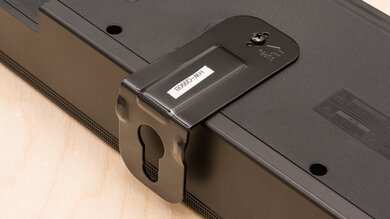
The Sony BRAVIA Theater Quad is the successor to the Sony HT-A9. The newer model has flat, rectangular speakers rather than the HT-A9's cylindrical design. This makes the Theater Quad speakers easier to mount on walls or in tight areas, making the most immediate difference between them the design of the discrete speakers. Other than that, the systems perform very similarly.
The Sony BRAVIA Theater Quad and Samsung HW-Q930D have different strengths. The Samsung has a subwoofer and puts out more bass information, which is great if you like to hear the rumbles of explosions. The Samsung's central bar also renders speech more clearly than the Sony's four discrete speakers. That said, the Sony system creates a more immersive and wider soundstage.
The Sony BRAVIA Theater Quad is identical to the Sony BRAVIA Theater Quad with Bass Module, just without the subwoofer. Naturally, that means the former offers less low-bass thump and punch, so sound effects and cinematic scores sound a bit thin. That said, if you're happy to save a little money, or already have this bass module from purchasing the Sony HT-A9 with Bass Module, you might be fine without the additional sub.
Test Results
for pictures & test results
for pictures & test results
for videos & test results

for videos & test results