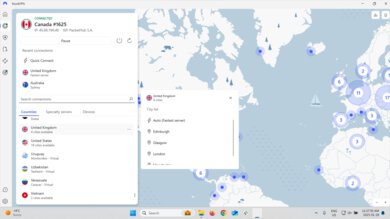
NordVPN was established in 2012 and is registered in Panama. Its parent company, Nord Security, also owns Surfshark VPN. It has servers in over 100 countries, apps on many different platforms, several additional features like obfuscation, multi-hop, a mesh network that can remotely connect your devices, and more.
Our Verdict
NordVPN is very good for torrenting. It allows you to download P2P files in most countries and doesn't have a data limit. Its security is acceptable, as it keeps your IP address and DNS queries within its tunnel while you use it. However, its kill switch doesn't work properly, as it allows some unencrypted traffic to leak past the VPN in the event of a system reboot or a software crash. It also lacks anonymity-preserving registration options, requiring an email address and password to create an account, but you can pay with cryptocurrencies.
Accepts cryptocurrencies for payment.
Proper TLS implementation doesn't leave you vulnerable to man-in-the-middle attacks.
Doesn't leak your IP address or DNS queries.
No registration options that preserve anonymity.
Kill switch doesn't work properly.
Bad policies and business practices.
NordVPN is disappointing for private browsing. Their policies and business practices suggest the company prioritizes growth over improving its products or preserving its users' privacy. While their 'no-logs' policy is prominently featured in their aggressive marketing tactics, a closer examination of their other, legally binding policies reveals vague statements, potential for data collection, and third-party audits of questionable provenance. Technically speaking, Nord's security is acceptable, but its kill switch feature doesn't work properly, leaking unencrypted data after a system reboot.
Accepts cryptocurrencies for payment.
Proper TLS implementation doesn't leave you vulnerable to man-in-the-middle attacks.
Doesn't leak your IP address or DNS queries.
No registration options that preserve anonymity.
Kill switch doesn't work properly.
Bad policies and business practices.
NordVPN has bad policies and business practices. While they maintain a no-logs policy, their privacy policy is riddled with vague statements and clauses that indicate they may collect your personal information. Their independent third-party audits are generally positive, but limited in scope and only available to paying subscribers, so you can't see them before you decide to subscribe. Their company structure is difficult to parse, and they engage in aggressive marketing practices that are generally unbecoming for a service designed to preserve user privacy.
Bad policies and business practices.
NordVPN has acceptable security. It doesn't leak your IP address or DNS queries while you're connected to it, and it has proper TLS implementation, protecting you from man-in-the-middle attacks. Unfortunately, its kill switch doesn't work as intended, as it leaks some unencrypted traffic upon rebooting your system and after a software crash. This is a concern if you need all your traffic to be encrypted in the event of a system crash.
Proper TLS implementation doesn't leave you vulnerable to man-in-the-middle attacks.
Doesn't leak your IP address or DNS queries.
Kill switch doesn't work properly.
We're testing this VPN's speed on an ongoing basis and will update this verdict when we have more data. See the Performance section of the review to look at the data we've collected so far.
Performance Usages
Changelog
-
Updated May 13, 2026:
We've added a link to the newly reviewed FastestVPN in the Kill Switch Robustness section of this review.
-
Updated Jan 23, 2026:
We've updated the text throughout the review to reflect the changes from Test Bench 0.10.1.
- Updated Jan 23, 2026: We've updated this review to Test Bench 0.10.1! This is a minor update to how we conduct our speed tests. Read the changelog for more info.
-
Updated Dec 16, 2025:
We've added text throughout the review to correspond with the new privacy tests in Test Bench 0.10.
Check Price
Differences Between Sizes And Variants
Nord has four tiers that include different supplementary features in addition to the core VPN functionality. We bought and tested NordVPN Basic.
| Plan | Threat Protection Pro* | Password Manager | Cloud Storage | NordProtect** |
|---|---|---|---|---|
| Nord Basic | No | No | No | No |
| Nord Plus | Yes | Yes | No | No |
| Nord Complete | Yes | Yes | 1TB | No |
| Nord Ultra | Yes | Yes | 1TB | Yes |
*Threat Protection Pro includes malware protection and an ad-blocker.
**NordProtect is an indentity theft protection service.
Popular VPN Comparisons
NordVPN is a full-featured VPN that's one of the biggest names in the industry. It performs comparably to most VPNs on the market in terms of performance, and like most, it fails the kill switch test. That could be an issue if you're concerned about any unencrypted data leaking from your system in case your device restarts or the VPN crashes. Nord has many additional services that come at an extra cost or are included with more expensive tiers of the service, like anti-malware software, a password manager, identity theft protection, and more.
NordVPN's privacy policies and business practices are disappointing compared to providers like Mullvad and IVPN. While it has a no-logs policy, its privacy policies are written vaguely and contain clauses that allow it to collect some of your personal information and share it with third parties. Nord also employs aggressive marketing tactics and has a history of less-than-transparent communication practices, taking a long time to publicize security incidents and having an obscure ownership structure.
For our recommendations, check out our picks for the best VPNs, the best VPNs for Windows PCs, and the best VPNs for Mac.
NordVPN and Surfshark VPN are VPN services owned by Nord's parent company, Nord Security, but operate independently. They both have similarly disappointing privacy policies and company practices that prioritize their bottom line over transparency and preserving your privacy. The two generally perform similarly, but NordVPN has more consistent latency, while Surfshark's latency fluctuates more over time. Feature-wise, Surfshark supports WireGuard while Nord doesn't, and instead offers NordLynx, their proprietary protocol. Lastly, doesn't limit how many of your devices you can connect at once, while Nord has a maximum of 10.
NordVPN and ExpressVPN each have their pros and cons. Nord's biggest weakness compared to ExpressVPN is that its kill switch doesn't work as effectively, as it leaks some calls after a system reboot. On the other hand, Nord is significantly faster than ExpressVPN. Neither supports the WireGuard protocol but has its own proprietary protocols, Lightway and NordLynx for ExpressVPN and NordVPN, respectively. Also, NordVPN has a higher maximum number of connected devices, 10, compared to Express's 8.
NordVPN is a better VPN service than IPVanish. IPVanish leaks some system traffic and DNS queries, so third parties could potentially log your activities. It's also slower than Nord, doesn't have servers in as many countries, and doesn't accept cryptocurrencies as payment options. That said, it doesn't have a limit on how many devices you can have connected simultaneously, while Nord has a maximum of 10.
AdGuard VPN is better than NordVPN. NordVPN's kill switch leaks some unencrypted traffic when your device restarts, whereas AdGuard's kill switch works correctly. Additionally, while neither VPN service has good business practices, NordVPN's are a little more concerning thanks to its confusing corporate structure and its aggressive marketing. That said, while Nord's third-party infrastructure audits aren't of the highest quality, AdGuard hasn't published any.
Test Results
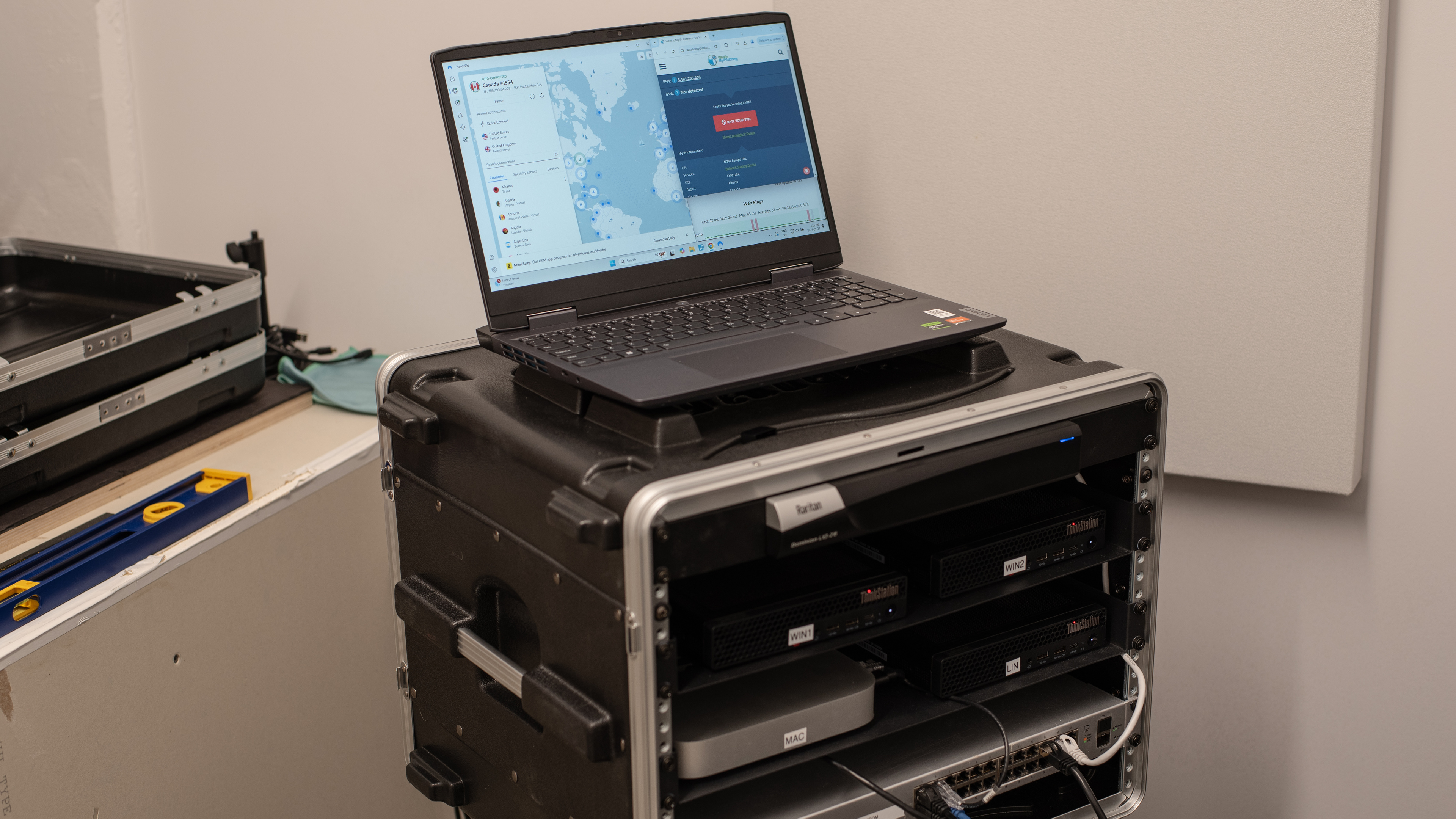
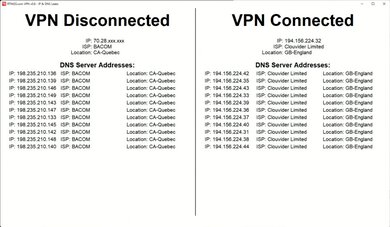
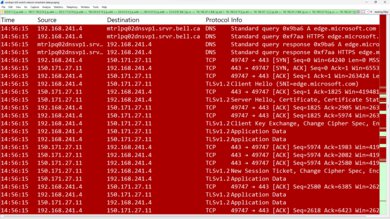
The kill switch doesn't work as intended, as network traffic leaks outside the VPN tunnel after a reboot. This can be problematic if you're concerned about keeping your traffic encrypted at all times, like when your system freezes, and you have to restart it.
If you're looking for a VPN service with a functional kill switch, check out FastestVPN or F-Secure VPN.
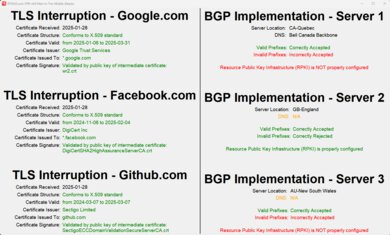
Like most VPN providers, NordVPN doesn't implement BGP properly. BGP primarily focuses on high-level internet routing rather than end-user traffic. As a result, it's only a concern for highly targeted and resource-intensive attacks that are feasible only for governments or large corporations to orchestrate.
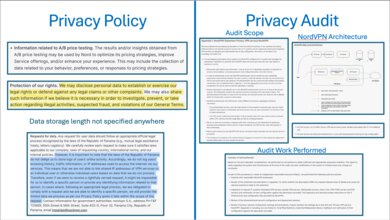
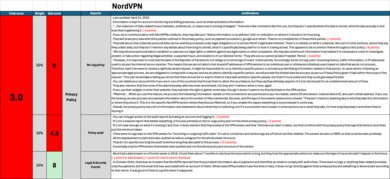
NordVPN has bad privacy policies. While it has a no-logs policy that guarantees no user traffic is recorded, several statements in the privacy policy indicate data collection and data sharing with numerous third parties, like payment processors and analytics platforms, but don't always specify which platforms. Many of these statements are vague and don't specify what data they collect, where they collect it from, or how long they store it for.
NordVPN commissions third-party audits to evaluate its no-logs policy and security infrastructure. While the results affirm that Nord upholds their policies, there are also some inconsistencies with the findings of the audit and the language present in Nord's policies. The scope of the audits is somewhat limited and lacks details like the time allotted for the auditors. Additionally, the full reports are only available to paying subscribers.
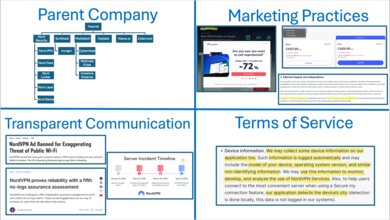
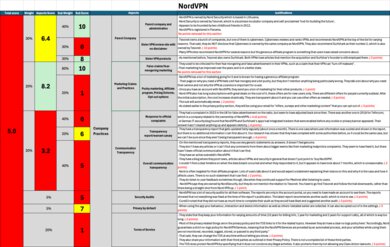
NordVPN has poor company practices overall. NordVPN's parent company, Nord Security, is part of Tesonet's portfolio of 'founded companies', but neither company is completely transparent about the exact nature of their relationship. Surfshark is also part of Tesonet's portfolio, although both companies claim they maintain operational independence. More concerning, however, is that VPN review sites like CyberNews are under the same umbrella where Nord and Surfshark are the most recommended services. This behavior, along with aggressive marketing, less-than-transparent communication, and a display of anti-consumer practices, suggests that Nord cares more about their bottom line than creating a better product for their users.
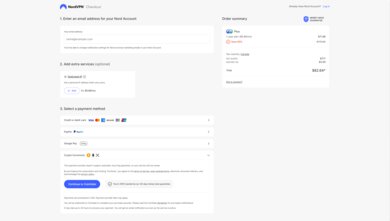
You can pay for NordVPN with Google Pay, credit card, debit card, PayPal, and a variety of different cryptocurrencies.
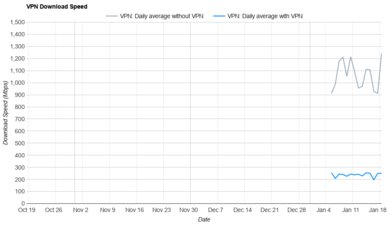
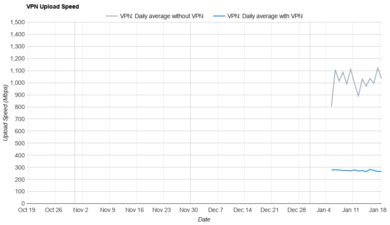
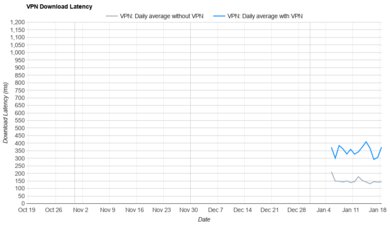
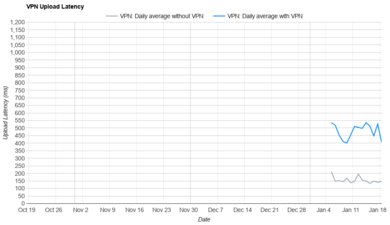
We're testing this VPN's performance on an ongoing basis, and will update the text for the download speed, upload speed, and latency tests when we have more data.
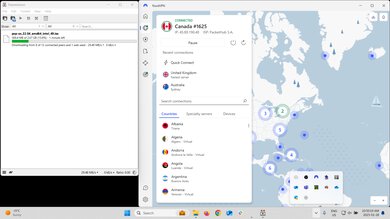
This VPN has native apps for a variety of different Linux distributions, and you can also configure it manually.
It's also available on various platforms, including iOS, Android, smart TVs, and as Chrome and Firefox extensions. You can also install it on your router, so all of your network traffic goes through the VPN.
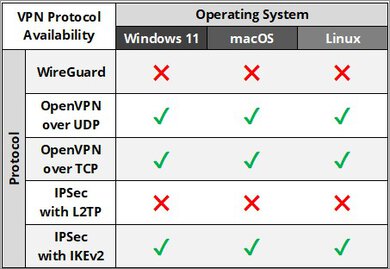
NordLynx is built around WireGuard, with the main difference being that it uses a 'double NAT' system that supposedly provides better anonymity for users connecting to their servers.