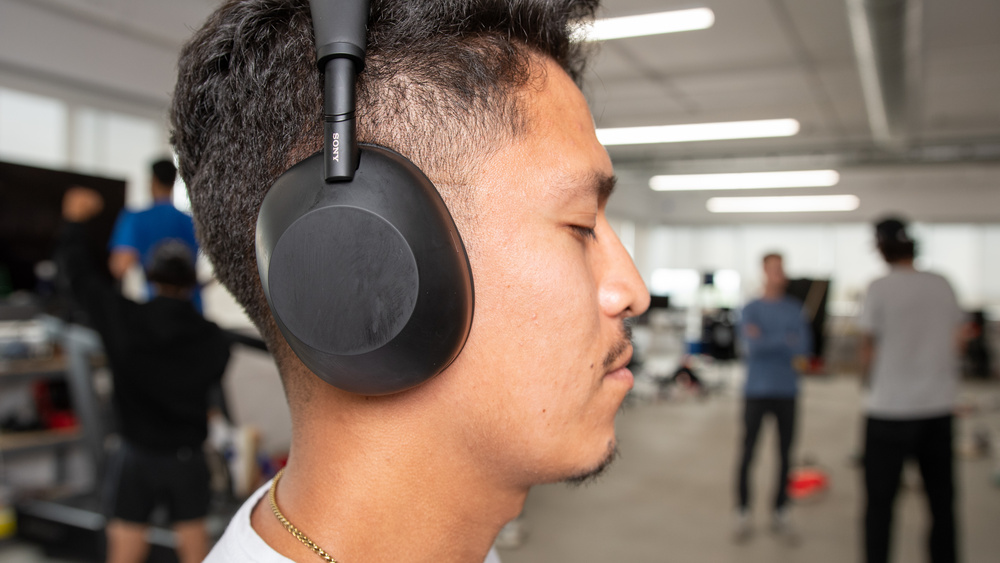
Whether you're looking to drown out the hum of an airplane engine while you recline in your seat or create your own personal bubble to lock in while in a busy office, you've probably seen or heard of headphones with active noise cancellation (ANC). But do you really know how it works? Don't worry, there's no shame in nodding along when familiar but mysterious acronyms are mentioned. Today, you'll find out how noise cancelling headphones operate, so you can impress your friends with niche technical knowledge at your next dinner party (trust us, it definitely works).
Test results
Basic Principles of ANC
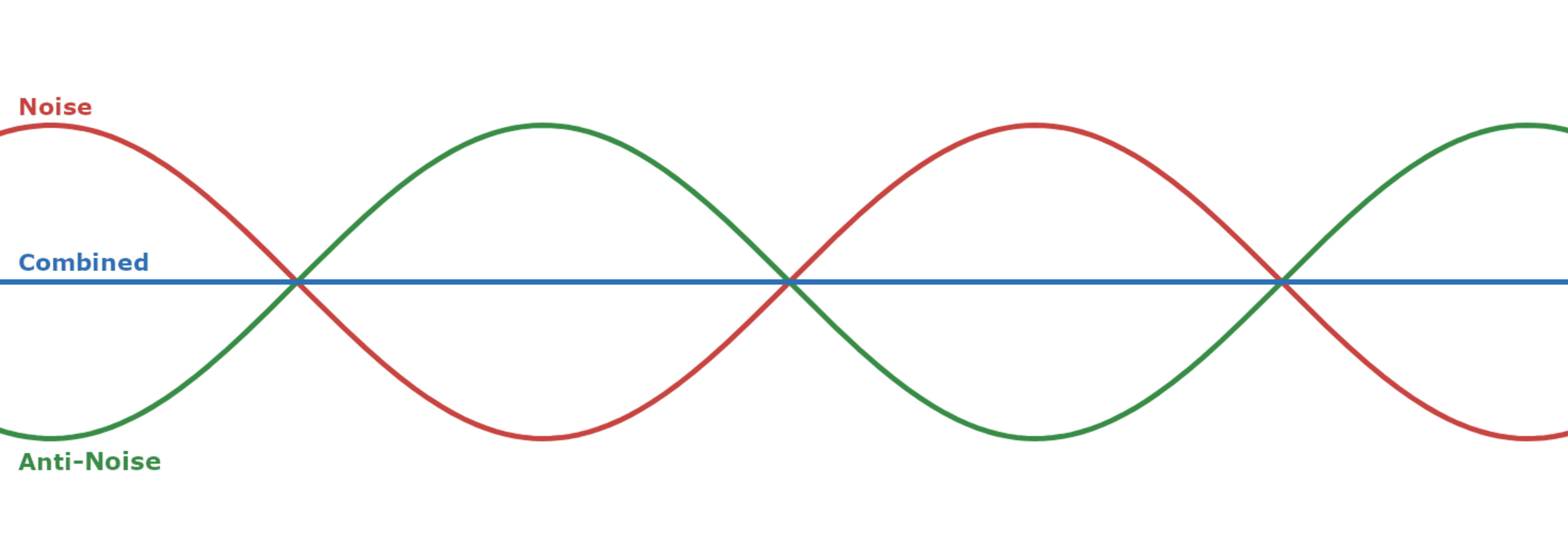
So, what is ANC? As you might've been clued in by the word 'active,' ANC is a fairly involved process where headphones (or other devices) use microphones to listen to the environment and generate 'anti-noise' using noise cancelling algorithms. This anti-noise is the inverse phase (time-shifted) wave of the identified noise and is emitted to cancel background sound waves through destructive interference, ideally resulting in silence; however, in practice, this works to varying degrees of success, depending on implementation and other factors like passive isolation (more on that later).
If that's all the information you need, you can check out some of our recommended noise cancelling headphones; otherwise, read on for more details.
Implementing ANC in Headphones
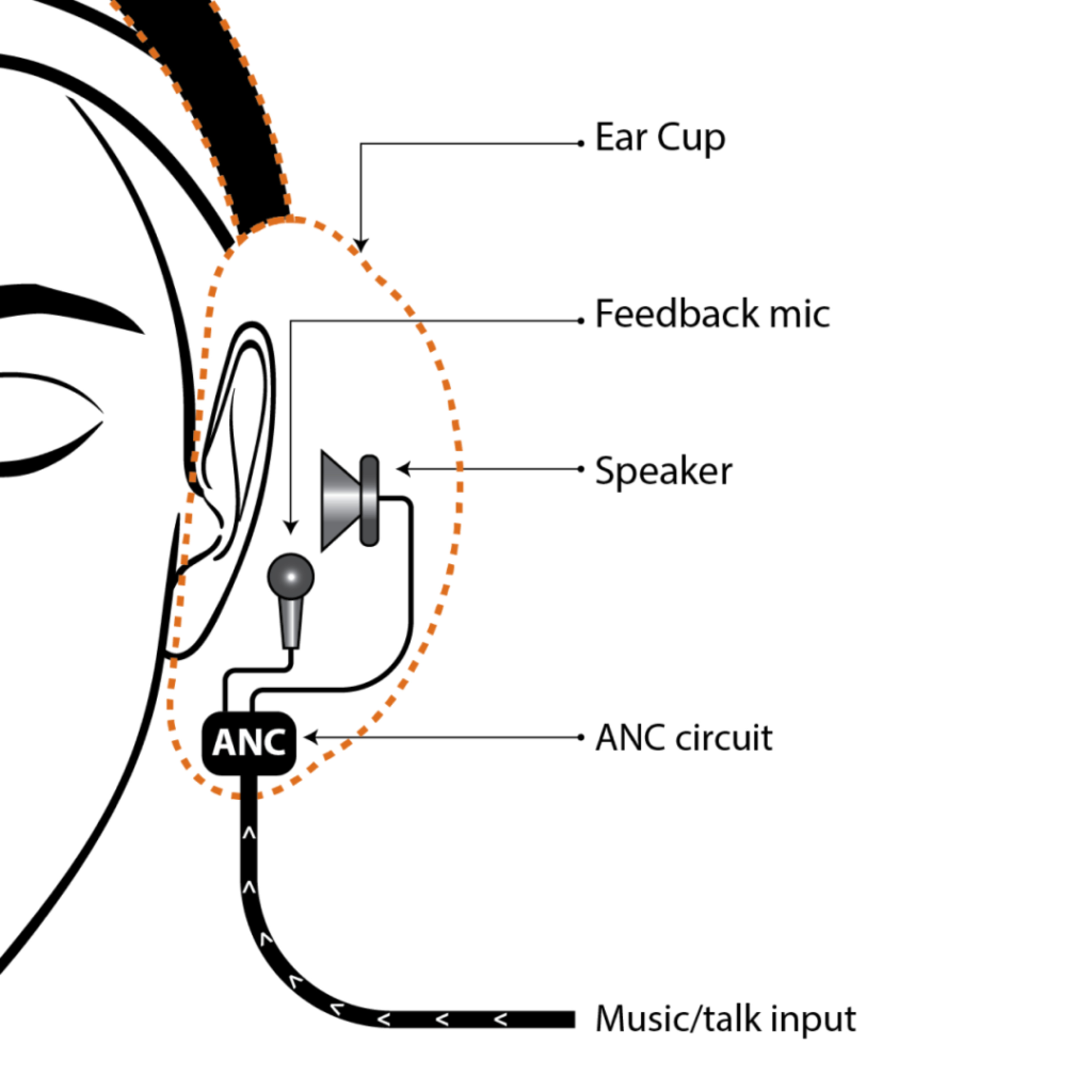
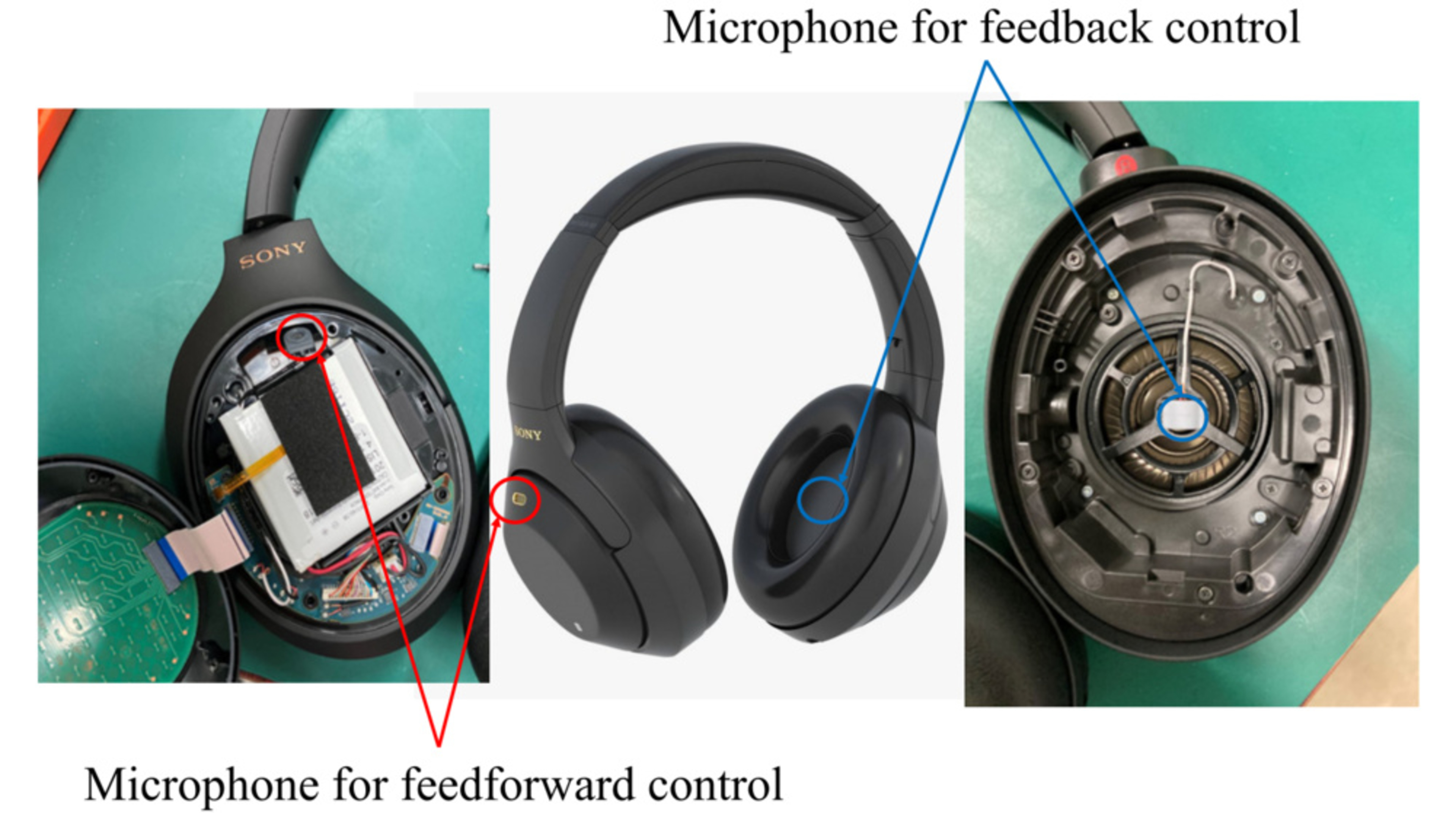
There are three primary types of ANC implementation in consumer ANC headphones: feedforward, feedback, and hybrid. Each name gives us a clue about the location of the microphones used to monitor the environment.
 |
 |
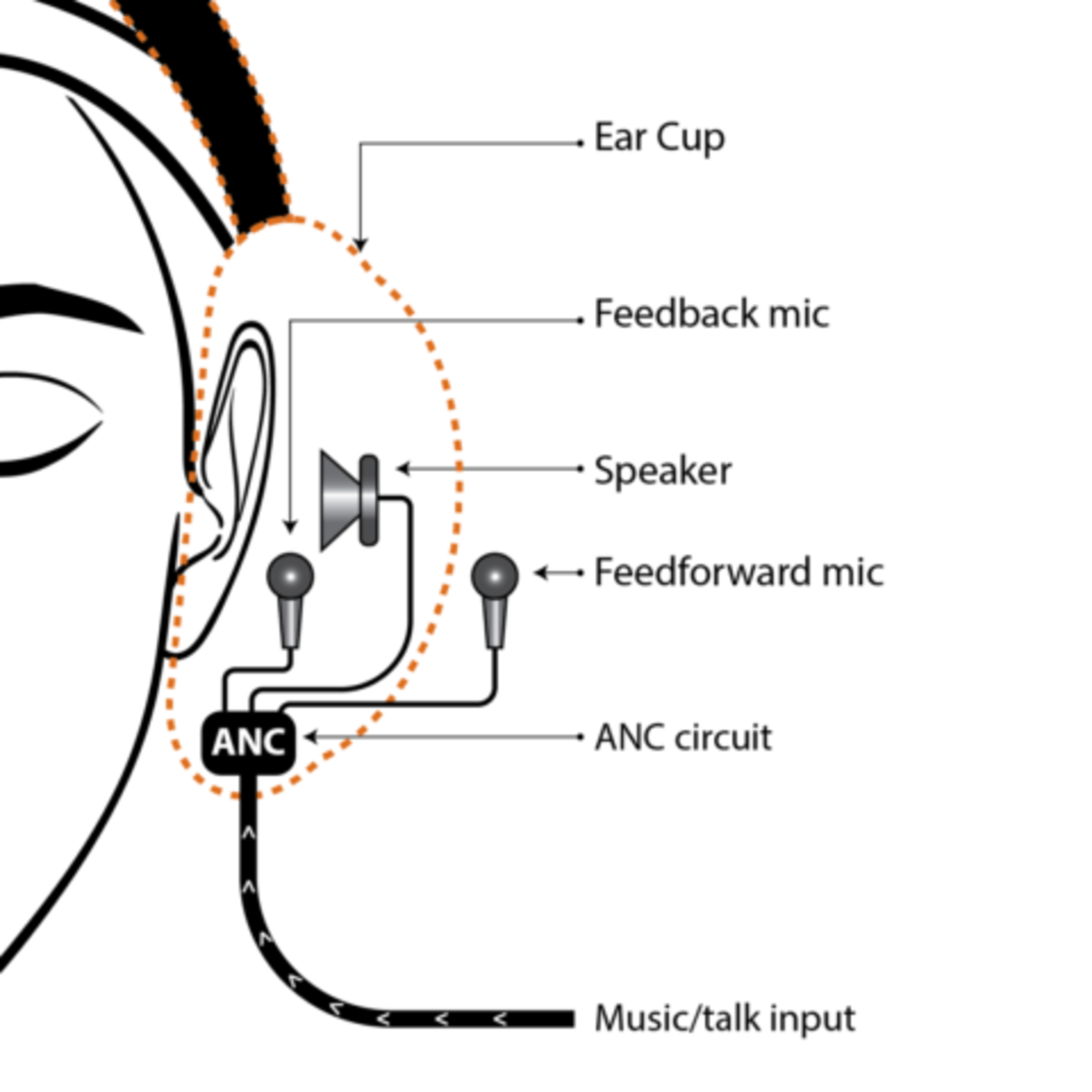 |
Feedforward ANC is the most common implementation, with microphones placed outside the ear cup (or ear canal for earbuds). Background noise is captured, processed by the ANC system, and anti-noise is played through the speaker.
Feedback ANC instead uses microphones placed inside the ear cup (or ear canal for earbuds). This method is more complex, as the microphone also picks up audio produced by the speaker. As a result, the ANC system must now filter out noise from your audio before determining what background noise to cancel.
Hybrid ANC, as you might have guessed, combines both approaches, with microphones inside and outside the ear cup (or ear canal for earbuds). This approach often results in the best performance and can be found in top-of-the-line ANC headphones.
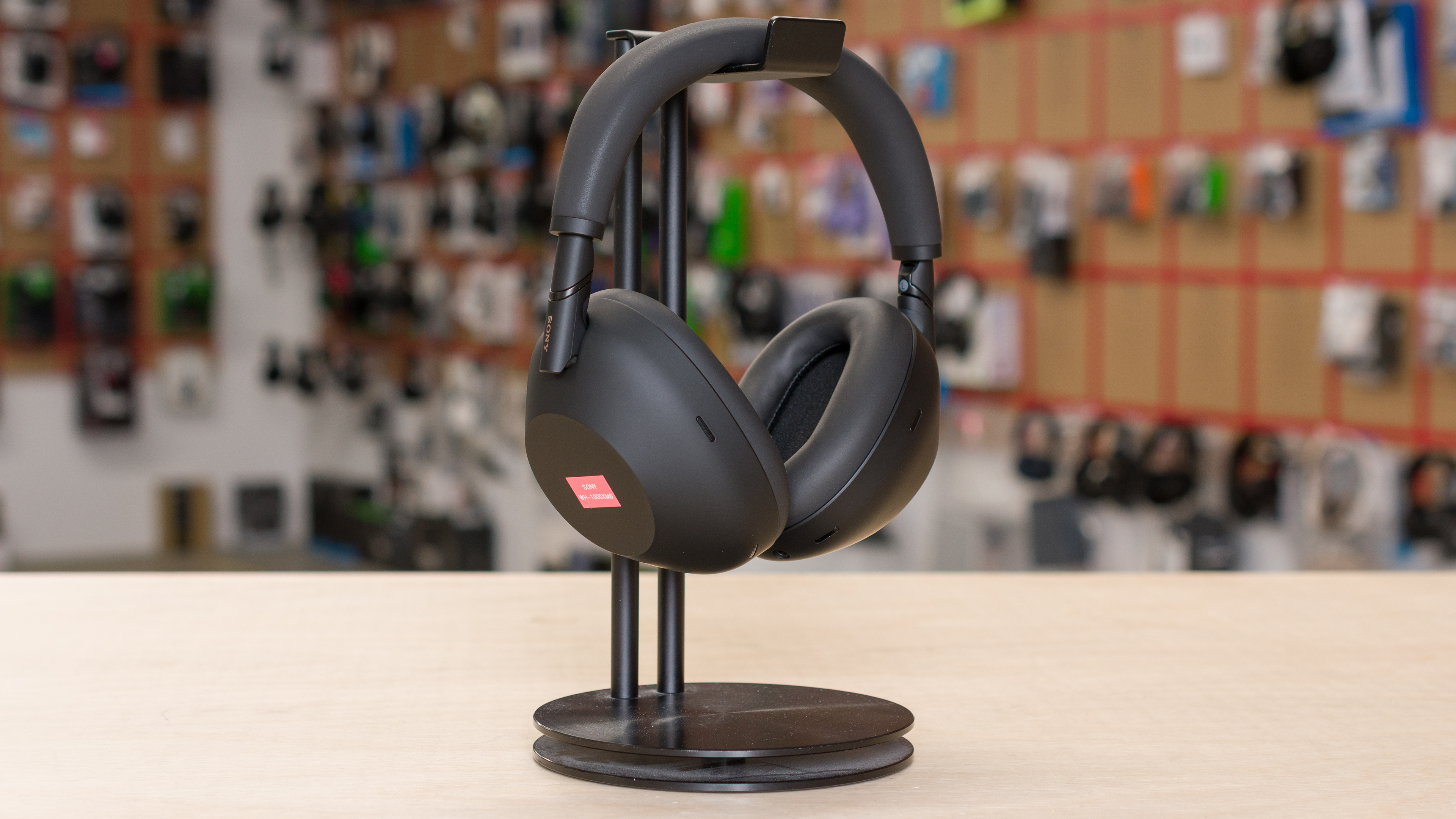
Manufacturers also have differing approaches to ANC implementation on the user-facing side. Some manufacturers offer an adaptive mode and presets (Anker Soundcore Space Q45 Wireless), transparency sliders (Technics EAH-AZ100), and even switch ANC based on your activity or location (Sony WH-1000XM6).

Passive Isolation vs Noise Cancelling
While ANC and the above systems, when implemented perfectly, should cancel out noise before it reaches your ears, the technology has limitations. For example, dealing with high-frequency noise is quite difficult; the short wavelengths can make processing, generating, and timing higher-frequency anti-noise more challenging. This is where passive isolation comes in.
Headphones (or earbuds) can dampen or block noise from entering your ears with their physical characteristics. This depends on several factors, including the materials used, shape, size, and seal of the headphones (or earbuds). We've measured the performance of earmuffs meant for hearing protection, and their combination of deep ear cups, high clamping force, thick foam padding, and well-sealing ear cups contributes to strong passive isolation. As you'd expect, most headphones that aim to attenuate noise in an effective capacity tend to have a closed rather than open design. However, there are outliers like the AirPods 4 with Active Noise Cancellation earbuds with a more open-enclosure that leverage noise cancellation to do some heavy lifting in the absence of a good ear tip seal.
 |
 |
That said, consumer headphones (and earbuds) meant for listening to music can't clamp as strongly on your head as earmuffs, otherwise they'd be uncomfortable to wear for longer periods. Plus, manufacturers must fit batteries, drivers, and other electronics into their headphone housing without creating a bulky abomination.
Instead, some of the best noise-isolating headphones (and earbuds) take inspiration from passive-only earmuffs in their choice of materials, opting for dense foams and leatherette. The foam's pliability allows earpads (or ear tips) to conform to your physical characteristics without leaving large gaps when you wear headphones (or earbuds). Meanwhile, leather or leatherette finishes typically provide a better seal as they're less permeable (check out our R&D article exploring the impact of headphone design on their noise attenuation capabilities for more info).
 |
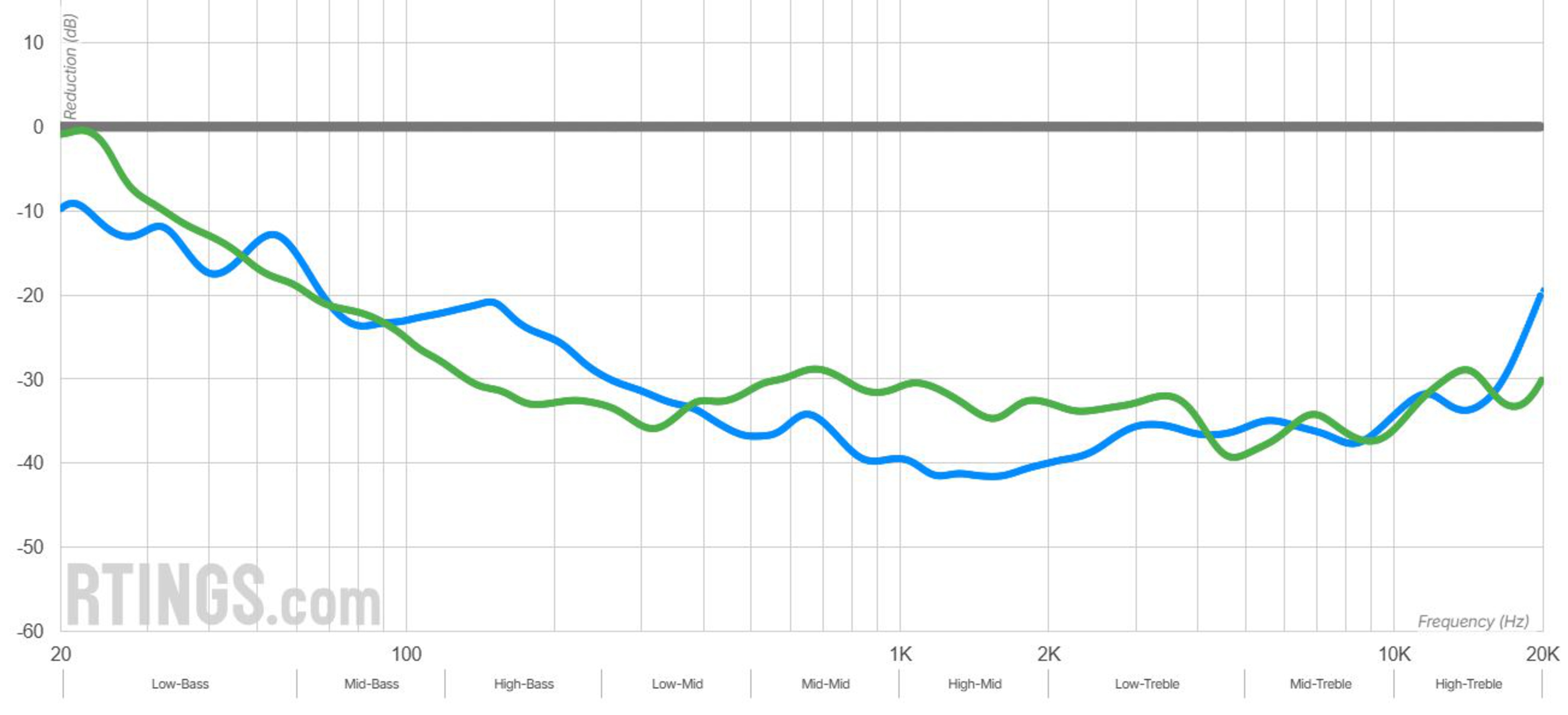 |
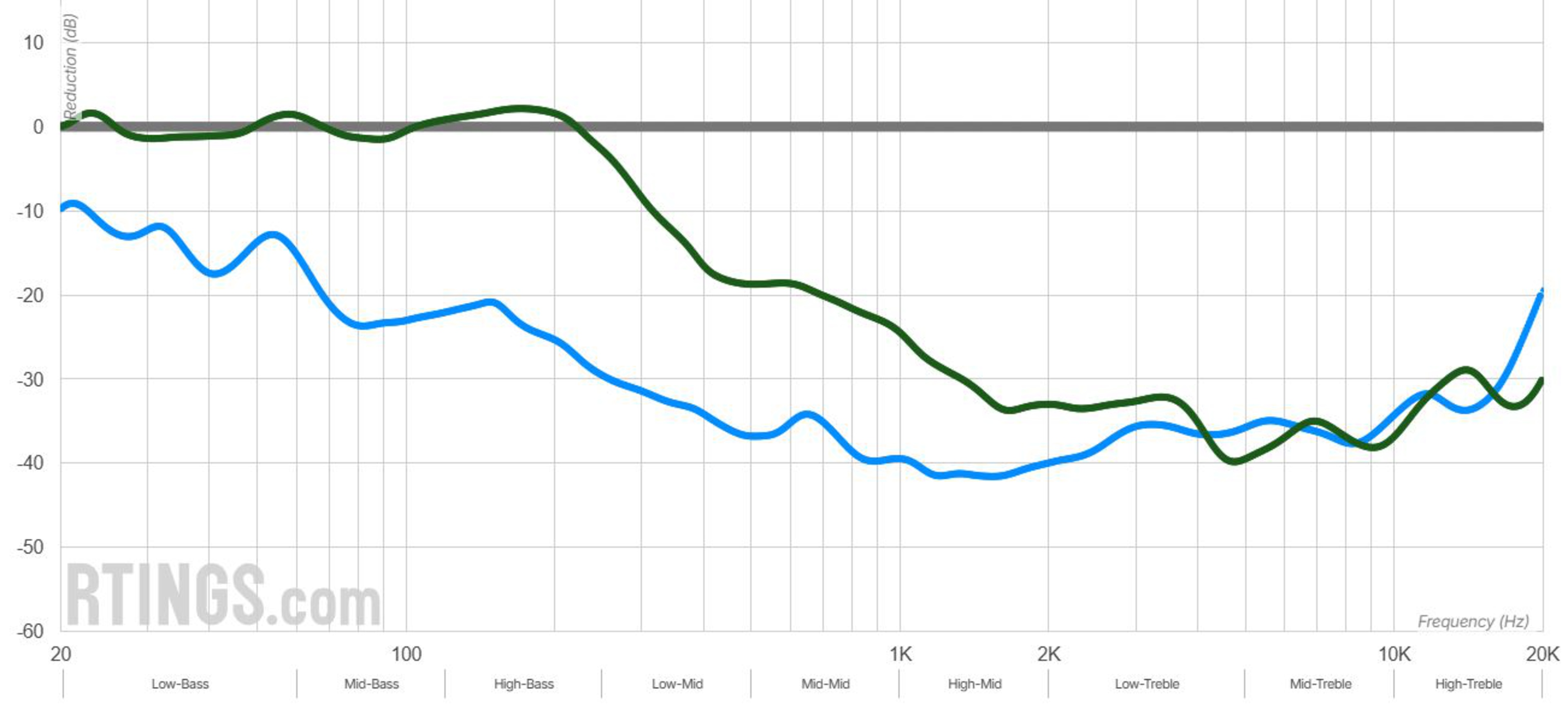
This approach allows modern headphones to take advantage of passive isolation for higher frequency noise (where ANC struggles to cancel sound) and focus their active system on mid and low frequencies, providing solid attenuation across the measured audio spectrum.
Wind Noise
While ANC is a powerful tool for attenuating noise, it's also not without its shortcomings. Some of the best noise cancelling headphones on the market are affected by a phenomenon called wind noise when their ANC is active. This is caused by wind interacting with the feedforward microphones outside the ear cups or ear canal.
Unlike typical background noise, wind noise occurs through the physical interaction of the wind with headphones. This is different from how wind typically interacts with trees or windows, which generates noise that can be attenuated normally.
When high-velocity wind hits a pair of headphones, it can create turbulent airflow, which creates a pressure differential over the microphones. This change in pressure is interpreted as noise, so the ANC system counters this imaginary noise with anti-noise. Additionally, the velocity and pressure at any given point are likely to be different, so if there are multiple feedforward microphones, each is registering a different imaginary noise. The end result is the speakers playing anti-noise for a sound that would never have made it to your ear, resulting in more noise than if the ANC were disabled.
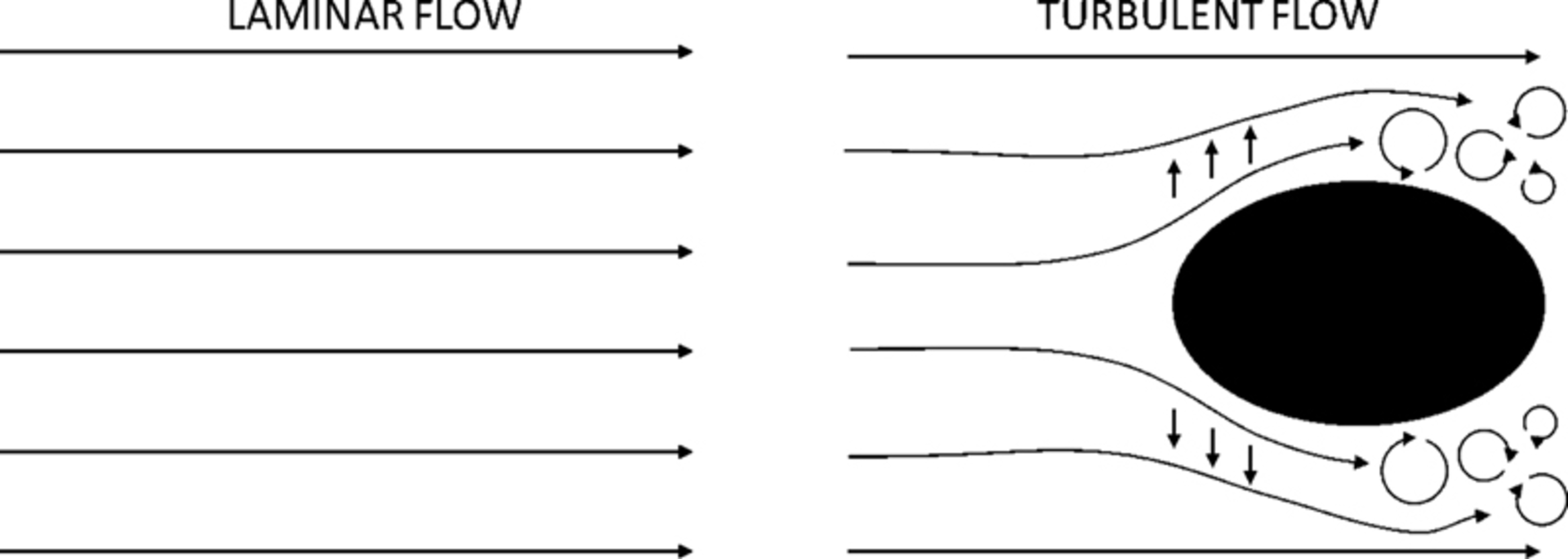
Manufacturers aim to deal with the issue in various ways, including muting external microphones or designing grilles that protect the mics from lower-velocity noise. Don't fret if your headphones don't have a wind noise reduction mode, though; most ANC-equipped products allow you to disable the system entirely. While you'll lose out on the attenuation of all other ambient sound, you might find the outcome preferable to the popping noise of your ANC system responding to phantom sounds.
Does ANC Affect Sound Signature?
Yes, it can, though this depends on the manufacturer's implementation of ANC. We typically measure the frequency response of headphones that have noise cancelling with the feature enabled as well as disabled, and link our results to the review. From the graphs, we can speculate that with the feature enabled, the headphones aren't pushing their drivers to the limits in case they need to produce low-frequency anti-noise.
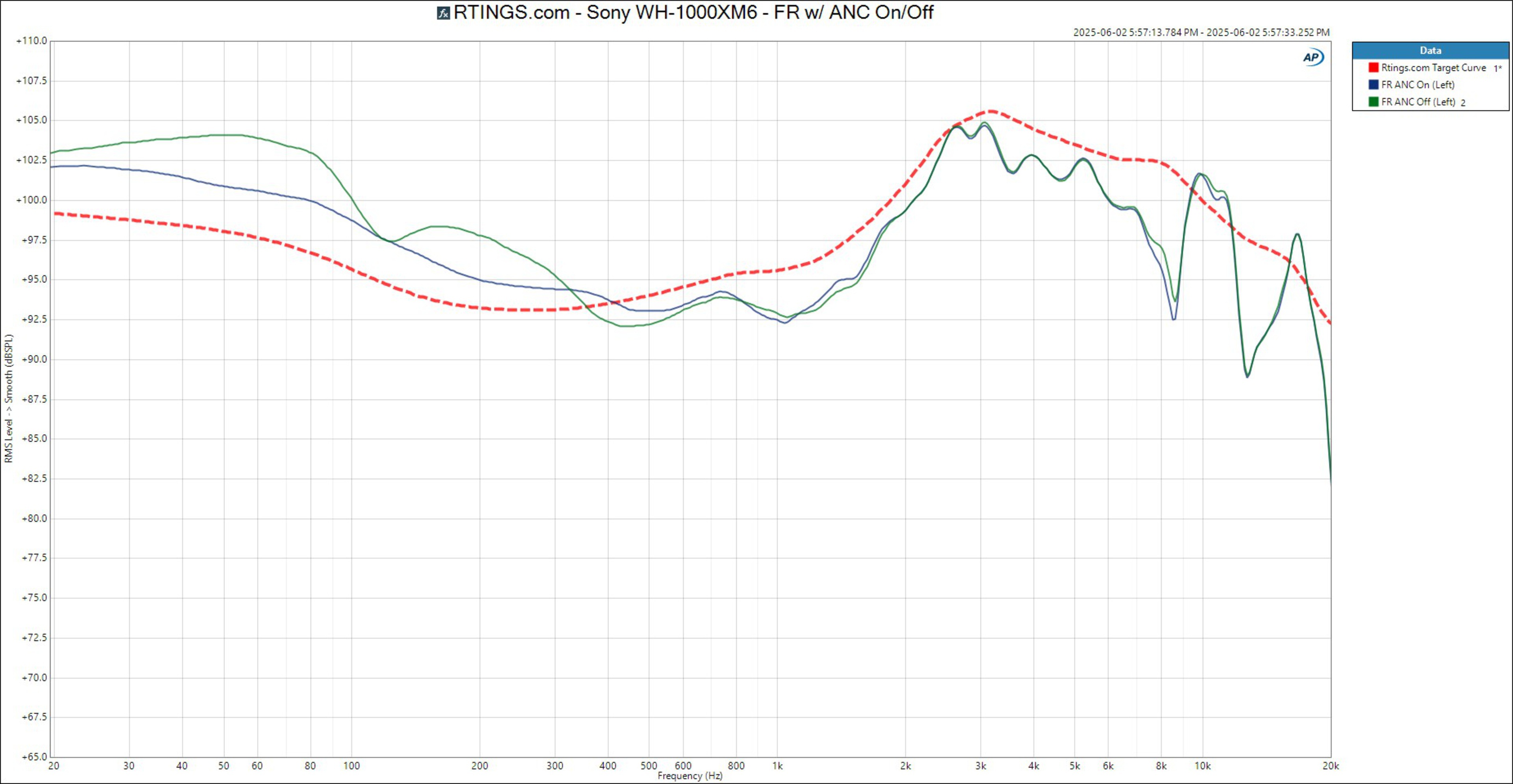 |
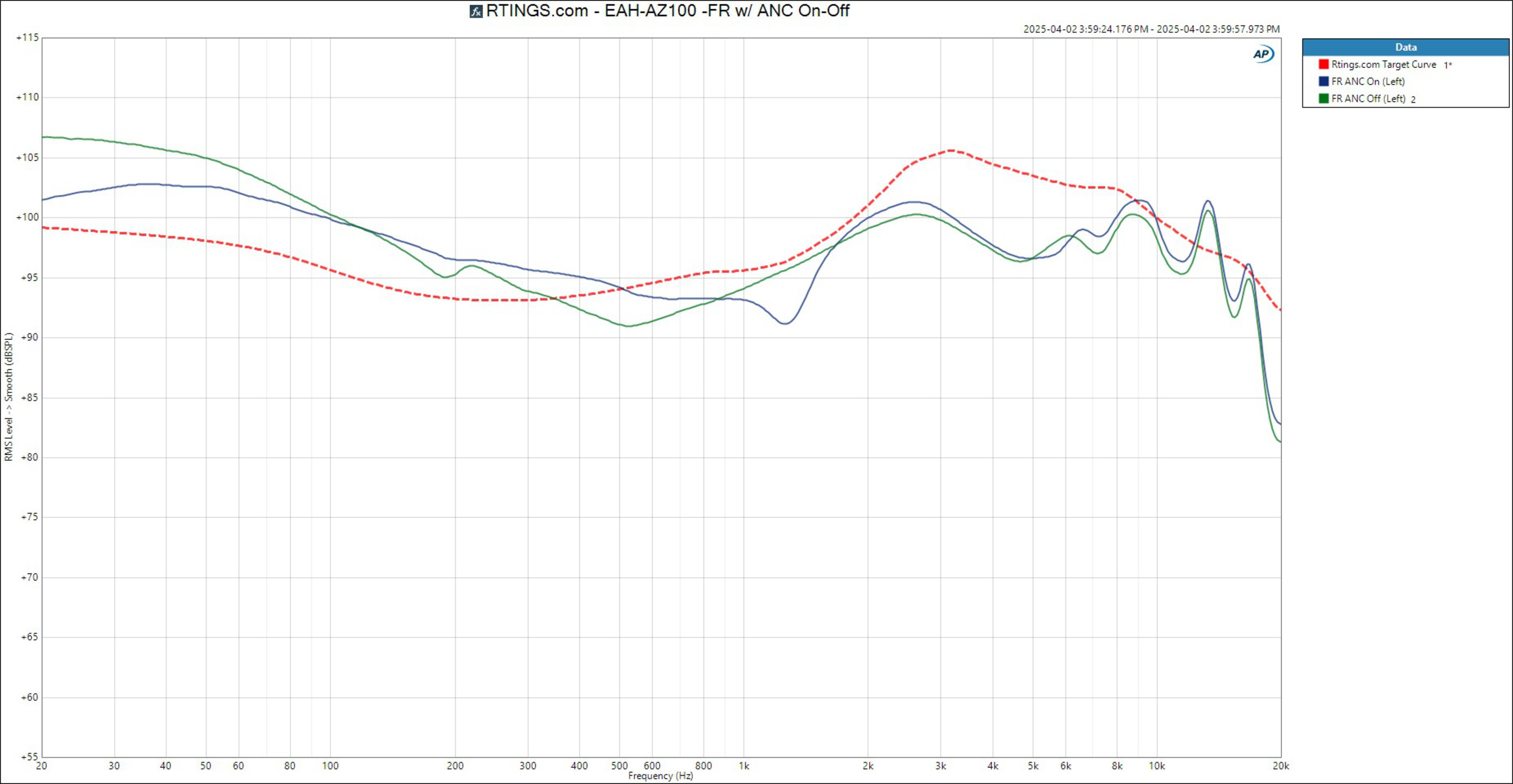 |
Does ANC Affect Battery Life?
Yes, it does. While we don't typically measure the performance of ANC-enabled headphones with the feature disabled, running the microphones, processing, and generating anti-noise will definitely drain your headphones' battery faster than if you had the feature disabled. It's also worth noting that, depending on your headphones' implementation of the feature, the amount of extra battery life drained can vary.
During continuous playback, for example, Sony advertises an eight-hour battery life with ANC enabled vs. a 12-hour battery life with ANC disabled for the Sony WF-1000XM5. Meanwhile, Technics advertises a 10-hour battery life with ANC enabled vs. a 12-hour battery life with ANC disabled for the Technics EAH-AZ100. It's worth pointing out that both manufacturers likely tested their products' battery life under differing conditions, so we shouldn't draw any definitive conclusions about their relative performance. This also demonstrates the value in objective, uniform measurements across manufacturers and products, which you can read more about in our How We Test Headphones article.
Conclusion
Now, the next time someone at the dinner table curiously asks, "What is noise cancelling?" you can chime in at a moment's notice, explaining the principles of anti-noise, the various implementations of ANC on headphones (or earbuds), and how turbid flow can trick external microphones into picking up non-existent noise. Just be careful you don't push your friends to put on their ANC-enabled headphones when you start talking.
Recent Updates
08/15/2025: We created the article to provide an introduction to active noise cancelling technology.