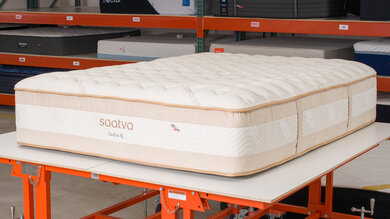
The Saatva Rx is a high-end innerspring mattress marketed as a responsive, pressure-relieving option for people with joint and back pain. It includes a comfort layer of micro coils as well as unusually designed support layer, with polyfoam cubes installed above each pocket coil.
This mattress has medium firmness overall, making it suitable for most side sleepers and lighter back and stomach sleepers. Lighter side sleepers may want something plusher for better pressure relief, while heavier back and stomach sleepers might want a firmer option for proper support. You sink deeply into the mattress's upper layers, but they don't contour your body closely, so you feel cradled but not hugged. It's moderately bouncy and extremely responsive, so it's easy to move around on and doesn't feel constricting.
Our Verdict
-
6.8Light Weight
-
8.2Average Weight
-
8.8Heavy Weight
Good firmness for average and lighter back and stomach sleepers.
Suitable for heavier side sleepers.
Sitting or sleeping on the edge is uncomfortable.
Too firm for average and lighter side sleepers.
-
8.1Light Weight
-
7.8Average Weight
-
7.4Heavy Weight
Good firmness for average and lighter back and stomach sleepers.
Suitable for heavier side sleepers.
Sitting or sleeping on the edge is uncomfortable.
Too firm for average and lighter side sleepers.
-
8.1Light Weight
-
7.7Average Weight
-
7.2Heavy Weight
Good firmness for average and lighter back and stomach sleepers.
Suitable for heavier side sleepers.
Sitting or sleeping on the edge is uncomfortable.
Too firm for average and lighter side sleepers.
Changelog
- Updated Mar 09, 2026: We converted this review to Test Bench 1.2. We've added sub-usages to the sleeping position usages in the Our Verdict section to clearly show the suitability of a mattress for your weight and sleeping position.
- Updated Feb 12, 2026: We converted this review to Test Bench 1.1. We've added new tests, including Body Conformity, Support, and Comfort Layers Envelopment, and also added scoring to the Bounciness test. Our usage scores have also changed, with new usages 'Side Sleeping,' 'Back Sleeping,' and 'Stomach Sleeping' replacing the 'Sleeping' verdict. We've also added 'Pressure Relief' and 'Support' performance usages. You can find more details in the full changelog.
-
Updated Oct 06, 2025:
We rewrote portions of this review to align with Test Bench 1.0.1, which adds a Longevity verdict and a score to the Foam Layer Mass Density box for users interested in the mattress's durability.
- Updated Oct 06, 2025: Converted this review to Test Bench 1.0.1. We've added scoring to the Foam Layer Mass Density section and a new 'Longevity' performance usage. Read more about it in our Changelog.
-
Updated Sep 18, 2025:
Added a note that the Helix Midnight Luxe 2025 has a better motion isolation performance.
-
Updated Aug 15, 2025:
We mentioned a recently reviewed mattress, the DreamCloud Hybrid (Canadian Version), in the Motion Isolation section for users looking for better performance in this area.
- Updated Aug 13, 2025: Review published.
- Updated Aug 05, 2025: Early access published.
- Updated Jul 16, 2025: Our testers have started testing this product.
Test Results
Longevity
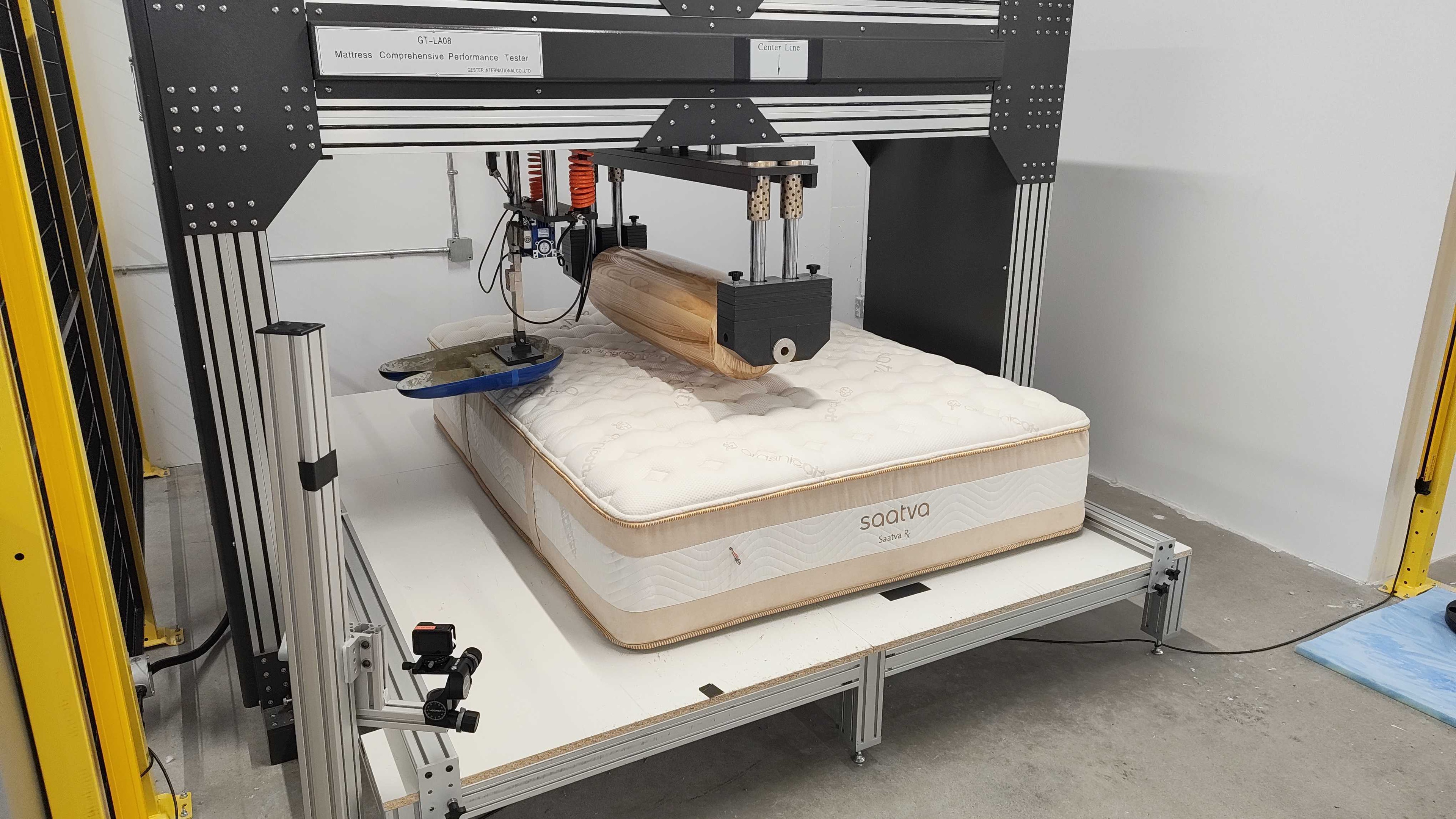
The Saatva Rx isn't very durable. Most of the foam in the mattress isn't dense enough to be considered good quality. The quilted top, upper comfort layer, and transition layer are made of lower-quality memory foam and polyfoam and are likely to form permanent indentations or start sagging sooner than higher-quality foams. That said, the foam cubes sewn onto the support springs are made of much more durable, high-quality polyfoam.
Good firmness for average and lighter back and stomach sleepers.
Suitable for heavier side sleepers.
Sitting or sleeping on the edge is uncomfortable.
Uses mostly low-density, less durable foam.
Too firm for average and lighter side sleepers.
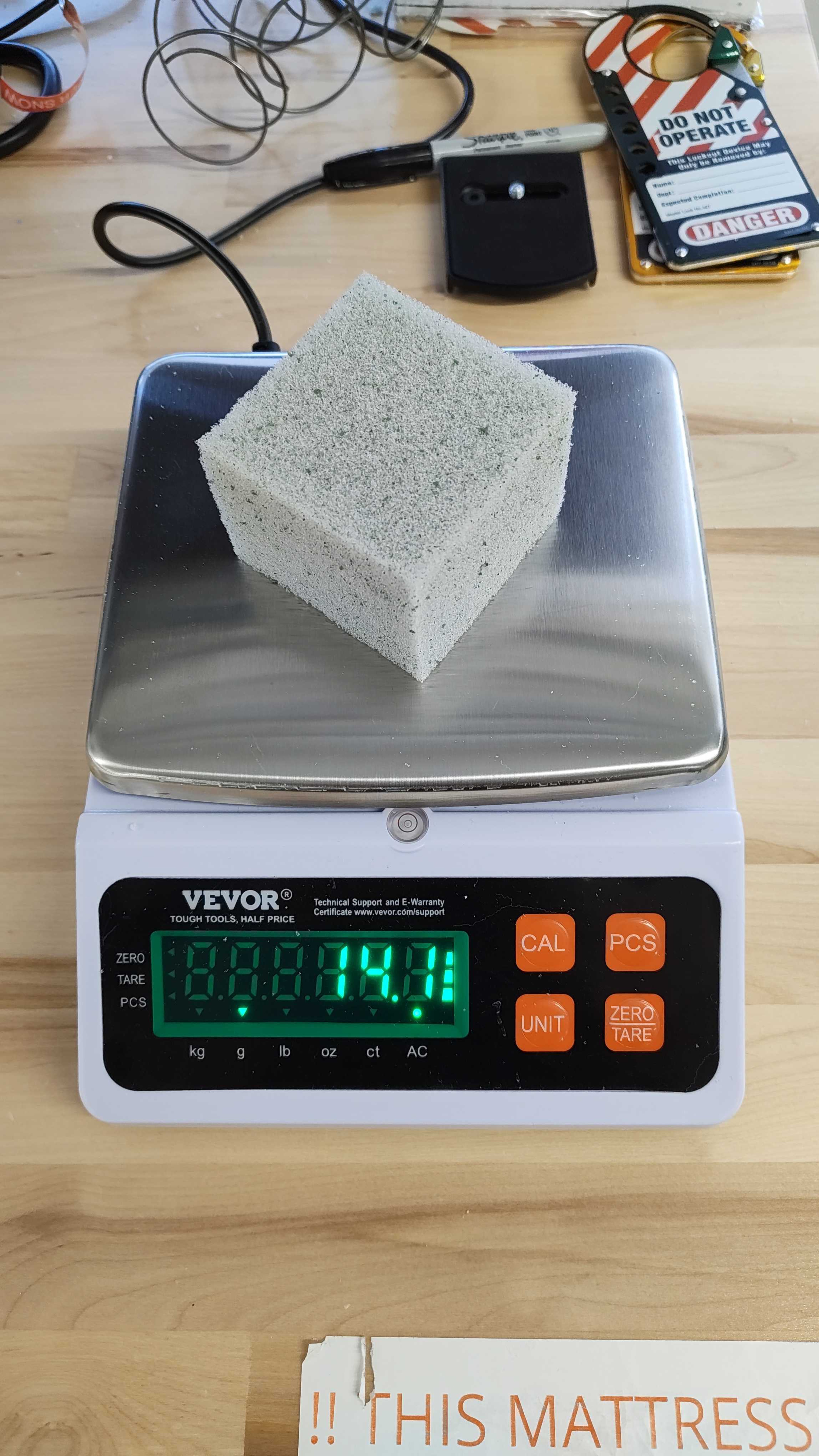
Most of the foam used is not dense enough to be considered good quality, including the polyfoam used for the quilted top, lower comfort layer, and transition layer, as well as the memory foam upper comfort layer. These foams aren't as durable as higher-quality foams and may start sagging or form permanent indentations sooner compared with denser polyfoam and memory foam. The exception is the foam cubes sewn into the support coils. These are made of dense polyfoam (55.3 kg/m³ or 3.5 lb/cu.ft), which suggests they will resist wear for longer.
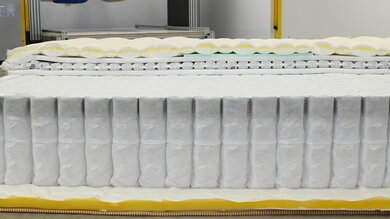
This mattress has multiple foam layers above its first layer of springs. The quilted top is made of soft polyfoam and fiber fill. Just below, there's a strip of memory foam in the lumbar area, which adds plushness and additional support for back sleepers. The lower comfort layer is made of firmer polyfoam. Just below it is a layer of short, soft coils, followed by a transition layer of polyfoam above the support coils.
Pressure Relief
Good firmness for average and lighter back and stomach sleepers.
Suitable for heavier side sleepers.
Sitting or sleeping on the edge is uncomfortable.
Too firm for average and lighter side sleepers.
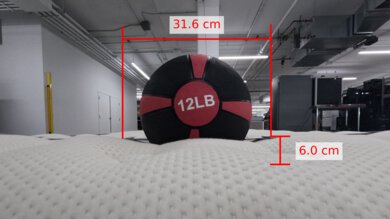
Support
Good firmness for average and lighter back and stomach sleepers.
Suitable for heavier side sleepers.
Sitting or sleeping on the edge is uncomfortable.
Too firm for average and lighter side sleepers.
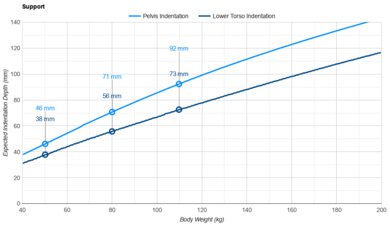
Cooling
The Saatva Rx has a good cooling performance. It dissipates enough heat to keep most people comfortable. However, it's only decent at dissipating heat when you first get into bed, so you may want to avoid it if you often have difficulty falling asleep because of overheating. It dissipates heat more efficiently overnight, so you're less likely to wake up hours later boiling hot.
Cooling enough for most people.
Good firmness for average and lighter back and stomach sleepers.
Suitable for heavier side sleepers.
Sitting or sleeping on the edge is uncomfortable.
Too firm for average and lighter side sleepers.
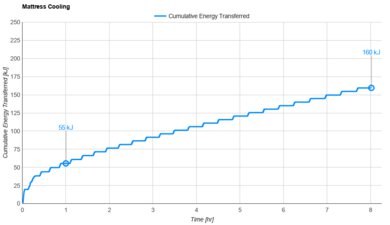
The Saatva Rx has a good cooling performance overall. While it feels somewhat warm during the first hour of sleep, it does a better job of dissipating heat overnight, so you won't continue to feel hotter and hotter. It's cooling enough for most people, but if you sleep hot, you probably want a mattress with better cooling, especially if your main issue is feeling hot as you're trying to fall asleep.
Motion Dissipation
The Saatva Rx has decent motion dissipation. You won't feel every small move your partner makes, but you will feel bigger movements across the mattress. Motion also doesn't dissipate very quickly, especially at the head and foot of the mattress. You might feel like you're bouncing around for a moment after someone rolls over or a pet jumps on the bed, which makes movement more likely to wake you up.
Good firmness for average and lighter back and stomach sleepers.
Suitable for heavier side sleepers.
Decent motion isolation, but not ideal for sleeping with a partner.
Sitting or sleeping on the edge is uncomfortable.
Too firm for average and lighter side sleepers.
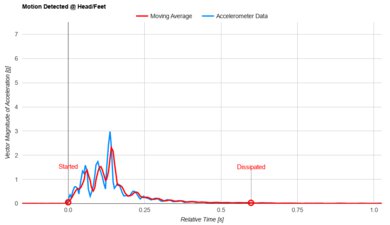
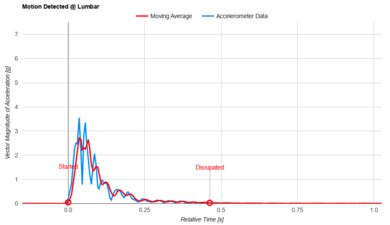
Its motion isolation performance is decent. You'll feel a lot of motion near its source. Less motion is transferred across the mattress, but you may feel larger movements, like your partner rolling over, at the head and foot of the mattress, as well as the lumbar area. Movement is somewhat slow to dissipate, which can create a feeling of the mattress wobbling after someone moves.
If you prioritize motion isolation, you might prefer a hybrid option like the DreamCloud Hybrid (Canadian Version) or Helix Midnight Luxe 2025.
Responsiveness
The Saatva Rx has incredible responsiveness. It recovers its shape extremely quickly after being compressed, so as you shift sleeping positions, it adapts to your body quickly, and you don't feel held in place.
Very responsive, so you don't feel stuck in place.
Good firmness for average and lighter back and stomach sleepers.
Suitable for heavier side sleepers.
Sitting or sleeping on the edge is uncomfortable.
Too firm for average and lighter side sleepers.
It's extremely responsive. The mattress recovers its shape almost immediately after being compressed, so you never feel stuck in place.
Neither layer of springs is very bouncy, but they still contribute to the mattress's moderate bounciness. Most of the foam layers are quite resilient or bouncy, which also helps give the mattress its overall bouncy feel.
This mattress is moderately bouncy. This is typical for mattresses with springs, and helps avoid the 'dead' feeling of some all-foam models, making it easier to move around in your sleep.
The Saatva Rx uses mostly resilient, or bouncy, foam. This contributes to the mattress's moderate bounciness, which makes it easier to move around in your sleep. The memory foam in the lumbar area is not very resilient, which is expected from memory foam, and you'll easily sink into it.
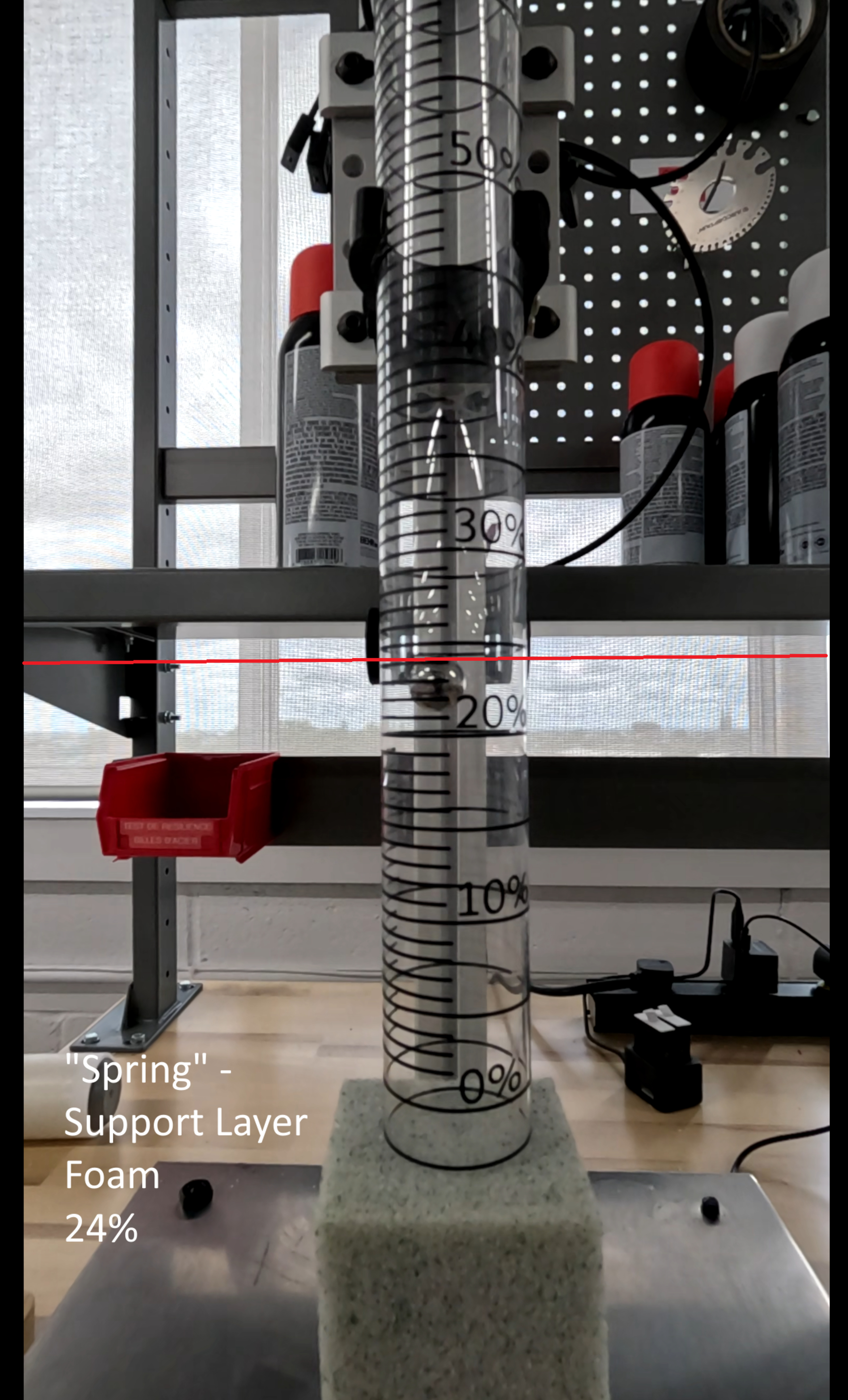
The foam cubes sewn onto the support coils are made of lower-resilience (24%) polyfoam. They aren't very firm, so if you compress the upper layers, they don't offer a lot of 'push back' and add pressure relief. Here's a photo of resilience testing for the foam cubes and a closer look at the foam separated from the coils.
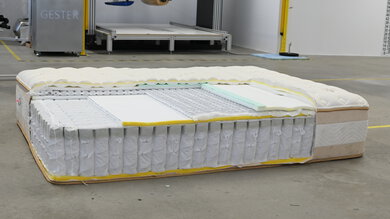
The Saatva Rx mattress is thick at about 15 inches (ours measured a little more). You'll probably need to use deep-pocket fitted sheets.
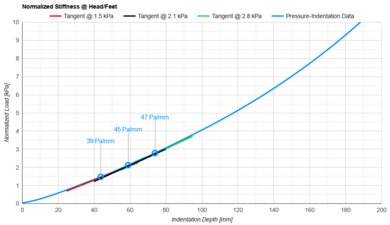
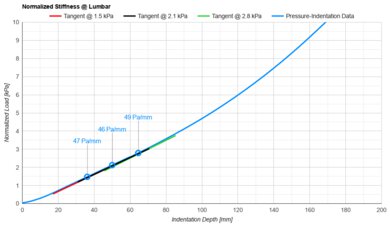
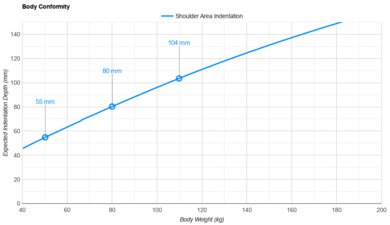
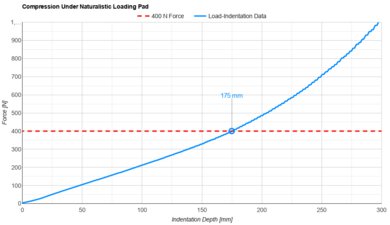
The Saatva Rx has medium firmness. This makes it suitable for average and lighter back and stomach sleepers as well as heavier side sleepers. However, lighter side sleepers may find it doesn't offer enough pressure relief for the shoulder area, while heavier back and stomach sleepers may find it doesn't offer enough support in the lumbar area.
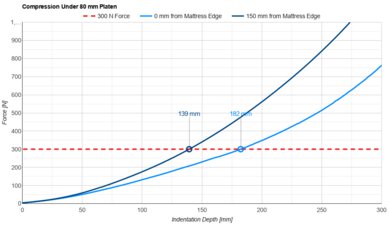
The edge support is sub-par. When you sit on the edge, it compresses a lot and creates a noticeable ramp outward. This makes it feel like you might slide off the mattress when sitting or sleeping near the edge. It also makes it more difficult to get in and out of bed, especially for people with mobility issues.
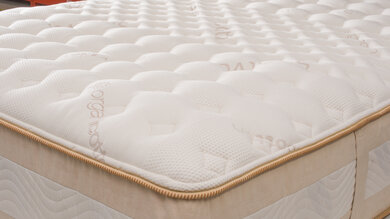
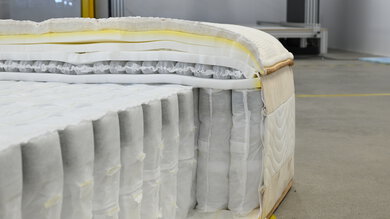
The support layer's edges are reinforced with 14-gauge pocket coils that appear similar to the rest of the support coils, but are taller. Still, it doesn't have good edge support.
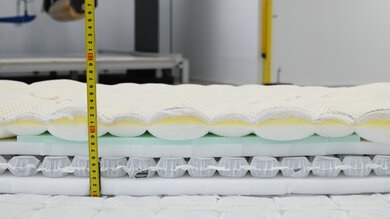
The quilted top is the thickest foam layer at 5.0 cm/2 inches. It's made of soft foam and fiber fill, and helps give the mattress its high sinking. The memory foam layer in the lumbar area is very thin, but it may help add padding under your lower back if you sleep on your back, or help with pressure relief for your hips if you sleep on your side. The polyfoam transition layer is firmer and helps keep you from feeling the individual comfort layer springs.
There's another thin layer of polyfoam (1.9 cm/0.7 inches) under the comfort layer springs. Those who compress the upper layers will also sink into it, and it helps with pressure relief.
Each individual support coil has a square of polyfoam sewn into the pocket above it. These cubes are 5.0 cm/2 inches high and help give the support coil layer a soft feel overall. If you compress the layers above, they will help relieve pressure for the heavier parts of your body.
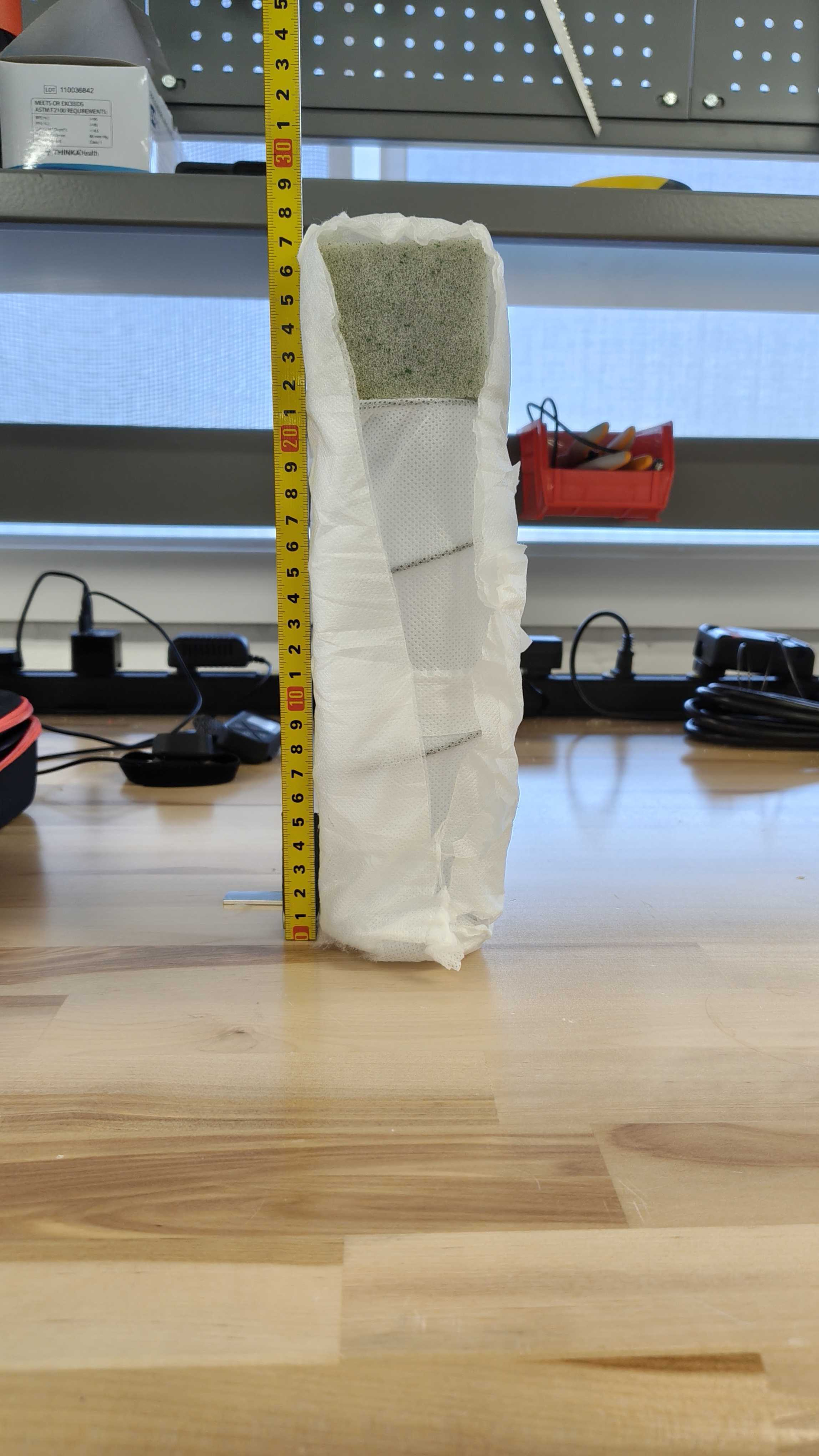
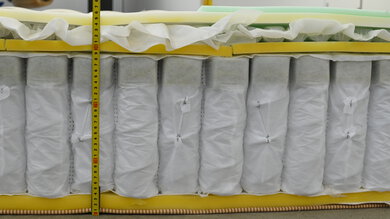
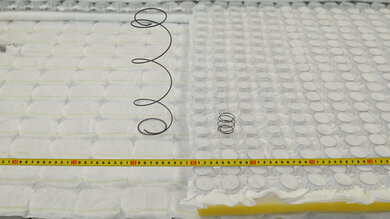
The comfort springs are a dense layer of short, soft 18-gauge springs. These pocket coils can each be individually compressed and help with contouring. They're easily compressed, so they feel soft. The support layer is made up of 14-gauge springs. This layer is less dense but much firmer, and adds support for the heavier parts of your body.
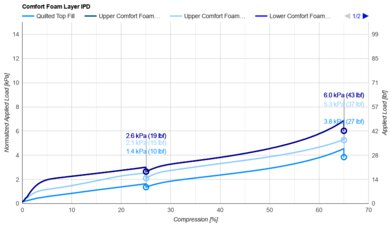
The foam used for the quilted top is the softest foam in the mattress. It's also quite a thick layer at 5.0 cm/2 inches, and contributes to the mattress's high sinking. The strip of memory foam in the lumbar area has medium firmness. The polyfoam layer below is a little firmer and helps prevent you from feeling the individual comfort springs. The polyfoam layer below is slightly firmer. It helps add support if you compress the springs fully.
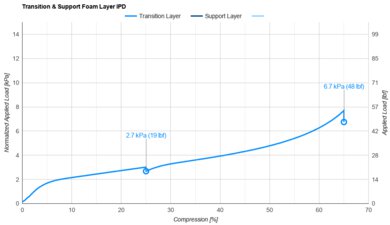
Unusually, every pocket coil in the support layer has a cube of polyfoam sewn into the pocket above it. Saatva calls the cubes Rx Foam Modules and says the design helps improve motion isolation and contouring versus a solid layer of foam. The cubes are made of polyfoam with a medium firmness. Here are the support layer IPD graph and the support foam firmness results.
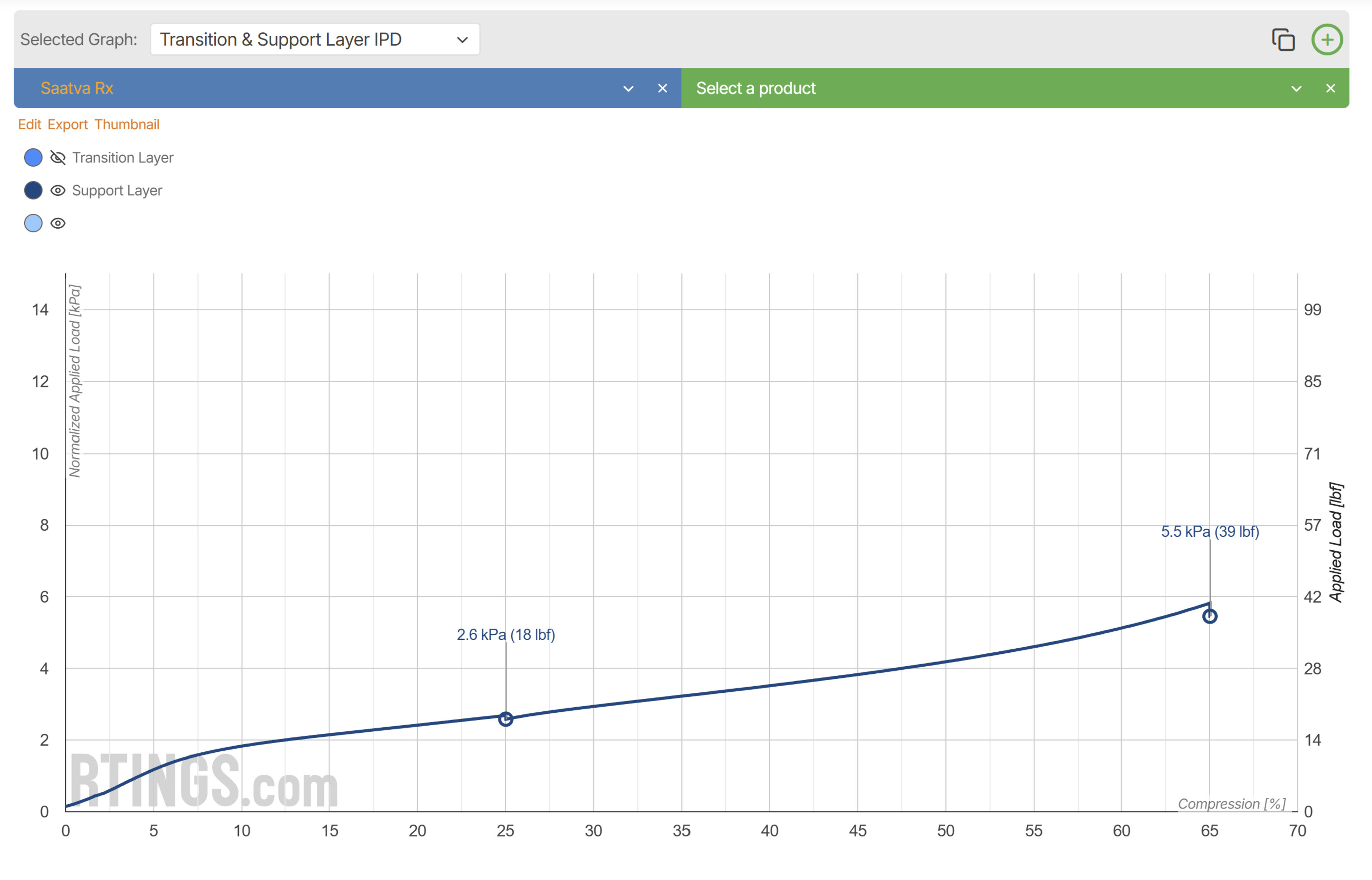

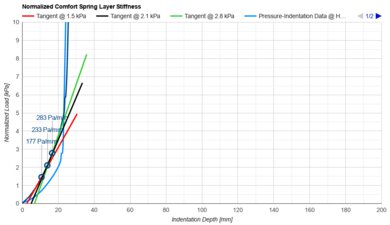
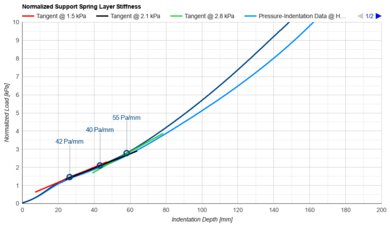
The comfort springs are very short, and compress fully before we're able to gather data for the stiffness result. That said, they are easily compressed and help with contouring and pressure relief.
We measured the stiffness of the support layer springs with the polyfoam cubes still in place. Together, the springs and the medium-firm polyfoam create a soft support layer. If you compress the upper layers, you'll sink quite easily into the polyfoam cubes, which will help with pressure relief and contouring.
Popular Mattress Comparisons
The Saatva Rx is an innerspring mattress with a medium firmness level. You sink deeply into it, but it contours your body less compared to most mattresses and is very responsive, so you don't feel hugged or constricted. However, it doesn't really stand out for its performance otherwise. Its motion isolation and cooling performances are just decent and similar to the Saatva Classic (Luxury Firm) mattress's, which also offers significantly better edge support. The Boring Mattress has the same medium firmness level and offers better cooling, motion isolation, and edge support, although its upper layers don't feel as pillowy. The Stearns & Foster Lux is also a good option with better cooling and motion isolation. It's more contouring and has a medium-plush firmness level, so it's better-suited for lighter side sleepers.
If you're looking for a recommendation, check out the best mattresses for side sleepers or our picks for the best mattresses overall.
The Saatva Rx and Helix Midnight Luxe 2025 have different strengths. The Saatva provides more support for back and stomach sleepers. It has a bouncier, more responsive feel, which makes it easier to move around on. On the other hand, the Helix has a more enveloping feel and offers better pressure relief for side sleep. It has the edge in cooling and motion dissipation, and it also features denser, more durable foam that'll help it resist sagging over time.
The Saatva Classic (Luxury Firm) with the double pocket-coil design is a little better than the Saatva Rx. They perform quite similarly, but the Classic has much better edge support, so you can easily get in and out of bed or comfortably sleep near the edge. The Classic is a little bouncier, which gives it a springy feel and makes changing sleeping positions feel effortless. However, you sink more deeply into the Rx's upper layers, which you might prefer if you like the feeling of being 'in' your mattress versus 'on' it.
The Tempur-Pedic TEMPUR-Adapt and the Saatva Rx are both medium mattresses suitable for most side sleepers, and you may prefer either depending on your preferences. The Tempur-Pedic is an all-foam mattress with memory foam, so it's highly contouring, but responds slowly and may make you feel constricted. That said, it stands out for its fantastic motion isolation, which is great if your partner's movements often wake you. The Saatva is very responsive and has low contouring, so you won't feel hugged or stuck in place.
You may prefer either the Casper Snow or the Saatva Rx. They have a similar medium firmness level, and both have high sinking, so you feel slightly enveloped by the mattress. The Casper utilizes memory foam for its comfort layers, which helps provide a more contouring feel and better motion isolation performance. It's also a much better choice for hot sleepers. The Saatva is much more responsive, however, so it's a better option if you don't like the slow-moving feel of memory foam.
The Purple RestorePlus Hybrid offers a better performance than the Saatva Rx. The Purple is significantly more cooling, making it more suitable for hot sleepers. It offers better edge support and motion dissipation and uses denser, better-quality foam.
The Beautyrest Black is a little better than the Saatva Rx. Both mattresses have a medium firmness level and are suitable for most side sleepers. They're moderately bouncy and very responsive, so it's easy to change sleeping positions. The Beautyrest has significantly better edge support, making it more comfortable to sit and sleep on the side of the mattress. It also offers better motion isolation. That said, the Saatva has better cooling. You sink deeper into it, so you might prefer it if you like feeling slightly enveloped by your mattress.
Differences Between Sizes And Variants
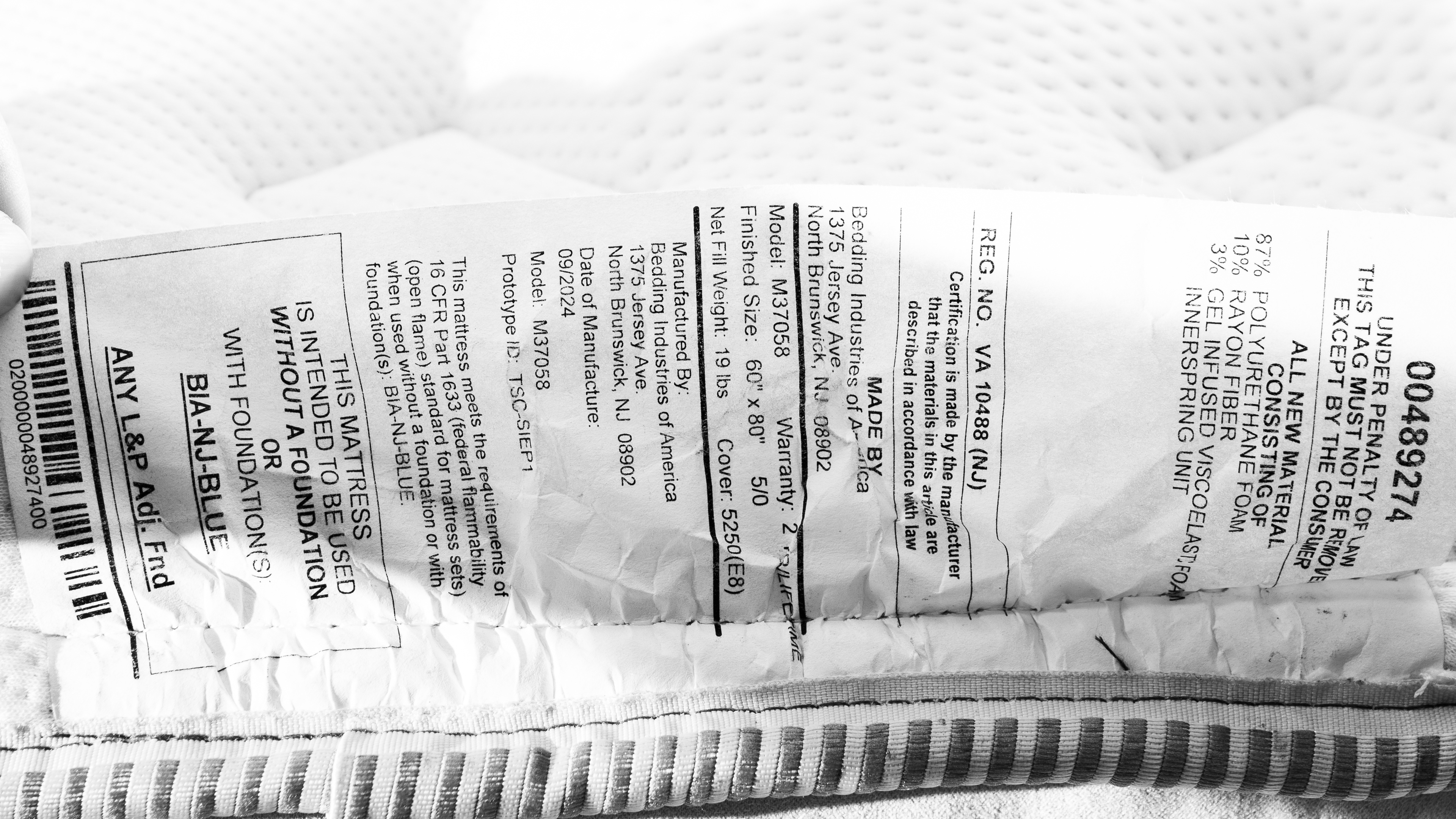
The Saatva Rx comes in standard sizes: Twin, Twin XL, Full, Queen, King, California King, and Split California King. It's available in one firmness option, 'Supportive Plush', which corresponds with a medium plush mattress on Saatva's scale. We tested a Queen-sized model, and you can see our unit's label. Our results are only valid for that size.
If you have experience with the Saatva Rx or a variant, we invite you to share your experience in the comments.