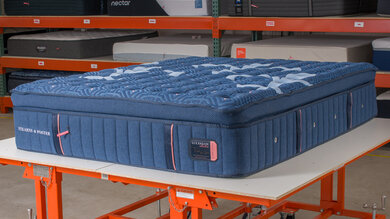
The Stearns and Foster Lux Estate is a high-end hybrid mattress. It includes pocket coils in both its comfort and support layers. Latex, memory foam, and springs in its comfort layers make for a high-profile (14.5-inch) mattress.
This mattress's 'Medium' variant has a medium-plush feel, making it well-suited for side sleepers and some lighter back and stomach sleepers, while average to large back and stomach sleepers may need something firmer. While it has a plush feel, you don't sink very deeply into it. It contours your body lightly but doesn't hug you. This hybrid mattress has a moderate amount of bounce, which helps make it easier to change sleeping positions, but it doesn't feel extremely bouncy or springy.
Our Verdict
-
6.7Light Weight
-
8.2Average Weight
-
8.7Heavy Weight
Great edge support.
Good for most side sleepers.
Uses some good quality foams.
May be too plush for back and stomach sleepers and heavier side sleepers.
-
7.0Light Weight
-
6.7Average Weight
-
6.7Heavy Weight
Great edge support.
Good for most side sleepers.
Uses some good quality foams.
May be too plush for back and stomach sleepers and heavier side sleepers.
-
6.8Light Weight
-
6.4Average Weight
-
6.3Heavy Weight
Great edge support.
Good for most side sleepers.
Uses some good quality foams.
May be too plush for back and stomach sleepers and heavier side sleepers.
Changelog
-
Updated Jun 22, 2026:
We mentioned the newly reviewed Kirkland Stearns & Foster Pillow Top Lakeridge in the Edge Support box for people looking for better performance.
- Updated Mar 09, 2026: We converted this review to Test Bench 1.2. We've added sub-usages to the sleeping position usages in the Our Verdict section to clearly show the suitability of a mattress for your weight and sleeping position.
- Updated Feb 12, 2026: We converted this review to Test Bench 1.1. We've added new tests, including Body Conformity, Support, and Comfort Layers Envelopment, and also added scoring to the Bounciness test. Our usage scores have also changed, with new usages 'Side Sleeping,' 'Back Sleeping,' and 'Stomach Sleeping' replacing the 'Sleeping' verdict. We've also added 'Pressure Relief' and 'Support' performance usages. You can find more details in the full changelog.
-
Updated Jan 20, 2026:
We mentioned the Boring Hybrid in the Foam Layer Mass Density box for users looking for a more durable mattress.
-
Updated Oct 06, 2025:
We rewrote portions of this review to align with Test Bench 1.0.1, which adds a Longevity verdict and a score to the Foam Layer Mass Density box for users interested in the mattress's durability.
- Updated Oct 06, 2025: Converted this review to Test Bench 1.0.1. We've added scoring to the Foam Layer Mass Density section and a new 'Longevity' performance usage. Read more about it in our Changelog.
-
Updated Aug 13, 2025:
Added a note that the newly reviewed Saatva Rx has a higher sinking level in Sinking & Contouring.
-
Updated Jul 31, 2025:
Compared its edge support performance to the Sealy Posturepedic Hybrid's.
- Updated Jul 15, 2025: Review published.
Test Results
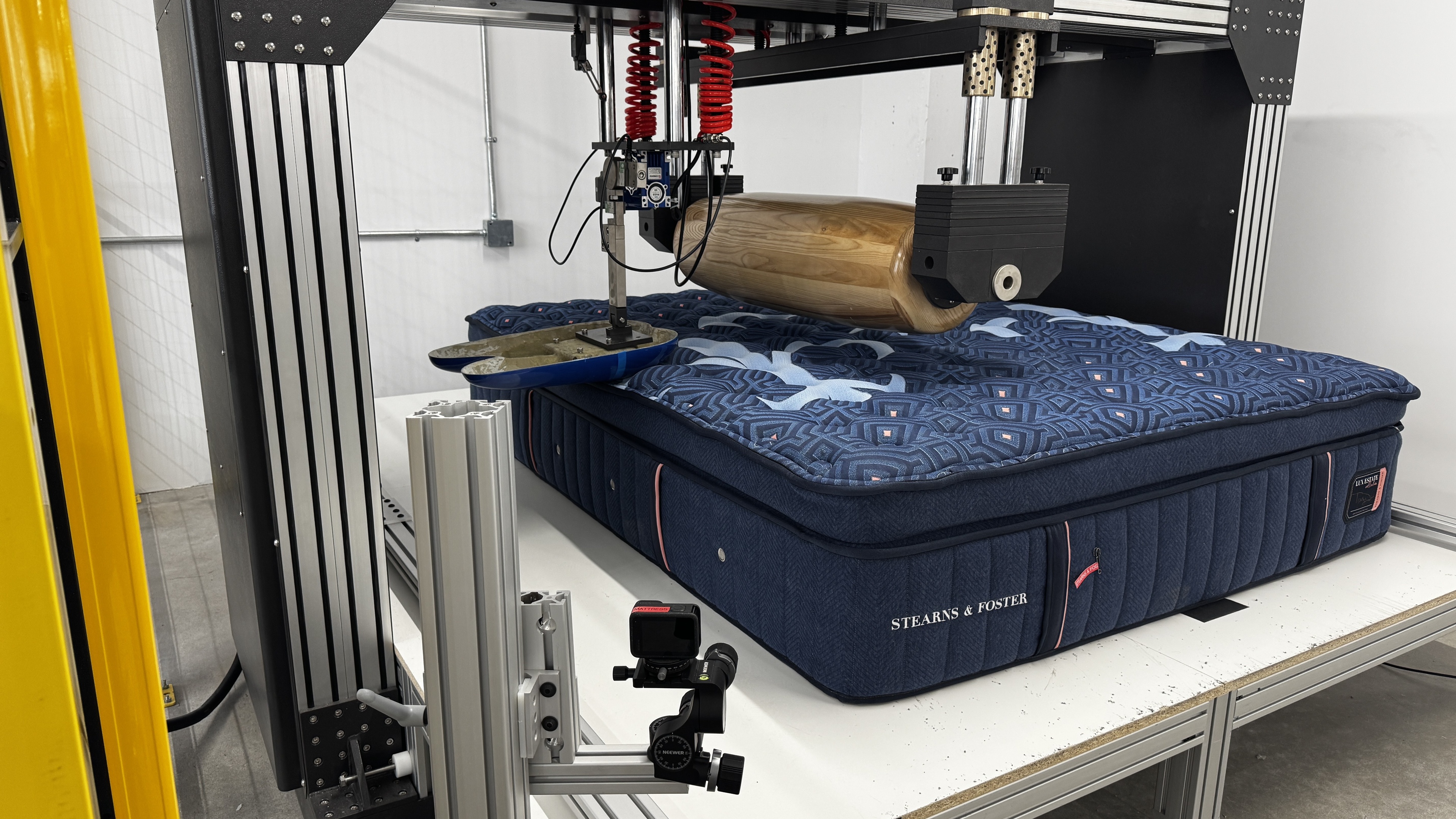
Longevity
The Stearns & Foster Lux Estate is moderately durable. The latex transition layer and polyfoam lower comfort layer are both made of good-quality foam and will help keep the mattress from sagging for longer compared to lower-quality materials. However, the polyfoam in the quilted top and the memory foam lower comfort layer are both less dense, lower-quality foams, and are more prone to forming permanent indentations.
Great edge support.
Good for most side sleepers.
Uses some good quality foams.
May be too plush for back and stomach sleepers and heavier side sleepers.
This mattress has some layers of good-quality foam, and others made of lower-quality, less durable foam. The latex transition layer is of good quality and will help the mattress resist sagging for longer. The lower comfort layer is made of polyfoam that's dense enough to be considered good quality, which will help prevent permanent indentations from forming for longer than lower-quality foams.
However, the other foam layers are made of lower-quality materials. The memory foam upper comfort layer isn't dense enough to be considered good quality, and neither is the polyfoam in the quilted top. These layers are more prone to forming permanent body impressions than higher-quality foams.
If durability is a priority for you, check out the Boring Hybrid. It's a medium-plush mattress that uses only high-quality foam.
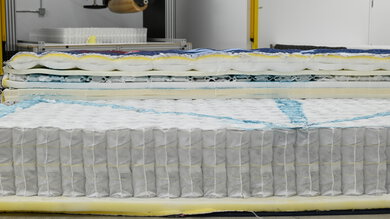
The quilted layer is made of polyfoam and fiber fill. The second layer down is memory foam. Along with the comfort layer of springs, the quilted layer and upper comfort layer help give the mattress its medium-plush feel. Below the first layer of springs, you have firmer layers of polyfoam and latex, which help provide support, and a last layer of memory foam that adds a bit of plushness if you're heavy enough to compress the layers above.
Pressure Relief
Great edge support.
Good for most side sleepers.
Uses some good quality foams.
May be too plush for back and stomach sleepers and heavier side sleepers.
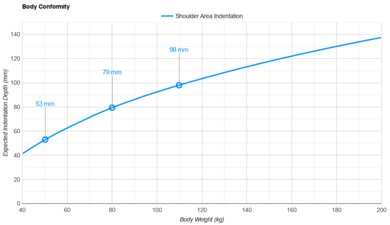
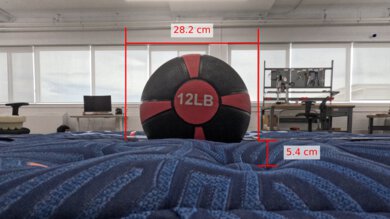
You only sink slightly into the mattress, which doesn't contour your body very closely. You feel slightly cradled but still like you're 'on' and not 'in' the mattress.
If you want to feel slightly enveloped by your mattress, you might prefer one with higher sinking like the Saatva Rx.
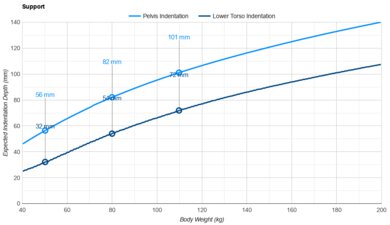
Support
Great edge support.
Good for most side sleepers.
Uses some good quality foams.
May be too plush for back and stomach sleepers and heavier side sleepers.
Cooling
The Stearns & Foster Lux Estate has a very good cooling performance, both during the first hour of sleep and overnight. It doesn't stand out for being extremely cooling, so if you have a problem with sleeping hot and want a mattress that will help, it's not the best option. However, it won't create an issue for people who don't usually sleep hot.
Great edge support.
Good cooling.
Good for most side sleepers.
Uses some good quality foams.
May be too plush for back and stomach sleepers and heavier side sleepers.
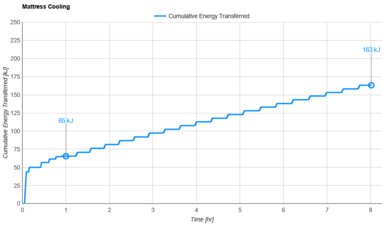
It has a very good cooling performance, likely aided by its latex transition layer. It's quite cooling during the first hour of sleep and overnight, and it won't create an issue if you don't usually sleep hot. While it's not an awful option for hot sleepers, its performance isn't quite good enough if cooling is a big priority.
Motion Dissipation
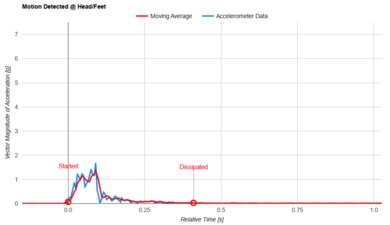
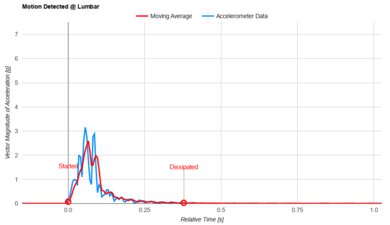
The Stearns & Foster Lux Estate has great motion dissipation. While you will feel your partner's movements in the lumbar area, you feel a lot less motion around your head, and you don't feel it for very long, so unless your partner is really tossing and turning, it won't wake you up.
Great edge support.
Impressive motion dissipation means your partner's every movement won't wake you.
Good for most side sleepers.
Uses some good quality foams.
May be too plush for back and stomach sleepers and heavier side sleepers.
Responsiveness
The Stearns & Foster Lux Estate has great responsiveness. It's not as quick to regain its shape after being compressed as some mattresses, which can help create a very light hugging feeling but still won't make you feel restricted in your movements as you sleep.
Great edge support.
Great responsiveness, so you can easily move around as you sleep.
Good for most side sleepers.
Uses some good quality foams.
May be too plush for back and stomach sleepers and heavier side sleepers.
The Stearns and Foster Lux Estate mattress has great responsiveness. It doesn't regain shape as instantly as some mattresses, likely because of the memory foam comfort layer. However, it doesn't have a classic memory foam feel, and you won't feel stuck in place.
The upper comfort layer of springs isn't particularly bouncy. The support layer pushes back more when pressure is applied, but it isn't extremely bouncy. This helps give the mattress its moderate bounciness, which helps make it quite easy to move around in your sleep.
It's not as bouncy as some mattresses with springs, like the Beautyrest Silver BRS900 or Saatva Classic (Luxury Firm), but it still avoids the dead feeling of some all-foam mattresses, which helps make it easier to move around in your sleep.
Some of the foam layers are quite resilient or bouncy, including the quilted layer and the lower comfort layer of polyfoam directly under the comfort springs. The latex transition foam directly below that is especially resilient, so it has a 'push back' feeling. The upper comfort foam isn't at all, which is expected from memory foam, and makes the mattress less bouncy overall.
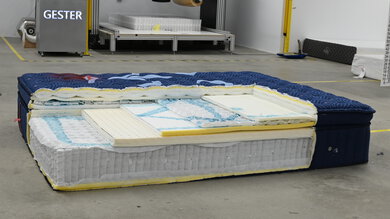
The Stearns and Foster Lux Estate is a thick mattress, and you may need to use deep-pocket fitted sheets.
This medium-plush mattress is suitable for side sleepers. Lighter back and stomach sleepers might also find it appropriate, but average and larger people may want something firmer.
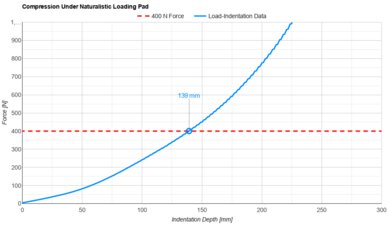
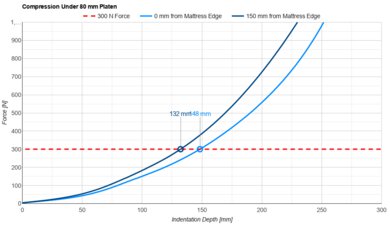
It has great edge support. The edges are reinforced with firm, small-diameter pocket coils, and when you sit on the very edge, it only forms a slight outward ramp. You can comfortably sit on the edge or sleep near it without feeling like you're about to slip off. If edge support is a priority, whether you want more ease getting in and out of bed or usually migrate to the very edge of the mattress, the Kirkland Stearns & Foster Pillow Top Lakeridge offers even better edge support.
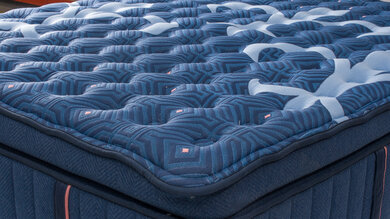
The cover is made of TENCEL Lyocell, a material made from wood pulp. The manufacturer, TENCEL, markets it as a sustainable material that can absorb and release moisture. Stearns & Foster says the cover also includes 'enhanced cooling fibers' but doesn't go into more detail about what they are.
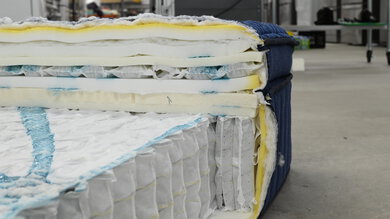
The edges are reinforced with small-diameter, firm pocket coils, which help give it its great edge support performance.
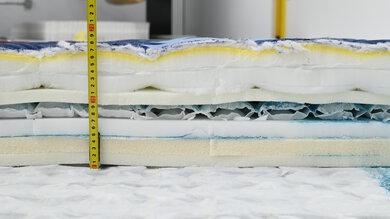
The quilted top fill is nearly 3" (7 cm) thick, contributing to the mattress's medium-plush feel. The upper comfort layer of memory foam (above the first spring layer) is quite thin, less than 1" thick, but also adds plushness and helps give the mattress its moderate contouring. Below the spring comfort layer are three one-inch foam layers: polyfoam, latex, and memory foam. The firmer polyfoam and latex layers provide support and stop you sinking into the firm support springs if you compress the softer comfort springs.
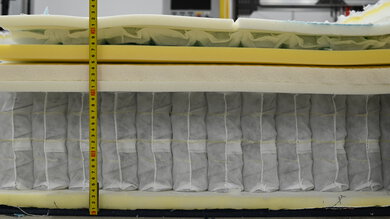

This mattress uses springs for one of its comfort layers and one of its support layers. Both layers are made of pocket coils, which are individually wrapped coils that help with motion isolation and are more contouring compared with continuous coils. The comfort layer springs are 18-gauge and easily compressed.
The much firmer support coils have a coil-in-coil design, so each pocket coil is actually made up of a large coil around a smaller, shorter, and firmer coil. These springs have a softer feel initially but become firmer when compressed further.
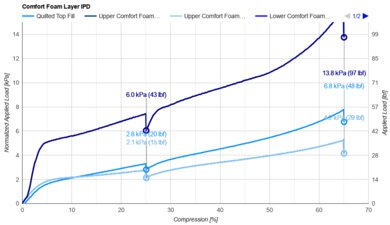
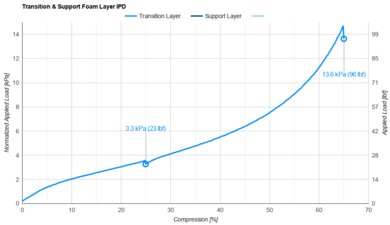
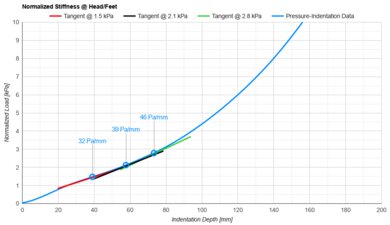
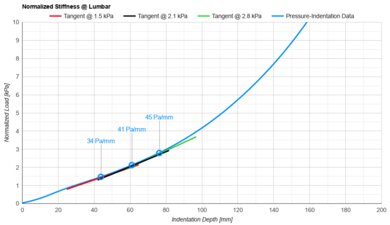
The quilted top fill is medium soft. The memory foam layer below is softer and adds to the mattress's moderate contouring. The comfort layer of springs is also soft, so you may fully compress that layer and feel the firm polyfoam below. The latex transition foam is medium-firm. These firmer layers offer support for the heavier parts of your body and help prevent you from sinking into the support springs. The final memory foam comfort layer above the support springs is softer, as you'd expect from this material. Since it's below so many other layers, it may not be compressed very much by lighter people, but it lends the mattress a little more 'give' if you have fully compressed the layers above.
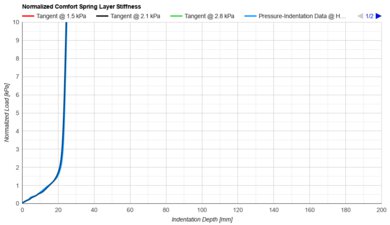
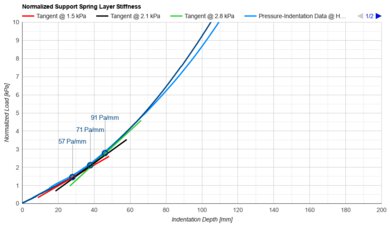
The upper comfort layer pocket springs are so short that they compress fully before we can gather data for the stiffness result. However, they are soft, so they'll compress easily and help contour your body. The support springs are much firmer and help provide support for the heavier parts of your body, like your hips.
Popular Mattress Comparisons
The Stearns and Foster Lux Estate is a medium-plush mattress with a balanced feel, meaning you sink into it a moderate amount and it feels moderately contouring. While it feels quite plush overall, if you want to really sink into your mattress, you might prefer an option like the Beautyrest Harmony Lux, which has a medium firmness level but a plusher upper layer. The Casper Snow offers more sinking and a better cooling performance, so it's a better option for hot sleepers, but its slow-moving memory foam feel can make you feel stuck in place.
If you're looking for a recommendation, check out the best mattresses.
The DreamCloud Classic Hybrid and the Stearns & Foster Lux Estate are medium-plush hybrids with similar performance, but for most people, the significantly higher price of the Stearns & Foster won't be worth it. The Stearns & Foster has slightly better cooling and motion isolation, and while it's still not quite cooling enough for hot sleepers, it may be worth considering if you sleep light or with a partner. That said, the DreamCloud is more responsive and offers better edge support, so it's more comfortable to move around, sleep near the edge, or get in and out of bed.
The DreamCloud Premier Hybrid is better than the Stearns & Foster Lux Estate for most people. Both are medium-plush mattresses with a similar feel. However, the DreamCloud has significantly better motion isolation and slightly better edge support. That said, the Stearns & Foster uses some good-quality foam, while all of the foam used in the DreamCloud is lower-quality and likely to start sagging sooner.
The Kirkland Stearns & Foster Pillow Top Lakeridge and the Stearns & Foster Lux Estate are both hybrid mattresses and are best for side sleepers, but they differ in construction. The Lux Estate uses pocket coils in both its comfort and support sections, plus a latex transition layer, for a softer Medium-Plush feel that also holds up better over time thanks to denser foam. The Lakeridge sticks to foam-only comfort layers over a single coil system, landing at a firmer Medium with stronger edge support and a more enveloping feel.
The Stearns & Foster Lux Estate is a little better than the Sealy Posturepedic Hybrid. Both mattresses have a similar medium-plush firmness and a similar feel overall. The Stearns & Foster uses a mix of good-quality and lower-quality foams, while the Sealy only includes lower-density foam, which is likely to sag or form indentations sooner. The Sealy offers better edge support, which makes it easier to get in and out of bed.
The Bear Elite Ultra Hybrid and the Stearns & Foster Lux Estate are both high-end hybrid mattresses. Both are well-suited to side sleeping, but the Bear has a Medium firmness
level, while the Stearns & Foster is softer at Medium-Plush, so it's less suited to heavier back and stomach sleepers. The Bear also pulls ahead on edge support, so you get less usable surface if you like to sleep near the side.
Differences Between Sizes And Variants
The Stearns and Foster Lux Estate is available in Standard and Pillow Top versions, which are each available in Soft, Medium, and Firm. You can also get it in Twin Long, Queen, King, Split King, California King, and Split California King sizes. Our unit is a Queen-sized Standard version in 'Medium.' This mattress doesn't have a label.
If you encounter another variant, let us know in the comments, and we'll update our review.