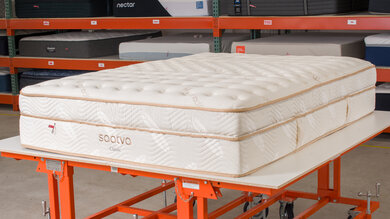
The Saatva Classic (Luxury Firm) is a high-end innerspring mattress. It uses foam for its comfort layers, while a double layer of springs provides support. The manufacturer also advertises an organic cotton cover.
Note: We purchased two Saatva Classic (Luxury Firm) mattresses for our testing. When we disassembled them, we found they each had a different design. According to Saatva, the mattress should have one layer of pocket coils and one layer of continuous coils. One of our units had the advertised design, but the other had another layer of pocket coils instead of the continuous coils. These mattresses were sold as the same model with the same firmness, and should have been identical. This difference in design resulted in major differences in performance. While we don't know the extent of the issue, you won't be able to determine the design of your mattress unless you cut it open (which you shouldn't do, as it would void the warranty). We've included results from both designs in the review where major performance differences exist. Check out our findings on unit-to-unit differences in mattresses for more information.
Our Verdict
-
5.9Light Weight
-
7.6Average Weight
-
8.4Heavy Weight
The Saatva Classic (Luxury Firm) is best-suited for side sleepers in the average and heavier weight categories. It offers the best pressure relief for people in the heavier weight category, as it offers fantastic body conformity when sleeping on your side. It's not very supportive for heavier people, but it still represents a satisfactory option for side sleeping. For average people, it's also a reasonable option, with good body conformity for pressure relief and slightly better support. Regardless of weight, the lighter parts of your body will sink moderately into the upper comfort layers, which helps relieve pressure on areas like your knees. However, it's not a good option for side sleeping for lighter people, who won't compress it enough, which can lead to uncomfortable pressure on their arms and shoulders.
Plush upper comfort layers help with pressure relief.
Fantastic body conformity for heavier people.
Sub-par body conformity for lighter people.
-
7.3Light Weight
-
6.6Average Weight
-
6.3Heavy Weight
The Saatva Classic (Luxury Firm) isn't a good choice for back sleeping for most people. It doesn't offer sufficient support for average or heavier back sleepers, which can cause your hips to sink in too far. That said, it's decently supportive for people in the lighter weight category, so your hips will stay mostly in line with the rest of your body, making it a reasonable choice for lighter back sleepers. Also, its upper layers are quite soft, so regardless of weight, your whole body will sink moderately into it, which helps relieve pressure around your hips and lower back.
Plush upper comfort layers help with pressure relief.
Decent support for lighter people.
Not very supportive for average and heavier people.
-
7.2Light Weight
-
6.4Average Weight
-
6.0Heavy Weight
The Saatva Classic (Luxury Firm) isn't ideal for stomach sleeping for most people. Average and heavier people won't be adequately supported, so your hips will sink in more than the rest of your body, and your spine won't be aligned. However, it offers satisfactory support for people in the lighter weight category. The decent pressure relief also helps prevent painful pressure around your hips or knees.
Plush upper comfort layers help with pressure relief.
Decent support for lighter people.
Not very supportive for average and heavier people.
Changelog
-
Updated Aug 19, 2026:
We mentioned the newly reviewed Bear Elite Ultra Hybrid in the Cooling box for those seeking better performance.
-
Updated Jul 14, 2026:
We updated the product name to Saatva Classic (Luxury Firm) in order to specify the firmness level tested.
- Updated Mar 09, 2026: We converted this review to Test Bench 1.2. We've added sub-usages to the sleeping position usages in the Our Verdict section to clearly show the suitability of a mattress for your weight and sleeping position.
-
Updated Jan 12, 2026:
Added a note that the Purple RestorePlus Hybrid offers much better motion isolation.
-
Updated Dec 12, 2025:
Added a note that we've also tested the 'Plush Soft' version of the Saatva Classic in the Differences Between Variants box.
-
Updated Dec 12, 2025:
We rewrote portions of the review to align with Test Bench 1.1, including adding text to the new test boxes and for the newly added verdicts.
- Updated Dec 12, 2025: We converted this review to Test Bench 1.1. We've added new tests, including Body Conformity, Support, and Comfort Layers Envelopment, and also added scoring to the Bounciness test. Our usage scores have also changed, with new usages 'Side Sleeping,' 'Back Sleeping,' and 'Stomach Sleeping' replacing the 'Sleeping' verdict. We've also added 'Pressure Relief' and 'Support' performance usages. You can find more details in the full changelog.
-
Updated Oct 21, 2025:
Compared its motion isolation performance to the Beautyrest Mattress's.
-
Updated Oct 15, 2025:
We added a link to our new article Are Mattresses As-Advertised? Our Findings On Unit-To-Unit Variance.
-
Updated Oct 06, 2025:
We rewrote portions of this review to align with Test Bench 1.0.1, which adds a Longevity verdict and a score to the Foam Layer Mass Density box for users interested in the mattress's durability.
- Updated Oct 06, 2025: Converted this review to Test Bench 1.0.1. We've added scoring to the Foam Layer Mass Density section and a new 'Longevity' performance usage. Read more about it in our Changelog.
-
Updated Sep 30, 2025:
We mentioned the recently reviewed Nectar Premier Classic in the Motion Isolation box for users looking for better performance in this area.
- Updated Jul 15, 2025: Review published.
Test Results
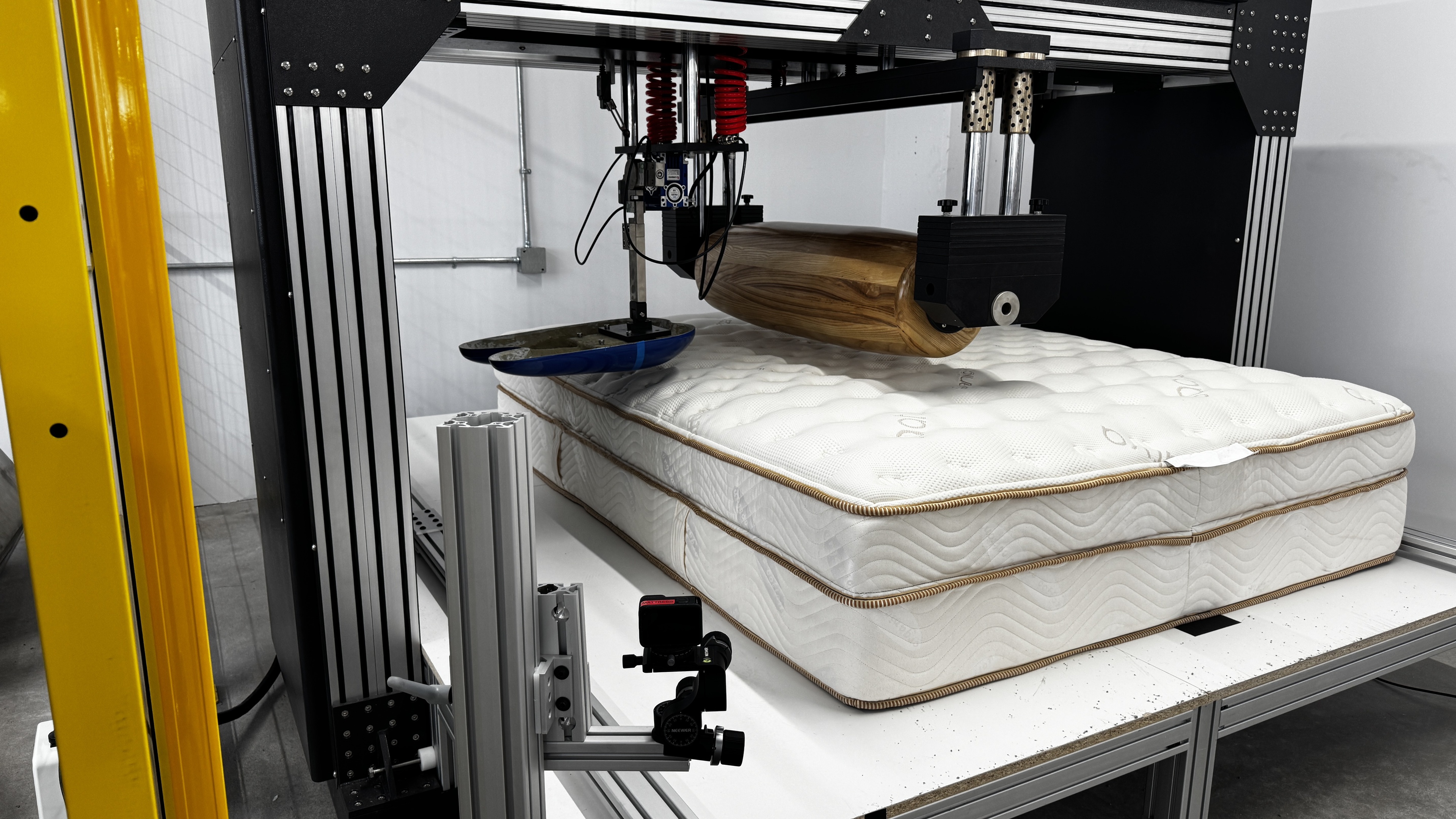
Longevity
The Saatva Classic (Luxury Firm) is not a durable mattress. None of the foam is dense enough to be considered of good quality, including the polyfoam support layer, transition layer, and lower comfort layer, as well as the polyfoam in the quilted top and the strip of memory foam in the lumbar area. As a result, the mattress is likely to form permanent body impressions or start sagging sooner than mattresses with higher-quality foam layers.
Uses only lower-quality, less durable foams.
None of the foam layers are dense enough to be considered good quality; they'll likely show signs of wear, such as sagging or permanent indentations, sooner than higher-quality foams. The polyfoam transition layer is the best-quality foam in the mattress, but it still doesn't quite meet the standard for good-quality foam.
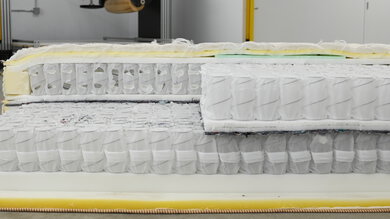
The quilted top is made of soft polyfoam and fiberfill. There's a strip of memory foam in the lumbar area, which adds extra material in that area that may help fill in the space under your lower back. The other foam layers, including the lower comfort layer, transition foam between the spring layers, and support foam at the base of the mattress, are all made of polyfoam. The near-lack of memory foam helps explain the mattress's very high responsiveness.
The official Saatva design doesn't include the thick layer of polyfoam at the base of the mattress, and its inclusion may be to compensate for the difference in height between the spring layers of the different designs.
Pressure Relief
The Saatva Classic (Luxury Firm) has a decent pressure relief performance for average and heavier people. It offers fantastic body conformity for individuals in the heavier weight category, which is particularly important for side sleepers who require adequate pressure relief in the arm and shoulder areas. However, its pressure relief performance isn't good enough for lighter side sleepers, who won't compress the mattress enough to comfortably sleep in that position. That said, regardless of your weight, lighter parts of your body will sink into the mattress's upper layers, which helps relieve pressure. Lighter back/stomach sleepers, who have less weight concentrated on in a small area, may find it offers enough pressure relief.
Plush upper comfort layers help with pressure relief.
Fantastic body conformity for heavier people.
Sub-par body conformity for lighter people.
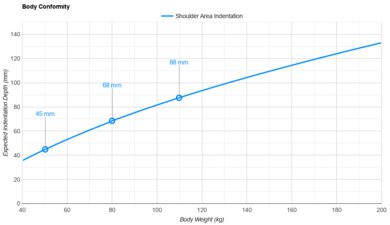
This 'Medium' mattress offers fantastic body conformity for side sleepers in the heavier weight category. Heavier side sleepers' shoulders will compress the mattress enough to relieve pressure. It's also a little plusher than some other medium mattresses, like the Big Fig Mattress, and is conforming enough for average side sleepers as well. However, if you're a lighter side sleeper, your shoulder won't sink in far enough, which can create uncomfortable pressure on your shoulder and arm.
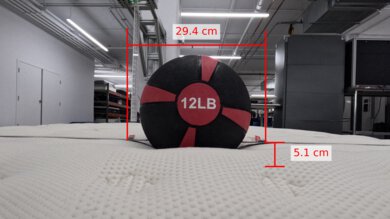
The upper comfort layers don't create a very enveloping feel. The sleeping surface isn't very contouring, so it has less contact with your body overall. The relatively soft quilted and upper and lower comfort layers allow the lighter parts of your body to sink into the sleeping surface more than most mattresses. You don't feel hugged, but rather slightly cradled.
Support
The Saatva Classic (Luxury Firm) is decently supportive for lighter people, but not others. While it doesn't offer great support, if you're in the lighter weight category, you can sleep on your back or stomach, and your hips will stay decently aligned with the rest of your body. It's less supportive for people in the average weight category and even less supportive for those who are heavier. The heavier parts of your body will sink deeper into the mattress, and back/stomach sleepers, in particular, won't receive proper support.
Decent support for lighter people.
Not very supportive for average and heavier people.
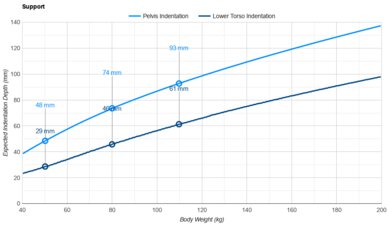
This mattress doesn't offer great support, regardless of your weight. It's most supportive for lighter individuals, so if you fall into that weight category, your hips won't sink in much further than your lower back when sleeping on your back or stomach. It performs significantly worse for individuals in the average weight category and provides subpar support for those who are heavier. The heavier parts of your body, like your hips, will sink in much more than the rest of your body, and your spine won't be aligned.
Cooling
The Saatva Classic (Luxury Firm) mattress has decent cooling. If you don't usually sleep hot, it shouldn't create a problem. However, it's likely to make hot sleepers feel overheated, even during the first hour or so of the night. If you have any concerns about heat, it's not an ideal option.
Very good cooling.
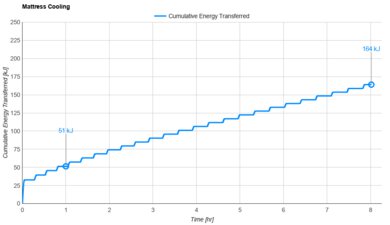
It has a decent cooling performance, so it's not a bad choice if you don't usually sleep hot. However, it's not a good option for hot sleepers, especially if feeling overheated often prevents you from falling asleep, since it feels particularly warm during the first hour you're in bed. It does a somewhat better job of dissipating heat over eight hours, but it still isn't an ideal choice if cooling is a priority. For a more cooling option, check out the Bear Elite Ultra Hybrid.
Motion Dissipation
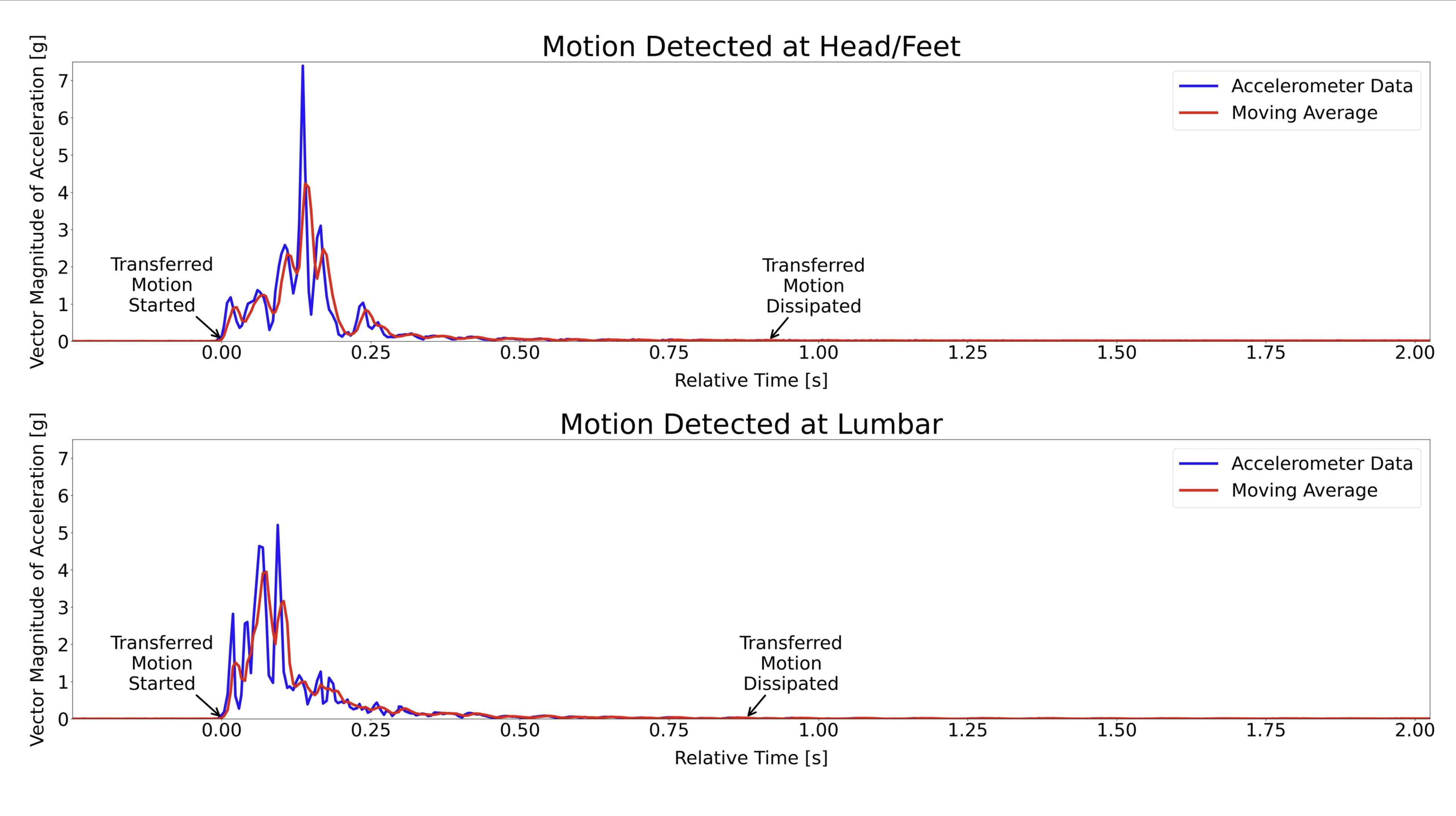
The Saatva Classic (Luxury Firm) mattress, featuring a double layer of pocket coils, offers decent motion isolation. You'll feel your partner's bigger movements in the lumbar area. Movement dissipates somewhat slowly, so you feel movements for longer. You feel less motion at the head and foot of the bed, but if you're a light sleeper or your partner tends to toss and turn, it's still not the best option.
Movement might disturb your sleep.
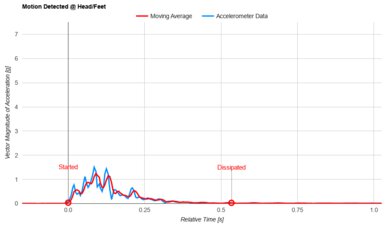
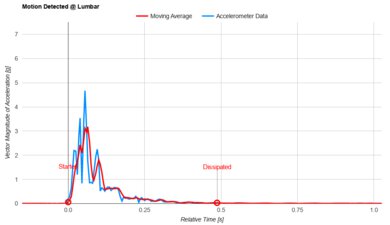
The double-pocket-coil design has decent motion isolation. You'll feel a lot of movement in the lumbar area when your partner rolls over, and it dissipates somewhat slowly, so you feel movements for longer. However, it's much less noticeable around your feet and head.
That said, if you get the official design with continuous coils as a base layer, its motion isolation performance is sub-par. Here are the motion isolation results for that design and a video of the official design's motion isolation performance.
If motion isolation is a priority for you, you might be interested in the Purple RestorePlus Hybrid, which has a much better performance without sacrificing responsiveness.
Responsiveness
The Saatva Classic (Luxury Firm) mattress is extremely responsive. The mattress's upper layers bounce back almost immediately after being compressed. The mattress is also very bouncy, and overall, it feels easy to move around on.
Fantastic responsiveness means you won't feel stuck in place.
It's extremely responsive. This hybrid mattress is made mostly of springs and polyfoam (with a thin layer of memory foam in the lumbar area), and it recovers instantly after being compressed. You won't feel stuck in place.
The spring layers are fairly bouncy. Combined with the resilient foam layers, they contribute to the mattress's high bounciness and springiness.
The pocket coils aren't as bouncy as the continuous coils that are part of the official Saatva Classic (Luxury Firm) design, which helps explain why the units have different bounciness results overall.
The all-pocket coil version of the mattress is very bouncy. This gives it a springy feel that makes it easy to shift sleeping positions. It should suit you if you want to avoid the "dead" feeling of some all-foam mattresses.
The official Saatva Classic (Luxury Firm) design is even bouncier (Maximum Rebound Height: 32 cm, Level: High), which you might prefer if you like a very springy mattress. Here's a video of that mattress's bounciness performance.
The quilted top and comfort layer polyfoams are quite resilient, or bouncy, which helps contribute to the mattress's overall bounciness and lively feel, making it easier to move around on. The memory foam in the lumbar area has low resilience, which is expected from memory foam, but since it's just a thin strip in one area of the mattress, it doesn't make it feel less bouncy overall.
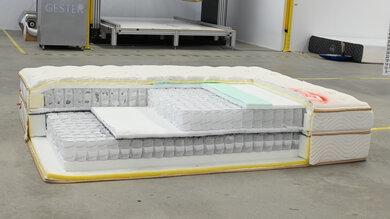
This hybrid mattress is quite tall, so you may need deep-pocket fitted sheets.
The photo above is of the double-pocket-coil design. The internal components of the unit with the official Saatva Classic (Luxury Firm) design can be seen here.
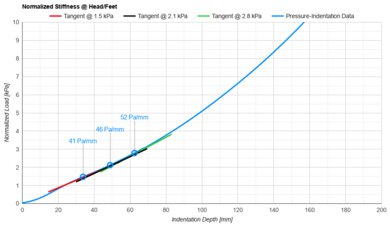
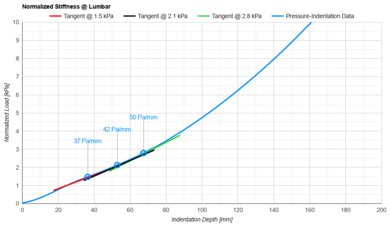
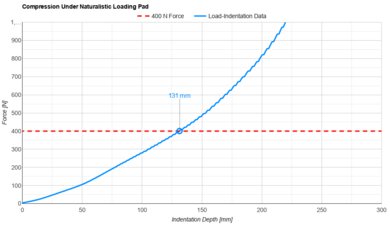
The Saatva Classic (Luxury Firm) mattress has medium firmness if you get a unit with double-pocket coils. It offers a decent balance of pressure relief and support for side sleepers in the average weight category, and also provides satisfactory support for lighter back and stomach sleepers. It's too firm for most lighter side sleepers, while heavier people will want more support regardless of sleeping position.
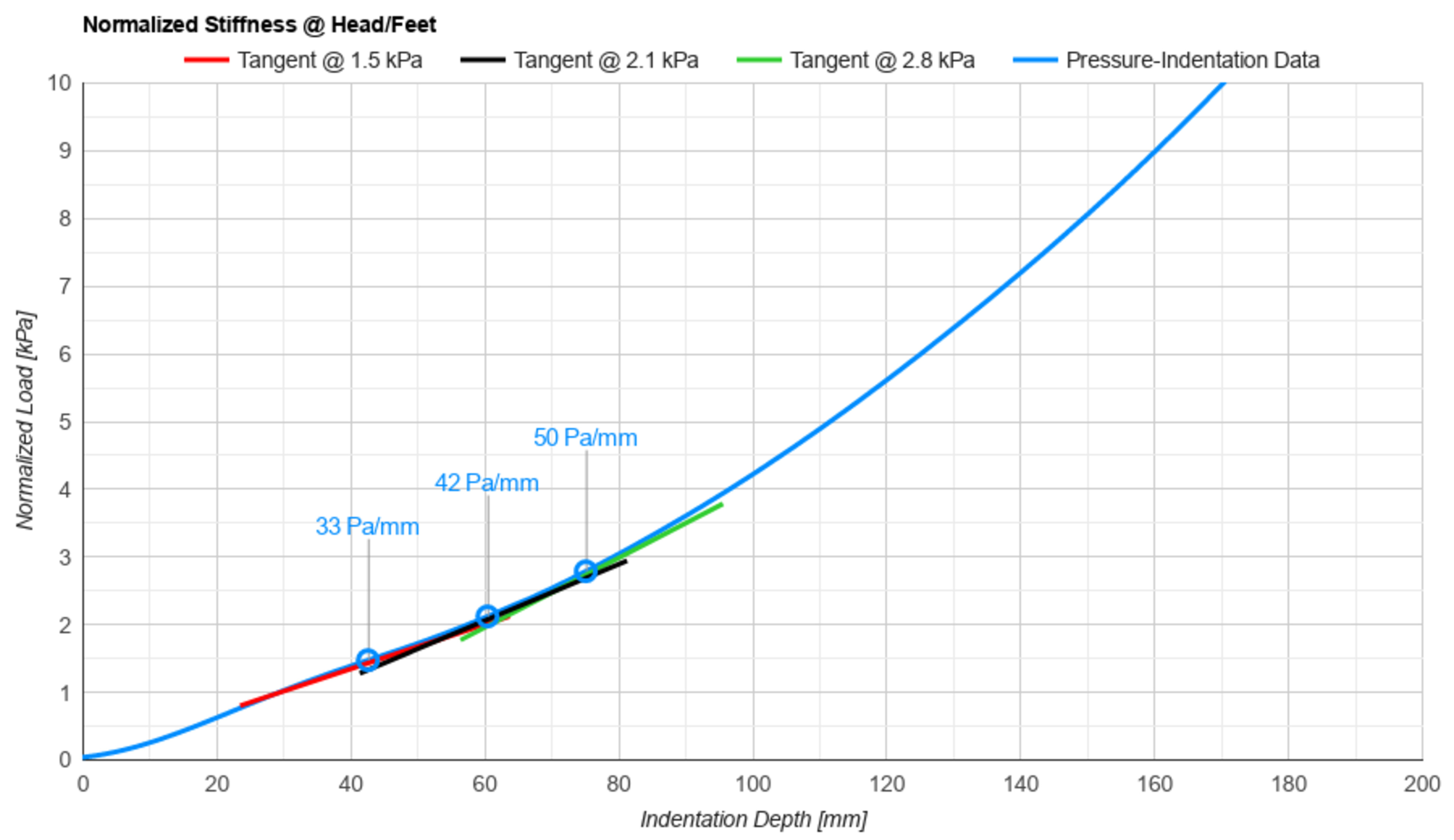
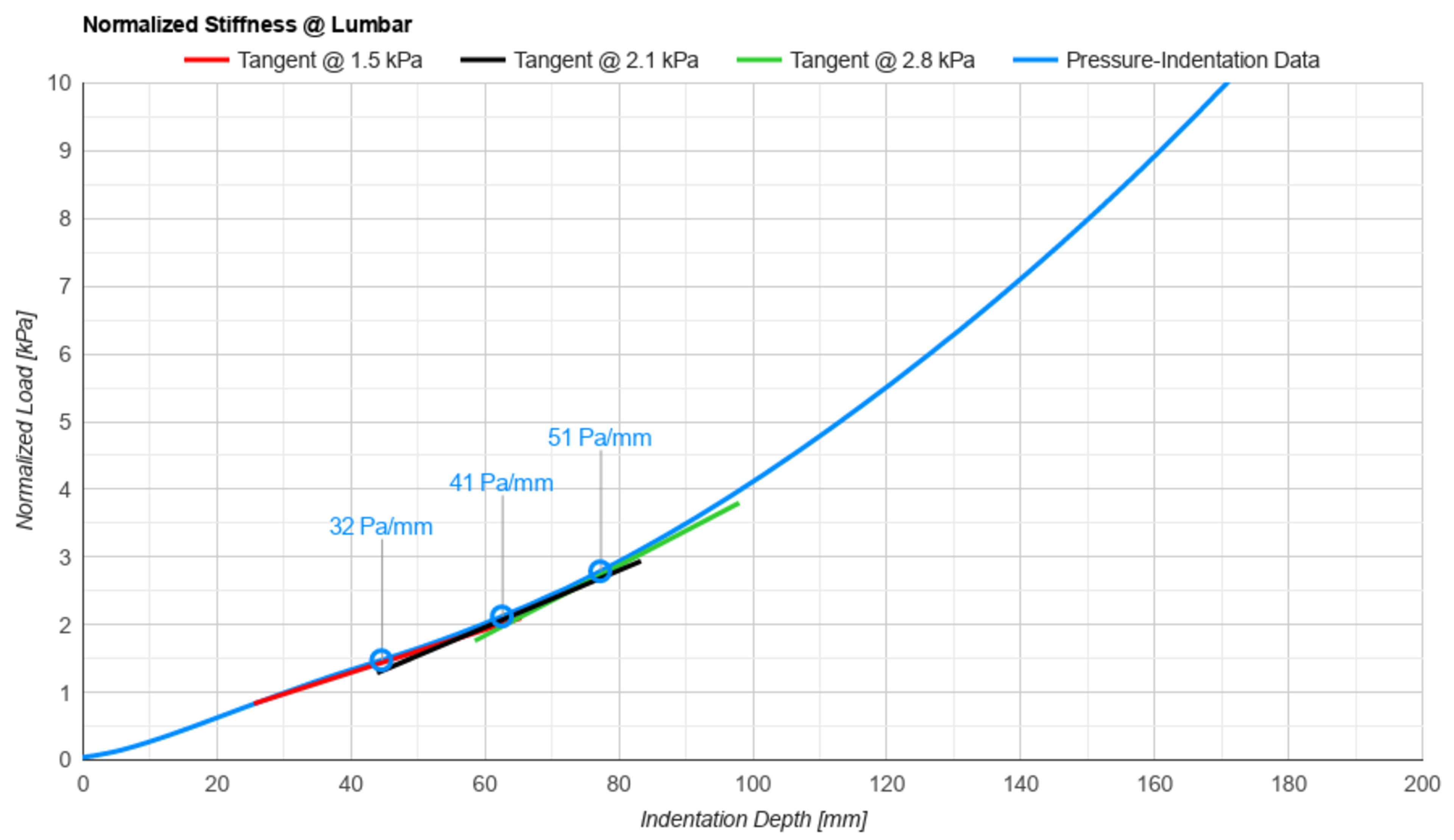
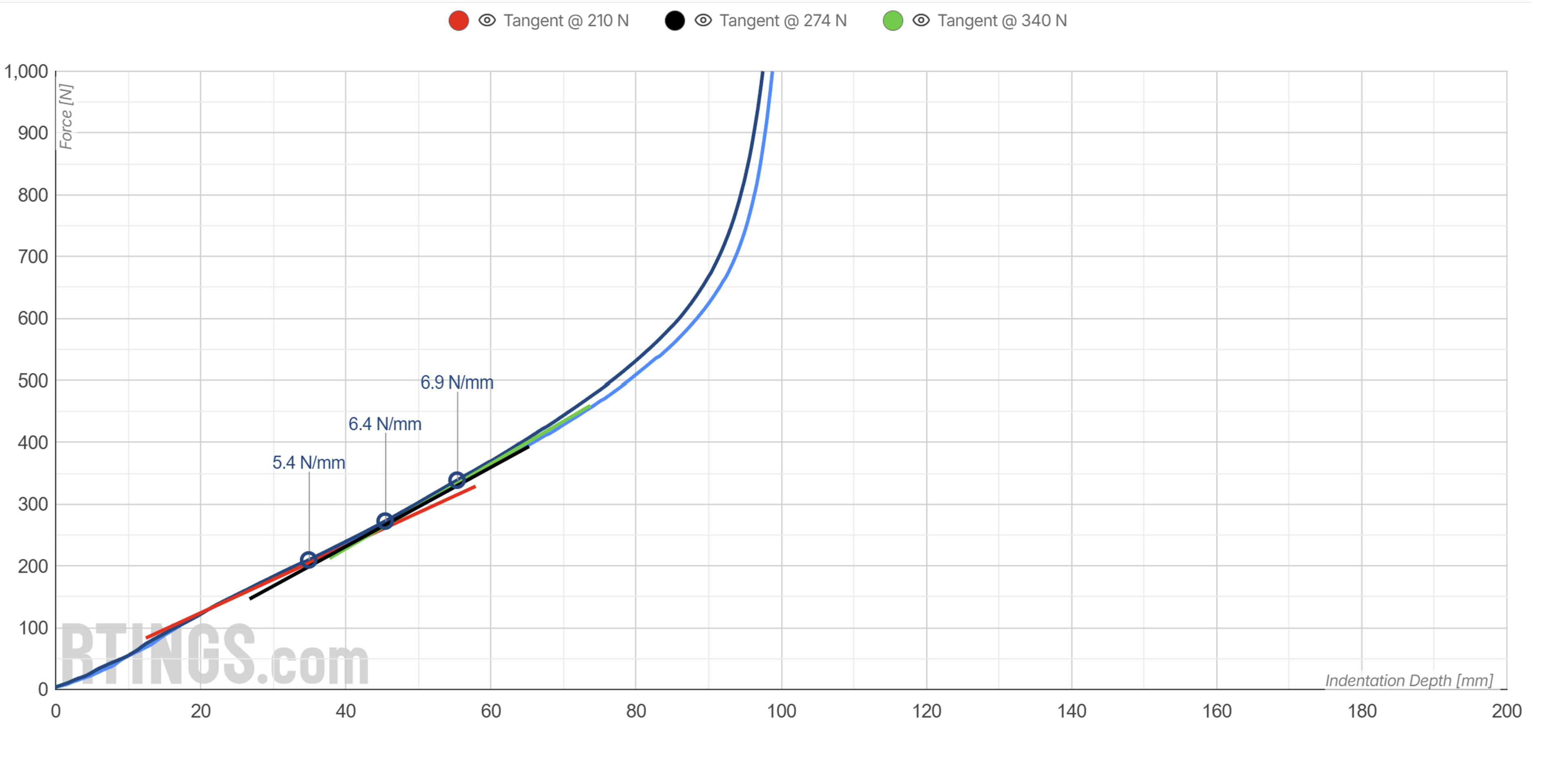
The official Saatva Classic (Luxury Firm) design, with continuous coils as a base layer, results in a firmer mattress with a 'Medium-Firm' level. This design will likely suit heavier stomach and back sleepers better, but may be overly firm for average side sleepers and lighter people in general. Here are the official Saatva design's firmness results at the head/foot of the mattress and in the lumbar area.
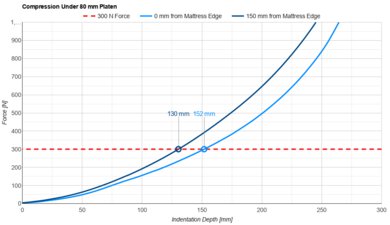
It has great edge support. The sides of the mattress are reinforced with firm polyfoam. When sitting on the edge, it creates a slope outwards, but it's not very steep. You can sleep near the edge of the mattress without feeling at risk of slipping off. Some mattresses offer even better support when you're sitting on the edge, such as the Beautyrest Silver BRS900.
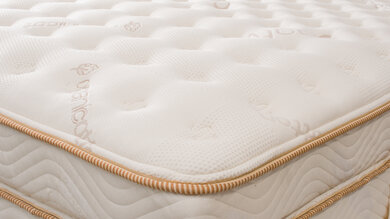
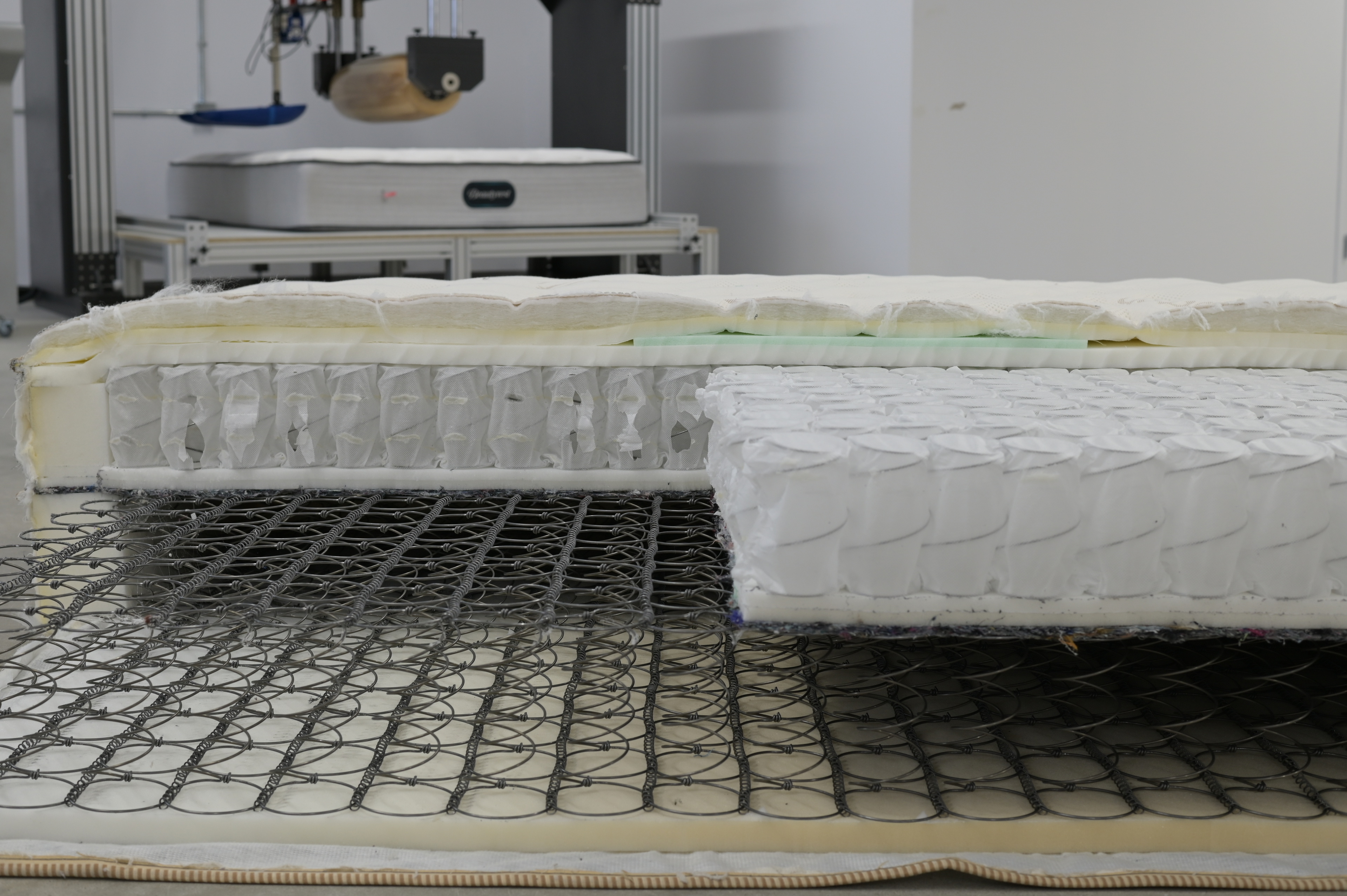
The edges are reinforced with polyfoam, which helps give the mattress its great edge support.
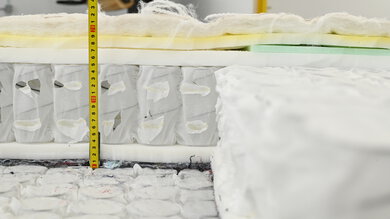
The thickest foam layer is the quilted top fill, but at only 1.8 inches, you don't sink very deeply into it before feeling the firmer upper comfort foam. This 0.9-inch layer of foam helps prevent you from feeling the comfort layer springs. The strip of memory foam is just 0.4 inches thick and is only present in the lumbar area, so it adds some extra material that may help support your lower back, but it doesn't change the feel of the mattress overall. The transition firm foam between the springs provides support for the heavier parts of your body.
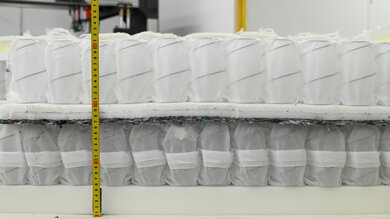
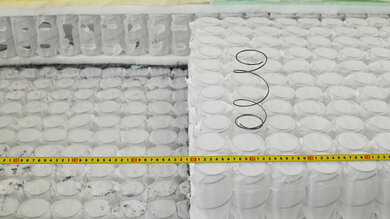
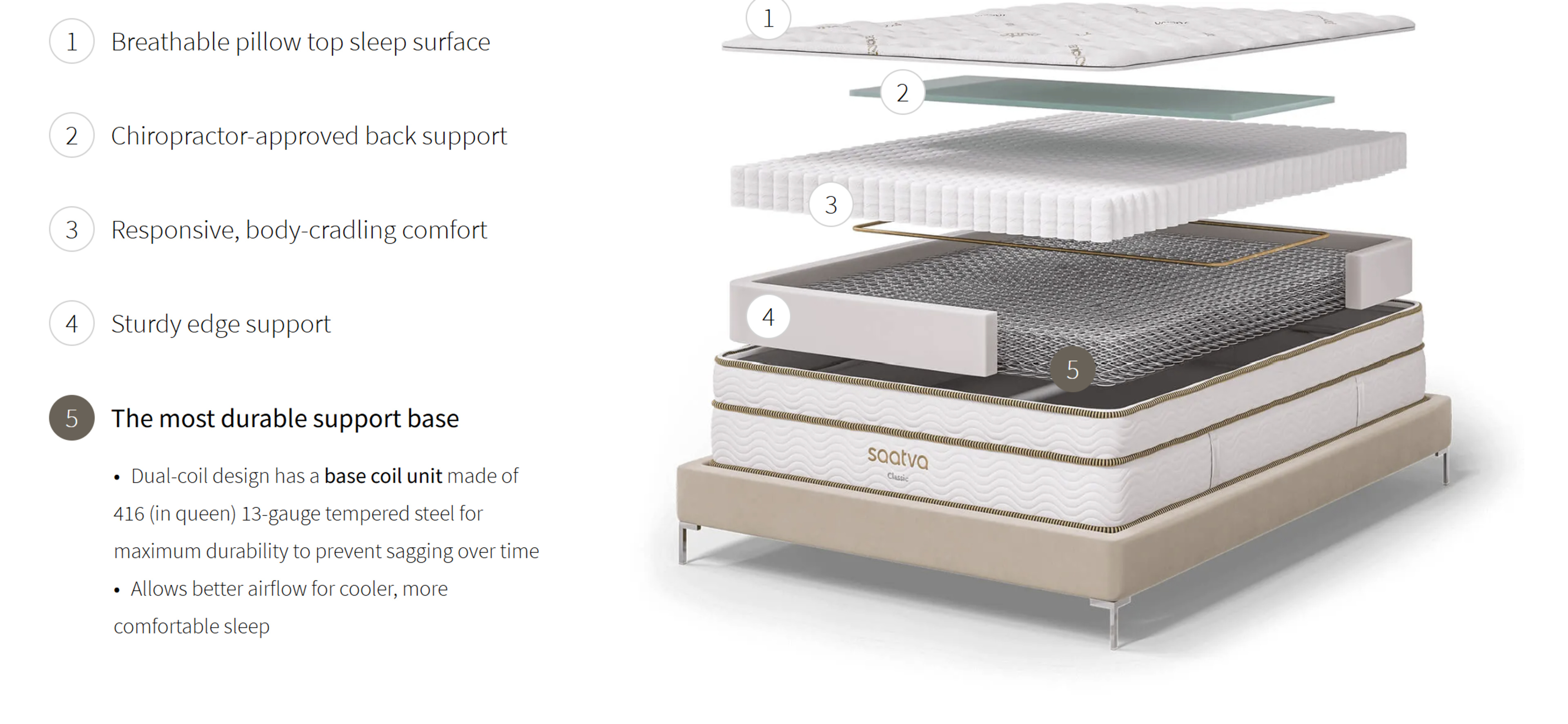
According to the manufacturer's specifications and marketing, it should have a layer of pocket coils above a layer of continuous innersprings. Here's a photo of Saatva's marketing. The first unit we disassembled had that design, as you can see in a photo of the mattress's components.
The second mattress we tested has a duplicate layer of pocket springs, as you can see in the photo above. These coils are of a higher gauge and softer. Because of their individually wrapped design, pocket coils are also more contouring. So, this difference in components changes the mattress's performance quite significantly.
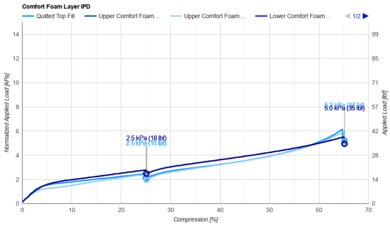
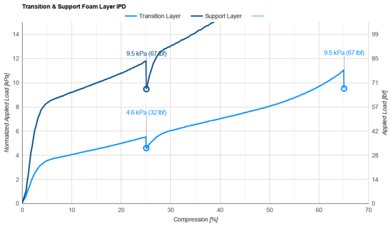
The quilted top and memory foam upper comfort layer are soft, so you'll sink into the upper layer. The lower comfort foam layer directly below is firmer. The transition foam between the spring layers is medium-firm, while the support foam below the support springs is very firm.
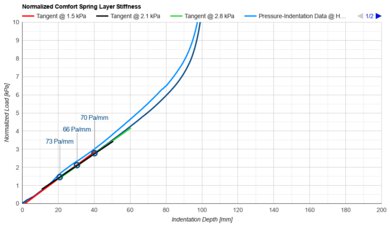
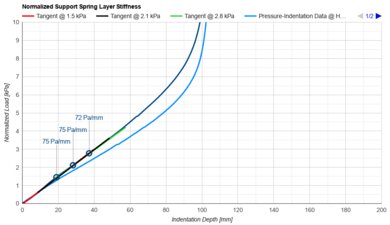
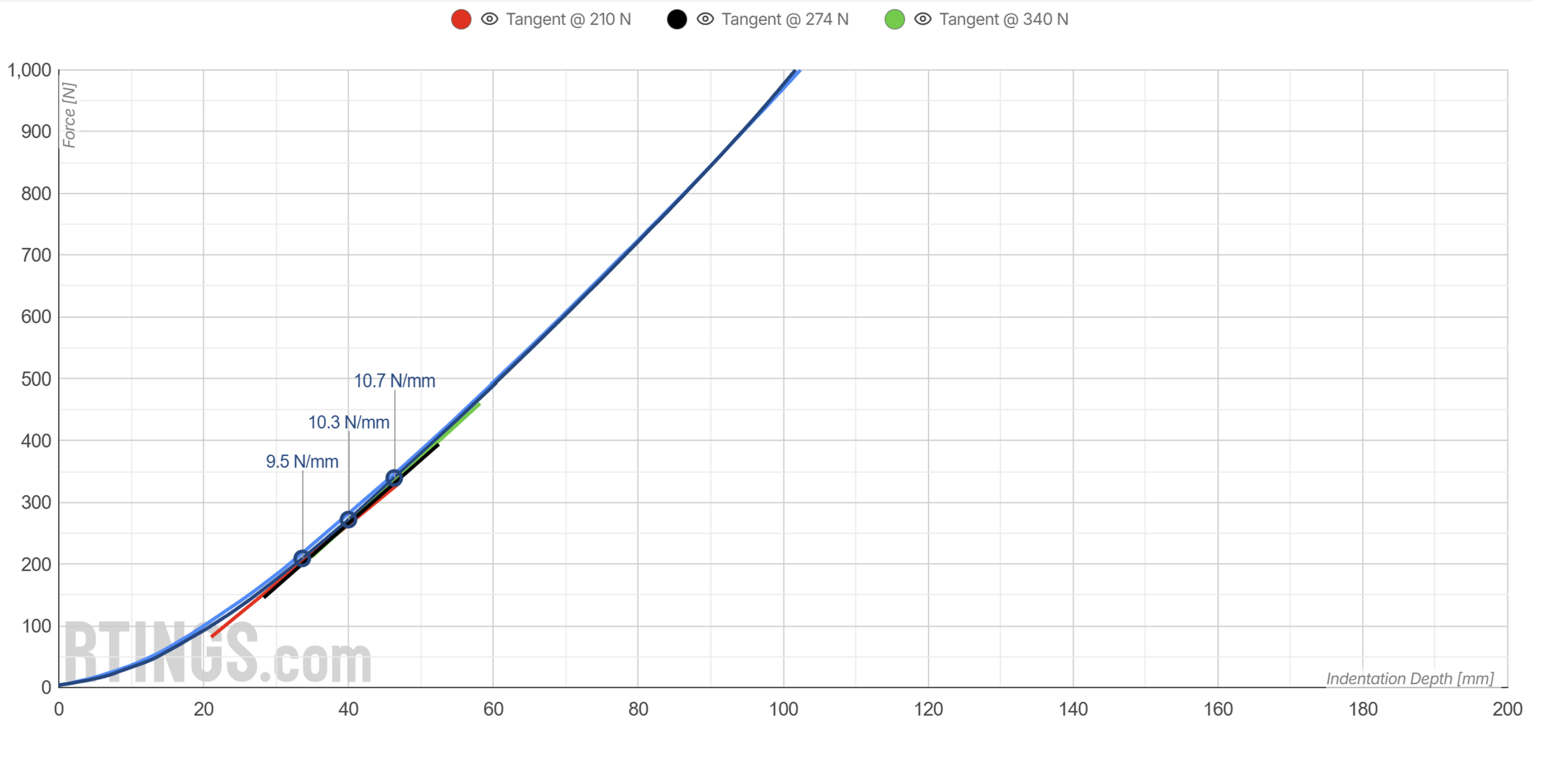
The comfort layer springs and the support layer springs are both quite firm. They help provide support for the heavier parts of your body, such as your hips, when sleeping on your back.
However, the pocket coils used for the support layer in the double-pocket coil design are not as firm as the advertised design's continuous coil layer, which makes the mattress softer overall.
Here are the spring layer firmness results for the official Saatva design for the comfort layer and support layer springs.
Popular Mattress Comparisons
The Saatva Classic (Luxury Firm) is a springy, responsive mattress with plush upper layers that you sink into, creating a cradling feeling. It has great edge support, but doesn't have good motion isolation, so you can feel your partner's movements. The Beautyrest Black has a similar feel and better motion isolation, although it's not as bouncy. If you don't mind a more static, much less bouncy feel, you might prefer a foam mattress like the Tempur-Pedic TEMPUR-Adapt. That mattress has fantastic motion isolation and better cooling, but its memory-foam feel isn't for everyone, and can make you feel stuck in place.
If you want to see more options, check out our recommendations for the best mattresses.
The Helix Midnight Luxe 2025 is better than the Saatva Classic (Luxury Firm). The Helix is more supportive for most people, making it a better option for back/stomach sleeping. The better pressure relief also makes it better for lighter side sleepers. It's more cooling and better at dissipating motion, so you'll feel fewer of your partner's movements. It also contains more good-quality foam. That said, it's not as springy or responsive as the Saatva, so it doesn't feel as easy to move around on.
The Saatva Classic (Luxury Firm) with the double pocket-coil design is a little better than the Saatva Rx. They perform quite similarly, but the Classic has much better edge support, so you can easily get in and out of bed or comfortably sleep near the edge. The Classic is a little bouncier, which gives it a springy feel and makes changing sleeping positions feel effortless. However, you sink more deeply into the Rx's upper layers, which you might prefer if you like the feeling of being 'in' your mattress versus 'on' it.
The Purple RestorePlus Hybrid is better than the Saatva Classic (Luxury Firm) for most people. Both are 'Medium' mattresses, but the Purple is more supportive, especially for lighter people, making it a better option for back/stomach sleepers in that weight category. Its fantastic cooling performance makes it a better option for hot sleepers, and it also offers better motion dissipation, so your partner's movements are less likely to wake you up.
The Bear Elite Hybrid is a better option than the Saatva Classic (Luxury Firm). While both mattresses are fantastically responsive, the Bear outperforms the Saatva in every other area. It keeps you cooler both as you fall asleep and throughout the night and does a better job of isolating motion, so you're less likely to wake up when your sleeping partner tosses and turns. The Bear also has better edge support, so it's more comfortable to sleep near the sides.
The Helix Midnight 2024 is a better option than the Saatva Classic (Luxury Firm) for most people. Both mattresses have a medium level of firmness, but the Helix comes out ahead in a few areas. The biggest difference is in edge support. On the Helix, you can sleep right next to the edge without worrying about slipping off. It's more cooling, too, and while it's not quite cooling enough for hot sleepers, it's a significant improvement over the Saatva. The Helix has slightly better motion isolation as well, though it's probably not a big enough difference to be noticeable. The one area where the Saatva comes out ahead is responsiveness. It responds more quickly when compressed, making it easier to move around on. Still, unless responsiveness is your top priority, the Helix is a better choice.
The Casper Cooling Select Hybrid is a better mattress than the Saatva Classic (Luxury Firm). It provides better support and pressure relief, making it a more comfortable option for a range of body types and sleeping positions. The Casper is also a better choice for couples; its effective motion isolation means that movement is less likely to wake you. It's also more cooling, so it's a good choice for hot sleepers. And while it's not the most durable mattress out there, its denser foam layers should help it resist sagging and indents longer than the Saatva.
Differences Between Sizes And Variants
The Saatva Classic (Luxury Firm) is a variant of the Saatva Classic, which also comes in Firm and Plush Soft. The 14.5-inch variant is available in Twin, Twin XL, Full, Queen, King, Split King, and California King sizes. We tested the Queen-sized 14.5-inch variant in Luxury Firm, and here's a photo of our unit's label. We've also separately tested the 14.5-inch Saatva Classic (Plush Soft).

If you encounter another variant, let us know in the comments, and we'll update our review.