Our 1.1 Mattress Test Bench enables you to evaluate a mattress's performance based on your weight and preferred sleeping position. To achieve this, we've introduced new tests and usages measuring support and pressure relief, and created new usages based on different sleeping positions as well.
What's Changed?
New Tests
- Body Conformity
- Support
New Usages
- Side Sleeping
- Back Sleeping
- Stomach Sleeping
- Pressure Relief
- Support
Changed Tests
- Sinking and Contouring has been renamed 'Comfort Layers Envelopment' and is now scored
- Bounciness is now scored
Changed Verdicts
- Bounciness is now a factor in the Responsiveness verdict
Performance Tests
When shopping for a new mattress, consider two main criteria: your weight and preferred sleeping position. This is because the firmness, support, and pressure relief required for a good night's sleep heavily depend upon these two factors. Previously, you could use our Firmness Level result to decide if a mattress would be comfortable for you. However, to do this, you already had to understand how your weight affected the perceived firmness of a mattress, as well as generally accepted guidelines about what firmness level is ideal for different sleeping positions. The problem with this approach in our 1.0 Test Bench is that you couldn't easily see how firm a mattress feels for your specific weight or compare between mattresses with the same firmness level when consulting the usage ratings at the top of our review or the test results. Similarly, we lacked a means to clearly correlate mattress firmness and sleeper weight data to sleeping positions in our reviews.
Our aim with Test Bench 1.1 is to allow you to easily see how a mattress performs for your specific weight and sleeping position at the top of each review. Your weight will affect how plush or firm a mattress feels, while your sleeping position affects what level of firmness you need.
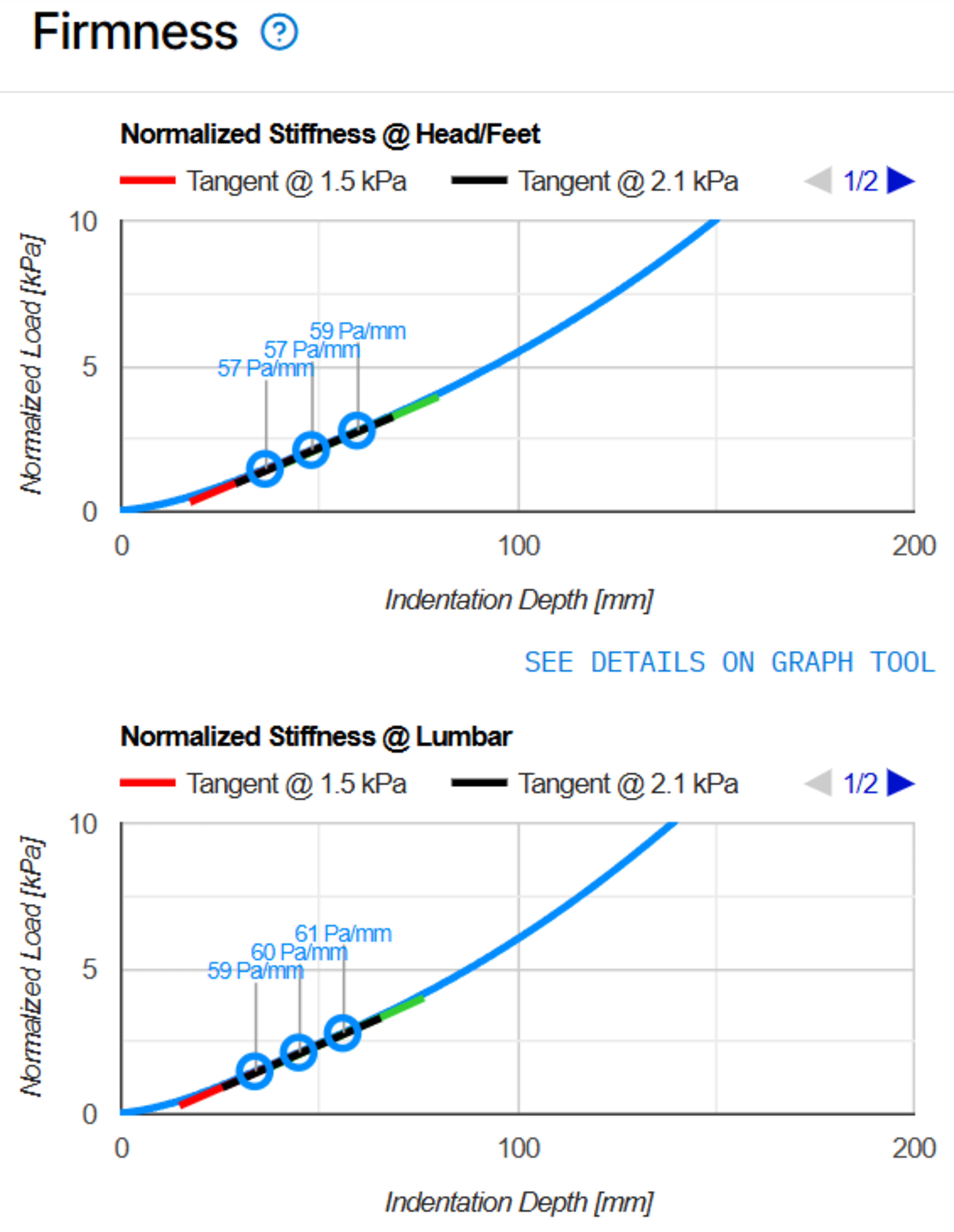
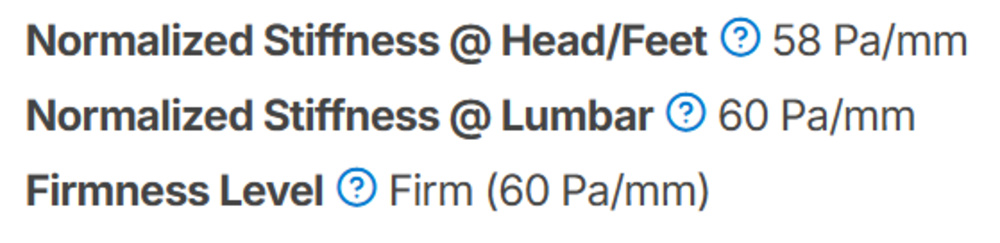
During the test design phase, we observed that a single firmness rating isn't always enough to tell if an individual will find a mattress comfortable.
As a first step, our testers tried different mattresses for different sleeping positions. When using measured firmness as the sole metric to match our tester's preference, the results didn't always match our expectations. For example, one side sleeper liked the Sleep On Latex Pure Green Organic, a very firm mattress, despite general guidelines suggesting they would need something much softer to avoid putting too much pressure on their arm and shoulder.
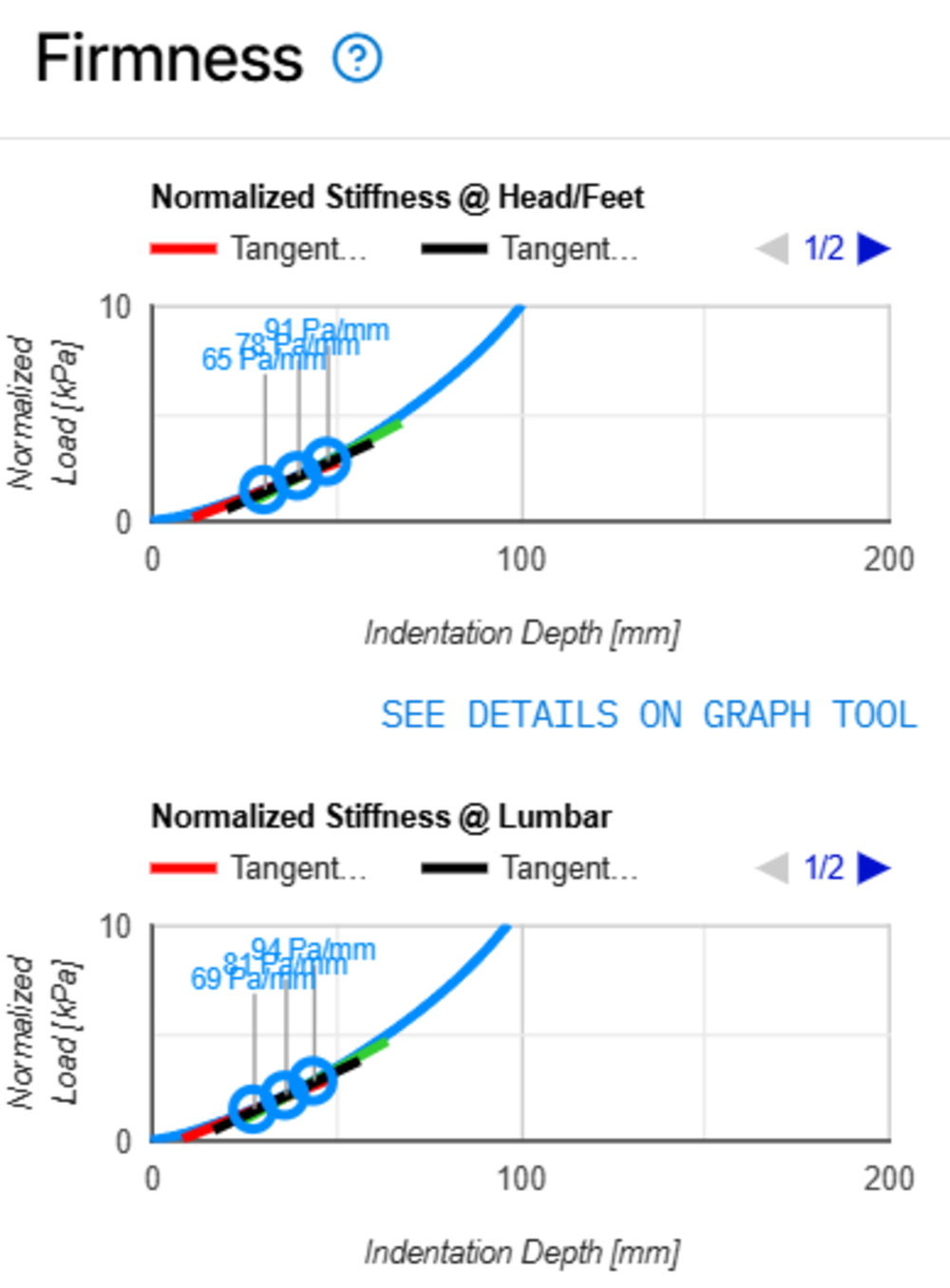
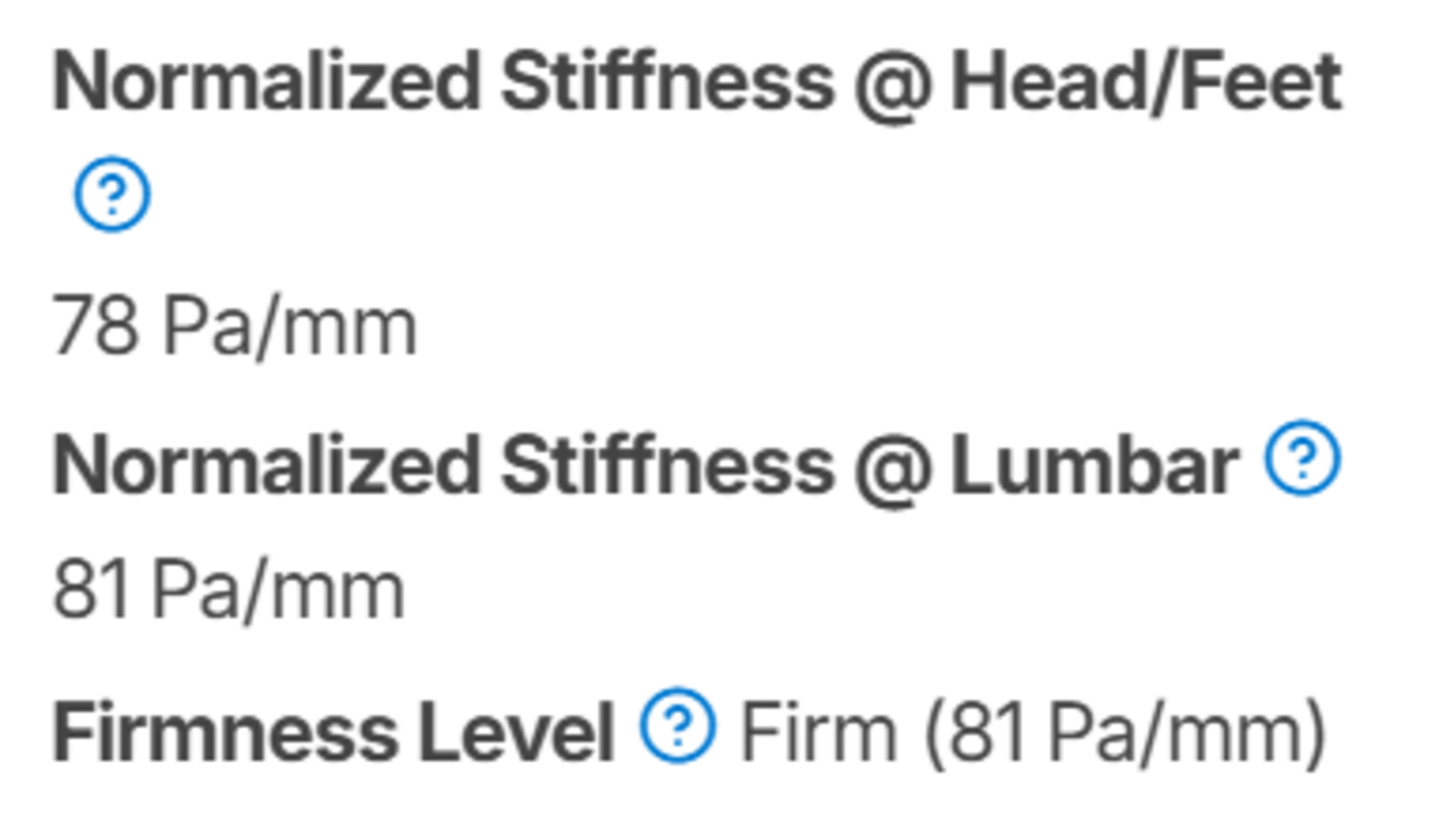
Of course, trying out a mattress for a few minutes has its own limitations, as you may have experienced when shopping for a mattress in person. You may have a different opinion about how firm a mattress feels and how comfortable you are on it after a few days or even weeks of actually sleeping on it. This is because, as our initial experiment suggests, using mattress firmness is a necessary way to determine sleeper comfort, but it isn't sufficient on its own; support and pressure are also key determinations once you consider sleeping position and body weight.
If you've ever shopped for a mattress online, you've likely heard that the right firmness is essential for proper spinal alignment, with firmer mattresses often recommended as more supportive options for heavier individuals. Many studies about mattress comfort also focus on spinal alignment. For example, one study1 looking at how varying the stiffness of different zones in a mattress affects spinal alignment for men of different body weights and proportions found that heavier individuals benefit from extra stiffness in the middle of the mattress for spinal alignment. This concept can be interpreted as 'Support', with different levels of mattress stiffness corresponding with different levels of support. In simpler terms, support is how well the mattress prevents the heaviest parts of your body from sinking in further than the rest.
Firmer mattresses may be more supportive, but not everyone will be comfortable on a very firm mattress, even if it is very supportive. You've probably experienced the feeling of an overly firm sleeping surface, and some mattress studies also back up the importance of pressure relief for comfort. For example, a study2 about the back sleeping position found that softer mattresses relieve more pressure. If a mattress doesn't relieve enough pressure, it can feel uncomfortable and even painful. While support is important to maintain the natural curvature of the spine, firmer isn't necessarily best, as the study suggests a 'Medium' mattress is more comfortable for more back sleepers.
1. Spine alignment in men during lateral sleep position: experimental study and modeling, 2011, Karim Leilnahari, Nasser Fatouraee, Mahmoud Khodalotfi, Mohammad Amin Sadeghein & Yekta Amin Kashani
2. The Influence of Mattress Stiffness on Spinal Curvature and Intervertebral Disc Stress — An Experimental and Computational Study, 2022, T.T.-H.; Wang, Y.; Wong, D.W.-C.; Zhang, G.; Tan, Q.; Chen, T.L.-W.; Zhang, M.
Support and Pressure Relief
Overall, both support and pressure relief are important aspects in mattress comfort. However, a mattress's support and pressure relief performance depend on your individual weight. To assess mattress support and pressure relief using a sleeper's body weight, we created a model based on measurements of the indentation of different sleepers on mattresses ranging from plush to extra firm. We then use the model and the mattress's firmness data to extrapolate how much a person will sink into the mattress, depending on their weight.
This data provides our Body Conformity and Support test results, which allow you to see a mattress's support and pressure relief performance tailored to your specific weight. Our scores are based on the mattress's performance for different weight categories: Lighter Sleepers or 50 kg/110lb; Average Sleepers or 80 kg/172lb; and Heavier Sleepers or 110 kg/242lb.
Body Conformity

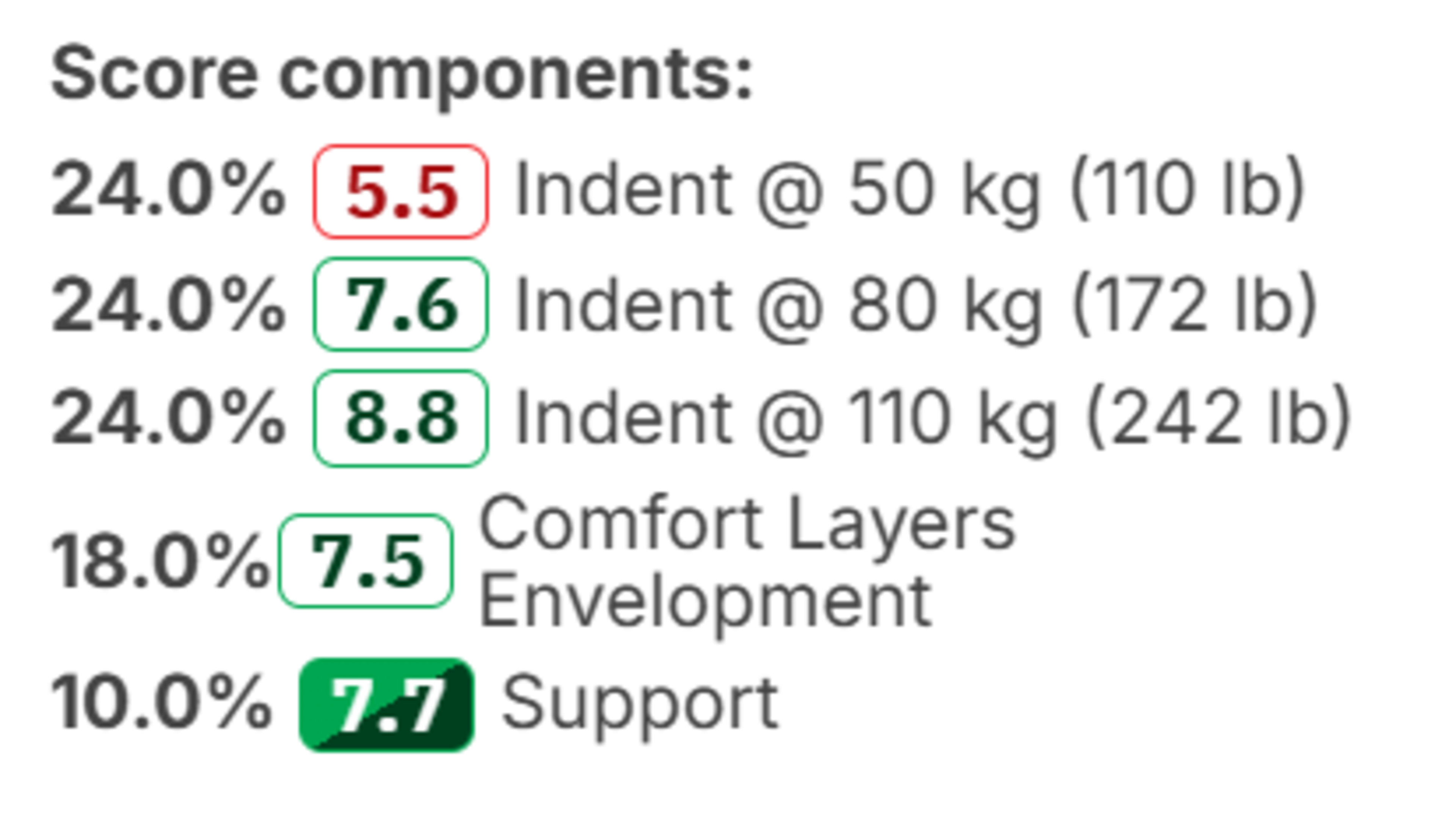
The Body Conformity test is based on the indentation of the shoulder in the side sleeping position. More conforming mattresses score higher, and allow you to sink in more, which means they have a softer feel and better pressure relief performance.
Support
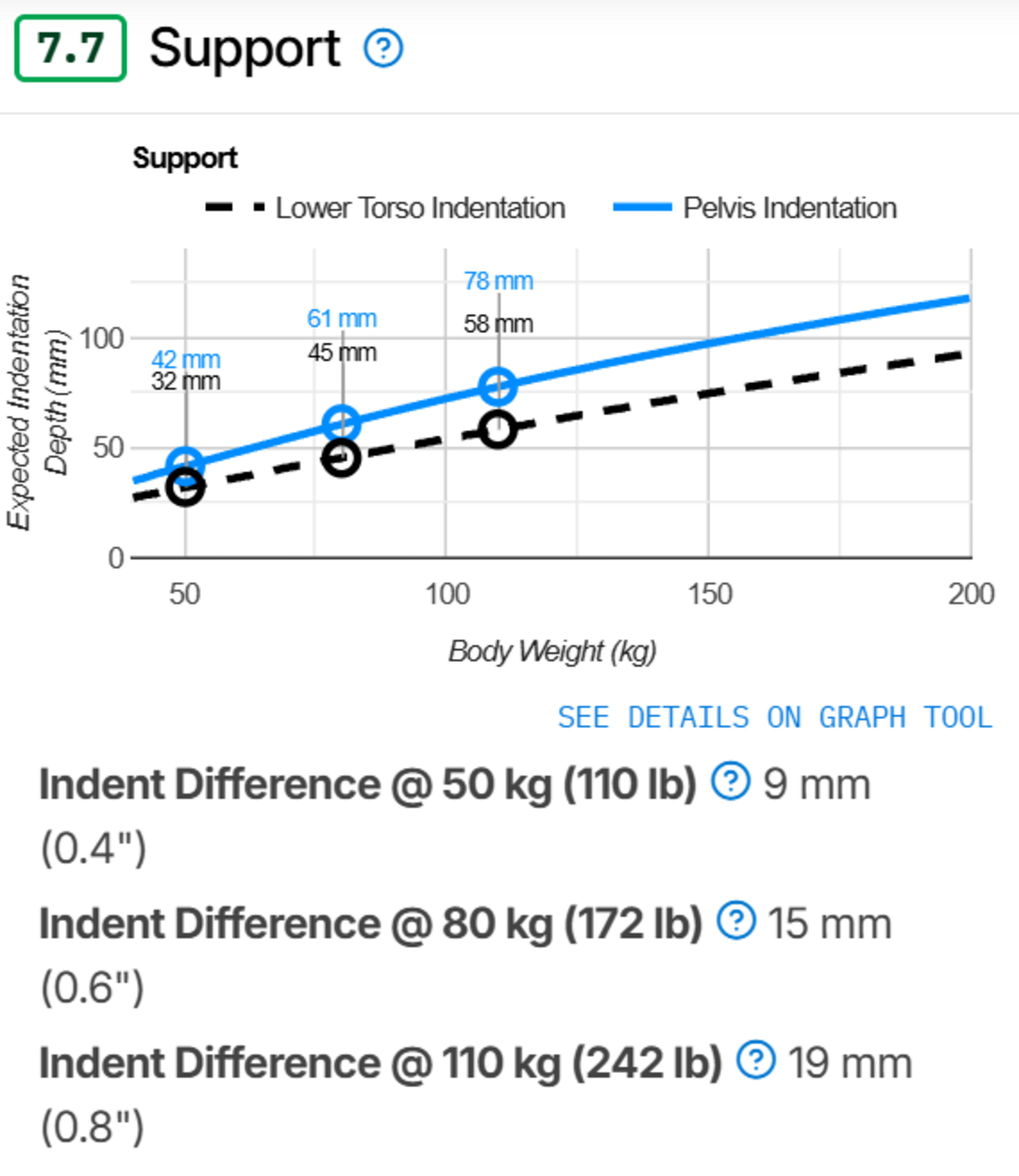
For the Support test, we use our indentation measurements at the head/foot of the mattress, as well as the lumbar area. Comparing the indentation in those two areas, we extrapolate how well the mattress will support the heavier parts of your body, depending on your weight, to keep the spine aligned. Mattresses with a smaller difference in indentation at the head/foot and lumbar area get a higher score for support.
Comfort Layers Envelopment
| Before | After |
 |
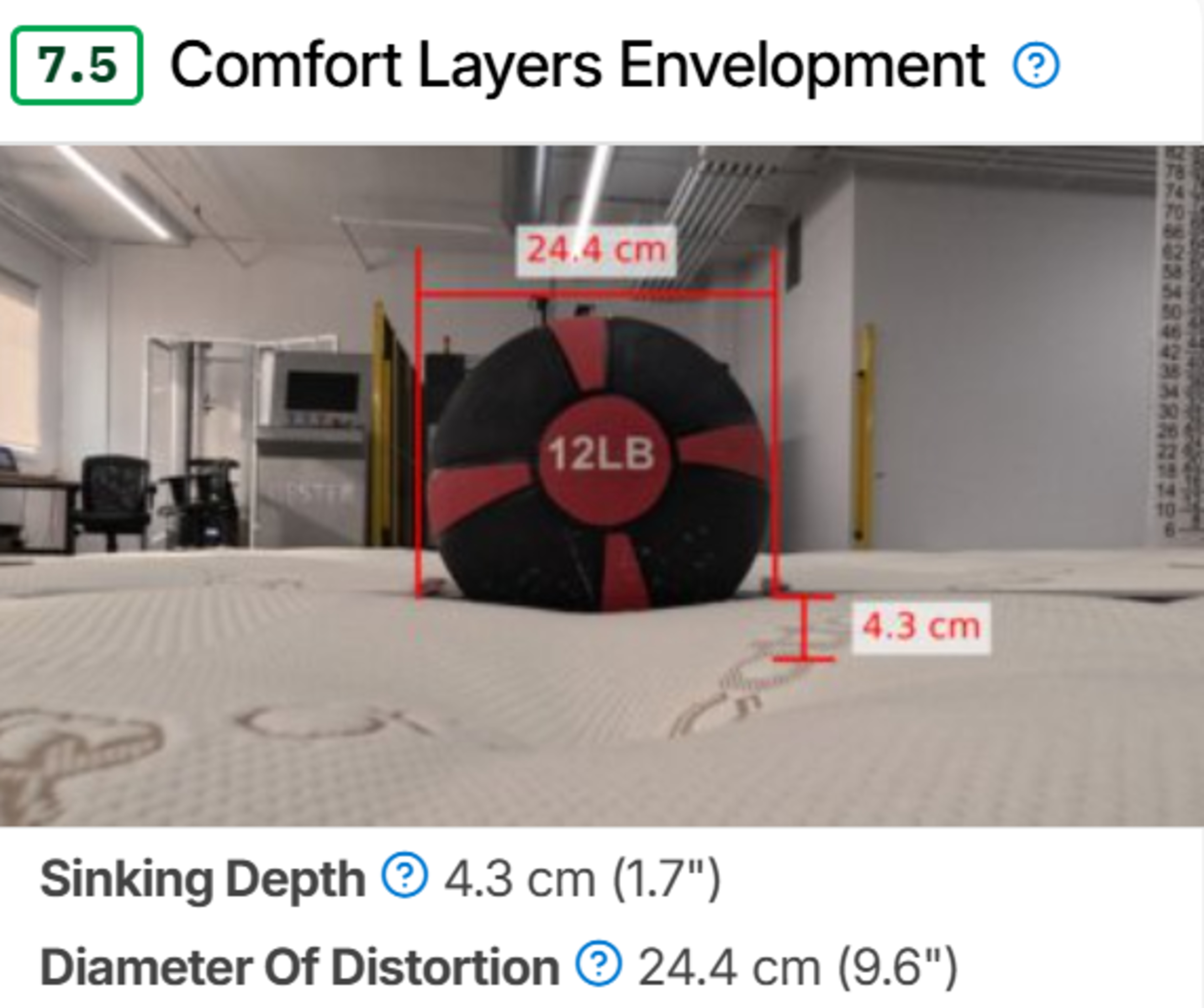 |
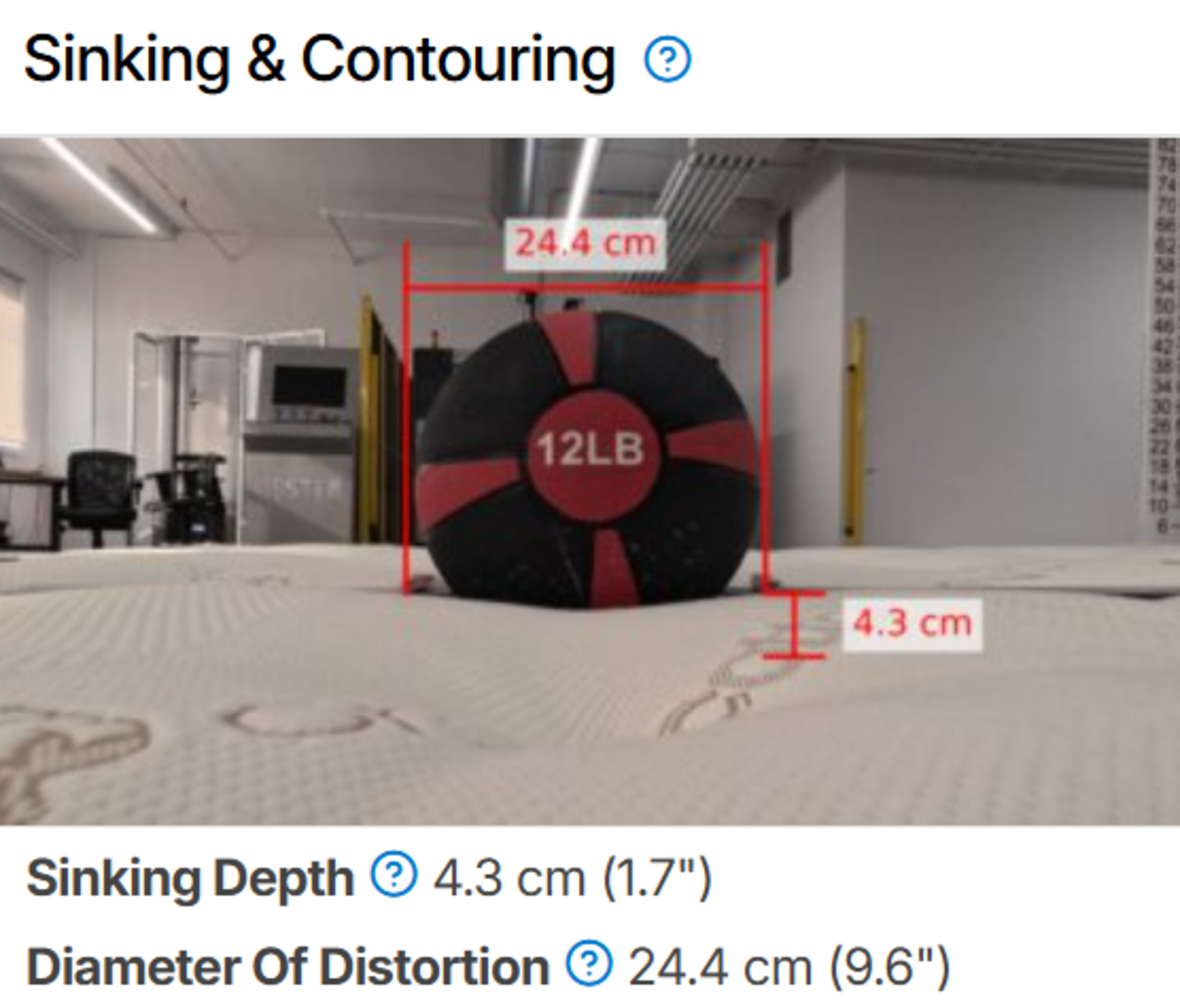
The Sinking & Contouring test has been renamed to Comfort Layers Envelopment, since both sinking and contouring are factors in how enveloping or hugging a mattress feels. The results are the same, but are now scored, allowing you to easily see how a mattress's upper comfort layers impact its feel. Most people have a preference between a more enveloping mattress that you sleep 'in', or a less enveloping one that you sleep ‘on'. Very soft or contouring upper comfort layers help with pressure relief and result in a higher Comfort Layers Envelopment score; mattresses with a higher Comfort Layers Envelopment score will also score higher for overall Pressure Relief.
Bounciness
| Before | After |
 |
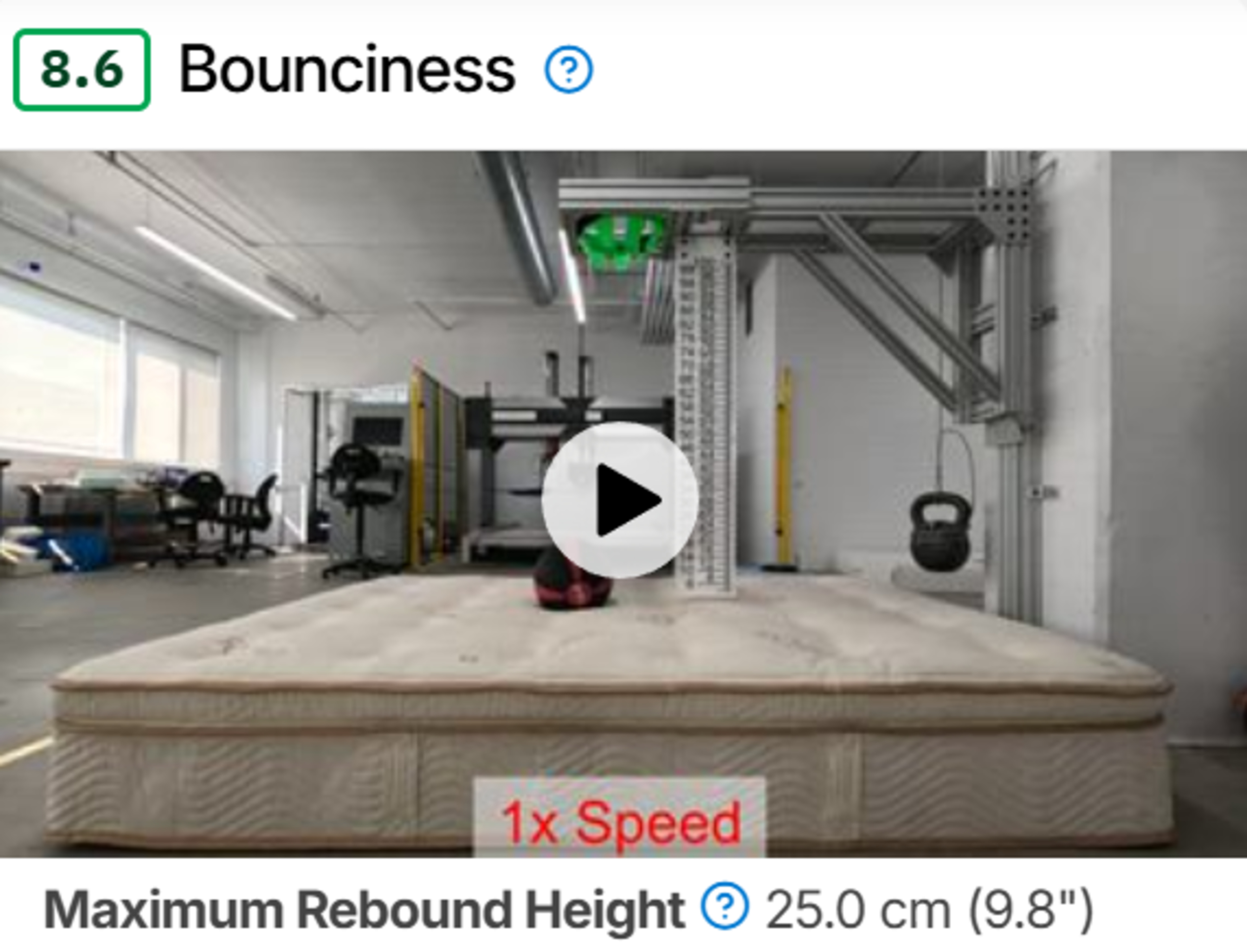 |
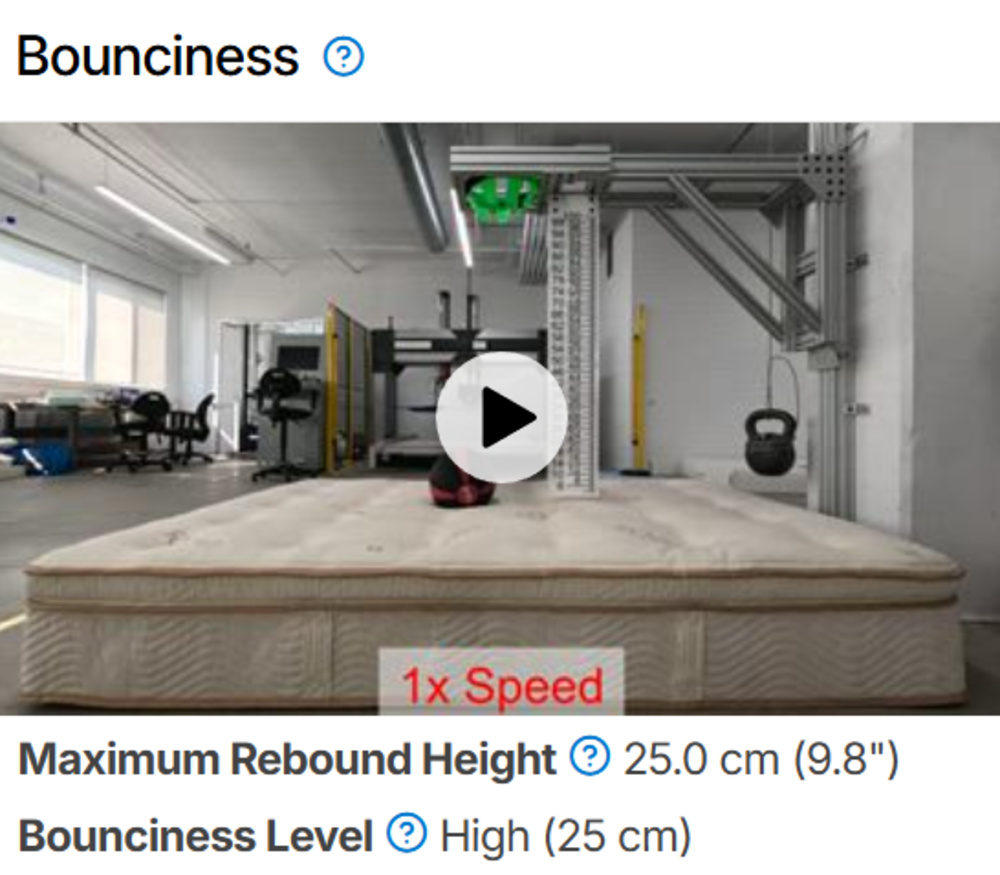
We've added scoring to the Bounciness test, and it's now a factor in a mattress's Responsiveness performance usage, since both responsiveness and bounciness affect how easy it feels to move around on a mattress.
Usages
| Before | After |
 |
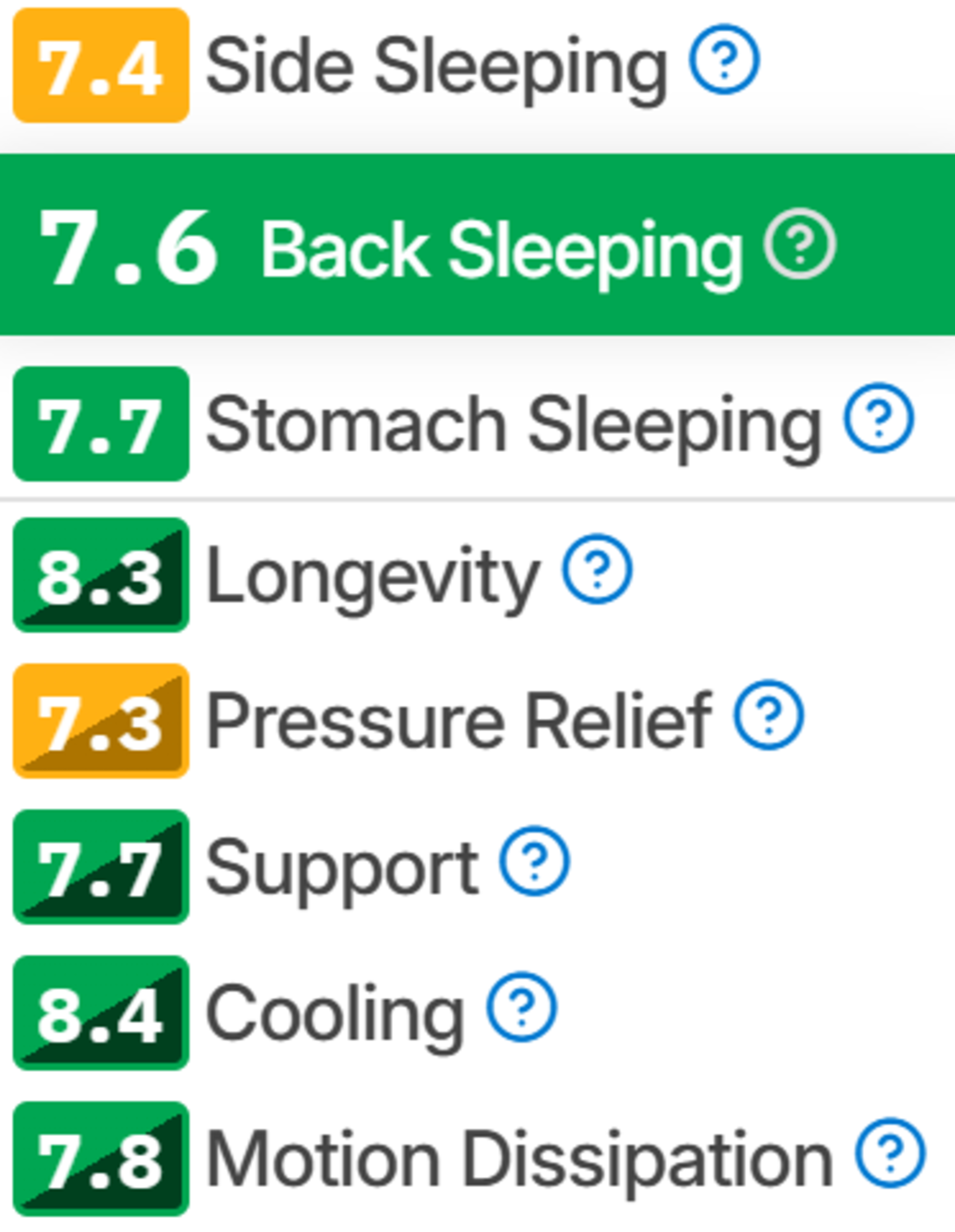 |
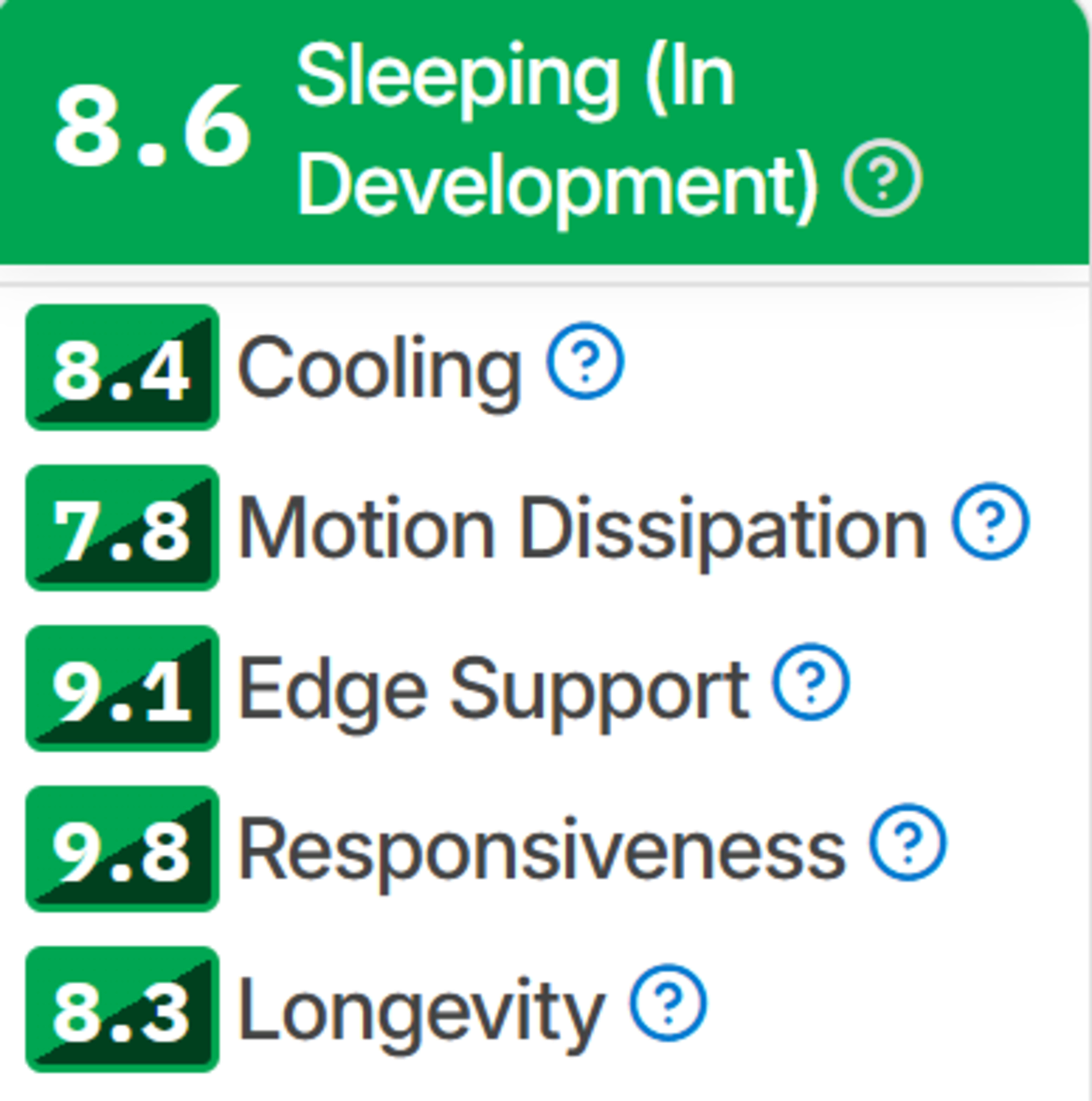
Depending on your sleeping position, you may require either more pressure relief or additional support. You can use the new Side Sleeping, Back Sleeping, and Stomach Sleeping verdicts to see whether a mattress offers the right feel for your sleeping position and weight. The Support and Pressure Relief performance usages provide an indication of the mattress's overall feel compared to other mattresses. We've also updated our Responsiveness verdict to include bounciness, as this is key when changing positions while sleeping.
Side Sleeping
In the side sleeping position, more of your weight is concentrated in a smaller area, making pressure relief more important. So, Body Conformity is the biggest factor in the Side Sleeping verdict, along with Comfort Layers Envelopment and Support.
Back Sleeping
Back sleepers need sufficient support for spinal alignment, but may also be most comfortable on a mattress that is soft enough to sink into slightly, thereby relieving pressure. Support is a bigger factor in the Back Sleeping verdict, but Pressure Relief (Body Conformity and Comfort Layers Envelopment) also contributes to the score.
Stomach Sleeping
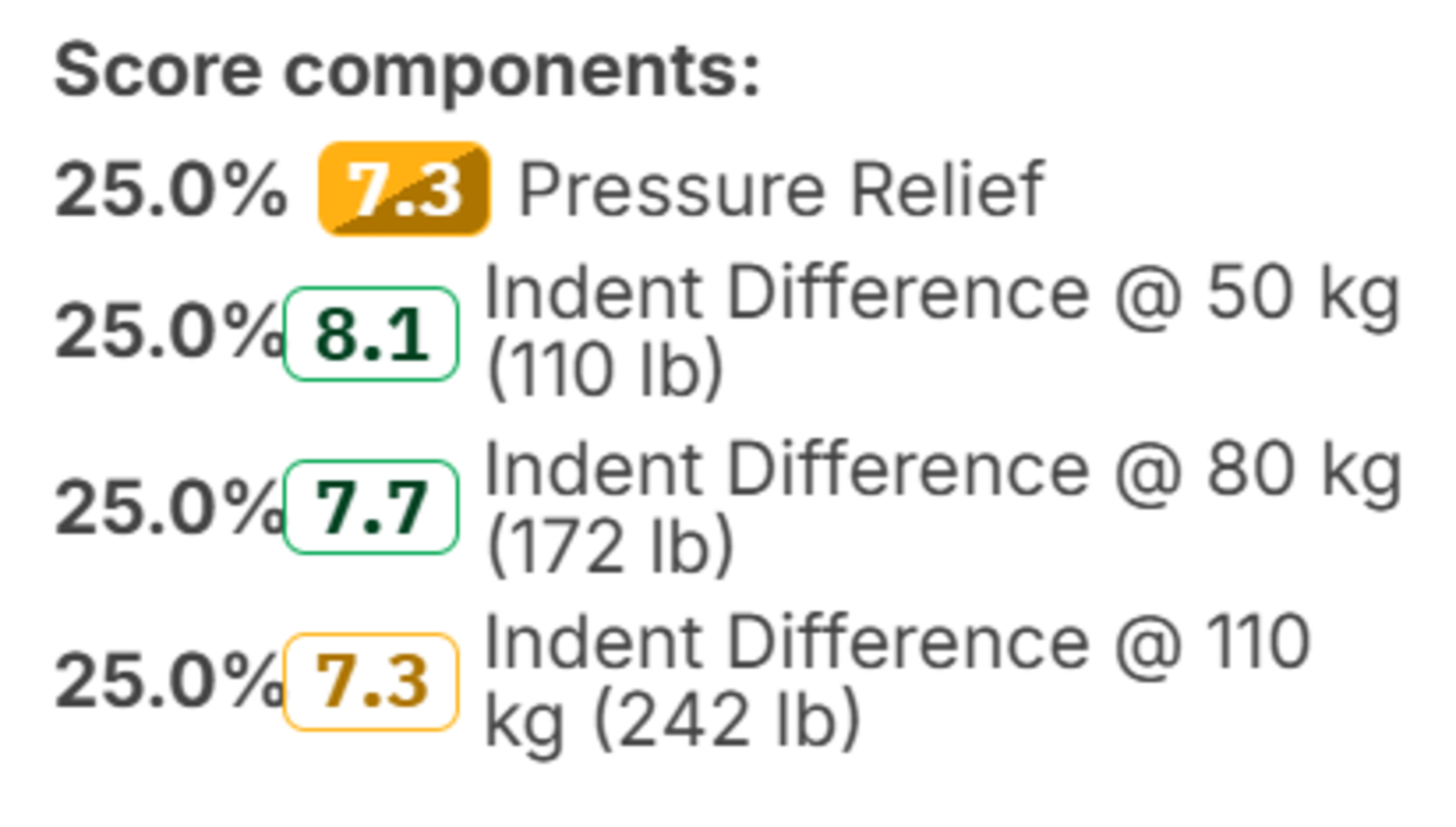
Support is especially important for stomach sleepers, as a mattress with insufficient support can cause your back to arch. Pressure Relief is a smaller aspect of the Stomach Sleeping verdict.
Pressure Relief
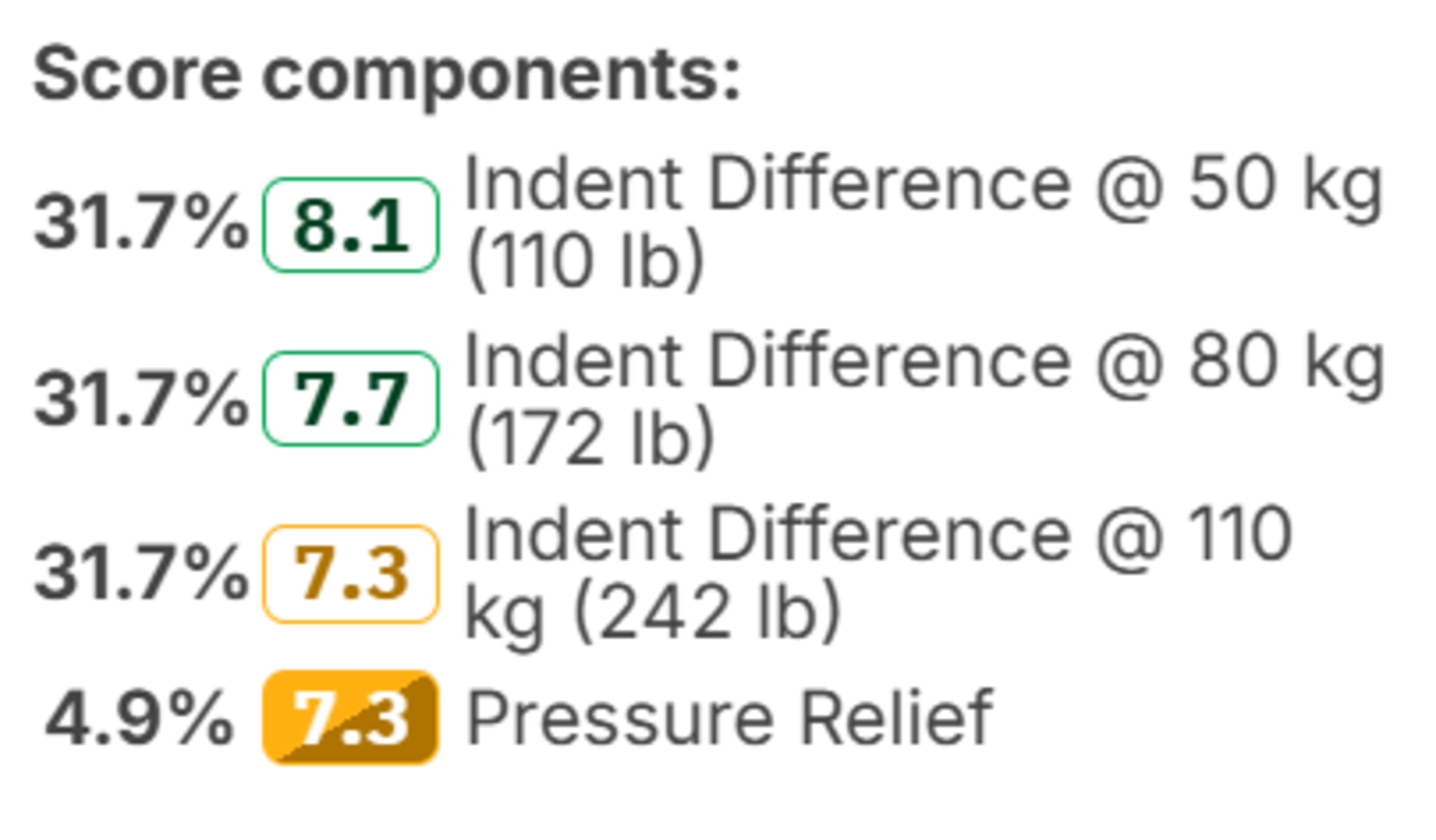
This performance usage factors in the mattress's Body Conformity score for each weight category, as well as Comfort Layers Envelopment, for an overall look at the mattress's Pressure Relief performance.
Support
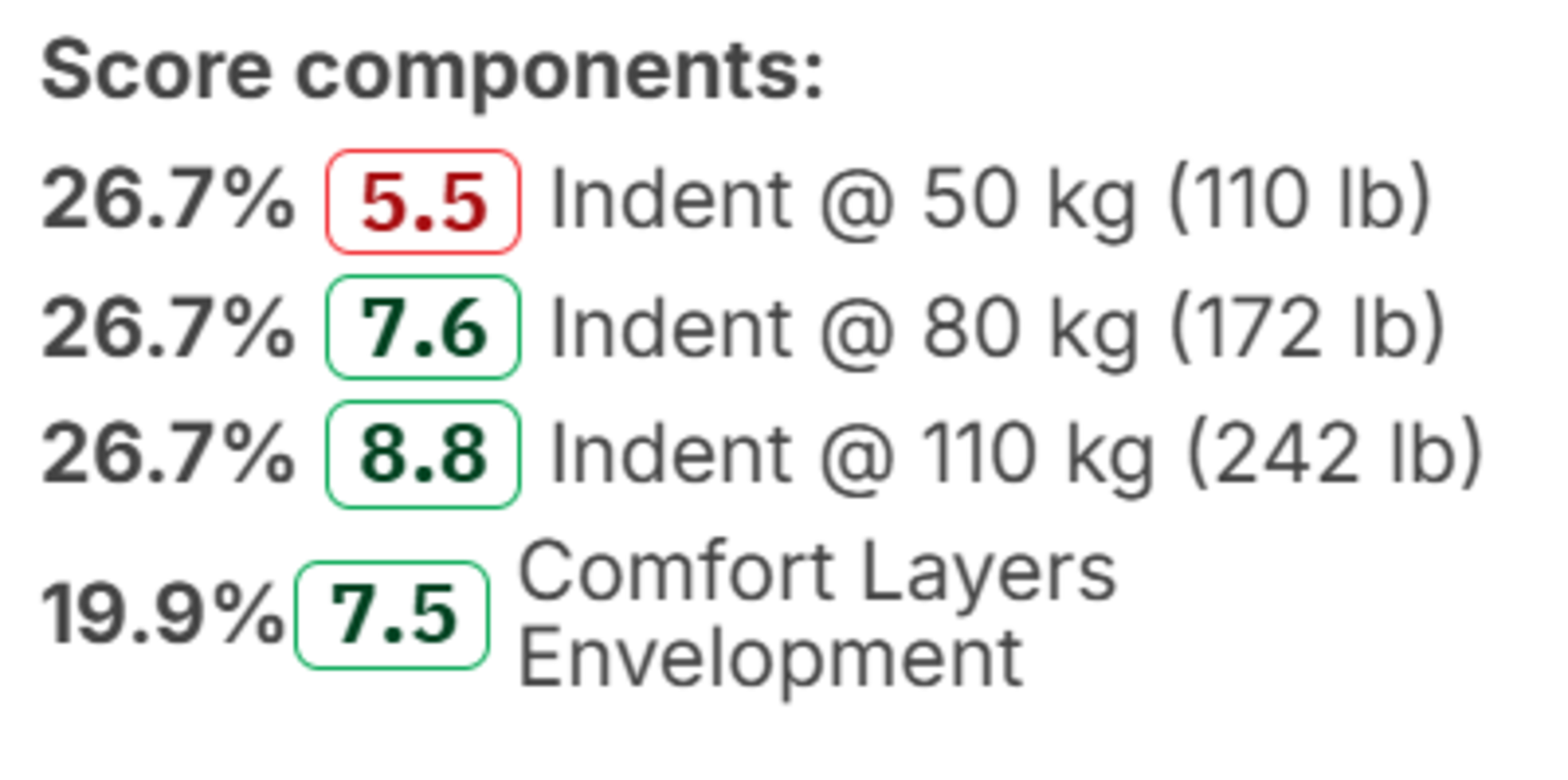
The Support performance usage score is based on the mattress's support performance for each weight category.
Responsiveness
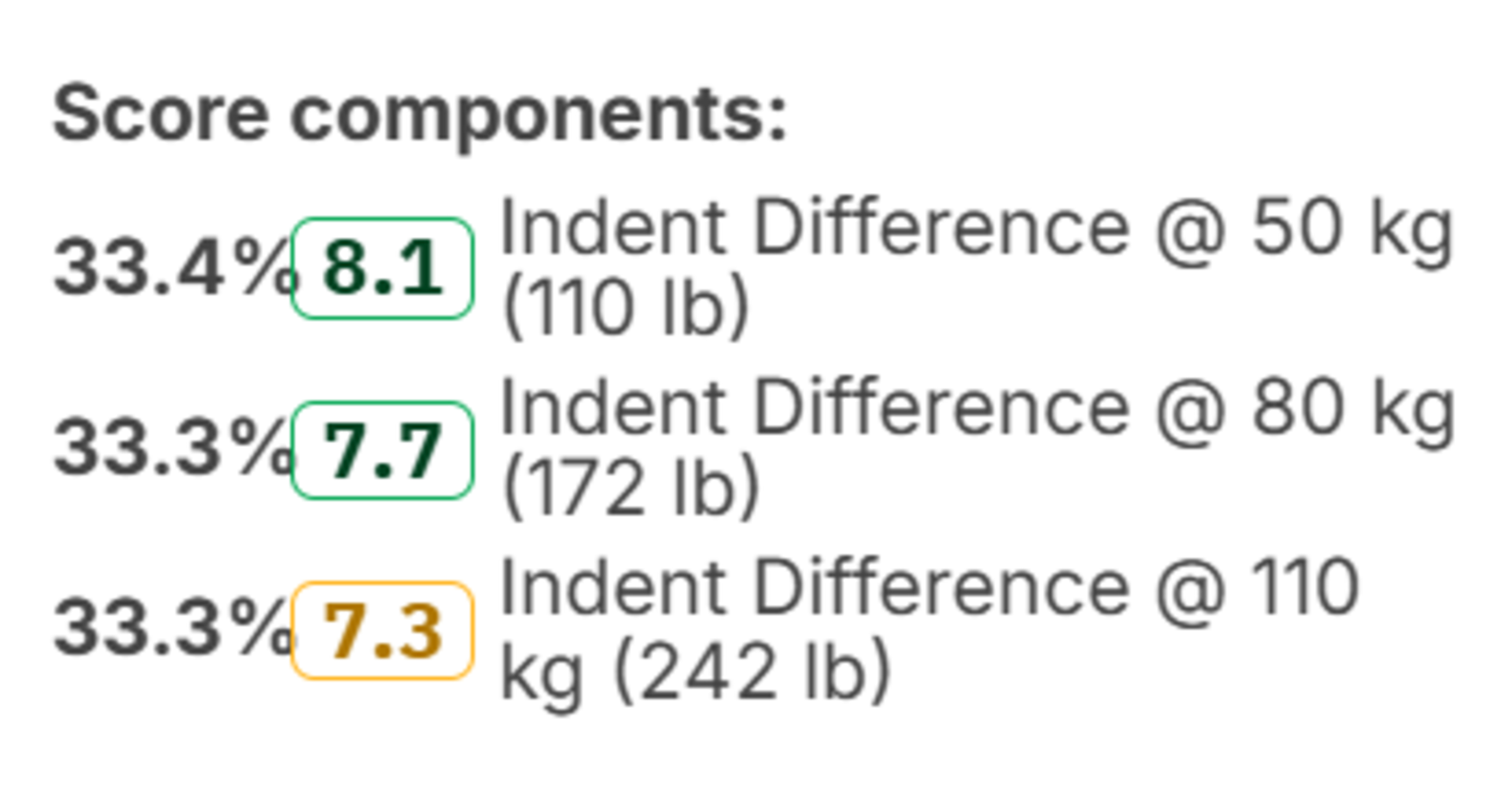
The Responsiveness performance usage score has been updated to factor in Bounciness, providing a more accurate overall assessment of how easy it feels to move around on a mattress.

Our new test bench should streamline the process of using our reviews to find your next mattress by including key information about how a mattress feels for different sleeping positions and body weights right at the top of our reviews. What do you think of these new changes? Is there anything else you'd like to see? Let us know in the comments!
40 Mattresses Updated
We have retested popular models. The test results for the following models have been converted to the new testing methodology. However, the text might be inconsistent with the new results.
- Bear Elite Hybrid
- Beautyrest Black
- Beautyrest Harmony Lux
- Beautyrest Mattress
- Beautyrest Silver BRS900
- Big Fig Mattress
- Boring Mattress
- Casper Snow
- Casper Snow (Canadian Version)
- DreamCloud Classic Hybrid
- DreamCloud Hybrid (Canadian Version)
- DreamCloud Premier Hybrid
- DreamCloud Premier Hybrid (Canadian Version)
- DreamCloud Premier Rest Hybrid
- Helix Midnight 2024
- Helix Midnight Luxe 2024
- Helix Midnight Luxe 2025
- Nectar Classic
- Nectar Classic Hybrid
- Nectar Premier
- Nectar Premier Copper
- Nectar Premier Hybrid
- Novaform ComfortGrande Plus
- Novaform Legacy
- Novaform Serafina Pearl
- Puffy Lux
- Puffy Lux (Canadian Version)
- Puffy Royal
- Purple Mattress
- Saatva Classic (Luxury Firm)
- Saatva Latex Hybrid
- Saatva Rx
- Sealy Posturepedic Hybrid
- Sealy Posturepedic Plus Mount Auburn
- Serta Perfect Sleeper Innerspring
- Sleep On Latex Pure Green Organic
- Stearns & Foster Lux Estate
- Tempur-Pedic TEMPUR-Adapt
- WinkBeds The WinkBed
- Zinus Original Green Tea 2024
