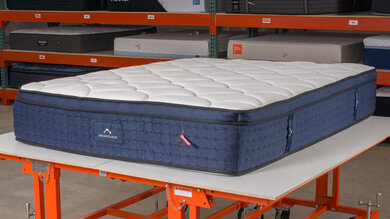
The DreamCloud Premier Hybrid (Canadian Version) is a budget-friendly hybrid mattress. It includes layers of polyfoam and memory foam above its pocket coil support layer. The foams are CertiPUR-US certified, meaning they have low VOC emissions and don't contain chemicals like formaldehyde.
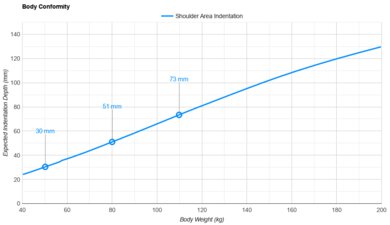
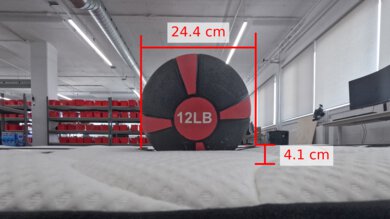
It's medium-firm, making it suitable for light and average back and stomach sleepers. Heavier back and stomach sleepers may want something firmer for proper spinal alignment, and most side sleepers will want a plusher mattress for better pressure relief. You don't sink very deeply into its upper layers, but it has high contouring, so it molds around your body without hugging or enveloping. It's moderately bouncy and has good responsiveness, so while it doesn't push back against your movements instantly, it doesn't make you feel stuck in place.
Our Verdict
-
4.3Light Weight
-
6.5Average Weight
-
7.9Heavy Weight
Excellent edge support, so you can comfortably sit or sleep on the edge.
Medium-firm feel suitable for most back and stomach sleepers.
Too firm for most side sleepers.
May not be firm enough for heavier back and stomach sleepers.
-
7.4Light Weight
-
6.4Average Weight
-
5.6Heavy Weight
Excellent edge support, so you can comfortably sit or sleep on the edge.
Medium-firm feel suitable for most back and stomach sleepers.
Too firm for most side sleepers.
May not be firm enough for heavier back and stomach sleepers.
-
7.7Light Weight
-
6.5Average Weight
-
5.4Heavy Weight
Excellent edge support, so you can comfortably sit or sleep on the edge.
Medium-firm feel suitable for most back and stomach sleepers.
Too firm for most side sleepers.
May not be firm enough for heavier back and stomach sleepers.
Changelog
- Updated Mar 09, 2026: We converted this review to Test Bench 1.2. We've added sub-usages to the sleeping position usages in the Our Verdict section to clearly show the suitability of a mattress for your weight and sleeping position.
- Updated Feb 12, 2026: We converted this review to Test Bench 1.1. We've added new tests, including Body Conformity, Support, and Comfort Layers Envelopment, and also added scoring to the Bounciness test. Our usage scores have also changed, with new usages 'Side Sleeping,' 'Back Sleeping,' and 'Stomach Sleeping' replacing the 'Sleeping' verdict. We've also added 'Pressure Relief' and 'Support' performance usages. You can find more details in the full changelog.
-
Updated Oct 06, 2025:
We rewrote portions of this review to align with Test Bench 1.0.1, which adds a Longevity verdict and a score to the Foam Layer Mass Density box for users interested in the mattress's durability.
- Updated Oct 06, 2025: Converted this review to Test Bench 1.0.1. We've added scoring to the Foam Layer Mass Density section and a new 'Longevity' performance usage. Read more about it in our Changelog.
-
Updated Sep 18, 2025:
We mentioned the recently reviewed DreamCloud Premier Rest Hybrid in the Edge Support box to emphasize the excellent edge support of this mattress.
- Updated Aug 20, 2025: Review published.
- Updated Aug 05, 2025: Early access published.
- Updated Jul 23, 2025: Our testers have started testing this product.
Test Results
Longevity
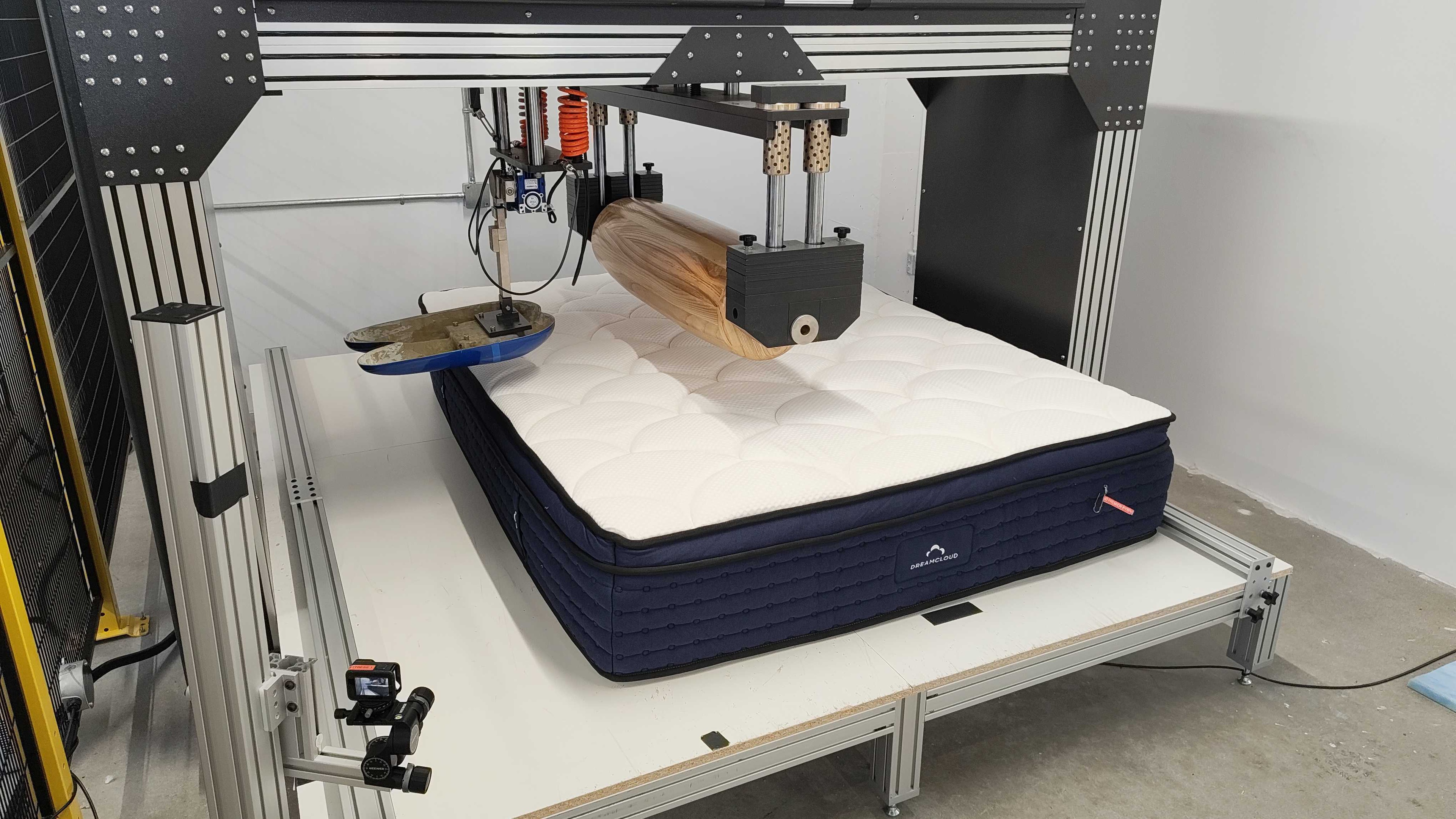
The DreamCloud Premier Hybrid (Canadian Version) is not a durable mattress. While the polyfoam and memory foam layers in the quilted top are just dense enough to be considered good quality, the polyfoam transition layer isn't. It's less dense and doesn't meet the standard for good quality, affecting the overall durability of the mattress. Overall, the mattress will lose its shape faster than models made with better-quality foam.
Excellent edge support, so you can comfortably sit or sleep on the edge.
Medium-firm feel suitable for most back and stomach sleepers.
Too firm for most side sleepers.
May not be firm enough for heavier back and stomach sleepers.
Low-quality foam in the transition layer makes the mattress less durable.
This mattress uses a combination of good-quality and lower-quality foam. Both the memory foam and polyfoam layers in the quilted top are dense enough to meet the standard for good quality. The results listed for 'Quilted Top Fill' are for the memory foam layer. The quilted top's polyfoam layer has a density of 29.1 kg/m3 or 1.8lb/cu.ft. These layers will resist sagging and indentations longer than lower-quality foams. The polyfoam transition layer is lower quality, however, and will begin to lose its shape before higher-quality foam.

Pressure Relief
Excellent edge support, so you can comfortably sit or sleep on the edge.
Medium-firm feel suitable for most back and stomach sleepers.
Too firm for most side sleepers.
May not be firm enough for heavier back and stomach sleepers.
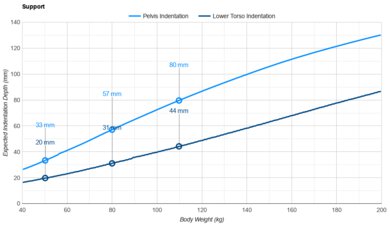
Support
Excellent edge support, so you can comfortably sit or sleep on the edge.
Medium-firm feel suitable for most back and stomach sleepers.
Too firm for most side sleepers.
May not be firm enough for heavier back and stomach sleepers.
Cooling
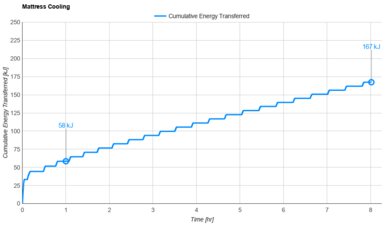
The DreamCloud Premier Hybrid (Canadian Version) has very good cooling. It won't make most people feel hot. However, it feels somewhat warm when you first get into bed, so if you have difficulty falling asleep because you feel overheated, it's not a great option. That said, it's better at dissipating heat overnight, so you're not as likely to wake up boiling hot later on.
Excellent edge support, so you can comfortably sit or sleep on the edge.
Cooling enough for most people.
Medium-firm feel suitable for most back and stomach sleepers.
Too firm for most side sleepers.
May not be firm enough for heavier back and stomach sleepers.
Motion Dissipation
The DreamCloud Premier Hybrid (Canadian Version) has excellent motion dissipation. You'll only feel bigger movements near the source, and motion dissipates quickly. Overall, your partner's tossing and turning isn't likely to wake you up.
Excellent edge support, so you can comfortably sit or sleep on the edge.
You won't feel most movements.
Medium-firm feel suitable for most back and stomach sleepers.
Too firm for most side sleepers.
May not be firm enough for heavier back and stomach sleepers.
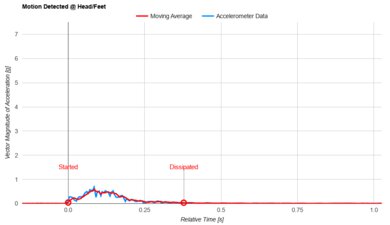
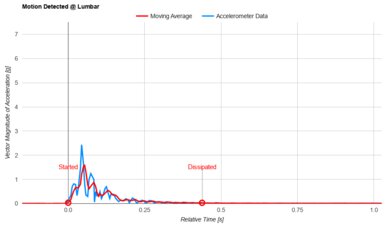
It has excellent motion isolation, so your partner's movements are unlikely to wake you. You'll feel bigger movements near the source, but very little motion travels across the mattress. Movement also dissipates quickly, so while you'll feel the initial shock when your partner rolls over, it won't seem like the mattress jiggles every time someone moves.
Responsiveness
The DreamCloud Premier Hybrid (Canadian Version) has good responsiveness. While it doesn't adapt instantly to your movements, it doesn't move slowly enough to make you feel stuck in place. Its design includes a layer of memory foam, which explains its slightly slow response, but it's a thin layer, and the other foam layers are more responsive.
Good responsiveness, so you don't feel stuck in place.
Excellent edge support, so you can comfortably sit or sleep on the edge.
Medium-firm feel suitable for most back and stomach sleepers.
Too firm for most side sleepers.
May not be firm enough for heavier back and stomach sleepers.
It has good responsiveness. However, unlike very responsive mattresses like the Saatva Latex Hybrid, it doesn't adapt to your movements immediately. It doesn't have a slow-moving feel and doesn't make you feel stuck in place.
The springs are moderately bouncy. They push back when you move, which helps make it easier to move around in your sleep and gives the mattress a somewhat springy feel.
It's a moderately bouncy mattress. Like a lot of hybrid models, it's not as bouncy as some innerspring models with less foam, such as the Beautyrest Silver BRS900.
The quilted layer has low resilience, or bounce, as a unit. The individual foams inside have different amounts of resilience: the memory foam upper layer has very little bounce. This is normal for memory foam, which doesn't push back or adapt to your movements quickly. The lower polyfoam layer is very resilient. This firmer layer has more 'push-back' and adds bounciness.
The transition layer of polyfoam isn't quite as resilient as the other polyfoam layer, but it has a bouncy feel.
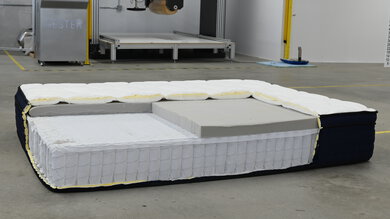
The DreamCloud Premier Hybrid (Canadian Version) is advertised as a 14-inch/36 cm mattress, but ours measured a little less at 13.8 inches/35 cm. You may need to use deep-pocket fitted sheets.
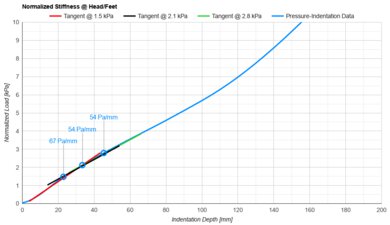
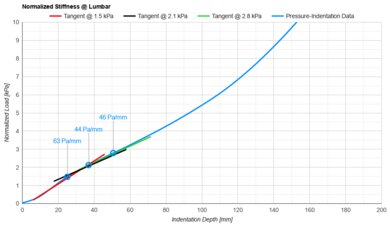
It's a medium-firm mattress. This firmness level is best-suited for light and average back and stomach sleepers. It may also offer enough pressure relief for heavier side sleepers. However, most lighter and average side sleepers will want a plusher mattress, while heavier back and stomach sleepers may want a firmer mattress for proper support and spinal alignment.
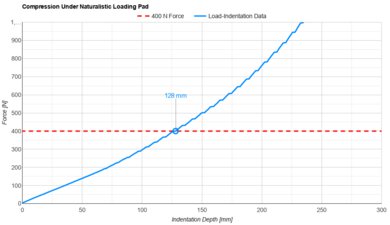
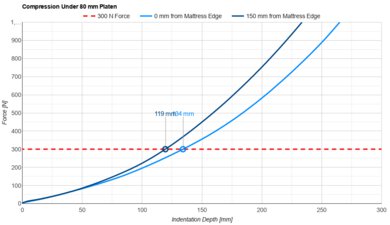
It has excellent edge support. The sides of the mattress don't compress very much when pressure is applied, so you can sit or sleep on the edges without feeling at risk of sliding off. This increases the comfortable sleeping surface and makes it easier to get in and out of bed. Notably, this mattress has much better edge support than other DreamCloud mattresses, like the DreamCloud Premier Rest Hybrid, which has edges that compress very easily.
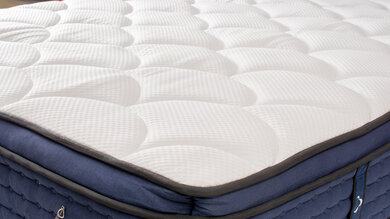
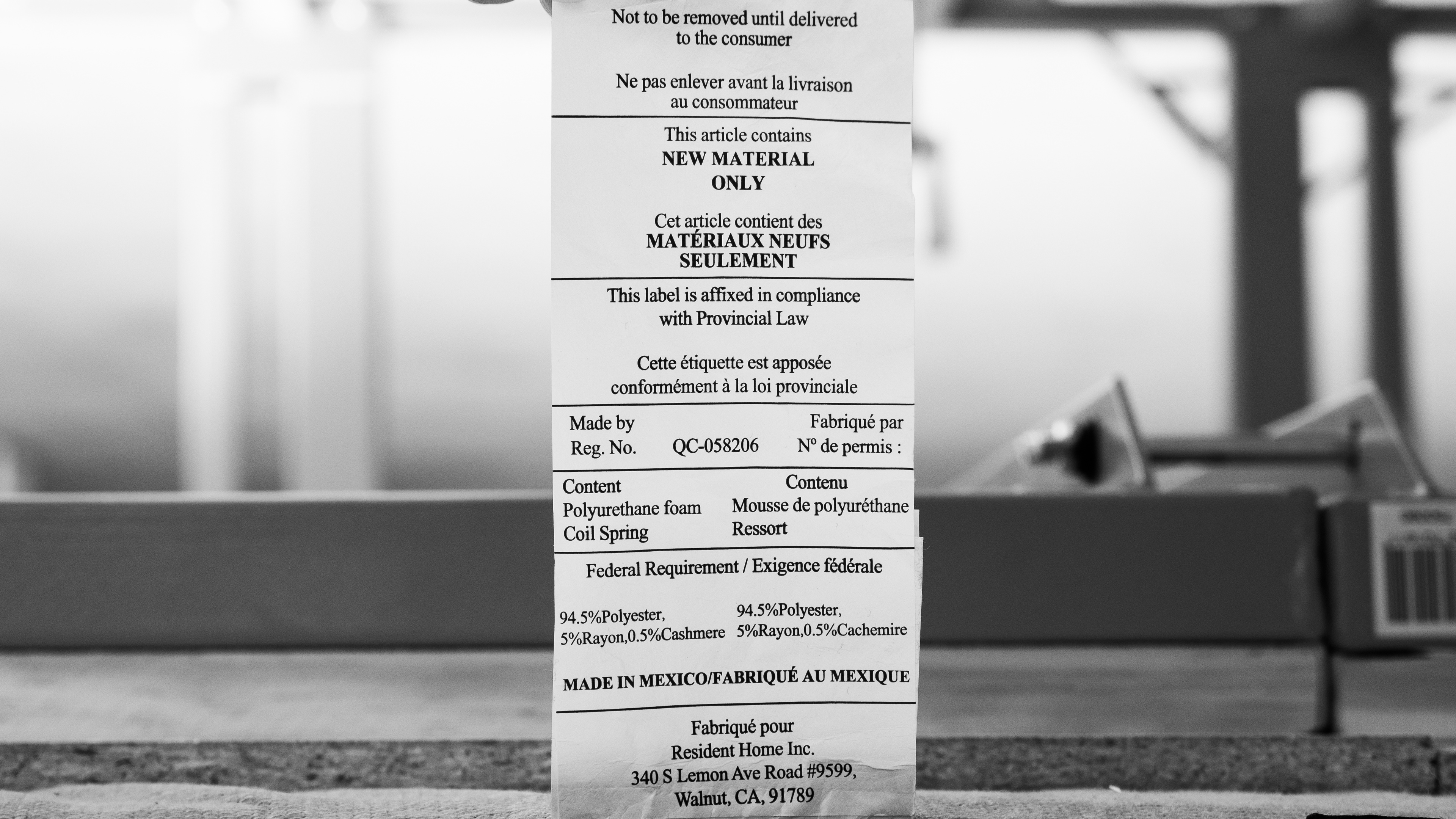
The 'Cashmere Blend Euro Top' cover contains 94.5% polyester, 5% rayon, and 0.5% cashmere. It's not meant to be removed and isn't machine-washable.
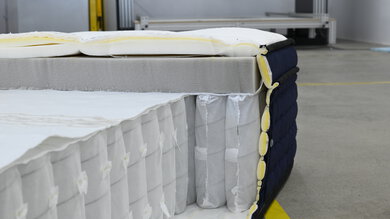
Thicker 13-gauge springs reinforce the edges of the mattress's spring layer. These springs offer more resistance than the rest of the layer's 14-gauge springs and contribute to the mattress's excellent edge support performance.
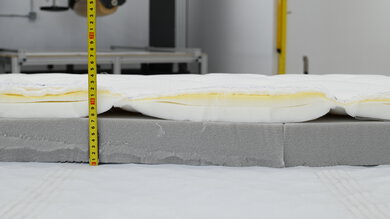
The quilted top has three distinct layers:
- Fiber Fill: 1.4 cm/0.6 inches
- Memory Foam: 1.3 cm/0.5 inches
- Polyfoam: 2.3 cm/0.9 inches
The whole layer is 5.0 cm/2.0 inches thick, so most people will compress it and also engage with the 6.7 cm/2.6 inches polyfoam transition layer, which prevents you from feeling the individual springs below.
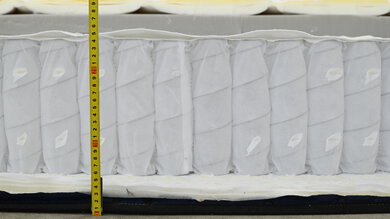
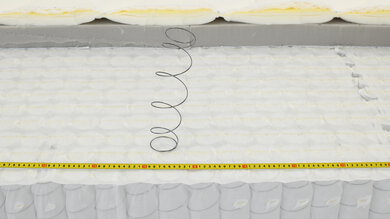
The support layers consists of medium-soft 14-gauge pocket coils, with firmer 13-gauge coils along the edges.
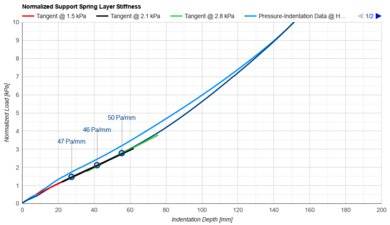
The spring layer is denser and significantly firmer overall than the lower-end variant of the mattress, the DreamCloud Hybrid (Canadian Version).
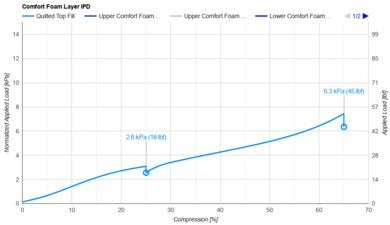
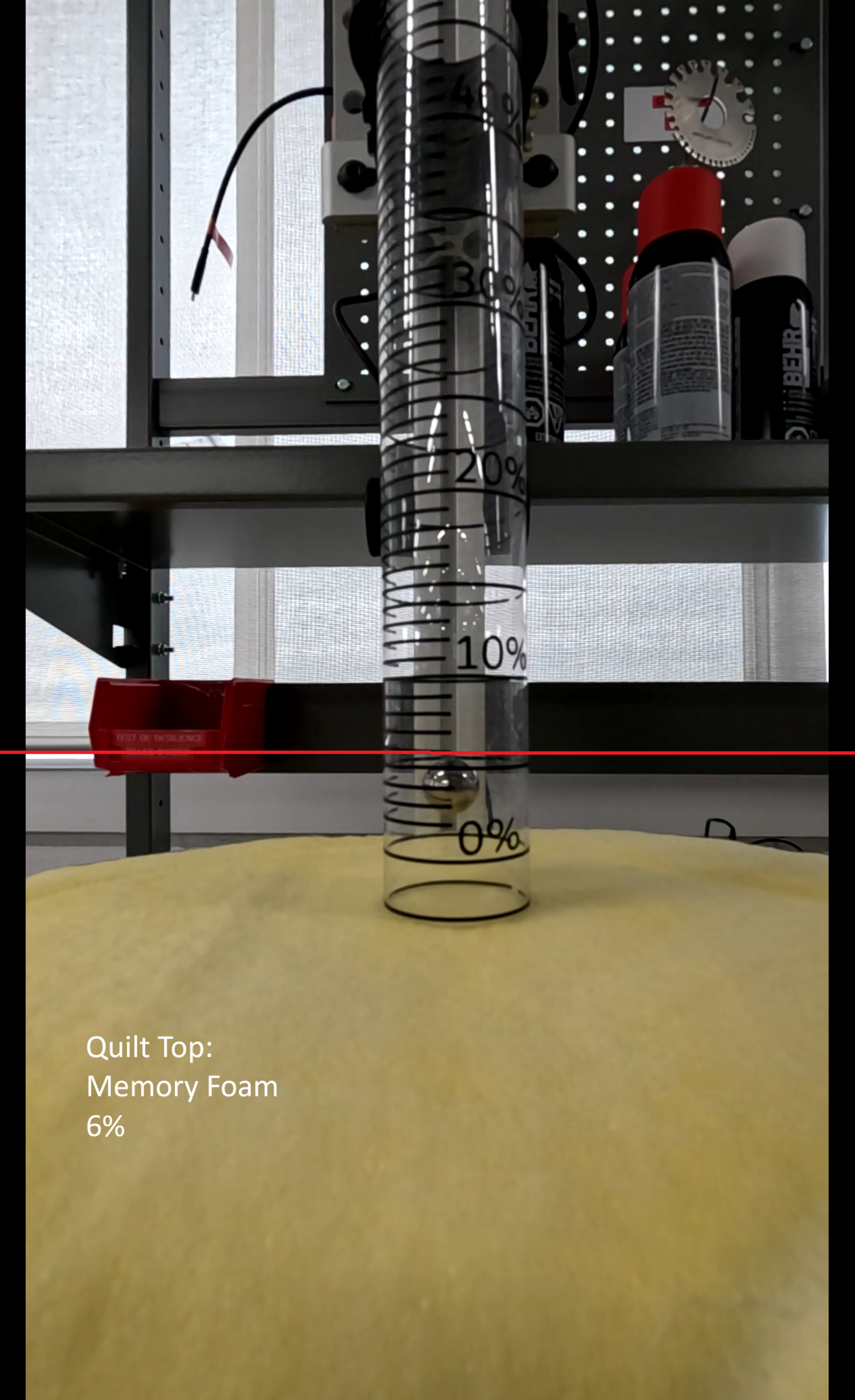
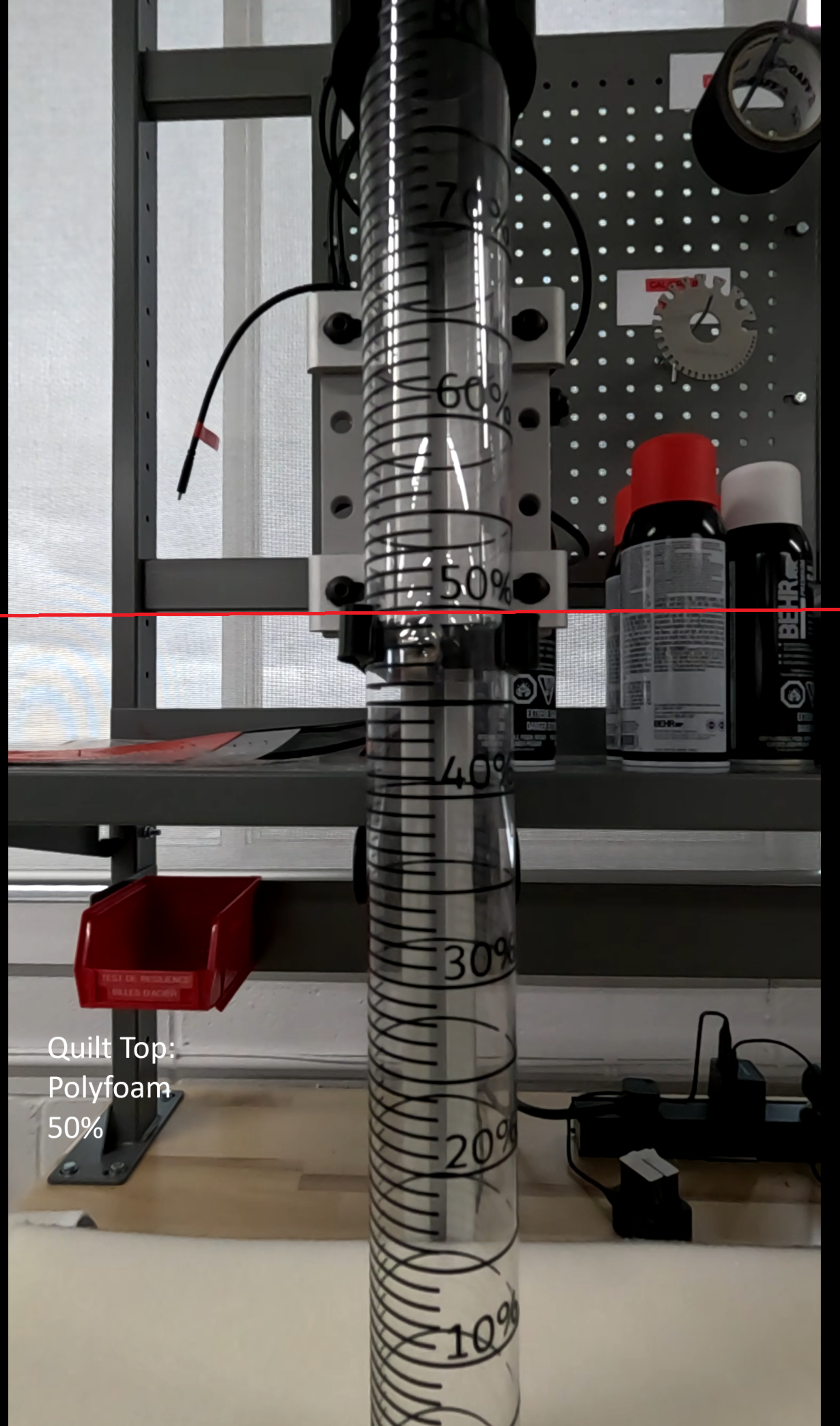
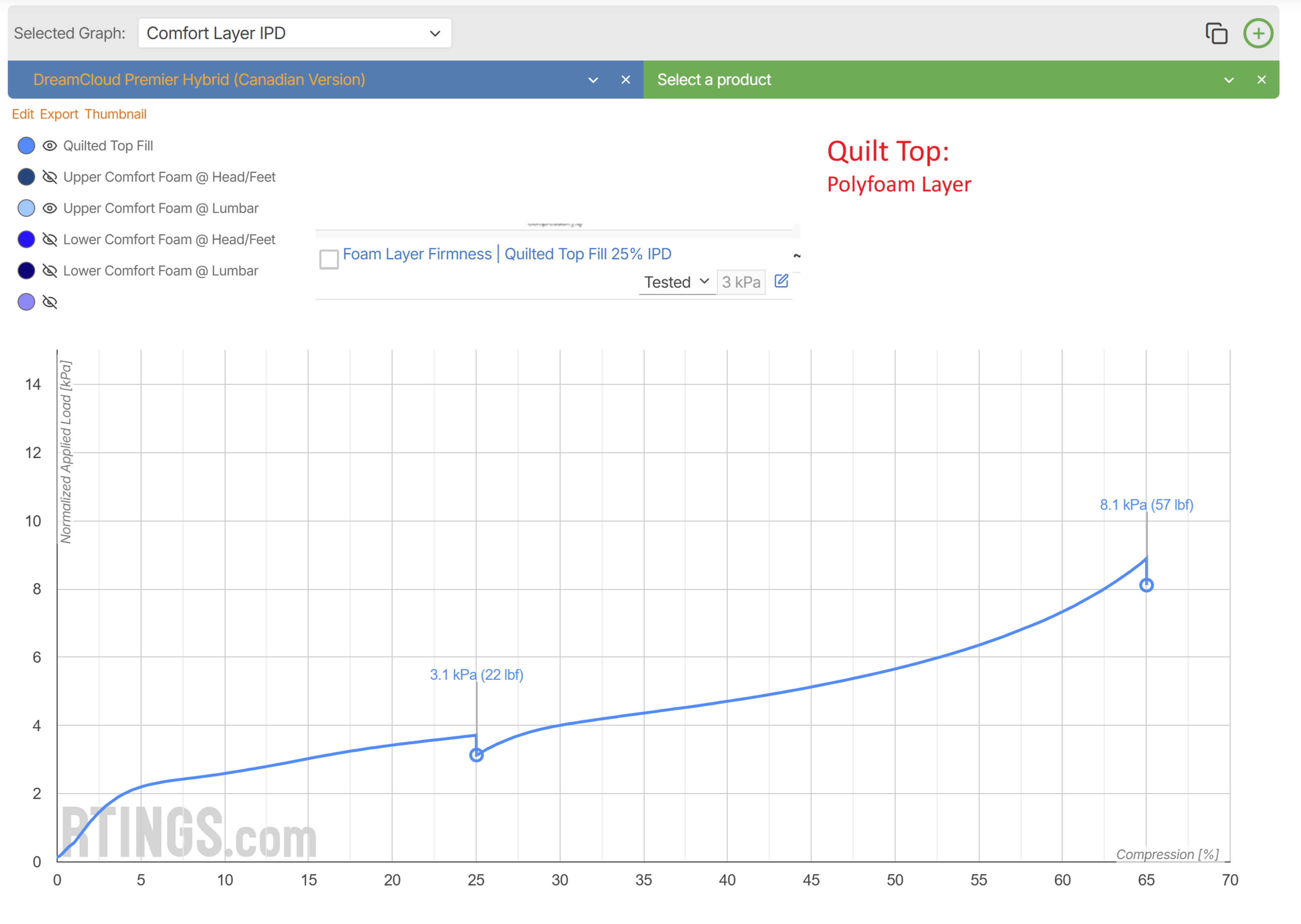
As a unit, the quilted top is medium-soft. The memory foam upper comfort layer is softer and the polyfoam has medium firmness. You'll sink into the memory foam layer, but it's only 1.3 cm/0.5 inches thick, and the polyfoam lower layer has medium firmness, so you won't sink as deeply into it. This helps explain the mattress's low sinking.
Here are the separate firmness results for the components of the quilted layer:
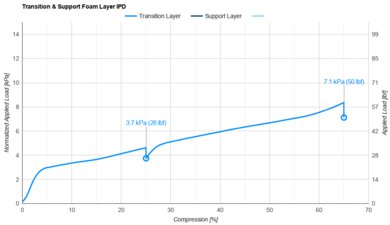
Below the quilted layer, there's a thick transition layer of polyfoam. It's the firmest foam layer, so it offers support if the heavier parts of your body compress the quilted top.

Popular Mattress Comparisons
The DreamCloud Premier Hybrid (Canadian Version) is a medium-firm hybrid mattress. It has low sinking but high contouring, so the mattress molds around you, but you still feel like you're sleeping 'on' it. It offers excellent edge support and motion dissipation, but hot sleepers might prefer the Purple Mattress, which has a similar feel and outstanding cooling. The Dreamcloud has good responsiveness, but doesn't adapt as quickly to your movements as the DreamCloud Hybrid (Canadian Version), which is also medium-firm but offers more sinking, so its upper layers feel a little more pillowy.
If you're looking for a recommendation, check out the best mattresses and best memory foam mattresses.
The DreamCloud Premier Hybrid (Canadian Version) is better than the DreamCloud Hybrid (Canadian Version). They perform similarly, except the Premier has a significantly better edge support performance, which creates a more comfortable sleeping space and makes it easier to get in and out of bed. That said, the Hybrid is more responsive, so it adapts to your movements faster. They're both medium-firm, but you sink a little more into the Hybrid, which some may prefer.
The DreamCloud Premier Hybrid (Canadian Version) and Casper Snow (Canadian Version) have different strengths. The DreamCloud has significantly better edge support, so you might prefer it if you want sturdy sides for sitting or sleeping on the edges. The Casper has better cooling, motion dissipation, and responsiveness. It's also a firmer mattress better-suited for heavier back and stomach sleepers.
The DreamCloud Premier Hybrid (Canadian Version) is better than the Puffy Lux (Canadian Version) for most people. The Dreamcloud has more bounce and is more responsive, so it feels easier to change sleeping positions. Its has significantly better cooling and slightly better motion dissipation and edge support. That said, if you're looking for a classic memory foam feel, you might like the Puffy's slow-moving feel better.
The DreamCloud Premier Hybrid (Canadian Version) outperforms the Novaform ComfortGrande Plus in most aspects. They're both Medium-Firm mattresses with some memory foam, but the DreamCloud is a hybrid mattress with a much bouncier and more responsive feel, so changing sleeping positions feels easier. It also offers significantly better edge support, which increases the comfortable sleeping space. That said, the Novaform's all-foam construction helps give it a significantly better motion dissipation performance, so light sleepers may prefer it.
The DreamCloud Premier Hybrid performs a bit better than the DreamCloud Premier Hybrid (Canadian Version), offering a more responsive feel and marginally better motion isolation and cooling. Otherwise, they feel very different and are suitable for different people. The Canadian version is medium-firm and better suited for back sleepers, while the U.S. version is medium-plush and best suited for side sleepers.
The Novaform DreamAway is a better mattress than the DreamCloud Premier Hybrid (Canadian Version), though the DreamCloud also has strengths to consider. The Novaform offers better support and pressure relief, making it a more comfortable mattress for most sleepers. However, the DreamCloud offers better motion dissipation and especially responsiveness, so it's easier to move around on and helps you sleep more peacefully with a partner who tosses and turns.
Differences Between Sizes And Variants
The DreamCloud Premier Hybrid (Canadian Version) comes in Twin, Twin XL, Full, Queen, and King. It comes in one firmness level (6.5/10 on DreamCloud's scale).
There's a different version of the DreamCloud Premier Hybrid available in the U.S. That version includes a layer of memory foam separate from its quilted layer and likely performs differently. Our results are only valid for the Queen-sized Canadian version. Here's a picture of our unit's label.
If you have this mattress, we invite you to share your experience in the comments.