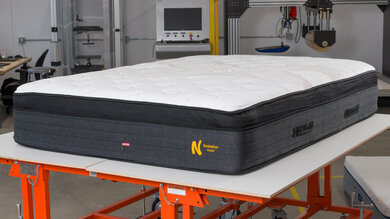
The Nolah Evolution is a mid-range hybrid mattress with a quilted top, contouring memory foam comfort layers, and a zoned pocket coil support layer. The cover is made of organic cotton, and the materials used in the mattress are certified by GREENGUARD Gold and Certi-PUR US.
Our Verdict
-
6.8Light Weight
-
8.5Average Weight
-
9.0Heavy Weight
The Nolah Evolution is well-suited for average-weight and heavier side sleepers. Its enveloping comfort layers allow people in those weight categories to sink in enough to relieve pressure when side sleeping. It also offers adequate body conformity for lighter people, so it's not a bad choice for side sleeping, but you might ideally want a mattress that offers more pressure relief if you always sleep on your side.
Excellent body conformity for average-weight people.
Fantastic body conformity for heavier people.
Body conformity for lighter people is just okay.
-
7.6Light Weight
-
7.1Average Weight
-
7.1Heavy Weight
The Nolah Evolution is best-suited for lighter back sleepers. It offers decent support for people in that weight category, so your hips won't sink in much further than the rest of your body. Its enveloping comfort layers help with pressure relief, making it a good choice if you prefer to sleep more in than on your mattress. While it's not an awful choice for average-weight and heavier back sleepers, as it offers adequate support, you might prefer a firmer mattress for better spinal alignment.
Decent support for lighter people.
Fairly supportive for average-weight and heavier people.
Not supportive enough for average-weight or heavier back/stomach sleepers.
-
7.4Light Weight
-
6.8Average Weight
-
6.8Heavy Weight
The Nolah Evolution isn't very well-suited for stomach sleeping overall. It's most supportive for lighter people, but its performance is still just decent, so you may want a more supportive mattress to prevent your back from arching when sleeping on your stomach. It's adequately supportive for average-weight and heavier people, but because support is particularly important for stomach sleepers, it's not an ideal choice for people in either weight category.
Decent support for lighter people.
Fairly supportive for average-weight and heavier people.
Not supportive enough for average-weight or heavier back/stomach sleepers.
Changelog
-
Updated Apr 28, 2026:
Compared its cooling performance to the DreamCloud Luxe Hybrid's.
- Updated Mar 09, 2026: We converted this review to Test Bench 1.2. We've added sub-usages to the sleeping position usages in the Our Verdict section to clearly show the suitability of a mattress for your weight and sleeping position.
- Updated Mar 03, 2026: Review published.
- Updated Feb 12, 2026: Early access published.
- Updated Jan 20, 2026: Our testers have started testing this product.
- Updated Nov 21, 2025: The product has arrived in our lab, and our testers will start evaluating it soon.
- Updated Oct 29, 2025: We've purchased the product and are waiting for it to arrive in our lab.
Test Results
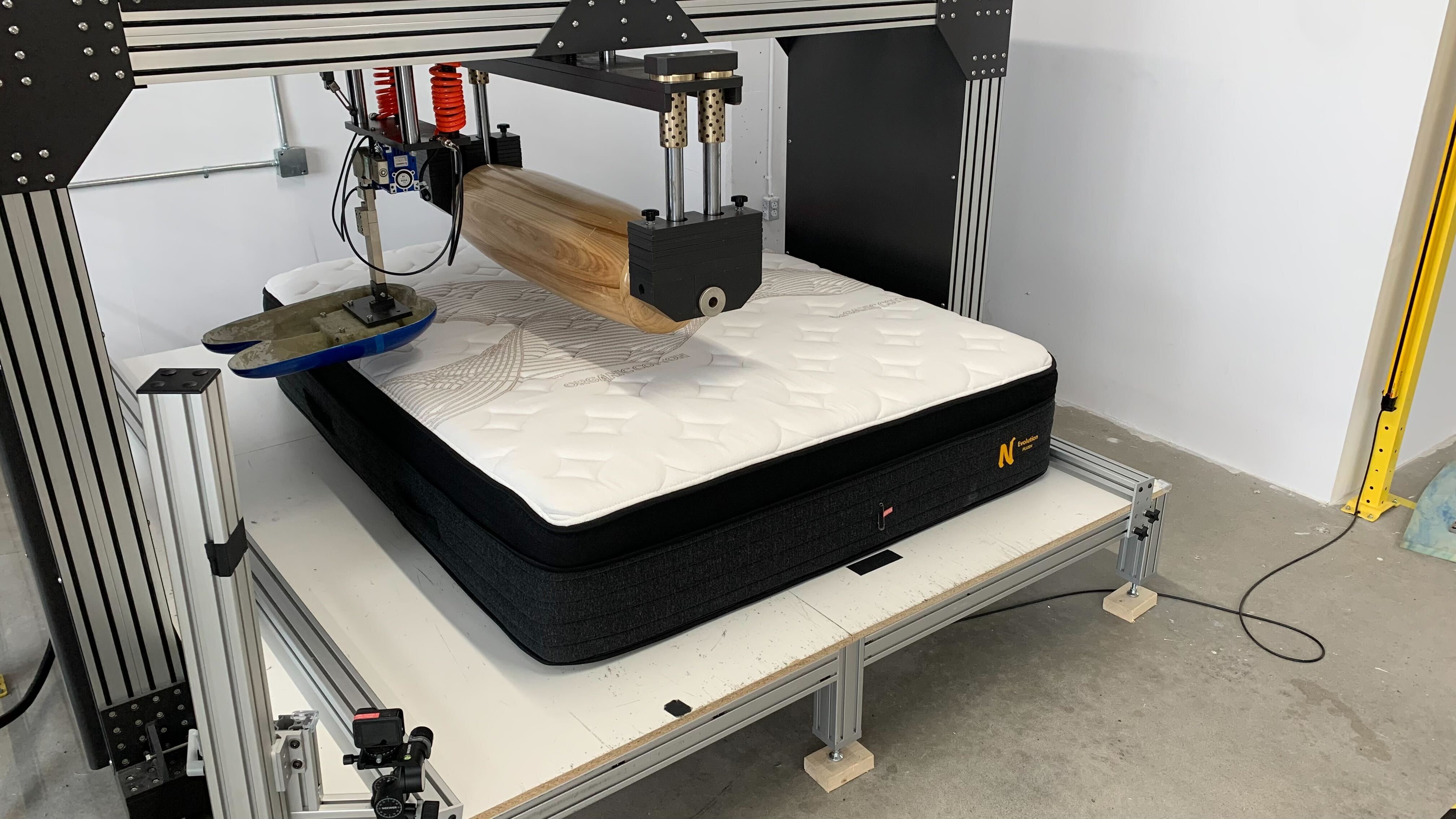
Longevity
The Nolah Evolution isn't a very durable mattress. It includes some good-quality foam in the upper comfort layer and transition layer. However, its other foam layers, including those in the quilted top and the lower comfort and support layers, are made of lower-density foams. These layers make the mattress prone to sagging or forming permanent body impressions sooner.
Uses mostly lower-density, less durable foam.
This mattress uses a mix of good and lower-quality foam. The memory foam upper comfort layer and polyfoam transition layer are dense enough to be considered good quality, which will help those layers resist forming permanent body impressions for longer. However, the foam in the quilted top, memory foam lower comfort layer, and support layer are all made of lower-quality foam that will be more prone to forming body impressions or sagging.
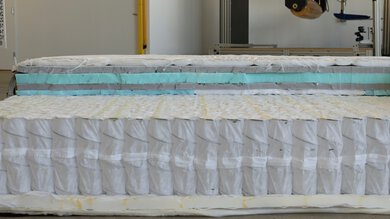
The mattress's quilted layer includes polyfoam and fiber fill. The upper comfort layer is made of Nolah's proprietary 'Air Foam Luxe', a gel-infused memory foam. The manufacturer says it's also infused with copper, which is meant to help with cooling. This layer also has perforations in some areas intended to add softness at the head and foot. However, they are sparse and don't make a noticeable difference in firmness. The lower comfort layer is made of 'Gel Swirl Foam', gel-infused memory foam that Nolah says helps with cooling. There's a polyfoam ('Ever Adapt' foam) layer below, followed by a polyfoam support layer. The support layer is zoned, with extra firmness in the middle of the mattress.
Pressure Relief
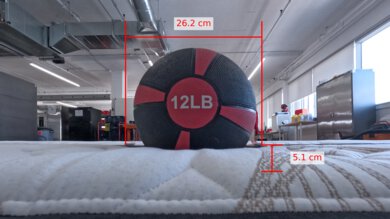
The Nolah Evolution offers excellent pressure relief for average-weight and heavier people. It's conforming enough to relieve pressure for side sleepers and has a hugging, enveloping feel that helps cushion your body. Its performance isn't ideal for lighter people, who will sink into it less, although it still offers adequate body conformity for side sleep.
Excellent body conformity for average-weight people.
Fantastic body conformity for heavier people.
Enveloping comfort layers help with pressure relief.
Body conformity for lighter people is just okay.
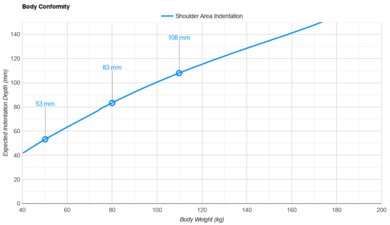
The Nolah Evolution's body conformity performance depends on your weight. It offers excellent conformity for average-weight people, so you'll sink into the mattress enough for comfortable side sleeping. It's even more conforming for heavier people, so it's fantastic at relieving pressure for side sleepers, as long as you don't mind sinking significantly into your mattress. While lighter people may want a mattress that offers more pressure relief for side sleeping, its performance is still adequate, so it's not a bad option, especially if you only sometimes sleep on your side.
Support
The Nolah Evolution isn't very supportive overall. It's most supportive for lighter people, offering a decent performance, so it'll keep your spine quite aligned if you sleep on your back or side, but you may want more support for stomach sleeping. However, if you're in the average or heavier weight category, the heavier parts of your body will sink in more. While it offers adequate support for side sleeping, it's not a good option for back or stomach sleeping.
Decent support for lighter people.
Fairly supportive for average-weight and heavier people.
Not supportive enough for average-weight or heavier back/stomach sleepers.
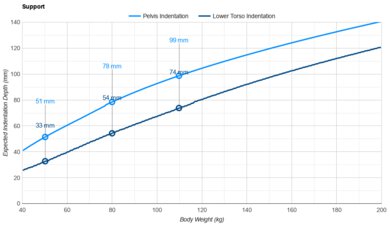
Its support performance is quite consistent regardless of your weight, but it doesn't offer particularly good support for anyone. It's most supportive for lighter people, offering satisfactory support that makes it a reasonable choice for back or side sleeping. It performs a bit worse for average-weight and heavier people. While it's adequately supportive and should support your hips enough for comfortable side sleeping, it's not ideal for back or stomach sleeping.
Cooling
The Nolah Evolution has a mediocre cooling performance. It's not a good option for side sleepers and may make you feel warmer even if you don't usually sleep hot. This is particularly noticeable when you first get into bed. Its overnight performance is a little better, but it's still not good if cooling is a concern.
May make you feel warmer.
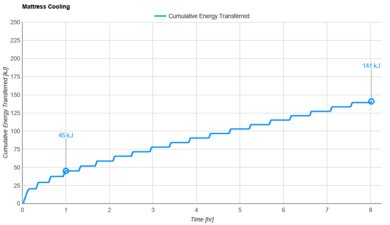
This mattress has a mediocre cooling performance and may make you feel warmer even if you don't usually sleep hot. In particular, it dissipates heat slowly during the first hour you're in bed. Its performance overnight is a bit better, but still, it's not ideal if you're a hot sleeper or cooling is a concern. If you're looking for a Medium-Plush mattress with better cooling, you might prefer the DreamCloud Luxe Hybrid.
Motion Dissipation
The Nolah Evolution has a great motion dissipation performance. You'll only feel bigger movements, like when your partner rolls over, and you won't feel movements all over the mattress. However, motion is a bit slow to dissipate. This can create a wobbling or bouncing sensation, making bigger movements more likely to wake you.
You won't feel most movements.
Movement dissipates somewhat slowly.
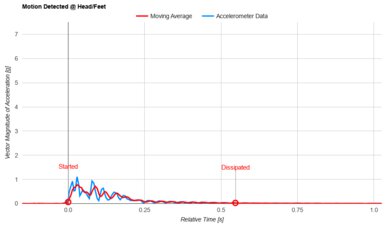
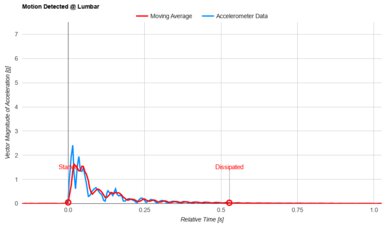
This mattress does a fantastic job of dampening movement and keeping it localized, so you don't feel most movements. Bigger movements are mostly felt near the source, so when your partner rolls over, you'll feel it around the lumbar area but not your head. However, motion dissipates somewhat slowly, so you may feel like the mattress wobbles or bounces around for a moment afterwards. This makes larger movements more likely to wake you.
Responsiveness
The Nolah Evolution isn't very responsive. Its enveloping comfort layers respond slowly when you move, which creates a hugging feel that can make it more difficult to change sleeping positions. It's decently bouncy, which helps support your movements a bit, but it's not an ideal mattress if you're worried about feeling stuck in place.
Low responsiveness may make you feel stuck in place.
It's not very responsive. Some of the comfort layers are made of low-resilience memory foam that recovers its shape slowly after being compressed. This creates a hugging sensation that adds to the enveloping feel of the mattress, but can also make you feel stuck in place.
The springs are moderately bouncy, which helps give the mattress its decently bouncy feel overall, despite some layers of low-resilience foam.
It's a moderately bouncy mattress. The pocket coil support layer is quite springy, but less resilient foam layers dampen its bounciness a bit. While it doesn't have the lifeless feel of some all-foam mattresses, it feels harder to move around on compared to some bouncier options.
The quilted top is very resilient, or bouncy. The upper and lower comfort layers are much less bouncy, however, which creates a slow-moving memory foam feel. The transition layer and support foam layer are quite resilient and have more 'push back', which helps make the layers more supportive, but overall, the mattress doesn't have a very springy feel.
As well as being slightly firmer in the lumbar area, the zoned support foam layer is slightly less resilient (39%) in the lumbar area compared to the head/foot (42%). The springier foam at the head/foot pushes back more against your movements, adding flexible support.
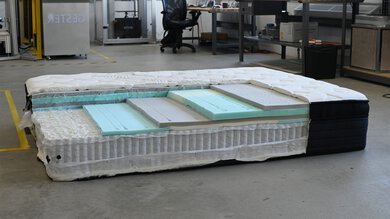
This hybrid mattress is 35.7 cm (14.1"), and you may need to use deep-pocket fitted sheets.
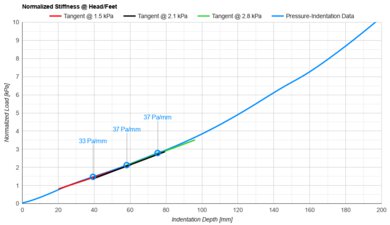
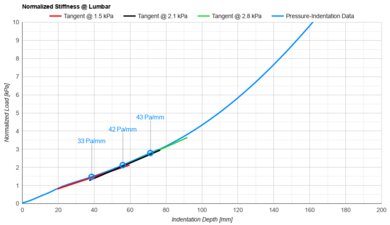
The Nolah Evolution's 'Plush' variant is a Medium-Plush mattress best-suited for average-weight and heavier side sleepers. It's not bad for lighter side sleepers, but if you always sleep on your side, you may want a mattress with better body conformity for people in that weight category. Its zoned foam and coil support layers may help it offer consistent support for a range of body types, but it's not very supportive for anyone, and isn't ideal for most back and stomach sleepers.
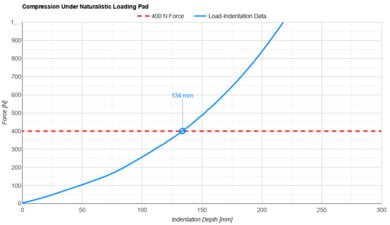
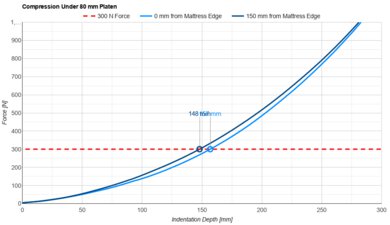
The Nolah Evolution has an excellent edge support performance. The sides of the mattress are difficult to compress, so you won't feel like you're sinking in a lot when you sit on the side of the bed. They also compress evenly rather than forming a ramp outward, making it more comfortable to sit or sleep on the side of the bed.
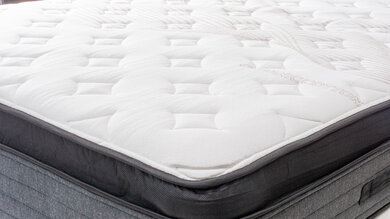
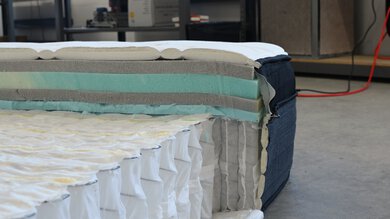
The edges of the mattress are reinforced with tightly wound 15-gauge springs, which help it provide excellent edge support.
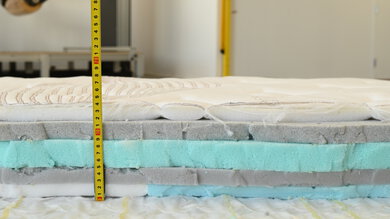
The mattress has just over 12.7 cm (5.0") of foam above its spring support layer. The quilted layer is just 2.3 cm (0.9") thick, and the upper comfort layer is also quite thin at just 2.5 cm (1.0"). You'll likely compress both layers and also interact with the 3.8 cm (1.5") lower comfort layer to some degree, which helps give the mattress its contouring, hugging feel. The firmer 2.5 cm (1.0") transition layer and 2.0 cm (0.8") support help add support and distribute your weight over the springs.
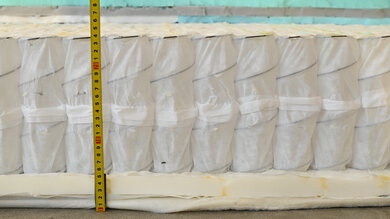
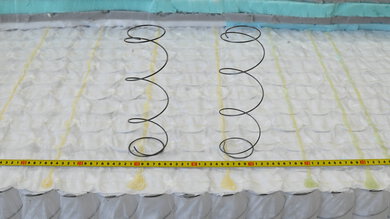
The mattress's support spring layer includes three different types of springs. The thicker 13-gauge coils in the lumbar area provide extra stiffness and support, while 14-gauge coils at the head/foot are softer, which is meant to add pressure relief for your shoulder when side sleeping. Tightly wound 15-gauge coils along the sides help give the mattress its excellent edge support.
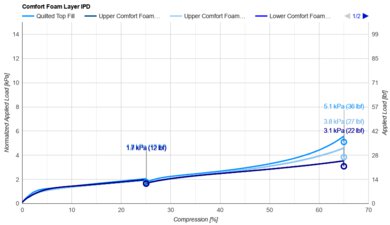
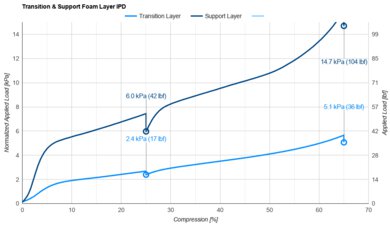
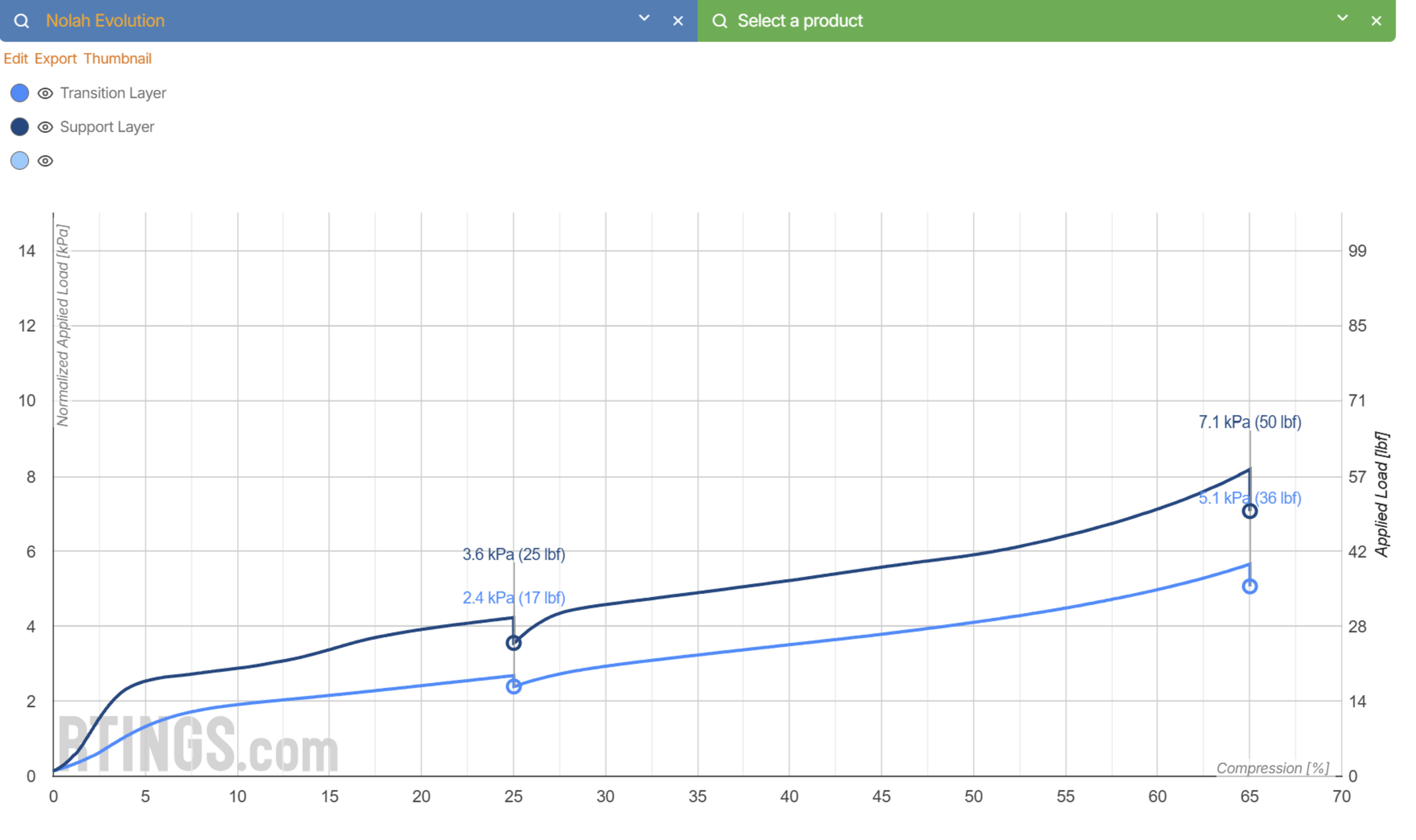
The quilted top, upper comfort layer, and lower comfort layer are all medium-firm. Many mattresses have softer upper layers, but the amount of comfort foam (nearly 9 cm or 3.5") helps it offer adequate body conformity for most people. The transition layer is a bit firmer and helps prevent heavier individuals from sinking into the much firmer support foam. The support foam is zoned, with higher firmness in the lumbar area (6 kPA) versus the head/foot (4 kPA), which is intended to add support for your hips and a more conforming feel for your shoulder.
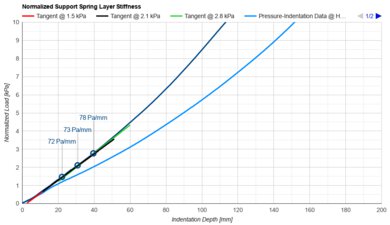
The zoned spring support layer offers different levels of stiffness in the lumbar area and at the head/foot of the mattress. The coils are medium-firm in the lumbar area, and much softer at the head/foot. This is meant to help support your hips and keep your spine aligned while providing a more conforming feel for the rest of your body, such as your shoulder if you sleep on your side.
Popular Mattress Comparisons
The Nolah Evolution's Plush variant offers an enveloping feel and solid pressure relief for average-weight and heavier side sleepers. Unlike some medium-plush mattresses, such as the Silk & Snow Mattress or Tuft and Needle Mint, it won't offer quite enough pressure relief for lighter side sleepers. Unlike similar mattresses like the Boring Hybrid or Sealy Posturepedic Hybrid, it's not cooling enough for hot sleepers and might leave you feeling overheated, even if you're not usually a hot sleeper. That said, its memory foam comfort layers give it a very enveloping feel that you might like.
If you want to see more options, check out the best mattresses for side sleepers, the best memory foam mattresses, and the best cooling mattresses.
The DreamCloud Luxe Hybrid and Nolah Evolution have different strengths. Both are best suited for average-weight and heavier side sleepers, but the Nolah is more supportive overall, which may be helpful for comfortable side sleeping and makes it better for occasional back/stomach sleep. However, its mediocre cooling might make you feel overheated even if you don't usually sleep hot, so it's only worth considering if heat is not an issue for you. The DreamCloud is cooling enough for most people and is also a bit more durable.
The Nolah Evolution and Serta Perfect Sleeper Innerspring are both best suited for average-weight and heavier side sleepers, but otherwise have different strengths. The Serta is a better option if you're concerned about cooling, while the Nolah uses some better-quality materials, making it a bit more durable, and offers better motion isolation.
The Tuft and Needle Mint is better than the Nolah Evolution for most people. The Tuft and Needle offers better body conformity for lighter people, making it suitable for a wider range of side sleepers. It's more supportive for most people, and offers better motion isolation and cooling. However, the Nolah is a good option for heavier and average-weight side sleepers, and you might prefer its more enveloping feel.
The Sealy Posturepedic Hybrid and Nolah Evolution have different strengths. Both are best for average-weight or heavier side sleepers and offer impressive motion isolation. The Sealy offers significantly better cooling and is more responsive, which makes it easier to move around on. On the other hand, the Nolah has a more hugging feel that helps it offer better pressure relief. You might prefer it if you like an enveloping mattress.
The Silk & Snow Mattress is better than the Nolah Evolution for most people. The Silk & Snow's superior pressure relief makes it suitable for a wider range of side sleepers, and its greater support makes it better for light and average back and stomach sleepers. It's also more cooling. The Nolah is a good option for average and heavier side sleepers, and you might like its very enveloping, hugging feel.
The Leesa Original is better than the Nolah Evolution in most cases. The Leesa's good support for heavier people makes it suitable for back and stomach sleepers in that weight category. It also offers enough pressure relief for average-weight and heavier side sleepers. The Nolah isn't as supportive, so it's not a good option for back and stomach sleeping, although it offers similar pressure relief for average-weight and heavier side sleepers. It's also much less cooling and a bit less durable.
Differences Between Sizes And Variants
The Nolah Evolution comes in different firmness levels: Plush, Luxury Firm, and Firm. It's also available with either a standard cotton cover or a cooling pillow top. We tested the Plush variant with the standard cover, and our results are only valid for that variant. You can see our unit's label here.

If you have this mattress or a variant, let us know about your experience in the comments.