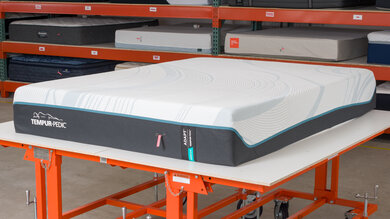
The Tempur-Pedic TEMPUR-Adapt is a high-end all-foam mattress. Its upper comfort layers are made of proprietary 'TEMPUR-Adapt' memory foam, which offers a contouring feel.
It has a medium level of firmness, making it a good option for light to average stomach and back sleepers. It can also work for bigger side sleepers, but lighter side sleepers may want something softer. It doesn't have a lot of bounce, so it can feel a bit lifeless compared with innerspring mattresses, but it molds around your body closely without making you feel enveloped, since you don't sink into it very much.
Our Verdict
-
6.5Light Weight
-
7.9Average Weight
-
8.6Heavy Weight
Good for light and average back and stomach sleepers.
Good for heavier side sleepers.
Edge support is just okay.
Heaver back/stomach sleepers may want something firmer.
-
7.5Light Weight
-
7.5Average Weight
-
7.1Heavy Weight
Good for light and average back and stomach sleepers.
Good for heavier side sleepers.
Edge support is just okay.
Heaver back/stomach sleepers may want something firmer.
-
7.4Light Weight
-
7.4Average Weight
-
6.9Heavy Weight
Good for light and average back and stomach sleepers.
Good for heavier side sleepers.
Edge support is just okay.
Heaver back/stomach sleepers may want something firmer.
Changelog
-
Updated Jul 27, 2026:
We added a link to the SweetNight CoolNest Pro in the Cooling box for users who prefer more efficient cooling.
- Updated Mar 09, 2026: We converted this review to Test Bench 1.2. We've added sub-usages to the sleeping position usages in the Our Verdict section to clearly show the suitability of a mattress for your weight and sleeping position.
- Updated Feb 12, 2026: We converted this review to Test Bench 1.1. We've added new tests, including Body Conformity, Support, and Comfort Layers Envelopment, and also added scoring to the Bounciness test. Our usage scores have also changed, with new usages 'Side Sleeping,' 'Back Sleeping,' and 'Stomach Sleeping' replacing the 'Sleeping' verdict. We've also added 'Pressure Relief' and 'Support' performance usages. You can find more details in the full changelog.
-
Updated Oct 15, 2025:
Compared its cooling performance to the Nectar Premier's.
-
Updated Oct 06, 2025:
We rewrote portions of this review to align with Test Bench 1.0.1, which adds a Longevity verdict and a score to the Foam Layer Mass Density box for users interested in the mattress's durability.
- Updated Oct 06, 2025: Converted this review to Test Bench 1.0.1. We've added scoring to the Foam Layer Mass Density section and a new 'Longevity' performance usage. Read more about it in our Changelog.
-
Updated Sep 12, 2025:
Added a note that the Novaform Serafina Pearl is a more responsive mattress with a similar design in Responsiveness.
-
Updated Aug 25, 2025:
We linked the recently reviewed Nectar Premier Copper in the Responsiveness box for those looking for better performance in this area.
-
Updated Aug 12, 2025:
Added a link to our recommendations for the best memory foam mattresses.
-
Updated Jul 22, 2025:
We've added a mention of the Nectar Classic in the Motion Isolation box to demonstrate how foam mattresses typically perform in this regard.
- Updated Jul 15, 2025: Review published.
Test Results
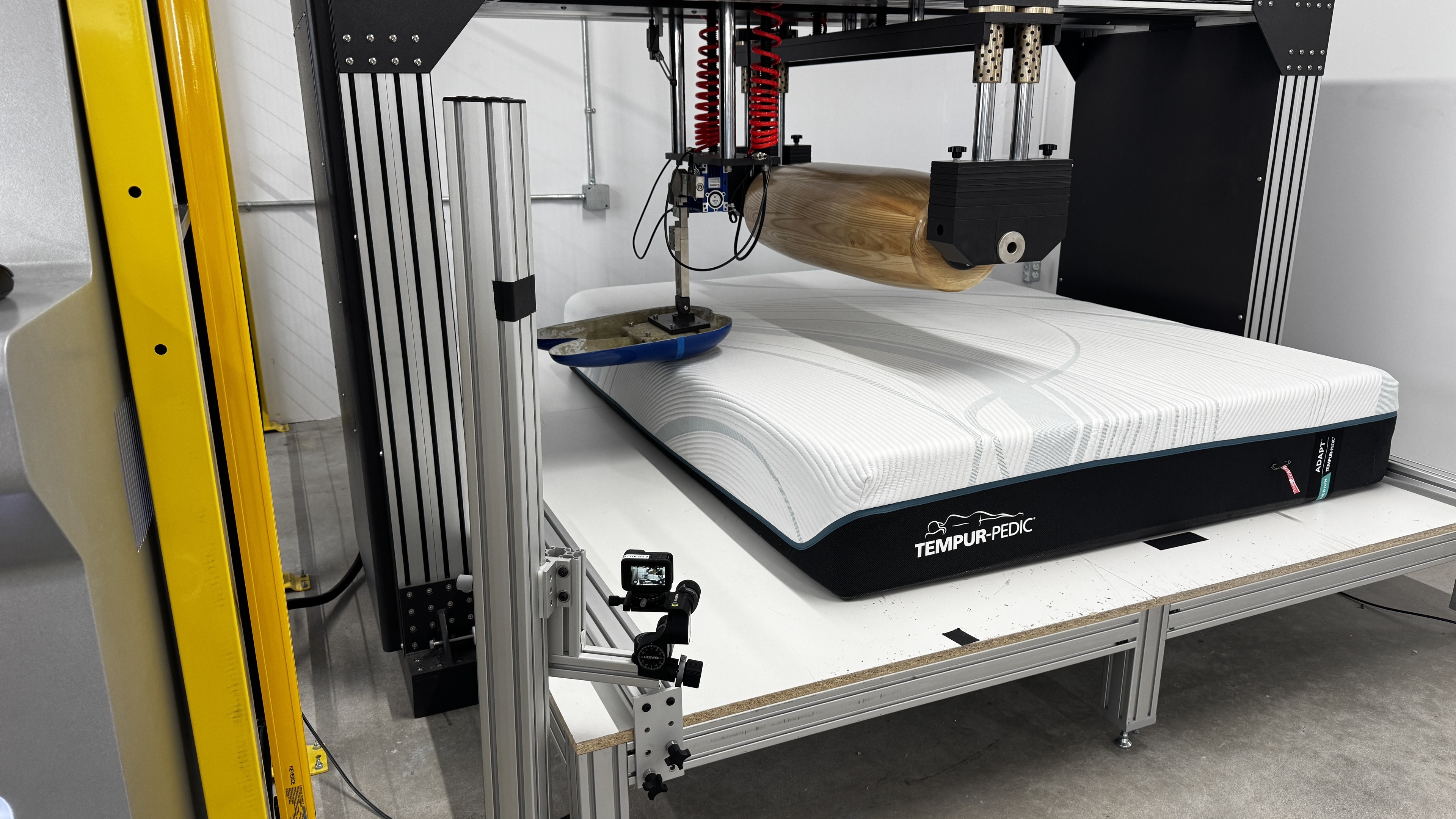
Longevity
The Tempur-Pedic TEMPUR-Adapt is moderately durable. It uses a mix of good and lower-quality foams. The memory foam lower comfort layer and polyfoam transition layer are both made of foam that's dense enough to be considered good quality, so these layers will resist forming permanent indentations for longer. However, the memory foam in the upper comfort layer and the polyfoam support layer are made of lower-quality foam. The lower-density support foam in particular may cause the mattress to sag sooner than mattresses that use higher-quality foam.
Good for light and average back and stomach sleepers.
Good for heavier side sleepers.
Edge support is just okay.
Heaver back/stomach sleepers may want something firmer.
Uses a mix of good and bad quality foams.
This mattress uses a mix of good and low-quality foams. The lower comfort layer memory foam and transition layer polyfoam are dense enough to be considered good quality. However, the upper comfort layer memory foam and the support layer polyfoam are not, which suggests you may notice permanent indentations or sagging sooner compared with mattresses that use higher-quality foam.
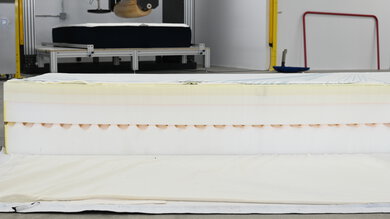
The upper and lower comfort layers are made of memory foam, which is soft, so you'll sink into it moderately, and very contouring. There's also a transition layer made of convoluted polyfoam, so it has an egg crate shape. It's firmer and helps prevent you from feeling the much firmer polyfoam support layer if you compress both upper layers.
It's also worth noting that the upper and lower comfort layers are each made of a different type of memory foam, despite looking quite similar. The lower layer is noticeably slower to respond after being compressed, and it's slightly softer (as you can see in the foam layer firmness results). It's a little less resilient (as seen in the foam layer resilience results), and it's denser (see the foam layer material). The manufacturer says the upper layer of memory foam is more conforming and more responsive, which would mean it recovers its shape faster after being compressed. This does seem to be supported by the results, although neither layer has high responsiveness. Here's a screenshot of Tempur-Pedic's description of the foams.
Pressure Relief
Good for light and average back and stomach sleepers.
Good for heavier side sleepers.
Edge support is just okay.
Heaver back/stomach sleepers may want something firmer.
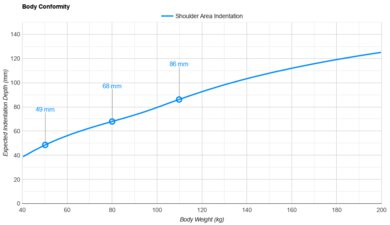
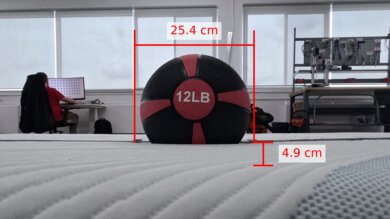
Support
Good for light and average back and stomach sleepers.
Good for heavier side sleepers.
Edge support is just okay.
Heaver back/stomach sleepers may want something firmer.
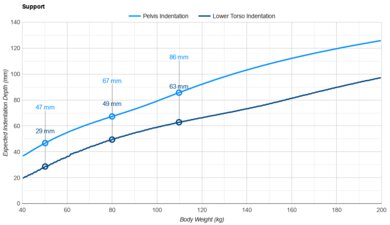

Cooling
The Tempur-Pedic TEMPUR-Adapt has good cooling. It doesn't retain a huge amount of heat either during the first hour of sleep or overnight, and if you don't usually have an issue with sleeping hot, it's a good option. However, if you live in a hot climate or already sleep hot, you may need a more cooling mattress.
Good cooling.
Good for light and average back and stomach sleepers.
Good for heavier side sleepers.
Edge support is just okay.
Heaver back/stomach sleepers may want something firmer.
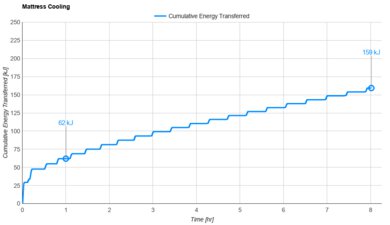
It has good cooling. It doesn't feel overly warm as you fall asleep and maintains good cooling performance overnight. It doesn't retain a ton of heat, and if you don't sleep hot, it won't create an issue. Still, if cooling is a priority, you might prefer a more cooling mattress like the Nectar Premier or the SweetNight CoolNest Pro.
Motion Dissipation
The Tempur-Pedic TEMPUR-Adapt has superb motion dissipation. You'll rarely feel your partner's movements; even bigger movements, like someone rolling over or your dog jumping on the bed, won't be overly disruptive. What little movement is transferred dissipates quickly, reducing the risk that motion will wake you up.
Fantastic motion isolation.
Good for light and average back and stomach sleepers.
Good for heavier side sleepers.
Edge support is just okay.
Heaver back/stomach sleepers may want something firmer.
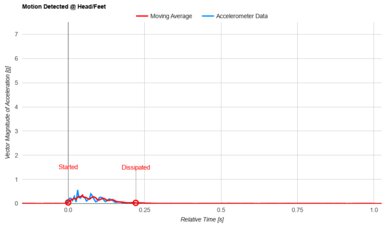
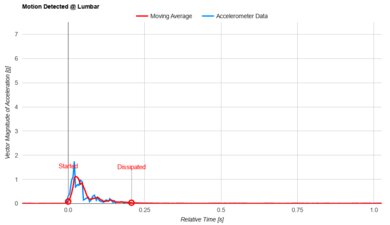
Even compared with other all-foam mattresses, like the Nectar Classic, which usually offer strong motion isolation, this mattress stands out as a fantastic option if your partner tosses and turns all night. You'll only feel the very biggest movements, and only very briefly.
Responsiveness
The Tempur-Pedic TEMPUR-Adapt has poor responsiveness. Its comfort layers are made of memory foam, which is characteristically slow-moving. It takes a few seconds to regain its shape after being compressed, which makes it more difficult to move around as you sleep and may make you feel stuck in place. If you don't move around much or just like the hugging feel of memory foam, you might not mind, but it's slow to respond, even for memory foam.
Good for light and average back and stomach sleepers.
Good for heavier side sleepers.
Poor responsiveness.
Edge support is just okay.
Heaver back/stomach sleepers may want something firmer.
It's very slow to respond. This mattress's memory foam comfort layer takes seconds to regain its shape after being compressed, which makes it more difficult to change sleeping positions. It creates a hugging sensation that you might like, especially if you know you like memory foam, but keep in mind it's quite slow to respond, even for memory foam. If you're looking for a more responsive option, check out the Nectar Premier Copper or the Novaform Serafina Pearl.
It has minimal bounce, so it has a 'dead' feeling compared with mattresses with springs and even some all-foam options like the Purple Mattress. This sluggish feel can make it more difficult to move around in your sleep.
Neither memory foam layer is very resilient or bouncy. These layers aren't exactly the same, with the upper layer having a little more bounce. This is expected from memory foam, which is known for its unbouncy, sinking feeling. The transition layer is much bouncier, while the support layer has a moderate amount of bounce. Still, you hardly feel any bounciness overall because of the memory foam layers.
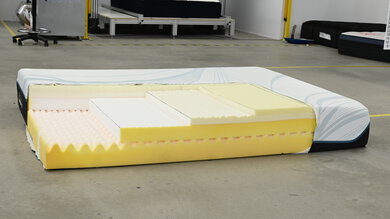
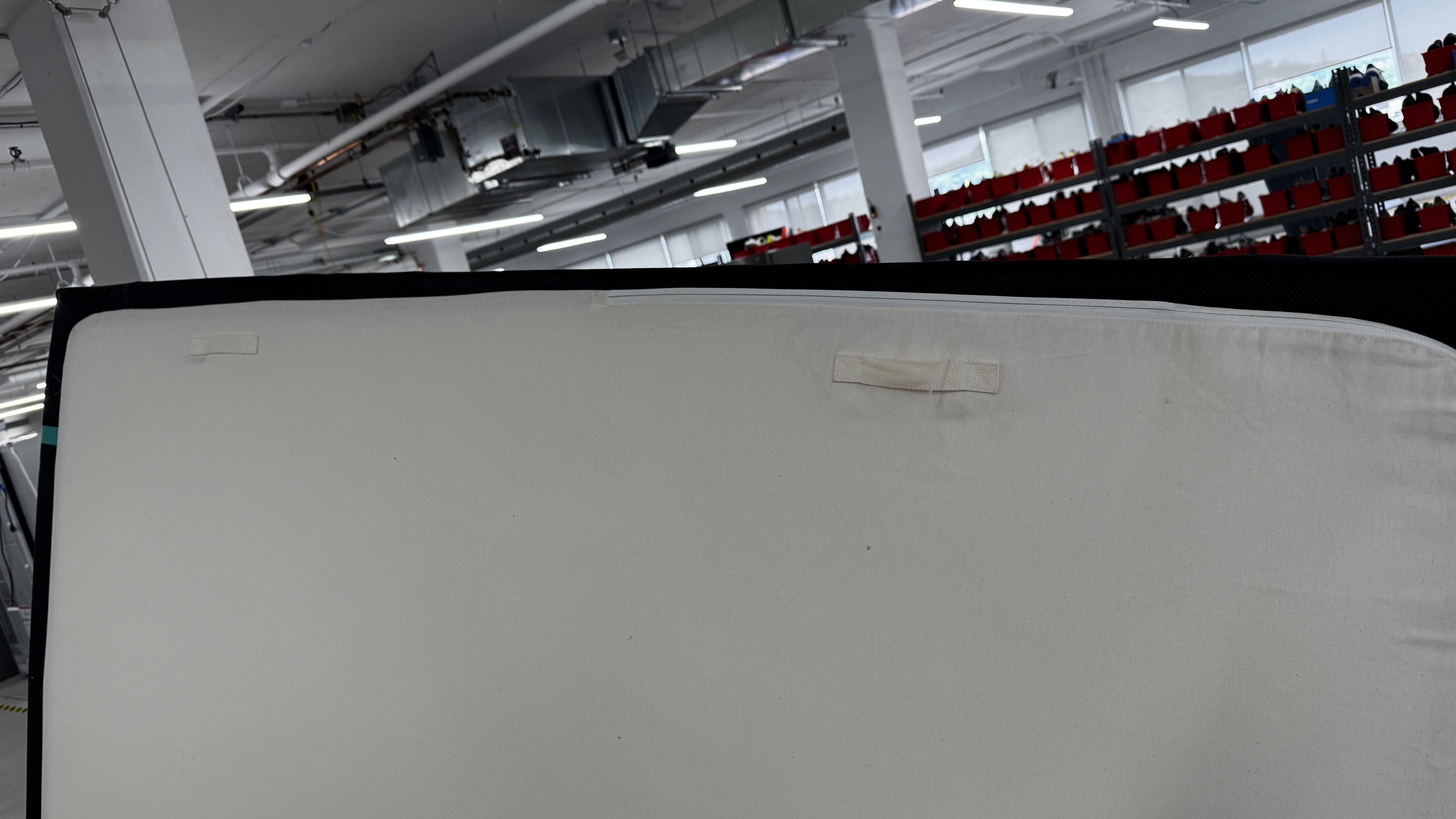
The Tempur-Pedic TEMPUR Adapt is a 10-inch all-foam mattress. There are four grab handles on the bottom of the mattress to facilitate moving it around.
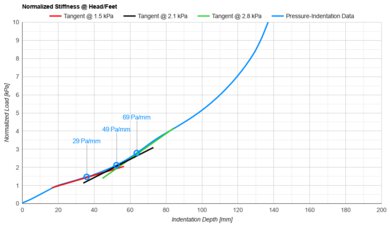
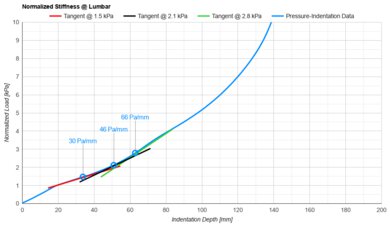
It has a medium level of firmness, so it's a good option for lighter to average back and stomach sleepers. Heavier back and stomach sleepers may want something firmer, while lighter side sleepers may want something plusher.
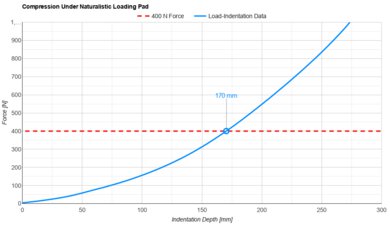
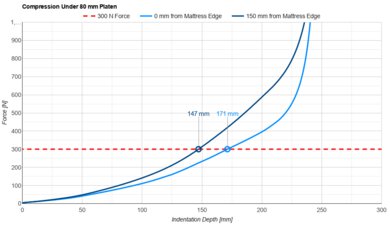
It has adequate edge support. When you sit on the edge, it doesn't compress as much as some mattresses, like the Zinus Original Green Tea 2024, so it's easier to get out of bed in comparison. However, it has nothing built into its edges for reinforcement, and when you're sitting or sleeping on the very edge, it forms a noticeable ramp outward. This can make you feel at risk of sliding out of bed and makes the comfortable sleeping surface a bit smaller.
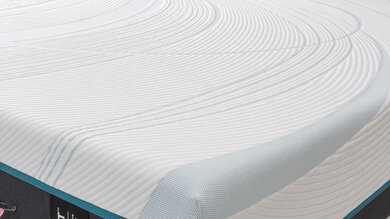
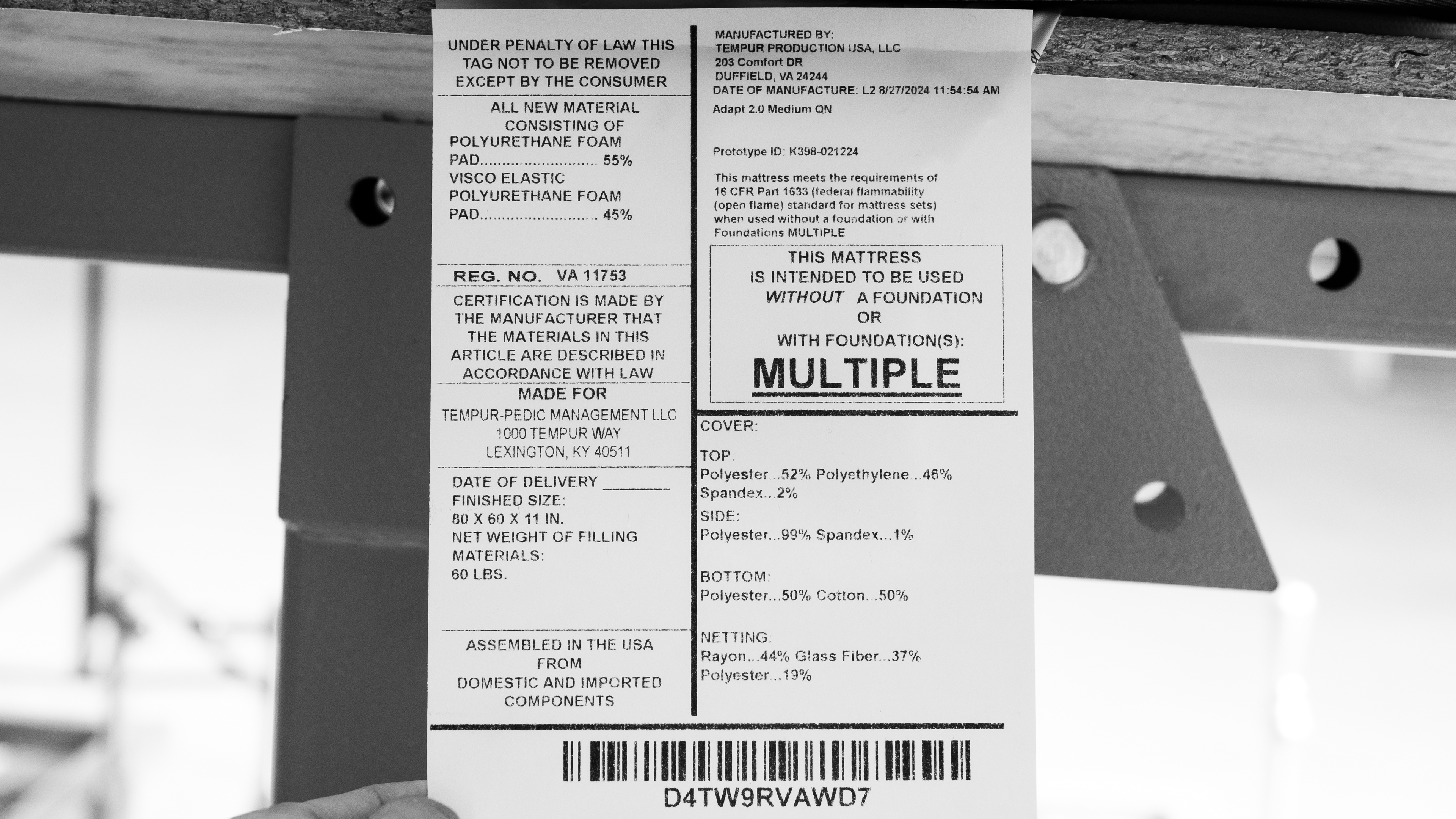
The cover is made of a blend of materials and isn't meant to be machine-washed. There's a zipper, although it's only on one side of the mattress. The manufacturer doesn't specify not to remove the cover, but you're generally not supposed to remove mattress covers, and it's not recommended here, since the netting underneath includes fiberglass (it's 37% fiberglass, 44% rayon, and 19% polyester).
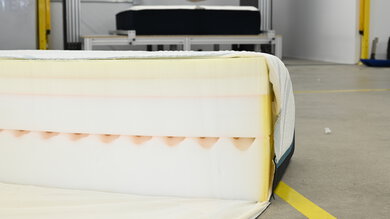
This mattress has nothing built into the edges for reinforcement. It offers an okay edge support performance.
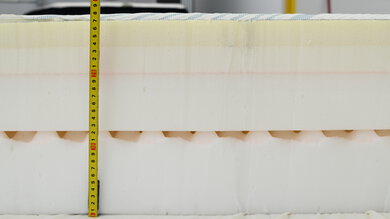
Both memory foam comfort layers are 1.5 inches/3.8 cm thick. The transition foam below is convoluted, meaning it has an egg-crate shape, and measures 3 inches/8.0 cm at its thickest. Because of its shape, the foam above sinks more easily into the valleys, allowing the heavier parts of your body to sink a bit further if you compress both memory foam layers above. The support layer is the firmest and nearly 5"/11.9 cm thick, providing support for your hips and shoulders.
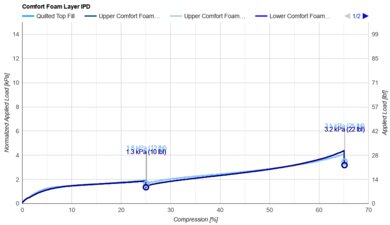
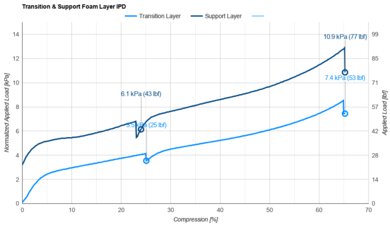
The memory foam layers are similar in terms of firmness. Both are soft and easy to sink into, while the lower layer is a little softer. The transition layer of polyfoam is medium-firm, although because of its shape, the memory foam above will sink a little more into the valleys than it would a solid piece of foam, which adds to the sinking and contouring feel of the mattress. The lower support foam is very firm, which prevents you from sinking further if you compress the upper layers.
Popular Mattress Comparisons
The Tempur-Pedic TEMPUR-Adapt is an all-foam mattress with a classic memory foam feel, so it molds around your body and recovers its shape slowly, which creates a feeling of being held in place. It's a great option if your sleep is often disturbed by your partner's movements, since it has superb motion dissipation, but it isn't ideal for hot sleepers. If you're concerned about motion isolation but want better cooling, the Casper Snow has a similar slow-moving feel, much better cooling, and similar motion isolation. The Beautyrest Harmony Lux is a good option for cooling and motion isolation if you want a more responsive mattress, since it uses memory foam in its comfort layers but avoids any stuck-in-place feel.
If you're looking for a recommendation, check out other models with a similar feel on our list of the best memory foam mattresses, or check out our picks for the best mattresses for a broader look at what's available.
The Tempur-Pedic TEMPUR-Adapt and the Saatva Rx are both medium mattresses suitable for most side sleepers, and you may prefer either depending on your preferences. The Tempur-Pedic is an all-foam mattress with memory foam, so it's highly contouring, but responds slowly and may make you feel constricted. That said, it stands out for its fantastic motion isolation, which is great if your partner's movements often wake you. The Saatva is very responsive and has low contouring, so you won't feel hugged or stuck in place.
The Nectar Premier Copper is a better option than the Tempur-Pedic TEMPUR-Adapt for most people. Both mattresses are all-foam options with very little bounce, but the Nectar is much more responsive, so it's easier to shift sleeping positions and doesn't make you feel constrained or stuck. The Nectar also has better edge support, so it's easier to get in and out of bed. That said, the Temper-Pedic keeps you cooler, though it's also not quite cooling enough for hot sleepers. It has better motion isolation as well, so if you're a very light sleeper, you may prefer it.
The DreamCloud Premier Rest Hybrid and Tempur-Pedic TEMPUR-Adapt have different strengths and weaknesses, and you may prefer either depending on your priorities. The DreamCloud is a hybrid model with medium-plush firmness. It's the more responsive option, so it's easier to move around on, and, unlike the Tempur-Pedic, it's cooling enough for hot sleepers. The Tempur-Pedic is a medium all-foam option with better edge support, and while you still feel a bit like you could slip off when you sleep close to the sides, it's a much better option than the DreamCloud in this regard. It also has outstanding motion isolation, so it's a good choice if you sleep with a partner who tosses and turns.
You may prefer either the Tempur-Pedic TEMPUR-Adapt or the Novaform ComfortGrande Plus. The Novaform is a firmer mattress that uses better-quality foam, making it more durable. The Tempur-Pedic is a similar all-foam mattress, but it has a less responsive feel, which can make you feel stuck in place. It's also more contouring, and you might prefer it if you want a mattress that feels like a hug.
The Novaform Serafina Pearl is better than the Tempur-Pedic TEMPUR-Adapt for most people. Both are all-foam mattresses with medium firmness, but the Novaform is more responsive, so it's easier to move around in your sleep, and slightly more cooling. The Tempur-Pedic has significantly better motion dissipation, however.
The Tempur-Pedic TEMPUR-Adapt and the Nectar Premier have different strengths. The Nectar is a much more responsive and bouncy mattress, making it easier to move around on and reducing the likelihood of feeling stuck in place. Its better cooling performance also makes it more suitable for hot sleepers. The Tempur-Pedic is much less responsive, which gives it a slower-moving feel. However, if you don't mind that, the significantly better motion dissipation makes it worth considering for light sleepers.
The Tempur-Pedic TEMPUR-Adapt and the SweetNight CoolNest Ultra have different strengths. The SweetNight offers better support for heavier people, making it more suitable for combination and back/stomach sleepers in that category. It also offers better edge support, so sleeping or sitting on the side of the bed is more comfortable. Both mattresses have low responsiveness and a hugging feel, but it's more pronounced with the Tempur-Pedic. The Tempur-Pedic also offers better motion dissipation, so you might prefer it if you sleep lightly.
Differences Between Sizes And Variants
The Tempur-Pedic TEMPUR-Adapt comes in Twin, Twin Long, Full, Queen, King, Split King, California King, and Split California King size options. The manufacturer considers the all-foam model to have a 'Medium' firmness and sells a 'Medium-Firm' hybrid mattress with the same model name. We tested the all-foam model in the Queen size, and you can see a picture of the label. Our results are only valid for that variant, as others may perform differently.
If you encounter another variant, let us know in the comments, and we'll update our review.