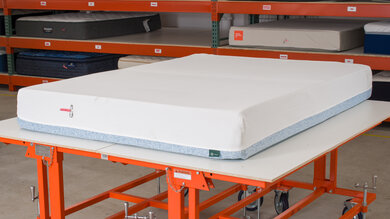
The Zinus Original Green Tea (2024) is a budget-friendly bed-in-a-box mattress. This 10-inch (25.4 cm) all-foam mattress uses memory foam for its comfort layer and polyfoam for its lower layers.
It's firm, making it best for back or stomach sleepers, while lighter side sleepers or anyone who prefers a plusher mattress may find it's not soft enough. Because of its memory foam comfort layer, it contours close to your body and responds slowly when you move, which might make you feel comfortably cradled or stuck, depending on your preferences.
Our Verdict
-
4.6Light Weight
-
6.8Average Weight
-
7.8Heavy Weight
Well suited to back and stomach sleepers.
Poor edge support performance.
Not ideal for lighter people or side sleepers.
-
7.6Light Weight
-
7.4Average Weight
-
7.1Heavy Weight
Well suited to back and stomach sleepers.
Poor edge support performance.
Not ideal for lighter people or side sleepers.
-
7.9Light Weight
-
7.6Average Weight
-
7.3Heavy Weight
Well suited to back and stomach sleepers.
Poor edge support performance.
Not ideal for lighter people or side sleepers.
Changelog
-
Updated Jun 11, 2026:
We updated this mattress's Cooling score because the Zinus Original Green Tea 2025 scored much higher on our cooling test despite having a nearly identical design. This is likely due to inconsistencies in the testing environment when the 2024 version was tested. Since both versions of the mattress actually offer similar cooling, we've updated this mattress's cooling score from 5.6 to 7.5.
- Updated Mar 09, 2026: We converted this review to Test Bench 1.2. We've added sub-usages to the sleeping position usages in the Our Verdict section to clearly show the suitability of a mattress for your weight and sleeping position.
- Updated Feb 12, 2026: We converted this review to Test Bench 1.1. We've added new tests, including Body Conformity, Support, and Comfort Layers Envelopment, and also added scoring to the Bounciness test. Our usage scores have also changed, with new usages 'Side Sleeping,' 'Back Sleeping,' and 'Stomach Sleeping' replacing the 'Sleeping' verdict. We've also added 'Pressure Relief' and 'Support' performance usages. You can find more details in the full changelog.
-
Updated Feb 02, 2026:
We mentioned the Casper Cooling Select in the Responsiveness box for users looking for a mattress that's easier to move around on.
-
Updated Jan 30, 2026:
We noted that the Allswell Hybrid is more responsive in the Responsiveness box.
-
Updated Jan 26, 2026:
We've updated the name of the product to Zinus Original Green Tea 2024.
-
Updated Oct 06, 2025:
We rewrote portions of this review to align with Test Bench 1.0.1, which adds a Longevity verdict and a score to the Foam Layer Mass Density box for users interested in the mattress's durability.
- Updated Oct 06, 2025: Converted this review to Test Bench 1.0.1. We've added scoring to the Foam Layer Mass Density section and a new 'Longevity' performance usage. Read more about it in our Changelog.
-
Updated Aug 25, 2025:
We recently reviewed the Nectar Premier Copper and linked it here in the Responsiveness box for users looking for more responsiveness.
-
Updated Aug 12, 2025:
Added a link to our recommendations for the best memory foam mattresses.
-
Updated Aug 12, 2025:
Compared its cooling performance to the Novaform ComfortGrande Plus's.
-
Updated Jul 22, 2025:
We've added a mention of the Nectar Classic in the Cooling box as it's more cooling.
- Updated Jul 15, 2025: Review published.
Test Results
Longevity
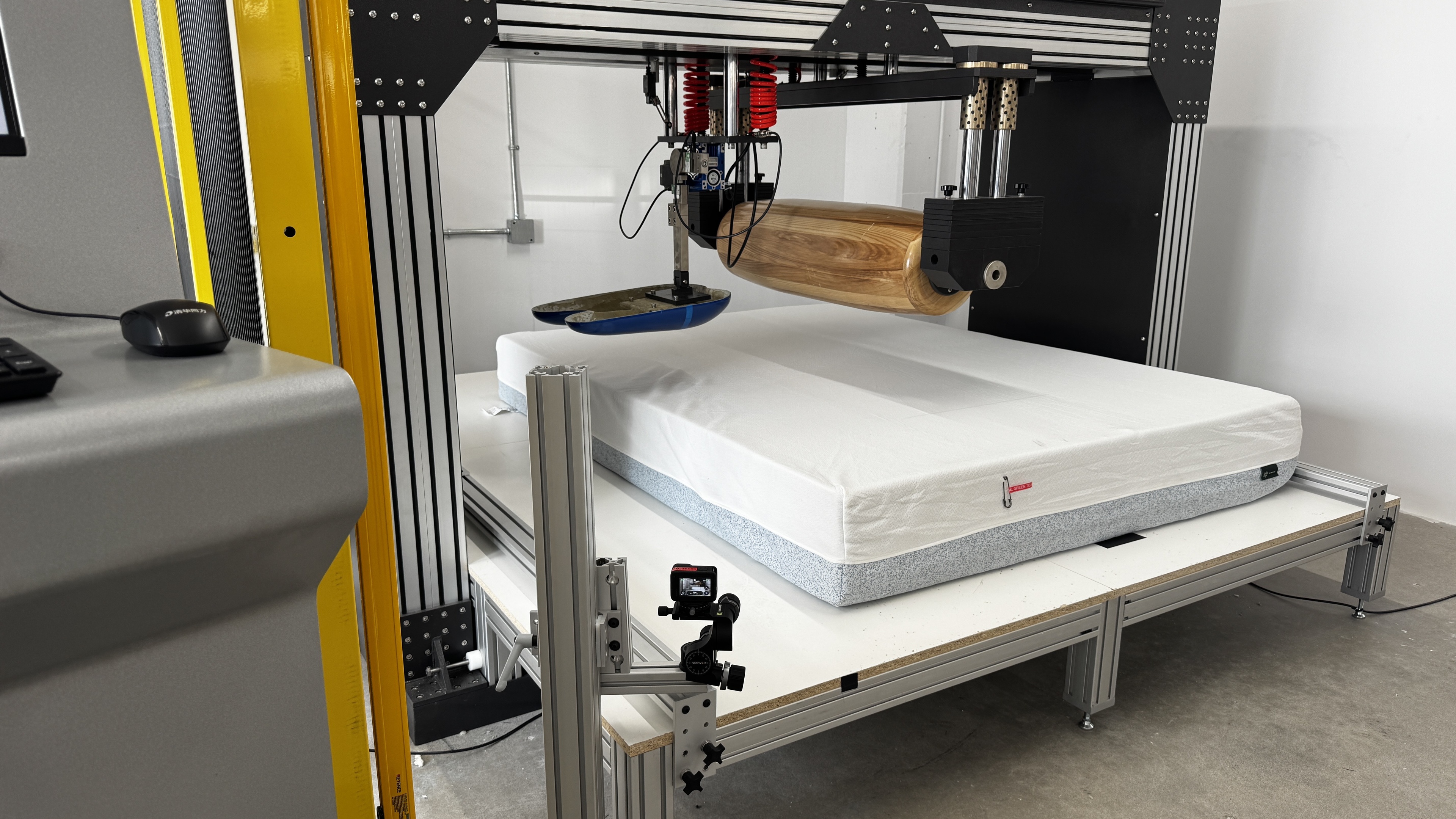
The Zinus Original Green Tea (2024) a is moderately durable. It uses good-quality polyfoam for its transition and support layers, which will resist sagging for longer than lower-quality foams. However, the memory foam used for the upper comfort layer is not dense enough to be considered good-quality and may form permanent indentations sooner compared with higher-quality foams.
Well suited to back and stomach sleepers.
Poor edge support performance.
Contains poor quality memory foam, which can cause indentations and sagging.
Not ideal for lighter people or side sleepers.
This mattress uses some low-quality foam and some good-quality foam. The memory foam used for the upper comfort layer isn't dense enough to qualify as good quality, and may form permanent indents sooner compared with higher-quality foams. However, the lower polyfoam transition and support layers are just dense enough to be considered good quality.
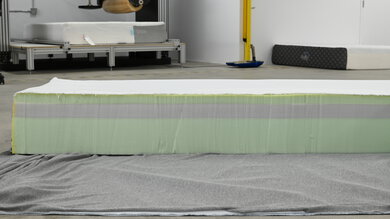
This mattress has three layers of foam. The comfort layer is made of memory foam, which is highly contouring and relieves pressure to keep you comfortable throughout the night. The transition and support layers are made of firmer, springier polyfoam, which supports the heavier parts of your body and helps keep your spine aligned.
Pressure Relief
Well suited to back and stomach sleepers.
Poor edge support performance.
Not ideal for lighter people or side sleepers.
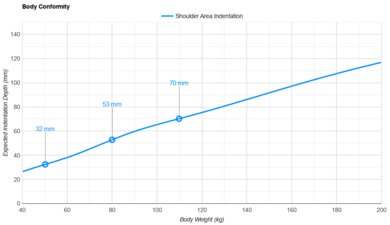
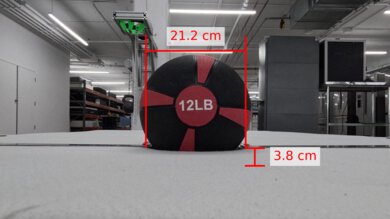
Its upper comfort layer is made of about 1.5 inches (3.8 cm) of memory foam, which you will sink into. You don't sink very far into this mattress, so you probably won't sink past this layer. The memory foam contours your body very closely and offers a tight hugging sensation. This can be suitable for back sleepers and heavier people who prefer a firm mattress and enjoy the contouring feeling of memory foam. However, since the memory foam layer is so thin, it may not be soft enough for side sleepers, lighter people, or anyone who likes a plush mattress.
Support
Well suited to back and stomach sleepers.
Poor edge support performance.
Not ideal for lighter people or side sleepers.
Cooling
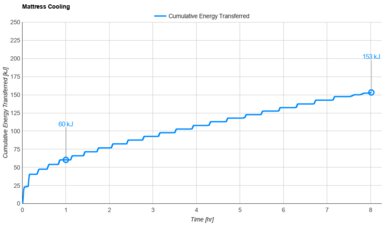
The Zinus Original Green Tea (2024) has good cooling. It doesn't feel overly warm when you first get into bed and dissipate heat efficiently over several hours, so it doesn't heat up significantly as you sleep. Its cooling is good enough for most people, but if you're a hot sleeper, you'll want a mattress with better cooling.
Well suited to back and stomach sleepers.
Subpar cooling.
Poor edge support performance.
Not ideal for lighter people or side sleepers.
Motion Dissipation
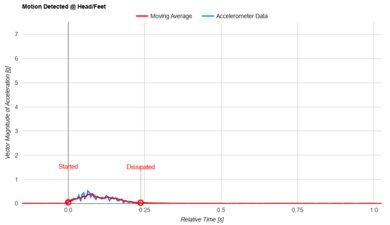
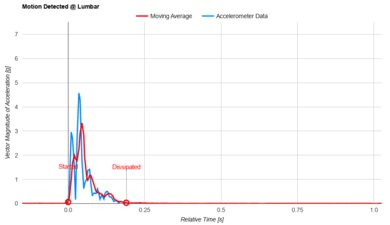
The Zinus Original Green Tea (2024) has excellent motion isolation. Memory foam shines in this respect, and you won't feel much movement from your partner, except for the initial, brief vibration of bigger movements. You won't feel like every small movement makes you bounce around for seconds afterwards.
Excellent motion dissipation.
Well suited to back and stomach sleepers.
Poor edge support performance.
Not ideal for lighter people or side sleepers.
Responsiveness
The Zinus Original Green Tea (2024) isn't very responsive because of its memory foam comfort layer. It's slow to regain its shape after being compressed. This makes it more difficult to change positions as you sleep, and if you tend to toss and turn, that can be uncomfortable. This is a common drawback with memory foam mattresses, and if you like the conforming feel of memory foam and don't move around much as you sleep, you might not mind.
Well suited to back and stomach sleepers.
Poor responsiveness may make you feel stuck.
Poor edge support performance.
Not ideal for lighter people or side sleepers.
It has poor responsiveness. The memory foam recovers its shape slowly after being compressed. This makes it harder to move around in bed and can leave you feeling stuck. If you want a bed that won't feel constricting, you may prefer a more responsive option, like the Allswell Hybrid or the Casper Cooling Select.
The Zinus Original Green Tea (2024) isn't a bouncy mattress. The memory foam comfort layer has very little 'push-back,' so it's not ideal if you like the feeling of a springy, bouncy mattress. Most mattresses with springs are bouncier, and even some all-foam options without memory foam, like the Purple Mattress, offer a springier feeling.
The upper memory foam layer has low resilience or bounce, which is expected for memory foam. It has very little 'push back' and will help with pressure relief, but not support. The low resilience of this layer makes it harder to change sleeping positions and move around on the mattress's surface. The more resilient lower layers help give the mattress a little bit of bounce.
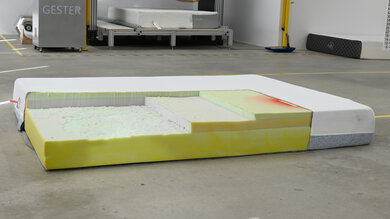
The Zinus Original Green Tea (2024) is advertised as a 10-inch (25.4 cm) mattress, and our mattress measured slightly less, so you can use standard fitted sheets without a problem.
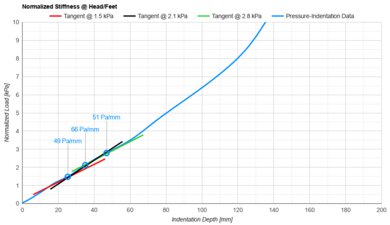
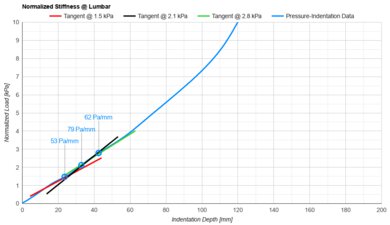
It's a firm mattress. Although the memory foam comfort layer is soft and conforms closely with your body, it's not very thick, so most people will fully compress it. The lower transition and support layers are much firmer, giving the mattress a firm feel overall. This firmness can be great for back and stomach sleepers, but side sleepers and lighter people may find it doesn't compress enough to provide sufficient pressure relief.
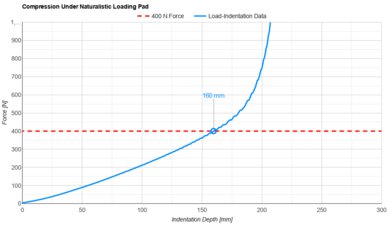
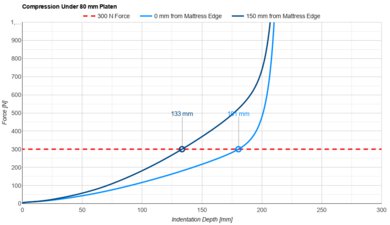
The Zinus Memory Foam mattress has subpar edge support. There's no additional edge component built into the mattress, and the material that is there compresses easily when you sit on it. When you're sleeping on the edge of the mattress, you feel at risk of sliding off.
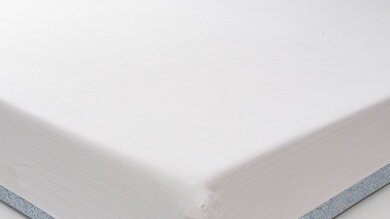
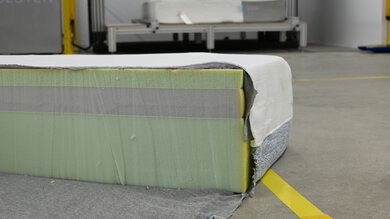
There's no additional edge component built into the mattress, which helps explain its disappointing edge support.
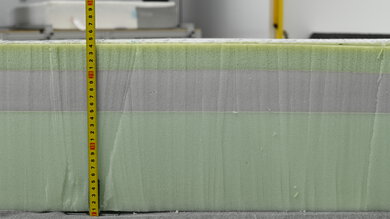
The memory foam layer is only 1.5" (3.9 cm) thick. Most people will find that they almost completely compress the comfort layer and, therefore, engage with the firmer 2.4" (6.1 cm) transition layer below, contributing to the overall firmness of the mattress. The support layer is 5.7" (14.6 cm) thick and provides a sturdy base for the mattress.
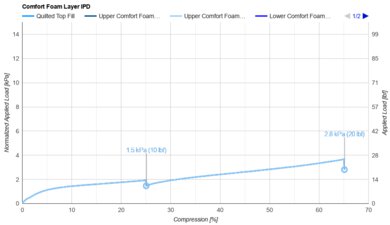
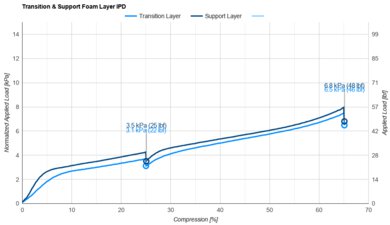
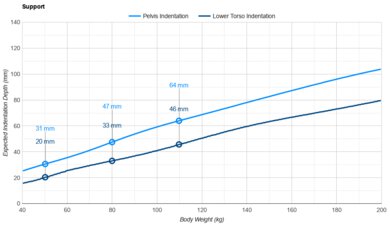
The upper comfort layer is made of soft memory foam that contours your body and relieves pressure, but doesn't offer much support. The polyfoam used for the transition and support layers is much firmer, which helps keep the heavier parts of your body, like the lumbar, hips, or shoulders, depending on your sleeping position, from sinking in too far.
Popular Mattress Comparisons
The Zinus Original Green Tea (2024) is a budget-friendly all-foam mattress with great motion isolation for couples and good enough cooling for most people. It's a decent option if you like the contouring, hugging feel of memory foam, but need a firmer feel for back or stomach sleeping. That said, pricier options like the Tempur-Pedic TEMPUR-Adapt and Casper Snow also have a slow-moving, contouring feel. They both offer much better cooling and similar (but not quite as good) motion isolation. If you're not interested in the memory-foam feel, you might also prefer the Purple Mattress, an all-foam mattress with outstanding cooling and a more responsive feel.
If you'd like more to consider, check out our recommendations for the best memory foam mattresses and the best mattresses overall.
The Novaform ComfortGrande Plus is better than the Zinus Original Green Tea 2024. The Novaform is more responsive, so you're less likely to feel stuck in place, and it has better motion isolation, so you're less likely to feel your partner's movements. Its sturdier edges make it more comfortable to sit or sleep on the side of the bed.
The Allswell Hybrid performs better than the Zinus Original Green Tea 2024 in most ways. The Allswell offers significantly better cooling, has sturdier edges, and offers a more responsive feel. However, if you like the hugging feel of slow-moving memory foam, you might prefer the Zinus, which has lower responsiveness and more contouring upper comfort layers.
Differences Between Sizes And Variants
The Zinus Original Green Tea (2024) mattress comes in Twin, Full, Queen, and King sizes. There's also the Zinus Cooling Green Tea Memory Foam Mattress, which has a similar design with 'cooling gel-infused' memory foam, according to the manufacturer.
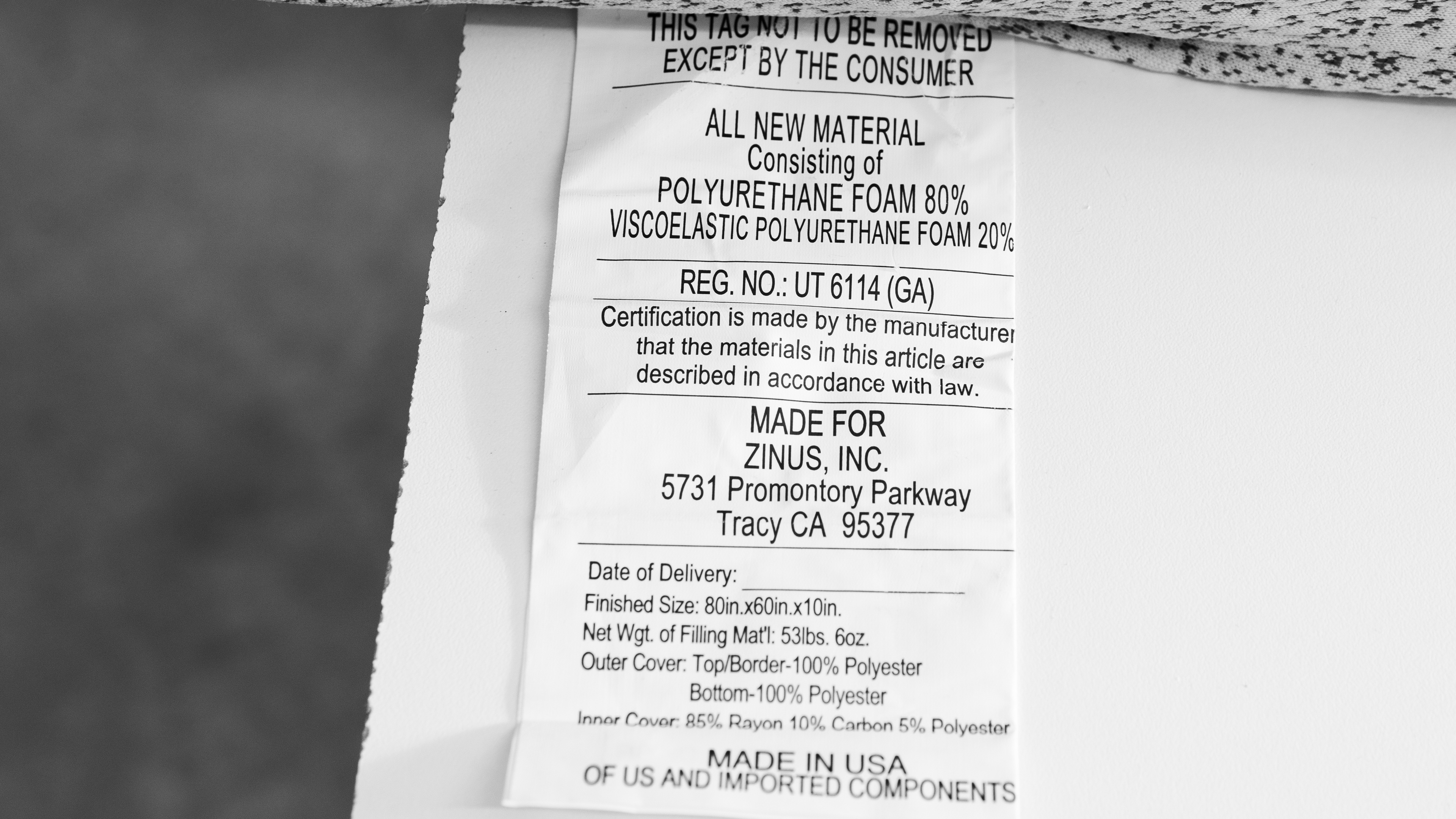
Our unit is a queen-sized 'Original Green Tea' mattress, and other sizes and variants may perform differently. Here's a picture of our unit's label.
If you encounter another variant or have experience with a variant that performs differently, let us know in the comments.