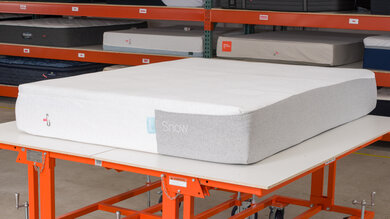
The Casper Snow (Canadian Version) is a high-end hybrid bed-in-a-box mattress. Its polyfoam comfort layer is zoned, with denser foam in the lumbar area to provide more support. The transition layer is made of memory foam, and below that, it has a support layer of individually wrapped pocket coils. This mattress is largely marketed for cooling. The manufacturer advertises three main cooling features: the Snow Cover, meant to be cool to the touch; 'phase change materials,' that absorb and release heat as they change states; and Heat Delete Bands, which are flexible strips of aluminum graphite meant to remove excess heat.
It's a medium mattress, so it's a good choice for average-sized and heavier side sleepers as well as lighter and average-sized back and stomach sleepers. Lighter side sleepers may find it too firm, while heavier back and stomach sleepers may want to consider a firmer option.
There are regional variants of the Casper Snow that differ in materials and construction. See the Differences Between Variants section below for more details.
Our Verdict
-
7.6Light Weight
-
8.4Average Weight
-
8.6Heavy Weight
Ideal for average to heavier side sleepers and lighter to average back and stomach sleepers.
Inadequate edge support.
Not ideal for lighter side sleepers or heavier back and stomach sleepers.
-
7.4Light Weight
-
7.4Average Weight
-
7.1Heavy Weight
Ideal for average to heavier side sleepers and lighter to average back and stomach sleepers.
Inadequate edge support.
Not ideal for lighter side sleepers or heavier back and stomach sleepers.
-
7.1Light Weight
-
7.2Average Weight
-
6.8Heavy Weight
Ideal for average to heavier side sleepers and lighter to average back and stomach sleepers.
Inadequate edge support.
Not ideal for lighter side sleepers or heavier back and stomach sleepers.
Changelog
- Updated Mar 09, 2026: We converted this review to Test Bench 1.2. We've added sub-usages to the sleeping position usages in the Our Verdict section to clearly show the suitability of a mattress for your weight and sleeping position.
- Updated Feb 12, 2026: We converted this review to Test Bench 1.1. We've added new tests, including Body Conformity, Support, and Comfort Layers Envelopment, and also added scoring to the Bounciness test. Our usage scores have also changed, with new usages 'Side Sleeping,' 'Back Sleeping,' and 'Stomach Sleeping' replacing the 'Sleeping' verdict. We've also added 'Pressure Relief' and 'Support' performance usages. You can find more details in the full changelog.
-
Updated Oct 06, 2025:
We rewrote portions of this review to align with Test Bench 1.0.1, which adds a Longevity verdict and a score to the Foam Layer Mass Density box for users interested in the mattress's durability.
- Updated Oct 06, 2025: Converted this review to Test Bench 1.0.1. We've added scoring to the Foam Layer Mass Density section and a new 'Longevity' performance usage. Read more about it in our Changelog.
-
Updated Aug 20, 2025:
Added the DreamCloud Hybrid Premier Hybrid (Canadian Version) as a firmer option in Firmness.
-
Updated Aug 11, 2025:
We added a link to the recently reviewed Bear Elite Hybrid in the Edge Support box for users looking for improved performance in this area.
-
Updated Jul 16, 2025:
We've updated this review to provide additional information on the expected user experience.
- Updated Jul 15, 2025: Review published.
Test Results
Longevity
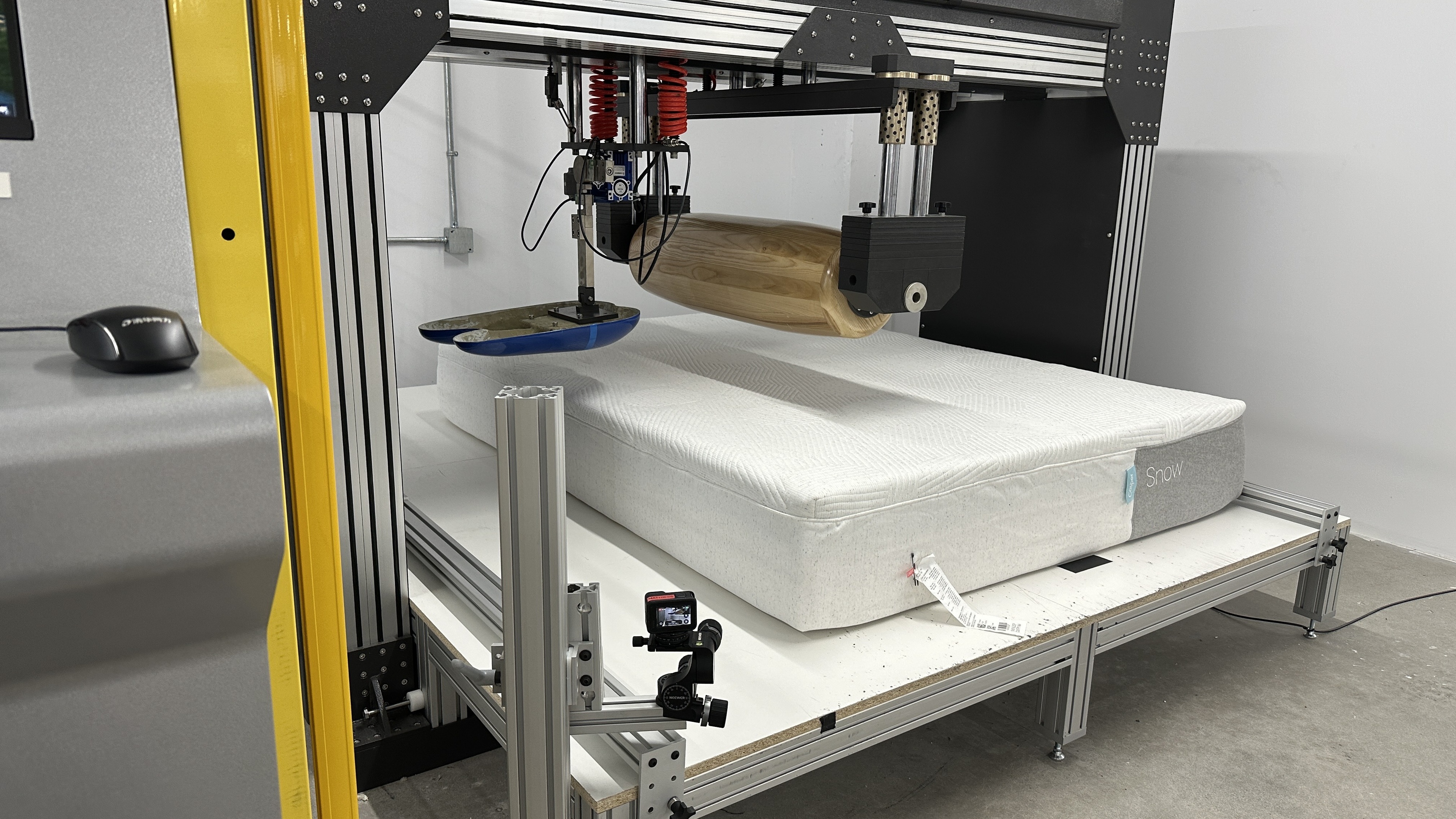
The Canadian Casper Snow is reasonably durable. The comfort layers are made of dense, good, and high-quality polyfoam, which helps resist sagging and wear. However, the transition layer uses lower-quality polyfoam that breaks down more quickly. While the mix of good and lower-quality materials offers some resistance to sagging, it's not as durable as a mattress made entirely of denser foam, so you can expect to see some premature wear and tear.
The comfort layers are made of durable, good-quality foam.
Ideal for average to heavier side sleepers and lighter to average back and stomach sleepers.
Inadequate edge support.
The transition layer is made of low-quality foam, impacting the mattress's overall durability.
Not ideal for lighter side sleepers or heavier back and stomach sleepers.
This mattress uses mostly dense, good-quality foam. The polyfoam upper and lower comfort layers are both dense enough to meet the standard for good quality. There's also a separate piece of even denser, high-quality polyfoam in the lumbar area of the lower comfort layer. These layers will resist the premature indentations and sagging that can happen with less dense, lower-quality foams.
Unfortunately, the transition layer is made of less dense, lower-quality foam, which will begin to lose its shape faster than the layers above. Since it's the thickest layer, it affects the mattress's overall durability more than the comfort layers.
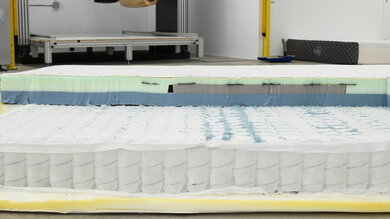
This mattress has three layers of foam above its pocket spring support system. The upper and lower comfort layers are made of perforated polyfoam with six Heat Delete bands in the middle. These polyfoam layers offer some resilience, pushing back when compressed, while the transition layer is made of memory foam, which has the opposite effect, contouring your body and providing a slow-moving sensation. This configuration can offer some of the pressure relief of memory foam while alleviating the 'stuck-in-place' feeling that's typical of this material, though light, average, and heavy sleepers will interact with this layer to various degrees.
Pressure Relief
Ideal for average to heavier side sleepers and lighter to average back and stomach sleepers.
Inadequate edge support.
Not ideal for lighter side sleepers or heavier back and stomach sleepers.
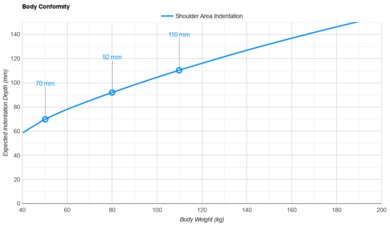
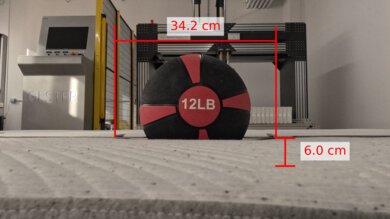
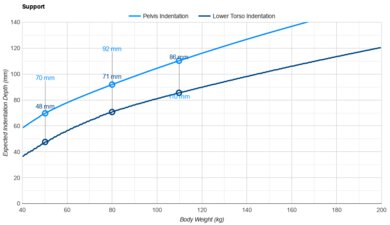
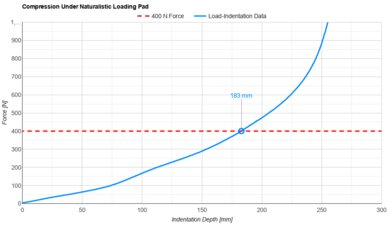
You sink fairly deeply into this mattress, but it doesn't contour your body very closely, so you feel cushioned and supported, but not enveloped. Heavier people will compress more of the comfort layers and interact to a greater degree with the memory foam transition layer, resulting in increased contouring, which you may or may not prefer depending on whether you enjoy the sluggish, huggy feeling of memory foam.
Support
Ideal for average to heavier side sleepers and lighter to average back and stomach sleepers.
Inadequate edge support.
Not ideal for lighter side sleepers or heavier back and stomach sleepers.
Cooling
The Canadian Casper Snow delivers an excellent cooling performance. It draws a lot of heat away from you as you fall asleep and continues to dissipate heat steadily throughout the night, so you feel cool as you drift off and don't wake up overheated during the night, either. If you sleep hot or live in a hot climate, and cooling is a priority for you, this mattress is definitely worth considering.
Excellent cooling performance.
Ideal for average to heavier side sleepers and lighter to average back and stomach sleepers.
Inadequate edge support.
Not ideal for lighter side sleepers or heavier back and stomach sleepers.
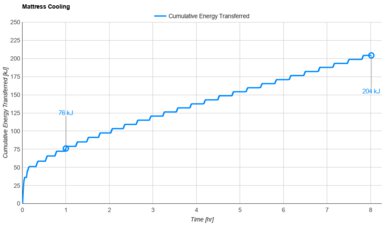
This mattress delivers excellent cooling performance. It dissipates a lot of heat during the first hour, keeping you noticeably cool as you fall asleep. After that, it continues to draw heat away from you, keeping you cool steadily throughout the night. This excellent performance is likely due to the manufacturer's trio of cooling technologies ('cool-to-the-touch' cover, phase change material, and aluminum graphite bands) combined with the support layer of pocket springs, which allow heat to dissipate more quickly than a layer of foam.
Motion Dissipation
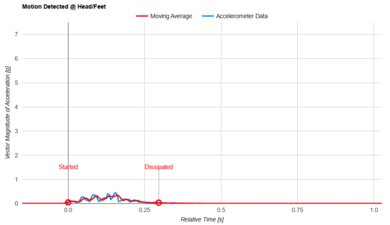
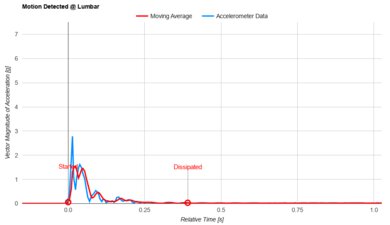
The Canadian Casper Snow offers excellent motion dissipation. Though you feel larger movements, like when your sleeping partner rolls over or a pet jumps on the bed, the movement is fairly localized and dissipates quickly, so it's less likely to disturb you.
Excellent motion dissipation means a sleeping partner's movements are less likely to wake you.
Ideal for average to heavier side sleepers and lighter to average back and stomach sleepers.
Inadequate edge support.
Not ideal for lighter side sleepers or heavier back and stomach sleepers.
Responsiveness
The Canadian Casper Snow is remarkably responsive. After compressing the mattress, it regains its shape very quickly, so it adapts to your movements fast, making it easy to shift sleeping positions.
Superb responsiveness makes it easy to change sleeping positions.
Ideal for average to heavier side sleepers and lighter to average back and stomach sleepers.
Inadequate edge support.
Not ideal for lighter side sleepers or heavier back and stomach sleepers.
The Casper Snow (Canadian Version) offers fantastic responsiveness. It recovers its shape very quickly after being compressed, meaning it will adapt to your movements effectively, and you won't feel 'stuck' when adjusting your sleeping position.
The pocket spring support layer is fairly bouncy and 'pushes back' when you apply pressure. When combined with the somewhat resilient foam layers, it gives the mattress its moderately bouncy feel.
This is a moderately bouncy mattress. It's not as bouncy as many spring mattresses, but it still avoids the static feeling of some all-foam mattresses.
None of the mattress's foam layers is particularly resilient or bouncy. The upper polyfoam layer has the most 'push back,' but it's still less resilient than most polyfoam, giving the mattress a less bouncy feel overall. The lower polyfoam layer is even less resilient, relieving pressure but not helping much with support. The memory foam transition layer has the lowest resilience, which is expected with memory foam. Since this layer is so far down, you won't interact with it too much unless you fully compress the layers above, but it still helps give the mattress its cushy feel.
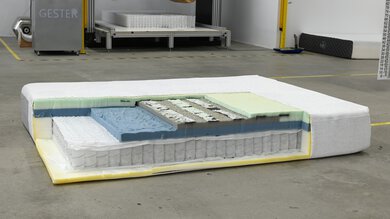
The Casper Snow (Canadian Version) is advertised as a 12" (30.5 cm) mattress, and our unit measured 11.3" (28.7 cm), so standard fitted sheets will easily fit.
It's quite difficult to move as it doesn't hold its shape very well, and the lack of carrying handles makes it even more difficult to maneuver.
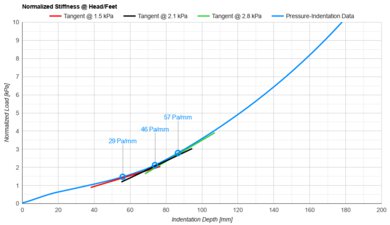
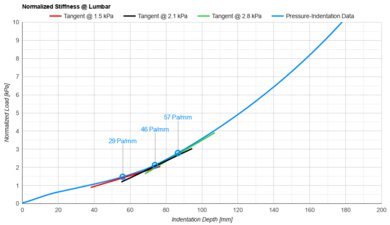
This mattress has a medium firmness, offering a balanced feel that fits various sleeping styles well. It's best suited to average-sized and heavier side sleepers and lighter to average-sized back and stomach sleepers. Lighter side sleepers may want something plusher, while heavier back and stomach sleepers may benefit from a firmer option, such as the DreamCloud Premier Hybrid (Canadian Version).
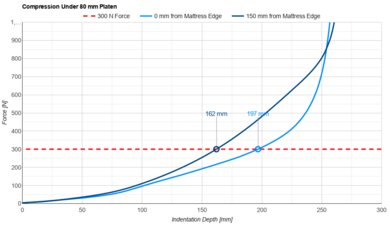
This mattress has disappointing edge support. Although there's an additional edge component built in, the polyfoam it's made of compresses easily. Sitting on or sleeping near the edge leaves you feeling like you might slide off.
If edge support is a priority for you, you might be interested in the Bear Elite Hybrid. It has tightly wound pocket coils reinforcing the edges, which offer better support.
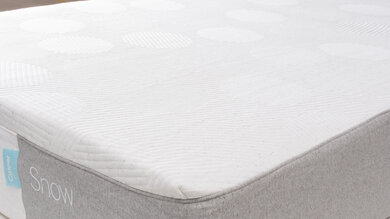
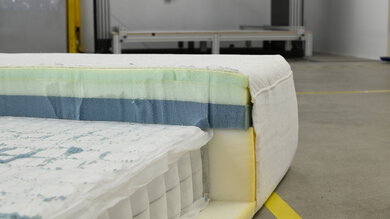
Although there's additional polyfoam built into the border, it compresses too easily to provide adequate edge support.
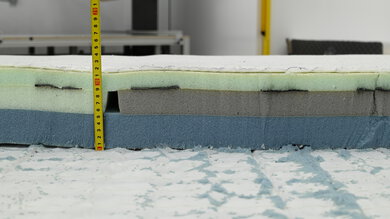
This mattress has 4.4" (11 cm) of foam above its pocket coil support system. The polyfoam upper comfort layer is 0.8" (2 cm) thick, while the polyfoam lower comfort layer is 1.6" (4 cm). Most people will compress this layer and interact to some degree with the 2" (5 cm) memory foam transition layer below, though how much depends on your size.
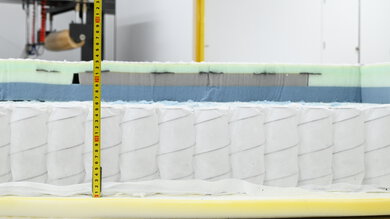
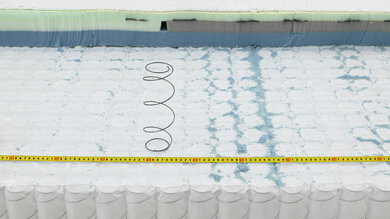
This mattress uses pocket springs as its support layer. Each spring is individually wrapped in fabric, allowing them to compress independently of one another. This design delivers better motion isolation and contouring than continuous coils. The 14-gauge springs are medium-soft, offering moderate support for the heavier parts of your body, like the shoulders, hips, or lumbar, depending on your sleeping position.
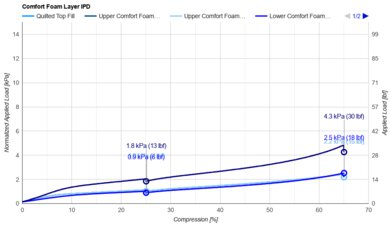
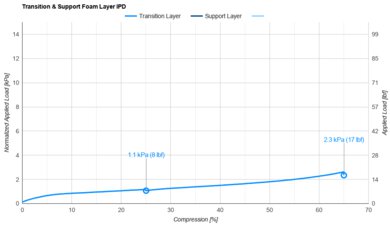
The polyfoam upper comfort layer is soft and creates a cushioned sleeping surface. The lower comfort layer at the head and feet is also soft, but the polyfoam in the lumbar region is a bit firmer, providing a bit of extra support in this area. The memory foam transition layer is only slightly firmer than the comfort layers. Lighter people may not engage with the transition layer much, but it adds extra cushioning if you fully compress the layers above.
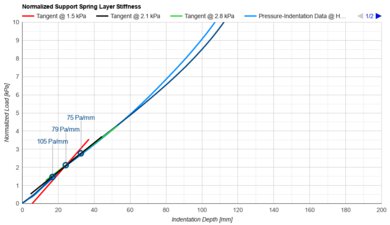
Pocket springs form the support layer of this mattress, and as such, they're firmer than the upper comfort layers. This helps to provide support for heavier parts of your body, like the lumbar, hips, or shoulders, depending on your sleeping position. Combined with the softer comfort layers, this produces a medium mattress.
Popular Mattress Comparisons
The Casper Snow (Canadian Version) is a high-end hybrid mattress from Casper Sleep, one brand that helped popularize the direct-to-consumer bed-in-a-box model. Their Canadian lineup includes a range of mattresses in three categories: Foam Mattresses, Hybrid Mattresses, and Snow Mattresses, designed for cooling. Along with the Casper Snow, you can also find the Wave Hybrid Snow Mattress being marketed for cooling, though at a higher price point and with a more complex design to match.
Compared with other hybrid mattresses, this one stands out for its effective cooling. It keeps you cooler than options like the Saatva Latex Hybrid. This mattress also has excellent motion isolation, outperforming foam options like the Puffy Lux (Canadian Version). You sink further into the Casper Snow than most other hybrids, but it offers less contouring, making it a good choice if you like the feeling of sleeping more 'in' than on top of your mattress, but want to avoid the hugging sensation of options like the Tempur-Pedic TEMPUR-Adapt. One downside of the Casper is its middling edge support, which is on par with the Zinus Original Green Tea 2024. That said, this mattress delivers a great sleeping experience, as long as its disappointing edge support isn't a dealbreaker.
If you'd like more options, check out our recommendations for the best mattresses.
The Casper Snow (Canadian Version) is a better mattress for most people than the DreamCloud Hybrid (Canadian Version). The main area where the Casper comes out ahead is cooling. The DreamCloud is fairly cooling, too, but the Casper is a much better choice for hot sleepers. The Casper is also more responsive, making it easy to move around, and it provides slightly better motion isolation, so you'll notice a bit less movement throughout the night. The one area in which the DreamCloud outperforms the Casper is edge support. Neither mattress has very good edge support, but the edges of the Casper are particularly easy to compress and leave you feeling like you could slip off the sides when you sleep nearby.
The DreamCloud Premier Hybrid (Canadian Version) and Casper Snow (Canadian Version) have different strengths. The DreamCloud has significantly better edge support, so you might prefer it if you want sturdy sides for sitting or sleeping on the edges. The Casper has better cooling, motion dissipation, and responsiveness. It's also a firmer mattress better-suited for heavier back and stomach sleepers.
The Casper Snow (Canadian Version) and Nectar Classic Hybrid perform similarly, but for most people, the Casper is a better choice. As its name implies, the Casper Snow (Canadian Version) is marketed as a cooling mattress, and if you run hot, it's the better bet to keep you cool throughout the night. It's also much more responsive than the Nectar—it bounces back instantly when compressed, so changing sleeping positions is effortless. When it comes to edge support, however, the Nectar comes out ahead, so if decent edge support is a must-have, it may be a better choice for you.
Differences Between Sizes And Variants
This mattress varies depending on which region you buy it in. The overall design is similar, but the Canadian version includes three more Heat Delete bands as well as perforated foam that Casper calls Airscape Technology. The Casper Snow (Canadian version) comes in Twin, Twin XL, Full, Queen, King, and California King.
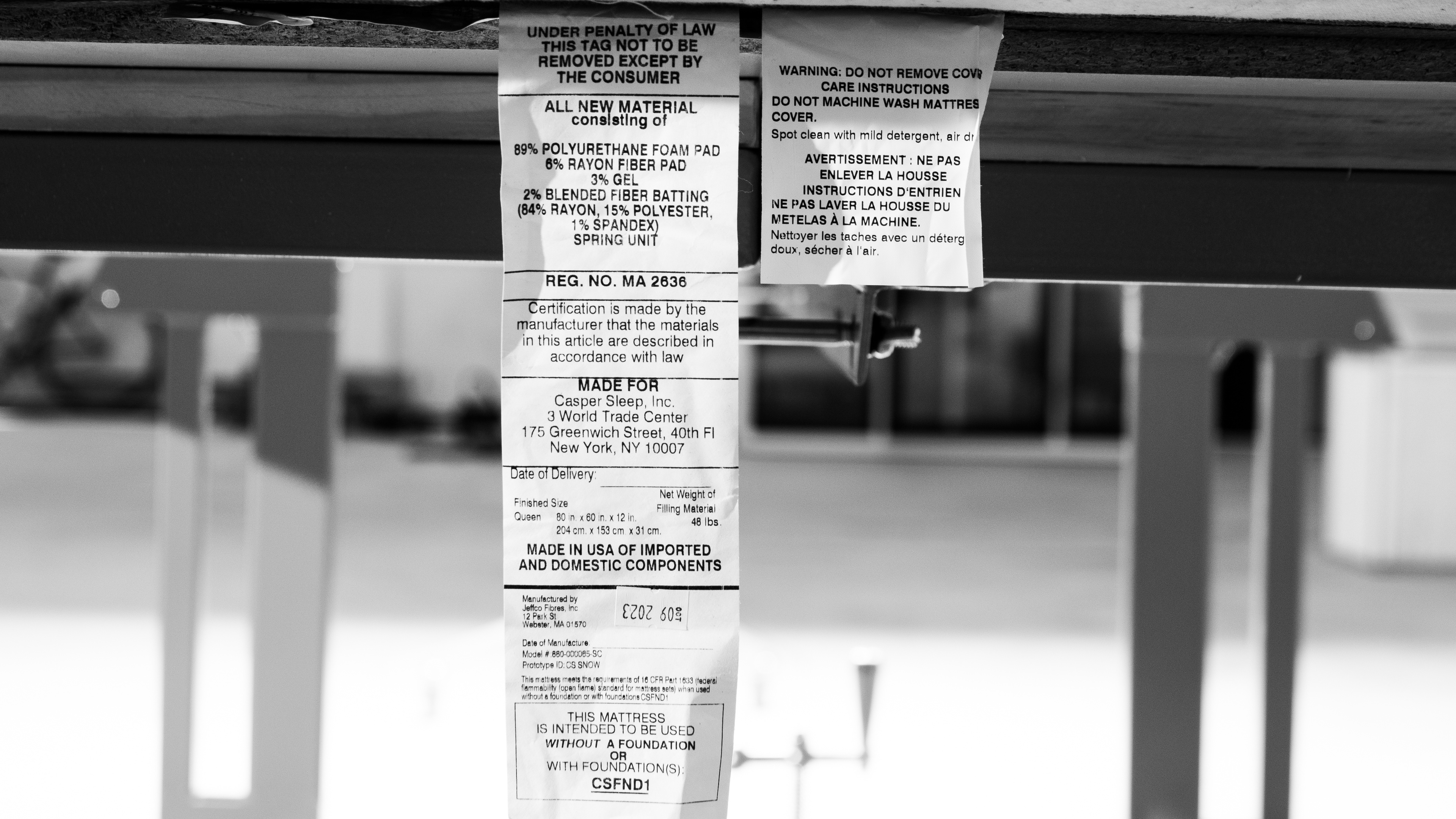
We tested the Queen-sized Canadian variant, and our results are only valid for this model. See a picture of our unit's label.
If you come across another variant or have experience with a variant that performs differently, let us know in the comments.