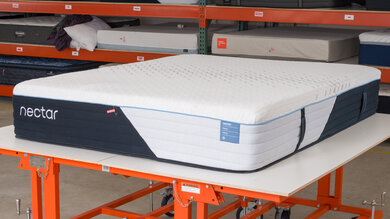
The Nectar Classic Hybrid mattress is a high-end bed-in-a-box mattress. It has a hybrid construction with a layer of pocket coils for support, a polyfoam transition layer, and a memory foam comfort layer.
This mattress is medium-firm, so it's a good choice for light to average-sized back and stomach sleepers as well as heavier side sleepers. Heavier back and stomach sleepers may want something firmer, so they don't sink too far into the mattress and misalign their spines as they sleep. By contrast, light to average-sized side sleepers may want something plusher, as they might not sink far enough into the mattress to engage its support layers and relieve pressure on their shoulders and hips. As a moderately bouncy mattress, it provides a bit of 'push back' without feeling overly springy. It also contours your body fairly closely, but you don't sink very far in, so you feel gently cradled, but not hugged or enveloped.
Our Verdict
-
5.0Light Weight
-
6.9Average Weight
-
8.1Heavy Weight
Good choice for light to average-sized back and stomach sleepers and heavier side sleepers.
Thicker pocket coils provide decent support for most sleeping positions.
Not ideal for heavier back and stomach sleepers or light to average-sized side sleepers.
Edge compresses enough to make getting out of bed a challenge.
-
7.4Light Weight
-
7.1Average Weight
-
6.3Heavy Weight
Good choice for light to average-sized back and stomach sleepers and heavier side sleepers.
Thicker pocket coils provide decent support for most sleeping positions.
Not ideal for heavier back and stomach sleepers or light to average-sized side sleepers.
Edge compresses enough to make getting out of bed a challenge.
-
7.6Light Weight
-
7.3Average Weight
-
6.2Heavy Weight
Good choice for light to average-sized back and stomach sleepers and heavier side sleepers.
Thicker pocket coils provide decent support for most sleeping positions.
Not ideal for heavier back and stomach sleepers or light to average-sized side sleepers.
Edge compresses enough to make getting out of bed a challenge.
Changelog
-
Updated Sep 03, 2026:
We mentioned the newly reviewed Puffy Monarch in the Firmness box for users looking for a plusher option.
-
Updated Aug 13, 2026:
We added a link to the Nectar Hybrid Luxe in the Body Conformity box for sleepers seeking a mattress with greater pressure relief.
- Updated Mar 09, 2026: We converted this review to Test Bench 1.2. We've added sub-usages to the sleeping position usages in the Our Verdict section to clearly show the suitability of a mattress for your weight and sleeping position.
- Updated Feb 12, 2026: We converted this review to Test Bench 1.1. We've added new tests, including Body Conformity, Support, and Comfort Layers Envelopment, and also added scoring to the Bounciness test. Our usage scores have also changed, with new usages 'Side Sleeping,' 'Back Sleeping,' and 'Stomach Sleeping' replacing the 'Sleeping' verdict. We've also added 'Pressure Relief' and 'Support' performance usages. You can find more details in the full changelog.
-
Updated Oct 06, 2025:
We rewrote portions of this review to align with Test Bench 1.0.1, which adds a Longevity verdict and a score to the Foam Layer Mass Density box for users interested in the mattress's durability.
- Updated Oct 06, 2025: Converted this review to Test Bench 1.0.1. We've added scoring to the Foam Layer Mass Density section and a new 'Longevity' performance usage. Read more about it in our Changelog.
-
Updated Sep 30, 2025:
We mentioned the recently reviewed Nectar Premier Hybrid in the Firmness box for users looking for a medium firmness level.
-
Updated Sep 11, 2025:
We mentioned the recently reviewed Helix Midnight 2024 in the Motion Isolation box to showcase the Nectar's excellent performance in this area.
-
Updated Aug 29, 2025:
Added a note that the WinkBeds The WinkBed is a comparable option with better responsiveness.
-
Updated Aug 11, 2025:
We recently reviewed the Bear Elite Hybrid and mentioned it in the Edge Support box for users looking for better performance in this area.
-
Updated Jul 31, 2025:
We recently reviewed the Boring Mattress and referenced it in the Responsiveness box for those who prefer a more responsive mattress.
- Updated Jul 28, 2025: Review published.
- Updated Jul 22, 2025: Early access published.
Test Results
Longevity
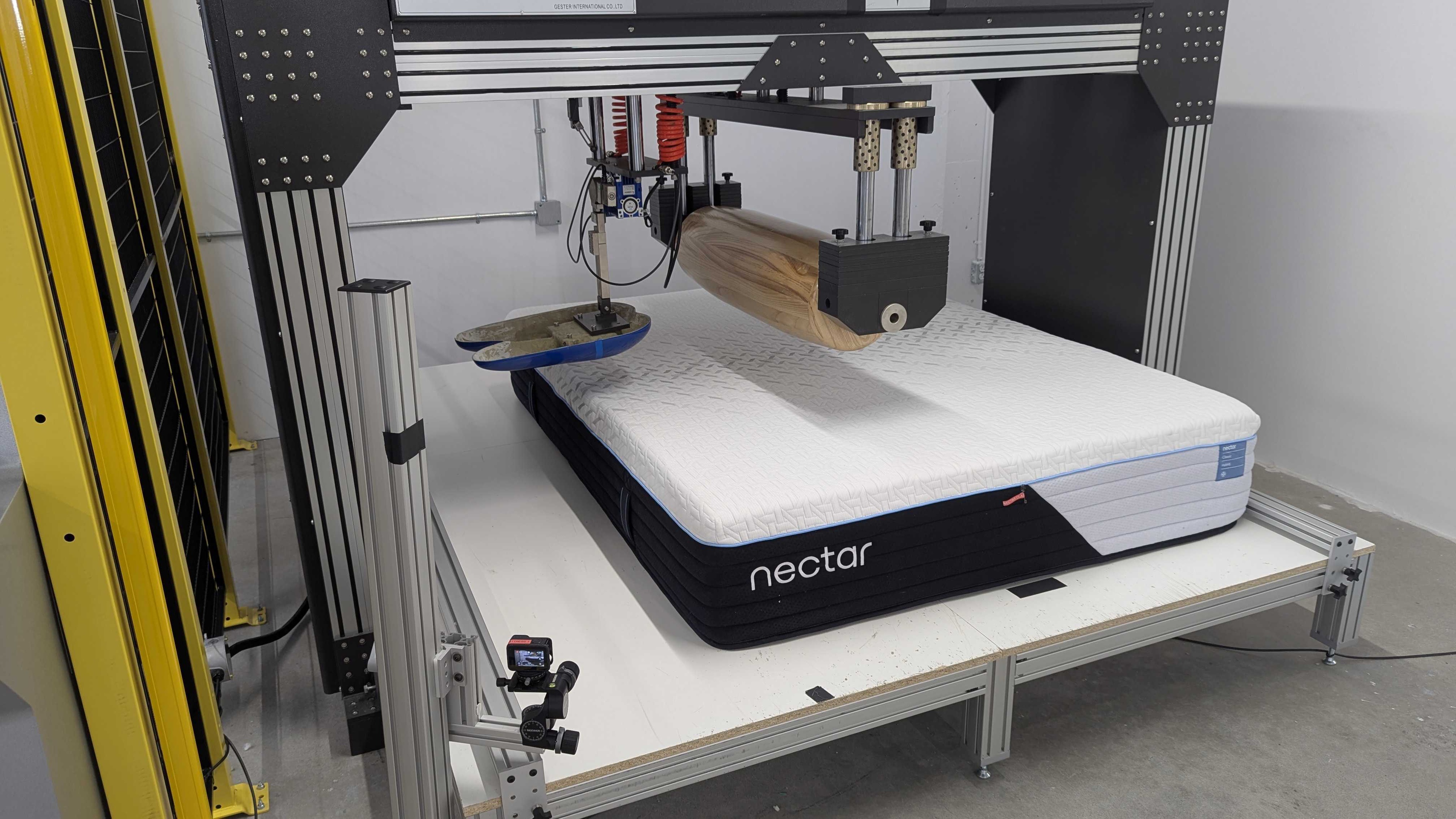
The Nectar Hybrid isn't a durable mattress. While the polyfoam transition layer is just dense enough to be considered good-quality, the memory foam comfort layer is not, so it'll lose its shape more quickly than denser foam. You can expect the mattress to sag and develop permanent impressions faster than options with better-quality foam inside.
Good choice for light to average-sized back and stomach sleepers and heavier side sleepers.
Thicker pocket coils provide decent support for most sleeping positions.
Contains low-quality memory foam, which can form impressions prematurely.
Not ideal for heavier back and stomach sleepers or light to average-sized side sleepers.
Edge compresses enough to make getting out of bed a challenge.
This mattress uses a mix of low-quality and good-quality foams. The memory foam upper comfort layer is not dense enough to be considered good quality. This low-density foam is prone to premature sagging and indentations. The polyfoam transition layer is just dense enough to be considered good quality, so it should hold up to wear and tear for a bit longer, but not as long as even denser foam.
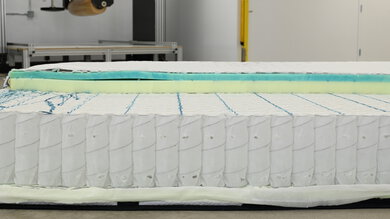
This mattress has two layers of foam above its pocket spring support layer. The upper comfort layer is made of memory foam, which contours your body and relieves pressure. The transition layer is made of polyfoam, which is firmer and more resilient. It provides some support while ensuring you don't sink too far into the mattress.
Pressure Relief
Good choice for light to average-sized back and stomach sleepers and heavier side sleepers.
Thicker pocket coils provide decent support for most sleeping positions.
Not ideal for heavier back and stomach sleepers or light to average-sized side sleepers.
Edge compresses enough to make getting out of bed a challenge.
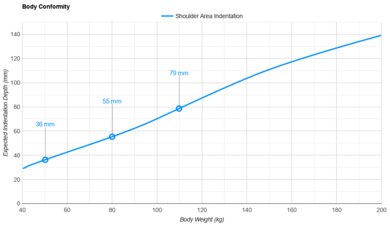
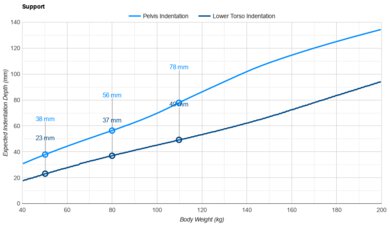
This mattress offers excellent body conformity for heavier people, but its pressure relief is less impressive for average-weight and particularly lighter people. If you want a mattress from Nectar that offers excellent body conformity for average-weight sleepers, consider the Nectar Luxe Hybrid.
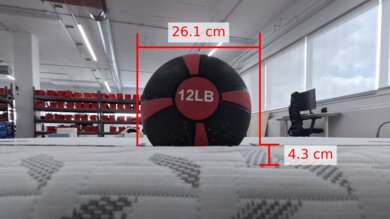
You don't sink very far into the Nectar Hybrid; most people compress the memory foam comfort layer and only sink a little way into the polyfoam transition layer below. As a result, you sleep more on than 'in' this mattress. It's moderately contouring, too, so the surface stays fairly close to your body, offering a hug-like sensation.
Support
Good choice for light to average-sized back and stomach sleepers and heavier side sleepers.
Thicker pocket coils provide decent support for most sleeping positions.
Not ideal for heavier back and stomach sleepers or light to average-sized side sleepers.
Edge compresses enough to make getting out of bed a challenge.
Cooling
The Nectar Hybrid mattress is very good at cooling. It transfers a lot of heat away from you throughout the night, making it a good choice for people who tend to heat up as they sleep. But if you have trouble falling asleep because you feel warm when you first get into bed, this mattress isn't the best choice, as it transfers heat more slowly during the first hour of the night.
Very good cooling performance throughout the night.
Good choice for light to average-sized back and stomach sleepers and heavier side sleepers.
Thicker pocket coils provide decent support for most sleeping positions.
Not ideal for heavier back and stomach sleepers or light to average-sized side sleepers.
Edge compresses enough to make getting out of bed a challenge.
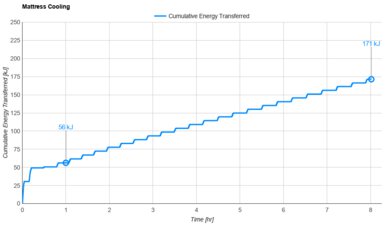
The Nectar Hybrid transfers a lot of heat throughout the night and will keep you cool if you predominantly suffer from overheating. However, during the first hour of the night, it doesn't perform quite as well, transferring the same amount of heat as its all-foam sibling, the Nectar Classic. If you have trouble falling asleep in a warm environment, you may want to consider something that transfers more heat away from you at the beginning of the night.
Motion Dissipation
The Nectar Hybrid mattress provides excellent motion isolation and dissipation. Most movement isn't noticeable, and while you still feel larger motions, like when your sleeping partner rolls over, you notice them mainly in the lumbar. They don't transfer much to the head or foot of the bed, so they're not likely to wake you.
Excellent motion isolation means movement is less likely to wake you.
Good choice for light to average-sized back and stomach sleepers and heavier side sleepers.
Thicker pocket coils provide decent support for most sleeping positions.
Not ideal for heavier back and stomach sleepers or light to average-sized side sleepers.
Edge compresses enough to make getting out of bed a challenge.
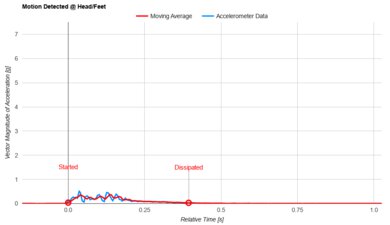
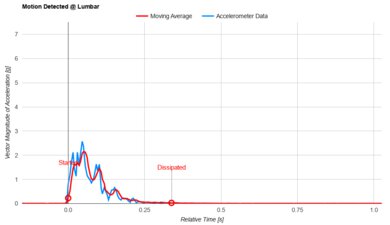
The Nectar Hybrid has excellent motion isolation, especially for a hybrid mattress, which tend to transfer more motion because of their spring layer. For example, it outperforms the Helix Midnight 2024 despite having a thinner memory foam upper comfort layer. If you sleep with a partner or have a pet who tends to jump on and off the bed late at night, you'll still feel their larger movements, but they don't travel throughout the mattress and dissipate very quickly, so they're not likely to disturb or wake you.
Responsiveness
The Nectar Hybrid mattress offers satisfactory responsiveness. It adapts to your movements fairly quickly, though not instantly. So, while it's not effortless, it's still pretty easy to move around and change sleeping positions.
Good choice for light to average-sized back and stomach sleepers and heavier side sleepers.
Thicker pocket coils provide decent support for most sleeping positions.
Adapts to movements quickly, making it fairly easy to change position.
Not ideal for heavier back and stomach sleepers or light to average-sized side sleepers.
Edge compresses enough to make getting out of bed a challenge.
Not responsive enough for people who enjoy a lively mattress.
The Nectar Hybrid is fairly responsive. While it doesn't recover instantly, it bounces back pretty quickly when compressed. It takes a bit of extra effort to move around or change sleeping positions, since the mattress's surface takes a moment to adapt to your movements, but it's not enough to bother most sleepers. If responsiveness is a priority for you, you may want to consider the Boring Mattress or the WinkBeds The WinkBed, both hybrid models that bounce back significantly quicker than this mattress.
While the springs are inherently bouncy, they don't have as much 'push back' as most other hybrid or innerspring models. Combined with the resilient polyfoam transition layer and much less resilient memory foam upper comfort layer, the springs produce a moderately bouncy mattress. While it's not the bounciest hybrid available, it's still quite easy to move around on the surface or change positions as you sleep.
The Nectar Hybrid is a moderately bouncy mattress, so it responds to your movements. However, it doesn't offer as much 'push back' as other hybrid models, like the Saatva Classic (Luxury Firm). People who like the lifeless feeling of a memory foam mattress will find this one too lively, while those who prefer the noticeably buoyant response of an innerspring mattress will find this option too dull.
The upper comfort layer isn't very resilient or bouncy, though this is expected of memory foam, which is slow-moving and doesn't offer much 'push back' when compressed. This layer makes it more difficult to move around, since the memory foam doesn't bounce back quickly enough to support your next move. The transition layer is much more resilient, helping to give the mattress its moderate bounciness overall.
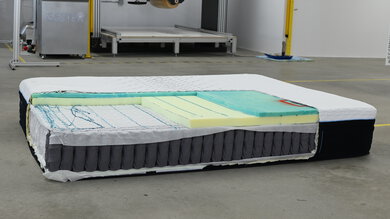
The Nectar Hybrid is advertised as a 12-inch (30.5 cm) mattress, but ours measured just a hair taller, so you can use standard fitted sheets.
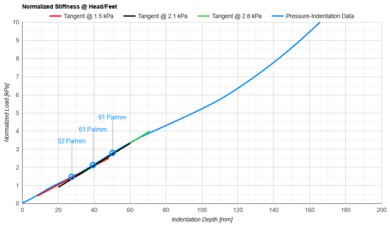
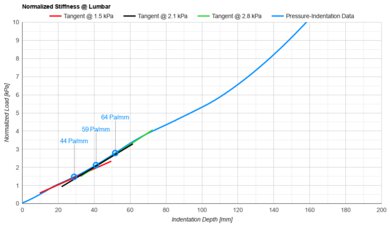
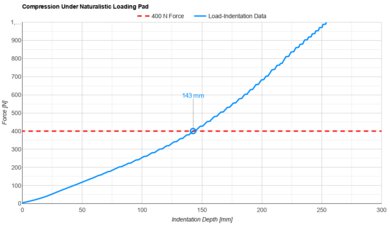
This medium-firm mattress is a good choice for lighter and average-sized back and stomach sleepers, as well as heavier side sleepers. Heavier back and stomach sleepers may sink too far into the mattress for comfort and could benefit from something firmer, while lighter and average-sized side sleepers may want a plusher option so their shoulders and hips can sink further in, keeping the spine aligned.
If you think a mattress with medium firmness would be a better fit for you, check out the Nectar Premier Hybrid. For an even more plush mattress, take a look at the Puffy Monarch.
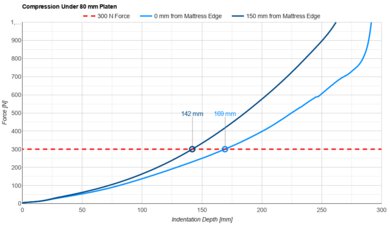
The Nectar Hybrid has decent edge support. Thicker pocket coils are built into the sides, which offer more resistance when compressed. That said, when you sit on or sleep near the edges, they still collapse somewhat, creating a ramp that can limit the comfortable sleeping surface and make you feel like you could slip off the side of the mattress.
For an option with better edge support, take a look at the Bear Elite Hybrid. It also has pocket coils in the sides, and while the coils are actually a higher gauge, they're very tightly wound and offer more robust support.
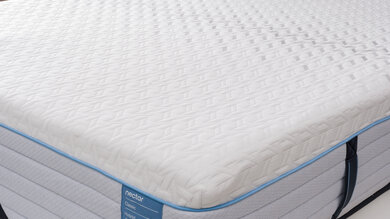
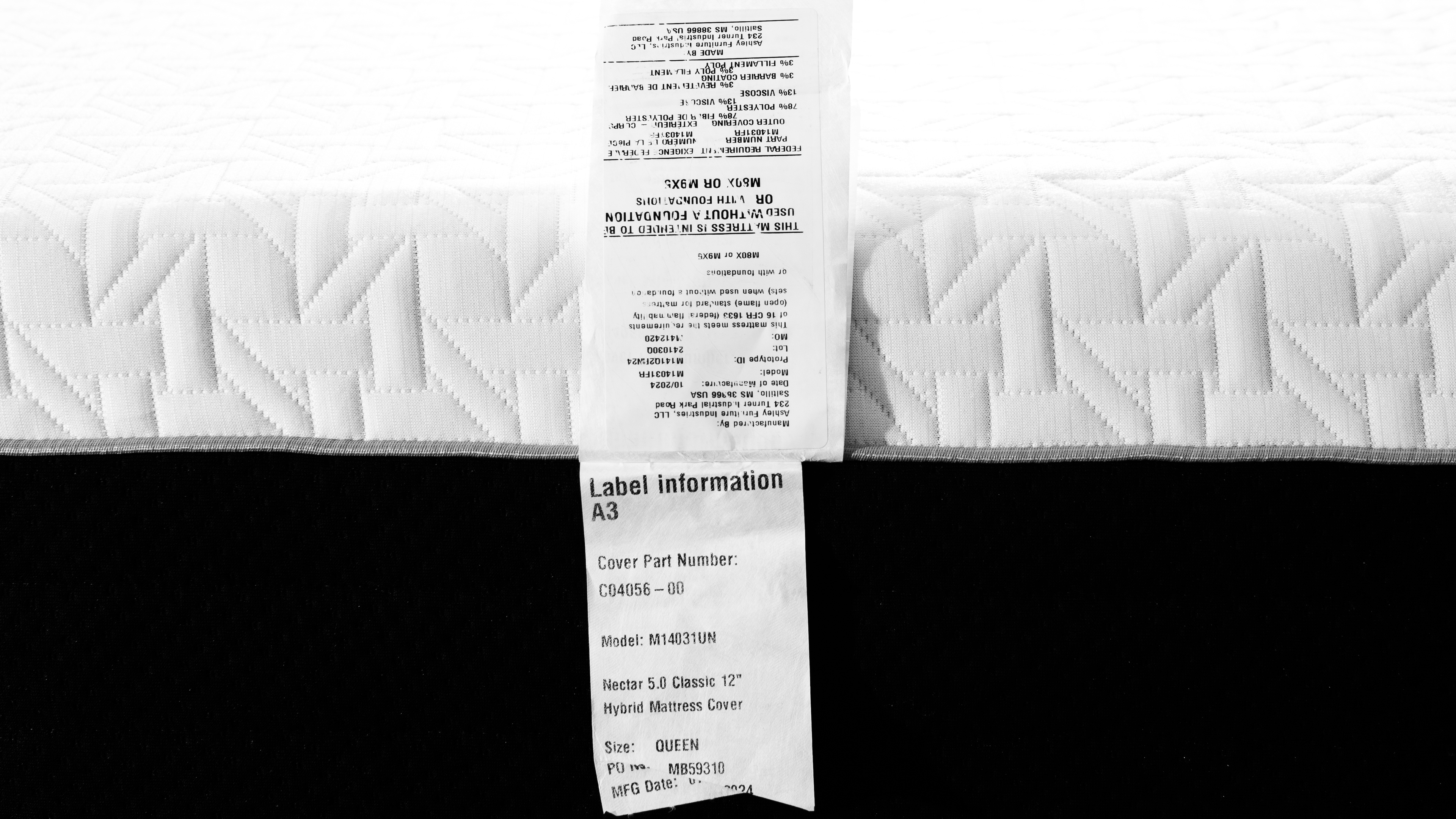
Although the cover has a zipper, the manufacturer warns not to unzip it and not to remove the cover. The sleeping surface is made up of 78% polyester, 13% viscose, 3% barrier coating, and 3% filament poly.
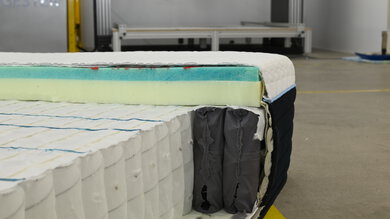
There are thicker pocket coils built into the border of the mattress. While the springs in the rest of the mattress are 15-gauge, the edge support springs are 13-gauge, making them noticeably more difficult to compress. Unfortunately, they still collapse enough to leave you feeling like you could slip off the side fairly easily when sleeping close to the edge.
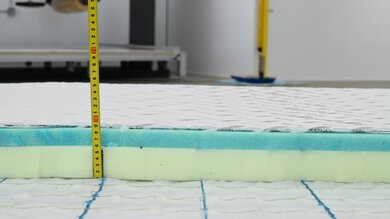
This mattress has 3" (7.5 cm) of foam above its pocket coil support system. The upper comfort memory foam layer is 1" (2.5 cm) thick, which is enough to provide pressure relief and contour your body. This layer is soft and easily compressed, so you also feel the 2" (5 cm) polyfoam transition layer below. This layer is quite firm and contributes significantly to the medium-firm feeling of the mattress overall. Most people will compress it somewhat, but since it's so firm, you're not likely to feel the individual springs below.
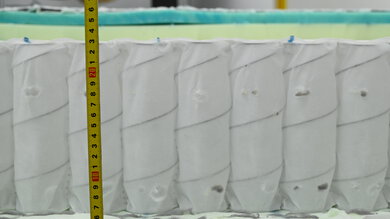
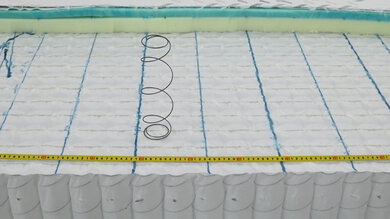
The mattress's support layer consists of pocket coils. Compared to other types of springs, pocket coils offer better motion isolation and contouring because they're individually wrapped and can compress independently of one another. The 15-gauge coils are soft and not very densely packed, so while they still support the heaviest parts of your body like your shoulders, hips, or lumbar, depending on your sleeping position, they have a flexible feeling and offer gentler support than firmer springs.
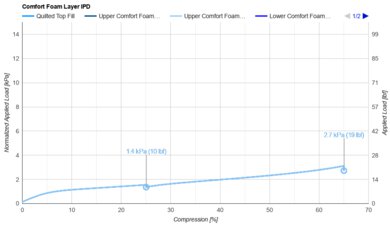
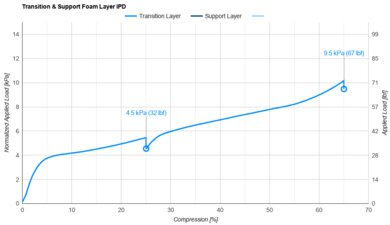
The memory foam upper comfort layer is soft, which is typical of memory foam and provides a cushy surface that relieves pressure. The polyfoam transition layer below is firm, so you don't sink too far into the mattress or feel the pocket springs below.
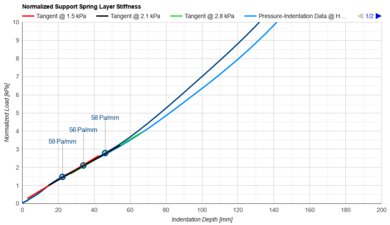
The pocket springs are the firmest component in the mattress, but the 15-gauge springs are still softer than in most hybrid models. They offer flexible support to the heavier parts of your body and have a little extra firmness in the lumbar region for added stability in that area. Together with the firm transition layer and soft upper comfort layer, the springs still result in a medium-firm mattress.
Popular Mattress Comparisons
The Nectar Hybrid mattress is a medium-firm option from Nectar Sleep, a popular bed-in-a-box brand. Overall, this mattress offers middle-of-the-pack performance, compared to other hybrid models, which tend to provide at least decent performance in most areas. It has better cooling, responsiveness, and edge support than its all-foam sibling, the Nectar Classic, thanks to the addition of the pocket spring support layer. This mattress is also excellent at motion dissipation, outperforming many other hybrids, despite being moderately bouncy. While it transfers heat away from you somewhat slowly at the beginning of the night, it offers very good cooling overall, too. After the first hour of the night, it keeps you very cool, so you don't wake up overheated, nearly matching the performance of the Sleep On Latex Pure Green Organic.
If you're wondering what we recommend, see our list of the best mattresses.
The DreamCloud Hybrid (Canadian Version) and Nectar Classic Hybrid are pretty evenly matched, and you may prefer either depending on your preferences. Both mattresses isolate motion well and keep you pretty cool, though the DreamCloud is more effective at the beginning of the night, while the Nectar transfers more heat throughout the rest of the night. They each struggle with edge support, and while the Nectar offers a little more stability in this area, the sides of both mattresses compress fairly easily. One big difference is in responsiveness. The DreamCloud responds to your movements very quickly, and the Nectar adapts significantly slower, making it harder to move around or shift sleeping positions.
For most people, the Bear Elite Hybrid is a better mattress than the Nectar Classic Hybrid. The Bear provides more responsiveness and better edge support, so it's easier to move around, and you can comfortably sleep right near the sides. However, the Nectar is better at isolating motion, so if you're a light sleeper or sleep with a partner, it may be a better fit.
The Nectar Classic Hybrid is a better mattress than the Nectar Classic. The hybrid option from Nectar Sleep, outperforms the all-foam option in every category, but the difference is especially stark when it comes to responsiveness. Thanks to its layer of pocket springs, the Nectar Classic Hybrid responds much more quickly when compressed, adapting to your movements, so you can change sleeping positions more easily. The pocket coils also give the hybrid an advantage when it comes to cooling, and edge support, but even where they should hinder the mattress's performance, in motion isolation, the hybrid still comes out on top—despite being a bouncier mattress overall. Unless, you know you want a foam mattress, the Nectar Hybrid Classic is the better choice.
The Nectar Premier Copper and the Nectar Classic Hybrid are pretty evenly matched, and while the Premier Copper has a slight edge overall, they both have their strengths. Despite its medium-plush feel and all-foam construction, the Premier Copper has better edge support and responsiveness than the medium-firm Classic Hybrid, which has a pretty bouncy spring layer. The Classic Hybrid is more cooling, however, so it's a better fit for hot sleepers. Ultimately, your choice will probably depend on your priorities and whether you prefer a foam or hybrid model.
The Nectar Classic Hybrid is better than the Sealy Posturepedic Plus Mount Auburn for most people. They're both medium-firm mattresses with memory foam, which creates a slower-moving feel. However, the Nectar offers much better motion isolation, so your partner's movements aren't as likely to wake you. It's slightly more cooling, and while it's not extremely responsive, it's more responsive than the Sealy, so it's easier to change sleeping positions. That said, you may prefer the Sealy for its much better edge support performance.
The Beautyrest Harmony Lux is a better mattress than the Nectar Classic Hybrid for most people. It's a much more responsive option, with better edge support. Shifting sleeping positions, getting in and out of bed, and sleeping near the edge of the mattress are all easier and more comfortable on the Beautyrest. It's also slightly more cooling, though they are more evenly matched in this regard—the Beautyrest keeps you cooler as you fall asleep, but the Nectar transfers more heat throughout the rest of the night. The Nectar also offers better motion isolation, which is important if you or your sleeping partner toss and turn.
The Casper Snow (Canadian Version) and Nectar Classic Hybrid perform similarly, but for most people, the Casper is a better choice. As its name implies, the Casper Snow (Canadian Version) is marketed as a cooling mattress, and if you run hot, it's the better bet to keep you cool throughout the night. It's also much more responsive than the Nectar—it bounces back instantly when compressed, so changing sleeping positions is effortless. When it comes to edge support, however, the Nectar comes out ahead, so if decent edge support is a must-have, it may be a better choice for you.
The Boring Mattress is better than the Nectar Classic Hybrid. It's a much more responsive mattress, so it's easier to move around and change sleeping positions on the Boring. It also provides increased edge support over the Nectar, so you can sleep close to the edge without worrying about falling off. The Boring is also more cooling than the Nectar, albeit by a smaller margin. It's slightly more cooling as you fall asleep and throughout the night. The one area where the Nectar outperforms the Boring is in motion dissipation, but the difference is so small that you're unlikely to notice it—both mattresses are excellent in this regard, so you only notice larger movements, and only for a moment.
The Saatva Latex Hybrid is a better mattress than the Nectar Classic Hybrid. It offers significantly better edge support than the Nectar, which extends the comfortable sleeping surface and makes it easier to get in and out of bed. Additionally, it's more responsive, allowing for easier movement around or changes in sleeping positions. The Saatva is also more cooling. It transfers enough heat to keep even hot sleepers cool. That said, the Nectar offers better motion dissipation, so if you sleep with a partner who tosses and turns, you may still prefer it.
The Nectar Premier Hybrid is the higher-end version of the Nectar Classic Hybrid. These mattresses perform similarly overall, and you may prefer either depending on your sleeping style, preferences, and budget. As the higher price tag would suggest, the medium Premier Hybrid outperforms the medium-firm Classic Hybrid in most respects, though, not by a huge margin. It's slightly more cooling and isolates movement a bit more effectively. If you sleep hot or sleep with a partner, the added cost may be worth it. It's also more responsive, so it's easier to move around on. Conversely, it has worse edge support, so if sturdy edges are a priority for you, you may prefer the Classic Hybrid.
The Novaform Legacy is better than the Nectar Classic Hybrid for most people. The Novaform is more cooling, offers better motion dissipation, and has a more responsive feel. It also uses more good-quality foam, making it more durable. On the other hand, the Nectar offers significantly better edge support, so it's more comfortable to sit or sleep on the edge of the mattress.
The Nectar Classic Hybrid and the Nectar Luxe Hybrid have different strengths. Choose the Classic if you sleep on your back or stomach, since it's the more supportive option between the two. It also isolates motion more effectively, making it a better choice for couples looking to sleep peacefully. Go for the Luxe if you need more pressure relief for side sleeping or if you tend to sleep hot, since it's a bit more cooling.
Differences Between Sizes And Variants
The Nectar Classic Hybrid is available in Twin, Twin XL, Full, Queen, King, Cal King, and Split King sizes. It's a medium-firm mattress and the manufacturer also makes a medium-firm foam model, the Nectar Classic. Our unit is a Queen-sized model and our results are only valid for that variant. See a photo of our unit's first label and second label.

If you encounter another variant or have experience with a variant that performs differently, let us know in the comments.