 |
 |
 |
During the development of our mattress reviews, we tested multiple units of the same mattress and, on a few occasions, found differences in the construction and performance of separate units of the same mattress model. These range from variances in foam firmness between units to much more obvious deviations in construction, such as using completely different spring designs. We've also found mattresses whose construction varies from the manufacturer's advertised design.
Because most of these differences cannot be known without cutting open two mattresses to compare, it's clear you don't always know what you're getting when you purchase a mattress. Here, we'll provide a list of mattresses with differences between units or between what's advertised and what we received. We'll update it as we review more mattresses. Further down, you can find more details about the differences we found.
List of Mattresses With Differences
The mattresses listed below had differences between units or varied from the manufacturer's advertised design.
| Mattress | Difference | Purchase Date |
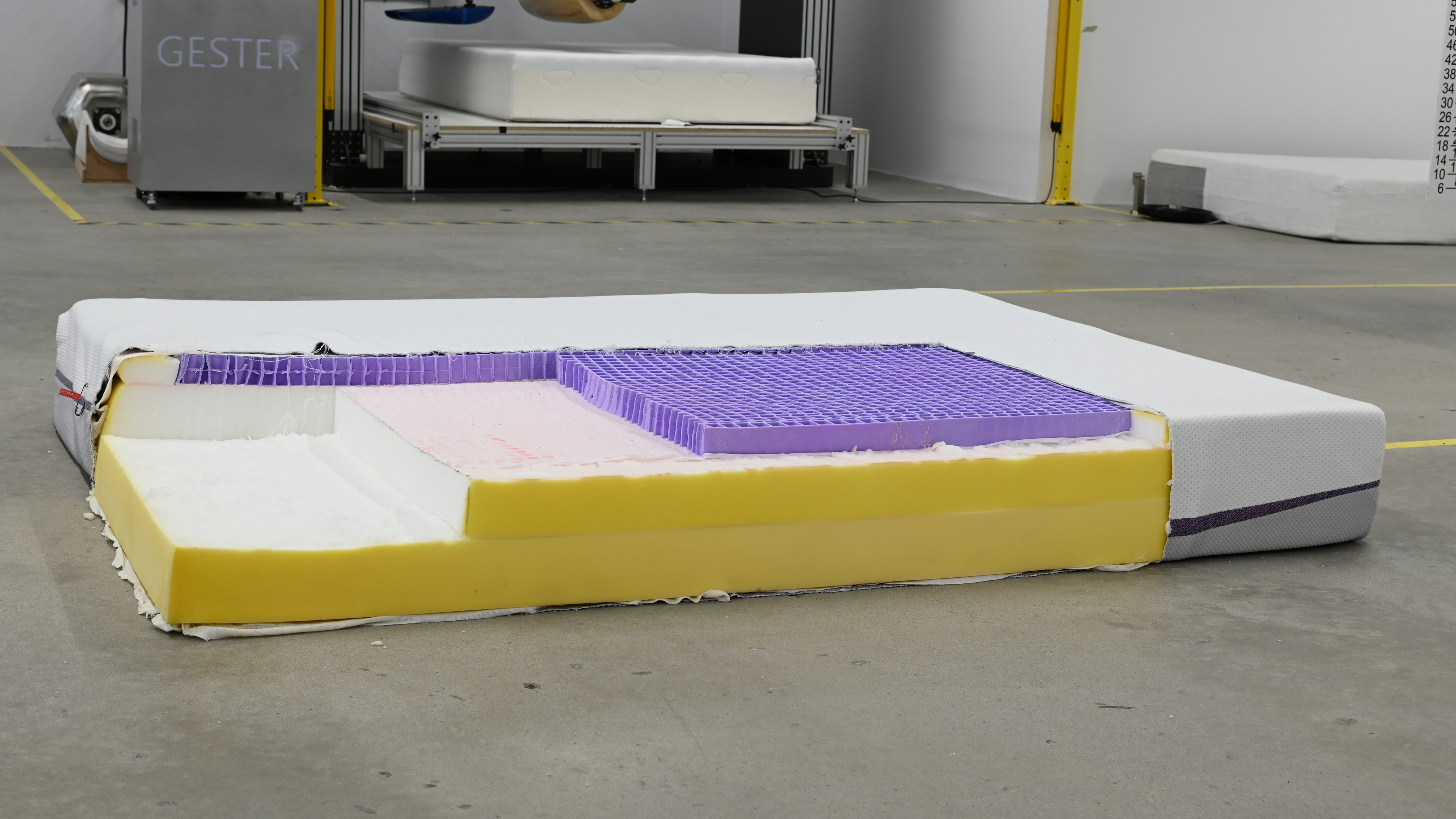
| Purple Mattress | Transition layer firmness | September 6, 2024 (Both units purchased on same date) |
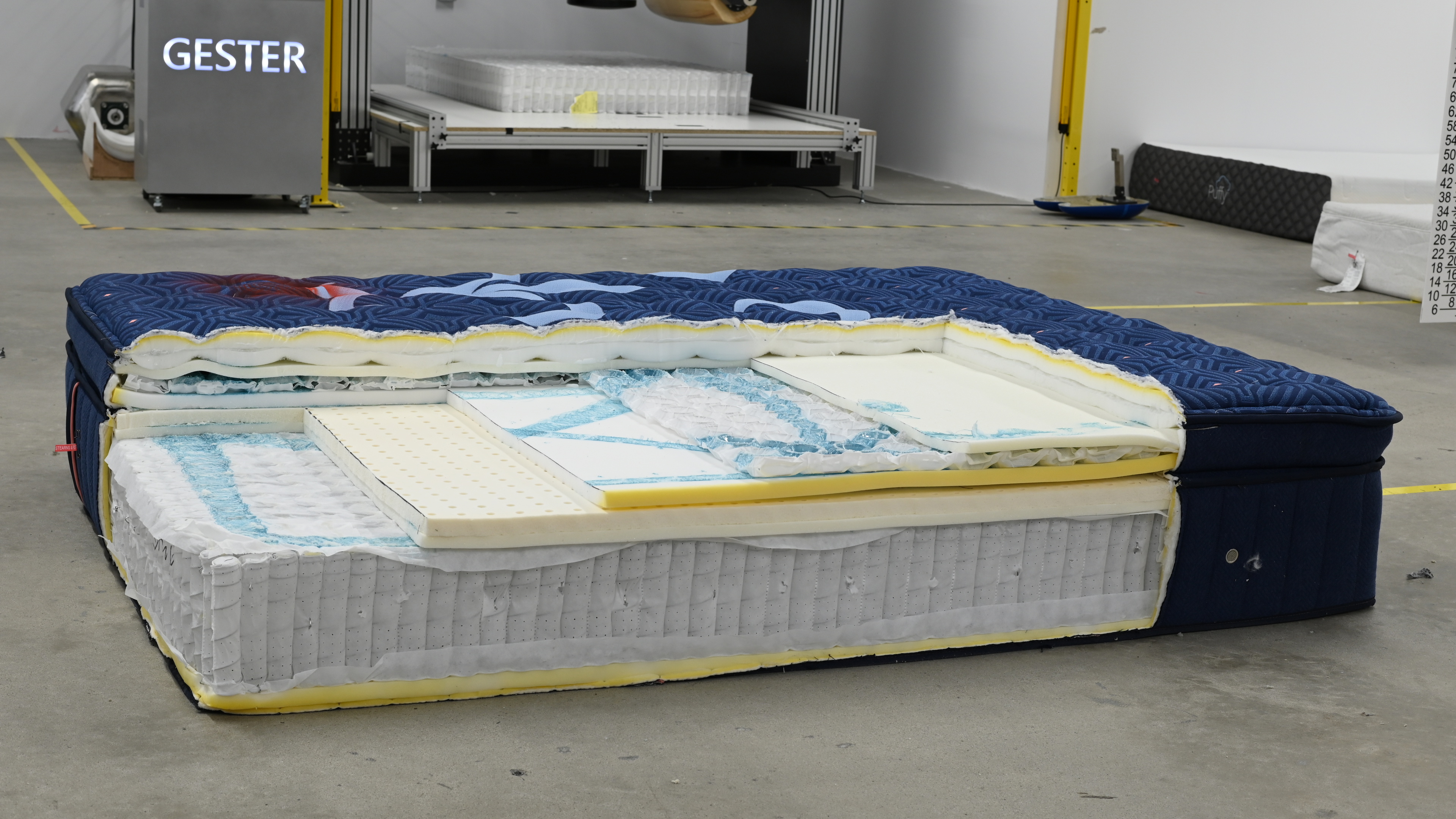
| Stearns & Foster Lux Estate | Tufts, foam type, and order of foam layers | September 10, 2024 (Both units purchased on same date) |
| Beautyrest Silver BRS900 | Spring layer firmness | September 16, 2024 (Both units purchased on same date) |
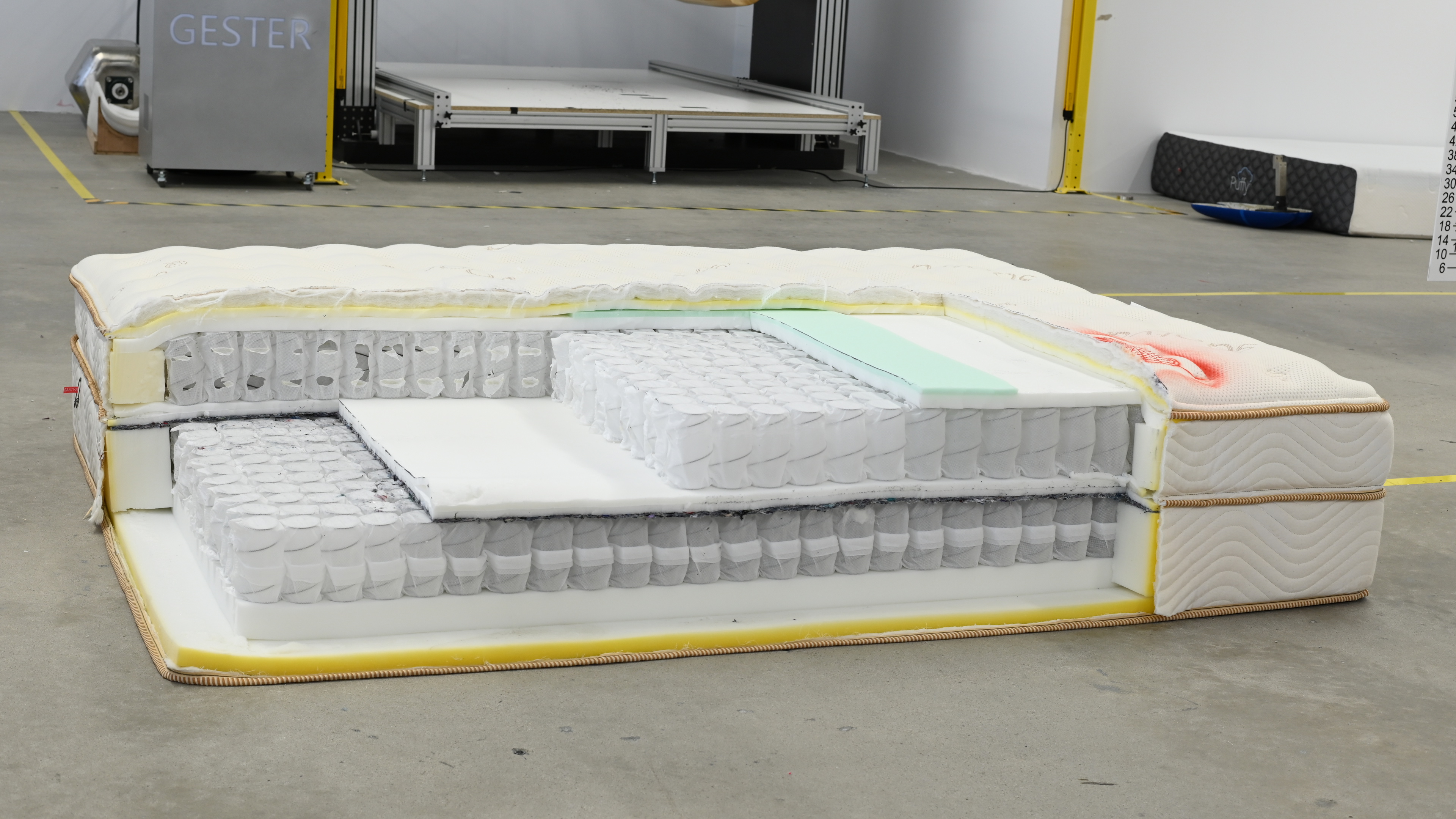
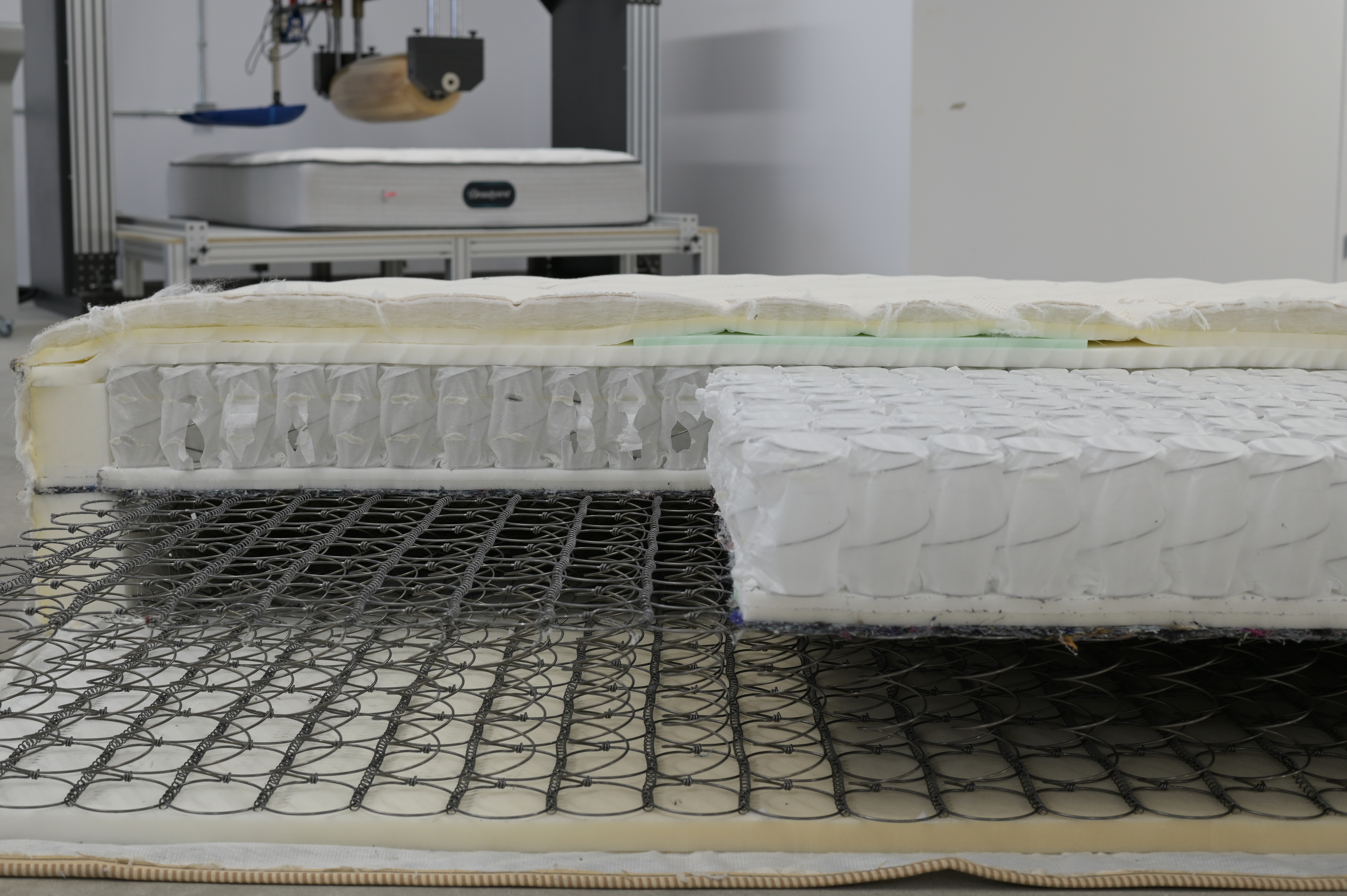
| Saatva Classic | Support spring design | September 27, 2024 and October 18, 2024 |
| WinkBeds The WinkBed | Extra felt layer | July 31, 2025 (One unit purchased, with a different design from Winkbed's advertised design) |
Saatva Classic
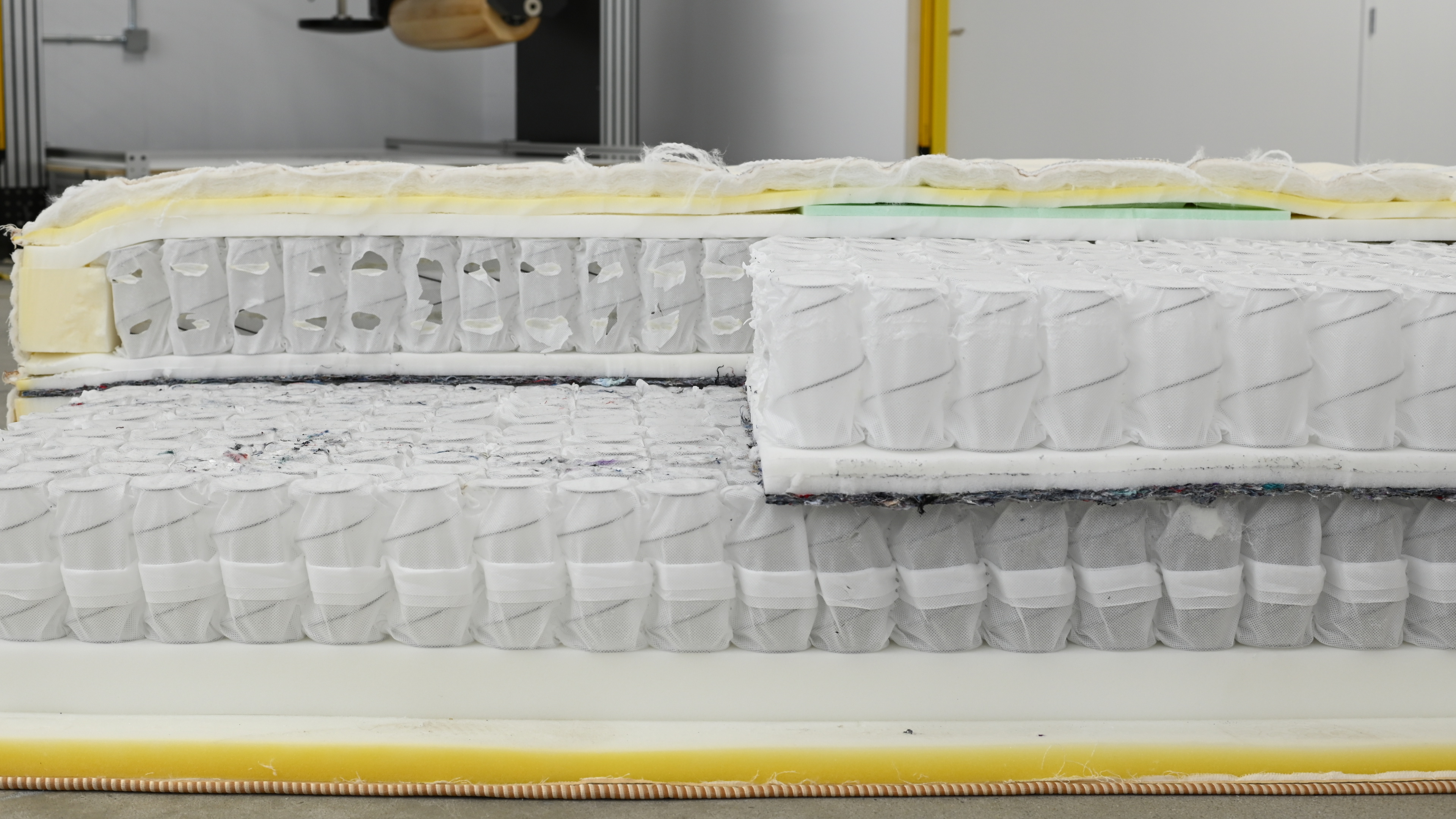
The mattress with the biggest unit-to-unit difference is the Saatva Classic. Units 1 and 2 have completely different support layers, which results in some major performance differences. Unit 1 has Saatva's official design, with a layer of Bonnell coils, while Unit 2 has an extra layer of shorter pocket coils.
 |
 |
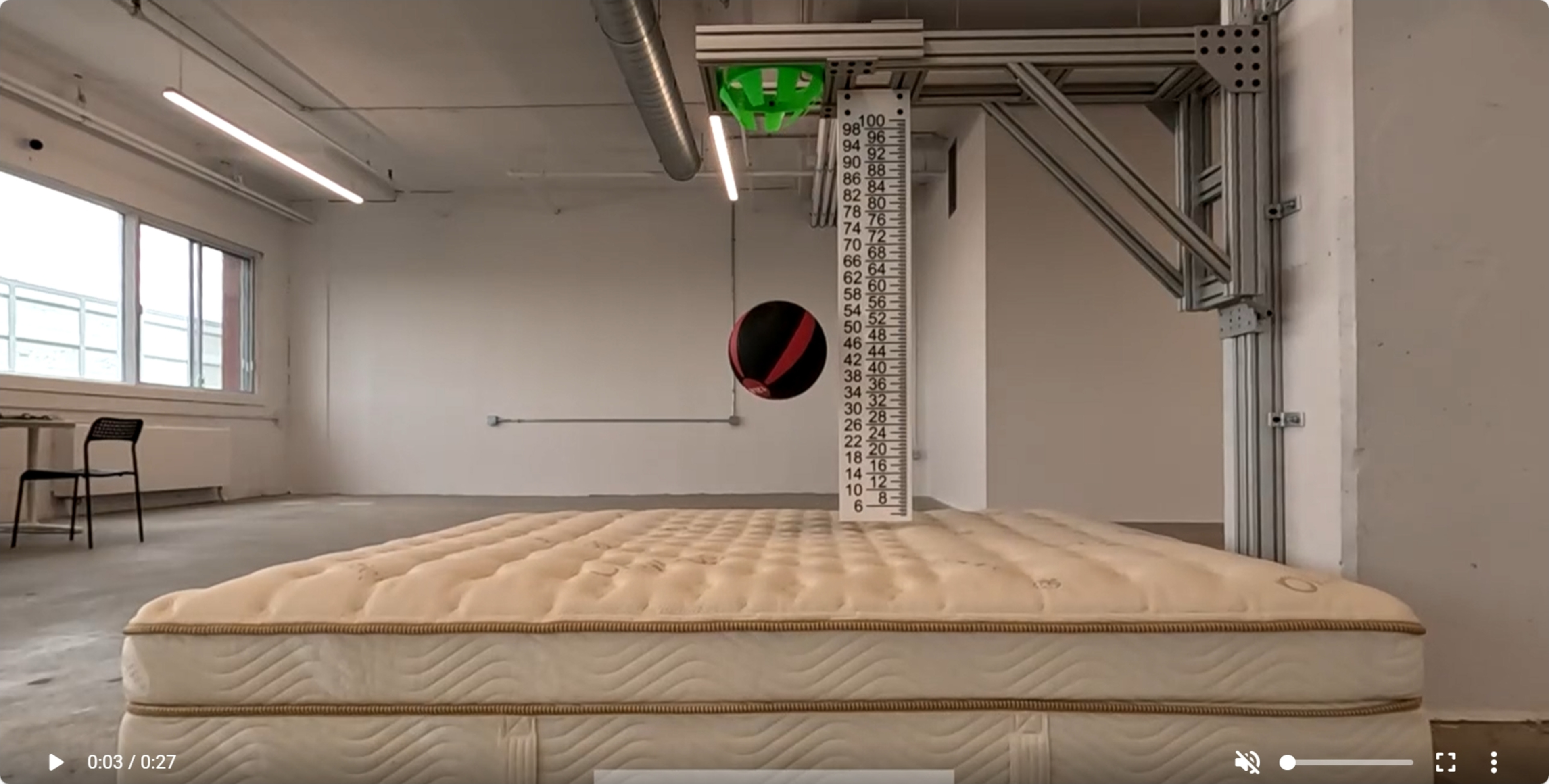
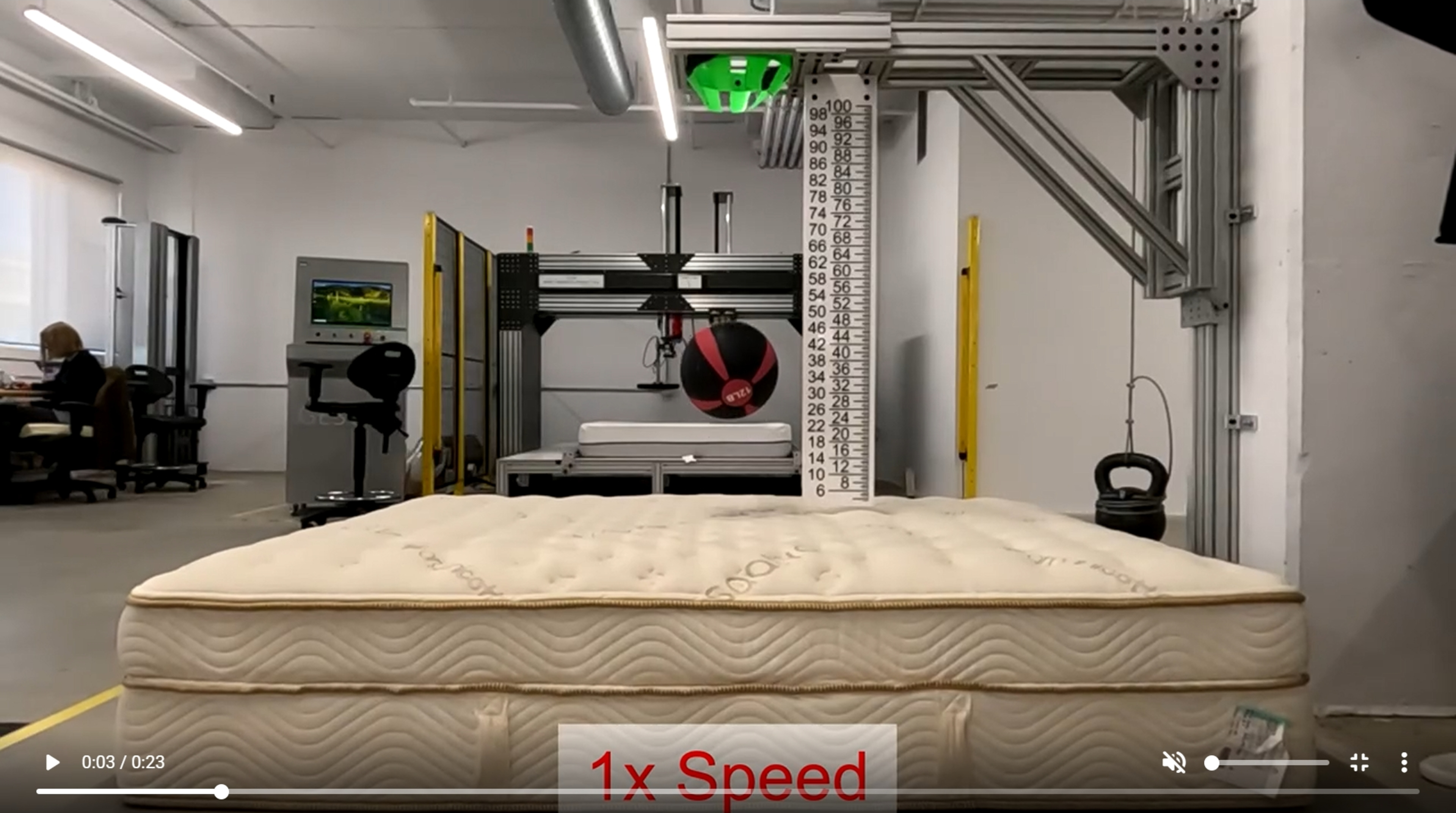
Unit 2, with pocket coils, offers much better motion isolation, so movement is less likely to be noticeable when you're sleeping with a partner. Meanwhile, Unit 1 is much bouncier, with a maximum rebound height of 32 cm versus Unit 2's 25 cm, which gives it a bouncier feel that makes it easier to move around in your sleep.
 |
 |
Stearns & Foster Lux Estate
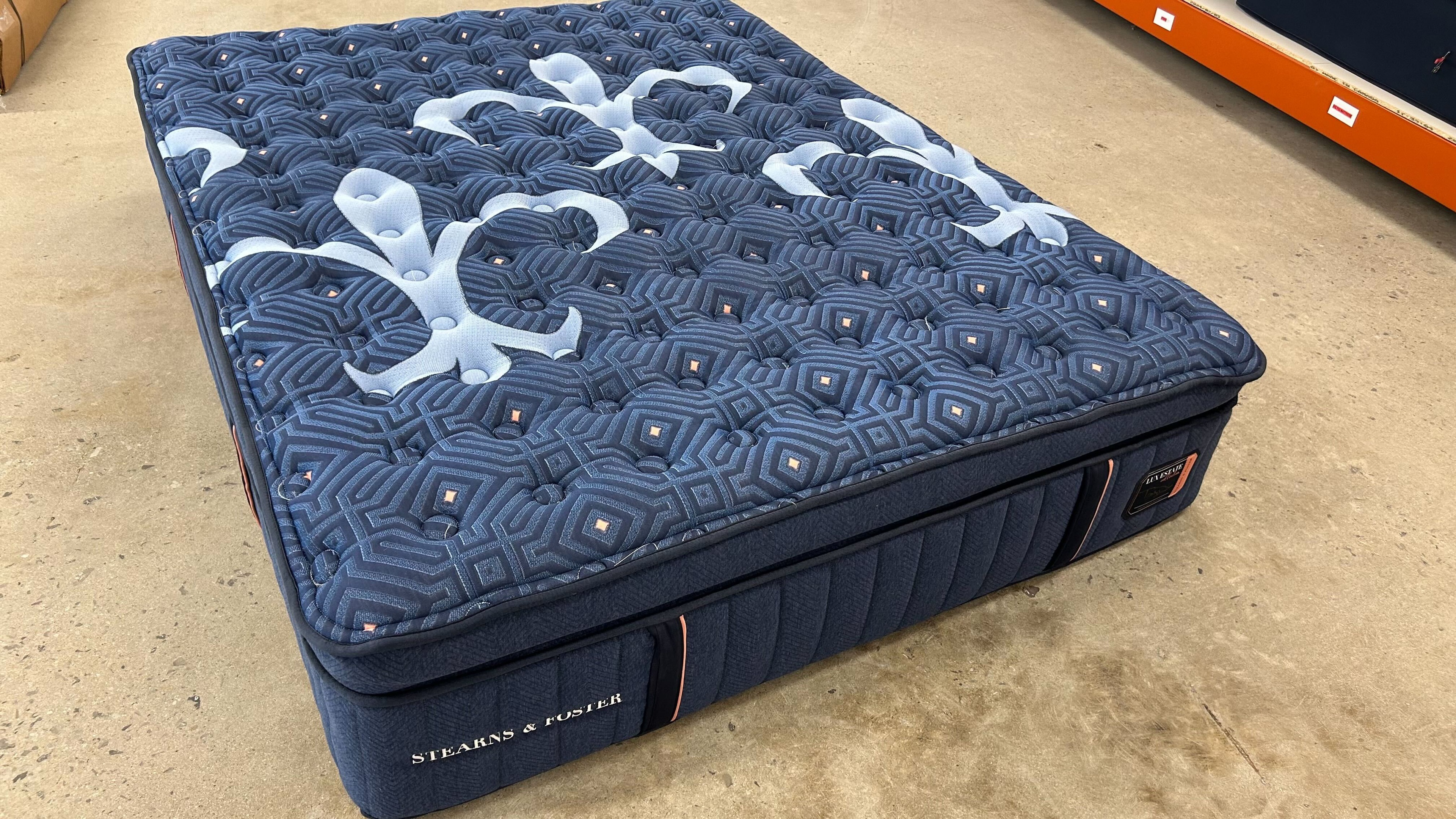
Our two units of the Stearns & Foster Lux Estate have some noticeable differences in the feel and performance of each mattress, owing to their construction.
First, the quilted layer has a different pattern and number of tufts on each mattress. Unit 2 has more tufts in a square pattern, while Unit 1 has fewer tufts in a diamond pattern. Unit 2's design makes the cover tighter, which helps make it bouncier and more responsive.
 |
 |
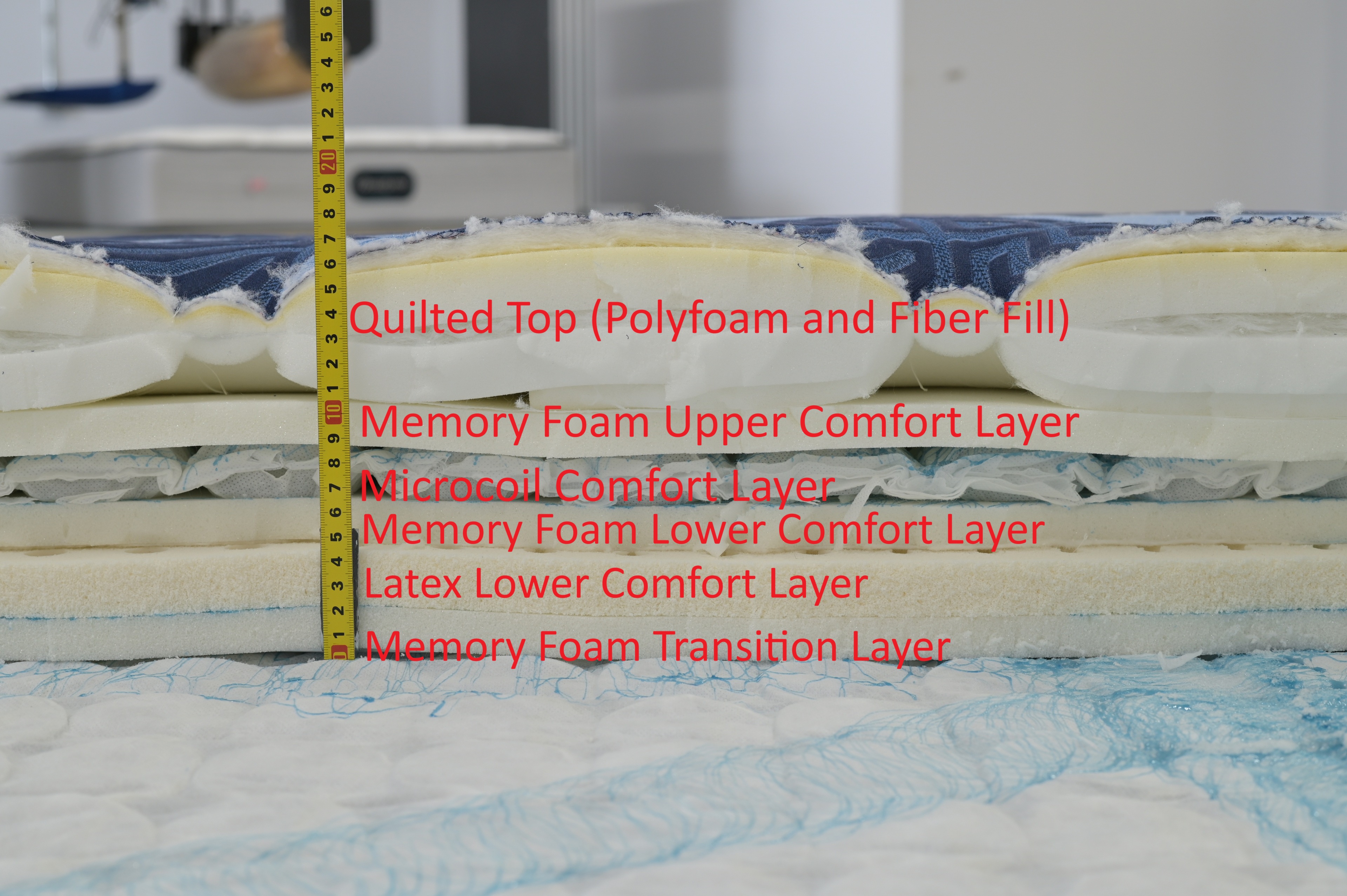
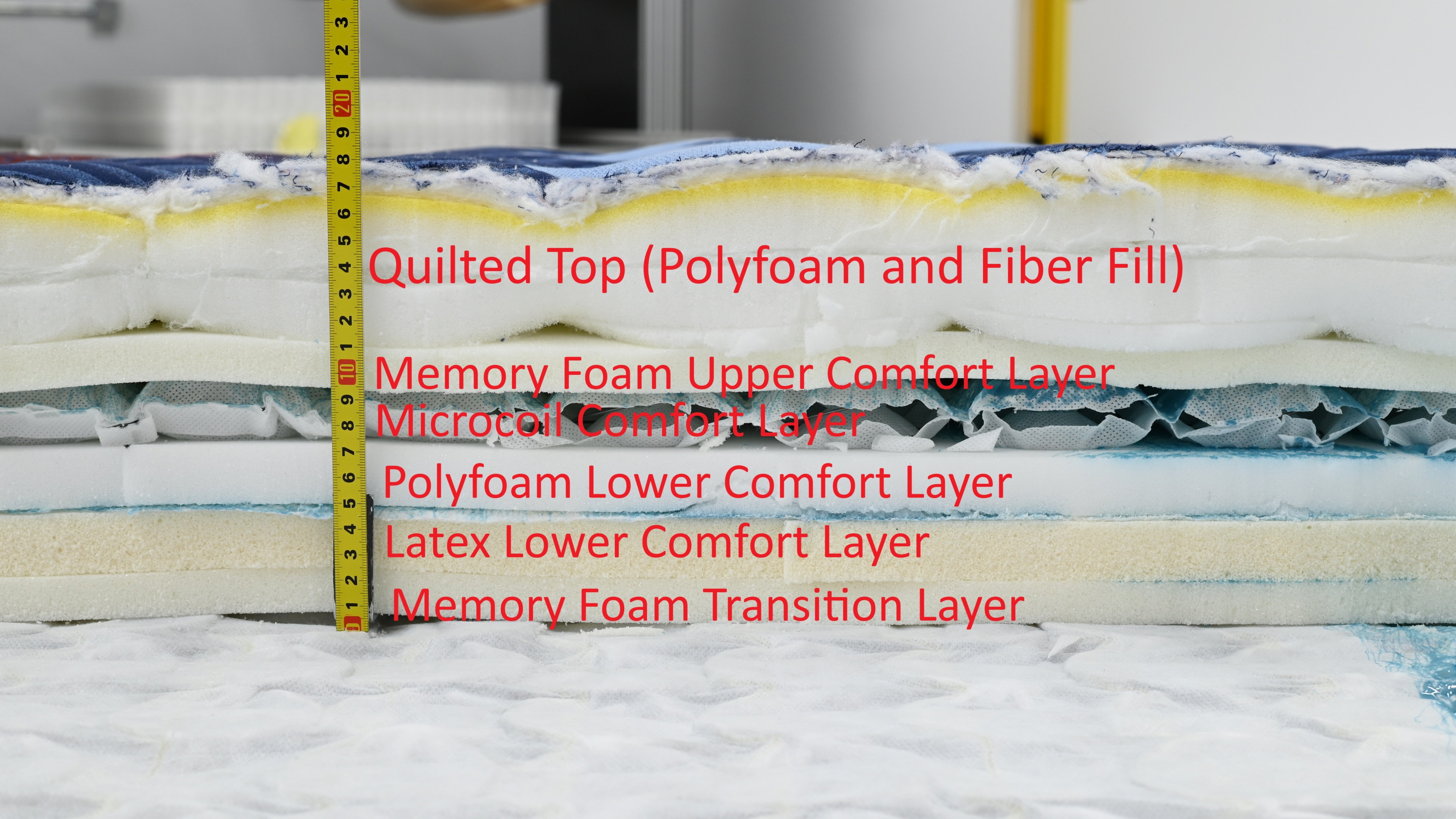
Units 1 and 2 also have different foam layers. Unit 2 has a polyfoam lower comfort layer, while the corresponding layer in Unit 1 is memory foam. This helps make Unit 2 a bit more responsive and bouncy. Unit 1's extra memory foam layer helps give it better motion isolation.
 |
 |
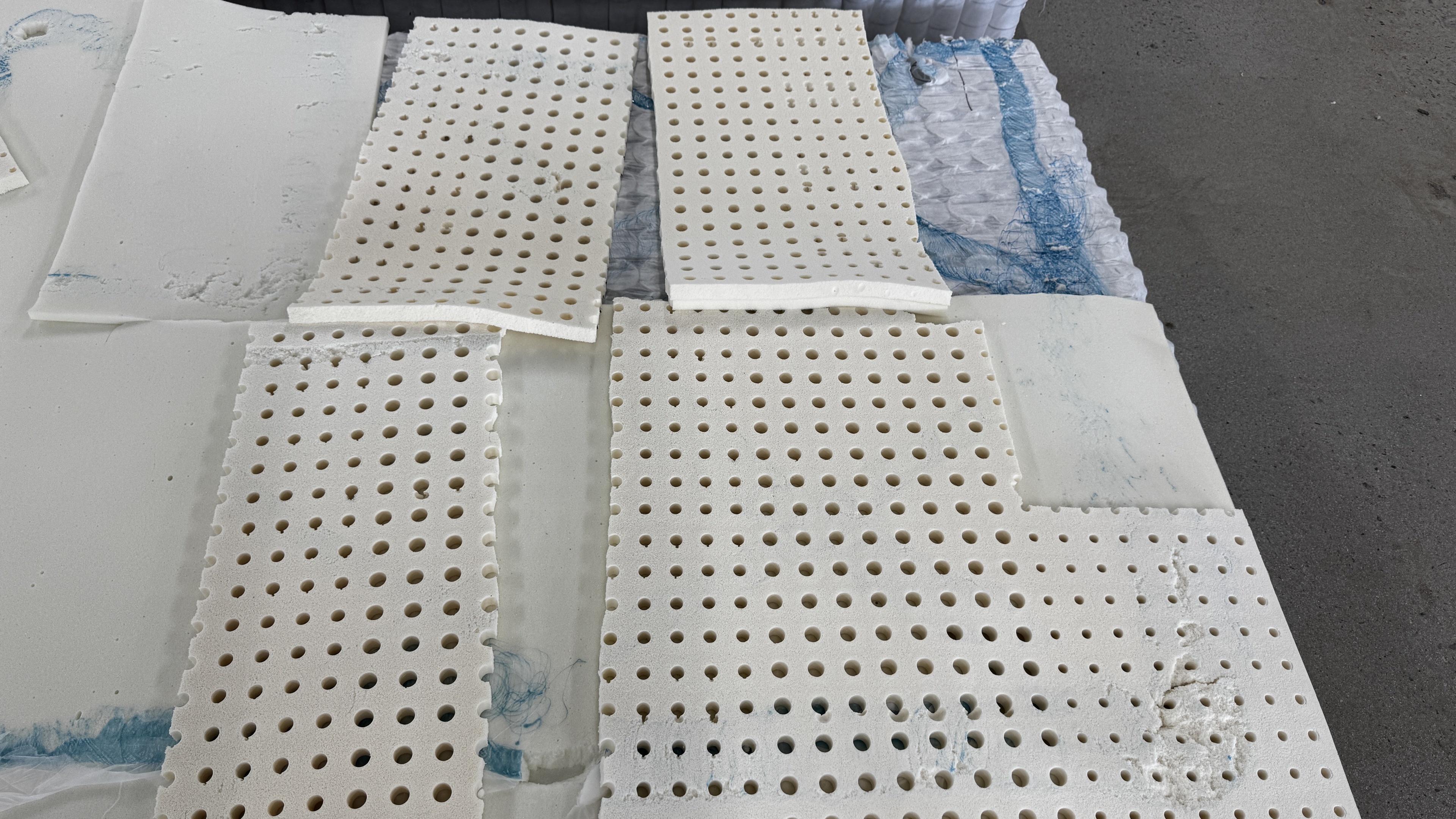
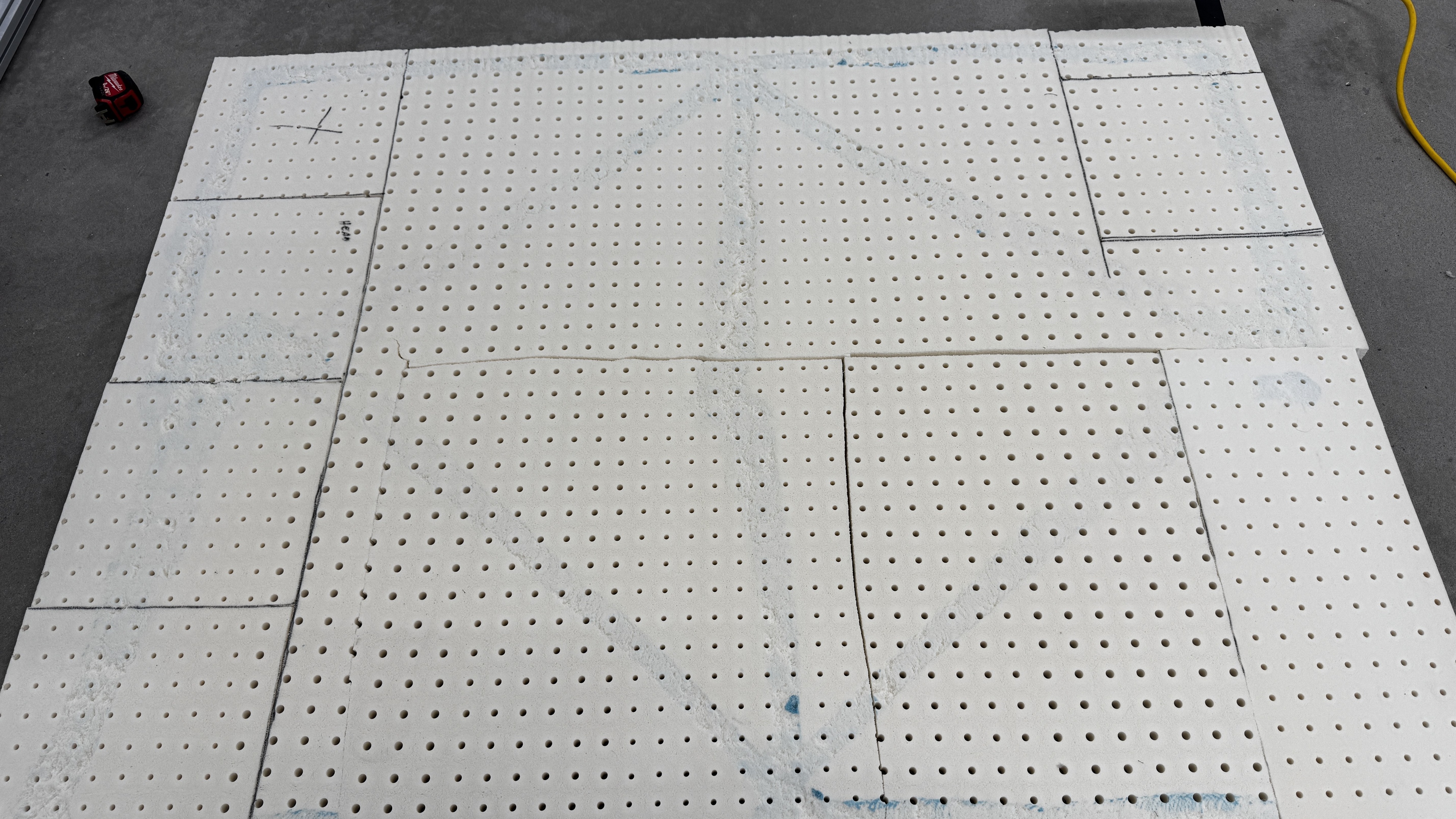
The latex foam layer is also different for each mattress. The holes in the foam, which affect its firmness, are of different sizes. The smaller holes in Unit 2's latex layer make it firmer, while Unit 1's latex layer has larger holes in the lumbar area, which gives it a softer feel.
 |
 |
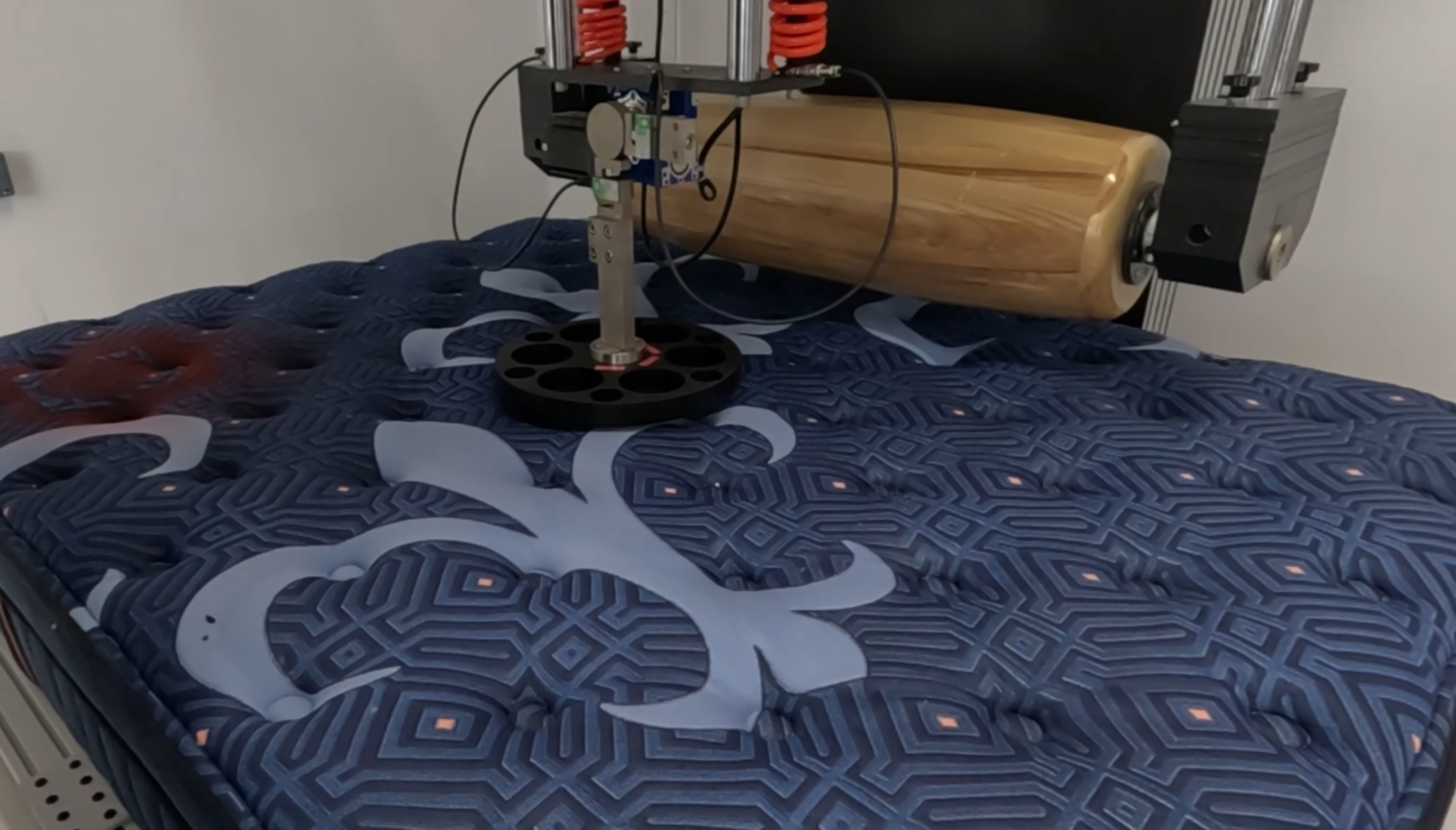
These differences affect various aspects of the mattresses' performance. Firstly, Units 1 and 2 have different overall firmness levels. Unit 1 is 'Plush,' while Unit 2 is a firmer 'Medium-Plush' mattress.
Firmness testing for Unit 1 (left) and Unit 2 (right) of the Stearns & Foster Lux Estate.
Unit 2, with a tighter quilted top and less memory foam, also has worse motion isolation.

Unit 2 is also a bit more bouncy and a bit more responsive (1.0s vs. 0.8s).
Unit 2 (right) is slightly bouncier, with a maximum rebound height of 12 cm, versus Unit 1's 8 cm (left).
Unit 1 (left) is slightly less responsive since it regained its shape within 1.0s versus Unit 2's 0.8s (right)
Purple Mattress
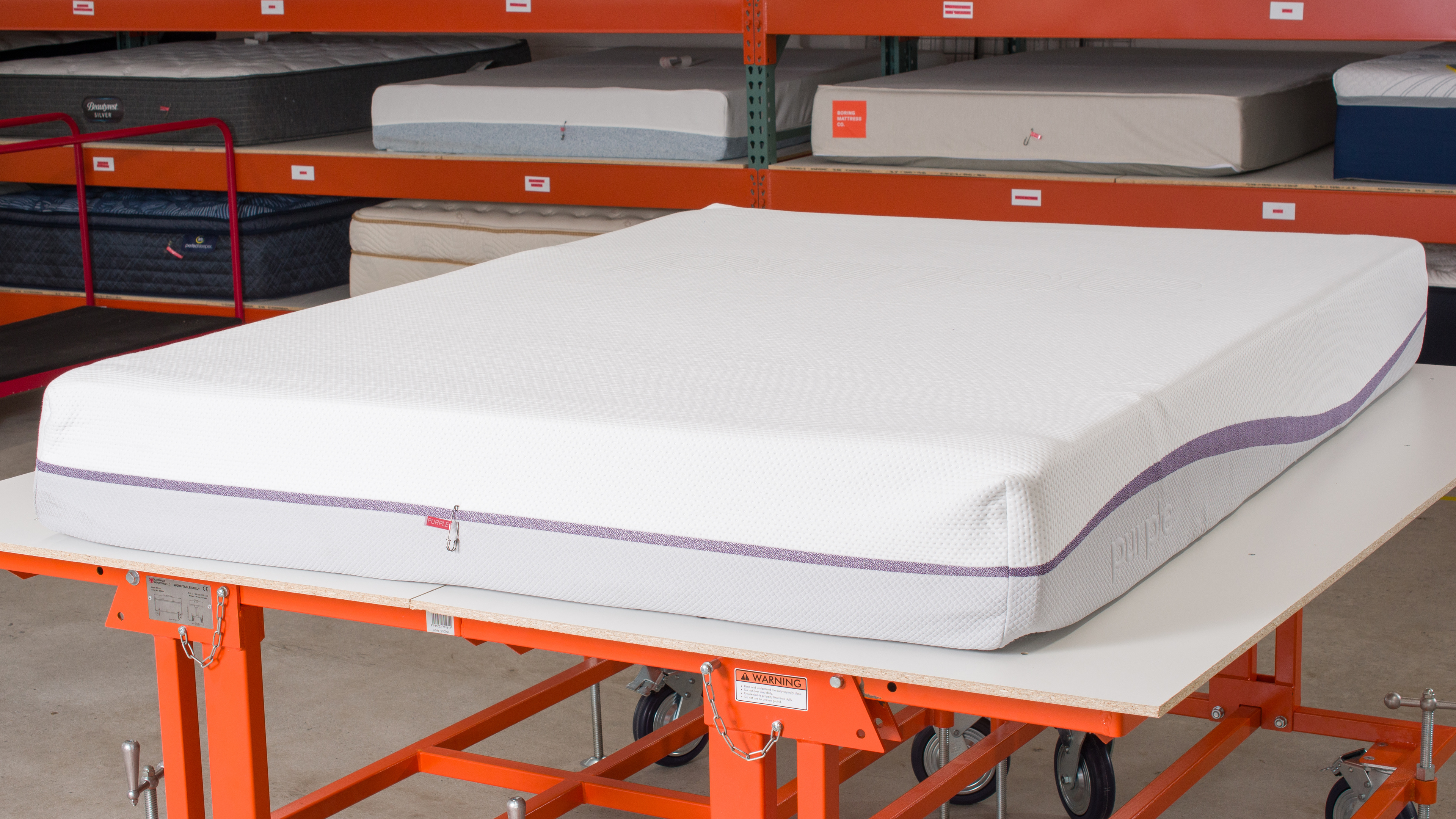
Units 1 and 2 of the Purple Mattress have transition layers with very different firmness levels, which also result in different overall firmness levels.
 |
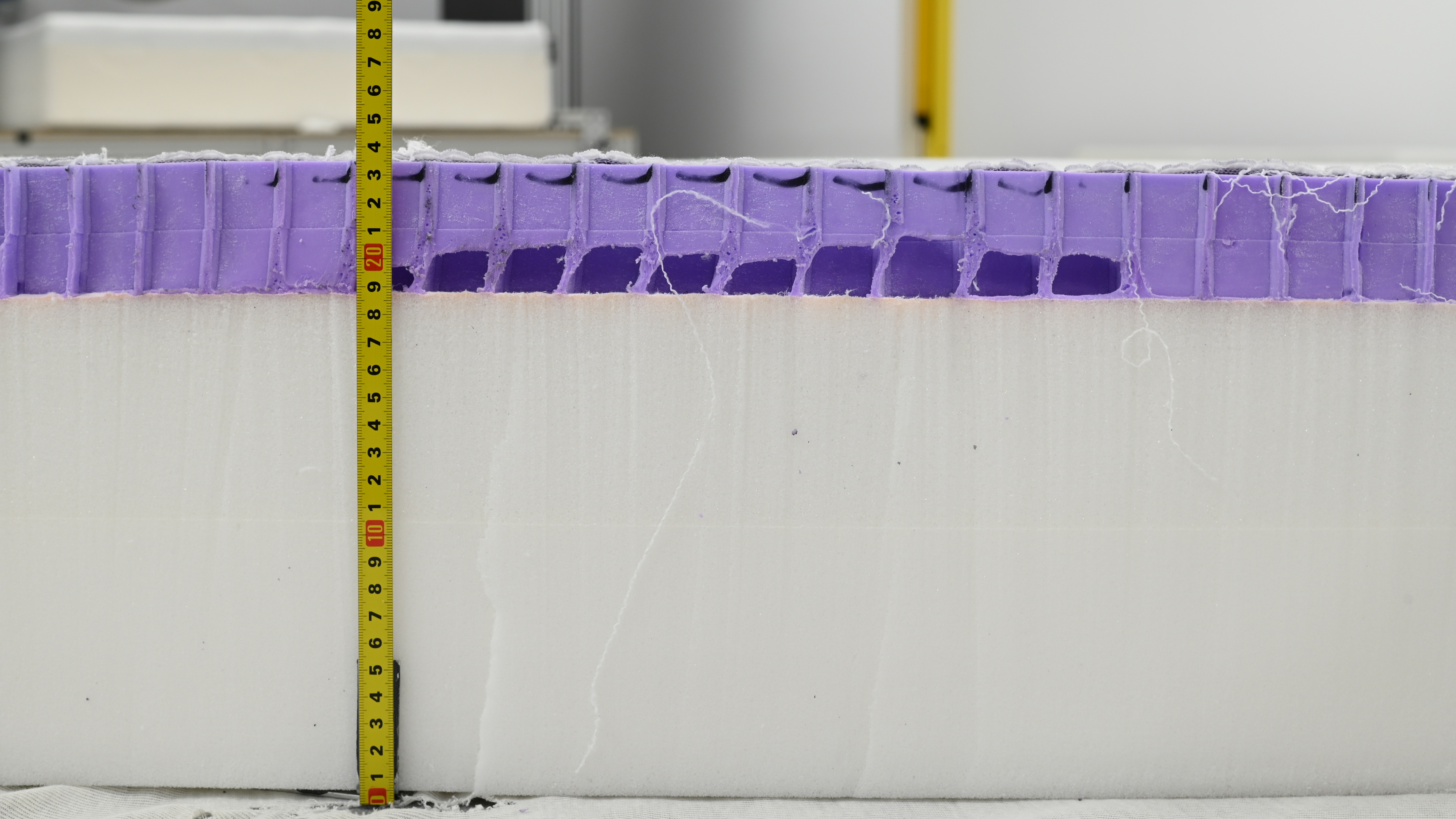 |
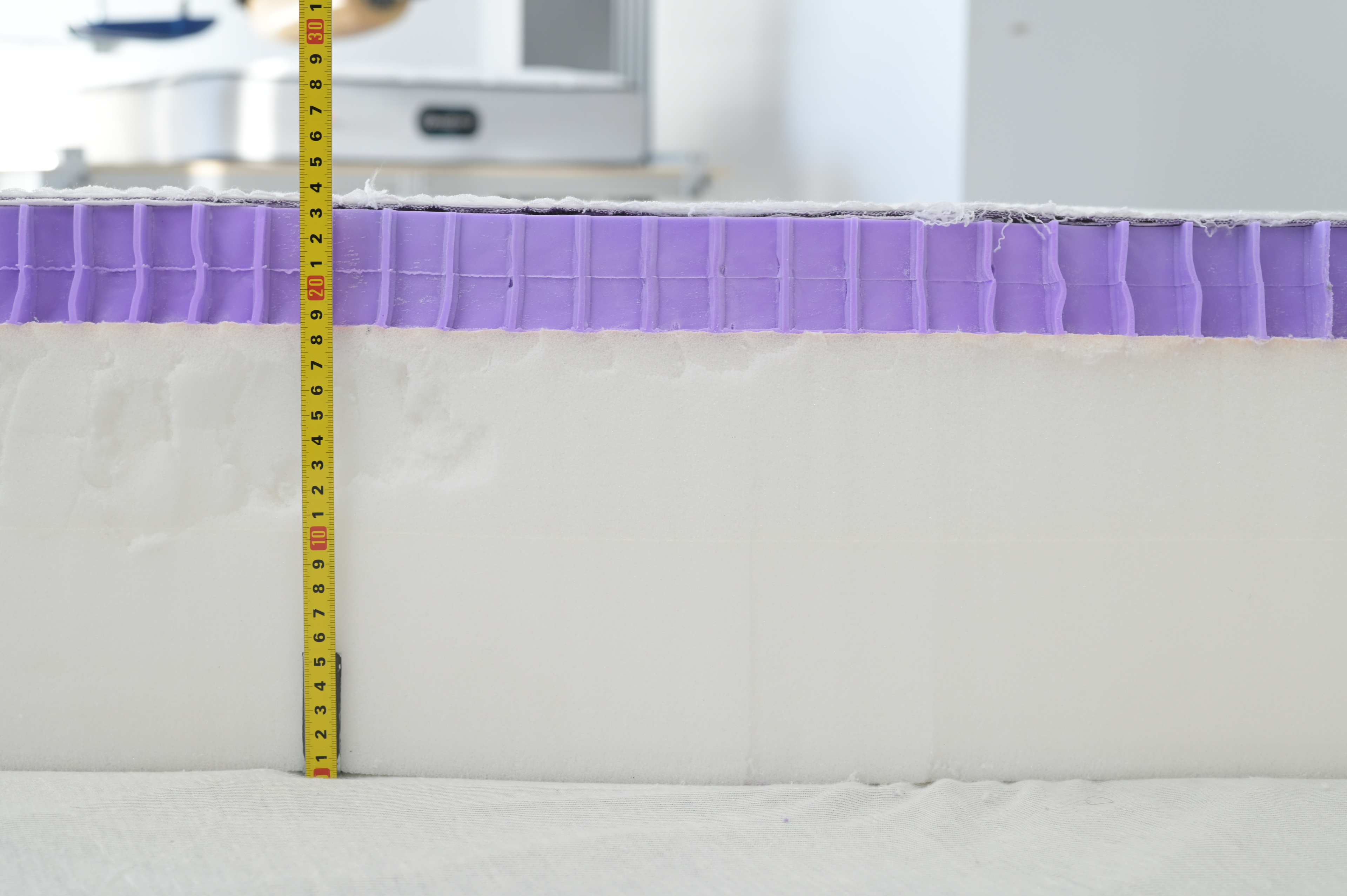
A look inside the Purple Mattress Unit 1 (left) and Unit 2 (right).
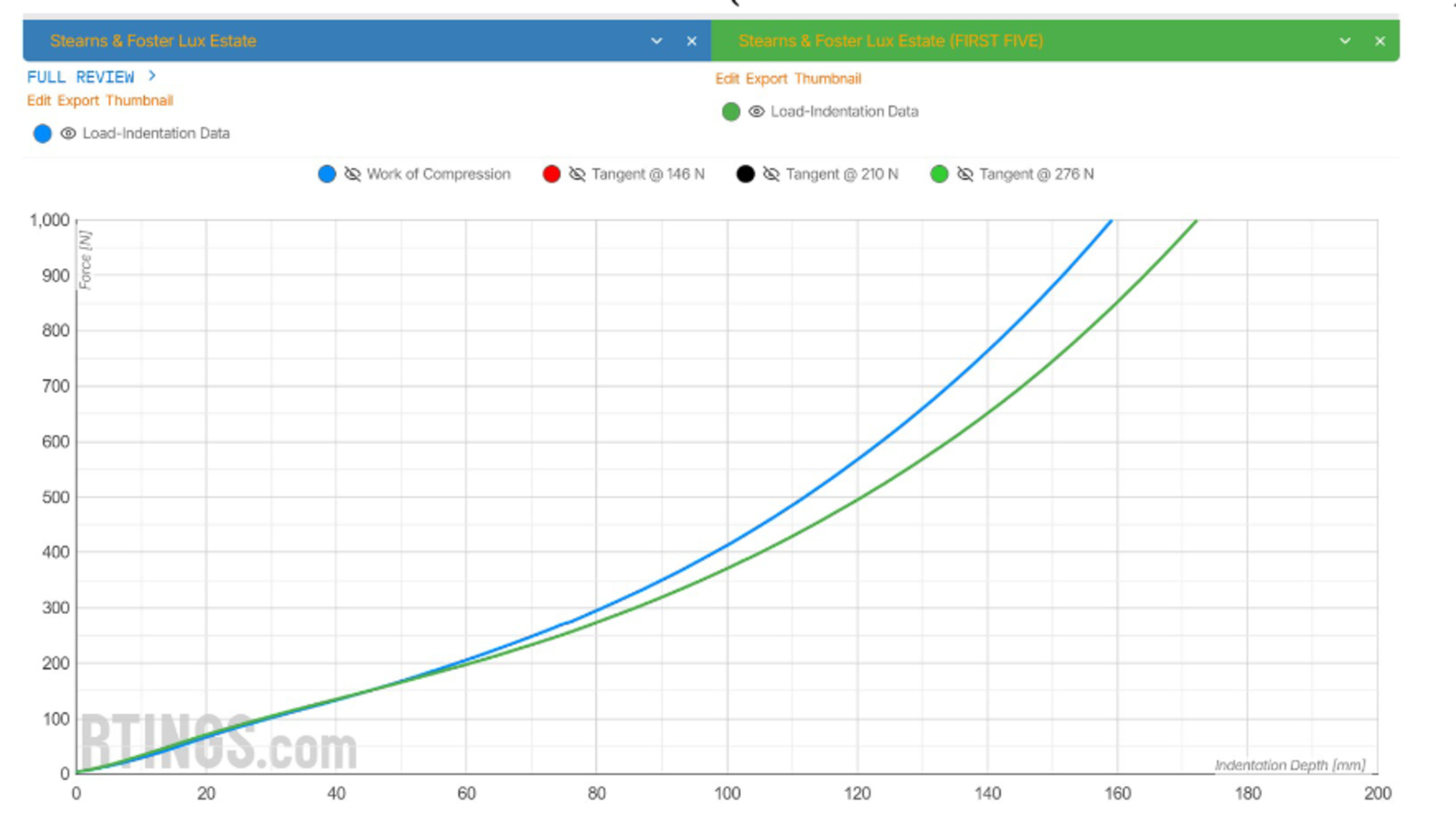
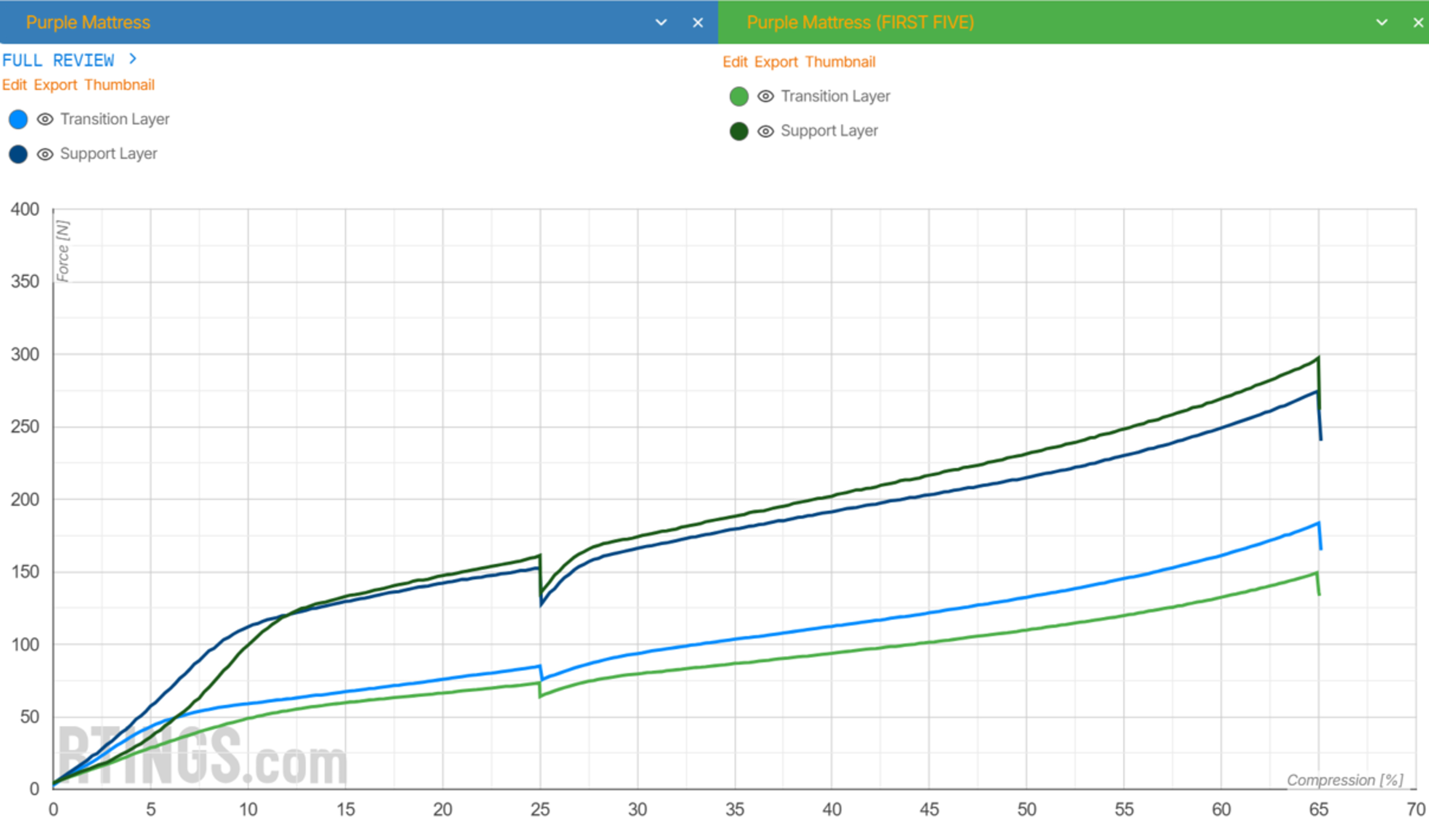
As you can see in the photos above, the insides of Units 1 (left) and 2 (right) appear identical, but the second layer of foam, right below the Gel-Flex Grid, is much firmer in Unit 2. This changes the overall firmness of the mattress significantly. Unit 1 is 'Plush' (30 Pa/mm), and Unit 2 is 'Medium-Firm' (51 Pa/mm).
Here are the foam layer firmness results for the transition layer for Unit 1 (green) and Unit 2 (blue):
Beautyrest Silver BRS900
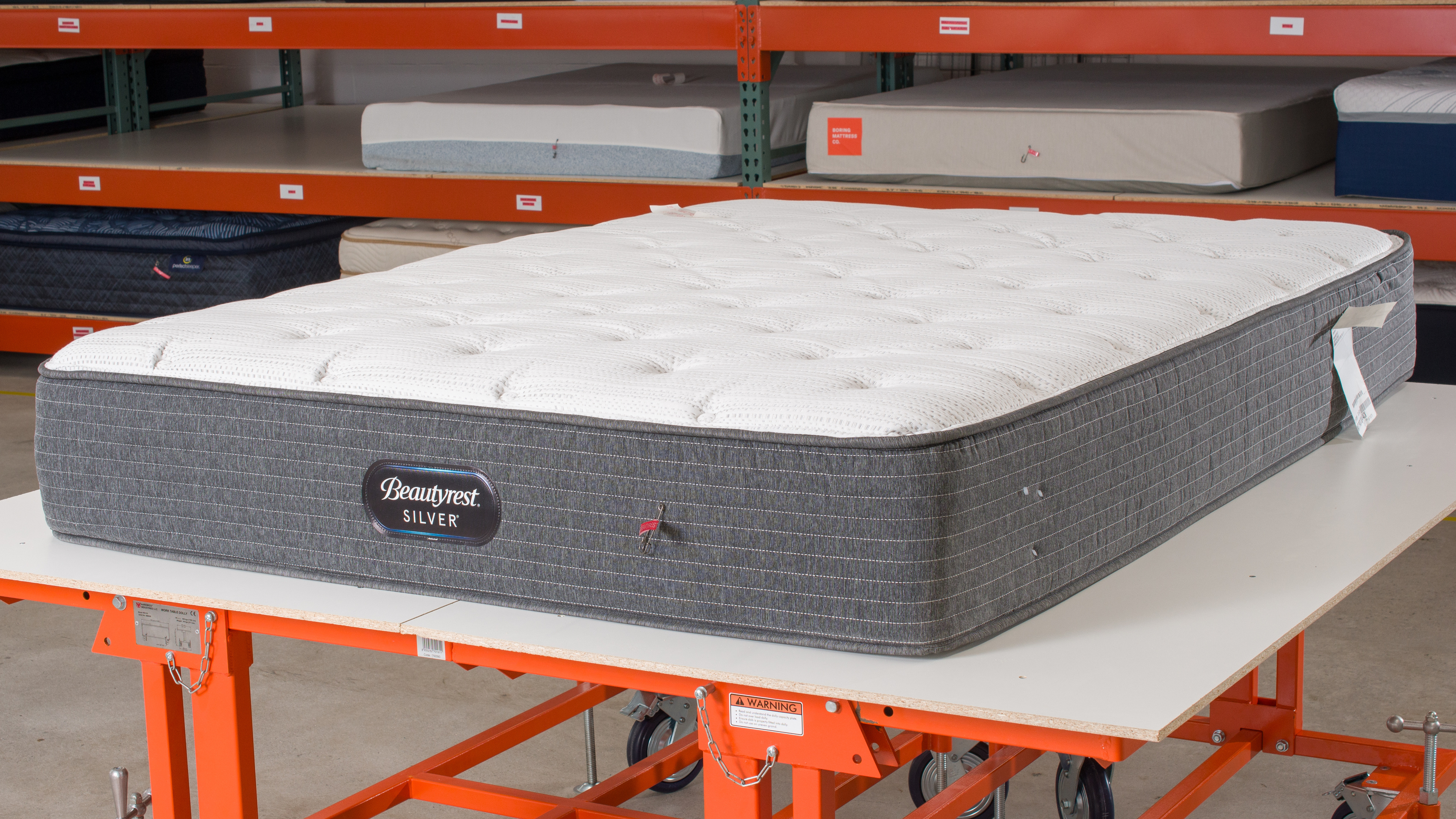
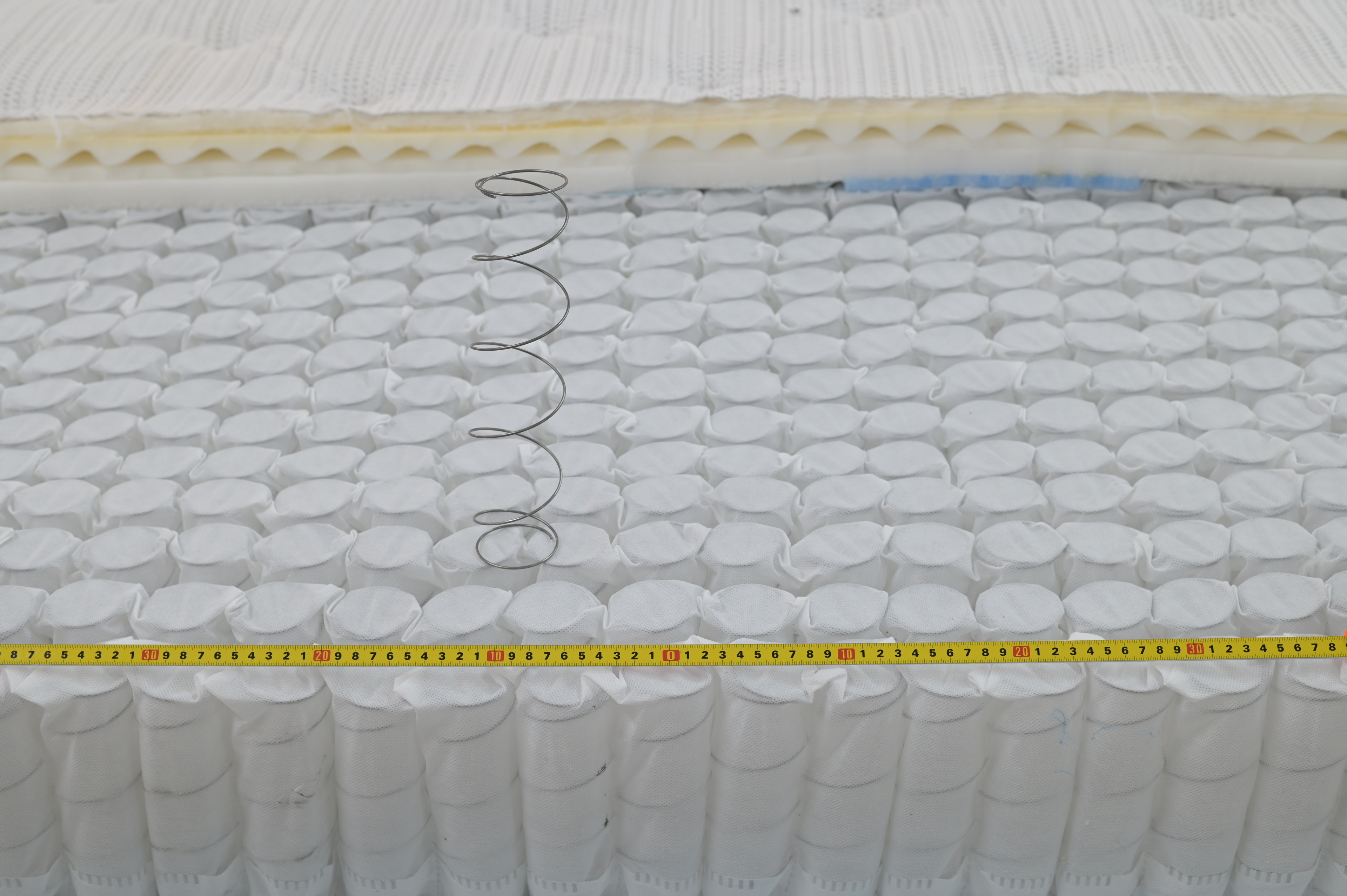
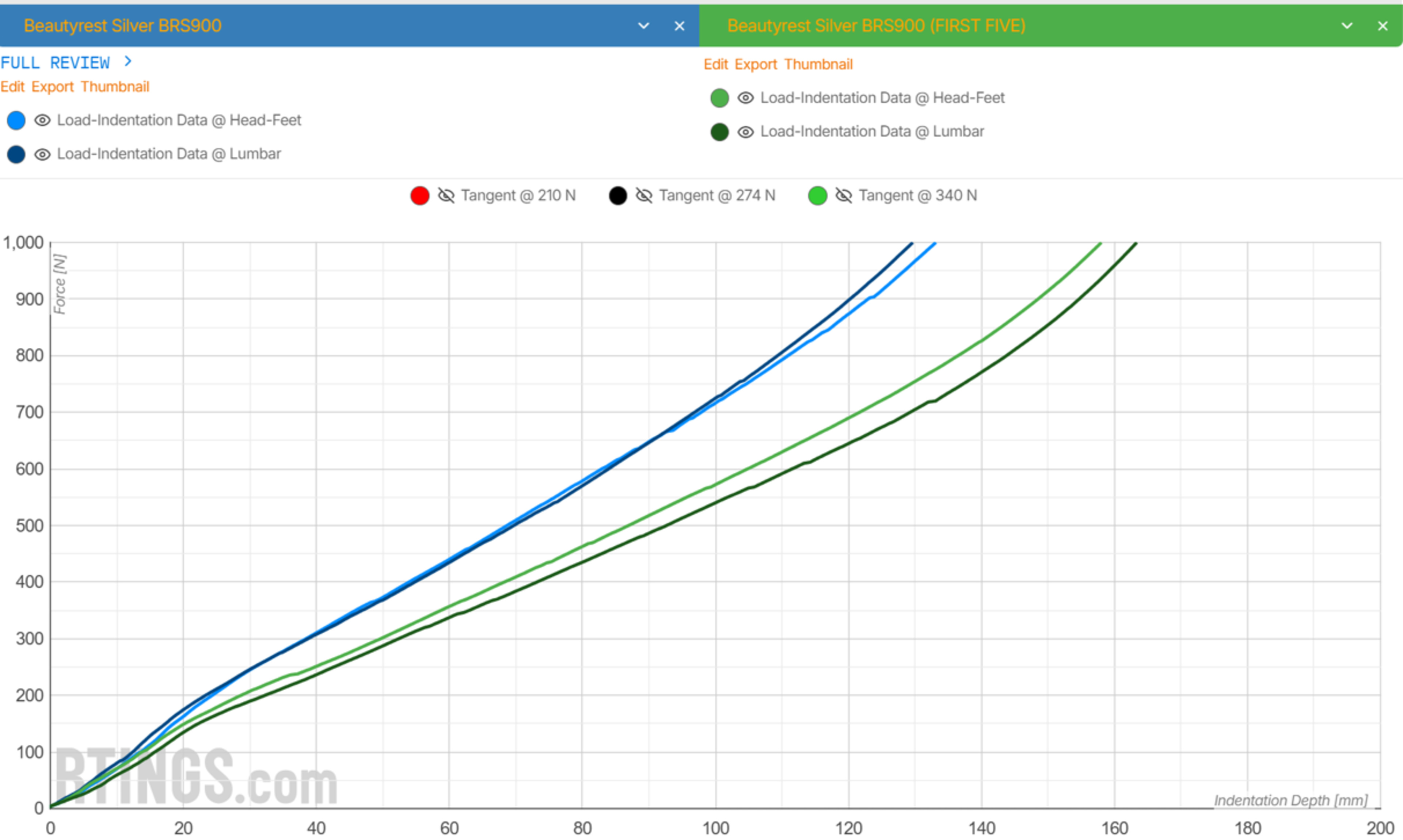
When testing the Beautyrest Silver BRS900, we found a measurable difference in spring layer firmness between Units 1 and 2, although both mattresses have the same overall firmness level. Both mattresses' support layers are made up of 15-gauge pocket coils, which appear identical.
 |
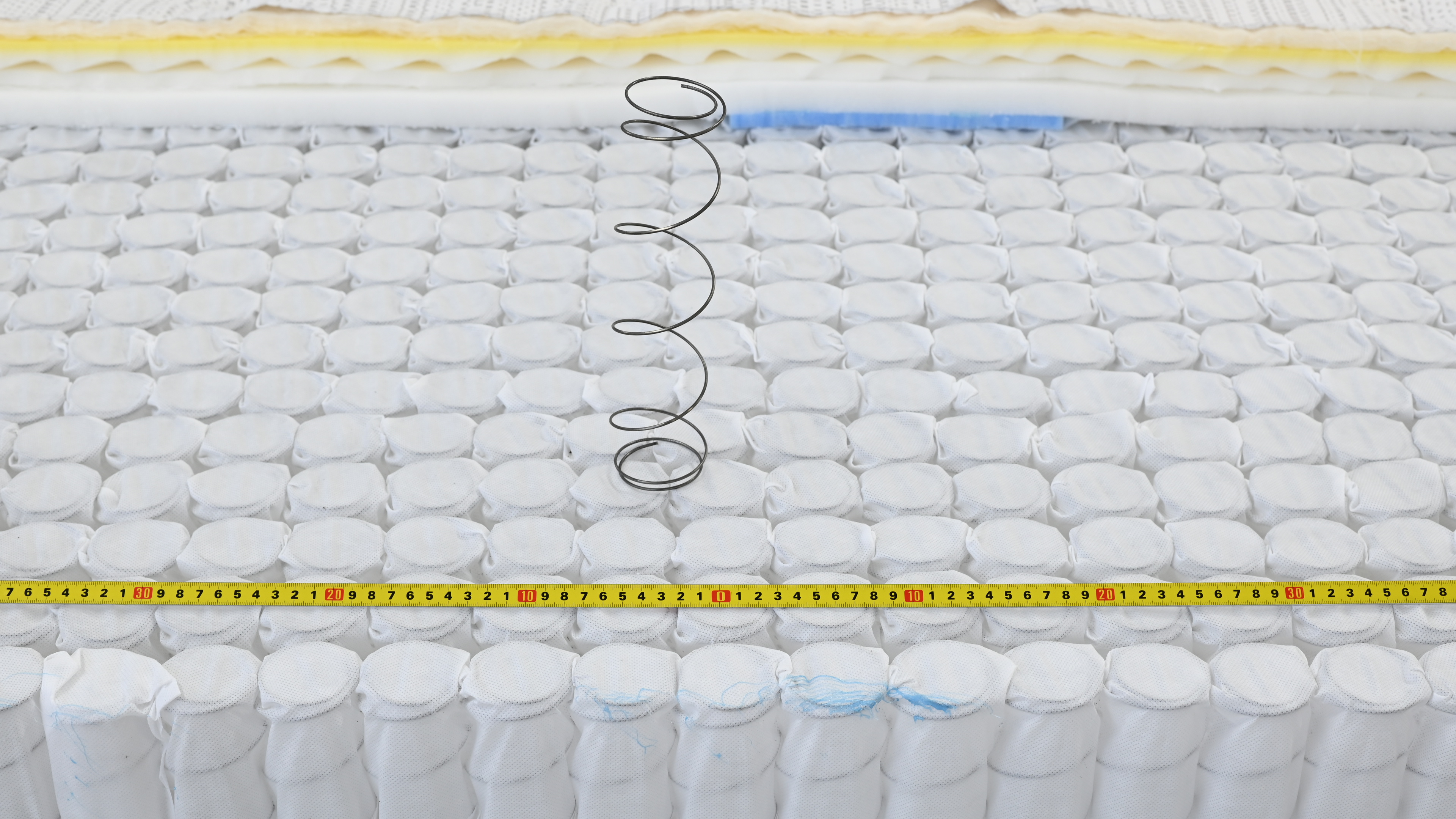 |
The support spring layer of Unit 1 (left) and Unit 2 (right) of the Beautyrest BRS900. The springs appear identical, but Unit 2's are firmer.
WinkBeds The WinkBed
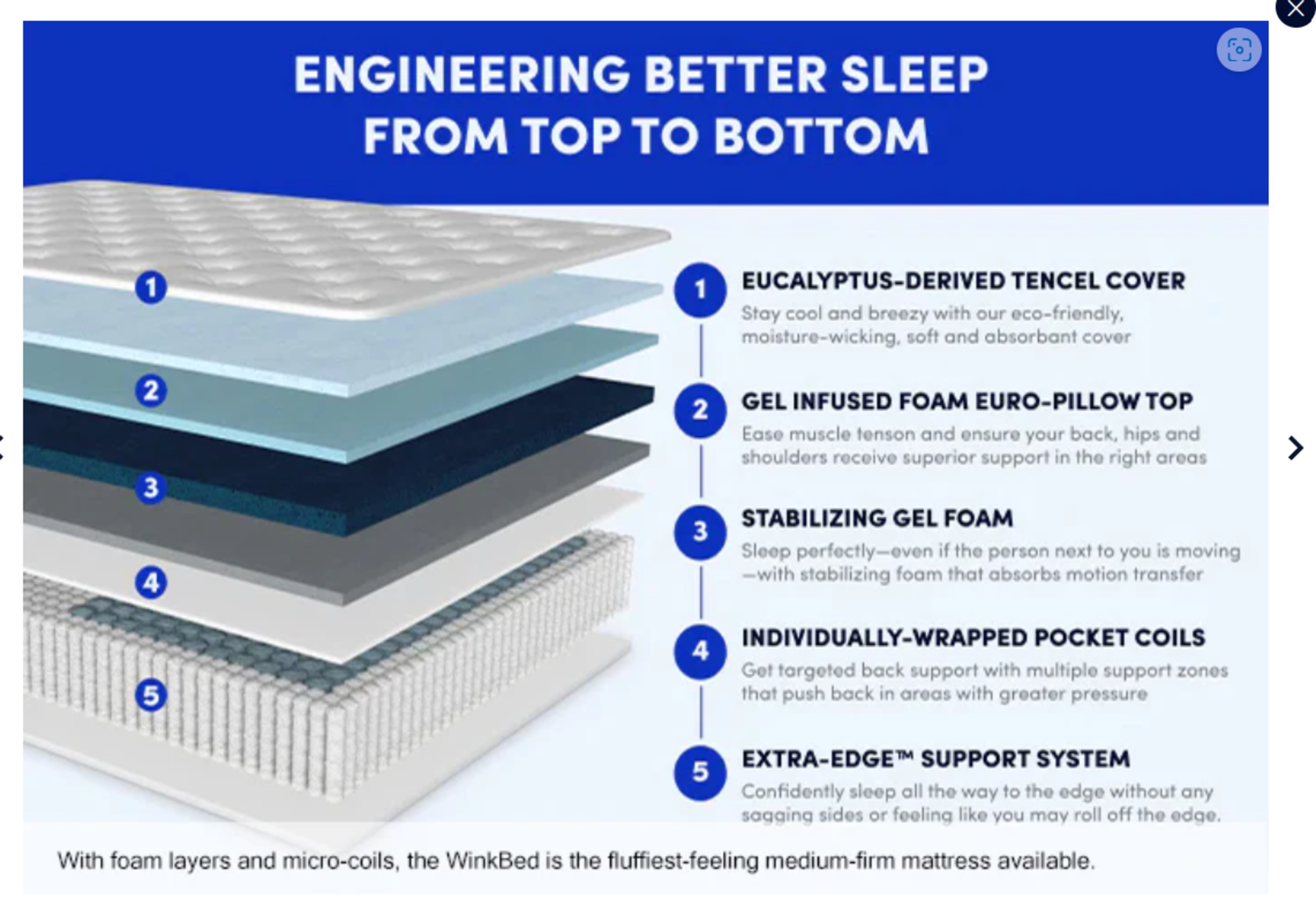
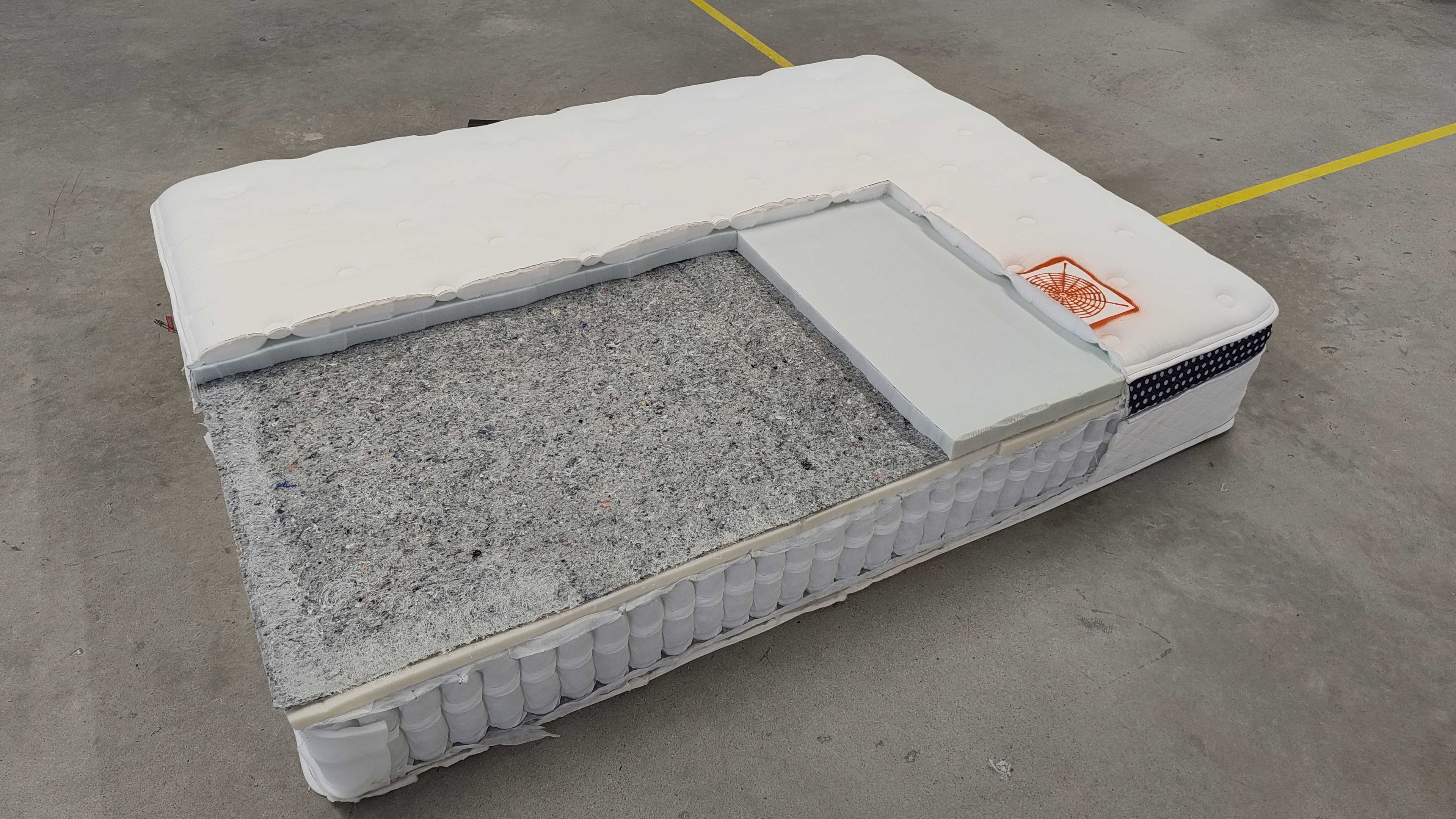
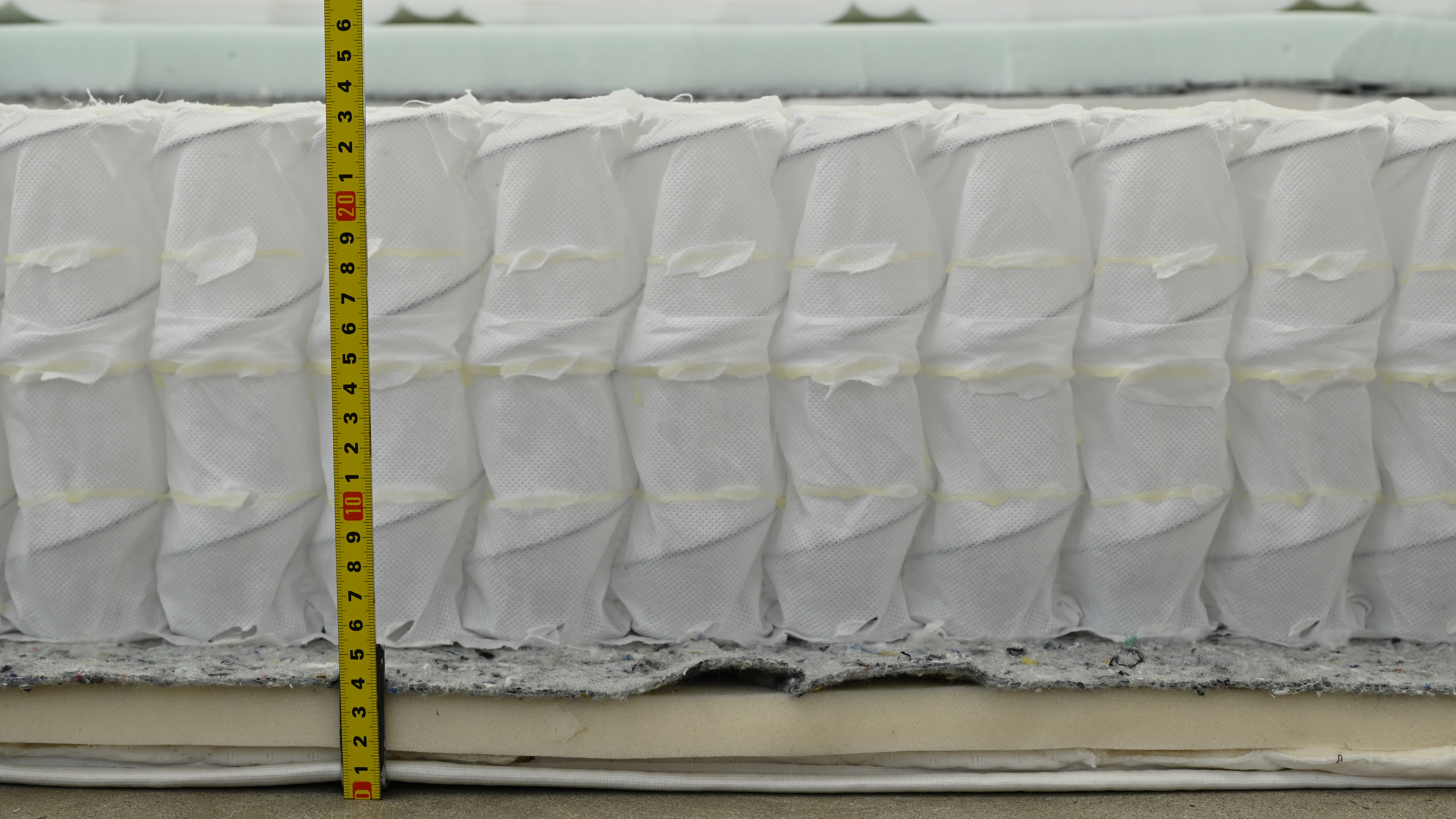
We've only tested one unit of the WinkBeds The WinkBed. However, we noticed differences between our unit and WinkBeds' official design. Our unit includes a layer of felt above the transition layer. This is likely an inexpensive way to help distribute the sleeper's weight across the transition layer, which helps protect that layer from being compressed and may help with longevity. WinkBeds says the mattress's last design change happened in 2018, and so this isn't an official update to the mattress's advertised design, which you can see in an image from WinkBeds' website.
 |
 |
Conclusion
While shopping for a mattress can be daunting enough when you're just looking for the right feel and high-quality materials, unit-to-unit variance adds an extra complication, since it suggests you might not have the same experience as someone else when you buy the same mattress. It's also hard to know if your mattress is affected without cutting it open, so we'll keep updating our list here when a mattress varies from the advertised design.
Let us know if you've ever noticed or suspected that your mattress is different from what's advertised (however, don't cut open your mattress and check!). If you're interested in how a mattress's construction affects its performance, and how we test mattress components, you can read more in our R&D article.