
If you're looking for the best projectors overall, there are numerous options available, ranging from budget-friendly, portable models to high-end home theater setups. Are you specifically seeking the best projector for home? Do you want a versatile device that handles both the latest movies and gaming sessions with ease? Or are you looking for something that's easy to carry around? Whatever your needs, we've got you covered, from more affordable models that trade image quality for portability to bulkier, pricier units that deliver top-notch image quality. Ultimately, the best choice depends on your specific needs and budget. If you're unsure how far you can place a given projector for your screen size, our projector throw distance tool can help you plan your setup.
We've bought and tested over 80 projectors, and below, we list the best models for a few critical uses. We only cover consumer models, not high-end products meant for enthusiasts, and our price tiers are built with consumer models in mind. If you're specifically looking for the best home projector to use in a smaller room, or if you just want your projector to stand closer to your screen or wall, look up our best short-throw projectors. Look up our best 4k projectors if you're only interested in high-resolution options. If you'd rather see cheaper options on the market, look up the best budget and cheap projectors. Want to take your projector outside? Consider our picks for the best outdoor projectors. And don't forget that you can vote on which projectors you'd like us to purchase and put to the test!
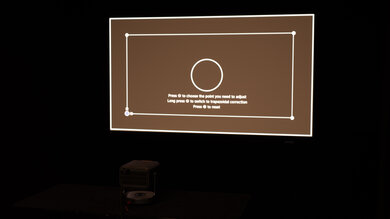
We've independently bought and tested over 80 projectors and published detailed results for each, so you can decide which one to buy. These have all been tested under the same standardized methodology, allowing you to compare them side by side. We still have all these projects in our lab, so we can continually go back and compare them to ensure our reviews are still accurate. All our test methodologies are also public on our website, so you can validate the results yourself.
-
Best Projector
 MoviesGamingBrightnessNative ContrastPre-Calibration Color AccuracyColor GamutInput LagPortabilityImaging TechnologyDLPLight SourceLaserSee all our test resultsNative ResolutionPixel Shift 4k
If you want the best projector overall, get the XGIMI TITAN. It's a long-throw 4k pixel-shift DLP projector with a dual-laser light engine that delivers exceptional brightness, so it works better than most projectors in rooms that aren't fully blacked out. That extra brightness also helps on larger screens, where the image still looks vivid and substantial instead of fading out. Even with all that light output, contrast is excellent, so movies and shows keep strong depth and punch once you dim the room down. It also supports Dolby Vision, HDR10+, and IMAX Enhanced, and its powered lens gives you motorized zoom and generous lens shift, which makes installation easy.
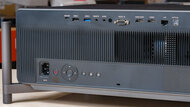
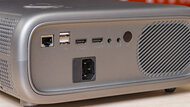
The compromise is convenience. There is no built-in smart platform, so most people will want to add an external streamer for apps. It's also not a gaming-first projector: input lag is on the high side at 4k/1080p @ 60Hz and 1080p @ 120Hz, so it's a better fit for slower, cinematic games than for fast competitive play. PC users can get a better feel at 1080p @ 240Hz, but responsiveness is still not its main selling point. Connectivity is otherwise strong, with two HDMI ports including eARC, plus USB, optical audio, Ethernet, and Bluetooth and Wi-Fi support. Overall, the TITAN is the best all-around pick if you want top-tier image quality in a real home setup and are willing to add your own streamer and keep gaming secondary.
-
Best Upper Mid-Range Projector
MoviesGamingBrightnessNative ContrastPre-Calibration Color AccuracyColor GamutInput LagPortabilityImaging TechnologyDLPLight SourceLaserSee all our test resultsNative ResolutionPixel Shift 4kIf you want a projector that still feels premium but costs less than the XGIMI TITAN, the XGIMI HORIZON 20 Max is the upper mid-range pick to beat. You give up some of the TITAN’s raw brightness and a bit of its higher-end image refinement, but you gain a more convenient all-in-one experience. It's still extremely bright, so it holds up well in living rooms with lamps on and looks even better once the lights go down. Even with its high brightness, the picture stays polished, with crisp 4k (via pixel shift), a wide color gamut, and excellent contrast. Out of the box, it's impressively accurate, and XGIMI's fast autofocus, auto-keystone correction, and intelligent screen alignment make setup feel instantaneous; drop it on a coffee table and you're dialed in within seconds.
Gamers aren't left out either. In Game Mode, input lag is low enough that 4k @ 60Hz story games feel responsive, and 1080p @ 120Hz or 1080p @ 240Hz is snappy enough for faster titles. It also supports VRR, which helps reduce tearing and smooth out small frame-rate dips, although you can see some artifacting in games with very unstable FPS, so it works best when your frame rate is capped or relatively steady. The smart platform covers the basics of big apps, including Chromecast built-in, Wi-Fi, and Bluetooth, making streaming straightforward. For most people, this is the best-balanced pick in its price range.
-
Best Mid-Range Projector
MoviesGamingBrightnessNative ContrastPre-Calibration Color AccuracyColor GamutInput LagPortabilityImaging TechnologyDLPLight SourceLaserSee all our test resultsNative ResolutionPixel Shift 4kIf you want a projector that keeps a lot of what makes the XGIMI HORIZON 20 Max so appealing but at a lower price, the XGIMI HORIZON 20 is the best mid-range pick. The main thing you're giving up is brightness, so the 20 Max still has the edge if you want the most vivid, high-impact image in a brighter room. Even so, the HORIZON 20 still looks excellent, with sharp 4k pixel-shifted detail, great contrast, and enough brightness for a dim living room or even a lamp or two. Its image also comes well dialed in out of the box, so you don't need to do much to get a pleasing picture.
It also keeps the lifestyle-friendly features from the 20 Max. You get a full smart platform, Wi-Fi and Bluetooth, plus autofocus, auto-keystone, and screen-fit tools that make setup quick, whether you place it on a shelf or a table. Plus, it doubles as a solid gaming projector, with support for 4k @ 60Hz and 120Hz/240Hz @ 1080p modes for more responsive play. HDMI eARC is included too, making it easy to pair with a soundbar or AVR. If you want a well-rounded projector that still feels premium without stepping up to the upper mid-range tier, the XGIMI HORIZON 20 is the right pick.
-
Best Lower Mid-Range Projector
MoviesGamingBrightnessNative ContrastPre-Calibration Color AccuracyColor GamutInput LagPortabilityImaging TechnologyDLPLight SourceLaserSee all our test resultsNative ResolutionPixel Shift 4kIf the XGIMI HORIZON 20 is too expensive for you, check out the Hisense M2 Pro. While it's not nearly as bright as the XGIMI, it's bright enough for evening viewing with a lamp on in the background, and its native contrast is strong, so darker scenes keep their depth instead of looking totally flat. It's also pretty colorful due to its wide color gamut, and it's accurate right out of the box. Another thing that makes it stand out are its gaming chops. Input lag is good across the board for comfortable console play, and it feels especially snappy at 1080p @ 240Hz, making it a fun big-screen option for fast PC games.
It has a built-in VIDAA smart platform with Netflix support, casting, and a solid auto-setup suite (autofocus, auto keystone, screen fit, and obstacle avoidance), so it feels like a complete living-room projector without needing a dongle. Connectivity is modern too, with HDMI (including eARC for a soundbar) plus USB, and its built-in speaker system is usable in a pinch. Plus, it's a pretty small unit, with a flexible stand, making it easy to setup if you have to move it. Overall, the projector gets you a sharp, colorful big-screen image with modern smart features and genuinely good gaming responsiveness.
-
Best Budget Projector
MoviesGamingBrightnessNative ContrastPre-Calibration Color AccuracyColor GamutInput LagPortabilityImaging TechnologyLCDLight SourceLEDSee all our test resultsNative ResolutionPixel Shift 4kIf you want a more affordable alternative to the Hisense M2 Pro, the Epson Lifestudio Flex Plus is the budget pick. It's a noticeable step down in picture quality, since the Hisense is brighter, has far better contrast, and generally looks more cinematic, especially once the lights go down. Still, the Epson costs a lot less, and it remains a fairly balanced, easy-to-use projector instead of feeling like a stripped-down compromise. Its pixel-shifted 4k image looks sharp enough for movies and TV, and while it's not built for bright living rooms, it has enough light output for evening viewing in a typical home setup. It also works fine for 60Hz gaming, as its input lag is responsive enough for some slower casual titles.
A big part of its appeal is how approachable it feels. The projector has a swiveling chassis, tilt adjustment, and a robust auto-setup suite with autofocus, auto-keystone, obstacle avoidance, and screen fit, so moving it around the house is quick and painless. Google TV is built in, and the lone HDMI port supports eARC if you want to hook up a soundbar later, while the onboard Bose speakers are good enough for casual use on their own. If you want a cheaper projector that still feels modern, convenient, and versatile, the Lifestudio Flex Plus is the budget option to get.
-
Best Cheap Projector
MoviesGamingBrightnessNative ContrastPre-Calibration Color AccuracyColor GamutInput LagPortabilityImaging TechnologyLCDLight SourceLEDSee all our test resultsNative Resolution1080pIf the picks above are still too expensive, the NexiGo PJ40 Pro is the cheap option that makes the most sense. Compared with the Epson Lifestudio Flex Plus, you give up quite a bit of overall polish: the Epson is much brighter, more accurate out of the box, and has a wider color gamut. The Epson also projects a sharper pixel-shifted image, while the NexiGo is limited to 1080p. Still, the NexiGo's big advantage is its great native contrast for the price, which helps it look surprisingly good in a dark room and gives movies more depth than you might expect from something this cheap. It's still a low-cost projector, so you'll want to keep the lights off and use a more modest screen size.
For the money, you get a ton of useful features. The PJ40 Pro has a full Google TV implementation with official app support, including Netflix, so you don't need to add a Chromecast or Fire TV Stick for everyday streaming. It also has Bluetooth 5.1 and Wi-Fi with casting, plus two HDMI inputs, one with ARC for a soundbar, and a 20W speaker system that's fine for casual viewing. It's small and light, and while it lacks autofocus, it does have auto-keystone to help with quick setup. There's a Game Mode, but treat it as a nice-to-have rather than a performance game-changer, as the unit's input lag is too high for most games. Overall, on a modest screen after dark, the NexiGo PJ40 Pro delivers genuinely good value at a low price.
-
Best Short-Throw Projector
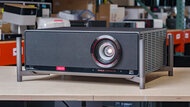
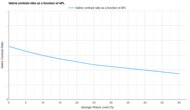
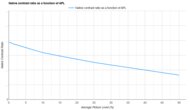
MoviesGamingBrightnessNative ContrastPre-Calibration Color AccuracyColor GamutInput LagPortabilityImaging TechnologyDLPLight SourceLaserSee all our test resultsNative ResolutionPixel Shift 4kIf you want the best short-throw projector overall, get the Valerion VisionMaster Max. Unlike the XGIMI TITAN, which competes more on sheer brightness for mixed lighting, the Valerion stands out by pairing premium image quality with a more flexible short-throw setup. It's a 4k pixel-shift DLP with amazing native contrast, giving dark scenes real depth and separation, and it's one of the rare projectors where the dynamic contrast mode is genuinely worth using, since it deepens blacks without constantly drawing attention to itself. Add its extremely wide color gamut, and movies and games look rich and punchy once you dim the lights.
Its short-throw design is a big part of the appeal, since it's easier to fit into real rooms than a traditional long-throw model. You also get autofocus and auto-keystone for quick positioning, plus a motorized zoom lens, a 0.90 to 1.50:1 throw range, and generous vertical lens shift to make placement far less finicky than usual. Gaming is another major strength, with low input lag in Game Mode, high-refresh support for smoother PC play, and three HDMI inputs, including two full-bandwidth HDMI 2.1 ports. Built-in smart features and HDMI eARC round out the package, so it's easy to use day to day and simple to pair with a soundbar or AVR. Overall, the VisionMaster Max is the projector to get if you want flagship-level contrast, excellent gaming performance, and the easier placement that comes with a premium short-throw design.
-
Best Ultra-Short-Throw Projector
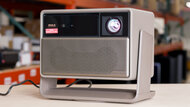
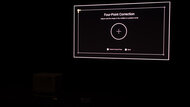
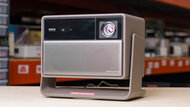
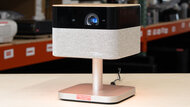
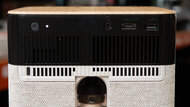
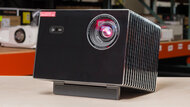
MoviesGamingBrightnessNative ContrastPre-Calibration Color AccuracyColor GamutInput LagPortabilityImaging TechnologyDLPLight SourceLaserSee all our test resultsNative ResolutionPixel Shift 4kIf you want a true TV replacement that lives inches from the wall, the ultra-short-throw (UST) Hisense PX3-PRO is the step to take. Compared with other premium and upper mid-range options like the XGIMI TITAN and XGIMI HORIZON 20 Max, you give up some overall image quality and, in the case of the 20 Max, some gaming responsiveness, but you gain the core UST advantage: a huge image from just inches away, with no beam crossing the room and no one walking in front of the picture. Its TriChroma RGB-laser light engine delivers vivid color and plenty of brightness, with easy setup. Google TV handles apps smoothly, and sound is perfectly fine for casual nights, although it sounds its best when connected to a soundbar through eARC.
Gamers get a Game Mode with 4k @ 60Hz and 1080p @ 120Hz/240Hz support. It's especially quick at 240Hz, which is great for PC gamers. Console gamers should stick to 120Hz, as the projector's input lag is noticeably slower at 60Hz. Sound is competent for casual use, and eARC lets you hand off audio to a soundbar or AVR when you want more impact. For the best daytime results, pair it with a UST ALR screen; placement is simple on a low stand against the wall, and you'll get a flatter, brighter image than projecting onto paint. Overall, if you're shopping for USTs, the PX3-PRO's combination of color volume, modern smart TV OS, and decent gaming chops puts it at the top of the list.




Notable Mentions
-
XGIMI Horizon S Max:
The XGIMI Horizon S Max is a tremendous mid-range option, especially when it's on sale. When it's not, the XGIMI HORIZON 20 ends up being the better deal due to its slightly superior image quality and superior gaming chops.
See our review -
Wanbo X5 Pro:
The Wanbo X5 Pro is a solid alternative to the NexiGo PJ40 (Gen 3), as they both perform nearly the same. Still, the NexiGo has slightly better contrast and is far easier to calibrate. The Wanbo still warrants consideration, as it's far quieter under load and comes with a fully featured smart OS, whereas the NexiGo requires a dongle.
See our review -
Hisense C2 Ultra:
The Hisense C2 Ultra is a solid and far cheaper alternative to the Valerion VisionMaster Max. The Hisense is just as bright and is as capable for gamers. Still, the Valerion is best-in-class for contrast, a bit more accurate, and quieter under load.
See our review -
XGIMI AURA 2:
The XGIMI AURA 2 is a strong value UST with high brightness, accurate color, and a friendly setup. Unfortunately, its colors are a bit subdued for a projector at this price point. The Hisense PX3-PRO, in turn, offers richer colors, HDR10+ support, and more gaming features, at the cost of higher input lag at 60Hz.
See our review
Recent Updates
May 01, 2026:
The NexiGo PJ40 Pro replaces the NexiGo PJ40 (Gen 3) as our 'Best Cheap Projector' thanks to its full Google TV support. We also updated the XGIMI AURA 2 Notable Mention to better explain how it compares to the Hisense PX3-PRO.
Apr 03, 2026:
The XGIMI HORIZON 20 replaces the XGIMI Horizon S Max as the 'Best Mid-Range Projector' due to its slightly better image quality and improved gaming features at a similar price. This pushes the S Max to the Notable Mentions.
Mar 11, 2026:
We named the XGIMI TITAN our new top pick thanks to its exceptional brightness and very strong contrast. We also revised the other picks to better explain the trade-offs as you move down in price, and the Valerion VisionMaster Max is now our short-throw pick, replacing the Hisense C2 Ultra because of its amazing contrast.
Feb 03, 2026:
We rearranged our picks to fit our new pricing structure; the first few are now being recommended based on their market positioning. The XGIMI HORIZON S Max is now the 'Best Mid-Range Projector.' We've also freshened up the text.
Dec 17, 2025:
The Hisense C2 Ultra replaces the BenQ X3100i as the Best Gaming Projector, as a recent retest highlighted far lower input lag than it previously had. The new Hisense M2 Pro replaces the BenQ HT2060 as the Best Budget Projector due to its modern features and great performance for the price.
All Reviews
Our recommendations above represent what we consider the best overall projectors currently available for most consumers. We consider factors like price (we favor more affordable options unless the difference in quality justifies a higher cost), feedback from our visitors, and product availability (we avoid models that are scarce or nearly out of stock).
However, if you prefer to make your own selection, here's the list of the top projectors we've tested. Remember not to get too bogged down in the minutiae. While no projector is flawless, many perform well for most purposes. Just be cautious of the lowest-quality models to ensure a satisfactory viewing experience.