If you're looking for the best projectors overall, there are numerous options available, ranging from budget-friendly, portable models to high-end home theater setups. Are you specifically seeking the best projector for home? Do you want a versatile device that handles both the latest movies and gaming sessions with ease? Or are you looking for something that's easy to carry around? Whatever your needs, we've got you covered, from more affordable models that trade image quality for portability to bulkier, pricier units that deliver top-notch image quality. Ultimately, the best choice depends on your specific needs and budget. If you're unsure how far you can place a given projector for your screen size, our projector throw distance tool can help you plan your setup.
We've bought and tested over 90 projectors, and below, we list the best models for a few critical uses. We only cover consumer models, not high-end products meant for enthusiasts, and our price tiers are built with consumer models in mind. If you're specifically looking for the best home projector to use in a smaller room, or if you just want your projector to stand closer to your screen or wall, look up our best short-throw projectors. Look up our best 4k projectors if you're only interested in high-resolution options. If you'd rather see cheaper options on the market, look up the best budget and cheap projectors. Want to take your projector outside? Consider our picks for the best outdoor projectors. And don't forget that you can vote on which projectors you'd like us to purchase and put to the test!
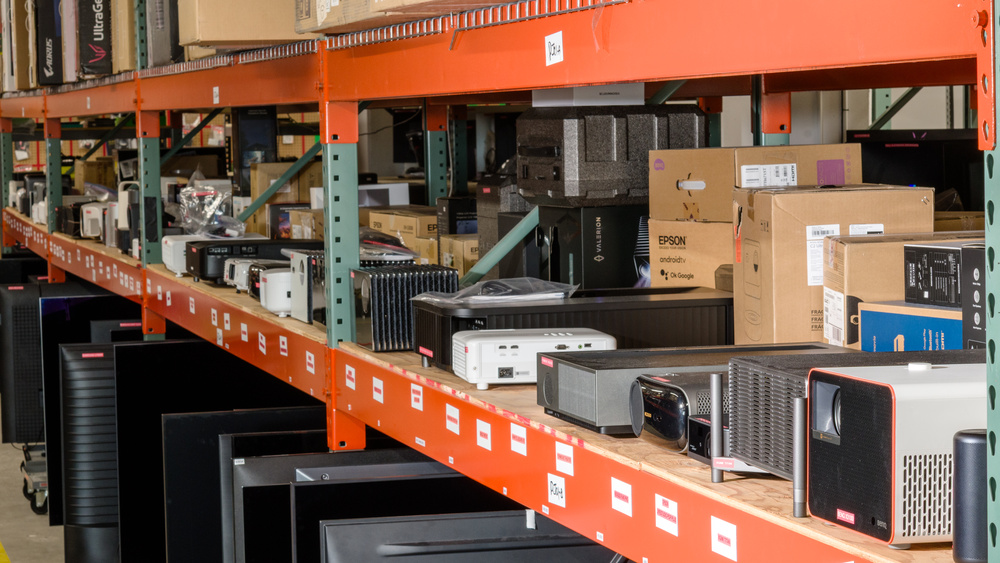
We've independently bought and tested over 80 projectors and published detailed results for each, so you can decide which one to buy. These have all been tested under the same standardized methodology, allowing you to compare them side by side. We still have all these projects in our lab, so we can continually go back and compare them to ensure our reviews are still accurate. All our test methodologies are also public on our website, so you can validate the results yourself.
-
Best Projector
 Home TheaterOutdoorsBedroomGamingProjector TypeShort ThrowNative ResolutionPixel Shift 4kSee all our test resultsLight SourceLaser
The best projector we've tested is the Valerion VisionMaster Max. Its great contrast gives dark and mixed scenes impressive depth, while its accurate image and excellent color performance make movies and games look natural and vibrant. Its adjustable iris lets you favor contrast or brightness to suit your room, while its dynamic contrast feature deepens blacks further without introducing noticeable artifacts. It also displays most movies and shows smoothly, and its effective RBE Reduction feature makes rainbow flashes around bright elements much less noticeable if you're sensitive to them. The projector remains quiet with this feature enabled, apart from a faint high-pitched fan noise, but most users won't hear it while there's audio playing.
Its short-throw design lets it produce a large image from closer to the screen than a conventional projector, making it easier to use in smaller rooms. Motorized zoom, vertical lens shift, and automatic image correction provide additional setup flexibility, although it lacks horizontal lens shift. Its fully featured smart OS also lets you access major streaming services without an external device. It's a strong gaming projector thanks to its high-refresh-rate support and two full-bandwidth HDMI 2.1 ports, though its input lag isn't quite low enough for the most demanding competitive players. If you want to save money, consider the Valerion VisionMaster Pro 2 instead; its contrast isn't quite as good, and enabling RBE Reduction makes its fan much louder, but it's otherwise very similar.
-
Best Upper Mid-Range Projector
Home TheaterOutdoorsBedroomGamingProjector TypeStandard ThrowNative ResolutionPixel Shift 4kSee all our test resultsLight SourceLaserThe XGIMI HORIZON 20 Max is the best upper mid-range projector we've tested. At its default settings, it delivers slightly better contrast than the Valerion VisionMaster Max and is substantially brighter, making it a better option in ambient light. Its integrated gimbal stand lets you angle it toward the screen, making it more versatile for unconventional setups. However, the Valerion has greater contrast potential through its adjustable iris and dynamic contrast feature, and it avoids several of the XGIMI's caveats. The XGIMI can't eliminate choppy motion from many international shows, while smoothing other content requires lowering the resolution to 1080p. It also produces more visible rainbow flashes than the Valerion with no setting to reduce them.
The Valerion is also more responsive for gaming, especially at 60Hz, but the XGIMI is slightly more responsive at 120Hz and 240Hz. The XGIMI also supports VRR to reduce screen tearing, but the feature can introduce visible artifacts, so some gamers may end up disabling it. Still, the HORIZON 20 Max just looks great in action. Its excellent contrast gives scenes impressive depth, while its accurate image and excellent color performance make movies and games look natural and vibrant. Optical zoom, vertical lens shift, and automatic screen setup add placement flexibility, and its Google TV OS and dual 12W speakers make it easy to use without extra equipment. Ultimately, the XGIMI HORIZON 20 Max can do it all, with few inconveniences. If you want to save money, consider the XGIMI HORIZON 20 Pro instead; it's essentially the same projector, but dimmer, so it just works just as well in a dark room.
-
Best Mid-Range Projector
Home TheaterOutdoorsBedroomGamingProjector TypeStandard ThrowNative ResolutionPixel Shift 4kSee all our test resultsLight SourceLaserYou can save considerably by stepping down to the XGIMI HORIZON 20, the best mid-range projector we've tested. Compared with the XGIMI HORIZON 20 Max, it's dimmer, has weaker contrast, and reproduces a slightly narrower range of colors. The Max is therefore better for very large screens, spaces with ambient light, and anyone prioritizing top picture quality. However, the base HORIZON 20 is much cheaper, lighter, and even quieter. This makes it easier to carry from room to room, place beside the bed, and put away afterward, while its exceptionally quiet fan is less likely to distract during late-night viewing. Of the two, this is the best projector for bedroom use.
It otherwise retains most of the Max's strengths. Its sharp image is accurate out of the box, and its contrast and color performance are still great for the price. The integrated gimbal lets you angle it toward the screen, while optical zoom, vertical lens shift, and automatic screen setup provide plenty of placement flexibility, with the same Google TV OS and speaker setup. It also shares some of the Max's drawbacks. It can't eliminate choppy motion from many international shows, and smoothing other content can require lowering the resolution to 1080p, and rainbow flashes can be quite visible. It's also a strong gaming projector with high-refresh-rate support and VRR, although VRR can introduce artifacts. Overall, it gives up some image performance but retains nearly all of the Max's versatility for much less.
-
Best Lower Mid-Range Projector
Home TheaterOutdoorsBedroomGamingProjector TypeShort ThrowNative ResolutionPixel Shift 4kSee all our test resultsLight SourceLaserThe Hisense M2 Pro is the best lower mid-range projector we've tested. It's considerably smaller and cheaper than the XGIMI HORIZON 20, and its handle makes it easier to carry between rooms. However, its compact design comes with some compromises. Its one-axis gimbal only tilts vertically, and since it lacks lens shift, you have to move the unit itself to reposition the image. It's also dimmer, has weaker contrast, and runs louder, making it less well-suited to bedroom use despite its smaller size. For gaming, its lower input lag at 60Hz makes it more responsive for most console games, although it's slightly slower at 120Hz, and its weaker image quality holds back the overall experience.
Still, the Hisense packs plenty into its smaller, cheaper package. Its image is very accurate out of the box, and it reproduces a wide range of colors across dark and light shades. Its brightness and contrast are only decent, though, so it looks best in a dark or dim room. Its short-throw lens produces a large image from close to the screen, while motorized zoom and automatic screen adjustments simplify setup. VIDAA also provides access to the major streaming services without an external device, emphasizing the projector's versatility.
-
Best Budget Projector
Home TheaterOutdoorsBedroomGamingProjector TypeShort ThrowNative ResolutionPixel Shift 4kSee all our test resultsLight SourceLaserThe XGIMI Elfin Flip 4K is the best budget projector we've tested. By stepping down from the Hisense M2 Pro, you give up some brightness, a far more accurate image out of the box, and smoother motion in movies. In return, the XGIMI costs less and offers slightly better contrast, greater portability, and more responsive gaming at common console refresh rates. It's especially appealing if convenience or gaming matters more than a more polished movie-watching experience.
Its compact design is a major strength: it weighs less than half as much as the Hisense and folds into a slim shape with built-in lens protection, making it exceptionally easy to grab, carry, and store. The integrated gimbal lets you tilt it toward the screen, while autofocus, automatic keystone correction, obstacle avoidance, and screen fitting streamline setup. It also runs quietly, and Google TV provides direct access to major streaming services. Low input lag keeps controls responsive at both 60Hz and 120Hz. It also supports VRR at 1080p to reduce screen tearing, although the feature can introduce visible artifacts. Few budget projectors balance image quality, convenience, and gaming performance this well.
-
Best Cheap Projector
Home TheaterOutdoorsBedroomGamingProjector TypeStandard ThrowNative Resolution1080pSee all our test resultsLight SourceLEDThe NexiGo PJ40 Pro is the cheap option that makes the most sense if the XGIMI Elfin Flip 4K is still too expensive. It's dimmer and less accurate out of the box than the XGIMI, reproduces a narrower range of colors, and is limited to 1080p instead of the XGIMI's sharper pixel-shifted 4k image. The XGIMI's integrated gimbal and more advanced automatic setup also make it easier to position. Still, the NexiGo costs considerably less and has better contrast, giving dark scenes surprising depth. You'll just need to keep the lights off and use a small screen to compensate for its limited brightness.
It has a few other flaws. While it doesn't produce distracting rainbow flashes, motion in most movies can look choppy regardless of source, and there's no setting to smooth it out. Its fan is also extremely loud and can be distracting during quiet scenes, so a soundbar or Bluetooth headphones are worth considering. Game Mode doesn't overcome its high input lag, making it a poor choice for all but very casual gaming. Still, its fully featured Google TV platform includes major streaming apps like Netflix, while two HDMI ports and a 20W speaker system provide useful connectivity and audio options. It's reasonably easy to move, but it has no carrying handle or included case. Automatic keystone correction helps square the image, but focus is manual, and there's no optical zoom or lens shift, so you still need to position it carefully.
-
Best Ultra-Short-Throw Projector
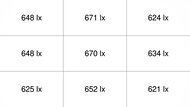
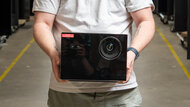
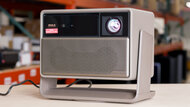
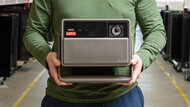
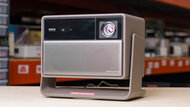
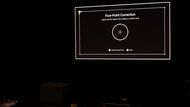
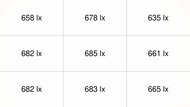
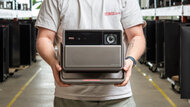
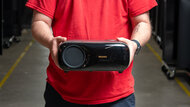
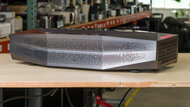
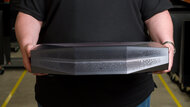
Home TheaterOutdoorsBedroomGamingProjector TypeUltra Short ThrowNative ResolutionPixel Shift 4kSee all our test resultsLight SourceLaserThe AWOL Vision Aetherion Max is the best ultra-short-throw projector we've tested. Its UST design lets it sit close to the wall or screen, functioning more like a TV than a conventional projector. However, the unit itself is massive, and its fixed lens lacks optical zoom and lens shift, so careful alignment is essential. The Valerion VisionMaster Max is much smaller and more flexible, as well as slightly brighter, quieter, and far more accurate out of the box. Both offer similarly great contrast and adjustable irises that let you favor brightness or deeper blacks to suit your room.
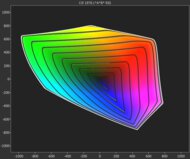
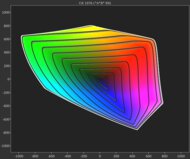
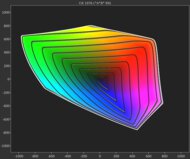
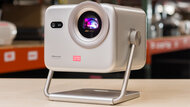
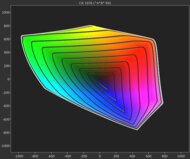
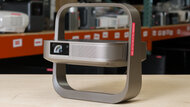
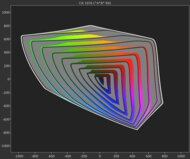
Once installed, the Aetherion Max produces an impressive image. Its strong brightness and RGB laser light source let it reproduce an exceptionally wide range of colors, while its great contrast gives dark scenes convincing depth. Its mediocre out-of-the-box accuracy benefits from calibration, though. Most movies play smoothly, but removing choppy motion from movies sent through an older streaming device lowers the image to 1080p. Rainbow flashes are well controlled, and the fan stays quiet, although the Valerion is better in both respects. Gaming is where the AWOL pulls ahead. Its low input lag and VRR support provide very responsive controls and reduce screen tearing when frame rates fluctuate. The Valerion is the more versatile all-rounder, but the Aetherion Max is the standout UST, especially for gaming. If you want to save money, also consider the dimmer but otherwise identical AWOL Vision Aetherion Pro.


Notable Mentions
-
XGIMI TITAN:
The XGIMI TITAN is very bright and has excellent contrast, making it a beast for very large screens and rooms with ambient light. Still, its underwhelming colors and poor judder handling, which leaves movies looking choppy, keep it behind the more well-rounded Valerion VisionMaster Max.
See our review -
JMGO N3 Ultimate:
The JMGO N3 Ultimate is a solid alternative to the XGIMI HORIZON 20 Max if choppy motion in movies doesn’t bother you. It’s exceptionally bright, has great contrast and excellent color performance, and is a tremendous gaming projector, but its inability to display movies smoothly keeps the XGIMI ahead for home theater.
See our review -
JMGO N1S Ultimate:
The JMGO N1S Ultimate is a compelling alternative to the XGIMI HORIZON 20 if you aren't bothered by choppy motion in movies and rarely watch content with a wide range of colors, such as some animated shows. It's substantially brighter than the XGIMI and has an exceptionally quiet fan, although the HORIZON 20 is more well-rounded overall.
See our review -
Hisense PX3-PRO:
The Hisense PX3-PRO is typically a bit cheaper than the AWOL Vision Aetherion Max, but the AWOL performs better in most respects. However, the Hisense can play movies from older streaming devices smoothly without lowering the resolution to 1080p, unlike the AWOL.
See our review
Recent Updates
Aug 04, 2026:
We've overhauled this article after our latest test bench, now providing more details on how a projector performs in a home theater, outdoors, or in a bedroom. The Valerion VisionMaster Max replaced the XGIMI TITAN as our top pick. We've also refreshed the rest of the lineup and our Notable Mentions.
Jun 09, 2026:
The JMGO N3 Ultimate replaces the XGIMI HORIZON 20 Max as the 'Best Upper Mid-Range Projector' due to its strong gaming chops and image quality. We've also replaced the Hisense PX3-PRO with the XGIMI AURA 2 as the 'Best Ultra-Short-Throw Projector,' as the XGIMI AURA 2 performs almost identically for a much lower price.
May 01, 2026:
The NexiGo PJ40 Pro replaces the NexiGo PJ40 (Gen 3) as our 'Best Cheap Projector' thanks to its full Google TV support. We also updated the XGIMI AURA 2 Notable Mention to better explain how it compares to the Hisense PX3-PRO.
Apr 03, 2026:
The XGIMI HORIZON 20 replaces the XGIMI Horizon S Max as the 'Best Mid-Range Projector' due to its slightly better image quality and improved gaming features at a similar price. This pushes the S Max to the Notable Mentions.
Mar 11, 2026:
We named the XGIMI TITAN our new top pick thanks to its exceptional brightness and very strong contrast. We also revised the other picks to better explain the trade-offs as you move down in price, and the Valerion VisionMaster Max is now our short-throw pick, replacing the Hisense C2 Ultra because of its amazing contrast.
All Reviews
Our recommendations above represent what we consider the best overall projectors currently available for most consumers. We consider factors like price (we favor more affordable options unless the difference in quality justifies a higher cost), feedback from our visitors, and product availability (we avoid models that are scarce or nearly out of stock).
However, if you prefer to make your own selection, here's the list of the top projectors we've tested. Remember not to get too bogged down in the minutiae. While no projector is flawless, many perform well for most purposes. Just be cautious of the lowest-quality models to ensure a satisfactory viewing experience.