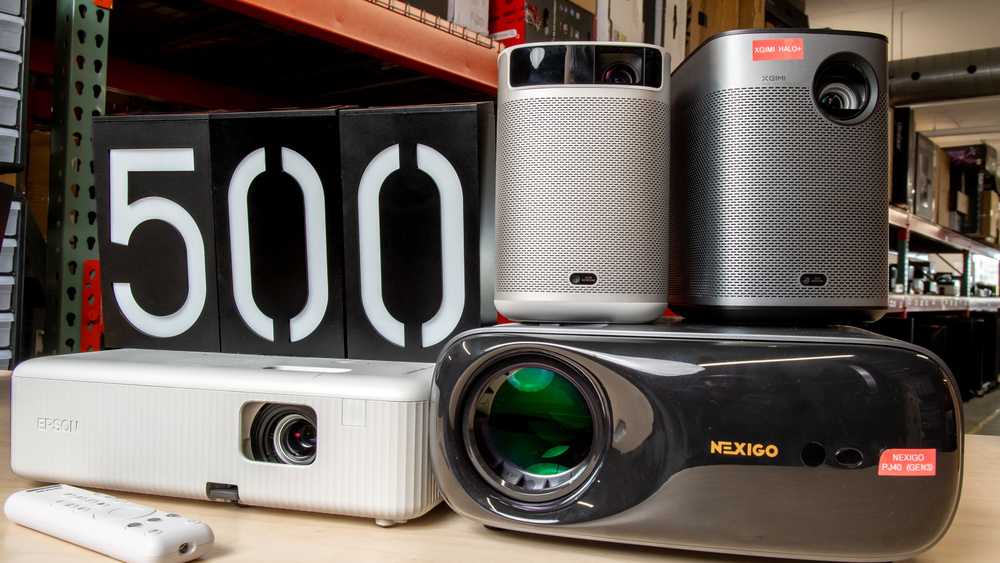
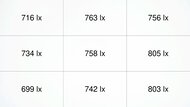
Projectors under $500 can be a great way to get a big screen for movie nights, casual gaming, or a multipurpose room without spending a fortune. At this price, many of the cheapest options are small portable models, and those tend to be very dim, while larger plug-in models usually deliver a brighter, more comfortable image. In general, the more portable a projector is, the more you tend to trade away in image quality, so it helps to think about where and how you will use it before you buy. If you are unsure about the size of screen you can accommodate at your distance, you can also use our projector throw calculator to determine how each model fits your room. If you're shopping for a TV instead, our best TVs under $500 roundup is a good place to start.
We've bought and tested more than 90 projectors, and below, you'll find the best models to buy for under $500. For larger budgets, look at the best projectors under $1,000, or the best budget and cheap projectors. If you want to take your projector outside, consider the best outdoor projectors instead. You can also vote on which ones you want us to purchase and test.
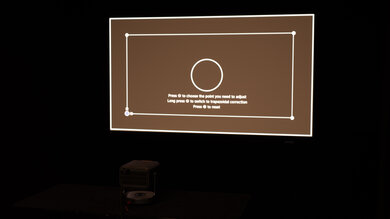
We've independently bought and tested over 80 projectors and published detailed results for each, so you can decide which one to buy. These have all been tested under the same standardized methodology, allowing you to compare them side by side. We still have all these projects in our lab, so we can continually go back and compare them to ensure our reviews are still accurate. All our test methodologies are also public on our website, so you can validate the results yourself.
-
Best Projector Under $500
 Home TheaterGamingBrightnessEffective ContrastPre-Calibration Color AccuracyColor GamutSizeImaging TechnologyLight SourceLampSee all our test resultsNative Resolution1080p
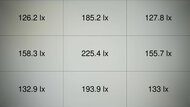
The Epson EpiqVision Flex CO-FH02 stands out as the best projector under $500 because it solves the biggest problem cheaper models usually have: brightness. It's bright enough for casual viewing in a living room, basement, or occasional backyard setup after sunset, and its 1080p image looks sharp enough for movies and games. It's also very accurate out of the box, so colors look natural without much tweaking, and its LCD imaging system means you don't get the rainbow flashes some people see on DLP projectors. The main tradeoff is contrast. Some cheaper projectors can produce deeper blacks than the Epson in a completely dark room, but that advantage falls apart quickly if there's any ambient light, especially since many of those models are much dimmer.
The Epson's blacks still look gray in dark scenes, so it's not a cinematic home theater projector, but its extra brightness makes it the more practical choice for most setups. Gaming is its other weak point, as its high input lag makes it a poor choice beyond slow, casual play. Setup is fairly basic too: the zoom gives you some control over image size, and automatic vertical keystone can help straighten the picture, but you still need to place it more carefully than a projector with full auto-setup tools. It includes an Android TV dongle for streaming, so you won't need to buy a separate device for apps. Overall, the CO-FH02 is the best projector under $500, and certainly the best bright room projector, if you want a bright, simple, accurate option for everyday big-screen viewing and don't need deep contrast or responsive gaming.
-
Best Dark Room Projector Under $500
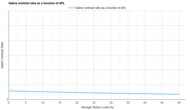
Home TheaterGamingBrightnessEffective ContrastPre-Calibration Color AccuracyColor GamutSizeImaging TechnologyLight SourceLEDSee all our test resultsNative Resolution1080pAs good as the Epson EpiqVision Flex CO-FH02 is, the NexiGo PJ40 Pro is the better choice under $500 if you mostly watch at night or in a fully dark room. It isn't nearly as bright as the Epson, so the Epson is still the safer pick for living rooms, daytime viewing, or any setup with lamps on. However, once the lights are completely off, the NexiGo's much stronger contrast gives movies and shows more depth, with darker blacks and a punchier image than the Epson can deliver. Just keep in mind that this advantage depends heavily on the room: if there's ambient light, the Epson's extra brightness is more useful than the NexiGo's better black levels.
The NexiGo is an all-in-one entertainment projector. It has Google TV built in, so you can stream from major apps without adding a separate device. Its main drawbacks are color and gaming. Colors are muted, it isn't especially accurate out of the box, and input lag is too high for anything beyond slow, casual games. Still, if you want an inexpensive projector for dark-room movies and streaming, the PJ40 Pro is a strong pick. And if you don't care about the full smart platform, you can save some money with the cheaper, more barebones NexiGo PJ40 (Gen 3), which performs very similarly otherwise.
-
Best Cheap Projector Under $500
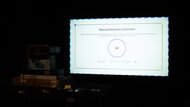
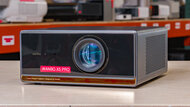
Home TheaterGamingBrightnessEffective ContrastPre-Calibration Color AccuracyColor GamutSizeImaging TechnologyLight SourceLEDSee all our test resultsNative Resolution1080pFor shoppers trying to spend as little as possible, the Wanbo X5 Pro is a surprisingly capable cheap projector. It’s similar in spirit to the NexiGo PJ40 Pro: both are dim 1080p projectors that make the most sense in a dark room, where their strong contrast can give movies and shows more depth than you usually get from cheap models. The NexiGo is the more polished option overall, with slightly better image quality, better accuracy, and more room for improvement if you calibrate it. However, the Wanbo is often cheaper, and it still delivers a punchy image once the lights are fully off. Just don't expect it to handle ambient light well; if your room isn't truly dark, the brighter Epson EpiqVision Flex CO-FH02 is the safer choice.
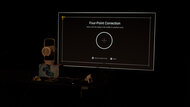
The Wanbo also has Google TV built in, so you can stream from major apps without adding a separate device, and its automatic setup tools make it easier to get a squared-up image when moving it between rooms. The tradeoffs are clear, though: colors are muted, accuracy is poor, and gaming responsiveness is disappointing. Overall, the Wanbo is the cheap pick to consider if you want a low-cost, all-in-one projector for dark-room viewing and can live with basic brightness, color, and gaming performance.
-
Best Cheap Portable Projector Under $500
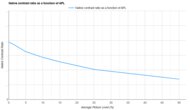
Home TheaterGamingBrightnessEffective ContrastPre-Calibration Color AccuracyColor GamutSizeImaging TechnologyLight SourceLEDSee all our test resultsNative Resolution1080pThe XGIMI Vibe One is the pick when portability matters more than image quality. Compared with the Wanbo X5 Pro, it's much dimmer, so it needs a fully dark room, a small screen, or a nighttime outdoor setup to look its best. The Wanbo is the better choice if you want a bigger, more watchable image for the money. That said, the Vibe One has even stronger contrast, so dark scenes can look surprisingly deep in ideal conditions, though that strength is partly tied to how little light the projector outputs. It also has better calibration potential than the Wanbo, so you can improve its accuracy if you're willing to tweak it, but out of the box, the two are similarly inaccurate.
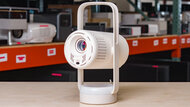
The Vibe One's real advantage is convenience. It has a built-in battery, a tall stand that doubles as a carry handle, built-in lens protection, and a compact body that's easy to move around or bring outside. Its stand also makes it easy to aim the image without propping up the projector. Setup is simpler than on many cheap models, with autofocus, auto keystone, and post-movement correction, but it doesn't have obstacle avoidance or auto screen fit, so you'll still need to adjust placement manually. Like most cheap portable projectors, it's limited for gaming and not especially colorful, but it's a practical choice if you want an inexpensive grab-and-go projector for casual streaming or occasional movie nights after dark.
-
Best Gaming Projector Under $500
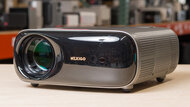
Home TheaterGamingBrightnessEffective ContrastPre-Calibration Color AccuracyColor GamutSizeImaging TechnologyLight SourceLEDSee all our test resultsNative Resolution1080pThe Anker Nebula P1i is the clear gaming pick under $500, as it's by far the most responsive unit on this list. Still, it has some weaknesses when it comes to image quality: it's dim, its contrast is weak, and its narrow color gamut means games don't look especially rich or vibrant. The Epson EpiqVision Flex CO-FH02 is much brighter, while the NexiGo PJ40 Pro, Wanbo X5 Pro, and XGIMI Vibe One deliver much deeper contrast in a fully dark room. However, the P1i's input lag is extremely low at 1080p @ 60Hz, so the delay between pressing a button and seeing the action on screen is minimal, which is rare for a projector at this price point. If you want gaming responsiveness in a portable package, this is it.
It's also convenient: Google TV is built in, automatic setup tools help focus and square the image quickly, and its two 10W Dolby Audio speakers flip outward for a wider soundstage. But there are still limits. It doesn't accept 4k signals and doesn't support 120Hz gaming, so this isn't a high-end gaming projector for modern console features or competitive PC players. Overall, the Anker is the best gaming option under $500 if responsiveness matters more than brightness, contrast, or cinematic picture quality.
Notable Mentions
-
XGIMI Halo+:
The XGIMI Halo+ is a strong alternative to the Epson EpiqVision Flex CO-FH02, as it has better contrast than the Epson and is much more portable due to its small size and integrated battery. It's also more responsive for gamers. Still, the Epson is far brighter, making it easier to place in brighter rooms. Plus, the XGIMI is often sold above $500, and these days it's a bit hard to find.
See our review -
Epson EpiqVision Flex CO-W01:
The Epson EpiqVision Flex CO-W01 is a solid alternative if you prefer a very bright projector over a dim but high contrast unit like the NexiGo PJ40 Pro. Still, the NexiGo also comes fully featured with a smart OS, while the Epson needs a dongle, so it's not quite as convenient. It also projects images in a 16:10 aspect ratio, which isn't optimal for watching movies or console games.
See our review -
ViewSonic LX60HD:
The ViewSonic LX60HD performs very similarly to the Wanbo X5 Pro, and generally, you should get the cheapest one you can find. Still, the Wanbo slightly edges out the ViewSonic due to its slightly more accurate image out-of-the-box, and far lower input lag. The ViewSonic does have slightly better contrast, but it's hard to notice in practice.
See our review -
XGIMI MoGo 2:
The XGIMI MoGo 2 is a solid alternative to the XGIMI Vibe One if you value brightness and colors over contrast, sharpness, and gaming performance. While the MoGo 2 is certainly not bright by any means, it's much brighter than the Vibe One. Still, the Vibe One offers better image quality and a more portable design, with a battery, making it the better pick for most people.
See our review
Recent Updates
Jul 07, 2026:
We rewrote this article from top to bottom, as many of our previous picks have either gone out of stock or are now too expensive to recommend. We also updated the text throughout to make the recommendations clearer and more helpful for users.
Mar 05, 2026:
We added some extra information to our picks to make it clearer what you're losing or gaining with each one.
Oct 29, 2025:
The XGIMI Halo+ is being sold for $499.99, making it the top pick below $500 for most people. The NexiGo PJ 40 (Gen 3) is now the 'Best Dark Room Projector Under $500,' and we added the XGIMI MoGo 3 Pro and the XGIMI MoGo 4 to the Notable Mentions.
Feb 26, 2025:
We've removed the BenQ TH671ST as our top pick since it was too often sold above $500 to belong in this article. The NexiGo PJ40 (Gen 3) is now our new top pick.
Dec 04, 2024:
The NexiGo PJ40 (Gen 3) is now our 'Best Dark Room Projector Under $500' pick, while the Epson EpiqVision Flex CO-W01 is the new 'Best Bright Room Projector Under $500.'
All Reviews
Our recommendations above are what we think are currently the best projector models under $500 to buy for most people. We factor in the price (a cheaper projector wins over a pricier one if the difference isn't worth it), feedback from our visitors, and availability (no projectors that are difficult to find or almost out of stock everywhere).
If you'd like to do the work of choosing yourself, here's the list of all our reviews of projectors available under $500. Be careful not to get too caught up in the details. While no projector is perfect, many are good enough for most uses; however, avoid the worst models to ensure adequate quality.