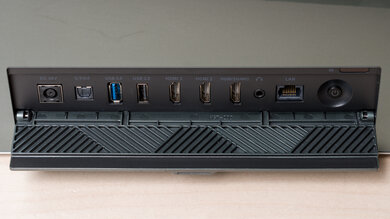
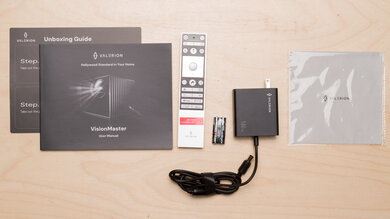
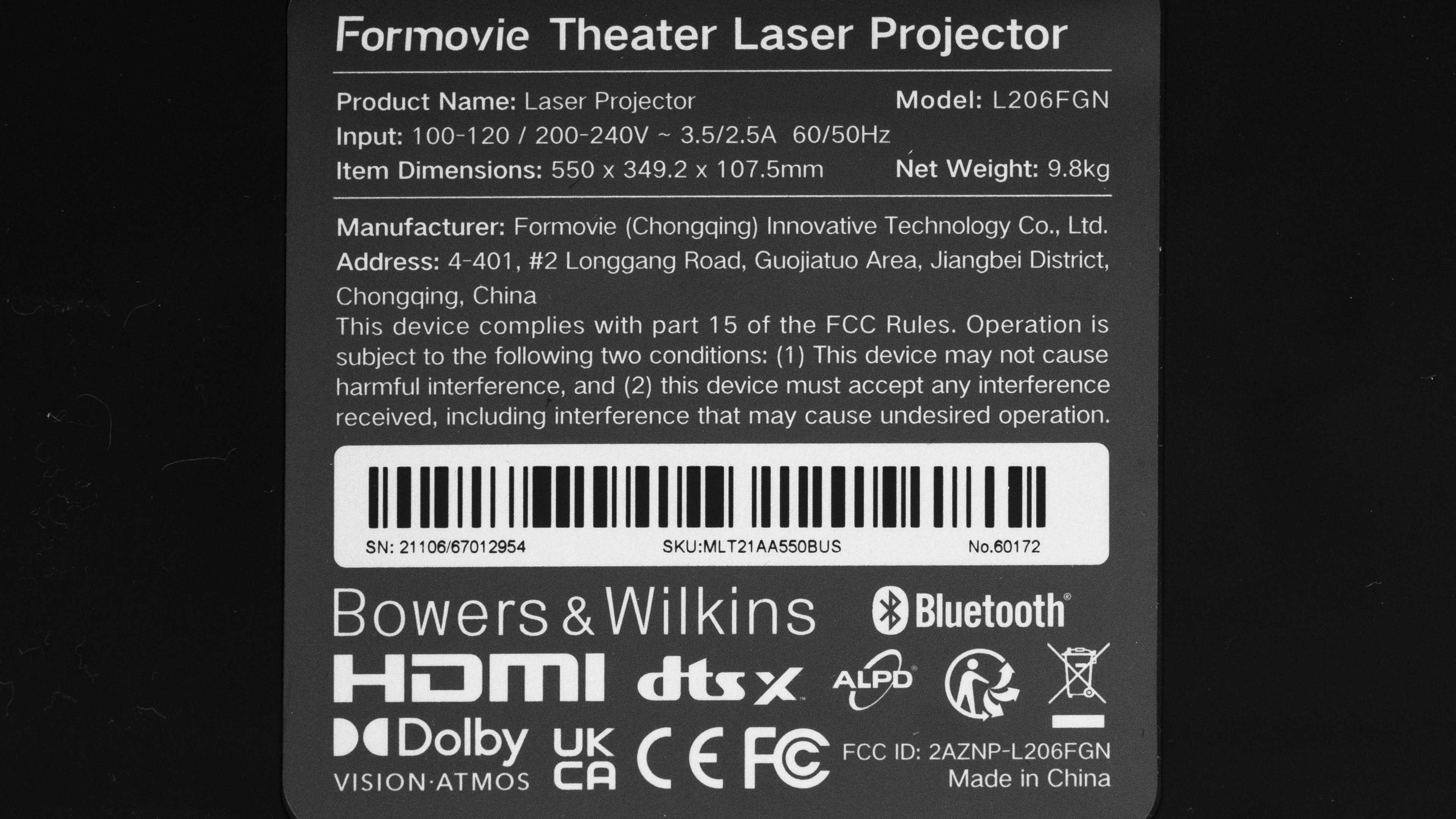
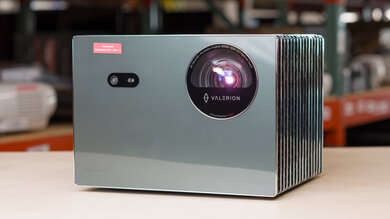
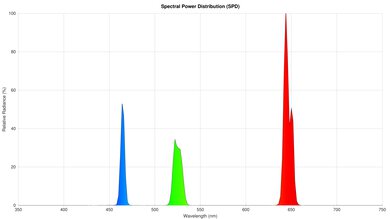
The Formovie THEATER is an ultra-short-throw (UST) 4k HDR laser projector. It uses the latest ALPD 4.0 triple laser light source, which is supposed to output up to 107% of the Rec. 2020 color gamut, delivering bright and colorful images in HDR10 or Dolby Vision. It can project content at an extremely short distance from the screen or wall, projecting an 80" image at a distance of 5.5" and up to a 150" image at a distance of 19.3". It has three HDMI ports and can passthrough advanced audio formats from Dolby and DTS through its eARC port. It also supports Dolby Atmos. Its MEMC motion compensation technology smooths out fast-moving content, such as sports, and it features an Auto Low Latency Mode (ALLM) that automatically switches the projector to a low input lag mode when gaming. It has Bluetooth and Wi-Fi support and comes with the Android TV 11 smart interface with full Chromecast integration. Finally, it comes with an integrated 30W Bowers & Wilkins sound system.
Our Verdict
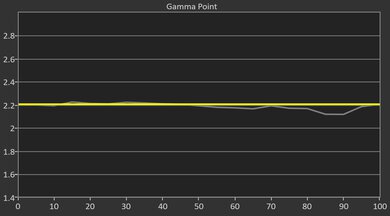
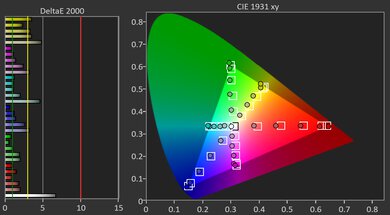
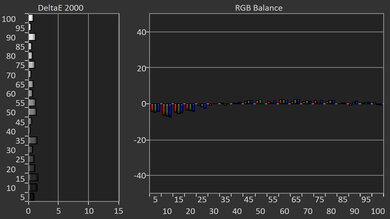
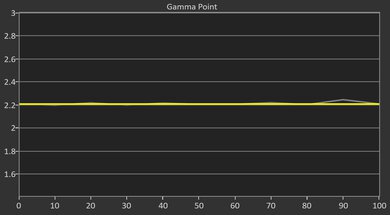
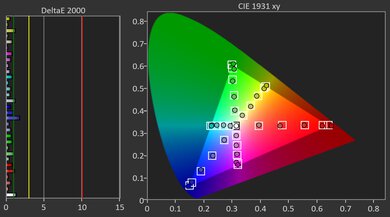
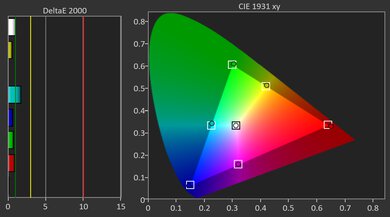
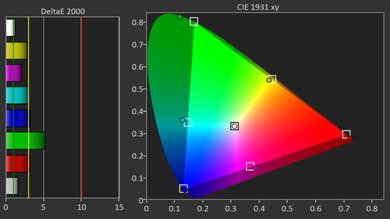
The Formovie THEATER projector is decent for watching movies. It's bright enough to look good in dimly lit rooms, but not bright enough to handle moderately lit rooms. Its contrast is at its best in dark scenes, where blacks look deep and shadow-heavy content has a convincing sense of depth, but that advantage is less consistent once scenes get brighter and blacks lift a bit. It has a wide color gamut, but unfortunately, it's not bright enough to make them pop. The projector's color accuracy is inadequate out of the box, with magentas looking too red and cyans leaning strongly toward green. You'll need to invest in a calibrator if you're concerned about color accuracy.
- Wide color gamut that looks especially good in HDR.
- Fully-featured projector with Android TV, three HDMI 2.1 ports, Wi-Fi, and Bluetooth.
Ultra-short-throw capabilities, so you can place it very close to the wall or screen.
Very good contrast for deep blacks in dark scenes.
HDR10+ and Dolby Vision support.
- Not bright enough to make colors pop.
- The unit's color space setting is buggy, requiring users to manually adjust it based on the content if they care about color accuracy.
Inadequate image accuracy out of the box.
The Formovie THEATER projector is disappointing for gaming. It can look impressive in a dark room thanks to its rich colors and strong contrast in darker scenes, but its input lag is very high, and it's limited to 60Hz, with no support for 120Hz. You should stick to watching movies with this projector.
- Wide color gamut that looks especially good in HDR.
Very good contrast for deep blacks in dark scenes.
HDR10+ and Dolby Vision support.
- Not bright enough to make colors pop.
Inadequate image accuracy out of the box.
Very high input lag.
Limited to 60Hz at all resolutions.
The Formovie THEATER's brightness is fine for a dedicated or mostly dark room, but it isn't a light cannon. It can comfortably light a 100" screen with excellent uniformity, yet the image starts to look a bit dull once you add more than a small lamp or some bias lighting. Its wide color gamut also isn't fully exploited because highlights don't get especially punchy.
Very uniform image.
- Not bright enough to make colors pop.
Looks washed out in brighter rooms.
The Formovie THEATER has very good native contrast, and in a dark room, it can deliver deep blacks that make shadowy scenes look cinematic. That said, it doesn't stay as strong as scenes get brighter, as blacks lift, and the image loses some punch compared with the best all-around performers.
Very good contrast for deep blacks in dark scenes.
Changelog
-
Updated May 28, 2026:
We've added text to some test boxes as a result of our latest test bench.
- Updated May 13, 2026: We've converted the review to Test Bench 0.12, which adds new Judder, Screen Adaptation, Battery, Maximum Volume, Size, Mobility Features, and Physical Setup Features test boxes. We also updated Inputs & Connectivity to verify Bluetooth support with wireless speakers or headphones. See the 0.12 changelog.
-
Updated Jan 14, 2026:
We updated the Native Contrast results after a recent adjustment to our testing. We also touched up the Our Verdict section and the Popular Projector Comparisons box.
-
Updated Jan 14, 2026:
We've modified the text in our Brightness and Native Contrast text boxes as a result of our latest test bench and added a Sequential Contrast test. We've also added Brightness and Contrast performance usages in the Verdict section.
Check Price
Differences Between Sizes And Variants
We bought and tested the original Formovie THEATER projector. It doesn't have traditional variants or screen bundles, but Formovie has since released the Formovie THEATER Premium as an upgraded version of the same basic design. The Premium keeps the same triple-laser ALPD light engine and Bowers & Wilkins speakers, but adds higher claimed brightness, built-in Google TV with licensed Netflix, and HDMI 2.1 inputs. The table below highlights the main practical differences between the two models.
| Feature | Formovie THEATER Premium | Formovie THEATER |
|---|---|---|
| Brightness (ISO) | 2200 ISO lumens | 1800 ISO lumens |
| Throw ratio | 0.21:1 (can sit closer for same size, or go bigger from same spot) | 0.23:1 |
| 3D support | Yes (frame-packed / 3D modes after firmware update) | No |
| Operating system | Google TV | Android TV 11.0 |
| Streaming apps | Native Netflix app + Google TV aggregation | No native Netflix (needs external streamer) |
| Speakers | 2 × 15 W, Bowers & Wilkins (Gen 2 tuning) | 2 × 15 W, Bowers & Wilkins (original tuning) |
| Color gamut / calibration | 107% BT.2020 (with “more precise calibration” per Formovie) | 107% BT.2020 |
Our unit was manufactured in China.
Popular Projector Comparisons
The Formovie THEATER is a capable UST projector, especially if you mostly watch in a dark room where its contrast gives movies a nice sense of depth, but brighter USTs like the NexiGo Aurora Pro deliver a more impactful HDR experience, while the Epson EpiqVision Ultra LS800 trades some black-level performance for much higher brightness and lower input lag. If you don't specifically need a UST setup, long-throw models like the Epson Home Cinema 3800 or the XGIMI HORIZON 20 Max can offer similar or better all-around performance for the money, often with more modern features and fewer gaming-related compromises.
Check out our recommendations for the best 4k projectors, the best projectors for home theater, and the best short-throw projectors. If you'd prefer to shop for a cheaper product, look up the best projectors under $1,000 instead.
The Hisense PX3-PRO is better than the Formovie THEATER. The Hisense is noticeably brighter, with more vibrant and punchier colors. The Hisense is also more accurate out of the box, even if it's noticeably too warm, and it can be improved more easily than the Formovie through calibration. Finally, the Hisense comes with a wider array of smart, wireless, and gaming features, making it more versatile than the Formovie.
The Formovie THEATER is better for watching movies than the Hisense PX1-PRO. The Formovie has much deeper contrast, so it looks punchier in pitch-black rooms when watching movies. Still, the Hisense is much more accurate before and after calibration, has a slightly wider color gamut, and has better gaming features than the Formovie due to its two HDMI 2.1 ports, which can do 4k @ 120Hz.
The Epson Home Cinema 3800 is better than the Formovie THEATER for watching movies, as the Epson is much brighter and is vastly more accurate. Still, the Formovie has more features, as it comes with Android TV 11, Wi-Fi, and Bluetooth, while the Epson requires you to purchase an external streaming dongle if you need any smart features. Plus, the Epson isn't a UST projector, so you must install it further away from the wall or screen than the Formovie.
The Epson EpiqVision Ultra LS300 is a bit better than the Formovie THEATER. The Epson is much brighter and has far superior color accuracy. Still, the Formovie does project a sharper image than the Epson due to its pixel-shifting 4k technology, while the Epson is limited to 1080p. The Formovie also has much better contrast and a wider color gamut, so it looks much better in dark rooms than the Epson.
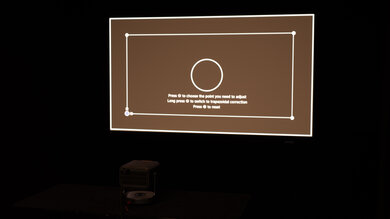
We've independently bought and tested over 80 projectors and published detailed results for each, so you can decide which one to buy. These have all been tested under the same standardized methodology, allowing you to compare them side by side. We still have all these projects in our lab, so we can continually go back and compare them to ensure our reviews are still accurate. All our test methodologies are also public on our website, so you can validate the results yourself.
Throw Calculator
Global Controls
Test Results
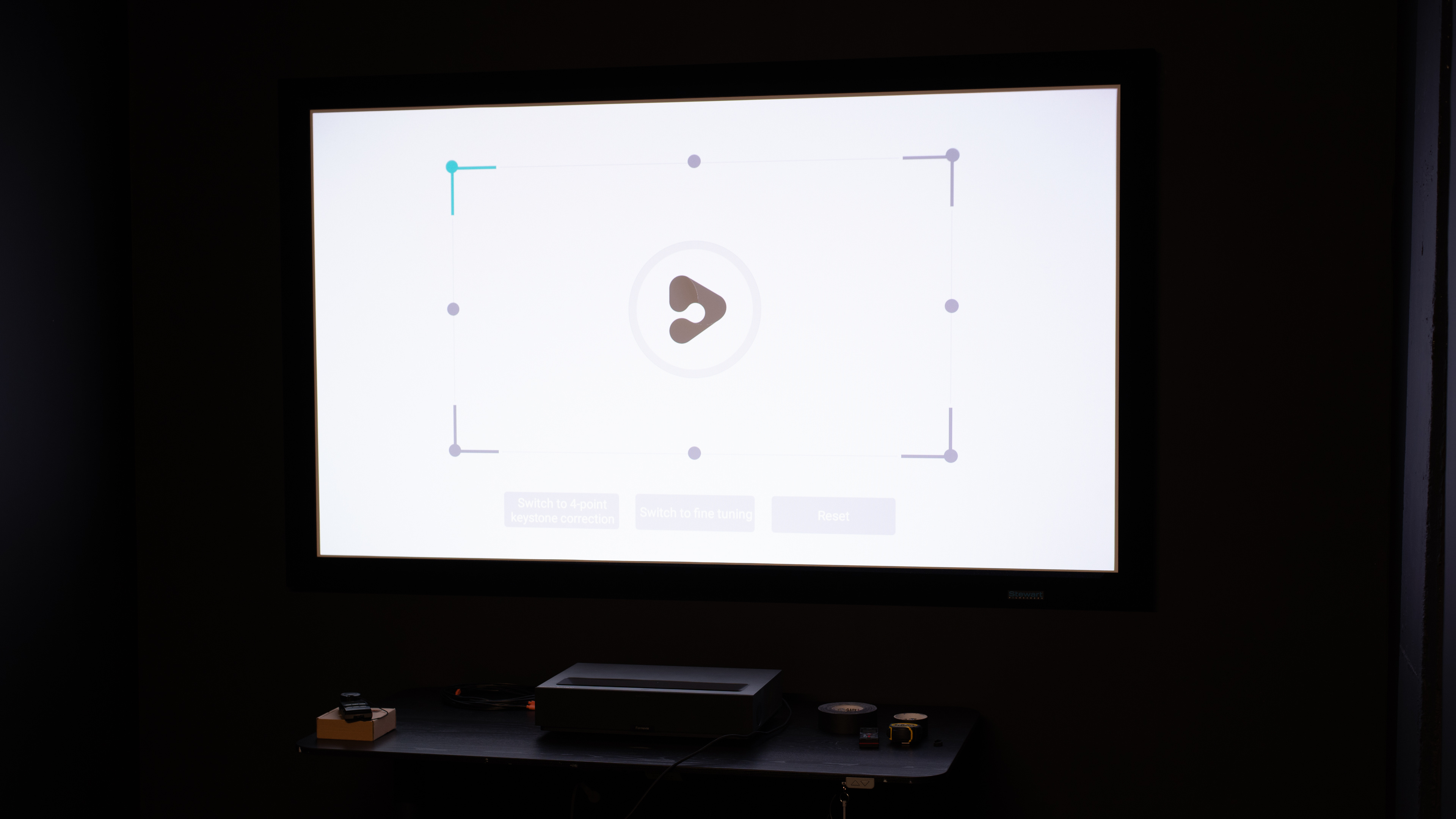
for pictures & test results
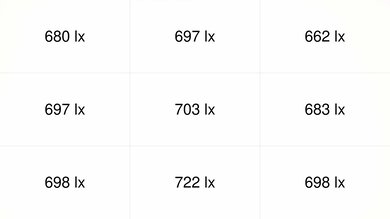
for pictures & test results
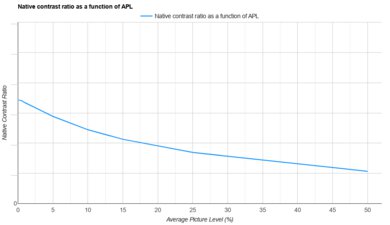
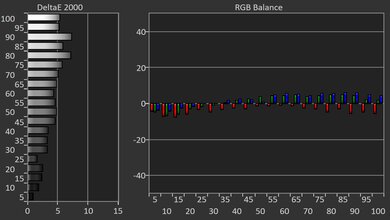


for pictures & test results
for pictures & test results

for pictures & test results