The Epson Home Cinema 5050UB is a 4k HDR LCD projector. The projector has Epson's 4k PRO-UHD technology with a 3-chip design, allowing it to project colorful and sharp images with double the resolution of 1080p. It also comes with Epson's UltraBlack technology for enhanced contrast capabilities. It's fully 10-bit HDR capable and comes with manual focus and lens shifting options, as well as manual keystone correction. The projector has two HDMI 2.0 ports for full 4k @ 60Hz gaming, but no Wi-Fi or Bluetooth support.
Our Verdict
The Epson Home Cinema 5050UB is very good for home theater use. The great contrast gives movies deep blacks and clear shadow detail, while its very accurate colors make the image look natural out of the box. It has no rainbow effect, so it is a comfortable choice for viewers sensitive to color flashes. However, lighter colors, like those seen in some animated shows, don't pop as much, and camera pans can look jittery with older streaming devices.
Deep blacks and strong shadow detail give movies and games convincing depth.
Very accurate colors out of the box.
No rainbow effect for viewers sensitive to color flashes.
Movie motion looks jittery from regular 60Hz sources.
Colors lack punch overall, especially in lighter shades.
Scenes dominated by bright areas lose some depth.
The Epson Home Cinema 5050UB is sub-par for outdoor use. It is bright enough to project a large image after sunset, but its huge body is inconvenient to carry outside. You'll also need an outlet, a sturdy surface, and time to set up the image manually every time you move it. Its built-in lens cover offers some protection during short trips, but this projector is much better suited to a permanent indoor setup than regular outdoor movie nights.
Bright, even image works well on a large screen in dim or moderately lit spaces.
Motorized zoom and extensive lens shift make placement flexible.
Huge, heavy body with no handle or carrying case makes it difficult to move.
Moving it means manually refocusing and realigning the image.
Requires an external streaming device; it has no built-in smart platform or wireless connectivity.
The Epson Home Cinema 5050UB is poor for bedroom use. Its large, heavy chassis is awkward to place on furniture or move between rooms, and there are no automatic setup tools to realign the image after moving it. The fan is also audible in a quiet bedroom. Its extensive zoom and lens shift are excellent for a permanent installation, but it isn't a convenient projector to use casually.
Motorized zoom and extensive lens shift make placement flexible.
Huge, heavy body with no handle or carrying case makes it difficult to move.
Moving it means manually refocusing and realigning the image.
Fan is audible in quiet rooms.
Requires an external streaming device; it has no built-in smart platform or wireless connectivity.
The Epson Home Cinema 5050UB is okay for gaming. It produces a bright, accurate image with great contrast. However, it is limited to 60Hz, controller inputs feel delayed, and fast motion is blurry due to the projector's LCD technology. It's better for relaxed single-player games than shooters, fighting games, or competitive play.
Bright, even image works well on a large screen in dim or moderately lit spaces.
Deep blacks and strong shadow detail give movies and games convincing depth.
Very accurate colors out of the box.
No rainbow effect for viewers sensitive to color flashes.
Colors lack punch overall, especially in lighter shades.
Scenes dominated by bright areas lose some depth.
Limited to 60Hz, with noticeable input lag and blur in fast games.
The Epson 5050UB's brightness is great. It's easily bright enough for a big 100" screen in a dim or moderately lit room. Brighter picture modes add even more light for daytime viewing, but at the cost of color accuracy.
Bright, even image works well on a large screen in dim or moderately lit spaces.
The Epson Home Cinema 5050UB has great contrast. Dark scenes have deep blacks and clear shadow detail, and most mixed scenes retain convincing depth. However, scenes with large bright areas look less punchy, with less separation between light and dark details, but it's slight.
Deep blacks and strong shadow detail give movies and games convincing depth.
Scenes dominated by bright areas lose some depth.
The Epson Home Cinema 5050UB is terrible for portability. Its huge chassis and lack of a carrying handle or a case make it impractical to move around. The built-in lens cover protects the lens, but you'll still need to carry the projector carefully and set it up manually each time, as it lacks automated screen-adaptation features.
Motorized zoom and extensive lens shift make placement flexible.
Huge, heavy body with no handle or carrying case makes it difficult to move.
Moving it means manually refocusing and realigning the image.
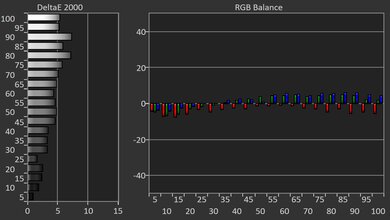
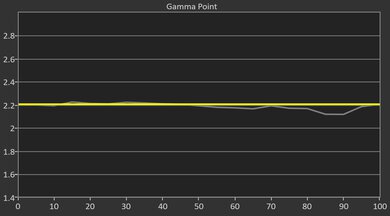
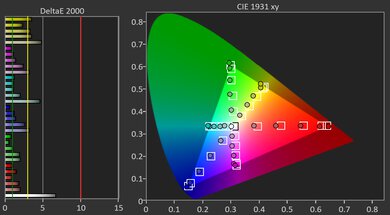
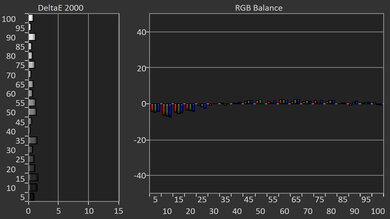
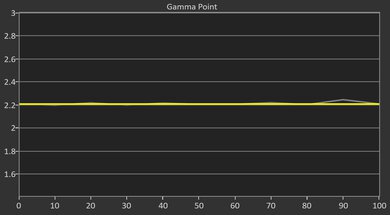
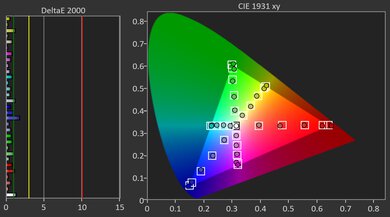
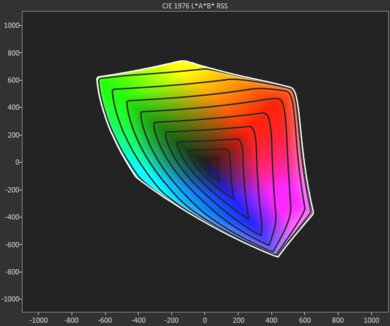
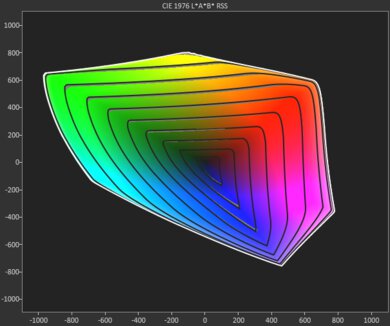
The Epson Home Cinema 5050UB has good color performance. It is very accurate out of the box, so movies and games look natural without calibration. However, it doesn't produce especially rich or vibrant colors overall, especially in lightly colored scenes. It also has extensive calibration controls if you want to fine-tune the image.
Very accurate colors out of the box.
Colors lack punch overall, especially in lighter shades.
The Epson Home Cinema 5050UB has subpar gaming responsiveness. It only supports a 60Hz refresh rate, its input lag is noticeable albeit not excessive, and its LCD panel makes fast motion look blurrier than on DLP projectors. It's best suited to slower single-player games rather than competitive or reaction-heavy titles.
Limited to 60Hz, with noticeable input lag and blur in fast games.
Performance Usages
Changelog
- Updated Jul 28, 2026: We've converted the review to Test Bench 1.0, which replaces our Color Gamut test with Color Volume and adds a new Rainbow Effect test box. We also updated Effective Contrast (formerly Native Contrast) to account for projector brightness and reworked Judder scoring. The new bench also adds Outdoors and Bedroom usages, plus Portability, Color, and Gaming Responsiveness Performance Usages; Movies is now Home Theater, and all existing usage scores have been updated. See the 1.0 changelog.
-
Updated May 11, 2026:
We've added text to some test boxes as a result of our latest test bench. We've also updated Inputs & Connectivity to include Bluetooth support checks, as well as the 3D test box.
- Updated May 11, 2026: We've converted the review to Test Bench 0.12, which adds new Judder, Screen Adaptation, Battery, Maximum Volume, Size, Mobility Features, and Physical Setup Features test boxes. We also updated Inputs & Connectivity to verify Bluetooth support with wireless speakers or headphones. See the 0.12 changelog.
-
Updated Jan 14, 2026:
We mention the newly reviewed Valerion VisionMaster Max in the Smart Features & Sound section of this review.
Check Price
Differences Between Sizes And Variants
The Epson Home Cinema 5050UB is a high-end model in Epson's mid-range 3LCD home theater line, serving as a solid option for home theater enthusiasts who prefer not to splurge on a more premium unit. It uses pixel‑shift, has HDR10 and HLG support, and has motorized optics. In Epson's lineup, it slots above the basic Epson Home Cinema 1080 (which lacks HDR and smart streaming), the Epson Home Cinema 2350 (which adds pixel shifting, HDR support, and an Android TV dongle), and the Epson Home Cinema 3800 (which is brighter and has better contrast than the cheaper models). Here's how they stack up:
| Model | Native Resolution | Pixel-Shift (4K PRO-UHD) | Brightness | HDR Formats | Lens / Optics | Smart / Wireless |
|---|---|---|---|---|---|---|
| Epson Home Cinema 1080 | 1080p (3LCD) | No | 3,400 lm | None | 1.2× manual zoom; Throw 1.02–1.23; No lens shift | Built-in Wi-Fi 5 with Miracast screen mirroring; no Android TV |
| Epson Home Cinema 2350 | 1080p (3LCD) | 2-phase (1920×1080×2) | 2,800 lm | HDR10, HLG | 1.62× manual zoom; Throw 1.32–2.15; Vertical lens shift ±60% (manual) | Android TV dongle (Chromecast built-in); Bluetooth audio; HDMI ARC |
| Epson Home Cinema 3800 | 1080p (3LCD) | 2-phase (1920×1080×2) | 3,000 lm | HDR10, HLG | 1.62× manual zoom; Throw 1.32–2.15; Lens shift ±60% V / ±24% H (manual) | No Android TV; Bluetooth (incl. aptX) for audio |
| Epson Home Cinema 5050UB | 1080p (3LCD) | 2-phase (1920×1080×2) | 2,600 lm | HDR10, HLG | 2.1× motorized zoom/focus/shift; Throw 1.35–2.84; Lens shift ±96% V / ±47% H; lens memory | No built-in smart features |
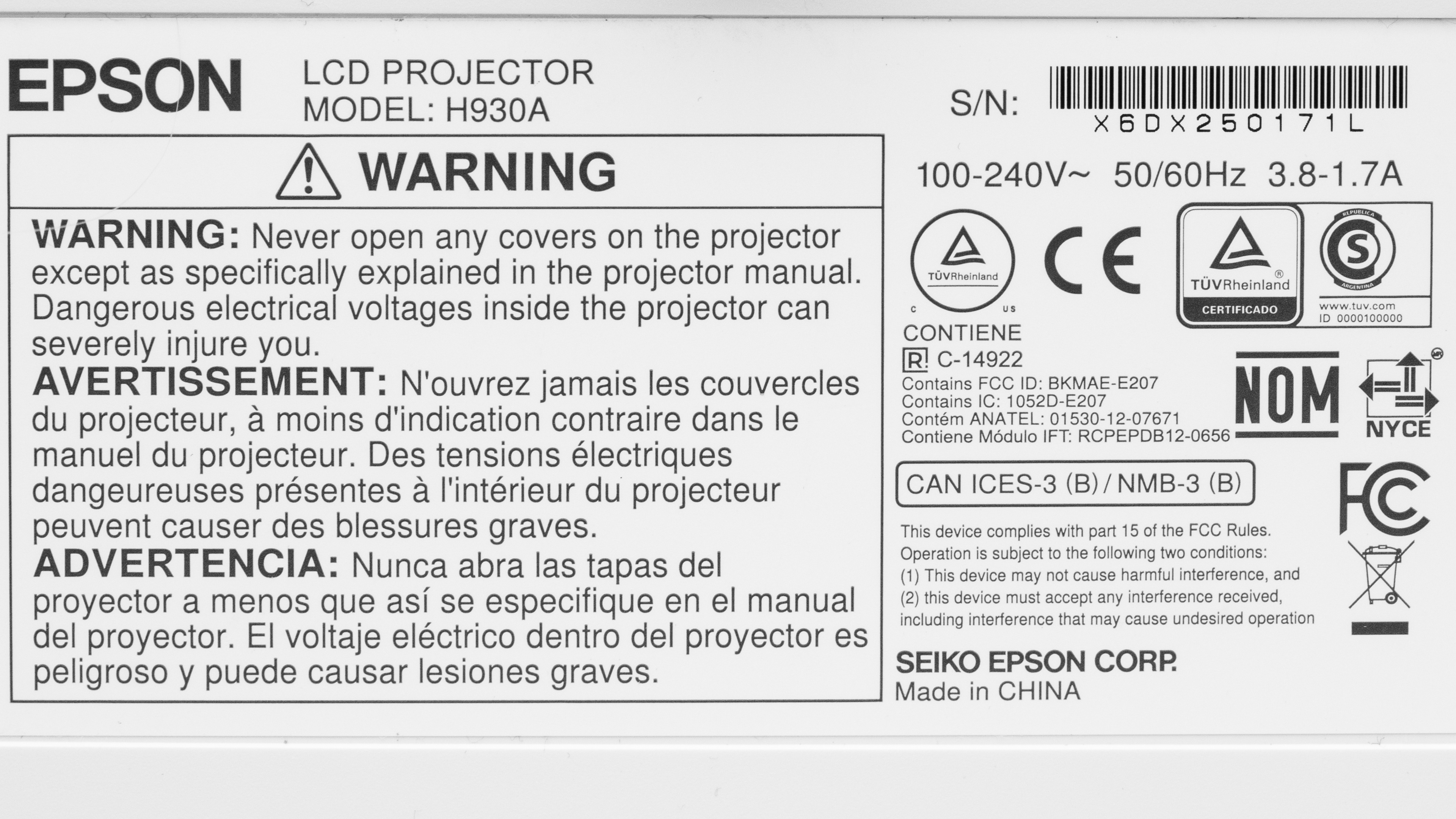
You can see the label here.
Popular Projector Comparisons
The Epson 5050UB is a solid home-theater projector if you prioritize pure image quality, boasting great contrast and rich colors. It's also quite expensive, though, so many people will be just as happy with the cheaper Epson Home Cinema 3800, which doesn't look quite as refined but is brighter, includes speakers, and supports Bluetooth audio. If you'd rather have a living-room-friendly smart projector, the XGIMI HORIZON Ultra offers more convenience features, but its overall image quality isn't as good as either Epson. Still, if you're chasing the best picture in a dark room, the Epson 5050UB is hard to beat.
See our recommendations for the best projectors for home theater. If you're looking for something more general, look up our list of the best projectors instead.
The Epson Home Cinema 5050UB is better than the Epson Home Cinema 3800. The 3800 has higher peak brightness than its more expensive sibling. Still, the 5050UB offers better contrast and a noticeably wider color gamut, making it the better-looking projector when watching movies in a dark room.
For some purists, the Epson Home Cinema 5050UB is slightly better than the Valerion VisionMaster Pro 2, but the Valerion is the better choice for everyone else. That's because of the Valerion's versatility; it has more modern features than the Epson, which lacks a smart OS, out-of-the-box casting support, wireless connectivity, or advanced gaming features. Still, the Epson is much more accurate out of the box. Still, the Valerion has the edge for watching HDR content due to its much wider color gamut and good dynamic contrast, alongside Dolby Vision and HDR10+, while the Epson is limited to HDR10.
The Epson Home Cinema 5050UB is much better than the Hisense PX1-PRO. The Epson is much brighter, has better contrast, and has slightly better colors, so it has the edge in image quality. The Epson is also vastly more accurate out of the box, so you don't need to worry about calibration. The Hisense has way more features than the Epson, with an integrated smart OS, Wi-Fi, and Bluetooth support, but it can't compensate for the image quality gap.
The Epson Home Cinema 5050UB offers slightly better image quality than the BenQ X3000i due to its wider color gamut and better contrast. However, the BenQ is much smaller and has significantly more features. The Epson is a barebones projector without any smart or wireless features, while the BenQ comes with the QS01 streaming dongle, which has Android TV, Bluetooth, and Chromecast built in. The BenQ also has more features for gamers, as it can project a 4k @ 60Hz or 1080p @ 240Hz image, while the Epson is limited to 4k @ 60Hz. Thus, if you're going for pure image quality, the Epson is better, but the BenQ is more versatile.
We've independently bought and tested over 80 projectors and published detailed results for each, so you can decide which one to buy. These have all been tested under the same standardized methodology, allowing you to compare them side by side. We still have all these projects in our lab, so we can continually go back and compare them to ensure our reviews are still accurate. All our test methodologies are also public on our website, so you can validate the results yourself.
Throw Calculator
Global Controls
Test Results
for pictures & test results
for pictures & test results



for pictures & test results