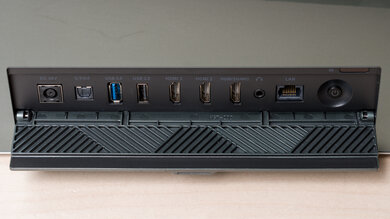
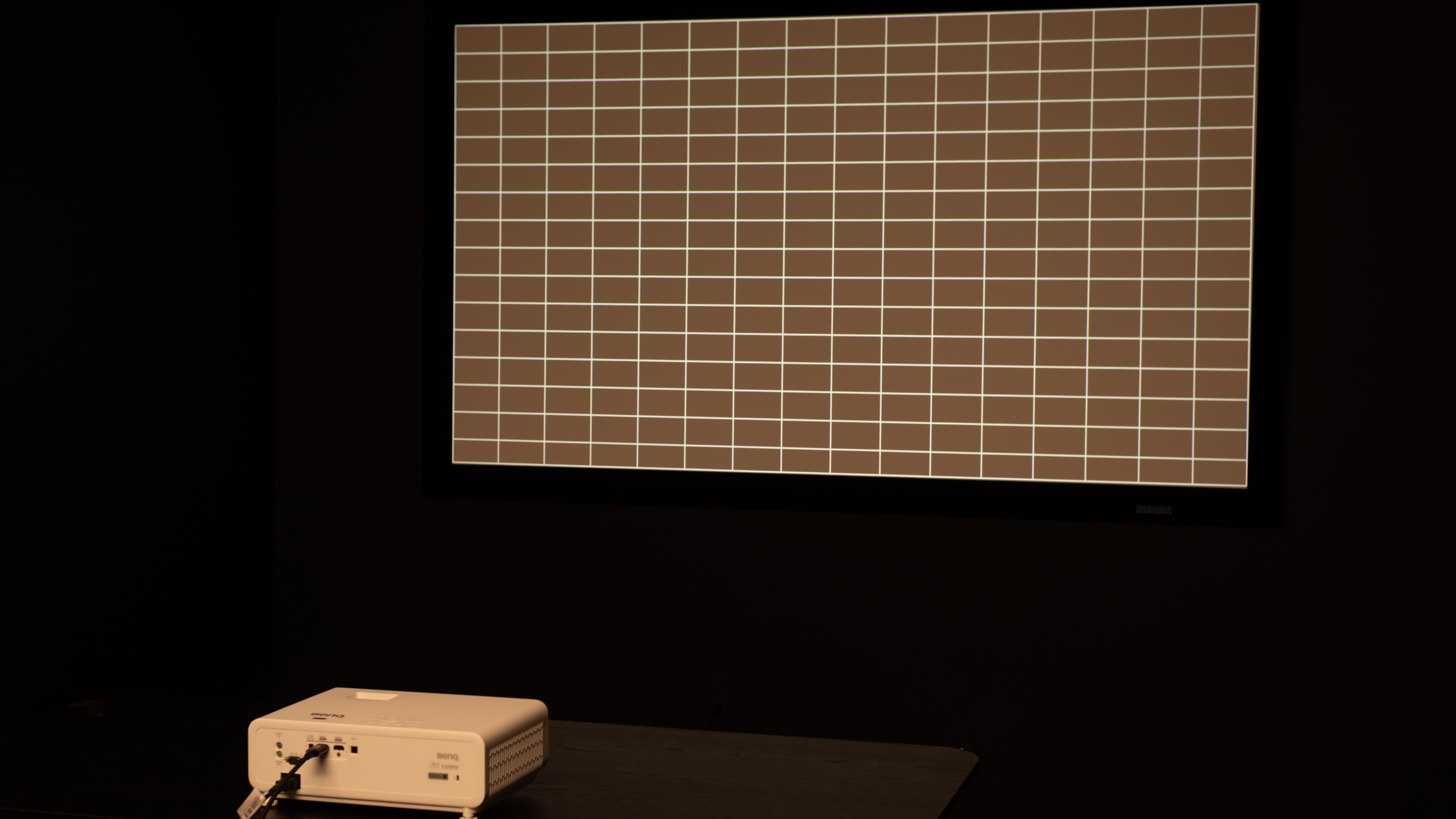
The BenQ HT2060 is a 1080p HDR10-enabled projector primarily meant for home theater use. It projects a 100-inch image at a distance of around 9.6 feet, 120 inches at a distance of around 11.5 feet, and a very large 150 inches at a distance of about 14.4 feet. The projector comes with auto vertical and manual horizontal keystone adjustments to eliminate trapezoid effects when setting up the projector. It has two HDMI 2.0 ports, both capable of 1080p @ 120Hz gaming, and has an integrated 10W speaker system. It doesn't have an integrated smart OS, but it has a Filmmaker Mode to help the projector respect the content creator's intent.
Our Verdict
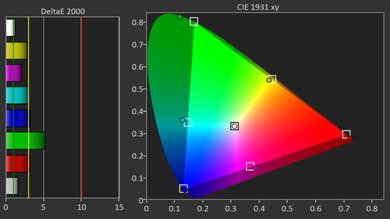
The BenQ HT2060 is a good choice for watching movies. It's not a very bright projector, but it's bright enough for dim rooms. In a completely dark room, however, its contrast shines through, as it has deep blacks, especially in brighter content. It does so without sacrificing any of its image accuracy in the process, making it a solid pick for purists. Unfortunately, it's not very colorful, as its color gamut is only decent, but it's enough for most people.
Blacks are deep, especially in brighter scenes.
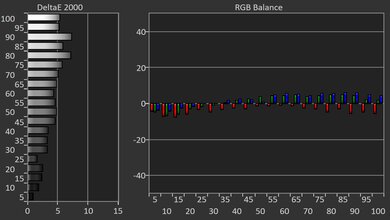
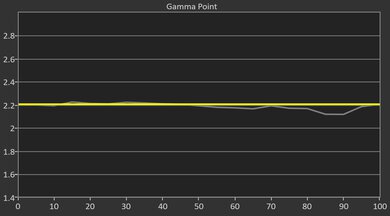
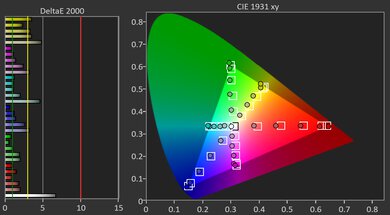
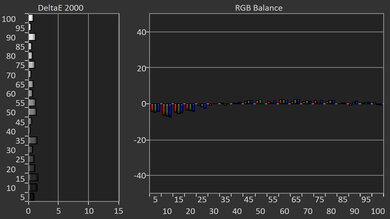
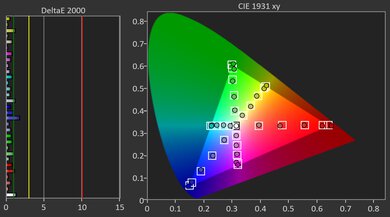
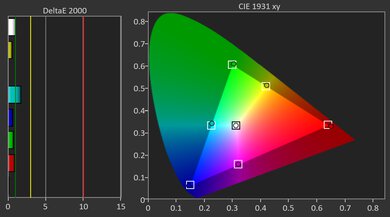
Very accurate prior to being calibrated.
Has a Filmmaker Mode that respects the content creator's intent.
Not very bright.
No included wireless or smart features.
Its contrast isn't quite as good in very dark scenes, with inadequate separation between elements.
The BenQ HT2060 is best treated as a 1080p @ 120Hz gaming projector with a workable, but disappointing, latency profile. At 120Hz, the unit's latency is palpable; not too high for single-player titles, but too high for any multiplayer or competitive titles. At 60Hz, the latency is too high for any gaming outside of turn-based games. Thankfully, it does offer good image quality, with great contrast and an accurate image out of the box. Just make sure to dim the lights, as it's not very bright.
Blacks are deep, especially in brighter scenes.
Very accurate prior to being calibrated.
Not very bright.
No included wireless or smart features.
High input lag, even at 120Hz.
Its contrast isn't quite as good in very dark scenes, with inadequate separation between elements.
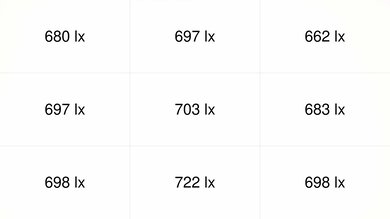
The BenQ HT2060's brightness is alright. It's bright enough for dim rooms, but it definitely looks its best in a blacked-out room. It does have good brightness uniformity, even though there is some vignetting, which is especially noticeable on white screens.
Good brightness uniformity, although there is some vignetting.
Not very bright.
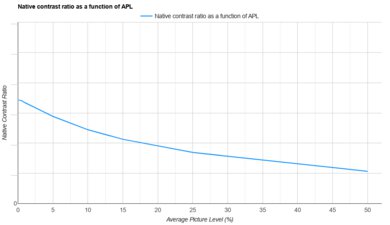
The BenQ HT2060's native contrast is great. It performs extremely well in bright scenes, with good separation between bright and dark elements. It does falter in very dark scenes, where it doesn't perform as well as some of the best home theater projectors.
Blacks are deep, especially in brighter scenes.
Its contrast isn't quite as good in very dark scenes, with inadequate separation between elements.
Changelog
-
Updated May 29, 2026:
We've added text to some test boxes as a result of our latest test bench.
- Updated May 13, 2026: We've converted the review to Test Bench 0.12, which adds new Judder, Screen Adaptation, Battery, Maximum Volume, Size, Mobility Features, and Physical Setup Features test boxes. We also updated Inputs & Connectivity to verify Bluetooth support with wireless speakers or headphones. See the 0.12 changelog.
-
Updated Feb 05, 2026:
We've modified the text in our Brightness and Native Contrast text boxes as a result of our latest test bench. We've also added Brightness and Contrast performance usages in the Verdict section.
- Updated Jan 21, 2026: We've converted the review to Test Bench 0.11, which renames our Contrast test to Native Contrast, and adds a Sequential Contrast test box. We also added new Brightness and Contrast performance usages in Our Verdict. See the 0.11 changelog.
Check Price
Differences Between Sizes And Variants
We bought and tested the BenQ HT2060. It's part of the BenQ Home Cinema Series, alongside other products such as the BenQ HT2050A, the BenQ HT3550, the BenQ HT3560, and the BenQ HT4550i. The HT2060 replaces the HT2050A and has a higher-rated contrast ratio, a longer-lasting LED light source, a Filmmaker Mode, and HDR10 support.
| Model | Resolution & Imaging | Light Source | HDR Formats | Max Refresh (input) |
|---|---|---|---|---|
| HT2060 | 1080p DLP | 4-LED | HDR10, HLG; Filmmaker Mode | Up to 120Hz (1080p) |
| HT2050A (previous gen) | 1080p DLP | Lamp | SDR only | 60Hz |
| HT3550 | 4k XPR DLP | Lamp | HDR10, HLG (DCI-P3 filter) | 60Hz (4k) |
| HT3560 | 4k XPR DLP | Lamp | HDR10, HLG | Up to 240Hz (1080p) |
| HT4550i | 4k XPR DLP | 4-LED | HDR10, HLG, HDR10+ | Up to 240Hz (1080p) |
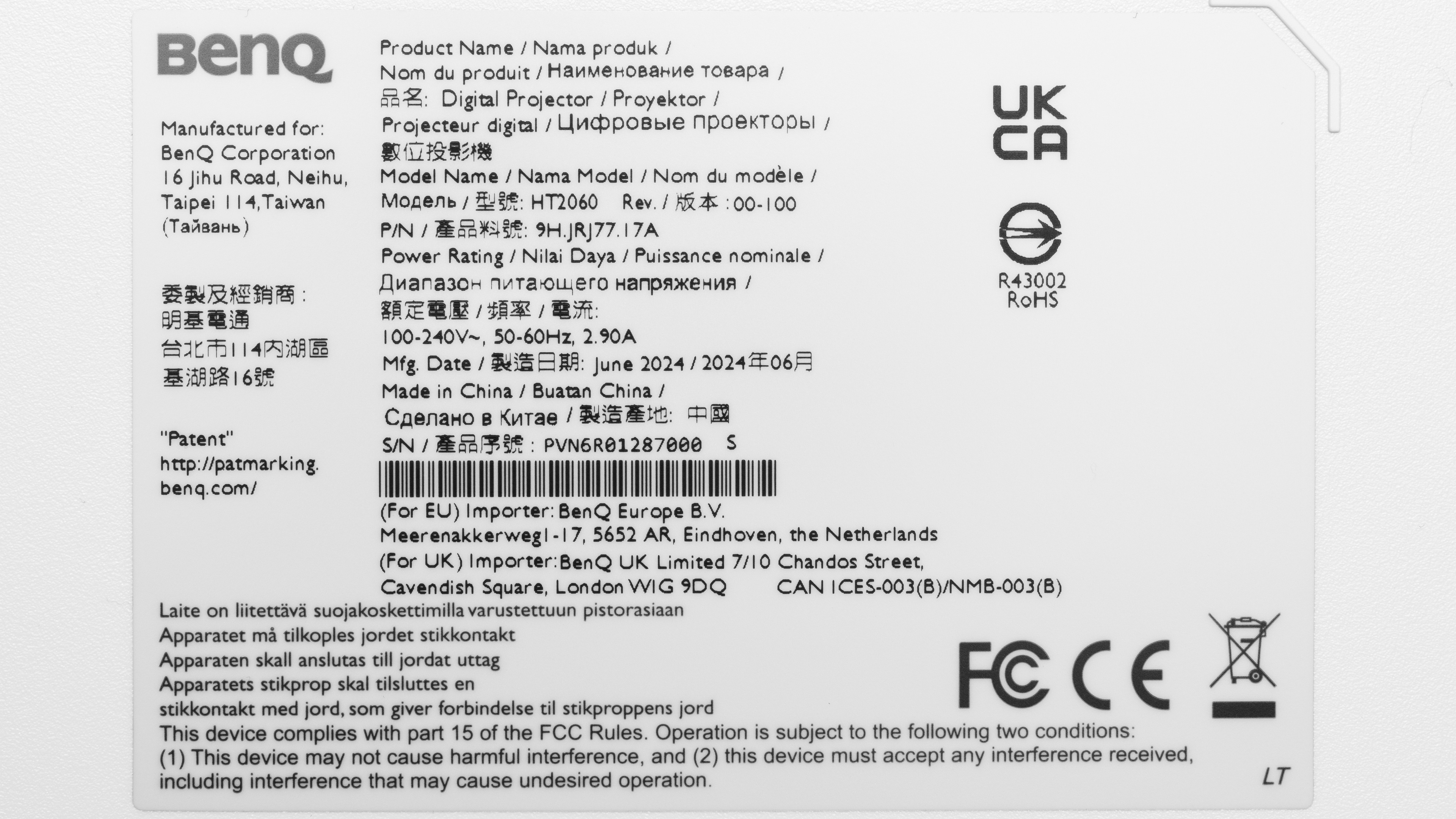
Our unit was manufactured in June 2024; you can check out our unit's label for more information.
Popular Projector Comparisons
The BenQ HT2060 is one of the best projectors at its price point, as it's significantly cheaper than the slightly better BenQ X500i, although the latter is the better option for gamers due to its 1080p @ 240Hz and 4k @ 60Hz support. Still, the HT2060 is a definite improvement over the BenQ HT2050A, as it offers better contrast, a wider color gamut, greater accuracy, HDR10 support, and Filmmaker Mode. It's also a better option than the similar Optoma UHD35, even though the Optoma is brighter, as it offers better overall image quality.
See our recommendations for the best projectors for home theater, or the best 4k projectors if you're looking for something with a sharper image. If you're looking for something more general, look up our list of the best projectors instead.
The BenQ HT2060 is an improvement over the BenQ HT2050A, even if the latter is a bit brighter. Otherwise, the newer HT2060 has deeper contrast, is far more accurate out of the box, has more accurate colors, and has HDR10 support. It also has a Filmmaker Mode, which respects the content creator's intent quite well. Finally, the HT2060 is also pretty decent for gaming due to its 1080p @ 120Hz support, while the older HT2050A is limited to 1080p @ 60Hz.
The BenQ HT2060 is a bit better than the Epson Home Cinema 2350, but only because it has noticeably better contrast, which offsets the far brighter Epson. Otherwise, both units are quite similar, although the BenQ doesn't come with a smart OS, nor a smart dongle, which the Epson does come with.
The BenQ HT2060 is better than the BenQ TH671ST. While the TH671ST is easier to carry around due to its smaller size and lighter weight, it doesn't have any adjustable feet, nor does it have any auto keystone correction, both of which the HT2060 has. When it comes to image quality, the TH671ST does have slightly better colors, but it doesn't support HDR. The HT2060 has HDR, is slightly brighter, and has noticeably better contrast, making it the better and more modern product of the two. If you're looking to install your projector closer to the wall, the TH671ST is a short-throw projector, so it can project at a shorter range than the HT2060 can.
The BenQ HT2060 is better than the Epson Home Cinema 1080, but they excel in different room contexts. The Epson is easier to carry around due to its smaller size and lighter weight, and they both have automatic vertical keystone correction, but the BenQ has adjustable feet and a more powerful integrated speaker system. The Epson is far brighter than the BenQ, but the BenQ has vastly better contrast; this makes the Epson a better pick for brighter rooms, while the BenQ has the edge in home theater setups, especially with its HDR support.
We've independently bought and tested over 80 projectors and published detailed results for each, so you can decide which one to buy. These have all been tested under the same standardized methodology, allowing you to compare them side by side. We still have all these projects in our lab, so we can continually go back and compare them to ensure our reviews are still accurate. All our test methodologies are also public on our website, so you can validate the results yourself.
Throw Calculator
Global Controls
Test Results
for pictures & test results
for pictures & test results


for pictures & test results
for pictures & test results

for pictures & test results