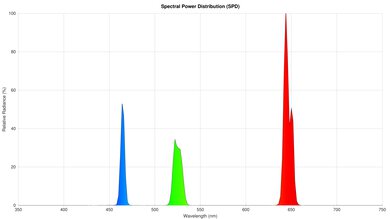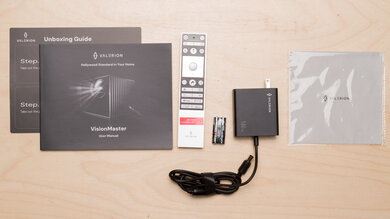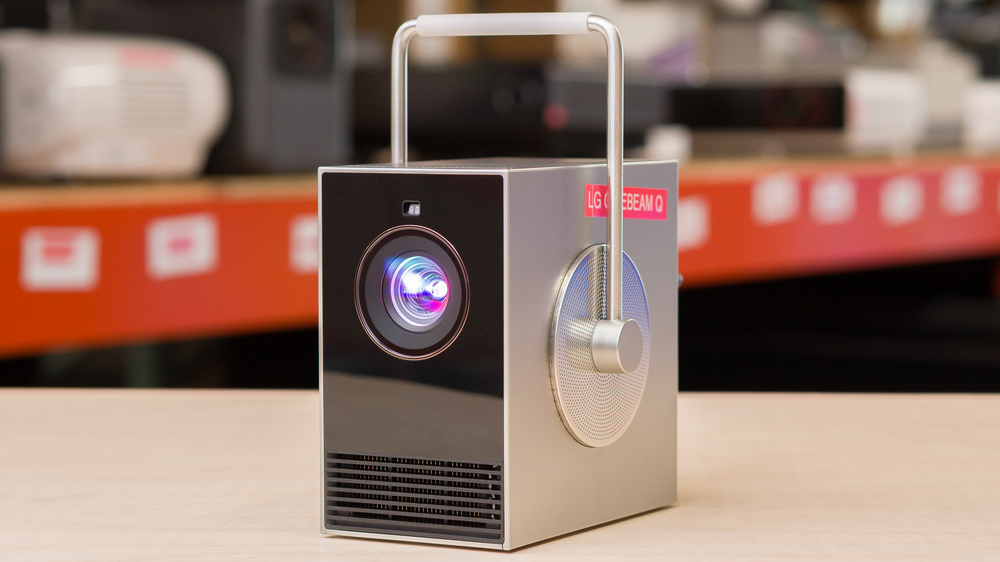
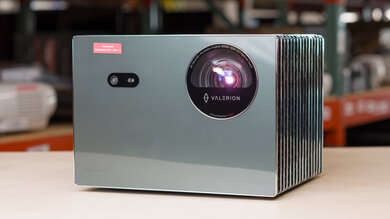
The LG CineBeam Q is a compact 4k pixel-shifting DLP projector that uses a 3-channel RGB laser light source rated for 20,000 hours. Setup is quick thanks to auto screen adjustment features and autofocus. It projects 50- to 120-inch images with a fixed 1.2:1 throw ratio, which works out to about ~4.4 ft for 50″ and ~10.5 ft for 120″. It runs webOS with built-in apps like Netflix, Disney+, Prime Video, YouTube, and Apple TV, and supports casting via Apple AirPlay 2 and Miracast Screen Share. Wireless audio and smart control are covered by Bluetooth, and the unit has a built-in 3W speaker. For I/O, there's HDMI (ARC) and USB-C that supports DisplayPort Alt Mode video and USB-PD power; LG includes a 65W adapter in the box, and the unit can be powered via USB-C PD 65W power bank or higher.
Our Verdict
The LG CineBeam Q is a sub-par projector for a home theater. It has decent contrast overall, but it's not a bright projector, so it's best suited for a smaller image. Increasing the projector's brightness can help a bit, though it washes out colors and produces audible fan noise. It can't de-judder any content regardless of source, so motion and camera pans look choppy. While it has excellent color volume that makes colors look vivid and punchy, it's not very accurate out of the box, giving images a notably cooler tint than they should have. A calibration addresses most of the issues. Rainbow flashes are noticeable to those sensitive to them, and there's no setting to decrease the effect.
Decent contrast across all scenes.
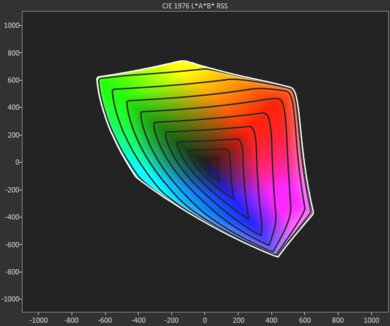
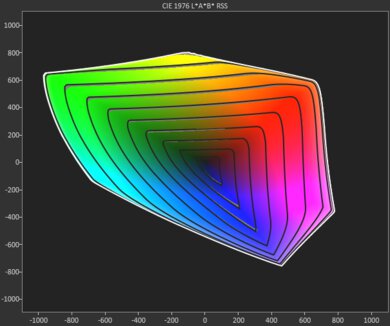
Excellent color volume.
Poor brightness, and unable to combat ambient light.
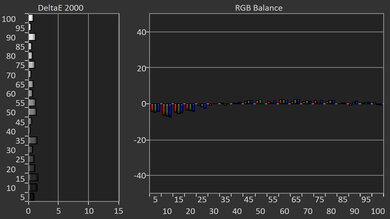
Not very accurate out of the box.
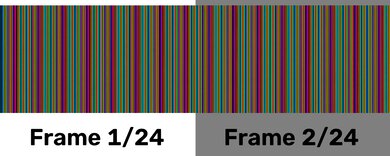
Rainbow flashes will bother those sensitive to them.
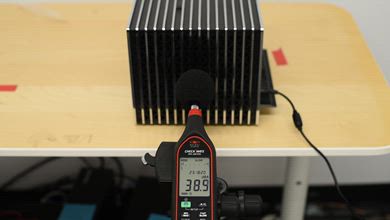
Fan noise is audible in quieter scenes.
Can't de-judder content from any source, leading to choppy motion.
The LG CineBeam Q is a disappointing option for outdoor use. It's not bright enough to fight ambient light, so it's best to use it after the sun has gone entirely to see the image clearly. It doesn't offer much in the way of flexibility when it comes to physically setting it up outside; its handle doubles as a stand to help angle the projector vertically, but it has no mounting holes for tripod setups, and its lack of lens shift means that you need to physically move the projector to center the image. On the other hand, its biggest strength is its portability. It's a small, lightweight projector that's easy to move in and out of the house, and it has automated features to help align and focus the image to your screen. It doesn't have a built-in battery, but it can run on USB-C power, letting you use a compatible power bank if there isn't an outlet nearby.
Very portable, with a ton of smart features.
Integrated handle can also be used to vertically adjust image.
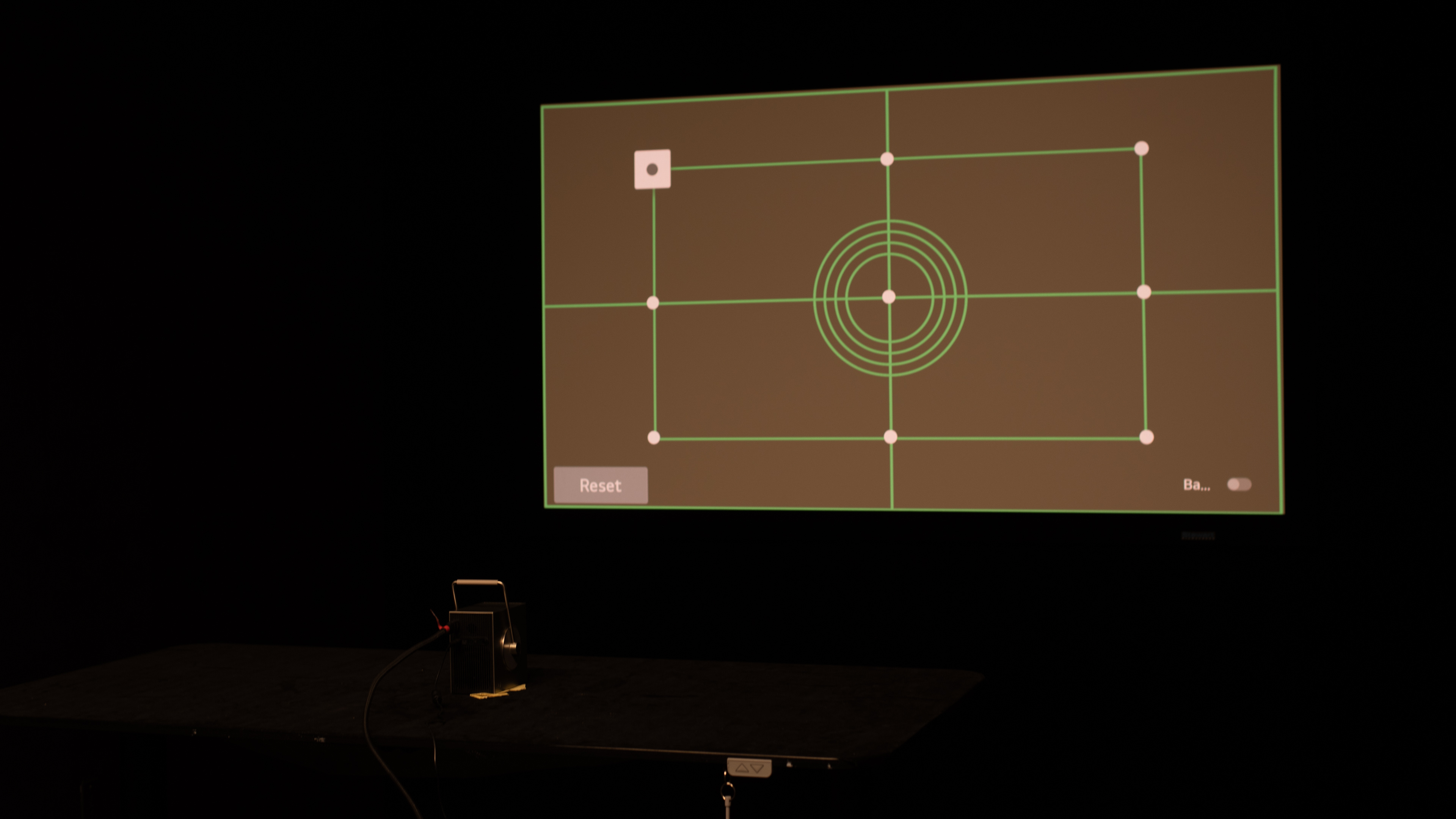
Automatic focus and keystone simplify the setup process.
Poor brightness, and unable to combat ambient light.
No lens shift, so it must be centered to the wall or screen.
No battery, so you need access to a power outlet.
The LG CineBeam Q is an adequate projector for the bedroom. It's small and lightweight, and its integrated handle makes it easy to move it into the bedroom. Its lack of lens shift means you need to physically center the projector to your wall or screen to get the best image. For smaller bedrooms where it may not be possible, the projector has automated focus and keystone to help align and focus the image to simplify the setup. That said, the projector's fan noise is audible, especially in quieter scenes, which can be distracting if you're looking for a projector to use while falling asleep.
Very portable, with a ton of smart features.
Integrated handle can also be used to vertically adjust image.
Automatic focus and keystone simplify the setup process.
Fan noise is audible in quieter scenes.
No lens shift, so it must be centered to the wall or screen.
No battery, so you need access to a power outlet.
The LG CineBeam Q is a subpar gaming projector. The projector tops out at 60Hz, so it accepts 4k@60Hz and 1080p@60Hz signals. However, it downscales 1440p signals, and 120Hz gaming is not possible at any resolution. Input lag is pretty high across the board, even in Game Mode, so inputs feel sluggish. In terms of picture quality, the projector has excellent color volume, but the unit isn't accurate out of the box, giving the image a cold tint that calibration can address. While it has decent contrast across most scenes, the image is dim, so this projector is more ideal for gaming in a dark room.
Decent contrast across all scenes.
Excellent color volume.
Poor brightness, and unable to combat ambient light.
Not very accurate out of the box.
Limited to 60Hz.
High input lag at any resolution.
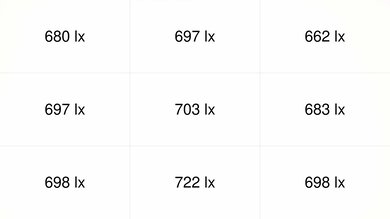
The LG CineBeam Q is a dim projector. It's bright enough to provide a good viewing experience when all the lights are off, but it looks washed out with any ambient lighting. It does have fantastic brightness uniformity, though, so you don't see any obvious vignetting.
Image is evenly bright across the screen.
Poor brightness, and unable to combat ambient light.
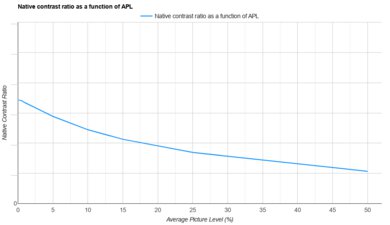
The LG CineBeam Q's contrast is satisfactory. It has very good separation between elements across most scenes. However, it's held back by its poor brightness, so it's best to use it in a very dark room to get the most out of it.
Decent contrast across all scenes.
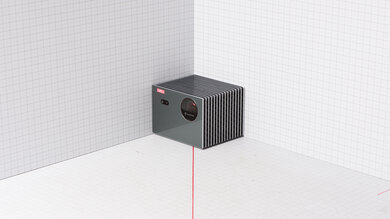
The LG CineBeam Q's portability is impressive. It's a small, lightweight projector with a built-in handle that doubles as a stand to help you align the image vertically. Its main drawback is that it lacks optical zoom or lens shift, so you'll need to physically center the projector on your screen or wall to get the best image. However, if that's not possible, it does have automatic focus and keystone features to help align the image. It also doesn't have a built-in battery, so you'd need to make sure there's always an outlet nearby.
Very portable, with a ton of smart features.
Integrated handle can also be used to vertically adjust image.
Automatic focus and keystone simplify the setup process.
No lens shift, so it must be centered to the wall or screen.
No battery, so you need access to a power outlet.
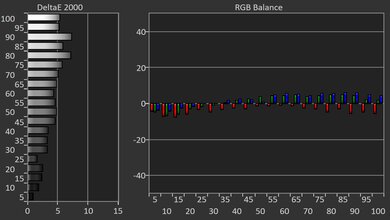
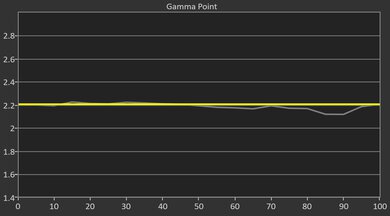
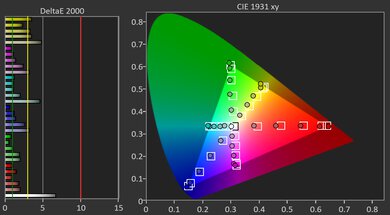
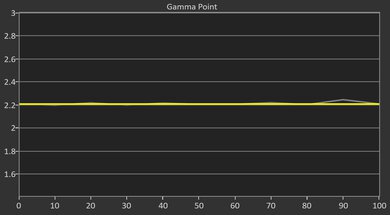
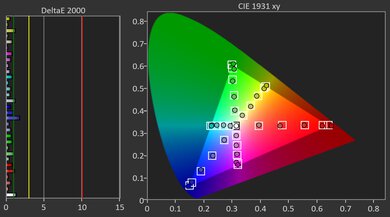
The LG CineBeam Q's color performance is okay. It keeps most saturated colors rich, giving vivid content a bold, lively look. However, it's not very accurate out of the box, with images having a very cold tint and a fair number of color-mapping issues. If possible, calibrating the projector does address most of these issues.
Excellent color volume.
Calibration addresses most issues experienced out-of-the-box.
Not very accurate out of the box.
The LG CineBeam Q has poor gaming responsiveness. The projector tops out at 60Hz, accepting both 4k @ 60Hz and 1080p @ 60Hz signals. However, high-frame-rate modes on consoles and PCs aren't supported, and while it accepts 1440p signals, these are downscaled. However, its biggest drawback is its high input lag, which is consistently high even in Game Mode, making it not a very responsive gaming experience, even for slower-paced games. That said, its DLP imaging keeps response-time blur low.
No excessive motion blur.
Limited to 60Hz.
High input lag at any resolution.
Performance Usages
Changelog
- Updated Aug 07, 2026: We've converted the review to Test Bench 1.0, which replaces our Color Gamut test with Color Volume and adds a new Rainbow Effect test box. We also updated Effective Contrast (formerly Native Contrast) to account for projector brightness and reworked Judder scoring. The new bench also adds Outdoors and Bedroom usages, plus Portability, Color, and Gaming Responsiveness Performance Usages; Movies is now Home Theater, and all existing usage scores have been updated. See the 1.0 changelog.
-
Updated Jul 02, 2026:
We mention the newly reviewed BenQ GV50 in the Screen Adaptation box of this review.
-
Updated Jun 03, 2026:
We mention the newly reviewed Epson Lifestudio Pop Plus in the Pre-Calibration Color Accuracy section of this review.
-
Updated May 13, 2026:
We mention the newly reviewed Anker Nebula P1 in the Input Lag section of this review.
Check Price
Differences Between Sizes And Variants
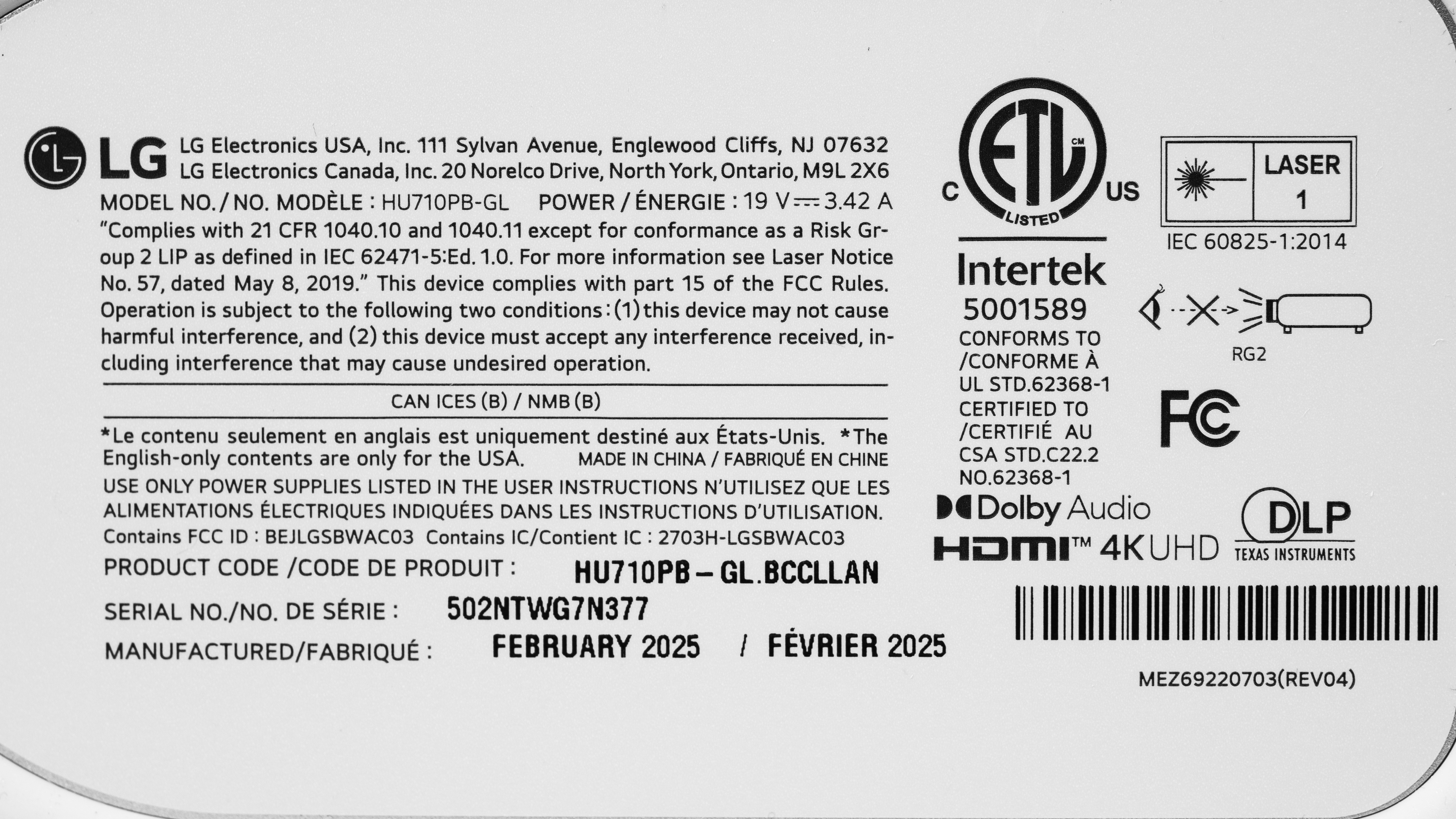
LG sells the CineBeam Q as a single hardware model (the HU710PB). It has different regional suffixes (e.g., HU710PB-GL, HU710PB.AUS, and HU710PB.ACC), but the core specs remain the same, and we expect all of them to perform similarly, if not identically.
Our unit was manufactured in February 2025.
Popular Projector Comparisons
The LG CineBeam Q is a sub-par projector overall, but it's an option for those looking for a small, portable projector for casual viewing. It's not perfect, as it's not very bright nor accurate out of the box, and it doesn't have an integrated battery like the Halo+ or the XGIMI MoGo 4 Laser. It also has very high input lag at any resolution, making it a poor choice for gaming. Still, overall, the LG is better than both at delivering decent contrast across most scenes in movies, TV shows, and games, though the other projectors have notably lower fan noise for a less distracting experience during quieter scenes, and the latter is more responsive in games.
Check out our recommendations for the best portable projectors, the best outdoor projectors, and the best projectors overall. If you'd prefer to shop for another product in the same price range, look up the best projectors under $1,000 instead.
The LG CineBeam Q is significantly better than the Samsung The Freestyle 2nd Gen. The LG is brighter, has way deeper contrast, and has better colors. The Samsung is, however, more accurate right out of the box, but that's pretty much all it has going for it compared to the LG.
The LG CineBeam Q is better than the XGIMI MoGo 4 Laser. The LG is brighter and has better contrast, so it looks better in any room. Still, the XGIMI has some advantages. It has an integrated battery, making it easier to carry around with you. It's also much quieter under load, which is important for those of you hoping to use the projector in a quiet bedroom.
The LG CineBeam Q and the LG CineBeam S perform very similarly. The main difference between the two is that the CineBeam Q is a short-throw projector with ARC support, while the CineBeam S is an ultra-short-throw projector that supports eARC. Otherwise, both projectors have impressive contrast, wide color gamuts, and are very accurate after calibration. On the other hand, both have disappointing brightness and high input lag for gamers.
The LG CineBeam Q is generally better than the BenQ GV50, especially for watching movies, as its contrast is vastly better, and it has a noticeably wider color gamut. Still, the BenQ has some advantages. It's not super responsive for gaming, but definitely much more so than the LG is, so you can use it for slow games in a pinch. It has an integrated battery, so you don't need to worry about having access to an outlet, or carrying a power bank, like you do with the LG. So if you care more about portability than image quality, the BenQ is a good alternative.
We've independently bought and tested over 80 projectors and published detailed results for each, so you can decide which one to buy. These have all been tested under the same standardized methodology, allowing you to compare them side by side. We still have all these projects in our lab, so we can continually go back and compare them to ensure our reviews are still accurate. All our test methodologies are also public on our website, so you can validate the results yourself.
Throw Calculator
Global Controls
Test Results
for pictures & test results
for pictures & test results



for pictures & test results