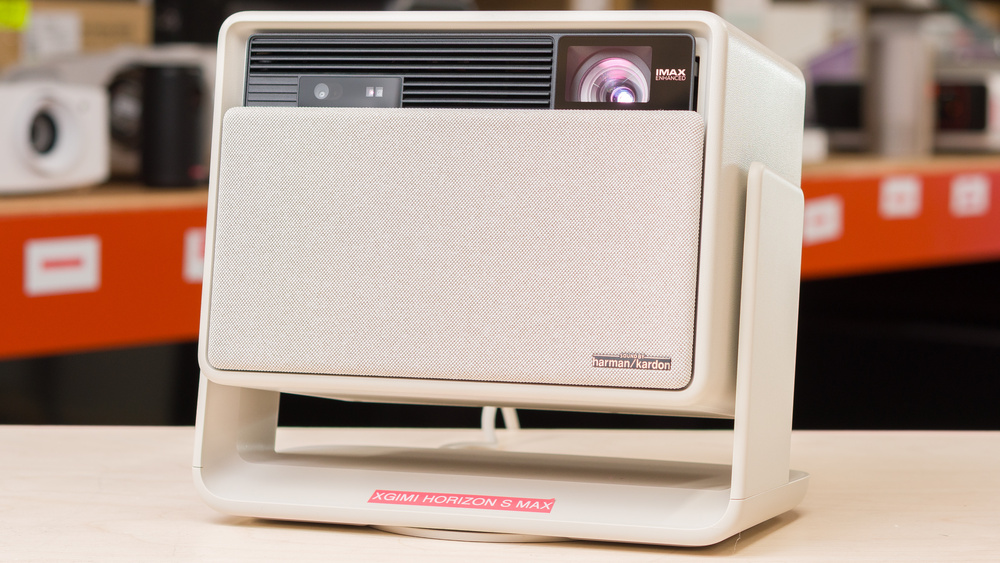
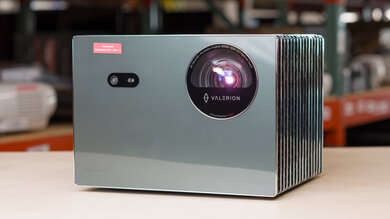
The XGIMI Horizon S Max is a long-throw 4k XPR DLP projector built around XGIMI's Dual Light 2.0 tri-laser + LED engine. It supports Dolby Vision, HDR10, HLG, and IMAX Enhanced, and adds ISA 5.0 setup features, including uninterrupted auto-keystone/autofocus, obstacle avoidance, screen alignment, and wall-color adaptation, plus a flexible built-in stand and an electric sliding lens cover. It runs Android TV 11 with Google Cast, includes 64 GB storage, and uses dual 12W Harman/Kardon speakers. The fixed 1.2:1 throw covers 40–200 inches; that's roughly ~3.5 ft (40 inches) to ~17.4 ft (200 inches). Connectivity includes Wi-Fi 5, Bluetooth 5.1, HDMI (eARC), and two USBs.
Our Verdict
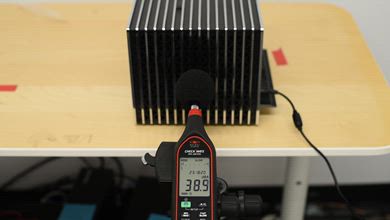
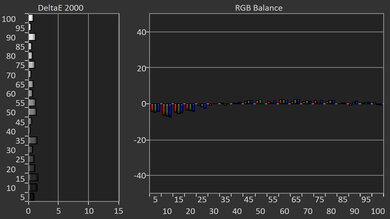
The XGIMI Horizon S Max is an adequate projector for a home theater. Movies and TV shows consistently have good depth across all scenes, even in very dark and very bright ones. It's also very accurate out of the box and is bright enough to project rich colors. Its main downside is its inability to remove judder from any source you use to watch content, so motion and camera pans look uneven. As well, those particularly sensitive to rainbow effect (RBE) around bright objects are likely to be bothered by it. Its fan noise is also noticeable, but unless you're sitting right next to it, it gets drowned out with a soundbar or AVR.
Consistently good contrast across all content.
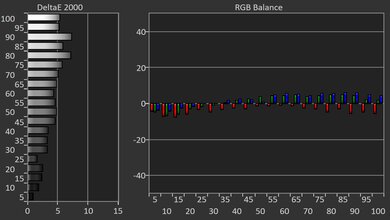
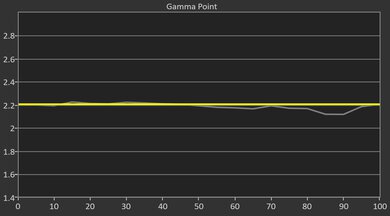
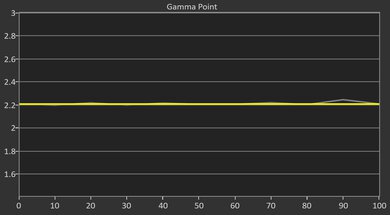
Very accurate right out of the box, and is easy to calibrate.
Great color volume for rich colors.
Bright enough for environments with some ambient light.
A ton of smart features.
Motion looks choppy since it doesn't remove judder from any sources.
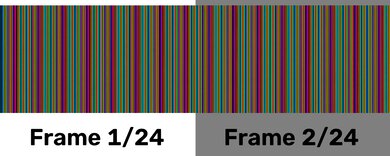
Rainbow flashes will bother those who are sensitive to them.
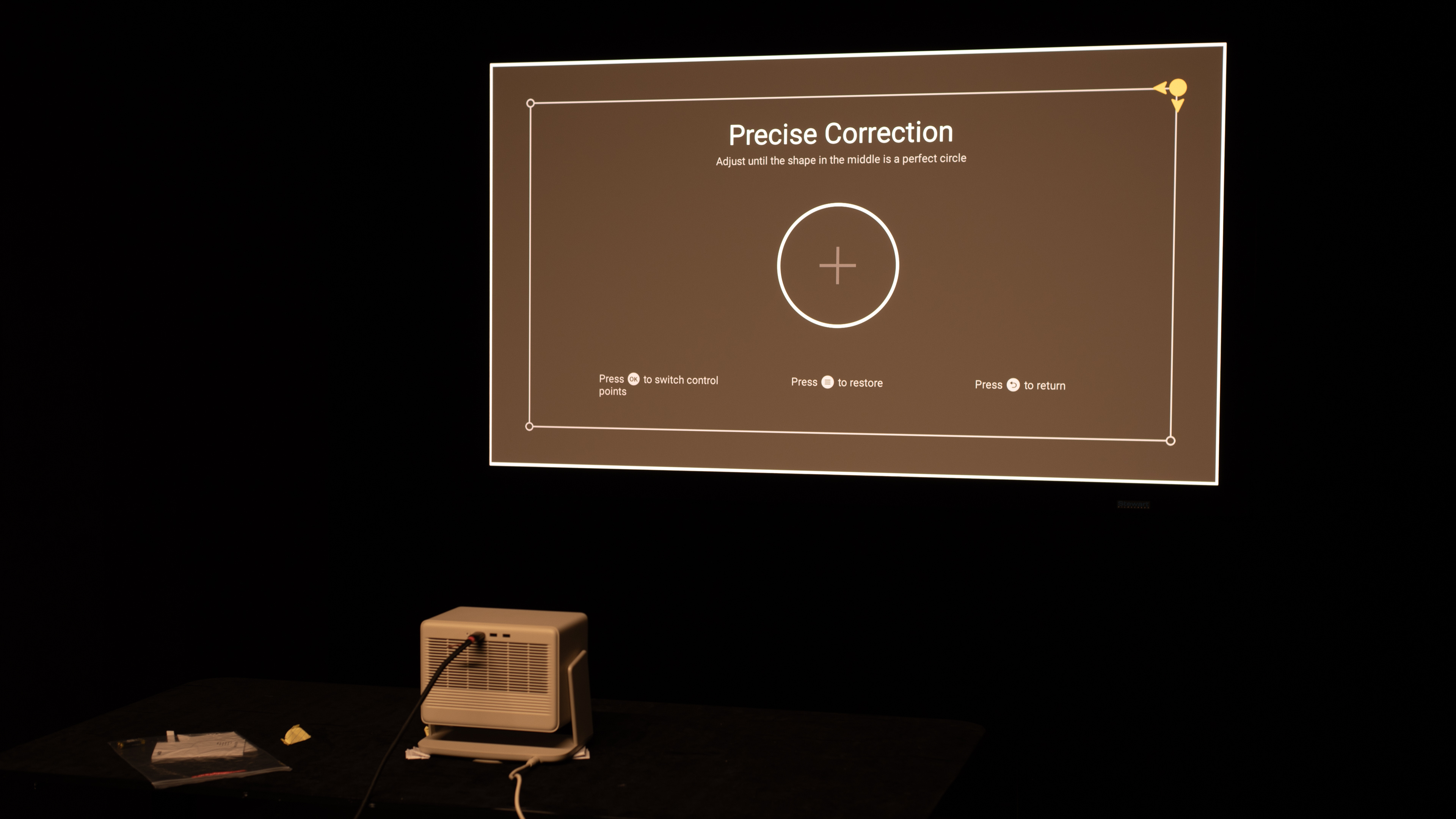
The XGIMI Horizon S Max is an alright outdoor projector. It's bright enough to deal with a bit of ambient light if you bring it outside for an impromptu backyard movie night. It's too big to be a true grab-and-go projector, especially without a carrying handle or a built-in battery, though the lens is protected when it's not being used. Once it's outside, it can be set up on a tripod, and its two-axis gimbal also provides some flexibility in aiming the projector. However, it doesn't have lens shift or optical zoom, so you need to physically move the projector to align the image or adjust its size. Otherwise, it offers several automated features to support more casual setups.
Bright enough for environments with some ambient light.
Auto screen adaptation features simplify the setup process.
Two-axis gimbal helps point the projector to the screen.
Includes a mounting hole for setup on a tripod.
No carrying handle or case included to help move it.
No built-in battery.
No lens shift or optical zoom.
The XGIMI Horizon S Max is an alright projector for the bedroom. It takes up a decent amount of space on a nightstand or small table, and its fan noise is noticeable if you're right next to it. However, it can also be set up on a tripod, and its two-axis gimbal also gives some aiming flexibility. It has automated features like auto keystone and autofocus to help with more casual setups, but for more permanent setups, it doesn't have lens shift or optical zoom, so you need to physically move the projector to center the image and adjust its size to your liking. Since it doesn't have a built-in battery, it needs to be set up somewhere near an outlet.
Auto screen adaptation features simplify the setup process.
Two-axis gimbal helps point the projector to the screen.
Lens is protected when it's not in use.
Includes a mounting hole for setup on a tripod.
Fan noise is audible, especially when close to it.
No carrying handle or case included to help move it.
No built-in battery.
No lens shift or optical zoom.
The XGIMI Horizon S Max is a solid pick for casual gaming if you're fine with gaming at 60Hz. In Game Mode with Ultra-Low Latency enabled, input lag is decently low, so it feels responsive, although not quite enough for very fast-paced titles. There's no 120Hz support to further reduce input lag. The unit also offers solid image quality, as it's bright and colorful, with good overall contrast. Plus, it's quite accurate right out of the box. Ultimately, this is a good choice for anyone wanting a good-looking image for their single-player gaming needs.
Low enough input lag for single player games.
Consistently good contrast across all content.
Very accurate right out of the box, and is easy to calibrate.
Great color volume for rich colors.
Bright enough for environments with some ambient light.
No 120Hz mode to make the unit even more responsive.
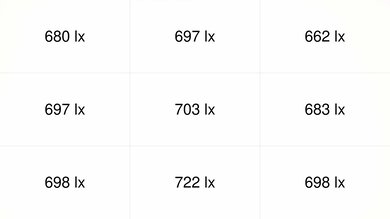
The XGIMI Horizon S Max's brightness is great. It's bright enough to handle a few lights in an otherwise dim room, and its brightness uniformity is fantastic; if you look close enough, you can notice some dim corners on white screens, but it's subtle.
Bright enough for environments with some ambient light.
Fantastic brightness uniformity.
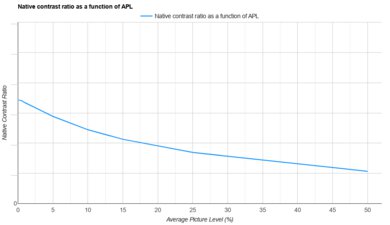
The XGIMI Horizon S Max's contrast is good. While it doesn't quite maintain the same level of separation between dark and bright elements relative to the best home theater projectors, it still performs consistently well across all scenes, even very dark and very bright ones.
Consistently good contrast across all content.
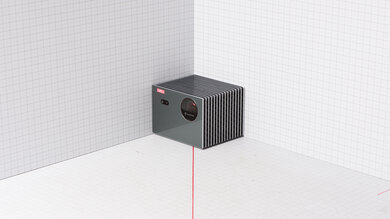
The XGIMI Horizon S Max is passable as a portable projector. Its size and lack of carrying features prevent it from being a true grab-and-go projector. It also doesn't have a built-in battery, so it needs to be set up near an outlet. It has a few automated features to help with setup, such as keystone correction, auto focus, and obstacle avoidance, and there's a mounting hole for a tripod, providing another option for temporary setups. However, it doesn't have lens shift, so the projector needs to be centered to the screen or wall for the cleanest image. It also doesn't have optical zoom to adjust the image size without moving the projector.
Auto screen adaptation features simplify the setup process.
Two-axis gimbal helps point the projector to the screen.
Lens is protected when it's not in use.
Includes a mounting hole for setup on a tripod.
Its shape and stand require two hands to move safely.
No carrying handle or case included to help move it.
No built-in battery.
No lens shift or optical zoom.
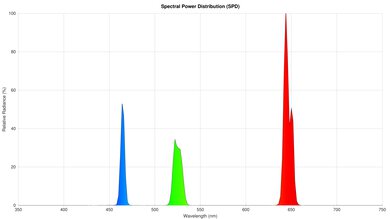
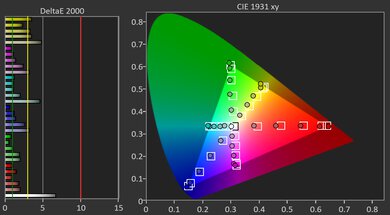
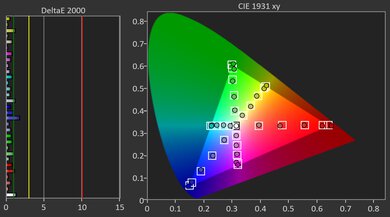
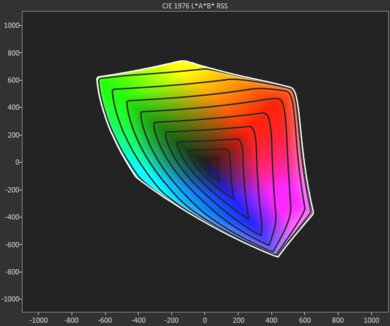
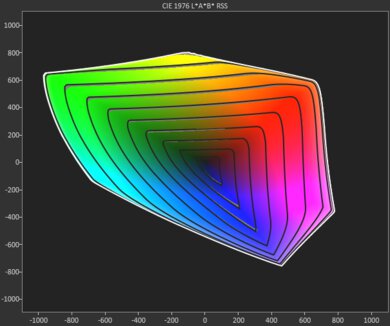
The XGIMI Horizon S Max has great colors. Its colors are very accurate out of the box, and it's also easy to calibrate, a boon for purists who want an even more accurate image. It also has impressive color volume, so colors look rich and vibrant. Although it covers most of the DCI-P3 color space, it only covers a decent amount of the wider BT.2020 color space, struggling more with lighter colors and very dark shadow detail.
Very accurate right out of the box, and is easy to calibrate.
Great color volume for rich colors.
Struggles to maintain saturation with the lightest colors.
The XGIMI Horizon S Max has good gaming responsiveness. It tops out at 60Hz, which is fine if looking for a projector that's also good for casual gaming. Its input lag is reasonably low in Game Mode with Ultra-Low Latency for a responsive gaming experience, though not quite low enough for very fast-paced titles. There's also no support for gaming at 120Hz to improve this. Fortunately, its DLP imaging technology helps avoid excessive motion blur.
Low enough input lag for single player games.
No excessive motion blur.
No 120Hz mode to make the unit even more responsive.
Performance Usages
Changelog
- Updated Aug 31, 2026: We've converted the review to Test Bench 1.0, which replaces our Color Gamut test with Color Volume and adds a new Rainbow Effect test box. We also updated Effective Contrast (formerly Native Contrast) to account for projector brightness and reworked Judder scoring. The new bench also adds Outdoors and Bedroom usages, plus Portability, Color, and Gaming Responsiveness Performance Usages; Movies is now Home Theater, and all existing usage scores have been updated. See the 1.0 changelog.
-
Updated May 29, 2026:
We've added text to some test boxes as a result of our latest test bench.
- Updated May 13, 2026: We've converted the review to Test Bench 0.12, which adds new Judder, Screen Adaptation, Battery, Maximum Volume, Size, Mobility Features, and Physical Setup Features test boxes. We also updated Inputs & Connectivity to verify Bluetooth support with wireless speakers or headphones. See the 0.12 changelog.
-
Updated Feb 09, 2026:
We mention the newly reviewed Valerion VisionMaster Plus2 in the Supported Resolutions section of this review.
Check Price
Differences Between Sizes And Variants
The XGIMI Horizon lineup ranges from earlier LED-based models to newer Dual Light (laser + LED) flagships with higher brightness and Dolby Vision. Key differences include the light source, peak brightness, supported HDR formats, image-automation features (ISA version), optics (fixed throw vs limited zoom or built-in stand), OS/storage, and audio/I/O extras like eARC. The following table highlights some key differences.
| Model | Light Source | Resolution | HDR Formats | Setup / OS | Ports (highlights) |
|---|---|---|---|---|---|
| Horizon 20 Max | Laser (single) | 4k (XPR) | Dolby Vision, HDR10, HDR10+, HLG, IMAX Enhanced | ISA 5.0; Android TV 11 | HDMI 2.1 (eARC)×1 + HDMI×1, USB×2, Wi-Fi 6, BT 5.2 |
| Horizon S Max | Dual Light 2.0 (RGB laser+LED) | 4k (XPR) | Dolby Vision, HDR10, HLG, IMAX Enhanced | ISA 5.0; Android TV 11 | HDMI (eARC)×1, USB×2, Wi-Fi 5 |
| Horizon S Pro | Dual Light 2.0 | 4k (XPR) | Dolby Vision, HDR10, HLG | ISA 5.0; Android TV 11 | HDMI (eARC)×1, USB×2, Wi-Fi 5 |
| Horizon Ultra | Dual Light (laser+LED) | 4k (XPR) | Dolby Vision, HDR10, HLG | ISA 3.0; Android TV 11 | HDMI×2 (1×eARC), USB×2, LAN, optical out, Wi-Fi 6 |
| Horizon Pro | LED | 4k (XPR) | HDR10, HLG | ISA (earlier gen); Android TV 10 | HDMI×2, USB×2, LAN, optical out, Wi-Fi |
| Horizon | LED | 1080p | HDR10, HLG | ISA (earlier gen); Android TV | Typical: HDMI×2, USB×2, LAN |
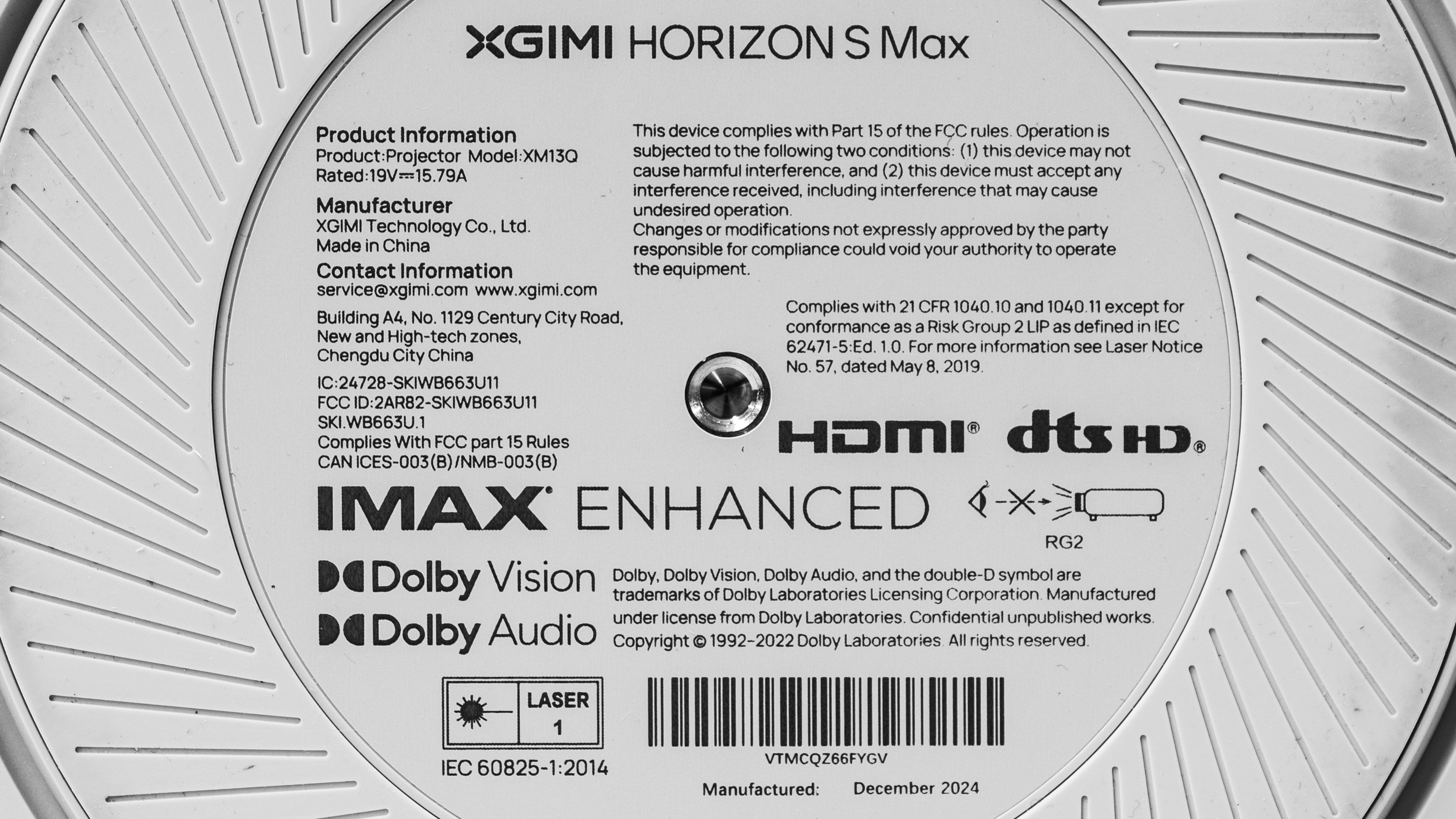
Our unit was manufactured in December 2024.
Popular Projector Comparisons
The XGIMI Horizon S Max is a great product and is a noticeable improvement over the XGIMI Horizon Ultra. In particular, Max's portability is significantly enhanced compared to its predecessor, thanks to its fully rotating stand. Still, some of its competitors, like the Hisense C2 Ultra and the higher-end XGIMI HORIZON 20 Max, also have that feature while offering slightly better image quality. And if portability is what you're after, the Anker Nebula X1, with its integrated handle and excellent image quality, is a better pick. Still, the Horizon S Max brings an interesting beige color scheme and a slightly smaller overall size than the aforementioned products, making it a compelling pick depending on your needs.
Check out our recommendations for the best 4k projectors and the best projectors for home theater. If you'd prefer to shop for a projector for outdoor use, look up the best outdoor projectors instead.
The XGIMI HORIZON 20 generally outperforms the XGIMI Horizon S Max in most ways. The HORIZON 20 is a bit brighter, has slightly better contrast, and isn't quite as loud under load. For gamers, it also has high-refresh-rate support, while the S Max is limited to 60Hz. Still, it does have lower input lag at 60Hz than the HORIZON 20, so it's worth a look if you don't game at 120Hz and 240Hz.
The XGIMI Horizon S Max is better than the XGIMI HORIZON Ultra. While the Ultra is brighter overall, the Max fights back with deeper blacks and a more colorful image. It's also more portable due to its vast image correction features and fully rotating stand.
The XGIMI HORIZON 20 Pro is better than the XGIMI Horizon S Max. The 20 Pro is brighter, has better contrast, and supports VRR alongside higher refresh rates. It also has full eARC passthrough support. In turn, while the S Max is limited to 60Hz when gaming, it does have lower input lag at 60Hz than the 20 Pro.
The Hisense C2 Ultra is a bit better than the XGIMI Horizon S Max, mostly due to the Hisense's brighter picture, which is noticeable. Otherwise, both units are pretty similar, with a rotating stand, a full suite of image correction features, and similar contrast.
We've independently bought and tested over 80 projectors and published detailed results for each, so you can decide which one to buy. These have all been tested under the same standardized methodology, allowing you to compare them side by side. We still have all these projects in our lab, so we can continually go back and compare them to ensure our reviews are still accurate. All our test methodologies are also public on our website, so you can validate the results yourself.
Throw Calculator
Global Controls
Test Results
for pictures & test results
for pictures & test results



for pictures & test results