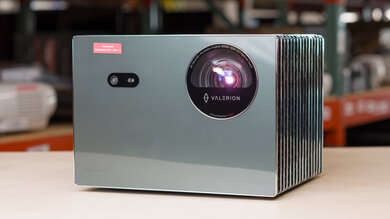
The Hisense PX3-PRO is an Ultra Short Throw (UST) 4k HDR laser projector, succeeding the Hisense PX2-PRO and Hisense PX1-PRO. It's a fully featured projector with support for Dolby Vision, HDR10+, and Dolby Atmos, providing an immersive HDR viewing experience. It's also certified as 'Designed for Xbox,' which means it features a low-latency mode and is capable of gaming at up to 240Hz in 1080p and 60Hz at 4k through its two HDMI 2.1 ports. It also has an HDMI 2.0 port, which doubles as the unit's eARC port.
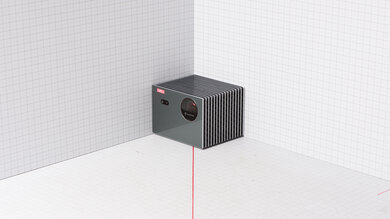
As it's a UST projector, it displays content at an extremely short distance from the screen or wall, projecting a 90-inch image at a distance of 6.6 inches and up to a 130-inch image at a distance of 14.3 inches. It features Bluetooth and Wi-Fi support, and comes with the Google TV smart interface, which includes full Chromecast and AirPlay 2 compatibility. Finally, it has a 50W Harman Kardon sound system.
Our Verdict
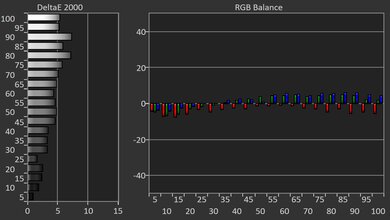
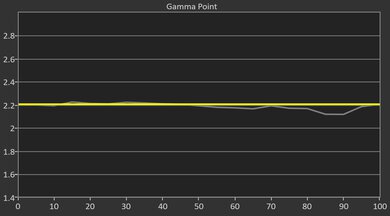
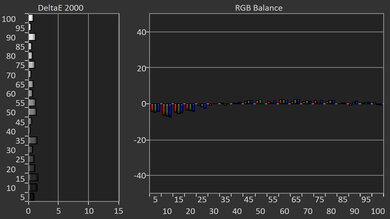
The Hisense PX3-PRO is a decent projector for a home theater. While darker scenes have a lot of depth, it doesn't perform as well in brighter scenes, which look notably flatter. Motion and camera pans look smooth across most content, except when you're using an older streaming device or cable box to watch 25p content, like some international shows. Colors look rich and vibrant across most content, though the projector isn't very accurate out of the box and has a noticeably warm tint, which a calibration addresses. Finally, the projector's brightness is very good, and is plenty bright to fight a bit of ambient light if need be.
Remarkable contrast in dark scenes.
Motion and camera pans look smooth across most content.
Bright enough to fight off some ambient light.
Can be placed very close to the wall or screen.
Excellent color volume for vivid, punchy colors.
Notably worse contrast in bright scenes.
Noticeably warm image out of the box.
Rainbow flashes will bother those sensitive to them.
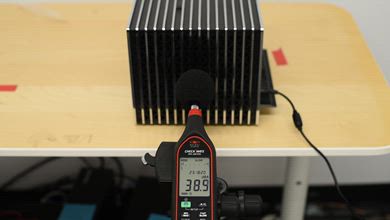
Fan noise can be distracting if you are nearby.
The Hisense PX3-PRO is a sub-par outdoor projector. It's bright enough so you don't have to wait until the sun completely goes down to avoid the image washing out too much. Its biggest drawback, especially for impromptu backyard movie nights, is its portability. Like most ultra-short-throw projectors, it's big and heavy, and it doesn't have a carrying handle to help you move it. Plus, while it has adjustable feet, the setup process isn't flexible or automated, so it's more involved. It has manual focus and keystone correction, but you'd still need to center the projector to the screen to get the best image.
Bright enough to fight off some ambient light.
Bulky frame is not the easiest to move.
Focus and keystone correction are both manual.
No lens shift or optical zoom to adjust the image without losing quality.
The Hisense PX3-PRO is a poor projector for a bedroom. It's big and not the easiest to move around for more casual setups, and its lack of physical setup features or automated screen adjustment capabilities makes the setup process more involved. Its fan noise is audible if your bed is nearby, though lowering the projector's brightness can help with nighttime viewing.
Bulky frame is not the easiest to move.
Focus and keystone correction are both manual.
No lens shift or optical zoom to adjust the image without losing quality.
Fan noise can be distracting if you are nearby.
The Hisense PX3-PRO is a good gaming projector, especially for PC gamers. Over HDMI, it accepts 4k @ 60Hz, and it can run high refresh rates of up to 240Hz at 1080p, with very good input lag. Unfortunately, the unit's input lag at 60Hz and 120Hz is disappointing, especially at 60Hz, making it a tough sell for console gamers. In terms of picture quality, colors look vivid in most scenes, but the image out of the box is noticeably warm, so a calibration is recommended. Dark scenes look remarkably deep, but it doesn't perform as well in brighter scenes, so they look much flatter. It's very bright, though, so it can be used for gaming in either a dark room or one with a bit of ambient light.
Supports up to 240Hz at 1080p and 120Hz at 1440p.
Feels quick when running at 240Hz.
Remarkable contrast in dark scenes.
Bright enough to fight off some ambient light.
Excellent color volume for vivid, punchy colors.
Feels a bit sluggish at almost all resolutions and refresh rates.
Notably worse contrast in bright scenes.
Noticeably warm image out of the box.
The Hisense PX3-PRO is a bright ultra-short-throw projector. It can comfortably light a big 100" screen and still look punchy in a room with some ambient light, and in brighter modes, it has enough output for casual daytime viewing on an ALR screen. You still get the best results in a dim or dark room, but you don't need perfect light control for the image to pop.
Bright enough to fight off some ambient light.
Bright enough for a 100" screen in a living room.
Strong color brightness, so images stay vivid instead of washing out.
Contrast has decent contrast overall. Darker scenes have remarkable depth, with good separation between darker areas and highlights. However, it doesn't perform nearly as well in bright scenes, especially very bright ones, which look washed out as blacks look more gray.
Remarkable contrast in dark scenes.
Notably worse contrast in bright scenes.
The Hisense PX3-PRO's portability is poor. As with most ultra-short-throw projectors, it has a large frame and weighs a bit, so it's best suited for a more permanent setup on a stable piece of furniture rather than on a small shelf. It has adjustable feet, but otherwise, the projector offers little flexibility or automation to simplify setup or adjust the image. This includes not having lens shift, so you'd need to center the projector on the screen or wall to get the best image.
Bulky frame is not the easiest to move.
Focus and keystone correction are both manual.
No lens shift or optical zoom to adjust the image without losing quality.
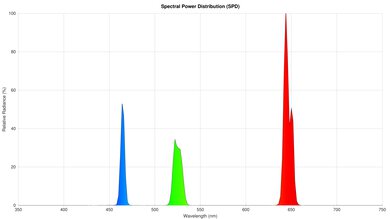
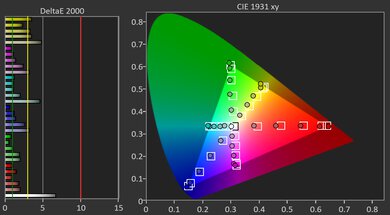
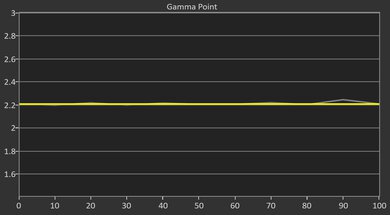
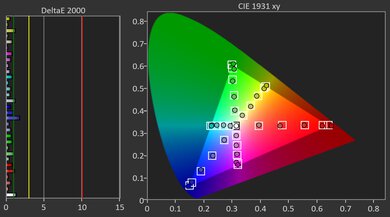
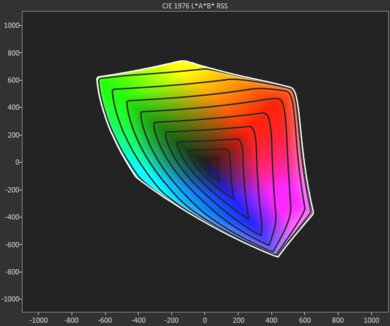
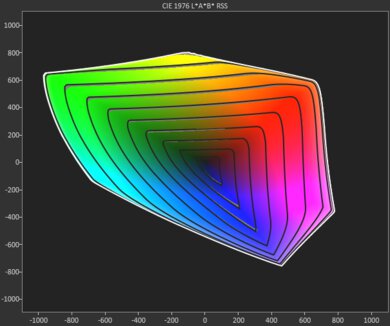
The Hisense PX3-PRO has good color performance. It has outstanding color volume, so colors look vivid in most content. However, it's not very accurate out of the box, with an image that's noticeably warmer than it should be, though calibration helps address this for the most part.
Excellent color volume for vivid, punchy colors.
Noticeably warm image out of the box.
The Hisense PX3-PRO has satisfactory gaming responsiveness. It accepts 4k @ 60Hz, and can run high refresh rates of up to 240Hz at 1080p, giving you a gaming option with adequately low input lag. Unfortunately, its input lag at 60Hz and 120Hz is poor, especially at 60Hz, making it a tough sell for console gamers. On the bright side, its DLP imaging technology avoids any excess motion blur.
Supports up to 240Hz at 1080p and 120Hz at 1440p.
Feels quick when running at 240Hz.
No excessive motion blur.
Feels a bit sluggish at almost all resolutions and refresh rates.
Performance Usages
Changelog
-
Updated Sep 14, 2026:
We mentioned the newly reviewed XGIMI MIRA in the Screen Adaptation section.
-
Updated Aug 13, 2026:
We added that the Hisense PX4-PRO is an alternative that supports variable refresh rate (VRR).
- Updated Aug 07, 2026: We've converted the review to Test Bench 1.0, which replaces our Color Gamut test with Color Volume and adds a new Rainbow Effect test box. We also updated Effective Contrast (formerly Native Contrast) to account for projector brightness and reworked Judder scoring. The new bench also adds Outdoors and Bedroom usages, plus Portability, Color, and Gaming Responsiveness Performance Usages; Movies is now Home Theater, and all existing usage scores have been updated. See the 1.0 changelog.
-
Updated Jun 25, 2026:
We mention the newly reviewed AWOL Vision Aetherion Pro in the Contrast section of this review.
Check Price
Differences Between Sizes And Variants
We bought and tested the Hisense PX3-PRO, which succeeds the Hisense PX2-PRO and the Hisense PX1-PRO. All three are similar, although the newer PX3-PRO is brighter, has HDR10+, and has a more powerful 50W Harman Kardon sound system.
| Model | Luminance (Lumens) | HDR Formats | HDMI | Speakers |
|---|---|---|---|---|
| PX3-PRO | 3000 | HDR10, HDR10+, Dolby Vision | 2 x HDMI 2.1, 1 x HDMI 2.0 (eARC) | 50W |
| PX2-PRO | 2400 | HDR10, Dolby Vision | 2 x HDMI 2.1, 1 x HDMI 2.0 (eARC) | 30W |
| PX1-PRO | 2200 | HDR10 | 2 x HDMI 2.1 (ARC) | 30W |
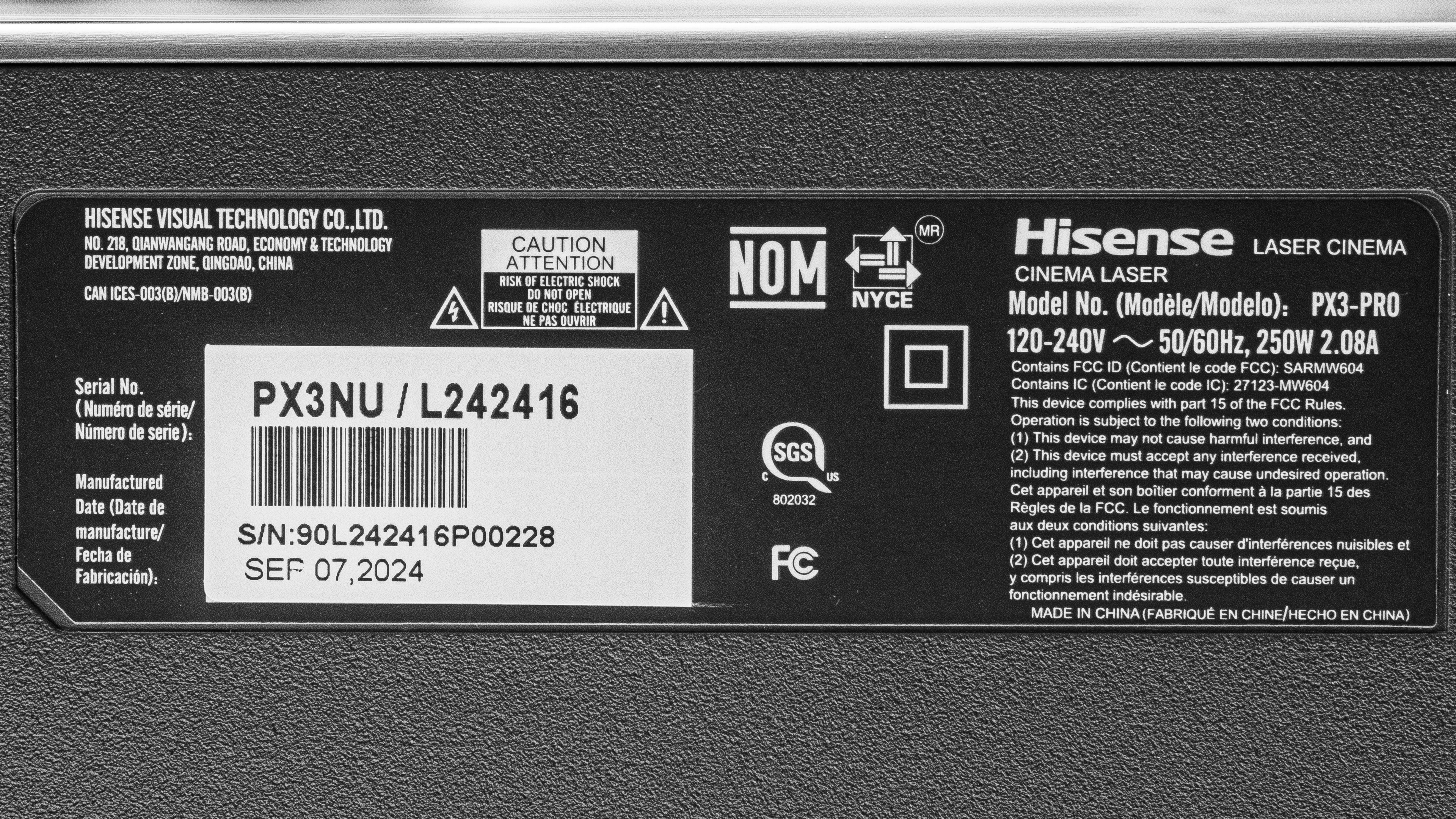
Our unit was manufactured in September 2024.
Popular Projector Comparisons
The Hisense PX3-PRO is a great ultra-short-throw (UST) projector, with great brightness and good color performance, though it's also quite expensive. It also has decent contrast overall, though it performs notably better in darker scenes than in bright ones. If you're shopping for a UST projector at this price point, and especially looking for a home theater option, consider the AWOL Vision Aetherion Pro. It's dimmer than the Hisense, but the much better contrast results in images with more depth, and it's also more effective at reducing rainbow flashes around bright objects if you're sensitive to them. If you're looking for a brighter option, though, like for a living room setup with ambient light, the Epson EpiqVision Ultra LS800 is amazingly bright, is more accurate out of the box, and its LCD imaging results in no rainbow flashes, but the Hisense has much better contrast and color volume.
Check out our recommendations for the best 4k projectors, the best projectors for home theater, and the best short-throw projectors. If you'd prefer to shop for a cheaper product, see the best projectors under $1,000 instead.
The Hisense PX4-PRO is a newer version of the Hisense PX3-PRO. The PX4-PRO upgrades in a few areas, like with its input lag, contrast, and RBE handling, but otherwise, they have very similar performance. There are a few differences in features, though, as the PX4-PRO supports VRR, which the PX3-PRO doesn't. You may prefer the built-in Google TV on the PX3-PRO over the VIDAA system of the PX4-PRO, though.
The Hisense PX3-PRO is slightly better than the Hisense PT1, except for gaming, where the PT1 has the edge due to its lower input lag. The PT1 is also a bit smaller and lighter, and is slightly quieter under full load. For image quality, however, the PX3-PRO is brighter and is a bit more accurate out of the box.
The Hisense PX3-PRO is better than the Epson EpiqVision Ultra LS800, but they excel in different environments. The Epson is noticeably brighter, so it's the better option to use in rooms that aren't light-controlled, or even as a patio option. The Hisense has the far better contrast, however, with punchier colors; this makes it the much better option for darker rooms. The Hisense also comes with a wider feature set than the Epson, making it more versatile.
Although they're very similar in terms of features, the Hisense C2 Ultra is a bit better than the Hisense PX3-PRO. While the PX3-PRO's contrast is a bit deeper, the C2 Ultra is noticeably brighter. It's also much more portable due to its lighter weight, fully functioning image correction features, and gimbal stand. Finally, the C2 Ultra is also more accurate out of the box.
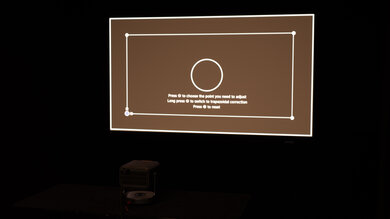
We've independently bought and tested over 80 projectors and published detailed results for each, so you can decide which one to buy. These have all been tested under the same standardized methodology, allowing you to compare them side by side. We still have all these projects in our lab, so we can continually go back and compare them to ensure our reviews are still accurate. All our test methodologies are also public on our website, so you can validate the results yourself.
Throw Calculator
Global Controls
Test Results
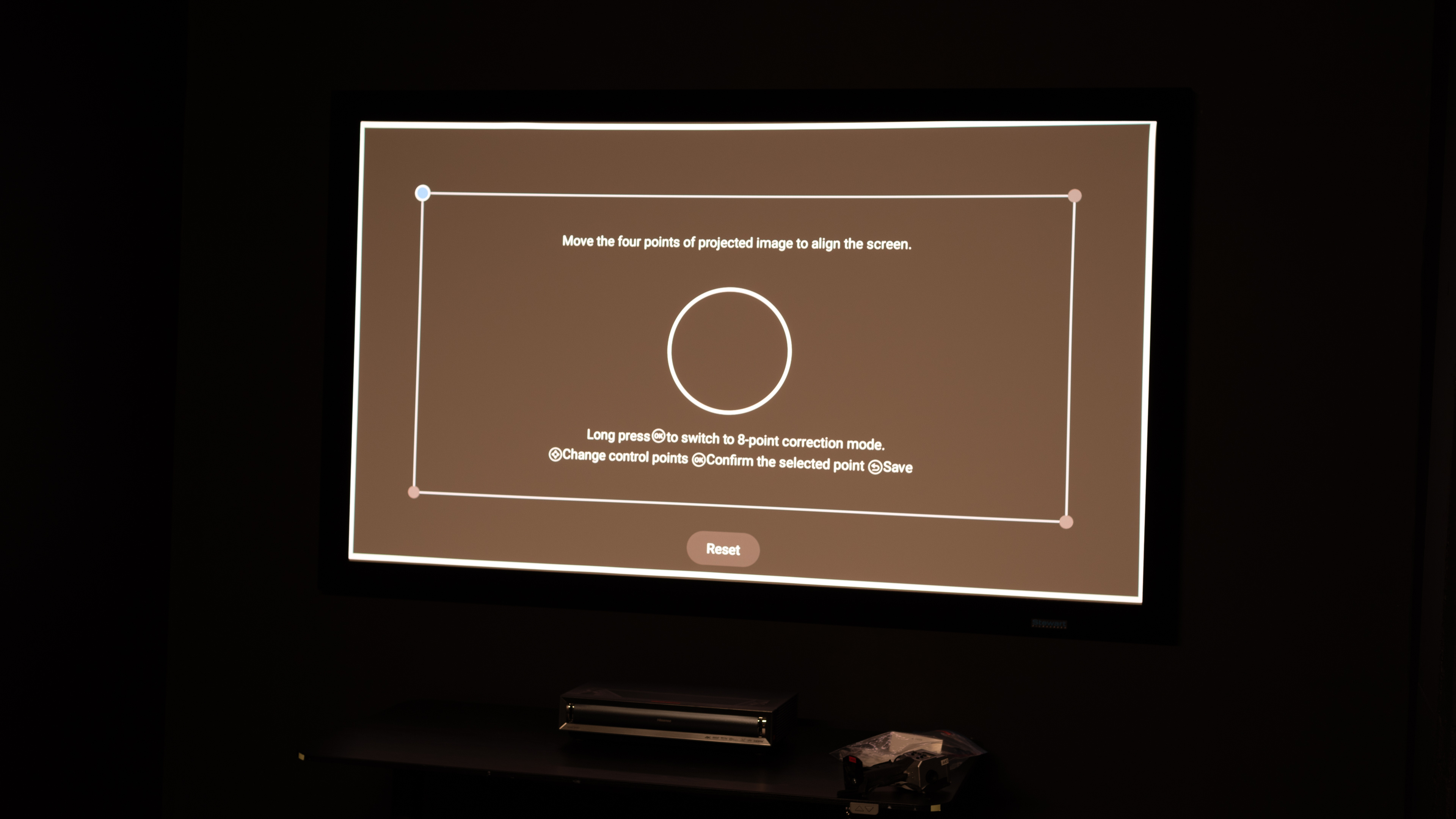
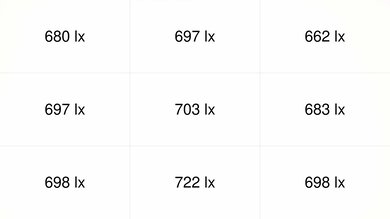
for pictures & test results
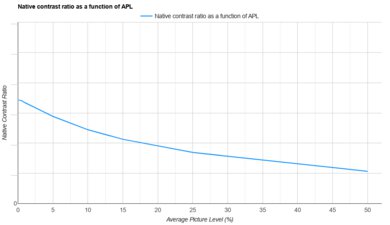
for pictures & test results



for pictures & test results