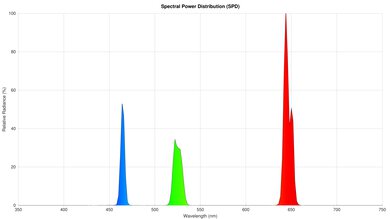
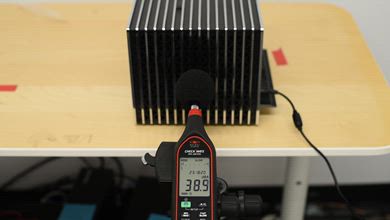
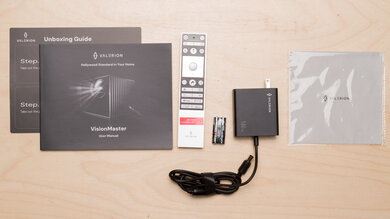
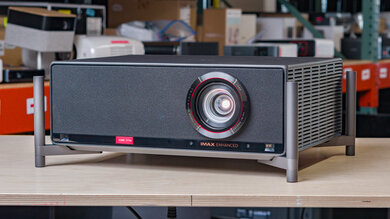
The XGIMI HORIZON 20 Max is a long-throw 4k XPR DLP projector built around an RGB triple-laser light engine. It supports Dolby Vision, HDR10+, and HDR10, and adds XGIMI's latest ISA setup suite, including uninterrupted auto-keystone/autofocus, obstacle avoidance, screen alignment, wall-color adaptation, and eye-protection. It runs Android TV 11 with Google Cast and uses dual 12W Harman/Kardon speakers (24W total). The powered lens offers a 1.2–1.5:1 throw with motorized zoom, horizontal/vertical lens shift, and automatic keystone for easy placement across typical living-room distances. Connectivity is modern, featuring Wi-Fi 6, Bluetooth 5.2, two HDMI inputs with eARC on one port, plus USB 3.0/2.0, optical audio, and a 3.5 mm jack.
Our Verdict
The XGIMI HORIZON 20 Max is very good for home theater use. It has great contrast overall, leading to good depth in dark scenes. However, the contrast ratio declines in brighter scenes, so the image looks a bit flat. Colors are accurate enough for most users, and colorful movies stay rich even in brighter highlights. Unfortunately, while it can remove judder from most content, except for some international shows, it requires downscaling the image to 1080p. The projector does a very good job minimizing the rainbow effect, but sensitive viewers may still notice some subtle flashes or color tearing, and eliminating the tearing requires the same 1080p compromise.
Deep contrast, especially in mixed and dark scenes.
Natural colors with colorful highlights.
Smooth movie motion in most content.
Fan is very quiet in most modes.
Can't de-judder some international shows.
Removing judder and color tearing limits the image to 1080p.
The XGIMI HORIZON 20 Max is very good for outdoor use. It's bright enough for a very large, watchable image after dark, even with some nearby lighting. Its automatic focus, image alignment, and screen fitting reduce setup time after moving it. However, it needs a nearby outlet and lacks lens protection or a handle. Fortunately, it comes with a carrying case you can use to transport it safely if needed.
Very bright image that can deal with some ambient light.
Flexible placement tools with a ton of automated screen setup features.
Has built-in Google TV with dual 12W speakers.
Has an included carrying case for occasional trips.
Is a relatively hefty unit.
No battery, handle, or lens protection.
The XGIMI HORIZON 20 Max is very good for bedroom use. Its gimbal, optical zoom, lens shift, and automatic screen setup make it easy to position, while Google TV and the dual 12W speakers let you watch without extra equipment. It's reasonably quiet in its regular modes and bright enough to handle some room lighting. However, the 'High Power' Picture Mode washes out colors and gets much louder, so it's best avoided in a bedroom.
Flexible placement tools with a ton of automated screen setup features.
Has built-in Google TV with dual 12W speakers.
Fan is very quiet in most modes.
Is a relatively hefty unit.
'High Power' picture mode washes out colors and makes the fan much louder.
The XGIMI HORIZON 20 Max is a fun, versatile gaming projector with one big caveat: input lag. At 4k @ 60Hz, it can feel a bit sluggish, so it's better suited to slower single-player games than to fast, twitchy titles. If you bump the refresh rate, it gets much snappier. It also supports VRR across a very wide range, which can help smooth out stutter and reduce tearing when frame rates fluctuate. That said, VRR on a projector can be a bit finicky. Resolution support is otherwise strong, with clean 4k @ 60Hz and high-FPS 1080p. It also has great image quality with punchy colors, great contrast, and a very bright image.
Very bright image that can deal with some ambient light.
Deep contrast, especially in mixed and dark scenes.
Natural colors with colorful highlights.
Fast, blur-free high-refresh rate 1080p gaming with wide VRR range.
Relatively sluggish at 4k @ 60Hz.
VRR feature causes artifacting in some content, or when the FPS fluctuates a lot.
The XGIMI HORIZON 20 Max is incredibly bright. It produces a vibrant image on a very large screen, even with a few lights on. The 'High Power' Picture Mode makes it even brighter, but washes out colors and greatly increases fan noise.
Very bright image that can deal with some ambient light.
'High Power' picture mode washes out colors and makes the fan much louder.
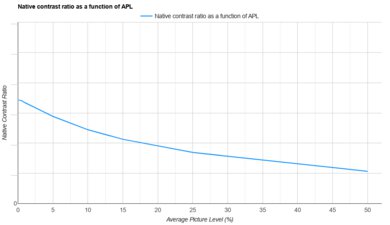
The XGIMI HORIZON 20 Max has great contrast. The image has good depth in dark scenes, but the contrast ratio declines rapidly in brighter scenes, leading to an image that looks a bit flat. The projector has a Dynamic Black Level Enhancement setting that's designed to further improve contrast, but it doesn't work.
Deep contrast, especially in mixed and dark scenes.
The XGIMI HORIZON 20 Max is mediocre for portability. It's a substantial projector with no built-in battery, carrying handle, or lens cover, so it's better for planned trips than everyday travel. Its included carrying case makes occasional trips easier, and its automatic image correction removes much of the setup hassle when moving it around the house, but it's still not exactly easy to grab and go.
Flexible placement tools with a ton of automated screen setup features.
Has built-in Google TV with dual 12W speakers.
Has an included carrying case for occasional trips.
Is a relatively hefty unit.
No battery, handle, or lens protection.
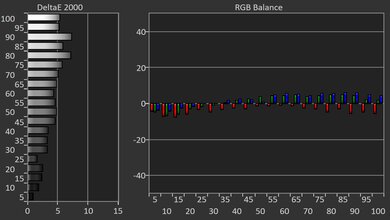
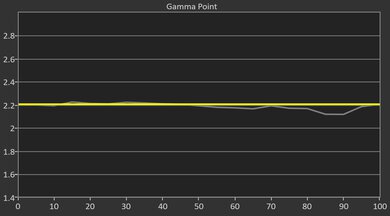
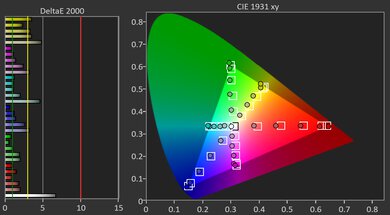
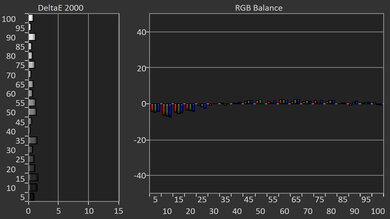
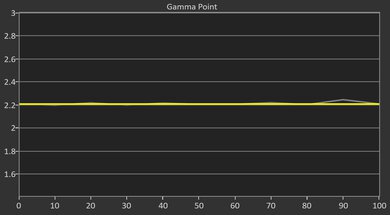
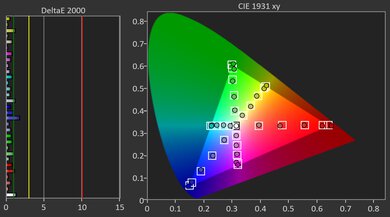
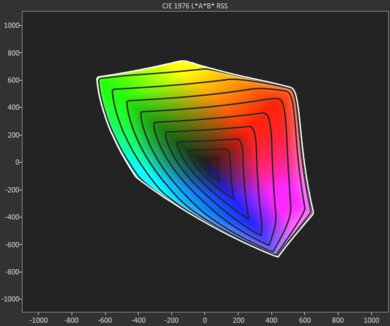
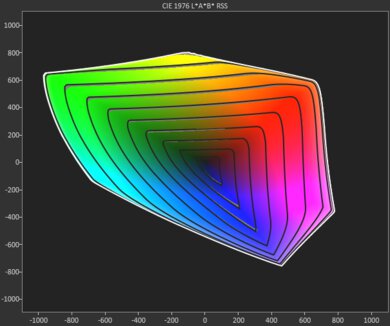
The XGIMI HORIZON 20 Max has excellent color performance. Its out-of-the-box image looks believable, although it has a slight cool tint. Colors also stay rich and vibrant throughout the image. However, the 'High Power' Picture Mode washes them out considerably.
Natural colors with colorful highlights.
'High Power' picture mode washes out colors and makes the fan much louder.
The XGIMI HORIZON 20 Max has good gaming responsiveness, although not at 4k @ 60Hz, as inputs feel sluggish enough to limit fast, competitive games. Still, input lag drops considerably at 120hz and 240Hz at 1080p, where fast-moving objects stay sharp and free of visible blur. It also supports VRR across a wide range to reduce tearing, though it can cause artifacts at some refresh rates.
Fast, blur-free high-refresh rate 1080p gaming with wide VRR range.
Relatively sluggish at 4k @ 60Hz.
VRR feature causes artifacting in some content, or when the FPS fluctuates a lot.
Performance Usages
Changelog
-
Updated Sep 16, 2026:
We retested the projector's Brightness, Effective Contrast, and Rainbow Effect with firmware version V1.4.163 (DLP V5.4.165), since this latest firmware added an Anti-RBE feature. We've updated the results and text in those three sections of the review. We also updated the scores and text for the Home Theater, Gaming, and Contrast usages in the Our Verdict section.
-
Updated Aug 19, 2026:
We mentioned the newly reviewed XGIMI TITAN Noir Max in the Contrast section.
- Updated Jul 28, 2026: We've converted the review to Test Bench 1.0, which replaces our Color Gamut test with Color Volume and adds a new Rainbow Effect test box. We also updated Effective Contrast (formerly Native Contrast) to account for projector brightness and reworked Judder scoring. The new bench also adds Outdoors and Bedroom usages, plus Portability, Color, and Gaming Responsiveness Performance Usages; Movies is now Home Theater, and all existing usage scores have been updated. See the 1.0 changelog.
-
Updated May 22, 2026:
We mention the newly reviewed JMGO N3 Ultimate in the Input Lag section of this review.
Check Price
Differences Between Sizes And Variants
The XGIMI HORIZON 20 Max sits at the top of XGIMI's long-throw Horizon line. Unlike the XGIMI Horizon S Max's Dual Light 2.0 (laser+LED), the 20 Max uses an RGB triple-laser (laser-only) light engine with 4k XPR. It adds an HDMI 2.1 input (with eARC) and high-frame-rate support up to 1080p @ 240Hz. It supports Dolby Vision, HDR10, HDR10+, HLG, and IMAX Enhanced, runs Android TV 11 with ISA 5.0 (uninterrupted auto-keystone/autofocus, screen alignment, obstacle avoidance, wall-color adaptation), and includes dual 12W Harman/Kardon speakers. Versus older LED-only Horizons, you get broader HDR support, faster setup, and newer I/O (HDMI 2.1, Wi-Fi 6, Bluetooth 5.2).
The XGIMI Horizon lineup comprises older LED-based models and newer Dual Light (laser+LED) flagships, as well as the Horizon 20 Max, which utilizes an RGB triple-laser (laser-only) engine. Key differences are the light source, peak brightness, supported HDR formats, ISA features, and I/O (e.g., eARC). The table below highlights the main specs and features.
| Model | Light Source | Resolution | HDR Formats | Setup / OS | Ports (highlights) |
|---|---|---|---|---|---|
| Horizon 20 Max | RGB triple-laser (laser-only) | 4k (XPR) | Dolby Vision, HDR10, HDR10+, HLG, IMAX Enhanced | ISA 5.0; Android TV 11 | HDMI 2.1 (eARC)×1 + HDMI×1, USB×2, Wi-Fi 6, BT 5.2 |
| Horizon S Max | Dual Light 2.0 (RGB laser+LED) | 4k (XPR) | Dolby Vision, HDR10, HLG, IMAX Enhanced | ISA 5.0; Android TV 11 | HDMI (eARC)×1, USB×2, Wi-Fi 5 |
| Horizon S Pro | Dual Light 2.0 | 4k (XPR) | Dolby Vision, HDR10, HLG | ISA 5.0; Android TV 11 | HDMI (eARC)×1, USB×2, Wi-Fi 5 |
| Horizon Ultra | Dual Light (laser+LED) | 4k (XPR) | Dolby Vision, HDR10, HLG | ISA 3.0; Android TV 11 | HDMI×2 (1×eARC), USB×2, LAN, optical out, Wi-Fi 6 |
| Horizon Pro | LED | 4k (XPR) | HDR10, HLG | ISA (earlier gen); Android TV 10 | HDMI×2, USB×2, LAN, optical out, Wi-Fi 5 |
| Horizon | LED | 1080p | HDR10, HLG | ISA (earlier gen); Android TV 10 | HDMI×2, USB×2, LAN, optical out, Wi-Fi 5 |
Popular Projector Comparisons
The XGIMI HORIZON 20 Max is a top-tier "do-it-all" projector: it's extremely bright, has great native contrast, and supports high refresh rates, making it equally well-suited for movies, sports, and gaming in both bright and dark rooms. If you're chasing the very best dark-room black levels above all else, you might want to consider UST options like the NexiGo Aurora Pro or Formovie THEATER. However, overall, the XGIMI is one of the best all-around projectors on the market if you want it all.
Check out our recommendations for the best 4k projectors and the best projectors for home theater. If you'd prefer to shop for a projector for outdoor use, check out the best outdoor projectors instead.
The XGIMI HORIZON 20 Max and JMGO N3 Ultimate are extremely close, and the best one for you comes down to a few simple factors. The JMGO is slightly brighter, more accurate out of the box, and has slightly better contrast. The XGIMI has both HDR10+ and Dolby Vision, while the JMGO only supports Dolby Vision. Plus, the XGIMI is far better at handling judder than the JMGO; this makes the former the better option for home theater enthusiasts with a blacked-out room, especially if you're willing to calibrate. Still, the JMGO's brightness advantage and wider throw ratio make it a bit more versatile, and it's the better option for gamers due to its far lower input lag at all resolutions.
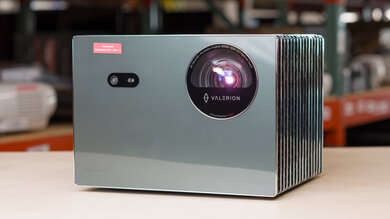
The XGIMI HORIZON 20 Max is better than the Valerion VisionMaster Pro 2. The Valerion is a solid performer, but the XGIMI has it beat in almost every facet: brightness, contrast, and out-of-the-box color accuracy. The XGIMI also has lower input lag, making it a better pick for gamers. The one advantage of the Valerion is that it's less noisy under load.
The XGIMI HORIZON 20 Max is a bit better than the Hisense C2 Ultra. The XGIMI is brighter, has slightly better contrast, and runs a bit quieter. Both are excellent for gaming, but their strengths are slightly different: the Hisense is clearly faster at 60Hz, which is great if you mostly play 60fps console games, while the XGIMI is just a touch quicker at 120Hz and 240Hz, though that small difference is hard to notice in practice.
The XGIMI HORIZON 20 Max is a bit better and cheaper than the Valerion VisionMaster Max, although the Valerion is a bit better for gaming. The XGIMI is incredibly bright, giving it a very striking image. Still, the Valerion has tricks up its sleeve: a solid dynamic contrast option and an RBE reduction feature that truly works, at the cost of more audible noise from the unit. For gaming, they're both solid, but the Valerion has much lower input lag at 60Hz, which makes it better for console gamers who like to game at 4k/60. For 120Hz and 240Hz gaming, the XGIMI has a very small edge, but they're very close.
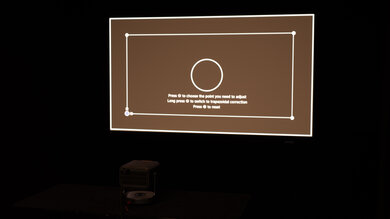
We've independently bought and tested over 80 projectors and published detailed results for each, so you can decide which one to buy. These have all been tested under the same standardized methodology, allowing you to compare them side by side. We still have all these projects in our lab, so we can continually go back and compare them to ensure our reviews are still accurate. All our test methodologies are also public on our website, so you can validate the results yourself.
Throw Calculator
Global Controls
Test Results
for pictures & test results
for pictures & test results



for pictures & test results