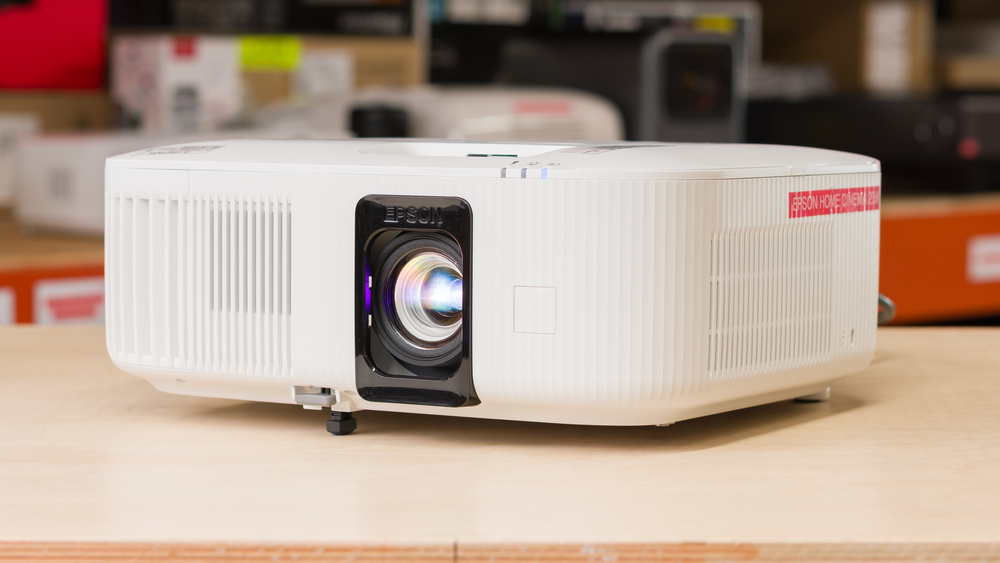
The Epson Home Cinema 2350 is a home theater projector designed for indoor use. It's a medium-sized 3LCD projector with a 1.62× manual optical zoom lens and a 1.32–2.15 throw ratio. It ships with an Epson-branded Android TV 11 streaming dongle, enabling access to popular apps and Chromecast built-in for wireless casting. Bluetooth audio output is also supported, making it easy to pair with soundbars or wireless headphones. The projector can display images from 60 inches up to 300 inches, supporting HDR10 and HLG content. It includes a built-in 10-watt speaker for basic use, with an HDMI ARC port. While it lacks Dolby Vision and HDR10+ support, its two-phase pixel-shifting system delivers sharper detail than native 1080p.
Our Verdict
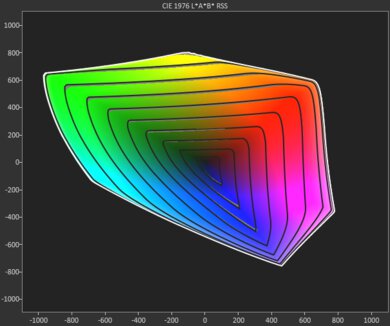
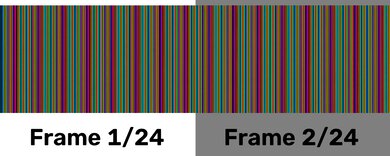
The Epson Home Cinema 2350 is unremarkable for home theater setups. The biggest downside is its low contrast, as blacks are raised and images are washed out across all content. It also gets bright to help make some brighter colors pop, but it fails to display a wide range of saturated colors in common color spaces. It removes judder from sources that can match the content's frame rate, but motion looks jittery if that's not the case. You may also be distracted by the projector's fan, which gets quite loud at its maximum brightness. On the plus side, this projector doesn't have any noticeable rainbow effect, which helps if you're sensitive to RBE.
Impressive brightness, with solid uniformity.
Quite accurate right out of the box.
No rainbow effect.
Blacks are raised in most content.
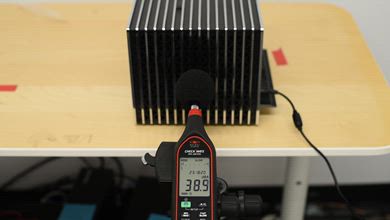
Loud fan.
Can't display saturated colors well.
Not judder-free with most sources.
The Epson Home Cinema 2350 is decent for outdoor setups. It gets bright enough to fight some ambient glare from nearby lamps, but you'll still have trouble seeing the screen during the daytime. It includes features to help with setup, such as optical zoom to fit it onto any surface and vertical lens shift to move the image up or down. However, it lacks obstacle avoidance and auto screen fit, so everything is done manually. Plus, it's on the heavier side, so while you can carry it anywhere, it's not something you can bring outside regularly.
Impressive brightness, with solid uniformity.
Includes vertical lens shift and optical zoom for cleaner image during setup.
Fairly heavy to carry around.
Screen adjustments are done manually.
The Epson Home Cinema 2350 is disappointing for bedroom setups. Its loud fan can be distracting if you're trying to keep the volume low before falling asleep. It's also fairly big, so it takes up a decent amount of space on a nightstand or any other furniture. It does have some settings to help you set it up, though, such as optical zoom and vertical lens shift. However, it lacks horizontal lens shift, and most adjustments are made manually, so it may take some time to properly set it up before your movie night.
Includes vertical lens shift and optical zoom for cleaner image during setup.
Loud fan.
Fairly heavy to carry around.
Screen adjustments are done manually.
The Epson Home Cinema 2350 is mediocre for gaming. At 4k @ 60Hz, inputs feel responsive enough for slow story-driven games, but the lack of 120Hz support and higher latency at 1080p make it unsuitable for any faster game genre. It also has some image blur due to its LCD imaging technology. It's decent for image quality, especially due to its impressive brightness, making it a solid pick for slightly brighter rooms. Sadly, the projector's contrast is disappointing, so it's not the best-looking image in dark rooms.
Impressive brightness, with solid uniformity.
Quite accurate right out of the box.
Blacks are raised in most content.
Can't display saturated colors well.
Motion blur with fast content.
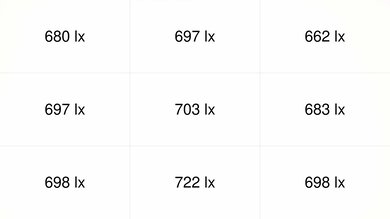
The Epson Home Cinema 2350's brightness is impressive. It's bright enough for rooms with a few lights, with very solid brightness uniformity.
Impressive brightness, with solid uniformity.
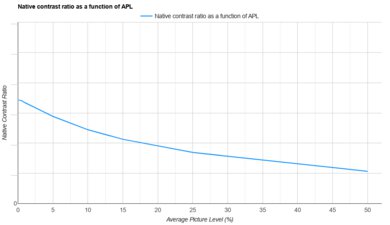
The Epson Home Cinema 2350's contrast is disappointing. It has raised blacks in any content, leading to washed-out images.
Blacks are raised in most content.
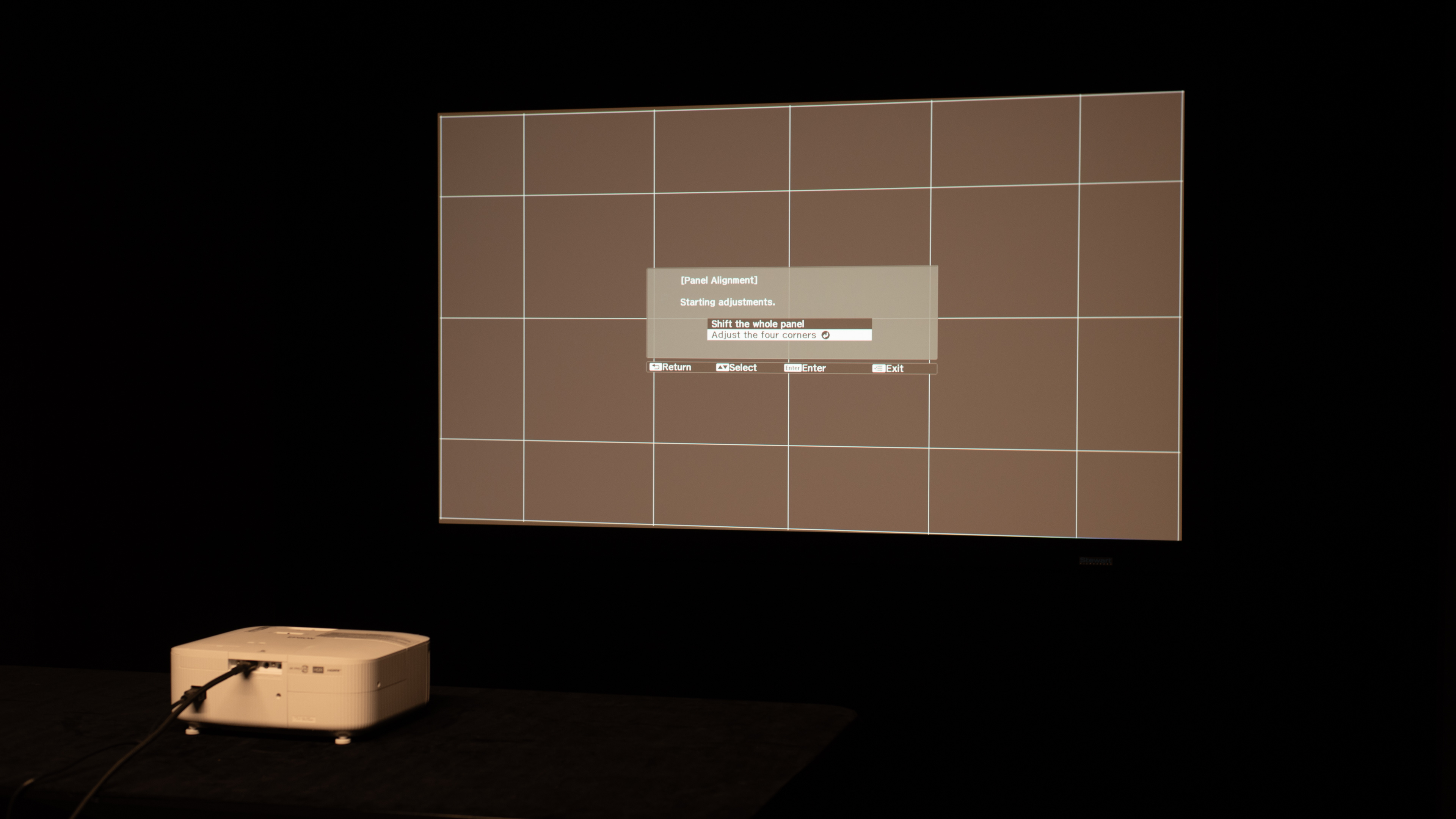
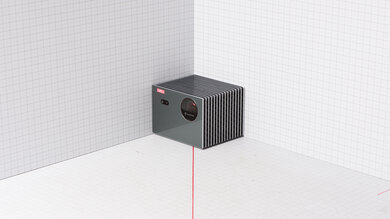
The Epson Home Cinema 2350 has unremarkable portability. It's fairly big, so it's not something you may want to carry around the house or outdoors all the time. That said, it has a few features to help with setup, such as manual optical zoom and vertical lens shift. Despite having keystone adjustments, these are manual, so you still need to dedicate some time to setting up the projector before using it.
Includes vertical lens shift and optical zoom for cleaner image during setup.
Fairly heavy to carry around.
Screen adjustments are done manually.
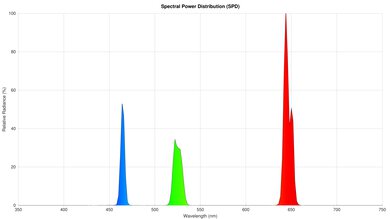
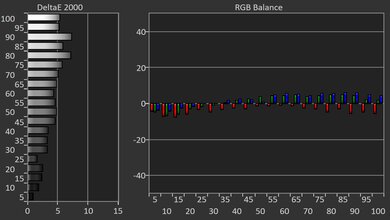
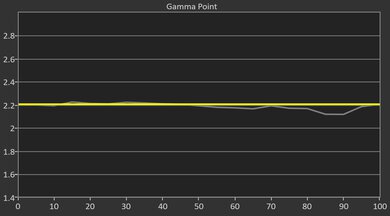
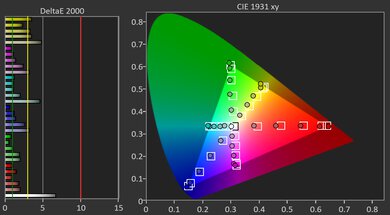
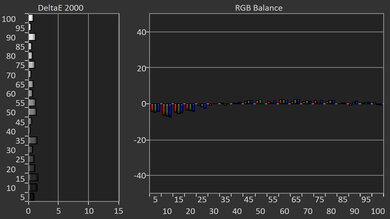
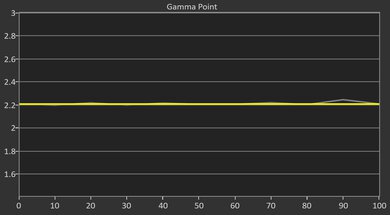
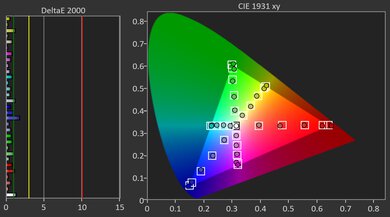
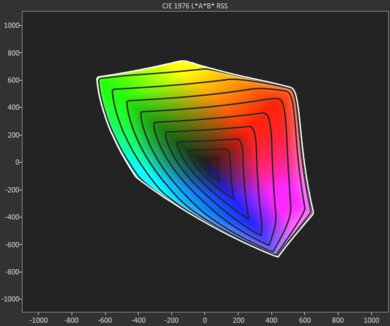
The Epson Home Cinema 2350 has decent colors. It's very accurate out of the box, with minimal adjustments required for an optimal image. A downside is that it can't display a wide range of saturated colors, although it displays bright colors fairly well.
Quite accurate right out of the box.
Can't display saturated colors well.
The Epson Home Cinema 2350 has disappointing gaming responsiveness. Motion looks blurry due to its LCD imaging technology, and it's limited to a 60Hz refresh rate with any resolution. It also has fairly low input lag, which helps with gaming, but it's still too high for games that require the fastest reactions.
Motion blur with fast content.
Limited to 60Hz refresh rate.
Performance Usages
Changelog
- Updated Aug 31, 2026: We've converted the review to Test Bench 1.0, which replaces our Color Gamut test with Color Volume and adds a new Rainbow Effect test box. We also updated Effective Contrast (formerly Native Contrast) to account for projector brightness and reworked Judder scoring. The new bench also adds Outdoors and Bedroom usages, plus Portability, Color, and Gaming Responsiveness Performance Usages; Movies is now Home Theater, and all existing usage scores have been updated. See the 1.0 changelog.
-
Updated May 29, 2026:
We've added text to some test boxes as a result of our latest test bench.
- Updated May 13, 2026: We've converted the review to Test Bench 0.12, which adds new Judder, Screen Adaptation, Battery, Maximum Volume, Size, Mobility Features, and Physical Setup Features test boxes. We also updated Inputs & Connectivity to verify Bluetooth support with wireless speakers or headphones. See the 0.12 changelog.
-
Updated Feb 06, 2026:
We've modified the text in our Brightness and Native Contrast text boxes as a result of our latest test bench. We've also added Brightness and Contrast performance usages in the Verdict section.
Check Price
Differences Between Sizes And Variants
The Epson Home Cinema 2350 sits within Epson's mid-range 3LCD home theater line and serves as a capable entry point into 4k enhancement technology. It uses pixel‑shift, has HDR10 and HLG support, and features Android TV streaming along with Bluetooth and ARC audio passthrough. In Epson's lineup, it slots above the basic Epson Home Cinema 1080 (which lacks HDR and smart streaming) but below the higher-tier Epson Home Cinema 3800 (brighter with more advanced processing) and the premium Epson Home Cinema 5050UB (with motorized optics, superior contrast, and enhanced color performance). Here's how they stack up:
| Model | Native Resolution | Pixel-Shift (4K PRO-UHD) | Brightness | HDR Formats | Lens / Optics | Smart / Wireless |
|---|---|---|---|---|---|---|
| Epson Home Cinema 1080 | 1080p (3LCD) | No | 3,400 lm | None | 1.2× manual zoom; Throw 1.02–1.23; No lens shift | Built-in Wi-Fi 5 with Miracast screen mirroring; no Android TV |
| Epson Home Cinema 2350 | 1080p (3LCD) | 2-phase (1920×1080×2) | 2,800 lm | HDR10, HLG | 1.62× manual zoom; Throw 1.32–2.15; Vertical lens shift ±60% (manual) | Android TV dongle (Chromecast built-in); Bluetooth audio; HDMI ARC |
| Epson Home Cinema 3800 | 1080p (3LCD) | 2-phase (1920×1080×2) | 3,000 lm | HDR10, HLG | 1.62× manual zoom; Throw 1.32–2.15; Lens shift ±60% V / ±24% H (manual) | No Android TV; Bluetooth (incl. aptX) for audio |
| Epson Home Cinema 5050UB | 1080p (3LCD) | 2-phase (1920×1080×2) | 2,600 lm | HDR10, HLG | 2.1× motorized zoom/focus/shift; Throw 1.35–2.84; Lens shift ±96% V / ±47% H; lens memory | No built-in smart features |
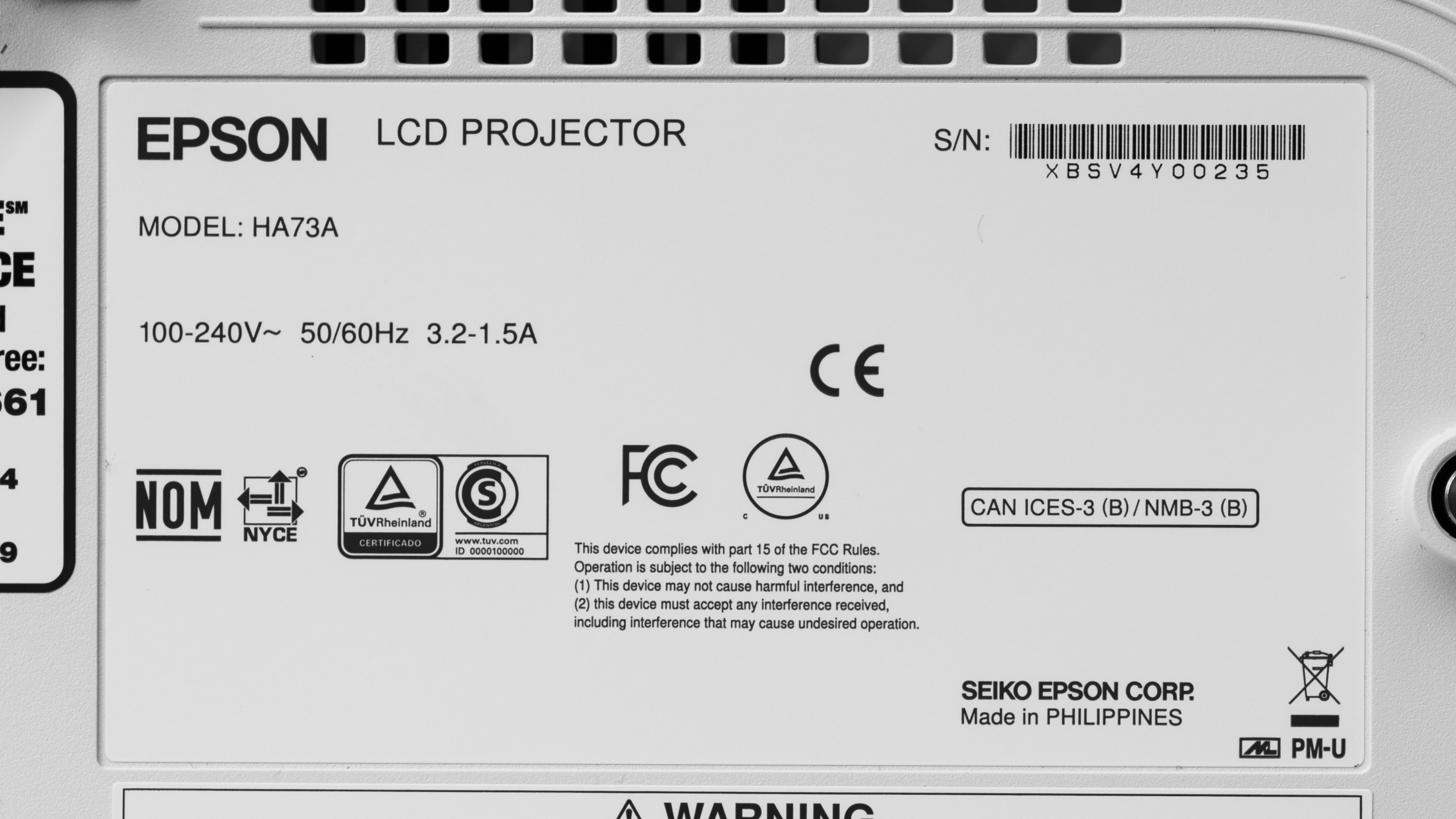
Our label doesn't have a manufacturing date, but the unit was made in the Philippines.
Popular Projector Comparisons
The Epson Home Cinema 2350 4k is a decent product: it's bright, looks fine with SDR, and adds 4k @ 60Hz input for games, but its color volume isn't great in the Rec. 2020 color space, and its blacks are noticeably raised in most content. If you want better gaming performance, the ViewSonic PX701-4K is a stronger choice thanks to 1080p @ 120–240Hz support and lower input lag, while the BenQ X500i also offers 1080p @ 120Hz and 240Hz with better contrast and accuracy. If you're focused on image quality over gaming, consider the (older but better) Epson Home Cinema 3800 or the BenQ HT2060, as both usually deliver a nicer picture for a similar or lower price.
See our recommendations for the best projectors for home theater. If you're looking for something more general, look up our list of the best projectors instead.
The Epson Home Cinema 3800 is noticeably better than the Epson Home Cinema 2350. The 3800 has far deeper blacks, with better contrast and accuracy than the 2350. Still, the 3800 doesn't come with a smart OS and is rather barebones when it comes to features, while the 2350 comes with an Android TV dongle.
The BenQ HT2060 is a bit better than the Epson Home Cinema 2350, but only because it has noticeably better contrast, which offsets the far brighter Epson. Otherwise, both units are quite similar, although the BenQ doesn't come with a smart OS, nor a smart dongle, which the Epson does come with.
The Epson Home Cinema 2350 is a slight improvement over the Epson Home Cinema 1080, thanks to its better contrast and improved colors. Plus, the 2350 has pixel shifting technology, with HDR support and an included Android TV dongle, while the 1080 is limited to 1080p resolution, no HDR, and no smart OS.
The XGIMI HORIZON Ultra is a bit better than the Epson Home Cinema 2350, even though they perform similarly. Still, the XGIMI is a bit brighter, has slightly deeper blacks, and has colors that are a tad more vibrant than the Epson.
We've independently bought and tested over 80 projectors and published detailed results for each, so you can decide which one to buy. These have all been tested under the same standardized methodology, allowing you to compare them side by side. We still have all these projects in our lab, so we can continually go back and compare them to ensure our reviews are still accurate. All our test methodologies are also public on our website, so you can validate the results yourself.
Throw Calculator
Global Controls
Test Results
for pictures & test results
for pictures & test results



for pictures & test results