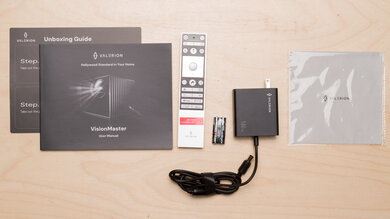
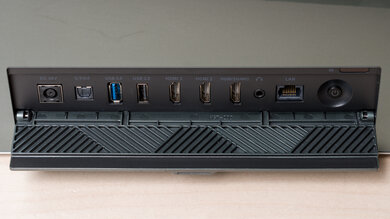
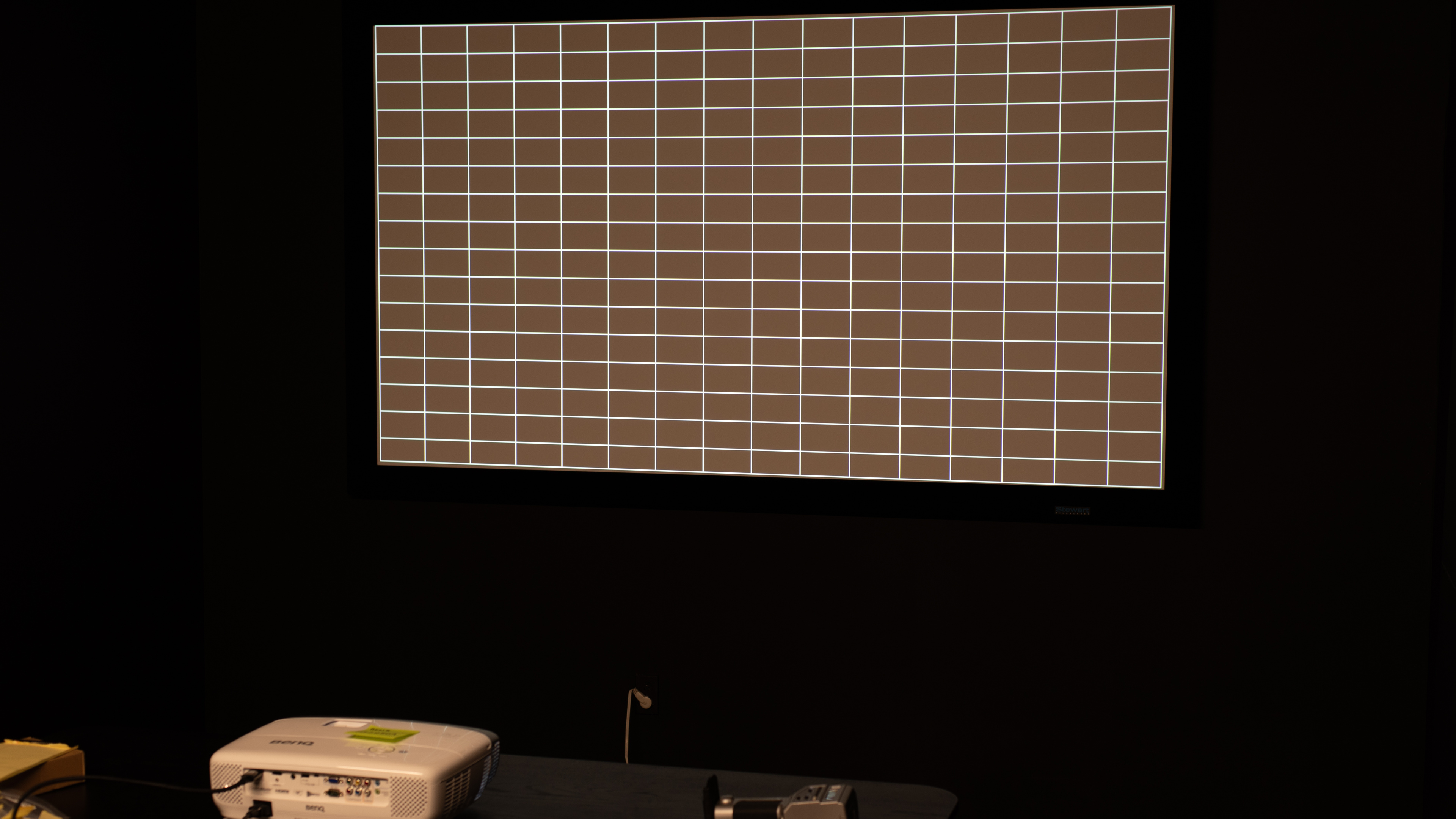
The BenQ HT2050A is a 1080p projector primarily aimed at home theater use. It projects a 100" image at a distance of 8.4 to 10.9 feet, 120" at a distance of 10 to 13 feet, and a very large 150" at a distance of 12.5 to 16.3 feet. The projector comes with a vertical lens shift feature and manual 2D keystone adjustments to eliminate trapezoid effects when setting up the projector. It has two HDMI 1.4 ports for 1080 @ 60Hz gaming, with one integrated 10W chambered speaker.
Our Verdict
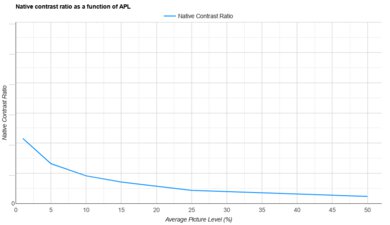
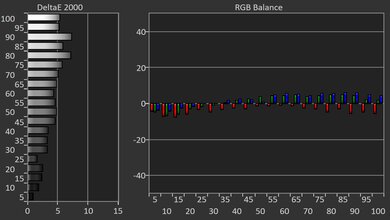
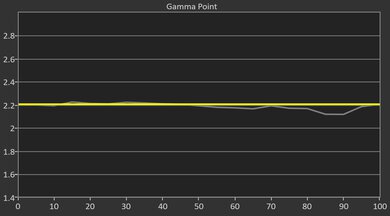
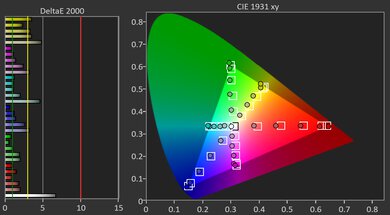
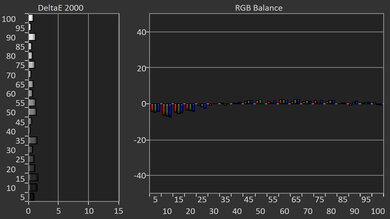
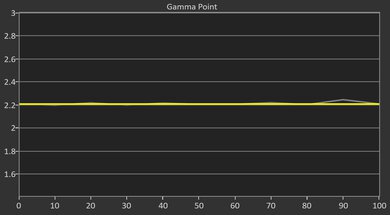
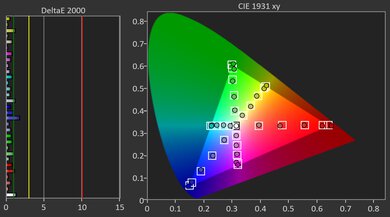
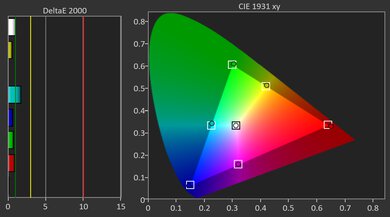
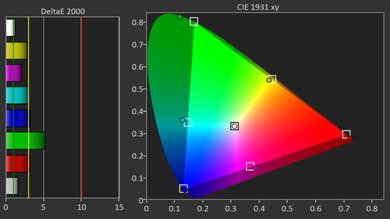
The BenQ HT2050A is decent for watching movies. Its native contrast is great, so watching movies in pitch-black rooms is a treat. Its brightness is decent enough to handle rooms with a few lights, although the projector is truly at its best in dark rooms. The projector's color gamut is okay, but it just isn't bright enough to really make colors pop. Unfortunately, the projector's color accuracy before calibration is inadequate, so you truly need to calibrate it if you care about color accuracy.
- Great contrast for deep blacks in dark rooms.
- Excellent image accuracy after calibration.
- Inadequate pre-calibration accuracy.
- Doesn't support HDR.
Changelog
-
Updated Mar 25, 2025:
We mentioned the newly reviewed BenQ HT2060 in the Pre-Calibration Color Accuracy section of this review.
- Updated Aug 02, 2024: We've converted this review to Test Bench 0.9. We've overhauled our Contrast tests, as we now measure contrast at various average pixel levels (APL). You can see the full changelog here.
- Updated Feb 27, 2024: Mentioned the newly reviewed Epson EX3280 in the Pre-Calibration Color Accuracy section of this review.
- Updated Feb 23, 2024: Mentioned the newly-reviewed BenQ TH671ST in the Pre-calibration Color Accuracy section of this review.
Check Price
Differences Between Sizes And Variants
We bought and tested the BenQ HT2050A. The BenQ HT2060 has replaced it, and the newer model comes with HDR support, a longer-lasting LED lamp, auto vertical keystone correction, and FILMMAKER mode. The 2050A also has a slightly improved model, the BenQ HT2150ST, which is ISFccc Certified for improved color accuracy out-of-the-box, has auto vertical keystone correction, and has a much shorter throw ratio, allowing it to be placed closer to the wall or screen.
Popular Projector Comparisons
The BenQ HT2050A is a decent 1080p projector for watching movies in a dark room due to its great contrast. It's a good choice for the price, as the just barely better BenQ HT3550 is significantly more expensive. Still, the slightly better Epson EpiqVision Flex CO-W01 is even cheaper than the BenQ HT2050A. However, the Epson is better suited for brighter rooms due to its excellent brightness and inadequate contrast, while inversely, the BenQ is better in pitch-black rooms.
See our recommendations for the best projectors for home theater and the best home projectors. If you're looking for something more general, look up our list of the best projectors instead.
The BenQ HT2060 is an improvement over the BenQ HT2050A, even if the latter is a bit brighter. Otherwise, the newer HT2060 has deeper contrast, is far more accurate out of the box, has a slightly wider color gamut, and has HDR10 support. It also has a Filmmaker Mode, which respects the content creator's intent quite well. Finally, the HT2060 is also pretty decent for gaming due to its 1080p @ 120Hz support, while the older HT2050A is limited to 1080p @ 60Hz.
The BenQ HT2050A offers better image quality than the older BenQ TH671ST. Unfortunately, this comes at a cost, as the HT2050A has inadequate color accuracy out of the box, while the TH671ST excels in that area. If you're willing to calibrate it, then the HT2050A projects a brighter image, with better contrast, than the TH671ST.
The BenQ HT2050A is slightly better than the BenQ HT3550, though the HT3550 is a more recent release with 4k HDR support, while the HT2050A is an older model limited to 1080p and lacking HDR. The HT3550 also has a much wider color gamut, although neither projector is bright enough to make colors pop. Still, the older HT2050A has much better contrast and slightly better peak brightness, so it's more capable in a variety of lighting conditions than the sharper HT3550.
The BenQ HT2050A is much better than the KODAK LUMA 350, but they're significantly different projectors. The KODAK is an ultra-lite projector and is meant to be extremely easy to carry around. The BenQ is a bigger projector that is meant for you to install permanently. The BenQ has vastly better image quality. However, the KODAK is small and has more smart features, like an integrated Android TV OS, Wi-Fi, and Bluetooth support, cast capabilities through DLNA, and auto vertical keystone correction.
We've independently bought and tested over 80 projectors and published detailed results for each, so you can decide which one to buy. These have all been tested under the same standardized methodology, allowing you to compare them side by side. We still have all these projects in our lab, so we can continually go back and compare them to ensure our reviews are still accurate. All our test methodologies are also public on our website, so you can validate the results yourself.
Throw Calculator
Global Controls
Test Results
for pictures & test results
for pictures & test results
for pictures & test results