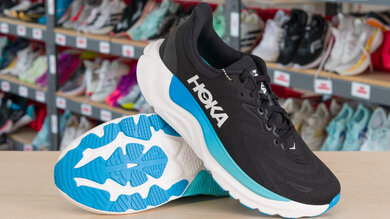
We've tested these running shoes to expand our database and allow users to compare results to help with their buying decisions. We don't expect to write a full review, but if you have any questions about this product, please let us know.
Changelog
- Updated Dec 02, 2025: Review published.
- Updated Dec 01, 2025: Early access published.
- Updated Aug 26, 2025: Our testers have started testing this product.
- Updated Aug 20, 2025: The product has arrived in our lab, and our testers will start evaluating it soon.
- Updated Aug 13, 2025: We've purchased the product and are waiting for it to arrive in our lab.
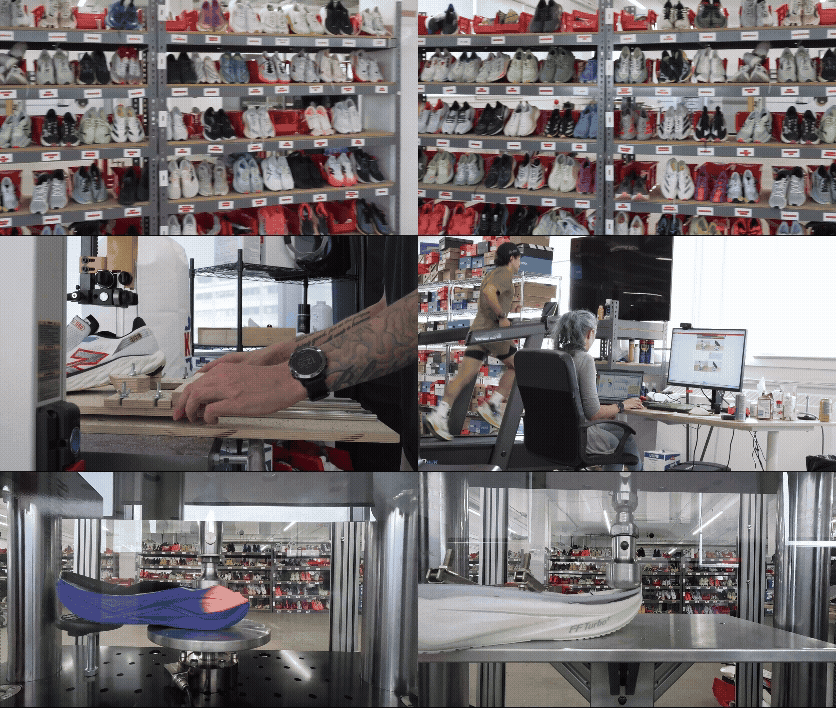
We've bought and tested more than 300 running shoes. Every pair purchased with our own money, never supplied or sponsored by brands. Our data-driven tests are designed to go beyond marketing claims, and since every shoe goes through the exact same methodology, you can directly compare results to find the right pair for your needs.
Popular Running Shoe Comparisons
The HOKA Clifton 10 is a better choice than the HOKA Arahi 8 for runners with a neutral stride. It has an accommodating fit and lots of cushioning, and it's good for running or walking. The Arahi 8 has a firmer foam frame that helps keep your foot stable, making it the safer choice if you know you have pronation issues.
The HOKA Bondi 9 is a better choice than the HOKA Arahi 8 if you want to protect your legs from impact. It has some of the best cushioning of any daily trainer, and its foam gives reasonable energy return despite the extra weight. The Arahi 8 uses a firm foam frame to help stabilize your foot, making it better if you overpronate.
The HOKA Arahi 8 and Brooks Adrenaline GTS 25 are both stability trainers, but they tackle the task very differently. The HOKA is the lighter, more cushioned option, with the brand's H-Frame support system and a smoother rocker that makes it feel less like a traditional corrective shoe. It still doesn't offer much bounce, but it provides good underfoot protection and a less bulky ride for daily miles. The Brooks is the more classic stability shoe, with guide-rail-style support, a firmer forefoot, and a more controlled feel underfoot. You'll likely prefer the HOKA if you want lightweight stability with more cushioning, while the Brooks makes more sense if you want a dependable support shoe with a more traditional feel.
The HOKA Gaviota 6 and HOKA Arahi 8 are both support trainers built around HOKA's H-Frame guidance system, but they provide that support differently. The Gaviota 6 is the more stable of the two, using a wider base to create a more planted ride that feels especially reassuring if your priority is maximum support and protection through daily miles. The Arahi 8 is lighter despite being a bit higher stacked, which helps it feel less bulky and a little more protective on foot, but its platform is not as broad, so it does not feel quite as stable overall.
The HOKA Arahi 7 and HOKA Arahi 8 are both light stability shoes, and though both serve the needs of most overpronators well, there are a few important distinctions. The Arahi 7 is the lighter, previous iteration of the line, and is slightly more stable. The mid-drop is best suited to midfoot strikers, but it can accommodate all types of runners. The Arahi 8, on the other hand, is a key overhaul. It has much more stack underfoot, and is way more cushioned through the heel, making it the better option for heel strikers. It's a softer shoe with more cushion and responsiveness. Despite the hit to stability, we'd still recommend most runners go for the Arahi 8 unless there's a significantly better deal on the Arahi 7.
The HOKA Gaviota 5 and HOKA Arahi 8 are two modern support shoes from HOKA, though they serve slightly different runners. The Gaviota 5 is the roomier shoe, better suited to runners with wider feet, and though both shoes use HOKA's innovative "H-frame" stability system, the Gaviota is slightly more stable overall. That said, its heavier construct and quite awful energy return can make it feel sluggish for runners looking to get out of first gear. The Arahi 8, however, is the significantly lighter and more cushioned support shoe, and though it boasts significantly better energy return (and is snappy in comparison), it's still not a shoe that will smash any landspeed records. Wider-footed runners should go for the Gaviota 5; narrower-footed runners, the Arahi 8.
The Nike Structure 26 and HOKA Arahi 8 are both stability trainers that use sidewalls on both sides of the shoe to support either over- or under-pronators. Neither is particularly fast or bouncy, but while the Structure 26 focuses on stability above all else, the Arahi 8 makes some concessions for comfort, with softer cushioning, including in the guide rails.