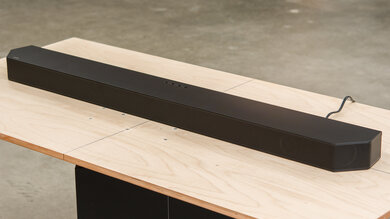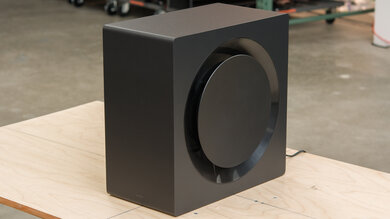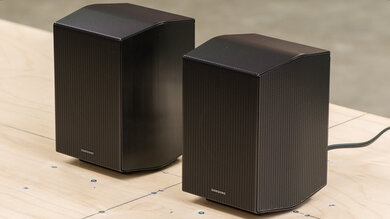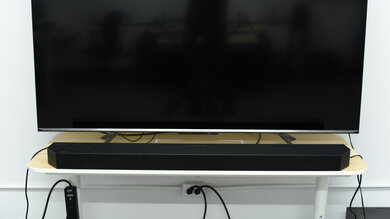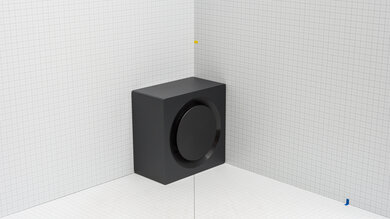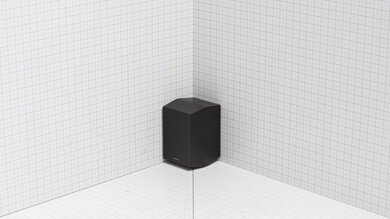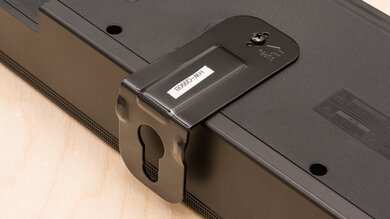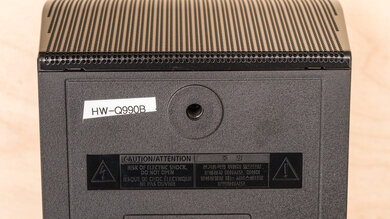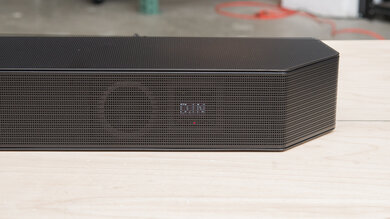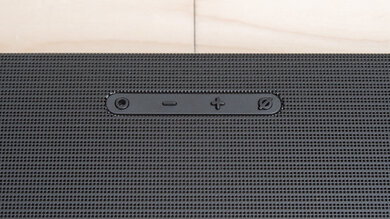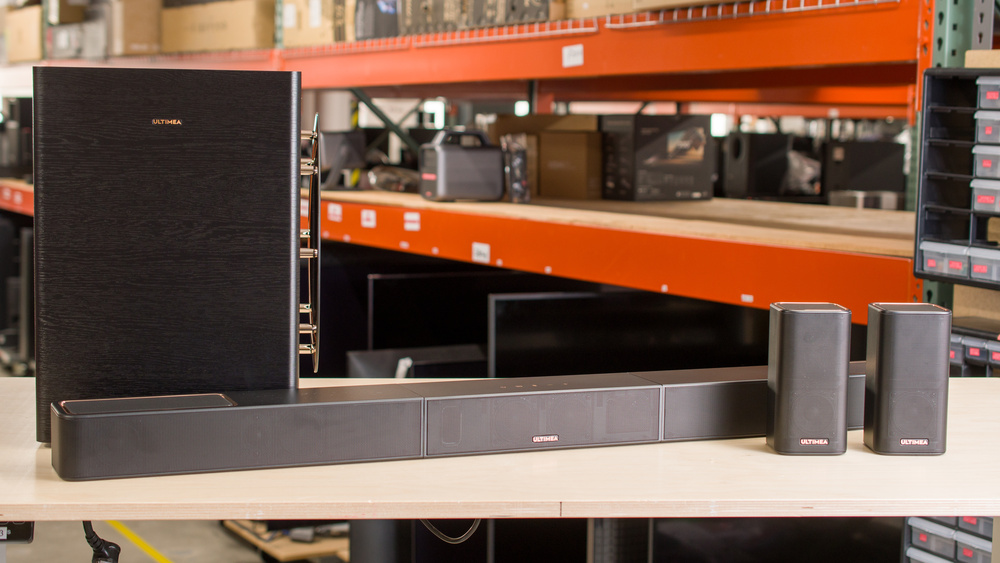
The Ultimea Skywave X70 is a 7.1.4 setup with a discrete subwoofer and two wireless rear speakers. It's positioned to compete with other mid-range offerings from big-name competitors, standing out from the crowd with its snazzy black and gold aesthetic and a host of proprietary technologies. Among them, X-Upmix allows you to up-mix non-Dolby content virtually, while the Gravus subwoofer promises serious low-end oomph.
Our Verdict
The Ultimea Skywave X70 is very good for mixed usage. It has a bass-heavy tuning that adds intensity to action-packed thrillers, as well as kick-heavy electronic tracks. While the bass can get overwhelming at times and comes at the expense of a rolled-off treble range, there are plenty of options to tweak the sound via a 10-band graphic EQ and presets. It can get very loud without compressing much too. Cinephiles might be disappointed by the lack of DTS support, as well as the slightly underwhelming soundstage and center performance.
10-band graphic EQ and presets.
Gets very loud.
Full HDMI In port.
No DTS format support.
No room correction feature.
The Ultimea Skywave X70 is great for dialogue and TV shows. While the default frequency response features an exaggerated bass response, the mid-range is quite balanced, resulting in detailed and clear dialogue reproduction. You can always boost the presence of voices via the 'Voice' mode. While the discrete center channel is also quite bass-heavy, it doesn't impact dialogue too much with content like comedy TV shows, which are generally mid-range heavy.
10-band graphic EQ and presets.
Low latency with all supported formats.
No room correction feature.
The Ultimea Skywave X70 is good for music, though it's more suited to some genres than others. The towering bass response produced by the 10-inch sub is best-suited to 808-infused hip-hop tracks and club bangers. While you can tweak it via the graphic EQ to compensate for the recessed treble range, the bass still has a tendency to be overbearing. Still, it can get plenty loud without compressing much, and though the stereo soundstage isn't especially wide, the mirroring of the soundstage across the rear speakers is less likely to be distracting with music.
10-band graphic EQ and presets.
Gets very loud.
Full HDMI In port.
No room correction feature.
Relatively narrow soundstage.
The Ultimea Skywave X70 is a good choice for movies, though there are some notable caveats. The default frequency response features a pronounced low-end with a recessed treble. While this lends itself well to action-packed chase sequences, the towering bass can interfere with dialogue or other mid-range nuances that get lost in the low-end maelstrom. Still, you can adjust the sound somewhat to make up for this via the graphic EQ and presets. Plus, the bar is capable of getting very loud without compressing too much. The soundstage isn't the widest, though, and the 5.1 and Atmos implementation has some quirks that can take away from the immersion expected of these formats. The lack of DTS format support might bother those with extensive Blu-ray collections.
10-band graphic EQ and presets.
Gets very loud.
Low latency with all supported formats.
No DTS format support.
No room correction feature.
Check Price
Differences Between Sizes And Variants
The Ultimea Skywave X70 comes in just one color variant: 'Black'. If you encounter another variant of this soundbar, please let us know in the comments, and we'll update our review.
Popular Soundbar Comparisons
The Ultimea Skywave X70 is a 7.1.4 soundbar that's posited as a disruptor to mid-range offerings from established brands, like Samsung, while also competing with flagship bars from less established, budget-minded manufacturers, like Vizio. It offers a comparable feature set to the Samsung Q930D, as both bars have HDMI passthrough capabilities and granular sound customization. While the Ultimea gets louder, the Samsung's sound is more nuanced, with a wider soundstage and a more balanced center channel. Compared to the Vizio Elevate SE SL512X-0806, the Ultimea provides more low-end horsepower with a higher top volume and HDMI In compatibility. Still, the Vizio offers a wider soundstage and comparable Atmos performance for a much lower asking price.
Check out our recommendations for the best soundbars, the best soundbars for movies, and the best Dolby Atmos soundbars.
The Samsung HW-Q930D is better for must use cases than the Ultimea Skywave X70. The Ultimea's main advantages are its deep low-end extension and high top volume, which is great for adding a cinema-esque quality to movie night. That said, the Samsung comes out on top in most other regards. The Q930D offers a wider soundstage and a much better center channel performance, for clearer dialogue. It's also better built, comes with a room correction feature and is compatible with more wireless playback options.
The UItimea Skywave X70 and the LG S80TR are similar bars with slightly different trade-offs. Both feature a slightly rolled-off treble range with a more pronounced bass range, though the Ultimea can extend lower. It also sounds a bit more immersive with surround sound and Atmos content. That said, the LG's center channel is more balanced, and it comes with a room correction feature to tune the response to the acoustics of your room. Though both bars have an HDMI In port, the LG is the only one that can passthrough a 4k signal @ 120Hz.
The Ultimea Skywave X70 is a more premium alternative to the Vizio Elevate SE SL512X-0806, though depending on what's important to you, the Vizio might offer better value. The Ultimea offers more low-end firepower and a more balanced default sound, as well as a louder top volume. It also has an HDMI In port for passthrough capabilities and a graphic EQ and presets for sound tweaking. Still, the Vizio has a better build quality, a wider soundstage, and a better center performance. It also offers a comparable Atmos performance to the Ultimea, despite having two fewer up-firing drivers.
The Hisense HS5100 is a more budget-minded, 5.1 option compared to the Ultimea Skywave X70, that makes some compromises to keep costs down. It's not as well-built as the Ultimea and lacks low-bass extension by comparison. It also lacks some of the more premium features, like Dolby Atmos compatibility, and HDMI In port and more granular sound enhancement options. Still, it offers a wider soundstage than the Ultimea, with a better center channel performance. If you don't need the bells and whistles and don't watch much media with Atmos, the Hisense is a good value pickup.
Test Results
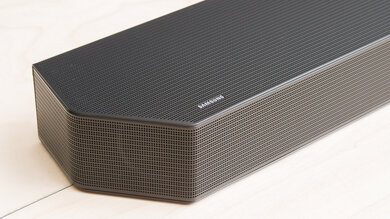
The Ultimea Skywave X70 is made of hard plastic, finished in a semi-gloss black finish that contrasts with the gold brand logo in the center of the bar. There are other gold accents on the bar (the controls and up-firing drivers), giving it a slightly upscale look. As is the norm for most bars, it's wrapped in a metal grill cover that encompasses the front, wrapping around the sides and encasing the up-firing drivers. Interestingly, the bar is shipped in three separate pieces that are connected together using a system of interlocking studs.
The sub is on the larger size, housing a 10-inch driver within its ported design. The side-firing woofer is protected by a hard plastic logo emblazoned with the Ultimea logo, featuring reflective gold trim. All in all, it shares a few aesthetic similarities with a gaming PC tower.
The bar is a little shorter in length than flagship bars like the Samsung HW-Q990F. It's not especially tall either and should fit in most people's living room setup without obscuring viewing angles.
The Ultimea Skywave X70 has a good build quality. While the design leans towards being quite plastic-heavy, the overall construction is quite solid. The bar features rubber feet at its bottom to mitigate slippage, and most of the drivers are protected by a sturdy metal grille cloth. The subwoofer showcases the best build quality among its components, boasting a wood-grain enclosure with a pleasing weight. By contrast, the satellites are lightweight, plastic-heavy affairs that don't ooze the more premium feel of the subwoofer.
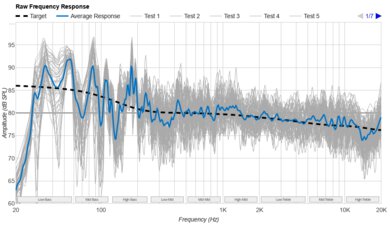
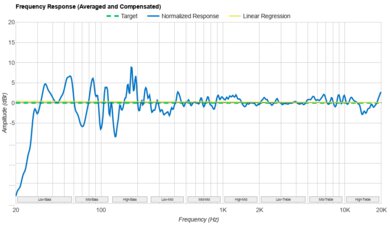
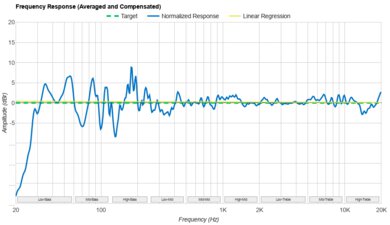
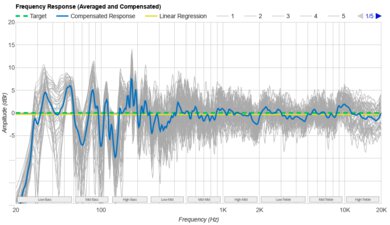
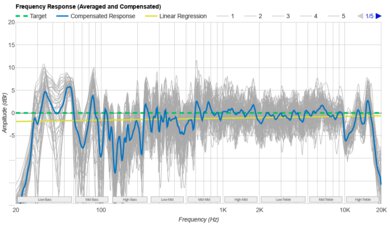
The Ultimea Skywave X70 has a good frequency response, though we feel it sounds worse subjectively than our scoring indicates. Ultimea themselves recommended the following settings for optimal performance: X-Upmix (virtual surround) disabled, Treble set to 10, and up-firing (height) set to max in the app. However, besides disabling X-Upmix, we subjectively found that the boosted treble introduced too much sibilance into the mix, and the changes to height settings slightly increased the height at the expense of overall dynamic balance. As a result, we measured it in 'Standard' mode with the X-Upmix setting disabled and other settings untouched.
This results in a bass-heavy sound, characterized by plenty of rumble and boom; however, the low-end often sounds muddy and lacks finesse. Although it's able to extend quite low, the bass range has a tendency to spill over into the mids, particularly with bass-heavy music and media. By contrast, the treble range is rolled off, resulting in a darker sound that buries instruments like cymbals and hi-hats in the mix when playing back music. It also detracts from the presence of dialogue and voices, although speech remains relatively clear and intelligible.
There are a few different sound modes you can toggle between to switch up the sound, though they tend to influence the width of the soundstage more than the frequency response. X-Upmix pushes the sound to the rears for greater immersion, but also augments the already bloated bass and supplements it with extra low-mids, making for a very warm sound.
Adjusting the bass to '-3' and the increasing the treble to '3' helps to tame some of the unruliness of the bass range while increasing clarity and detail in the high-end.
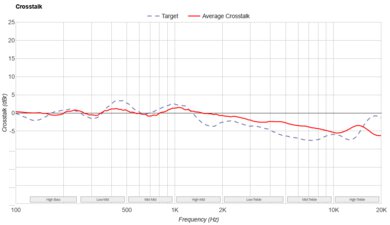
The soundstage performance is okay. The stereo field extends to the extremities of the bar but is also outputted to the rear surround speakers. While tracking from left to right is generally responsive, any panning to the extremities causes playback to switch to the rear speakers behind you, which can be disconcerting.
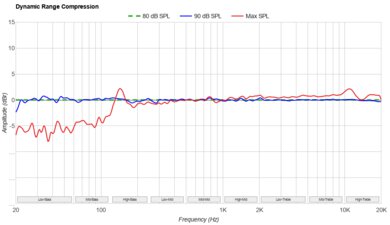
The dynamics performance is great. This bar can get pretty loud and is capable of reaching top volumes that might not be advisable for apartment dwellers. There's minimal compression at regular listening levels, though this changes at higher volumes, where bassy rumbles are throttled somewhat.
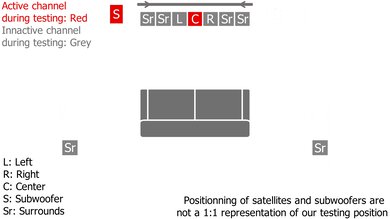
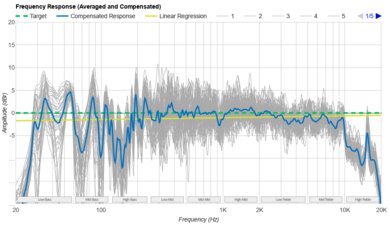
The Ultimea Skywave X70's center channel performance is decent. Although the bar features a discrete center channel, it's hampered by a very bass-heavy response that can cause dialogue to sound bloated. The roll-off in the treble range also means that voices lack some high-end sheen. The mids are at least well-balanced in the mix, so the fundamental frequencies of voices and dialogue are still present.
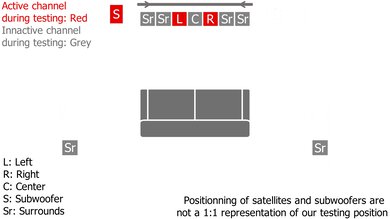
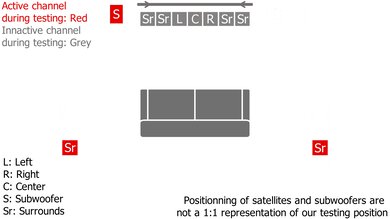
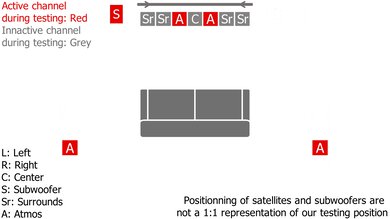
The surround performance is good. While the frequency response in the surround channels is a little uneven, erring towards bass-heavy, this can help bring out some of the rumble in action sequences. The balanced mid-range ensures dialogue cuts through, though voices lack a bit of air and presence at the very top end of the frequency range. Using the X-Upmix mode helps push audio further to the surrounds, though it also increases the bass, resulting in an extremely boomy sound.
With the X-Upmix setting off, the frequency response across the Atmos drivers is relatively balanced. There are four up-firing drivers (two in the bar and two in the rear speakers) that bounce audio off the ceiling to simulate the effect of height in Atmos content. That said, the way in which the height drivers interact causes Atmos implementation to be a little shoddy. The balance between the up-firing drivers is skewed towards the rear speakers, meaning that vertical movement (and to a lesser extent, horizontal movement) seems to come from behind you. The bass-range can sound very boomy during explosions and other action-packed sequences, while other mid and treble-range sound effects can sound very compressed and boxy.
Overall, we found that Atmos content lacked some refinement and nuance, as the one-note nature of the sub and the imbalance between the height drivers result in a very uneven Atmos implementation. Enabling X-Upmix can help increase immersion, widening the sound field, but it boosts the bass to the point where the overall sound can be a little fatiguing.
The Ultimea Skywave X70 comes equipped with an array of sound customization options. As with most other bars, there's a voice enhancement mode and a night mode (which disables the sub) to complement the other EQ modes such as 'Cinema', 'Music', and 'Game'. Each mode has its own independent bass/mid/treble controls. You can also access a 10-band graphic EQ in the app for more granular sound shaping, as well as a 'Style EQ' that adopts a less conventional interface. There's even a virtual surround mode in the form of X-Upmix (toggleable via the remote), which virtually up-mixes audio to the surrounds for a more immersive experience. Unfortunately, there's no room correction feature to tune the frequency response to the unique acoustics of your room.
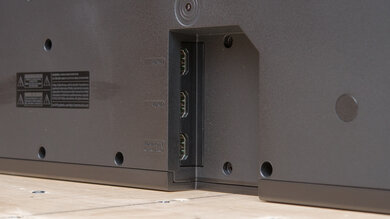
This soundbar's connectivity options include an HDMI eARC out, a single full HDMI In port, an optical port, and a USB port that lets you load MP3/FLAC files.
This soundbar supports most common audio formats via an eARC connection. It's compatible with Dolby Digital and Dolby Atmos formats, as well as Dolby TrueHD and Dolby Digital Plus. However, the latter of these formats caused a slight glitch, which led to the dedicated surround signal playing back on both the bar and rear speakers. Unfortunately, it lacks support for all DTS formats, which can be inconvenient if you want to play certain Blu-rays or stream from platforms like Disney+.
This bar has similar format compatibility when using the HDMI In port, with support for all major Dolby formats, though a similar glitch occurs with Dolby Digital+ that causes the dedicated surround signal to play back on both the bar and rear speakers. There's no support for any DTS formats.
The Optical port supports Dolby Digital and DTS formats. While we were expecting to have similar issues with DTS to what we had with other connection types, surprisingly, the soundbar was able to output sound with this format.
The Ultimea Skywave X70 has great latency across all formats, resulting in tight sync between audio and video. While latency is slightly higher with formats that require more processing from the soundbar, such as Dolby Digital Plus Atmos, it still falls within acceptable values.
Latency with the HDMI In connection is great. The syncing of audio and video is still tight across all formats.
Latency falls within very good values when using an optical connection, although it's a fair bit higher with Dolby Digital than with PCM 2.0 playback.
This bar has good video passthrough capabilities, thanks to its HDM In port. Though it lacks HDMI 2.1 bandwidth, it's capable of passing through 4k signals at a max refresh rate of 60Hz. It also features support for HDR formats as well as Dolby Vision passthrough.
In terms of wireless playback options, this bar is limited to just Bluetooth. There's no Wi-Fi support or support for other convenient streaming technologies, like Chromecast or Apple AirPlay.
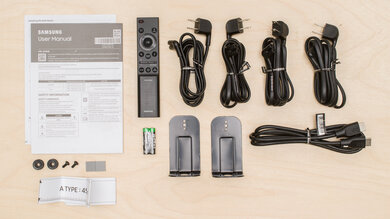
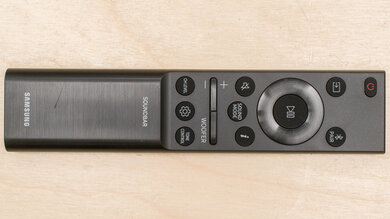
The Ultimea Skywave X70 comes with a simple remote that lets you control basic functions from your couch. We found that it only worked with disposable batteries, as opposed to the rechargeable lithium variety we're used to using. If you prefer to do everything with your phone, you can also use the Ultimea app.