Our Verdict
Decent for mixed usage. The Yamaha YAS-207BL has a good audio reproduction that will be suitable for most music genres and dialogue content like podcasts and audiobooks. However, it has sub-par performance with surround channels and doesn’t support height channels, resulting in a less immersive listening experience. The bar has a small tilt favoring bass frequencies and will be better suited for bass-heavy music genres, but this won’t be too audible for most. Also, its soundstage isn’t that wide, and it will downmix 5.1 surround content down to 2.1.
- Neutral sound signature.
- Decent build quality.
- Good overall stereo performance.
- Lacks sub-bass.
- Barebones app.
Good for dialogue. You can use this soundbar to listen to podcasts, audiobooks, or other similar content types. The sound profile is fairly neutral and the overall reproduction of voices will be accurate. It can also get pretty loud and you can also use the Dialogue Enhancement feature to get an even better listening experience. You’ll be able to stream content from your phone wirelessly, but unfortunately, it doesn’t have an auto-volume or night mode to normalize the sound of your different type of content.
Decent for music. The audio reproduction of this soundbar is accurate, but has a slight overemphasis in the bass, adding a bit of boominess. While its soundstage isn’t very wide, it's well-focused and doesn’t sound too defused. There’s not much compression at a moderate volume, but when pushed at the maximum volume, you might hear a bit of pumping and compression artifacts in the bass range, especially on bass-heavy genres. On the upside, you can easily adjust the level of the subwoofer separately.
Okay for movies. This soundbar has good overall audio reproduction, but it doesn’t do well with surround channels. On top of that, the soundstage isn’t that wide and it doesn’t have height channels. All of this will result in a less immersive listening experience. This 2.1 setup will downmix 5.1 content and won’t sound as real as other setups. On the upside, the compression performance is good and you have a few features to customize your sound a bit to your liking, although you won’t have room correction.
Changelog
- Updated Mar 30, 2021: Converted to Test Bench 1.0.
- Updated Sep 27, 2019: Review published.
Check Price
Popular Soundbar Comparisons
The Yamaha YAS-207 is a decent performing soundbar that offers good sound for music and dialogue at an affordable price. It won't be the best option for movies like some high-end soundbars since the YAS-207 doesn't support Atmos. See our recommendations for the best soundbars, the best soundbars under $300, and the best budget soundbars.
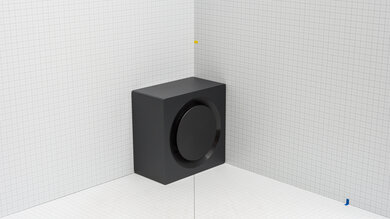
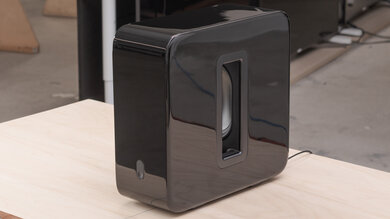
The Sonos Beam (Gen 2) is better than the Yamaha YAS-207 for most uses. The Sonos is a better-built 5.0 setup with a small, standalone design. Unlike the Yamaha, it supports Atmos content and has better center and surround performances. There are also some more sound enhancement features available, like room correction. However, it doesn't come with a dedicated sub like the Yamaha. As a result, the Yamaha reproduces a much more extended low-bass. That said, you can always buy a compatible sub from Sonos to add to your setup separately.
The Samsung HW-R650 is a slightly better performing soundbar than the Yamaha YAS-207, especially due to its dedicated center channel, which is great for voices and dialog. It's also a bit better-built but doesn't have the extended bass of the Yamaha. The Samsung also has more features like a dialog enhancement and night mode, on top of having a graphic EQ.
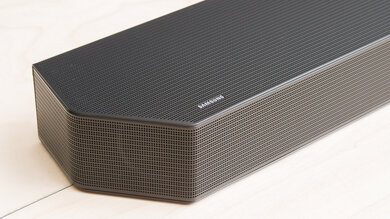
The Samsung HW-Q600A is better than the Yamaha YAS-207. The Samsung is a 3.1.2 setup that's better built. Unlike the Yamaha, it supports Dolby Atmos content. It has a better center channel performance and more sound enhancement features, like a graphic EQ and presets. That said, the 2.1 Yamaha has a better surrounds performance.
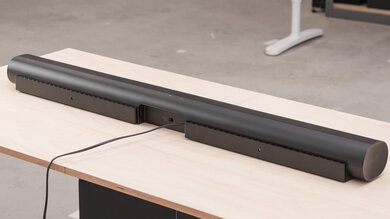
The Sonos Arc is better than the Yamaha YAS-207. The Sonos is a 5.0.2 setup that's better built. Unlike the Yamaha, it supports Dolby Atmos content and has built-in voice assistant connectivity. It also has better soundstage, center, and surround performances and more sound enhancement features available. The Yamaha has a dedicated sub that helps reproduce a more extended low-bass. It also has a Full HDMI In port, unlike the Sonos.
Test Results

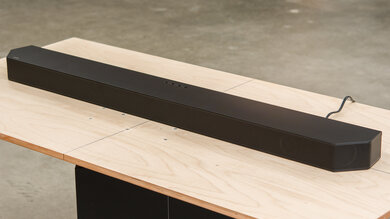
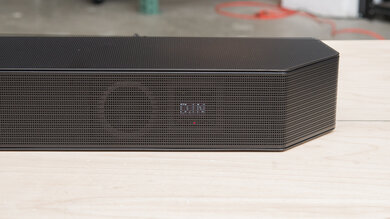
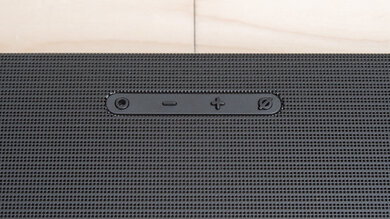
The Yamaha YAS-207BL is an all-black and grey soundbar that doesn’t stand out. It's made from plastic and there’s a mesh-like fabric covering most of the sides of the bar. The touch-sensitive controls are on the front, and the top part is covered by plastic with a faux leather-like finish. However, the overall look doesn't feel premium.
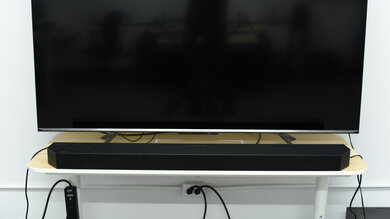
The Yamaha YAS-207BL is fairly wide and might not fit between the legs of a TV stand of most 55 inch TVs. It isn't too high and shouldn’t cover the bottom part of your screen unless you have a TV like the Sony A9F or Sony A9G, where the screen is sitting on the table.
The Yamaha YAS-207BL has a decent built quality. The main part of the frame is made from plastic and doesn’t feel as solid as other higher-end models. The bar is also mostly covered by mesh-like fabric that can more easily get dirty and damaged than bars that are made from metal. The mesh is sensitive to ripping, but it shouldn’t be a problem for most if you don’t move the bar around too much. The top part of the bar is covered by textured plastic that looks like faux leather but doesn't feel quite as nice. If the loose fabric is an issue for you, check out the Polk Audio Signa S2 who feels ever so slightly better built and has a tighter fabric covering its speakers.
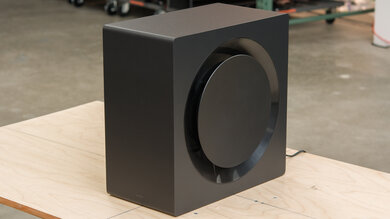
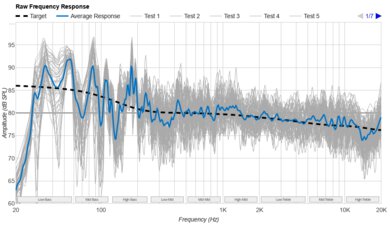
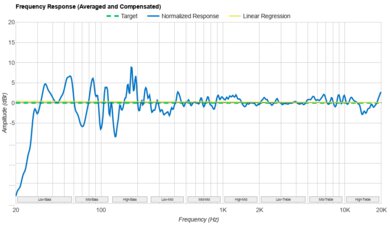
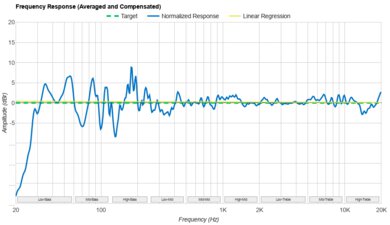
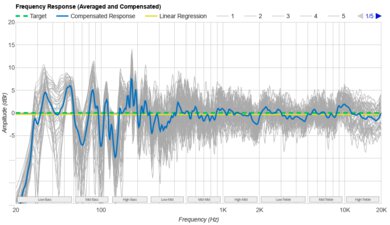
The Yamaha YAS-207BL has a very good stereo frequency response which results in a neutral and accurate sound profile. The low-frequency extension is only decent though, so while it can produce fairly deep thump and rumble it isn't as good as some higher-end soundbars with more bass, like the HW-Q90R. On the upside, this setup has an accurate audio reproduction in the mid and treble ranges, resulting in great vocals, lead instruments, dialogue, and sounds in the treble range (like S and Ts). Some may feel like it's a bit light on bass, but you can use their Bass Extension setting or adjust the level of the subwoofer to your liking. Also, check out the Yamaha YAS-209, which is the 2019 version of the YAS-207, for a better bass performance.
When listening to the YAS-207, the stereo soundstage is decent. It's fairly small, about the width of the bar, but very focused. On the upside, it doesn’t sound too diffused, which is good because objects seem to be coming from a more accurate pinpoint location rather than from a general area. It sounds more natural than the soundstage of the Bose Soundbar 500, but less wide.
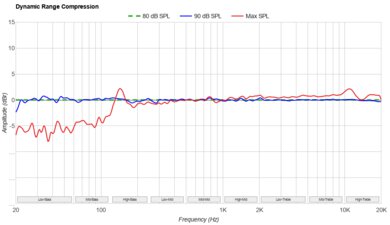
The Yamaha YAS-207BL can get pretty loud, which is good to use in a larger room or a crowded environment. However, when pushed to max volume, you get pumping and compression artifacts in the bass range, especially on bass-heavy content.
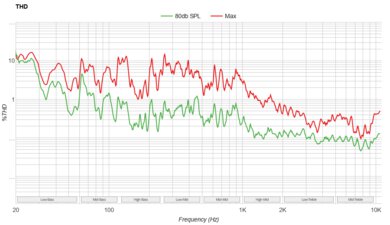
The YAS-207's THD performance is very good at normal volume (80dB SPL) and results in a clean sound and great fidelity of audio reproduction. However, when pushing the bar to its maximum capacities, there's a jump in THD in the bass range, but this won’t be audible to most people when playing real-life content.
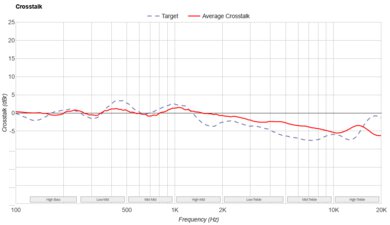
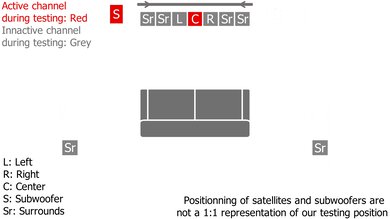
The Yamaha YAS-207BL is a 2.1 soundbar setup that doesn’t have a dedicated center speaker but still has a good overall performance. It uses the left and right speakers to create a sound in the center, which will sound more diffused and less clear compared to a discrete center. When sending a 5.1 surround sound signal, the YAS-207 will downmix it to 2.1 and will sound as good as how it sounds with a stereo signal, but without an immersive feel.
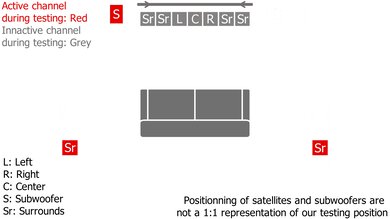
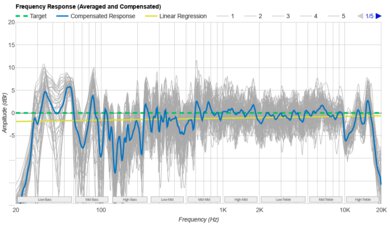
The YAS-207's audio reproduction when sending surround content to the soundbar is sub-par. Everything is downmixed to a stereo signal since this soundbar is a 2.1 setup. It uses the left and right speakers, which won’t do an accurate and clear representation of surround objects. This means the result won't be very immersive and the objects are perceived to come from the front instead of the sides or behind you.
This soundbar setup doesn’t have height channels and doesn’t support Atmos.
The Yamaha YAS-207 has sub-par sound enhancement features. It's missing Room Correction, which means this soundbar may sound differently depending on your room. There's no Auto-Volume/Night Mode to normalize the sound levels of louder content like commercials when watching a TV show, but it does have a feature to help dialogue sound clearer, even at lower volumes. You can also separately adjust the level of the subwoofer, which is great to adjust the amount of bass the sub is producing. Also, there's no bass adjustment per se, but it does have a Bass Extension feature that gives you the impression of a lower LFE. Although the bar has a 3D surround mode, the sound quality isn't the best when using it. You'll be better off using the normal surround mode, which doesn't sound as bad.
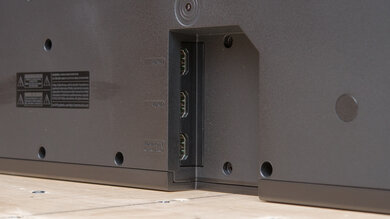
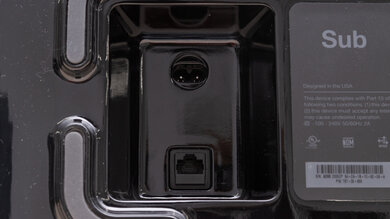
The Yamaha YAS-207BL has just the most common inputs. You have an Optical Audio In, which can be used for surround sound, although you also have an HDMI ARC and a Full HDMI In ports, which can be useful if you want to plug in a game console or a Blu-ray player. You can also plug in your cellphone via the Analog 3.5mm jack if you prefer having a high-quality wired connection instead of Bluetooth for your mobile device.
The YAS-207's supported audio formats over ARC are decent. Over their HDMI ARC port, this soundbar supports Dolby Digital and DTS, which most soundbars do. This means you’ll receive 5.1 surround sound on almost any content that supports it like streaming platforms and Blu-ray discs. Unfortunately, via ARC, you won’t be able to play lossless or object-based formats.
The Full HDMI In allows your soundbar to serve as a hub. Via this port, the soundbar supports both Dolby Digital and DTS, which means you'll be able to play 5.1 audio from streaming services like Netflix and games, which support surround sound. Additionally, 5.1 PCM is also supported, which is rarer on soundbars, so you’ll have uncompressed surround sound performance with sources like a PC or console.
Like most soundbars, the Yamaha YAS-207BL supports both Dolby Digital and DTS via their optical cable. This means you’ll receive 5.1 surround sound on almost any content that supports it like streaming platforms and Blu-ray discs. However, for uncompressed audio, you must use the Full HDMI In to play 5.1 PCM.
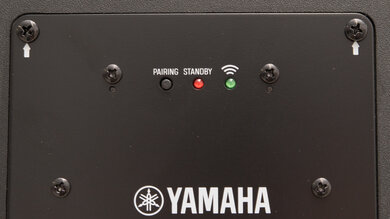
The YAS-207 can connect wirelessly only to a Bluetooth source. You’ll be able to connect your phone to the soundbar via Bluetooth, just like you would with wireless headphones. Unfortunately, this soundbar can't access a network and doesn't support Chromecast built-in or AirPlay, and you won't be able to cast from your device to the soundbar.
The YAS-207 can be connected between your TV and another source like a game console to play 4k content at 60Hz. However, it won’t do so for 10bit video signals or for 4:4:4 when connected to a PC. You’ll only get 30Hz passthrough. On the upside, it does support HDR10 passthrough, which can be useful for those who have a Blu-ray player or latest-gen gaming consoles.
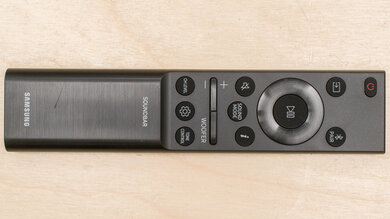
The Yamaha YAS-207 remote is very small but offers useful controls. You can switch the input, enable stereo or surround sound, and trigger sound effects like Clear Voice or Bass Extension. You can also control the volume of the soundbar and the sub independently or even mute them. The ‘Dimmer’ key can be used to change the brightness of the LED indicators while the ‘Bluetooth Standby’ function allows the unit to be turned on or off using your Bluetooth device.
Unfortunately, the YAS-207 doesn’t have any built-in voice assistants and you’ll have to use your Android phone via Bluetooth to use these functions. We weren't able to use Siri or Alexa to control the bar.
The Yamaha Home Theater Controller is a pretty basic app but almost offers the same features as the remote. The only features missing inside the app are the Bluetooth Standby and Dimmer. Unfortunately, you can’t play files directly from inside the app and you will rather need to switch to the respective apps you want to use, such as Spotify or Netflix, to be able to control the playback. On the upside, the app works seamlessly and without too much delay.
The soundbar can automatically turn itself off after being idle for a while or when disconnecting the bar from the source. It also supports HDMI CEC, so you can use your TV’s remote to control some of the soundbar features such as volume and power.