The Yamaha YAS-209 is an entry-level soundbar with a 2.1 setup. Overall, it's a decent soundbar with a well-balanced sound profile. The subwoofer helps create good bass, so the soundbar's good for many different uses. The soundbar has two channels, left and right, so without any dedicated satellites speakers, it can't properly project surround sound. However, there's a virtual surround sound setting, which may help it with this problem. It has a built-in Alexa feature and the controls are fairly easy to use. It's a slight improvement over the Yamaha YAS-207, with a sleeker design.
Our Verdict
The Yamaha YAS-209 is a decent soundbar with a well-balanced sound profile. It has a great frequency response, and the subwoofer helps produce good bass. The soundbar won't offer an immersive listening experience because of its lack of surround sound and height channels. Alexa users will be happy with a built-in Alexa feature. In addition, the soundbar has a simple, sleek design that won't stand out with most TV setups.
- Well-balanced sound profile.
- Decent build quality.
- Very good stereo performance.
- Poor surround performance.
The Yamaha YAS-209 is good for dialogue. As a 2.1 system, the soundbar is able to reproduce voices and dialogue well, and has a dialogue enhancement feature to enhance clarity. Unfortunately the soundbar doesn't get very loud, but most TV shows won't need max volume.
Decent for music. The Yamaha YAS-209 has a well-balanced sound profile, and the dedicated subwoofer produces a good low-frequency extension, which is good for bass-heavy music. The stereo soundstage is alright, but on the upside, there isn't much compression at the max volume, so the quality doesn't decrease the louder it gets.
Okay for movies. The Yamaha YAS-209 doesn't have dedicated satellite speakers, and there's no Atmos support, so this might not please most movie fans. The soundbar mixes surround sound content to the left and right channels, so it gives out a more stereo feel. However, there's a virtual surround setting to try to help with this problem, but we didn't measure this setting.
Changelog
-
Updated Oct 23, 2024:
The Bass Extension and Dynamic Range Compression (DRC) features have been mentioned in the Stereo Frequency Response With Preliminary Calibration and Sound Enhancements sections, and an outdated note was deleted from Stereo Dynamics. We've also removed out-of-date notes related to bugs in our testing process.
- Updated Mar 21, 2024: We've added a comparison between this soundbar and the Hisense HS2100 in Sound Enhancement Features.
- Updated Mar 27, 2023: Added cable lengths to In The Box.
- Updated Mar 22, 2023: Converted to Test Bench 1.1. With this update, we've added a Mounting test and added information aboutSubwoofer Output, Spotify Connect, and Microphone Mute.
Check Price
Popular Soundbar Comparisons
The Yamaha YAS-209 is a decent overall soundbar with good performance for a 2.1 setup. It has one of the better-performing stereo frequency responses that we've tested so far. This soundbar doesn't support Atmos content, so it's not as great of an option for movies compared to some of the higher-end models, but the wireless subwoofer is a good addition to an entry-level soundbar. It doesn't get loud like some other soundbars, but there isn't much compression at max volume. See our recommendations for the best soundbars, the best soundbars with subwoofers, and the best budget soundbars.
The Sonos Beam (Gen 2) is better than the Yamaha YAS-209. The Sonos is a better-built 5.0 setup that supports Dolby Atmos content. It also has better soundstage, center, and surround performances. Its compact design may be more suitable for some users. However, the 2.1 Yamaha has a dedicated sub that can reproduce a more extended low-bass. Unlike the Sonos, it also has a Full HDMI In port for high-quality passthrough.
The Yamaha YAS-209 is a bit better for mixed usage than the Bose Soundbar 500. The Yamaha reproduces a more extended low-bass, and it has a better center channel performance. Unlike the Bose, it has EQ presets for sound customization as well as Full HDMI In port. However, the Bose is better built, and it has a room correction feature. Also, it supports Apple AirPlay connectivity.
Depending on your listening habits, you may prefer either the Bose Smart Soundbar 300 or the Yamaha YAS-209. The Bose is a 3.0 setup with better center channel and soundstage performances. It's better-built, with more wireless playback options, and it gets louder. That said, the Yamaha reproduces a more extended low-bass, so you feel more thump and rumble in bass-heavy music and action-packed movies.
The Yamaha YAS-209 and the Klipsch Cinema 600 are very similar soundbars, meaning you may prefer one over the other. The Yamaha is better-built, and thanks to its Full HDMI In port, it supports 4k passthrough, unlike the Klipsch. However, the Klipsch has a better soundstage, and it can get louder.
Test Results

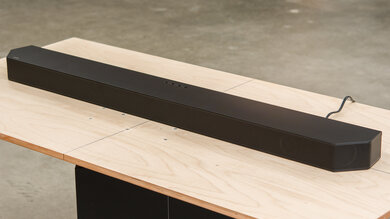
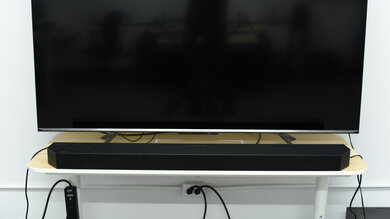
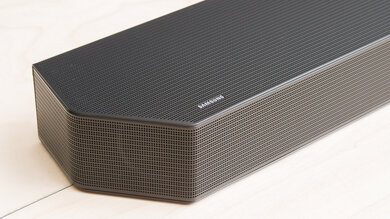
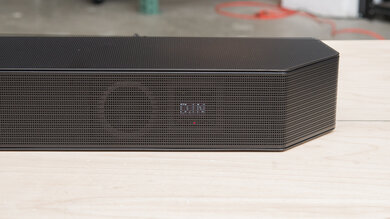
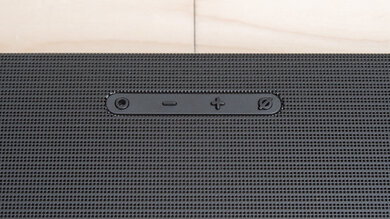
The Yamaha YAS-209's bar has a simple style with an all-black design. It's made out of mesh around the soundbar, but the top and the back where the inputs are placed are made out of plastic. Unlike the Yamaha YAS-207, whose controls were in front, the controls on the Yamaha YAS-209 are on top, so you won't see any distracting control lights when watching TV.
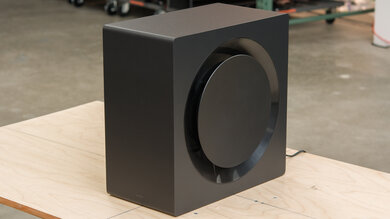
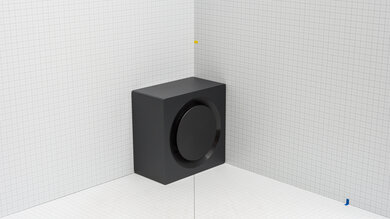
The subwoofer has a straightforward design. It's made out of melamine, but one of the sides and the front are completely covered by mesh fabric. The port is in the front and made from a glossy plastic, which looks like an improvement over the Yamaha YAS-207.
The Yamaha YAS-209 has decent build quality. The controls on top of the soundbar are a nice improvement on the Yamaha YAS-207, but overall, the two look similar. Mesh-like fabric covers the soundbar, except the top and back for the inputs, which are both made with plastic. Mesh fabric is prone to attract dust and get dirty, especially if you have animals in the house. The fabric can also rip, but this shouldn't be a problem if it doesn't move around too much. The subwoofer is made mostly of melamine, but a mesh fabric covers the front and one side.
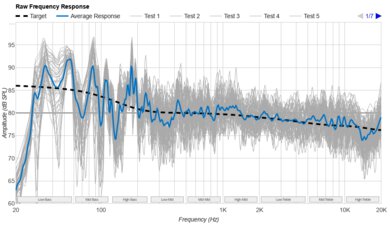
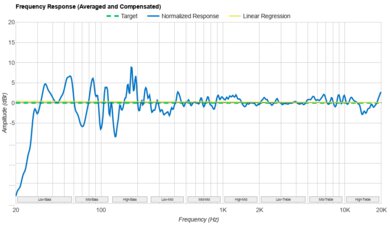
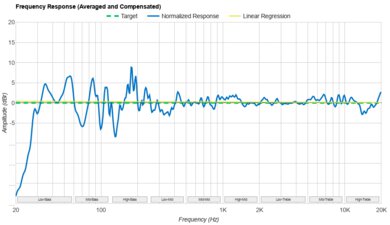
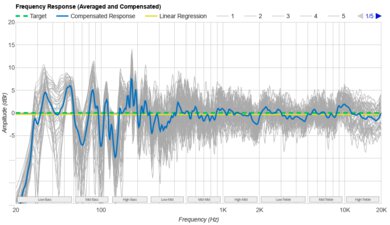
The Yamaha YAS-209's stereo frequency response is great. Its dedicated subwoofer helps create a good low-frequency extension, which is great for movies and bass-heavy music. It creates quite a bit more bass than the Yamaha YAS-207. The rest of its sound profile is fairly well-balanced and is suitable for a wide variety of content.
The default settings don't need calibrating, but there's a Bass Extension feature if you want more low-end.
The stereo soundstage of this soundbar is decent. It's ever so slightly wider than the bar itself and sounds very focused. You can easily tell that objects come from an accurate pinpoint location rather than a general area, like they do when listening to the Bose Soundbar 500, which sounds more diffused. For a soundbar with a better soundstage, check out the Klipsch Cinema 600.
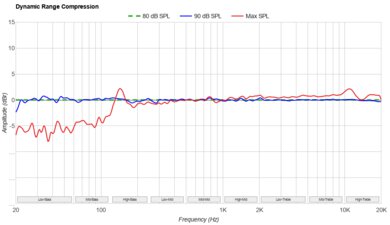
The Yamaha YAS-209 has decent stereo dynamics. While it doesn't get as loud as the Sony HT-G700, it should still satisfy most listeners. There isn't much compression at max volume, which is great.
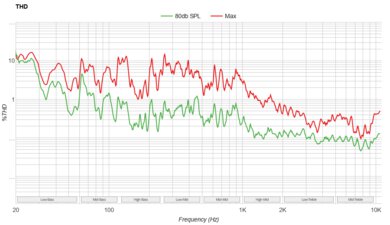
The stereo total harmonic distortion performance is good. The THD is within good limits and there's no significant jump under heavier loads. This means that the sound should still be clear and pure, even at max volume.
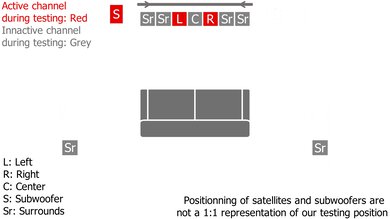
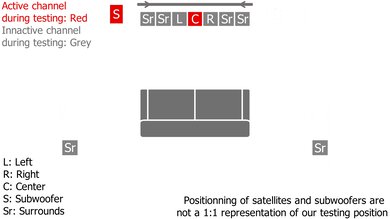
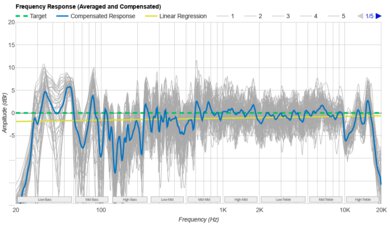
The center channel performance of the Yamaha YAS-209 is decent. Since this is a 2.1 system, the bar lacks a dedicated center channel and instead uses the stereo channels to create a phantom-localized center. This results in a more diffused and less clear reproduction of center noises. On the upside, It still has a fairly well-balanced sound, but is noticeably quieter than other soundbars.
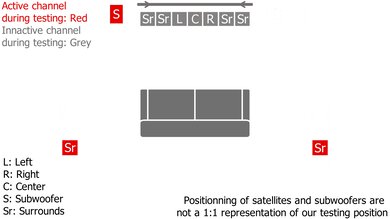
Due to its 2.1 configuration, the Yamaha YAS-209 has poor surround performance. It can receive surround content, but will downmix it to be able to play it with the left and right speakers. This means that sounds might feel like they're coming from in front of you rather than around. On the upside, it has a virtual surround setting which might help with this, although we tested the soundbar with the default settings.
This soundbar doesn't support Atmos content. If you're looking for a 2.1 setup with Atmos support and you don't mind it downmixing this content into stereo to play it, check out the Sony HT-X8500.
The Yamaha YAS-209 has a few sound enhancement features and even has six EQ presets made for different types of content, which weren't available on the Yamaha YAS-207. It also features a DTS-X 3D virtual surround setting and an immersive surround mode, although we didn't test those as we test soundbars with their default settings.
It doesn't have a proper EQ, but you can toggle on/off the Bass Extension for more low-end. The soundbar also lacks a dedicated Night mode, but if you set the Dynamic Range Compression (DRC) to the 'Maximum' setting (the others are 'No' and 'Standard'), it can even out the loudness of the quietest and loudest sounds in your movies, which is useful when you don't want to bother others.
For a 2.1 stereo soundbar that offers more features, check out the Samsung HW-T550 or the Klipsch Cinema 400. You can also check out the Vizio V Series V21x-J8 or the Hisense HS2100 if you want a bar with more bass and treble adjustments.
The Yamaha YAS-209 has most of the common inputs. There's an Optical Audio In for TVs that don't have an HDMI ARC, and HDMI ARC and Full HDMI In ports are included, which can be used if you want to connect a Blu-Ray or gaming console. Unfortunately, if you're looking for a wired connection to your phone, there's no analog 3.5mm jack. Additionally, there's a USB slot, which can only be used for updates, and an Ethernet port as well.
The supported audio formats over ARC on the Yamaha YAS-209 are decent. Like most soundbars, it supports both Dolby Digital and DTS over the HDMI ARC port. This way you'll receive 5.1 surround sound on most content that supports it, like streaming platforms and Blu-rays, but since this is a 2.1 bar, it'll downmix the signal to be able to play it. Unfortunately, it doesn't support lossless or object-based formats. For a 2.1 soundbar that supports Dolby Digital Plus content, check out the TCL Alto 8+.
The Yamaha YAS-209 soundbar can serve as a hub via the Full HDMI In port. With Dolby Digital and DTS support, you'll be able to play 5.1 audio from any source that supports surround sound but since this is a 2.1 bar, it will downmix the signal to be able to play it. Also, the HDMI 5.1 PCM video didn't play any sound in our tests, but the manual says it's supported on the soundbar.
This soundbar supports both Dolby Digital and DTS via the optical cable, like most soundbars. You'll receive 5.1 surround sound on any source that supports it, like Blu-ray discs, but it will be downmixed.
The Yamaha YAS-209 has both Bluetooth and Wi-Fi connectivity. There's a built-in Alexa feature, and you can connect your phone to play music from your favorite apps. Unfortunately, the soundbar doesn't have Google Chromecast or Apple AirPlay support.
The Yamaha YAS-209 supports 4k @ 60Hz, 4k @ 60Hz @ 10 bit, 4k @ 60Hz @ 4:4:4, and HDR10 passthroughs. This is an improvement over the Yamaha YAS-207, which only supported 4k @ 60Hz and HDR10 passthroughs. You'll be able to connect Blu-ray players, gaming consoles, or your PC monitor with these available passthroughs.
The Yamaha YAS-209 has an interface with light indicators, which lets you know which settings you're on. The interface is responsive, and there weren't any problems with it. The controls are on top, so you shouldn't see any blinking lights when facing it, but you also won't know which settings you're on.
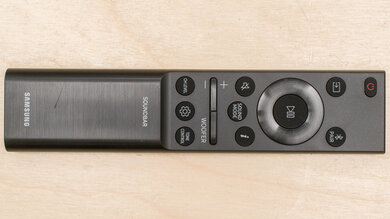
The remote for the Yamaha YAS-209 is curved, compared to the straight design of the Yamaha YAS-207. However, the curve faces inwards, so it's a bit awkward to hold. There are input controls, and a child lock procedure on the remote as well. You can control the volume of the soundbar and the subwoofer independently, and there are six different sound settings you can change with a click of a button. The Yamaha Sound Bar Controller app is pretty much a digital version of the Yamaha YAS-209 remote, too, so you're able to control the bar from your smartphone.