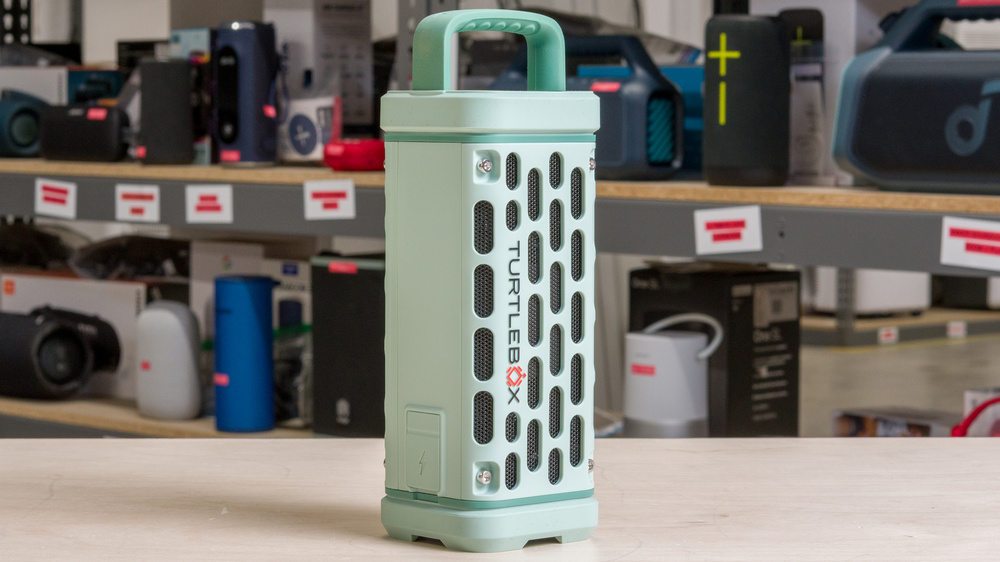
The Turtlebox Ranger is a portable, lantern-shaped speaker, designed to go with you anywhere, no matter the conditions. Its build emphasizes that you can take it anywhere, with tie-down bars, magnets to lock it into place, and the flexibility to pop it upright or sideways. As the brand's smallest Bluetooth entry, on paper, it exudes its larger counterparts' outdoorsy sensibilities in a smaller package. Still, as with any speaker, there are compromises, such as the absence of any app and EQ.
Our Verdict
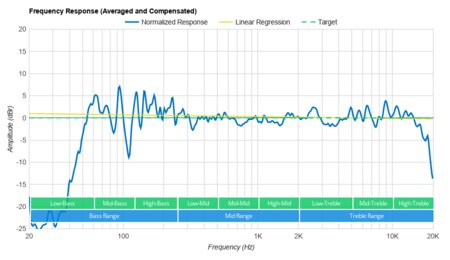
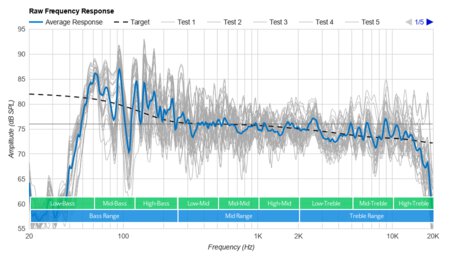
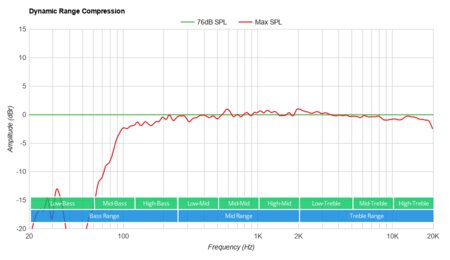
The Turtlebox Ranger is middling for music. Its bass lacks a deep low-end, robbing music of some of its thump and rumble, but the mid-range is fairly flat, and the low-treble conveys melodies and vocals as relatively natural, if slightly veiled in the high-end. Unfortunately, there's no EQ to tinker with to compensate for the sound profile, and the mono speaker design means your music is downmixed from stereo. If you choose to crank the tunes, the bass compresses and sounds weaker at max volume. On the bright side, the tactile buttons make playback easy to control, and you can add either a second identical speaker to make a stereo pair or another compatible speaker for party mode.
Very well-built.
Party and stereo modes available via controls.
No equalizer.
Notable compression at max volume.
Lacks low-bass, due to size.
Sound is somewhat sensitive to directivity.
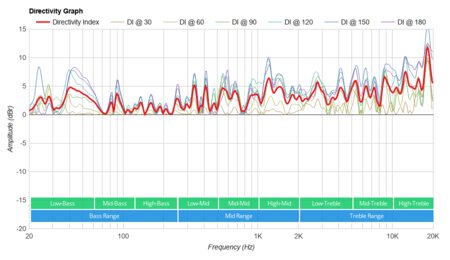
The Turtlebox Ranger is middling for watching videos and movies. In its favor, the speaker is low latency with iOS/Android yielding closely matched A/V, and it renders speech as reasonably clear, even if it isn't very full-sounding during action scenes. On the downside, the sound is sensitive to placement, so for a solo viewing, it's not bad, but for groups of people, the treble isn't as clear for anybody seated at the peripheries of the soundstage. Plus, at higher volumes, the bass is weakened and compressed. Because it's a mono speaker, movie and TV show audio gets necessarily downmixed, which doesn't feel as immersive.
Very well-built.
No equalizer.
Notable compression at max volume.
Lacks low-bass, due to size.
The Turtlebox Ranger is okay for podcasts. Since the speaker delivers an even-sounding mid-range with a fairly clear top-end, hosts of your favorite podcasts play back sounding natural. Its large tactile buttons make controlling audio a breeze, and with its lightweight and sturdy handle, it's simple to use and easy to move. The nearly 11 hours of battery life allow you to binge through several episodes without a recharge. However, because the speaker's soundstage is sensitive to placement, if you move about, voices can be harder to make out when the front of the speaker faces away from you.
Very well-built.
Portable and easy to carry.
Notable compression at max volume.
Sound is somewhat sensitive to directivity.
The Turtlebox Ranger speaker can't connect to a voice assistant function, and it lacks a microphone.
The Turtlebox Ranger is passable for outdoors. Its go-anywhere design is crushproof and resistant to saltwater (both according to the manufacturer), as well as IP67-rated. It's lightweight and well-built with a sturdy handle and tie-down bar. That said, it prioritizes portability at the expense of deep bass, though it delivers a good amount of boom on the bass. The frequency response otherwise sounds fairly even and a bit warm, except if you max out the volume, which causes the speaker to compress, particularly in the bass. The 11-hour battery life isn't bad, especially for the size. Still, in wide open spaces, the mono speaker can sound different in the top-end, hurting the sound's clarity, depending on whether you're moving around and not facing the front of the speaker at a picnic or in the park.
Very well-built.
Portable and easy to carry.
Lots of options for placement due to tie-down bar and magnets.
IP67 rated and resistant to salt water.
No equalizer.
Notable compression at max volume.
Lacks low-bass, due to size.
Sound is somewhat sensitive to directivity.
Check Price
Differences Between Sizes And Variants
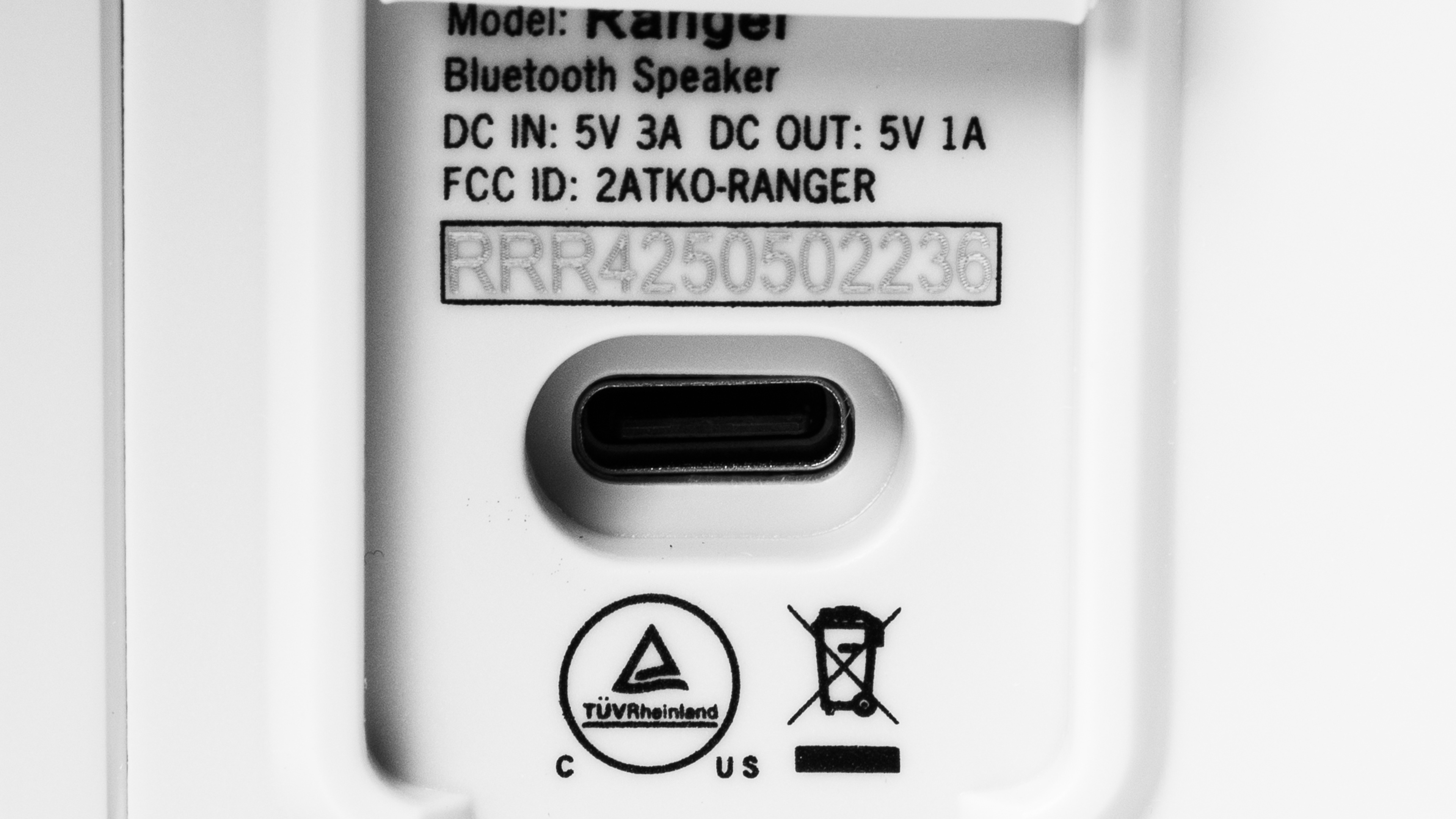
The Turtlebox Ranger comes in a few different colors: 'Ivory,' 'Gray,' River Rock,' 'Tan,' and 'Orange.' Besides color differences, we expect these to all perform the same as our 'River Rock' unit (its label shown here).
If you encounter another variant of this speaker, please let us know in the comments.
Popular Speaker Comparisons
The Turtlebox Ranger inevitably butts up against popular speakers such as JBL Charge 5 (and the similar JBL Charge 6), alongside budget-minded speakers like the Anker Soundcore Boom 3i in the tough portable speaker space. In this tier, it's surprising to note that the Turtlebox lacks a companion app, unlike most of the competition, including the JBL and Anker. Still, the durable exterior feels more impervious to rough and tumble circumstances than the likes of the Blue Tees Golf Player+'s novel, but more vulnerable, screen display, and IPX7 rating compared with the Turtlebox's IP67 rating and manufacturer's crushproof claim.
For more comparisons, check out the best outdoor speakers, the best waterproof speakers, and the best portable speakers.
The JBL Charge 6 is a more versatile speaker than the Turtlebox Ranger. It sounds flatter, with a somewhat more neutral tuning and a companion app supplying the added flexibility of EQ along with optional USB audio input. Its battery life is a little longer, too. Both speakers are water and dustproof, but the JBL has a slightly higher IP68 rating. That said, the Turtlebox's IP67 rating is very good, and according to the manufacturer, it's crushproof. Its overbuilt design offers niche benefits like tie-down bars and magnets for keeping it in place in less-than-ideal environments. Unfortunately, the lack of an app means you can't change the tuning.
Choosing between the JBL Flip 7 and Turtlebox Ranger depends on how much you want to spend and how you'll use the speaker. The JBL has a companion app and works with a larger selection of JBL speakers in Party Mode. By contrast, the Turtlebox has a longer battery life, per-function buttons, and a chunky built-in handle. It also gets louder at max volume, but it doesn't have a companion app, so there's no EQ for sound customization.
For many people, choosing between the JBL Flip 6 and Turtlebox Ranger is a toss-up and may depend on how you plan to use your speaker and budget. The advantages of the JBL include a robust app and a fairly balanced frequency response, which is a bit closer to our target curve. Plus, the JBL has a greater selection of potential speakers to purchase for party mode than the Turtlebox's smaller lineup. Meanwhile, the Turtlebox boasts a much longer battery life, chunkier buttons and build, and a higher max volume, but in other ways it's more limited, since it doesn't have a companion app with an EQ.
The Bose SoundLink Max is a better speaker for most people than the Turtlebox Ranger, but it depends on what you want the speaker for. The Bose delivers a more balanced frequency response with more bass, via both AUX and USB audio inputs. It also plays back stereo audio without downmixing and has a longer battery life. While it shares an IP67 rating with the Turtlebox, it's still likely more prone to scuffs. The Turtlebox's overbuilt plastic shell design (which is crushproof, according to the brand), with optional protective rings and tie-down bars, means it's perhaps more at home in an outdoors, construction work environment than the Bose. The Turtlebox's large array of tactile buttons also means you can control playback with gloves on. Still, that's fairly niche, and its tuning can't be modified (unless you have a third-party app).
Test Results
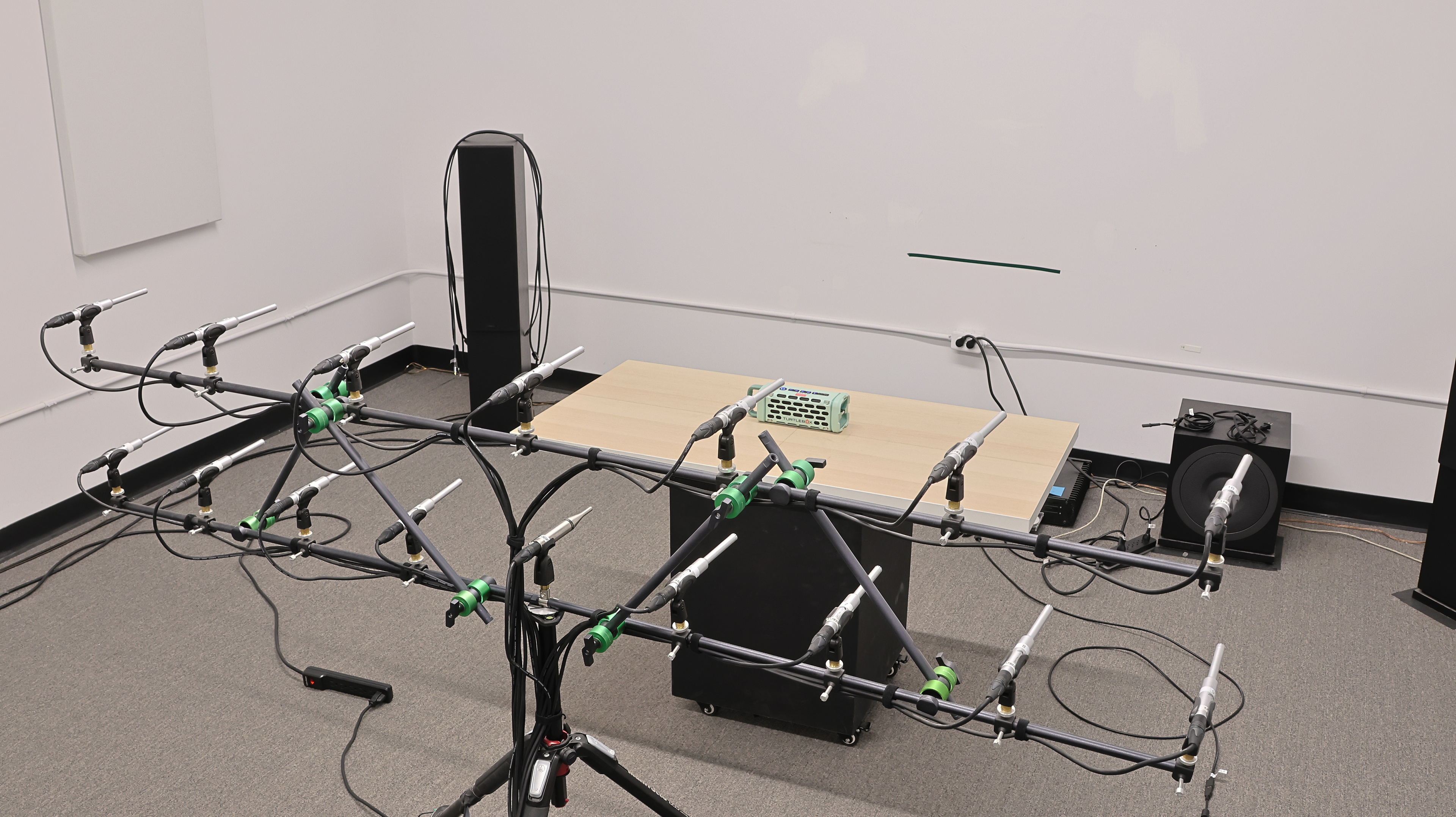
for pictures & test results
for pictures & test results