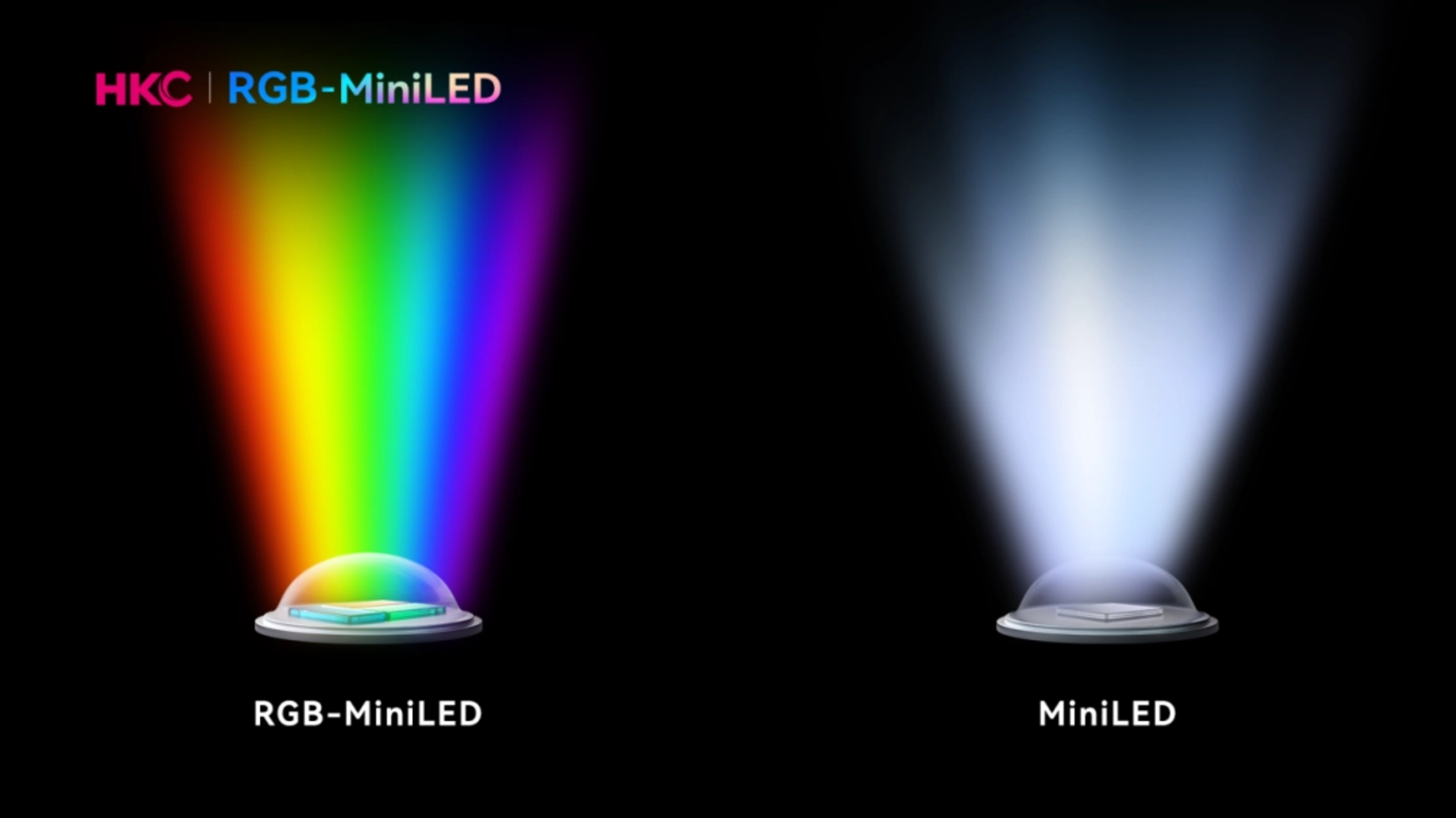
If you've been following technology news lately, chances are you've heard of RGB Mini LED and Micro RGB technology. Just what is RGB Mini LED, though, and how does it work? Up until 2026, most Mini LED TVs on the market used a blue LED backlight that shines through a layer of red and green quantum dot color converters to produce the separate colors that make up each pixel. RGB Mini LED replaces that quantum dot layer and blue backlight with separate LEDs.
Almost all TV manufacturers have announced new TVs powered by this technology in 2026, including many flagship models from each brand, like the Hisense UR9SG, Samsung R95H, and the Sony BRAVIA 9 II. While TCL is also releasing an RGB Mini LED model in 2026, their main focus is on Super Quantum Dot technology instead, which is featured in their TCL X11L and TCL QM8L flagships. Now that we've tested a few TVs that feature this new technology, let's take a deep dive into how it works, its strengths, and its flaws. If you're ready to start shopping, you can also check out our picks for the best RGB Mini LEDs.
How Does RGB Mini LED Work?
This new technology completely changes the way LED TVs generate light. Until now, Mini LED TVs worked by first generating either white or blue light (depending on the color technology used), and then passing that light through quantum dot color converters and color filters to generate the red, green, and blue light needed for each subpixel. RGB Mini LED TVs work by simply replacing the white or blue LEDs used in the backlight with multiple diodes.
These TVs can control the light output of each diode individually, so if you're displaying a scene with mostly red, it can dim the diodes that produce green and blue light separately, a feature most brands refer to as Color Dimming. Of course, they can still dim the entire LED array for each zone, allowing them to function like traditional local dimming features, which most brands refer to as White Dimming on these TVs.
Micro LED Vs. RGB Mini LED
It's important to note that this new technology is not the same thing as Micro LED. That technology uses a separate light-emitting diode for each individual subpixel, resulting in perfect contrast and incredible lighting control, as the TV can directly control the light being produced at each individual pixel. RGB Mini LED technology still works by breaking the backlight down into discrete zones. The exact number varies between models, brands, and even panel sizes, but we're still only looking at a few hundred to a few thousand zones, whereas Micro LED panels require over 24 million separate LEDs for a panel with a 4k resolution. This limitation means that while some people assumed RGB Mini LED would aim to compete with OLEDs, that's not the case. The goal of this new technology is to improve colors, not contrast.
What Is Micro RGB LED?
Depending on the brand, you might see some models advertised as Micro RGB instead. The good news is, it's the exact same thing as RGB Mini LED. This is another clear case of marketing bloat, with some brands using this different name to imply that their RGB LEDs are smaller or possibly more numerous than the competitors. That's not necessarily the case; in most cases, both marketing names refer to the same technology.
What Is TRUE RGB?
Sony has been hard at work on their approach to RGB Mini LED for a few years now. They first lifted the veil on their technology in early April 2026, and they're calling it True RGB instead. So what's different about Sony's approach? Well, not much. Some entry-level RGB Mini LED TVs from other brands don't actually have red, green, and blue diodes. For example, the TCL RM7L uses blue, green, blue diodes, with a phosphor coating over one of the blue diodes that converts that light into red. The end result is still blue, green, and red light in each LED, but Sony is using the "True RGB" name to differentiate these technologies.
Performance
Now that we've covered what RGB Mini LED and Micro RGB LED TVs are and how this new technology works, what are the benefits of these TVs, and how do they perform overall? We'll take a look at a few different models and compare them to their standard Mini LED predecessors, so you can see exactly what impact this new technology has on picture quality.
Contrast & Local Dimming
Let's get this out of the way: despite what some brands are claiming, an RGB Mini LED is still just a Mini LED, so it has the exact same limitations as existing local dimming features, and it may even make things worse in some cases. The exact zone count, the size of the LEDs, and, more importantly, the algorithms that control them still have the greatest impact on contrast and local dimming performance. So this first generation of RGB Mini LED TVs doesn't have any better halo control than 2025 models. You will still see haloing around bright highlights on these models.
 Contrast: 120,475:1 |
Contrast: 135,367:1 |
 Contrast: 134,943:1 |
 Contrast: 137,067 |
Above, you can see examples of the contrast measurements from two recent RGB Mini LED TVs, the Sony BRAVIA 7 II and the Samsung R95H. For comparison, above them, you can see the photos and measurements for the closest predecessors to these models, the Sony BRAVIA 7 and the Samsung QN90F, respectively. The new models have similar zone densities to the previous generation, and all use a similar panel type. As you can see, there's no significant difference at all between the older and newer generations. This is expected, as the goal of RGB Mini LED technology is not to improve contrast.
Another thing to keep in mind is the processors controlling these zones. MediaTek, one of the world's largest TV processor manufacturers, recently unveiled a new chipset that can control up to 15,000 local dimming zones independently. Since RGB Mini LED TVs have three individually-controlled LEDs, this means that an RGB Mini LED TV could only control 5,000 separate RGB sets, whereas the same TV with white LEDs could have 15,000 independent zones. Now, 5,000 zones is still an incredible amount and would undoubtedly have excellent local dimming performance, but it's still a limitation.
Color Gamut
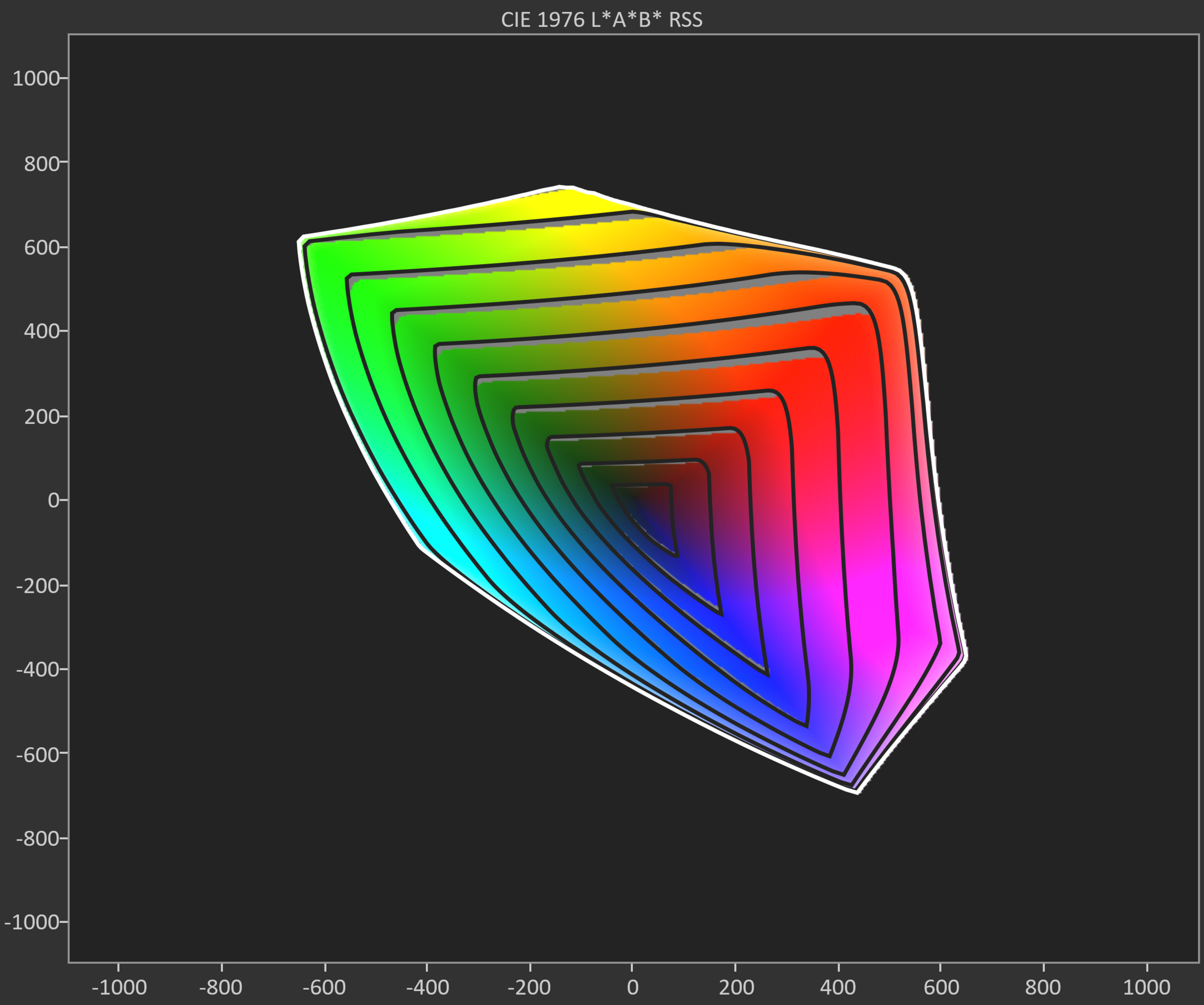 CIELAB DCI-P3 Coverage: 91.82% |
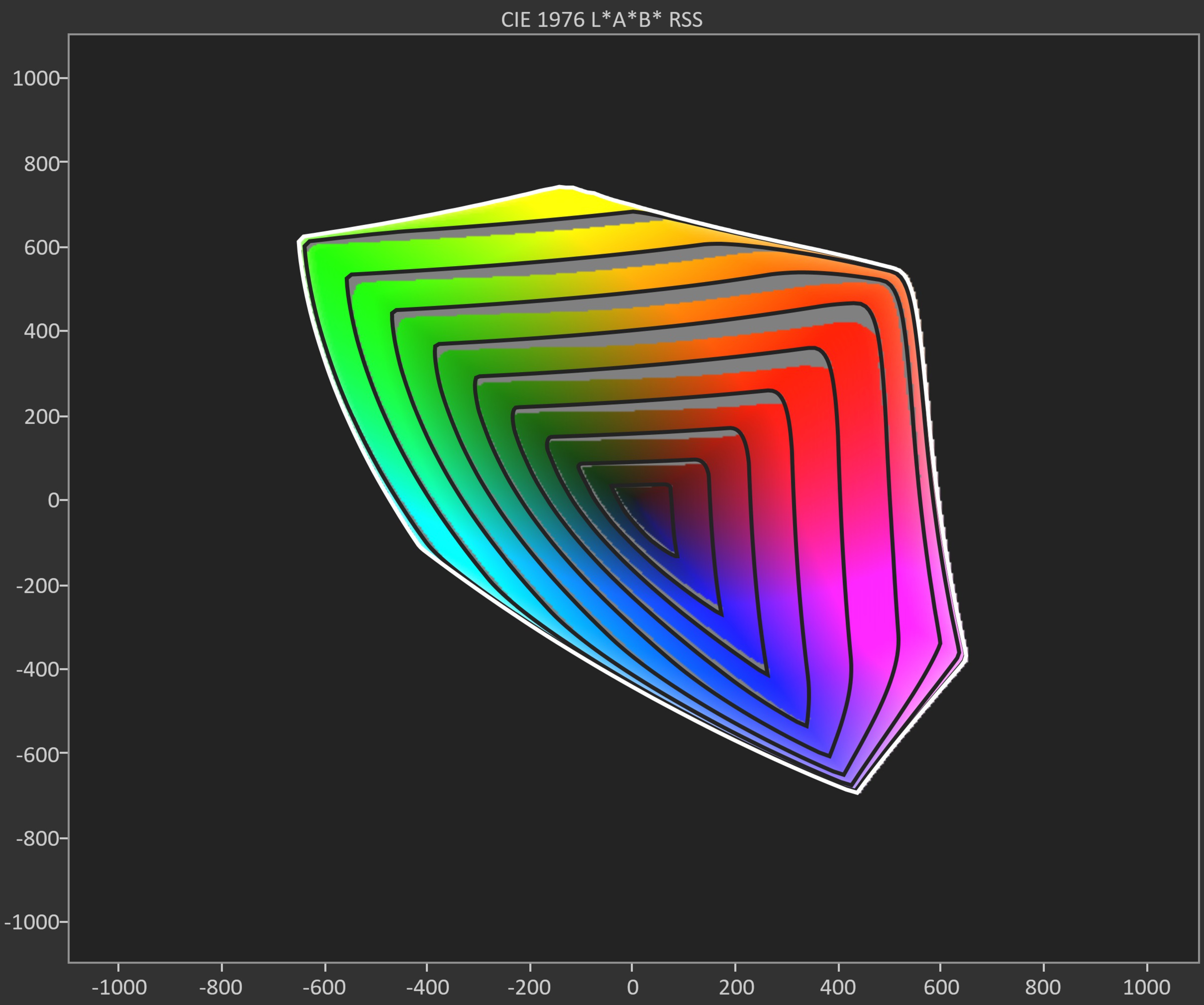 CIELAB DCI-P3 Coverage: 84.67% |
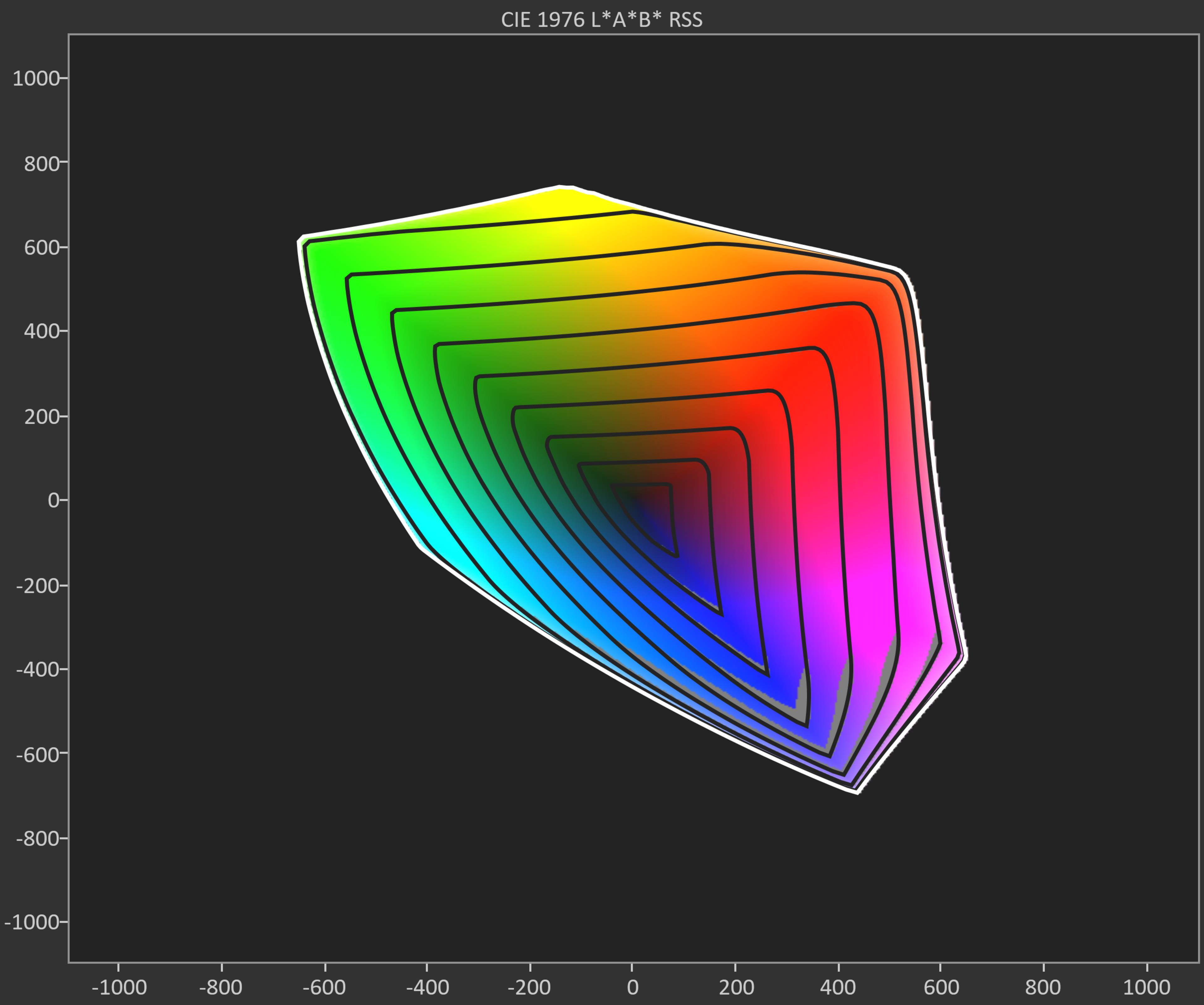 CIELAB DCI-P3 Coverage: 95.87% |
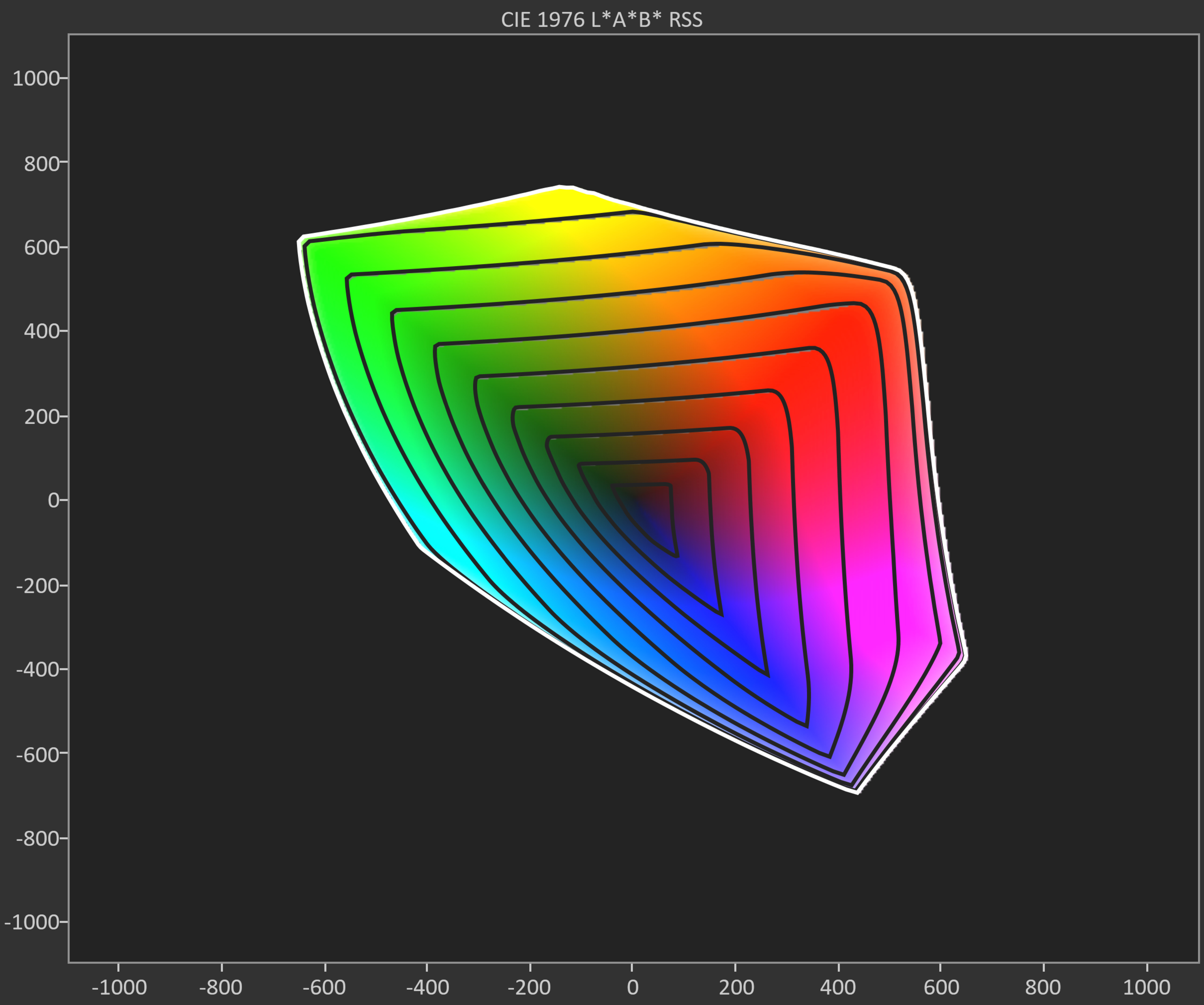 CIELAB DCI-P3 Coverage: 97.05% |
Color volume is a measure of how bright and vibrant colors can get. The gamut rings test we use shows the range of colors that a TV can produce in SDR, across a range of lightness levels, so you know how well the TV performs in both light and dark scenes. This is one area where the benefits of RGB Mini LED technology are very obvious. Looking at the two Samsung TVs, the Samsung R95H covers far more of the CIELAB DCI-P3 color space than the older QN90F. While it's not as obvious in these graphs, the raw data also shows us that the older Samsung had difficulty maintaining color saturation in lighter scenes. That's no longer the case with the new panel technology, and both of these RGB Mini LED models have very consistent color performance. The difference is less significant with the two Sony TVs, but again, the new model is a clear, marked improvement over the old one.
Overall, this means that the newer backlight tech can deliver much brighter, more vibrant colors in certain scenes. Unless you prefer setting your TV to its "Vivid" picture mode, you probably won't notice this difference with most real content, though.
Color Crosstalk
Unfortunately, switching to RGB backlighting also has a significant downside: color crosstalk. This is especially noticeable when you have a very saturated primary color right next to something else. You can see an example of this in the video above, shot on the Samsung R95H. As the colored bars move close to the white circle in the middle, you can see the hue change on the circle, and it looks more like whatever color is approaching it.
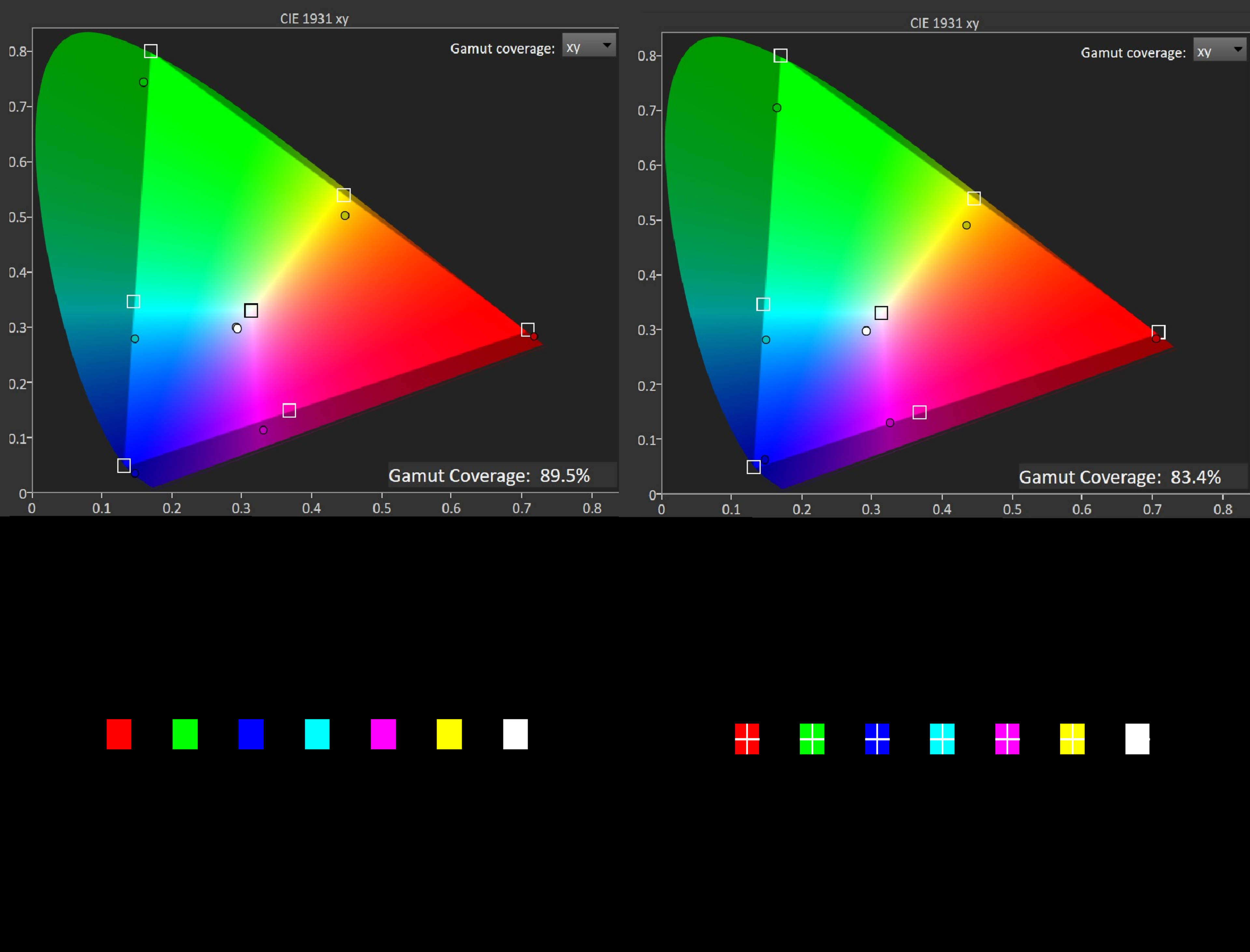 Standard test pattern: 89.5% Modified test pattern: 83.4% |
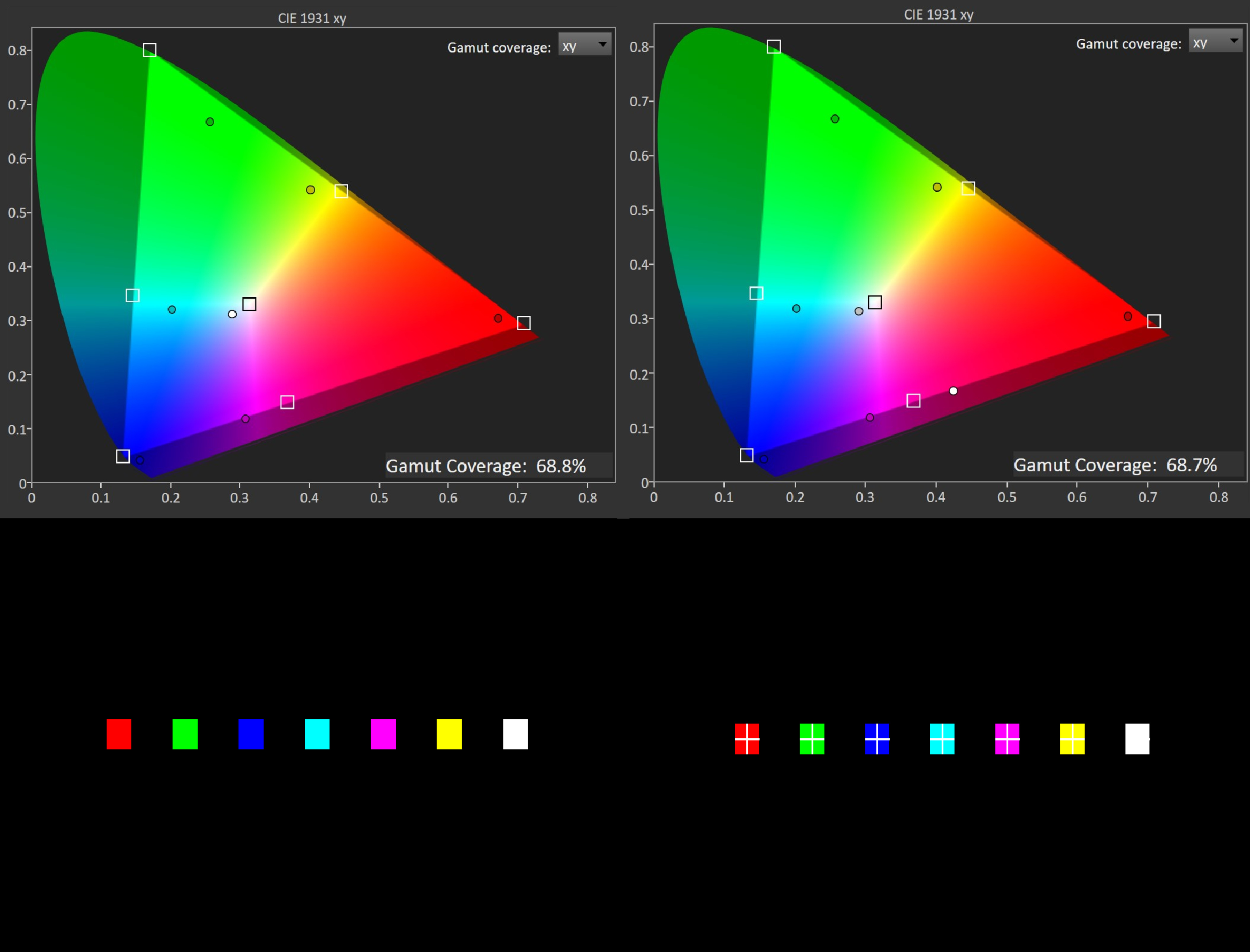 Standard test pattern: 68.8% Modified test pattern: 68.7% |
This color crosstalk means that RGB Mini LED TVs only look their best when they're displaying similar color tones. We can actually measure the impact of this by using a modified test signal when measuring color volume. By adding a white cross to the center of each test patch, we can see the impact of this crosstalk on the actual color gamut. As you can see above (click through to the large image of each graph), the color gamut coverage of the Samsung R95H decreases by about 6% with this modified pattern, while this change has essentially no impact on the coverage of the Samsung QN90F.
Color crosstalk also causes colored haloing in dark scenes, so the white glow that you get in dark scenes on existing Mini LED technology could now have a red, green, or blue tint to it, depending on the color of the highlight. This is especially problematic if you prefer to watch TV with subtitles enabled and have adjusted the color of those subtitles to reduce their intensity. This would cause significant color haloing around those subtitles.
Some RGB Mini LED TVs get around this by reverting to displaying white the vast majority of the time. With the Sony BRAVIA 7 II, for example, it reverts to a white backlight most of the time if Auto Local Dimming is set to 'Medium'. This reduces color volume, effectively negating the advantages of the new backlight, but it also eliminates color crosstalk.
Viewing Angle
Despite some marketing claims, this new technology doesn't affect a TV's viewing angle. Only the LED backlight is changing; the LCD layer that controls the light output at the front of the display remains the same, whether it's VA, ADS, or something else, and that layer has the greatest impact on a TV's viewing angle.
Longevity
Our testing has shown that over time, LEDs fail. While these new TVs may change up the type of LEDs used, they're still LEDs. Therefore, we don't expect issues such as image retention or burn-in to arise with this new technology; however, those LEDs can still fail over time. Thankfully, under normal usage, most people can expect their TV to last for many years without any issues, so the longevity of the individual LEDs isn't really a concern.
Conclusion
There's no doubt about it, RGB Mini LED is making waves in the TV industry, with every major brand investing significant resources into developing it. So far, these TVs aren't quite living up to the hype, though, and while they offer improved color volume in some content, the downsides are hard to ignore. So, what do you think, is RGB Mini LED the next big thing, or just another gimmick that'll go away in a year or two when something better comes along? Sound off in the comments below.
