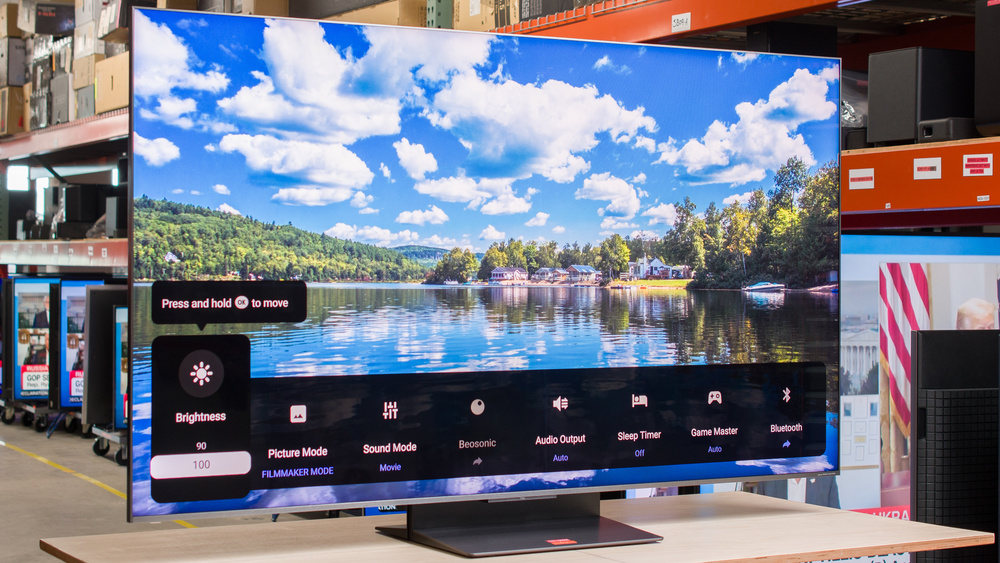
The TCL QM8K is a high-end model in TCL's 2025 North American QLED lineup, sitting between the TCL QM7K and the flagship TCL QM9K, and replacing the TCL QM851G. The QM8K is powered by TCL's AIPQ Pro processor and features a brand-new WHVA panel, which is advertised to deliver better viewing angles than traditional VA panels with the same deep blacks. The TV is loaded with features like Dolby Vision and HDR10+, HDMI 2.1 bandwidth, high refresh rate support up to 4k @ 144Hz or 1080p @ 288Hz, and VRR support. It has a built-in Bang & Olufsen-tuned speaker system, and it supports Dolby and DTS advanced audio formats. We bought and tested the 65-inch model, but we also bought and tested the 98-inch model separately. It's also available in a 75-inch and 85-inch size. It was replaced in 2026 by the TCL QM8L.
Our Verdict
The TCL QM8K is an excellent TV. It's a versatile choice with high peak brightness for daytime viewing but deep, uniform blacks for nighttime watching in a dark room. It's great for gaming thanks to its low input lag, fast refresh rate, and wide selection of gaming features. It delivers fantastic picture quality, with a wide color gamut, incredible contrast, and high peak brightness. Overall accuracy in SDR and HDR leaves a bit to be desired, though, so if you care about creative intent, it benefits from a full calibration.
Incredibly high contrast.
Colors are bright and vibrant.
Bright enough to overcome glare in any room.
Just okay color accuracy out of the box.
Some noticeable uniformity issues.
The TCL QM8K is an excellent TV for watching movies in reference conditions like a home theater room. Its Mini LED backlight delivers incredibly bright peaks in HDR and a phenomenal dark room experience, with deep, uniform blacks and very little haloing around bright spots in the scene. Colors are bright and vibrant, and it supports all advanced A/V formats, including DTS audio and Dolby Vision. Unfortunately, there are some unintended intermediate colors present in fast-paced scenes, and the edges of characters and objects are blurrier than intended due to subpar pixel transitions when the action ramps up. The TV also isn't very accurate out of the box, and it definitely benefits from a professional calibration if this matters to you.
Incredibly high contrast.
Colors are bright and vibrant.
Bright specular highlights stand out well.
Very little haloing around bright highlights.
Removes judder from almost all sources.
Just okay color accuracy out of the box.
Shadow details are crushed a bit in HDR.
Fast-paced scenes and sports have visible artifacts.
Noticeable stutter in slow panning shots.
The TCL QM8K is a great TV for use in a bright room. It's bright enough to easily overcome glare even in a very bright living room, and ambient light has almost no noticeable impact on black levels or colors. The glossy screen coating doesn't do much to reduce the intensity of direct mirror-like reflections, and there are noticeable rainbow effects from bright lights reflecting on the screen.
Bright enough to overcome glare in any room.
Ambient light has no impact on color saturation or black levels.
Glossy coating doesn't do much to reduce direct reflections.
The TCL QM8K is a very good TV for watching sports. Colors are bright and vibrant, and it's bright enough that you don't really have to worry about glare in a bright room. Its viewing angle is mediocre, though, so it's not a perfect choice for a wide seating arrangement. Unfortunately, the edges of fast-moving players and objects are noticeably blurry, and there are some color artifacts, which affect motion clarity in fast-paced sports like hockey.
Bright enough to overcome glare in any room.
Ambient light has no impact on color saturation or black levels.
Does a great job smoothing out low-quality content.
Some noticeable uniformity issues.
Image looks washed out from the sides.
Fast-paced scenes and sports have visible artifacts.
The TCL QM8K is a great TV for gaming. Games are responsive overall, thanks to the TV's decent response time and incredibly low input lag. Gamers will appreciate the wide selection of gaming features, including high refresh rate support up to 288Hz at 1080p/1440p or 144Hz at 4k. It also supports VRR with all sources to reduce screen tearing, but it's currently not working properly with NVIDIA GPUs when running at 60Hz. It also delivers fantastic picture quality when gaming, with no impact on black levels or peak brightness when you switch to Game Master mode.
Low input lag with all supported formats.
High refresh rate support, up to 4k @ 144Hz or 1080p @ 288Hz.
Switching to Game Master mode has no impact on picture quality.
Only two HDMI 2.1 bandwidth ports.
This TV has great expected reliability. Similar to direct-lit models, since the LEDs are housed directly behind the LCD layer, they're less likely to overheat and fail than edge-lit models. There's also no possibility of burn-in or image retention, so the type of content you watch doesn't affect its lifespan. Unlike direct-lit models, the LEDs are grouped together in zones, so a single failed LED will usually cause only one zone to fail, not the entire backlight.
No possibility of permanent burn-in.
Single LED failures affect only a single zone, not the entire backlight.
The TCL QM8K is an exceptionally bright TV. It's bright enough to bring out the brightest highlights in HDR, and full-screen brightness is high enough that even more demanding scenes stand out well. In SDR, it gets bright enough to easily overcome glare even in a very bright room.
Bright enough to overcome glare in any room.
Bright specular highlights stand out well.
The TCL QM8K delivers superb black levels, thanks to its Mini LED backlight system. Contrast is extremely high, resulting in deep blacks even in scenes with very bright areas. There's very little haloing around bright spots, but it's not quite as good as OLEDs in that area. Zone transitions are extremely quick overall, with just a bit of flicker as objects move between dimming zones.
Incredibly high contrast.
Very little haloing around bright highlights.
Nearly perfect black uniformity.
Colors on the TCL QM8K are very bright and vibrant, and it displays a wide range of colors in HDR. Color accuracy is just okay out of the box, though, in both HDR and SDR.
Colors are bright and vibrant.
Fantastic color volume in HDR.
Just okay color accuracy out of the box.
The TCL QM8K has decent motion handling, especially when watching movies and shows. The TV is completely free from judder and micro-judder, except for 25p content being sent via a 60p signal, so there are subtle hiccups in motion if you're watching European content from an older device. Unfortunately, the TV does a subpar job of avoiding transition artifacts, leading to unintended intermediate colors and visible motion blur around the edges of fast-moving colors in movies, shows, and sports. Its stutter performance is sub-par, so you might notice some minor choppiness in scenes with slow panning shots.
Removes judder from almost all sources.
No micro-judder from most sources.
Excellent lighting zone transitions.
Fast-paced scenes and sports have visible artifacts.
Noticeable stutter in slow panning shots.
The TCL QM8K delivers an incredibly responsive gaming experience. It has low input lag in all supported modes, great for games that require precise timings. It also supports a wide range of high refresh rates, up to a maximum of 144Hz at 4k or 288Hz with 1080p/1440p signals. Motion handling is decent, but there's noticeable motion blur in bright areas.
Low input lag with all supported formats.
High refresh rate support, up to 4k @ 144Hz or 1080p @ 288Hz.
Slow pixel response time in bright areas.
Note: We're in the process of improving our tests related to image processing, but this score should give you a general idea of how a TV performs overall with its image processing capabilities.
The TCL QM8K's image processing is very good. It does a fantastic job smoothing out streaming sources with a low bitrate, but there's some loss of fine details. It upscales low-resolution content well, but some fine details can be hard to make out. Its PQ EOTF tracking in HDR is good overall, but it crushes shadow details a bit and boosts bright highlights. Gradients are displayed well in HDR, but there's some noticeable banding in darker shades.
Does a great job smoothing out low-quality content.
Good upscaling.
Shadow details are crushed a bit in HDR.
Performance Usages
Changelog
- Updated Oct 02, 2026: We converted this review to Test Bench 2.3. With this update, we've added a new Expected Reliability performance usage, a Lifetime Burn-In Potential test, and a new test box for the Longevity 3.0 test.
- Updated Sep 18, 2026: We converted this review to Test Bench 2.2.1, adding a new Dumb TV test for whether or not the TV can be used offline.
-
Updated May 20, 2026:
We bought and tested the TCL QM8L, and added a comparison in the HDR Brightness section of the review.
-
Updated Mar 24, 2026:
We retested the TV's peak brightness on firmware V8-0012T02-LF1V321.001899 with the new 'Boost' setting enabled. We've updated the results in the SDR Brightness, HDR Brightness, and HDR Brightness In Game Mode sections.
Check Price
Differences Between Sizes And Variants
We bought and tested the 65-inch TCL QM8K, and these results also apply to the 75- and 85-inch models. We bought and tested the 98-inch TCL 98QM8K separately. The number of zones and the peak brightness increase slightly with each step up in size, but we don't expect it to make a significant difference. We also put the 65-inch and 98-inch models together in a head-to-head comparison; you can read our findings here.
In Europe, it's sold as the TCL C8K, but given the significant differences in the TV's software and tuning, our review isn't valid for that model.
Note: TCL hasn't officially confirmed the dimming zone count for each size, and they only advertise "up to 3,800" for the lineup.
| Size | Model | Dimming Zones |
|---|---|---|
| 65" | TCL 65QM8K | 1,680 |
| 75" | TCL 75QM8K | Unknown |
| 85" | TCL 85QM8K | Unknown |
| 98" | TCL 98QM8K | 3,760 |
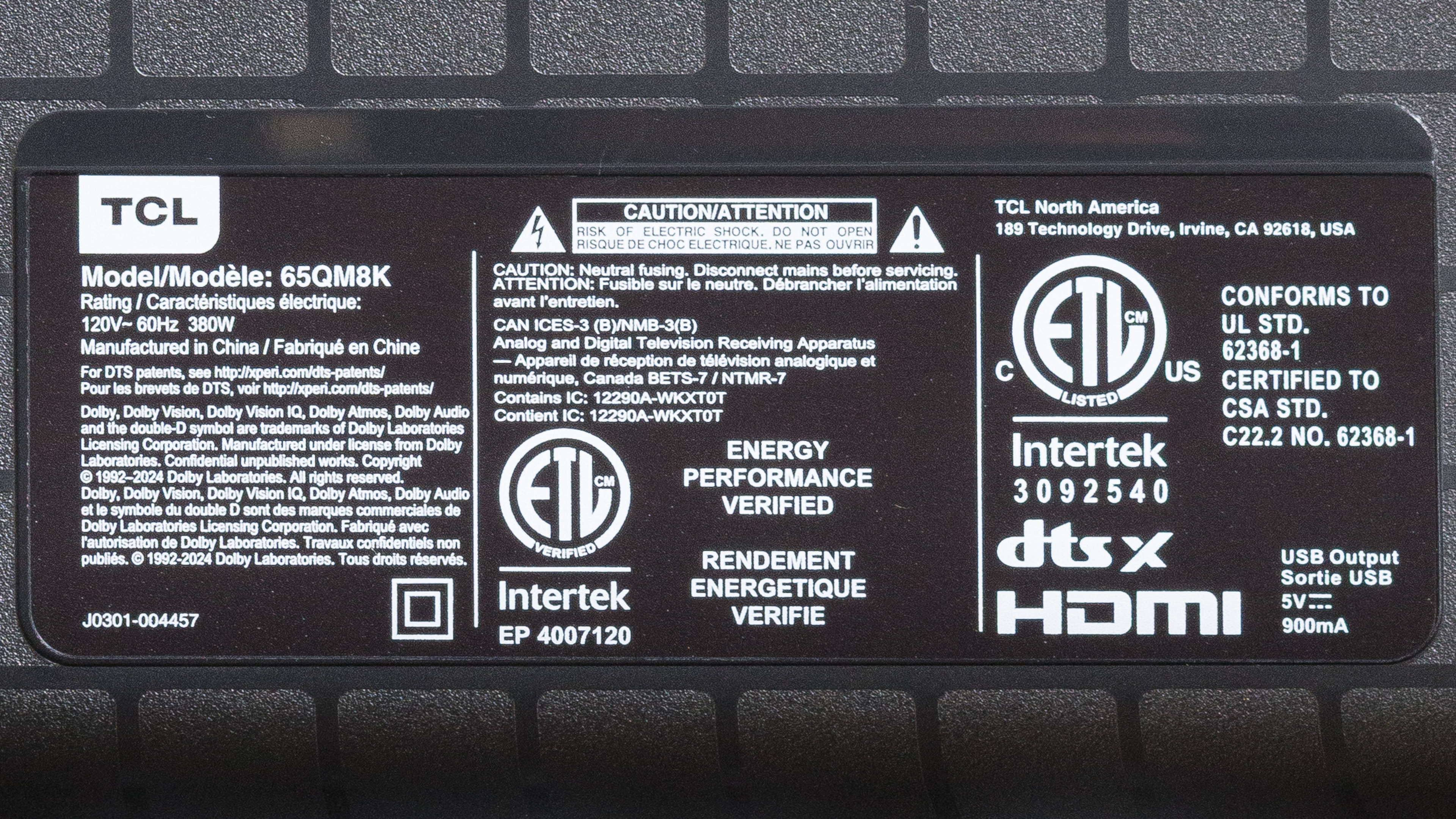
Our unit was made in China, with no manufacturing date listed. You can see the label here.
Popular TV Comparisons
The TCL QM8K is a remarkably good TV, especially for the price. It competes mainly with other high-end models from other brands like the Samsung QN90F, the Sony BRAVIA 9, and the Hisense U8QG. It delivers much better performance than most of its competitors, and it's aggressively priced, so you get a remarkable experience at a price that very few TVs can match. It's even a better buy for most people than the flagship TCL QM9K. The tradeoff here is accuracy and processing, as it's not quite as good as the Samsung or Sony in that regard. Overall, it's one of the best TVs released in 2025 that should please just about anyone.
For more options, check out our recommendations for the best QLED TVs, the best gaming TVs, and the best TVs.
The TCL QM9K is slightly better than the TCL QM8K, at least in theory. The QM9K gets a bit brighter in both HDR and SDR, and it can sustain that brightness longer. This doesn't actually matter that much, though, as most HDR content won't hit highlights that bright or for that long, so in most real content, it looks about the same as the QM8K. The QM9K does have a more recent smart interface, though, as it runs the Google TV version 14 instead of 12 on the QM8K; it also supports Google's Gemini AI assistant.
The TCL QM8K is significantly better than the TCL QM7K. The QM8K gets a lot brighter, delivering bright highlights in HDR and a more impactful HDR experience overall. This higher peak brightness also translates to a better bright-room experience, as the QM8K can overcome more glare in a bright room. The Mini LED local dimming feature on the QM8K is also better, resulting in less haloing around bright spots in the scene.
The TCL QM8K and the TCL QM7L are similar, but the QM8K is better. The QM8K displays deeper blacks with less haloing around highlights and subtitles, and highlights pop out more in HDR content, so it looks better in dark rooms. Furthermore, the QM8K doesn't overbrighten HDR content nearly as much as the QM7L does, and it does a better job of upscaling and smoothing out low-quality content. Finally, motion is much clearer and there's a bit less input lag on the QM8K, making it the better option for gamers.
The TCL QM8K is better than the Hisense U8QG. The TCL has much better black uniformity, with less haloing around bright spots in the scene. The TCL also has better processing, especially in HDR, where the Hisense boosts its brightness too much, resulting in a brighter image than the content creator intended. The TCL is also better for gaming, with slightly lower input lag at 120Hz and a faster response time.

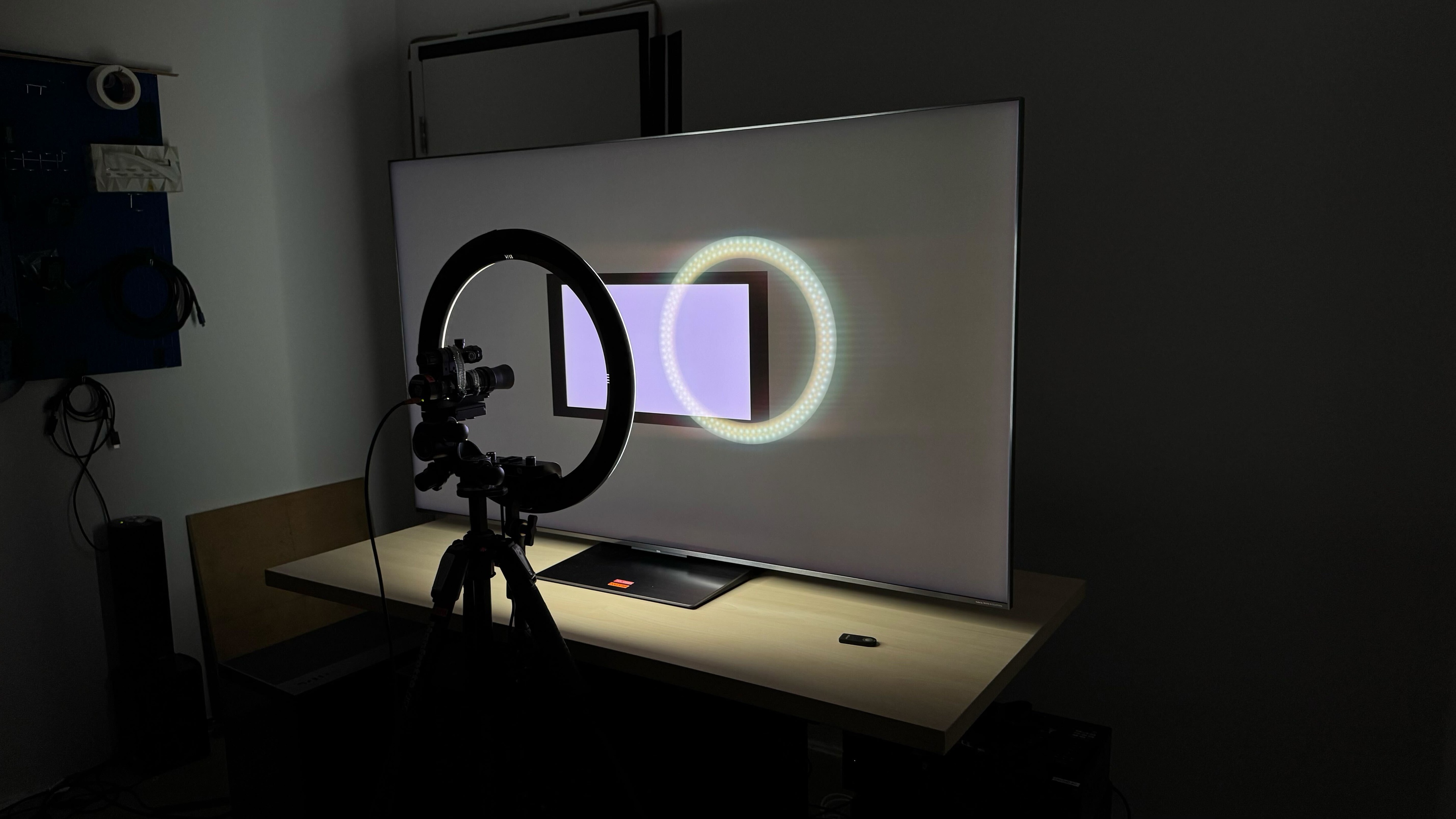
We buy and test dozens of TVs yearly, taking an objective, data-driven approach to deliver results you can trust. Our testing process is complex, with hundreds of individual tests that take over a week to complete. Most of our tests use specially designed test patterns that mimic real content, but we also use the same sources you have at home to ensure our results match the real-world experience. We use two main tools for our testing: a Colorimetry Research CR-100 colorimeter and a CR-250 spectroradiometer.
Test Results
for pictures & test results

for pictures & test results

for pictures & test results

The TCL QM8K is an incredibly bright TV. All HDR content stands out incredibly well, from the smallest specular highlights to large bright scenes; it just pops. It can't sustain specular highlights as long as the TCL QM9K can, but this really isn't an issue with the vast majority of content, since specular highlights aren't normally visible for more than a few seconds. The newer TCL QM8L is substantially brighter when displaying slides and with some very small highlights in HDR, but most real content is about the same brightness.
Firmware V8-0012T02-LF1V321.001899 introduced a new peak brightness setting called 'Boost'. With this setting enabled, there is a difference in brightness with some test windows, but the difference is fairly small in most real scenes. We've updated our results with the setting enabled. You can see our old results below with the 'Boost' setting disabled.
| 'Boost' Disabled | |
|---|---|
| Hallways Lights | 961 cd/m² |
| Yellow Skyscraper | 651 cd/m² |
| Landscape Pool | 395 cd/m² |
| Peak 2% | 3,431 cd/m² |
| Peak 10% | 3,605 cd/m² |
| Peak 25% | 2,467 cd/m² |
| Peak 50% | 1,438 cd/m² |
| Peak 100% | 810 cd/m² |
| Sustained 2% | 1,813 cd/m² |
| Sustained 10% | 1,725 cd/m² |
| Sustained 25% | 1,675 cd/m² |
| Sustained 50% | 1,001 cd/m² |
| Sustained 100% | 667 cd/m² |
Below are measurements with Dynamic Tone Mapping (DTM) set to each of its three settings, all in the 'Movie' HDR Picture Mode with the 'Boost' setting disabled.
Results with DTM set to Detail Priority:
- Hallway Lights: 889 cd/m²
- Yellow Skyscraper: 610 cd/m²
- Landscape Pool: 496 cd/m²
Results with DTM set to Balance:
- Hallway Lights: 967 cd/m²
- Yellow Skyscraper: 597 cd/m²
- Landscape Pool: 510 cd/m²
Results with DTM set to Brightness Priority:
- Hallway Lights: 972 cd/m²
- Yellow Skyscraper: 607 cd/m²
- Landscape Pool: 556 cd/m²
for pictures & test results

for pictures & test results

for pictures & test results

Overall, switching to Game Master reduces the peak brightness of the TV very slightly, but it's really not noticeable.
Firmware V8-0012T02-LF1V321.001899 introduced a new peak brightness setting called 'Boost'. With this setting enabled, there is a difference in brightness with some test windows, but the difference is fairly small in most real scenes. We've updated our results with the setting enabled. You can see our old results below with the 'Boost' setting disabled.
| 'Boost' Disabled | |
|---|---|
| Hallways Lights | 965 cd/m² |
| Yellow Skyscraper | 637 cd/m² |
| Landscape Pool | 375 cd/m² |
| Peak 2% | 3,610 cd/m² |
| Peak 10% | 3,516 cd/m² |
| Peak 25% | 2,166 cd/m² |
| Peak 50% | 1,246 cd/m² |
| Peak 100% | 800 cd/m² |
| Sustained 2% | 1,632 cd/m² |
| Sustained 10% | 1,673 cd/m² |
| Sustained 25% | 1,646 cd/m² |
| Sustained 50% | 982 cd/m² |
| Sustained 100% | 657 cd/m² |
Below are measurements with Dynamic Tone Mapping (DTM) set to each of its three settings, all in Game Master with the 'Boost' setting disabled.
Results with DTM set to Detail Priority:
- Hallway Lights: 948 cd/m²
- Yellow Skyscraper: 575 cd/m²
- Landscape Pool: 470 cd/m²
Results with DTM set to Balance:
- Hallway Lights: 962 cd/m²
- Yellow Skyscraper: 569 cd/m²
- Landscape Pool: 512 cd/m²
Results with DTM set to Brightness Priority:
- Hallway Lights: 941 cd/m²
- Yellow Skyscraper: 571 cd/m²
- Landscape Pool: 555 cd/m²
This TV is remarkably bright in SDR. Glare isn't an issue even in an extremely bright room, as you can simply increase the brightness setting to compensate. As with most TVs, large, bright scenes aren't quite as bright as more moderately lit scenes, but they're still bright enough.
Firmware V8-0012T02-LF1V321.001899 introduced a new peak brightness setting called 'Boost'. With this setting enabled, there is a difference in brightness with some test windows, but the difference is fairly small in most real scenes. We've updated our results with the setting enabled. You can see our old results below with the 'Boost' setting disabled.
| 'Boost' Disabled | |
|---|---|
| Real Scene | 753 cd/m² |
| Peak 2% | 2,246 cd/m² |
| Peak 10% | 3,238 cd/m² |
| Peak 25% | 2,075 cd/m² |
| Peak 50% | 1,250 cd/m² |
| Peak 100% | 717 cd/m² |
| Sustained 2% | 1,506 cd/m² |
| Sustained 10% | 1,567 cd/m² |
| Sustained 25% | 1,700 cd/m² |
| Sustained 50% | 1,084 cd/m² |
| Sustained 100% | 653 cd/m² |
for pictures & test results

The contrast on this TV, especially with local dimming, is fantastic. The native contrast is also very high, ensuring blacks remain fairly deep even in more difficult scenes when the local dimming can't keep up.
for pictures & test results

The precision of the dimming zones is excellent overall. Although it has fewer zones than the step-up TCL QM9K, it delivers very similar overall zone precision. There's a slight halo effect around subtitles or bright lights when viewed at an angle, but it's not nearly as noticeable from straight in front.
for videos & test results

The zone transitions on this TV are excellent. There's some noticeable flicker as bright lights move across zones. It does an amazing job keeping up with fast-moving objects, though. You barely notice any trailing halos, but the leading edge is a bit darker.



for pictures & test results

for pictures & test results

The SDR color volume is great. It has nearly perfect coverage of the DCI-P3 color space, and BT.2020 coverage is decent. Colors are slightly washed out in lighter scenes in any color space, but it's not noticeable in real-world use.
| Volume ΔE³ | DCI-P3 Coverage |
BT.2020 Coverage |
|---|---|---|
| L10 | 95.42% | 73.72% |
| L20 | 95.17% | 74.47% |
| L30 | 95.75% | 74.68% |
| L40 | 94.08% | 75.29% |
| L50 | 92.62% | 75.06% |
| L60 | 91.42% | 74.08% |
| L70 | 90.83% | 68.98% |
| L80 | 90.52% | 66.83% |
| L90 | 90.42% | 66.28% |
| L100 | 91.04% | 68.52% |
| Total | 91.98% | 71.26% |
for pictures & test results

for pictures & test results

The TCL QM8K has fantastic color volume in HDR. Darker shades are displayed well thanks to its incredibly high contrast ratio. Colors are bright and vibrant and stand out well, but aren't quite as bright as pure white. When switching between test slides, the TV briefly boosts brightness, resulting in higher peak brightness for a short time. This is why the red, green, and blue color measurements don't add up to the white measurement.
for pictures & test results

for pictures & test results

for pictures & test results

The TCL QM8K has okay accuracy in SDR before calibration. The white balance is noticeably off in midtones and brighter shades of gray, as blues are significantly underrepresented. This gives the TV an overall warm color temperature. Colors are a lot better, with just a few minor issues that most people won't notice. Gamma tracking is better, but shadow details are crushed a bit.
The TCL QM8K supports FILMMAKER MODE. While this mode is intended to give the most accurate picture quality possible, when we measured it on our unit, we found it to be very slightly less accurate than 'Movie.'
- White Balance dE 2000: 4.57
- Color dE Average: 2.63
- Color Temperature: 6,005K
- Gamma: 2.26
- Full results
for pictures & test results

for pictures & test results

for pictures & test results

This TV is easy to calibrate, and there are no noticeable issues after calibration. Given the significant improvement in accuracy, it's definitely worth getting a full calibration done on this TV if you care about creative intent.
See our full calibration settings.
for pictures & test results

for pictures & test results

This TV has okay accuracy in HDR before calibration. It's noticeably off across the board, with issues in the white balance and color accuracy, and the overall color temperature is a bit cool.
The TCL QM8K supports FILMMAKER MODE. While this mode is intended to give the most accurate picture quality possible, when we measured it in HDR, we found it to be slightly less accurate than 'Movie' overall, but colors are a bit better.
- White Balance dE ITP: 17.03
- Color dE ITP: 15.6
- Color Temperature: 7,177K
- Full results
for pictures & test results

for pictures & test results

Calibrating the TCL QM8K in HDR helps a bit with overall accuracy, and it looks good after calibration. There are still noticeable issues with the white balance and overall color accuracy, but the color temperature is much better.
for pictures & test results

The EOTF tracking on the TCL QM8K is good overall. Near-black shadow details are crushed a bit, but midtones are displayed incredibly well. It boosts highlights near the TV's peak brightness, but cuts off sharply. It's so bright that there's no real loss of gradation by doing this, as very little content even reaches such high brightness levels.
for pictures & test results

This TV has great low-quality content smoothing. It does a fantastic job smoothing out artifacts in low-bitrate content, but there is some loss of detail.
for pictures & test results

Lower-quality streams are upscaled properly, with no noticeable issues or excessive over-sharpening. Fine details are a bit hard to mark out, but the image is clear.
for pictures & test results
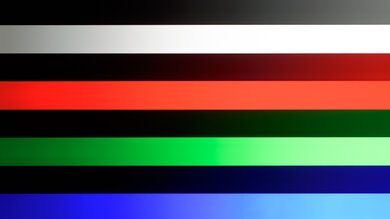
The TV has good gradient handling. There's some noticeable banding and posterization in darker shades of gray and blue, as well as brighter shades of green.
This TV has excellent input lag in Game Master mode, ensuring a responsive gaming experience with any supported resolution and refresh rate. Unlike previous TCL TVs, it also supports low-latency motion interpolation, so you can improve the fluidity of motion without adding significant lag.
Adjusting the local dimming setting has no impact on input lag. We measured it with local dimming on 'High' and on 'Off' and found no difference.
The TV supports all common resolutions up to 4k @ 144Hz on two of its four HDMI ports. It also supports up to 288Hz with 1080p and 1440p signals. All supported formats also support proper chroma 4:4:4, which is essential for clear text from a PC.
The TCL QM8K supports all three types of variable refresh rate (VRR) technology to reduce screen tearing. It works well with AMD sources, like an AMD GPU or any console across a wide refresh rate range, and it works with Low Framerate Compensation (LFC), ensuring your games remain nearly tear-free even when your frame rate drops very low.
There's an issue when using it with NVIDIA sources, though. If you set your desktop to a locked 60Hz refresh rate, it still tears as if VRR isn't working at all. This is only an issue if you have an older GPU and can't handshake above 4k @ 60Hz; it works fine if you set your computer to 4k @ 120Hz or higher and let VRR do its thing.
for pictures & test results
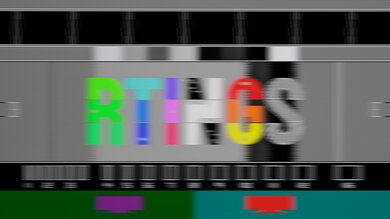
for pictures & test results

The CAD at the max native refresh rate of 144Hz is decent. Shadow details look great overall, with no noticeable overshoot or inverse ghosting. Brighter scenes are much worse, though, with a very slow response time resulting in more motion blur. This mismatch in responsiveness means bright areas of the scene have more noticeable blur than shadow areas.
for pictures & test results

for pictures & test results

When you drop down to 120Hz, the CAD is slightly worse overall, but it's not much of a difference. Overall, it behaves almost identically to the 144Hz performance.
for pictures & test results

for pictures & test results

When gaming at 60Hz, the CAD is still decent. There's still no noticeable overshoot or inverse ghosting, but the total response time of bright scenes, especially, is slow, so there's a lot of motion blur.
for pictures & test results

The TV is fully compatible with everything the PS5 offers, like 1440p @ 120Hz and 4k @ 120Hz, as well as HDMI Forum VRR. It also supports Auto Low Latency Mode, so you don't have to worry about manually switching to Game Master to get the lowest input lag.
for pictures & test results

The TV is fully compatible with everything the Xbox Series X|S offers, including 1440p @ 120Hz, 4k @ 120Hz, HDMI Forum VRR, and FreeSync Premium Pro. It also supports Auto Low Latency Mode, so you don't have to manually switch to Game Master to get the lowest input lag.
for videos & test results
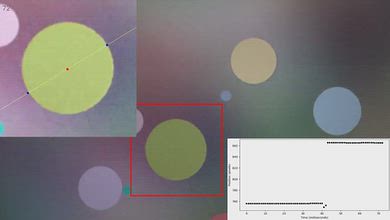
for pictures & test results
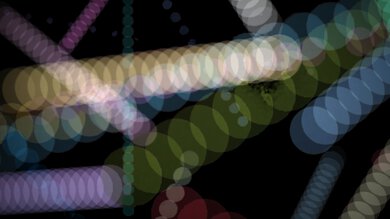
for pictures & test results
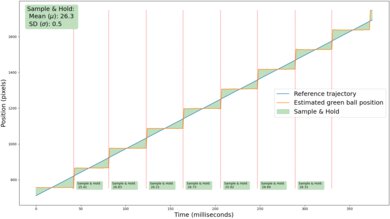
This TV has visible stutter when watching 24p and 25p content, especially in slow panning shots. It's not quite as bad as TVs with OLED panels, like the Samsung S90F OLED, but it's still noticeable if you're sensitive to it.
for videos & test results
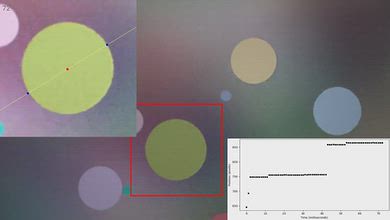
for pictures & test results

for pictures & test results
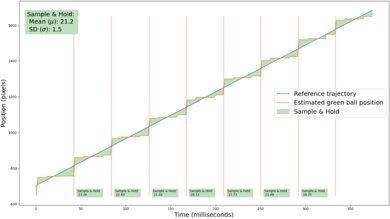
The TCL QM8K's motion interpolation feature does a very good job of mitigating stutter. Low frame rate content is smoothed out well when using the interpolation setting that's equivalent to 30fps, resulting in motion that looks mostly fluid and consistent, even in shots with slow camera movements.
for pictures & test results
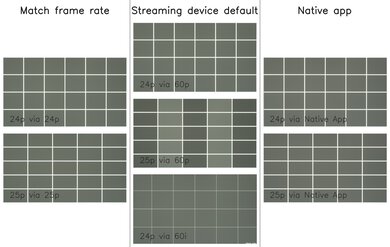
The TV removes judder from all sources when watching movies or shows that are in 24p. To remove 24p judder from 60p and 60i sources, like a cable box, Motion Clarity needs to be set to 'On' with sliders set to '0.' However, this setting only works with 24p content. The TV doesn't entirely remove judder from 25p content being sent via 60p, but frame times aren't too inconsistent, so motion is just a bit jittery. Fortunately, the TV removes 25p judder if you're using an external device like an Apple TV that has a 'Match Frame Rate' feature or when using the TV's native apps.
for videos & test results
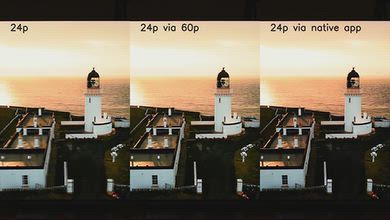
for videos & test results
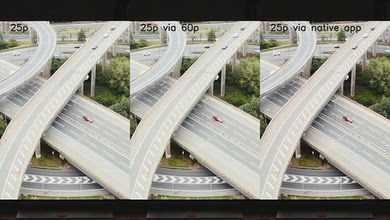
The TCL QM8K only has micro-judder present in scenes with complex motion when watching 25p content via a 60p signal, like when using an older streaming device that doesn't have a feature to match the outputted signal to the frame rate of the content. These micro-judders occur every 5-10 seconds, so they're pretty noticeable. Outside of that, there's no micro-judder in 24p and 25p content.
for pictures & test results

for pictures & test results

The cinematic response time on this TV is good overall. Most transitions are crisp and look good overall, with no noticeable overshoot. Transitions to the brightest scenes are oddly slow, though.
for pictures & test results
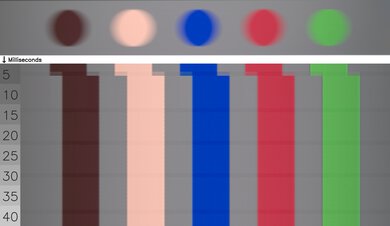
for pictures & test results
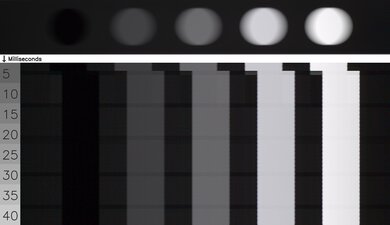
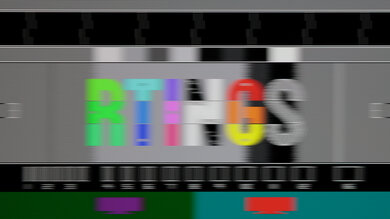
The TCL QM8K has subpar color transitions when watching movies and shows. It does a decent job of keeping colors pure during RGB transitions, but there's still some unintended intermediate colors present. For instance, there's some yellow mixed in with blues in fast-paced scenes and sports, which affects color consistency.
Unfortunately, the TV does a bad job keeping the edges of fast-moving objects consistent with the center, leading to excessive blurriness in movies, shows, and sports with a lot of motion.
for pictures & test results

The TCL QM8K brings back TCL's extremely odd flicker pattern, combining extremely high-frequency PWM with a DC dimming component to adjust the backlight output. TCL has designed this flicker method to ensure it's not noticeable in person.
for pictures & test results
for pictures & test results
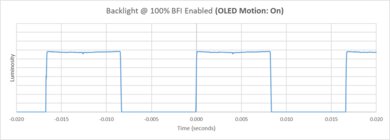
The TCL QM8K TV has an optional backlight strobing feature, commonly known as black frame insertion. This feature is meant to reduce persistence blur and improve the appearance of motion. Unlike most TVs on the market in 2025, it works at both 60Hz and 120Hz.
for pictures & test results

for pictures & test results

The glossy screen coating does a decent job of reducing the intensity of direct, mirror-like reflections. You'll still see bright lights or windows that are directly opposite the screen, but you can always crank up the brightness to compensate.
If you're in a bright room with lots of lights or windows, a TV with a matte anti-reflective coating, like the Samsung QN900F 8K, might be a better choice.


for pictures & test results

for pictures & test results

Overall, the amount of total reflected light off the screen is great. When it's off, you'll see the mirror-like direct reflections more, but indirect reflections aren't as noticeable. There are noticeable diffraction artifacts, though, like the rainbow smear around the lamp.
for pictures & test results

Ambient light has almost no noticeable impact on the color saturation of this TV.
for videos & test results
for pictures & test results

for pictures & test results

for pictures & test results

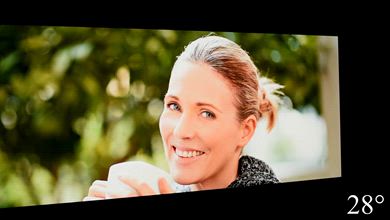
The TCL QM8K TV has a mediocre viewing angle. Brightness starts to drop off at a fairly narrow angle, and colors start to look washed out at a moderate angle, but don't shift much.
The WHVA panel in this TV is supposed to improve viewing angles, and despite our scoring, it does. When compared to the TCL QM7K, for example, you can see that although colors start to wash out at approximately the same point, the QM8K maintains a more gradual decrease after that point, whereas the QM7K drops off a cliff. There's also barely any color separation on the QM8K.
for pictures & test results

for pictures & test results

The TCL QM8K has decent gray uniformity. The screen isn't too cloudy or dirty overall, which is great for watching sports, but the color uniformity is a bit off, and there are warm spots across the entire screen. The sides are also a bit darker than the rest. Near-black scenes look much better.
for pictures & test results

for pictures & test results

The TCL QM8K is one of the first TVs on the market to use TCL CSOT's newest panel technology, known as WHVA. This new panel is designed to combine the strengths of VA and IPS, delivering wider viewing angles than traditional VA panels but with the same deep blacks. Unlike traditional VA panels, the subpixels are laid out in an R-G-B layout, which helps with text clarity when used with a PC.
The TV uses quantum dots for both red and green to achieve high color peaks with excellent separation between each primary color.
The Samsung QN90F also uses a WHVA panel, but it's not the same as the one used here; it has a different subpixel structure, and the SPDs are different, confirming it's a completely different panel.
TVs with LCD panels, like this one, are immune to permanent burn-in.
for pictures & test results

for pictures & test results

Two of the HDMI inputs support up to 48Gbps bandwidth. The eARC output is on an 18Gbps port, which is good and bad. It doesn't use up one of the TV's high-bandwidth ports, but it also means you can't pair it with a receiver that supports 48Gbps output to connect more than two high-bandwidth sources.
The TV supports eARC, which lets you pass high-quality, uncompressed audio to a compatible receiver or soundbar through an HDMI cable. It supports all major audio formats, so you don't have to worry about compatibility with external sources.
for pictures & test results

The TCL QM8K TV has a very premium, modern design. The bezels are incredibly thin, and they blend in well.
for pictures & test results

The TV comes with a compact, height-adjustable center-mounted stand. At its lowest position, the stand lifts the TV about 2.2 inches above the table and 3.4 inches at its highest, which is high enough for almost any soundbar.
Footprint of the 65-inch stand: 15.3" x 14.5".
for pictures & test results

The back of the TV is nice, with cutouts and guides for cable management. The inputs face to the right when viewed from the front of the TV, but they're inset on the back and can be difficult to access if the TV is mounted close to the wall.


for pictures & test results

The TCL QM8K TV has excellent overall build quality. It's mostly made from high-quality plastic, and we didn't notice any significant issues with our unit's build quality. After a few weeks of use, our unit developed a noticeable buzzing sound; it's noticeable at any brightness setting. Other owners have reported the same issue online, and it seems to be worse on the 98" model.
for pictures & test results

The remote has quick-access buttons for the most popular streaming services and a built-in microphone for voice commands. It's also backlit. It has a slightly different design from the TCL QM7K, with a silver finish and fewer sponsored buttons.
for pictures & test results

The TCL QM8K TV is powered by a MediaTek Pentonic 700 SoC and ships with Google TV 12. It comes with 52GB of shared storage, with 46GB free out of the box.
for pictures & test results

Unfortunately, like almost all TVs on the market, the smart interface contains ads, and you can't disable them.
for pictures & test results

There's a single button on the bottom middle of the TV that you can use to switch inputs and power the TV on/off. There's also a small switch you can use to turn the TV's built-in microphone on or off.
for pictures & test results

- Setup guide
- Remote
- 2x AAA batteries
- Power cable
for pictures & test results

The TCL QM8K TV has an okay frequency response. Most audio is well-balanced, but, like any TV, there's very little low bass response. Even a basic external soundbar will sound better.