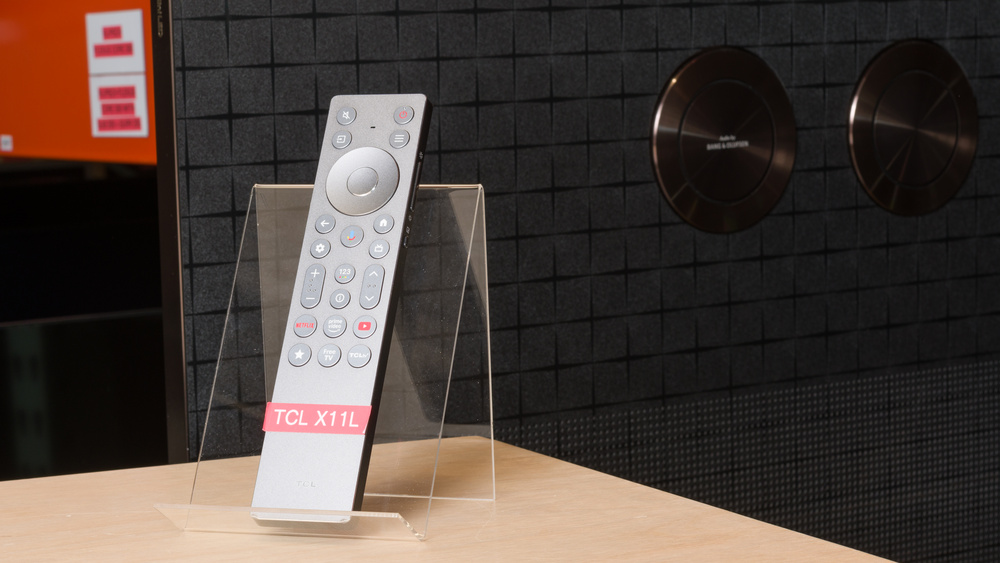
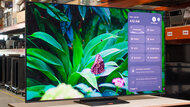
Although traditionally known as more of a budget brand, TCL has taken the TV market by storm in recent years, quickly becoming one of the top TV manufacturers in the world. In the past, they were known for their basic models with limited features, but that's no longer the case, and you'll find the latest, greatest technology available in many of their TVs, even budget models. They're often available at a lower cost than competitors, and most people will be pleased with their higher-end models. They mainly compete with Hisense but release models to compete with brands like Sony and Samsung.
Through our testing process, we've determined which TCL models are worth buying, and you can find our picks for the best TCL TVs below. You can also vote on which TCL TVs you want us to buy and test, and learn about the Google TV OS that TCL uses for most of their models.
Updates
- 09/04/2026TCL RM9L reviewed
- 09/02/2026TCL QM7L Pro reviewed
- 06/08/2026TCL QM7L reviewed
- 05/20/2026TCL QM8L reviewed
- 03/25/2026TCL X11L reviewed

We buy and test dozens of TVs yearly, taking an objective, data-driven approach to deliver results you can trust. Our testing process is complex, with hundreds of individual tests that take over a week to complete. Most of our tests use specially designed test patterns that mimic real content, but we also use the same sources you have at home to ensure our results match the real-world experience. We use two main tools for our testing: a Colorimetry Research CR-100 colorimeter and a CR-250 spectroradiometer.
-
Best TCL TV
 Mixed UsageHome TheaterBright RoomSportsGamingBrightnessBlack LevelColorMotion HandlingGame Mode ResponsivenessProcessing (In Development)Resolution:4kNative Refresh Rate:144HzScreen Finish:GlossyPanel Type:LCDSub-Type:VADolby Vision:YesSee all our test resultsSizes:75" 85" 98"
The best TCL TV we've tested is the TCL X11L. It's one of the brightest TVs on the market, delivering incredibly bright highlight details in movies and shows and easily overcoming glare during the day. Not only is the TV bright, but it also has outstanding black levels overall, so it displays very deep, bold blacks with almost no visible glow around bright areas against dark backgrounds in a dark room. It even has solid processing, so low-resolution and low-quality sources like streaming services and older cable TV stations or DVDs look pretty good.
This TV is also loaded with modern gaming features. All four HDMI ports have HDMI 2.1 bandwidth and support 4k @ 144Hz, 1080p @ 288Hz, and VRR, so you can take full advantage of the latest gaming consoles or high-end PCs. Motion isn't the smoothest, though, so fast action tends to look a bit blurry, especially when gaming.
-
Best Mid-Range TCL TV
Mixed UsageHome TheaterBright RoomSportsGamingBrightnessBlack LevelColorMotion HandlingGame Mode ResponsivenessProcessing (In Development)Resolution:4kNative Refresh Rate:144HzScreen Finish:GlossyPanel Type:LCDSub-Type:VADolby Vision:YesSee all our test resultsSizes:65" 75" 85" 98"As great as the TCL X11L is, it's also extremely expensive. Most people are far better off getting the TCL QM8L instead. While very small details aren't technically nearly as bright as they can be on X11L when measuring test slides, you won't actually notice this difference most of the time, and it's still incredibly bright when watching actual content. The QM8L offers similarly vibrant colors, and it's an excellent choice for a dark room thanks to its high contrast ratio and very effective local dimming.
The QM8L is also a very well-equipped TV with a great selection of smart features. It runs the Google TV smart platform, which has a huge selection of streaming apps. It has four HDMI 2.1 ports, so gamers can take full advantage of the latest gaming platforms or even a gaming PC. It also supports VRR to reduce screen tearing, and it has a very high refresh rate.
-
Best Lower Mid-Range TCL TV
Mixed UsageHome TheaterBright RoomSportsGamingBrightnessBlack LevelColorMotion HandlingGame Mode ResponsivenessProcessing (In Development)Resolution:4kNative Refresh Rate:144HzScreen Finish:GlossyPanel Type:LCDSub-Type:VADolby Vision:YesSee all our test resultsSizes:55" 65" 75" 85" 98"If you want to save a bit of money, you can get the TCL QM7L instead. This lower mid-range model offers great picture quality and a fantastic selection of extra features, but it's a bit of a step down across the board compared to the QM8L. Colors and bright details don't quite stand out as well; there's more glow around bright details on a black background, and it's not as good at cleaning up low-quality content feeds like most streaming services or cable TV channels.
There's also a Costco-exclusive variant of this TV known as the TCL QM7L Pro. It's a bit of a hybrid, sitting between the regular QM7L and the QM8L. The Pro version has four HDMI 2.1 ports instead of two, and the same processor as the QM8L, so it does a better job cleaning up low-quality streams. It's also not widely available and considerably less accurate out of the box, so most people are better off getting the regular QM7L instead.
-
Best Budget TCL TV
Mixed UsageHome TheaterBright RoomSportsGamingBrightnessBlack LevelColorMotion HandlingGame Mode ResponsivenessProcessing (In Development)Resolution:4kNative Refresh Rate:144HzScreen Finish:GlossyPanel Type:LCDSub-Type:VADolby Vision:YesSee all our test resultsSizes:55" 65" 75" 85" 98"Next up is the TCL QM6K, which is a budget model that punches well above its weight class. Even though it doesn't quite match the image quality of the higher-end models, it still delivers an impressive picture that's sure to impress most people. Colors are slightly muted compared to those on the more expensive TCL models, but they remain vibrant enough to deliver a pleasant image even if you enjoy vibrant colors. It gets bright enough to handle glare in well-lit rooms, and it looks decent in a dark room, although dark scenes aren't as punchy as they are on the higher-end models. However, its lower brightness means bright details don't stand out as much as they should.
This TV has the same set of gaming features that are found in its more expensive counterparts, including two HDMI 2.1 ports, support for 4k @ 144Hz, 1080p @ 288Hz, and VRR. It also features Dolby Vision and HDR10+, and supports every major audio format, making it an excellent choice for movie fans who want the widest compatibility. As with other TCL models, the viewing angle is on the narrow side, so sitting directly in front of the screen will give you the best image quality.
-
Best Cheap TCL TV
Mixed UsageHome TheaterBright RoomSportsGamingBrightnessBlack LevelColorMotion HandlingGame Mode ResponsivenessProcessing (In Development)Resolution:4kNative Refresh Rate:60HzScreen Finish:GlossyPanel Type:LCDSub-Type:VADolby Vision:YesSee all our test resultsSizes:50" 55" 65" 75" 85"Although it's a bit more expensive than cheap models from other brands, the Best Buy exclusive TCL QM5K offers the best image quality out of any other low-cost models on the market. The TV has local dimming, so blacks are nearly as deep as they are on the TCL QM6K, albeit with a bit more haloing around highlights and subtitles. It has very similar brightness capabilities to the more expensive model in most picture modes. Colors aren't as accurate out-of-the-box, but they have similar vibrancy, so the image doesn't look muted. Its viewing angle is approximately the same, so it's best to stay seated directly in front of the screen for optimal image quality.
Even though it has similar image quality to the QM6K, it's lighter in terms of gaming features. It doesn't support 4k @ 120Hz or 1080p @ 288Hz like the higher-end TCL models. However, it still gives you the option to game in either 1080p or 1440p @ 144Hz, which is great for gamers who prefer high frame rates over resolution. It also supports VRR up to 144Hz, minimizing screen tearing. The TV supports HDR10+, Dolby Vision, and DTS audio passthrough, ensuring excellent compatibility. It even has similar processing as the QM6K, which is impressive for a model this affordable.


Compared To Other Brands
-
Inexpensive.
TCL is one of the more budget-friendly brands on the market, and their TVs offer great value for their cost. Their prices have been going up, but TCL still offers an excellent cost-to-performance ratio.
-
Great smart OS.
TCL TVs mostly use the Google TV smart platform, which is user-friendly and has many apps you can download.
-
Has a lot of extra features.
As of their 2021 lineup, TCL started to include extra gaming features like HDMI 2.1 bandwidth and VRR support on their higher-end models. Even their mid-range models now support 4k @ 144Hz and 1080p @ 288Hz gaming, which is great for gamers. You also get Dolby Vision support on most of their models, and their mid-range and higher-tier TVs also support DTS audio formats.
-
Not good for wide seating areas.
Except for a few entry-level models, their TVs usually have VA panels with narrow viewing angles, so they're not suitable if you have a wide seating arrangement.
-
Less accurate.
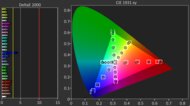
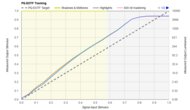
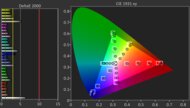
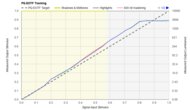
Even in their most accurate picture modes, TCL TVs are usually less accurate than competing brands. While most people won't notice these issues, it's a problem if you care about creative intent.
TCL vs Hisense
Hisense and TCL are direct competitors in the budget TV market. Their TVs usually offer the same features and similar performance. In the past, Hisense and TCL TVs had similar flaws, like bugs and motion handling issues. However, TCL has gotten better with those things in the past couple of years, so you shouldn't encounter any annoying issues with most of their models. Learn more about TCL vs Hisense TVs.
TCL vs Samsung
TCL and Samsung both offer a wide range of models. TCL TVs tend to offer much better value than Samsung, delivering higher performance for the price, especially at the lower end of the market. When comparing similarly priced models, TCL TVs tend to have better local dimming, display a wider range of colors, and get brighter. Learn more about TCL vs. Samsung.
TCL TVs tend to offer fantastic value compared to other brands. Even their entry-level models tend to have a great selection of extra features, especially for gamers. They also typically offer great picture quality, with effective local dimming, vibrant colors, and high peak brightness. Their greatest weak point is accuracy, though, and their TVs tend to be considerably less accurate than more expensive models from LG, Samsung, and Sony.
2026 TCL Lineup
TCL announced a handful of models at CES 2026. Unlike most other brands, TCL isn't primarily focusing on RGB Mini LED technology in their core lineup. Instead, TCL is working to improve color volume by refining quantum dot technology. They call this new iteration of quantum dots "Super Quantum Dots," or SQD for short. The first model to use SQD is TCL's high-end X11L, but they also brought this new technology to the QM7L and QM8L, which are direct replacements for the popular TCL QM7K and TCL QM8K Mini LED models from 2025. Although TCL's 2026 lineup doesn't focus on RGB Mini LED, they do have at least one model that utilizes this new panel technology, which is the TCL RM9L.
We'll update the table below once we have more details on TCL's full 2026 lineup. If you want a more in-depth summary of TCL's CES 2026 announcements, or you want to see how their 2026 lineup stacks up against the competition, check out our 2026 TV lineup page.
| Model | Sizes | Backlight Type | Advertised Zones | Refresh Rate | Notes |
|---|---|---|---|---|---|
| X11L | 75", 85", 98" | Mini LED | Up to 20,736 | 4k @ 144Hz, 1080p @ 288Hz | SQD with WHVA 2.0 panel |
| RM9L | 85", 98", 115" | RGB Mini LED | Up to 16,848 | 4k @ 144Hz, 1080p @ 288Hz | WHVA 2.0 panel |
| QM8L | 65", 75", 85", 98" | Mini LED | Up to 4,000 | 4k @ 144Hz, 1080p @ 288Hz | SQD panel |
| QM7L | 55", 65", 75", 85", 98" | Mini LED | Up to 2,100 | 4k @ 144Hz, 1080p @ 288Hz | SQD panel |
| QM6L | Unknown | Mini LED | Unknown | Unknown |
Recent Updates
Sep 23, 2026:
We replaced the TCL QM7K and TCL QM8K with their 2026 versions, as the 2025 models are becoming hard to find.
Jul 24, 2026:
We verified our picks for accuracy and tweaked the text for clarity.
Jun 08, 2026:
Added a mention of the TCL QM8L and TCL QM7L, but we're not recommending them over the 2025 versions at this time as they're too expensive at launch.
Jan 28, 2026:
We updated the Lineup section and revised other text throughout the article.
Nov 14, 2025:
Replaced the TCL Q651G with the TCL QM5K in the 'Best Cheap TCL TV' category.
Conclusion
In the past, TCL's lineup was primarily focused on budget-oriented models, but it has expanded in recent years. Our TCL TV reviews indicate that they continue to offer budget-friendly options with good picture quality. Their higher-end TVs are equipped with modern features, typically have excellent overall picture quality, and remain relatively affordable for the value they provide. TCL also manufactures some of the largest TVs on the market, with several models available in 98 inches and above. Whether you need a small and cheap TV for your bedroom or a massive TV for your home theater, TCL has options. For more detailed information on their models, a list of all the TCL models we've reviewed is provided below. Keep in mind that our scores aren't comparable across different test benches, so most of the older models in the list below score higher than they would today.


