
LED TVs have been around for a long time, but in recent years, a new technology called Mini LED has emerged. Mini LED isn't actually a technical term; it's mainly marketing, but most people understand it to refer to smaller, more numerous LEDs than traditional backlights. This should result in better contrast, as the higher number of LEDs and greater number of zones allows the backlight to more finely dim darker areas of the screen. Mini LED TVs have evolved in 2026, with the release of new RGB Mini LED models as well. These models replace the traditional blue or white LEDs with separate red, green, and blue-light-emitting diodes. However, just because a TV is marketed as Mini LED doesn't necessarily mean it performs well, or even that it has local dimming at all. Want to learn more? Check out our guide on what Mini LED is. If you're also considering an OLED TV, take a look at our article on Mini LED vs. OLED to see which technology is better for your needs.
Below are our recommendations for the best Mini LED TVs you can buy. For more options, see our picks for the best OLED TVs, the best gaming TVs, and the best sports TVs. You can also vote on which ones you want us to buy and test, and you can read our 2026 TV lineup article to learn about the new Mini LED models being released later this year.

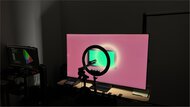
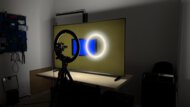
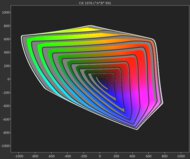
We buy and test dozens of TVs yearly, taking an objective, data-driven approach to deliver results you can trust. Our testing process is complex, with hundreds of individual tests that take over a week to complete. Most of our tests use specially designed test patterns that mimic real content, but we also use the same sources you have at home to ensure our results match the real-world experience. We use two main tools for our testing: a Colorimetry Research CR-100 colorimeter and a CR-250 spectroradiometer.
-
Best Mini LED TV
 Mixed UsageHome TheaterBright RoomSportsGamingBrightnessBlack LevelColorMotion HandlingGame Mode ResponsivenessProcessing (In Development)Dimming Zone Count Of The Tested TV:See all our test resultsSizes:65" 75" 85" 115"
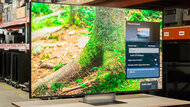
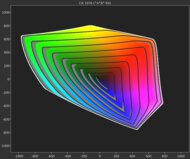
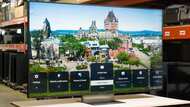
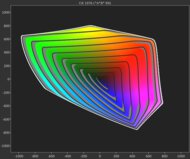
The Sony BRAVIA 9 II is the best Mini LED TV that we've tested. This 2026 model actually uses an RGB Mini LED backlight, which features separate red, green, and blue LEDs instead of a single light per zone. This allows the TV to display much brighter, more vibrant colors than the cheaper models on this list that use single LEDs. It looks great in a dark room thanks to its very high contrast ratio and excellent local dimming feature. It's also an incredibly good TV for a bright room, as it's bright enough to easily overcome glare and its matte anti-reflective coating effectively eliminates direct reflections.
It also has a great selection of features. It's powered by the Google TV smart interface and ships with the Gemini AI smart assistant. It has a great selection of streaming apps, and it can be used in an offline basic TV mode if you're concerned about data privacy. It's also good for gaming, with two HDMI 2.1 bandwidth inputs and support for 4k @ 120Hz gaming with the latest consoles. It doesn't support a higher refresh rate for PC gamers, though, which may disappoint some gamers.
-
Best Mid-Range Mini LED TV
Mixed UsageHome TheaterBright RoomSportsGamingBrightnessBlack LevelColorMotion HandlingGame Mode ResponsivenessProcessing (In Development)Dimming Zone Count Of The Tested TV:See all our test resultsSizes:50" 55" 65" 75" 85" 98"If you want something a bit cheaper than the Sony BRAVIA 9 II, check out the lower-end Sony BRAVIA 7 II instead. This TV is nearly identical to the higher-end model in many ways, but small, bright details aren't nearly as bright, so some scenes can look a bit flat at times. It also has worse reflection handling, so glare is more distracting during the day. Other than that, though, it's a remarkably good Mini LED TV, with fantastic picture quality, deep blacks, vivid colors, and high peak brightness.
It also has the exact same fantastic processing and image accuracy as the higher-end Sony. It does an excellent job cleaning up and scaling low-quality or low-resolution content, which is great if you watch a lot of streaming services or shows on DVD. It has a good selection of gaming features as well, including HDMI 2.1 bandwidth on two inputs, VRR support to reduce screen tearing, and a 120Hz refresh rate.
-
Best Lower Mid-Range Mini LED TV
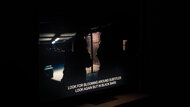
Mixed UsageHome TheaterBright RoomSportsGamingBrightnessBlack LevelColorMotion HandlingGame Mode ResponsivenessProcessing (In Development)Dimming Zone Count Of The Tested TV:See all our test resultsSizes:55" 65" 75" 85" 100"If you want something cheaper than the Sony BRAVIA 7 II, the Hisense U7SG is the best lower mid-range LED TV we've tested. It's a great TV overall, with very high peak brightness and very good colors. Its local dimming feature isn't quite as good as the Sony's, so blacks look slightly more gray in a dark room, and there's more light bleeding around bright spots on a dark background. While that's one of the most noticeable trade-offs of going with a cheaper model, the Hisense is also considerably less accurate, but many people won't even notice. On the other hand, the Hisense has a matte anti-reflective coating, making it a far better choice for a bright room, as reflections are nearly a thing of the past.
It also has a fantastic selection of gaming features, including a higher 165Hz refresh rate, and you can even boost it to 330Hz with a lower 1080p resolution. With its low input lag and VRR support to reduce tearing, it's a fantastic choice for PC esports gaming. It runs the Google TV smart interface, including access to the Gemini AI smart assistant, so there's no real difference between them.
-
Best Budget Mini LED TV
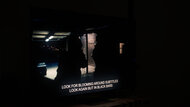
Mixed UsageHome TheaterBright RoomSportsGamingBrightnessBlack LevelColorMotion HandlingGame Mode ResponsivenessProcessing (In Development)Dimming Zone Count Of The Tested TV:See all our test resultsSizes:55" 65" 75" 85" 100"If you're shopping on a budget but still want a good home theater experience, the Hisense U6SF Pro is the best budget Mini LED TV we've tested. It has a surprisingly good local dimming feature and high contrast, resulting in very deep, uniform blacks in dark scenes. It has far fewer dimming zones than the Hisense U7SG, though, so you'll see more haloing around bright details or subtitles on a dark background. It's also not as colorful and significantly dimmer than the U7SG, so bright details don't stand out as well in movies.
It's also no slouch for bright room viewing. It has a similar anti-reflective coating to the Hisense U7SG and the Sony BRAVIA 9 II, so even dim scenes are clear and easy to see during the day. It has a good selection of extra features, including two HDMI 2.1 bandwidth ports, so you can take full advantage of one or two modern consoles. It also supports VRR to reduce screen tearing, and it has a fast refresh rate. Unfortunately, it has a slow response time, though, so motion is blurrier than it is on the higher-end models on this list.
-
Best Cheap Mini LED TV
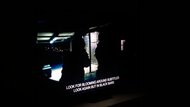
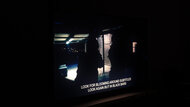
Mixed UsageHome TheaterBright RoomSportsGamingBrightnessBlack LevelColorMotion HandlingGame Mode ResponsivenessProcessing (In Development)Dimming Zone Count Of The Tested TV:See all our test resultsSizes:43" 50" 55" 65" 75" 85"If you want something even cheaper than the Hisense U6SF Pro while still offering Mini LED backlighting, check out the Vizio Mini LED Quantum 4K instead. There's no denying it: this is a substantially worse TV than the Hisense, but it's still okay overall. It gets surprisingly bright for the price, easily outclassing all other similarly priced models, making it as good as the TCL for a bright or moderately lit room. Where you'll really notice the difference, though, is in a dark room. While the Vizio offers Mini LED local dimming, it has a very low native contrast ratio, so you'll see a lot more haloing around bright highlights and subtitles on a dark background, and blacks just aren't nearly as crisp overall.
One area in which it excels compared to the other TVs on this list is its viewing angle. It's remarkably well-suited for a wide seating arrangement, as the image remains far more consistent as you move to the sides. It's also available in a wider range of sizes, as it's the only TV on this list available in a smaller 50- and 43-inch size. One thing to note is that this TV is sold exclusively at Walmart, and it requires a Walmart account to use most of its extra features. This isn't that much different from the other TVs on this list, most of which require a sign-in to use; it's just one more account you'll need to create.





Notable Mentions
-
TCL X11L:
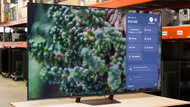
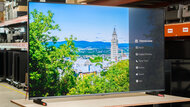
The TCL X11L competes with the Sony BRAVIA 9 II and has the highest peak brightness of any TV we've tested. However, the Sony is already bright enough for the vast majority of content and rooms, and a lot of the TCL's extra brightness goes to waste, since most content doesn't reach those levels. Since the Sony has superior processing, motion handling, and accuracy, it's the better option for most people.
See our review
Recent Updates
Sep 18, 2026:
We restructured the article, moving the Hisense U7SG down a spot to better match its market position and adding the Sony BRAVIA 7 II as the 'Best Mid-Range'. Finally, we replaced the TCL QM6K with the Hisense U6SF Pro as the 'Best Budget' pick, as it's more widely available and offers better overall performance.
Jul 22, 2026:
We replaced the Sony BRAVIA 9 with the Sony BRAVIA 9 II, as the new model is significantly better than the old one. We also removed the 'Best Small Mini LED TV' category as there are no picks available at the moment, and replaced it with 'Best Cheap Mini LED TV' with the Vizio Mini LED Quantum 4K instead.
Jun 10, 2026:
We replaced the TCL QM8K with the Hisense U7SG, as it's a newer model and provides better overall value. Refreshed the rest of the text throughout.
Apr 01, 2026:
We revised the introduction and replaced the TCL QM9K with the TCL X11L in the Notable Mentions.
Jan 29, 2026:
We added a new 'Best Lower Mid-Range Mini LED TV' category to give more options, and made the TCL QM7K our pick for that spot. We also added the Hisense U75QG to the Notable Mentions and revised some text throughout for accuracy.
All Reviews
Our recommendations above are what we think are currently the best Mini LED TVs to buy for most people in each price range. We factor in the price (a cheaper TV wins over a pricier one if the difference isn't worth it), feedback from our visitors, and availability (no TVs that are difficult to find or not available in the United States).
If you'd like to do the work of choosing yourself, here's a list of all our Mini LED TV reviews from the past few years. Be careful not to get too caught up in the details. While no TV is perfect, most TVs are great enough to please almost everyone, and the differences are often not noticeable unless you really look for them.


