The Fujifilm X-Pro3 is an interchangeable-lens mirrorless rangefinder-style camera with a unique hybrid optical and electronic viewfinder. This retro-inspired APS-C model has a reverse flip-out screen that encourages using this hybrid viewfinder in photography but can make it a bit unwieldy to shoot video. Still, it offers impressive image quality and records sharp, clear footage in 4k and FHD. It's also decently portable and amazingly well-built. However, depending on your choice of camera settings and usage patterns, its battery life is only adequate.
Our Verdict
The Fujifilm X-Pro3 is very good for travel photography. It offers impressive image quality, with a fairly wide dynamic range and good noise handling capability, even at higher ISO levels. Its wide shutter speed range is also well-suited to capturing everything from long-exposure shots to stills of fast-moving subjects. Its autofocus system is also impressively quick and accurate when it comes to tracking moving subjects. If you're looking to give your photos a distinctive flair, the camera has a couple of film-inspired visual effects that you can apply. That said, depending on your settings and usage patterns, its battery life is a little on the short side. It can also sometimes be a little heavy to carry around handheld for long periods, though its metal construction looks and feels premium.
- Impressive image quality.
- Excellent build quality.
- Great autofocus performance in photography.
- Battery life can be somewhat short.
The Fujifilm X-Pro3 is great for landscape photography. It offers a reasonably wide dynamic range, and images are quite low in noise, even at higher ISO levels, which is good if you plan on shooting in darker environments. The FUJINON XF 18-55mm F2.8-4 R OIS lens also has a fairly wide maximum aperture, allowing for a clear separation between subject and background. Its magnesium and titanium body feels amazingly well-built and is rated as weather-sealed. Its reverse flip-out screen is sharp, clear, and bright enough to see under direct sunlight, but its unusual, slightly cumbersome design encourages you to use the hybrid viewfinder to compose your shots unless you're planning on shooting below waist level.
- Impressive image quality.
- Excellent build quality.
- Battery life can be somewhat short.
The Fujifilm X-Pro3 is good for sports and wildlife photography. Its maximum continuous shooting speed is reasonably quick, though it takes some time to clear its buffer, so it's best to keep continuous bursts fairly short. Image quality is great overall, with impressive noise handling capability at higher ISO levels and a fairly high dynamic range. Its exceptionally fast maximum shutter speed when using its electronic shutter and responsive autofocus system should also let you capture clear stills of fast-moving subjects.
- Impressive image quality.
- Excellent build quality.
- Great autofocus performance in photography.
- Battery life can be somewhat short.
- Long buffer clearing time.
The Fujifilm X-Pro3 is okay for vlogging, though it isn't designed for this use. Its reverse flip-out screen can't be seen when the camera is pointed at you, and the camera can feel a little heavy if you're using it handheld for long periods. While it lacks in-body stabilization, the optical stabilization feature in its FUJINON XF 18-55mm F2.8-4 R OIS lens helps it do a great job of smoothing out camera shake in 4k and FHD recording. It offers impressive video quality in either resolution too. Its autofocus system also does a superb job of continuously maintaining focus on subjects' faces.
- Exceptional autofocus performance in video.
- Impressive video stabilization performance.
- Reverse flip-out screen can be clunky to use for video.
- Battery life can be somewhat short.
The Fujifilm X-Pro3 delivers impressive overall performance for studio video. It's capable of recording at up to 30 fps in 4k or native 60 fps in FHD without a crop. Video quality is impressively sharp and detailed in either resolution, though there's noticeable visual noise in darker environments. Its F-log shooting mode yields a wider dynamic range in recording and allows for in-depth color grading while editing. Unfortunately, its reverse flip-out screen can't fully deploy when the camera is mounted on a tripod. While you can attach an auxiliary mic and plug in a pair of headphones via the use of a separate analog to USB-C adapter, it doesn't have an HDMI port to let you use an external recorder.
- Exceptional autofocus performance in video.
- Great video quality in FHD and 4k.
- Easy-to-use menu system.
- Reverse flip-out screen can be clunky to use for video.
- No HDMI output.
The Fujifilm X-Pro3 isn't designed for action video. It isn't meant to be attached to a chest or helmet rig, though it's fairly compact and feels amazingly sturdy. It's rated as being weather-sealed. While it lacks in-body stabilization, it does a great job of smoothing out camera shake, too, in no small part due to the optical stabilization feature of its FUJINON XF 18-55mm F2.8-4 R OIS lens. Unfortunately, it's incapable of recording at more than 30 fps in 4k, so you can't record smooth action video or generate high-quality slow-motion footage in this resolution, though it does have a slow-motion mode in FHD that records 1080p at 120 fps.
- Excellent build quality.
- Impressive video stabilization performance.
- Limited frame rate selection in 4k.
- Battery life can be somewhat short.
Changelog
- Updated Sep 05, 2023: We re-processed the 'Photo RAW Dynamic Range' test scene photo using Lightroom rather than RawTherapee and re-uploaded it to the review for consistency with our current methodology.
- Updated Aug 14, 2023: We've updated the sensor type to 'BSI CMOS' to reflect the sensor's back-illuminated design. We previously only noted that it was a 'CMOS' sensor.
- Updated Jun 06, 2023: We've updated the 'App Name' in the 'Menu System' section of the review to reflect this camera's compatibility with Fujifilm's new XApp.
- Updated Apr 05, 2023: Converted to Test Bench 0.12.
Check Price
Differences Between Sizes And Variants
The Fujifilm X-Pro3 is available in three different color variants: 'Black', 'Dura Black', and 'Dura Silver', with the latter two variants having a special coating on the titanium top cover and bottom plate that's advertised as being scratch-resistant. We tested the 'Dura Black' variant, and you can see its label here. We tested it in conjunction with the FUJINON XF 18-55mm F2.8-4 R OIS lens, though other X-mount lenses can be used. We also expect the other color variants to offer similar overall performance when used with the same lens.
If you come across another variant of this camera, let us know in the discussions so we can update our review.
Popular Camera Comparisons
The Fujifilm X-Pro3 and the Fujifilm X100V have some similarities but are different types of cameras. The X100V is a fixed-lens compact, whereas the X-Pro3 is an interchangeable-lens camera. Both cameras use the same sensor and feature hybrid optical/electronic viewfinders, but the X100V is better for those seeking something more portable, while the X-Pro3 is better for those who prefer the flexibility to switch out and use different lenses.
Test Results
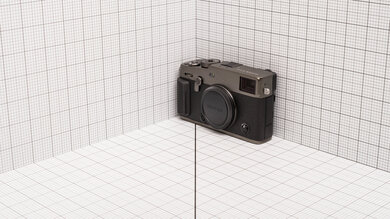
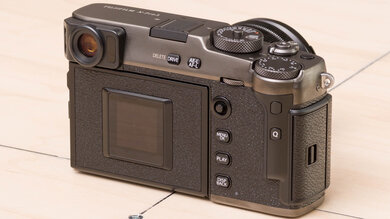
- Has a magnesium frame with a top cover and base plate made of corrosion-resistant titanium
- 'Dura Black' and 'Dura Silver' color variants have a coating that's advertised as being scratch-resistant, though we don't test for this
- Wheels, buttons, and thumb stick operate tightly and precisely
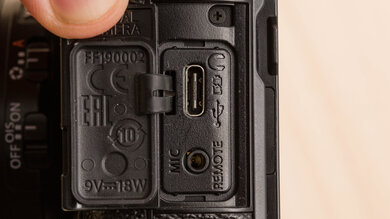
- Input and output compartment is covered by a locking hinged flap with a weather-sealing gasket, though we don't test for this
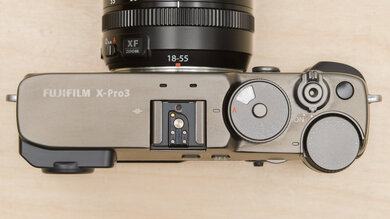
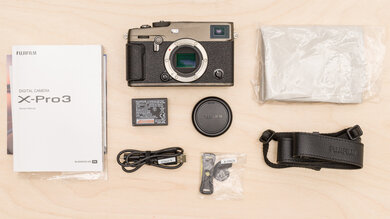
- Fujifilm X-Pro3 mirrorless camera body
- 1x NP-W126S battery
- Sensor cover
- Shoulder strap
- Shoulder strap connections
- Microfiber cloth
- USB-A to USB-C cable
- User manual
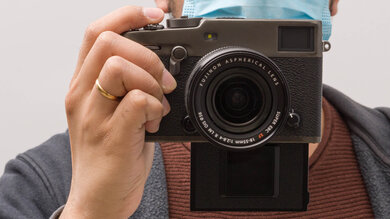
- Grip is a little small for users with very large hands but provides a secure hold thanks to its very well-textured surface
- Reverse flip-out screen design encourages the use of the viewfinder to frame your shots
- Plenty of room between lens and grip, so your fingers shouldn't feel pinched
- Pulling up the shutter speed wheel reveals the ISO adjustment dial, which can take some time to get used to
- Still easy to make exposure adjustments with your eye pressed against the viewfinder or when shooting below waist level with the screen
- Back dial is easy to use, though the camera also has a thumb stick to navigate the menu or swap between focus points
- AF drive button can be hard to reach for users with small hands
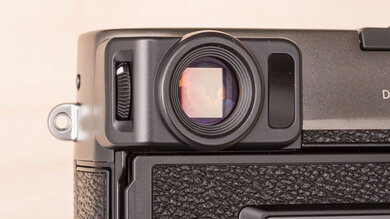
Note: The results shown are for the viewfinder when used in EVF mode. You can press the toggle switch at the front of the camera that switches it to an optical rangefinder. It has an advertised magnification of roughly 0.52x and features frame overlays for a couple of different focal lengths, giving you a rough estimate of your photo composition.
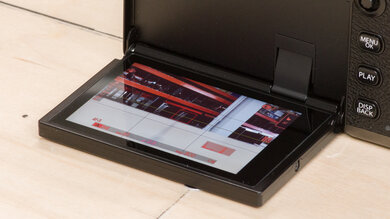
Note: The results shown above are for the reverse flip-out screen. The camera also has a color memory LCD sub-monitor screen on the rear of the reverse-mounted display that can show various camera settings. In 'Classic' mode, it shows the current film simulation effect, remaining battery life, and camera ISO. Using it in 'Standard' mode allows you to customize what information is shown, including exposure parameters like aperture, shutter speed, and ISO.
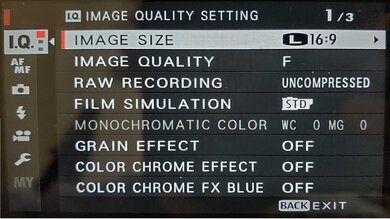
- Interface is very easy to navigate with physical controls
- Navigation can sometimes feel a little clunky since you need to go through several sub-menus to reach the settings you want
- Menu features some visual aids to help you understand a few of the functions
- Doesn't have a guide mode to help novice users understand some brand-specific terminology