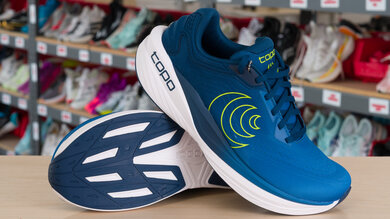
The Topo Phantom 4 is a stable, good daily trainer with an anatomical toe box, designed for runners who value a planted ride and roomy fit over speed. Its impressive stability and decent cushioning make it well-suited to relaxed running. However, its ride is very dull and lacks the propulsion to tackle faster efforts or racing, and its midsole bottoms out beyond 10K.
| ✅ Buy If: | ❌ Skip If: |
|
|
Our Verdict
The Topo Phantom 4 is a sub-par shoe for a marathon. Its limited energy return means you'll have to expend more energy to go the same distance as in a bouncier shoe. The cushioning is also inadequate for absorbing the cumulative impact of the marathon distance.
Very minimal bounce.
Cushioning bottoms out over long distances.
The Topo Phantom 4 is a suitable option for running shorter races. While it's nimble enough for some strides and pickups, the limited bounce from the ZipFoam midsole (an EVA/TPU blend) means that you'll get back less of the energy you put into each stride compared to a dedicated racing shoe.
Very firm forefoot.
Very minimal bounce.
The Topo Phantom 4 is an okay long-run shoe. Its excellent stability keeps the platform planted as fatigue builds, and it's decently cushioned at step-in. The excellent rocker geometry also helps the shoe roll well. However, its midsole bottoms out fast, and the shoe's poor responsiveness means it lacks the versatility for progressive efforts.
Excellent stability keeps the platform planted as fatigue builds.
Midsole bottoms out fast so legs will feel beat up.
The Topo Phantom 4 is a good daily trainer for runners who prioritize stability over excitement. Its impressive stability creates a planted platform for regular mileage, while the cushioning provides decent impact protection overall. However, its poor responsiveness means it's not the shoe to pick up the pace.
Excellent stability provides a planted platform for daily mileage.
Cushioned enough for regular miles.
Lack of plate makes shoe accessible.
Not the shoe for faster efforts.
Changelog
-
Updated Aug 26, 2026:
We've updated this review to tweak the intro and add text to the new usage boxes after updating the shoe's Test Bench. We also added a link to the newly reviewed Topo Specter 3 in the Popular Comparisons section.
- Updated Jun 17, 2026: We've converted this review to Test Bench 0.12, which fixes how we measure firmness, a component of the Stability and 5K/10K Racing usages. There may be inconsistencies between the text and the scores for these usages, but the scores should still be considered valid. We've also brought back the Energy Return score and added two new usages: Daily Training and Long Run. To read more about the changes, see the changelog.
-
Updated Jun 09, 2026:
We modified the writing due to the new test bench. We've updated the Responsiveness box text to reflect the new scores and added text to the True To Size box.
-
Updated Jun 09, 2026:
We've updated the Popular Comparisons section to include a link to the newly reviewed Nike Downshifter 14.
- Updated May 26, 2026: We've converted this review to Test Bench 0.11, adding two new rocker measurements to the Design section, and three new responsiveness tests to the Performance section. The Energy Return usage score has been replaced with Responsiveness. Check out the details in our changelog.
- Updated Mar 25, 2026: We've converted this review to Test Bench 0.10, adding a new set of fit tests to the Design section and an overall fit performance usage. Check out the details in our changelog.
-
Updated Dec 12, 2025:
We have updated the Popular Comparisons section to include a comparison to the recently reviewed Altra Experience Flow 2.
- Updated Nov 21, 2025: Review published.
- Updated Nov 19, 2025: Early access published.
- Updated Aug 26, 2025: Our testers have started testing this product.
- Updated Aug 07, 2025: The product has arrived in our lab, and our testers will start evaluating it soon.
- Updated Aug 01, 2025: We've purchased the product and are waiting for it to arrive in our lab.
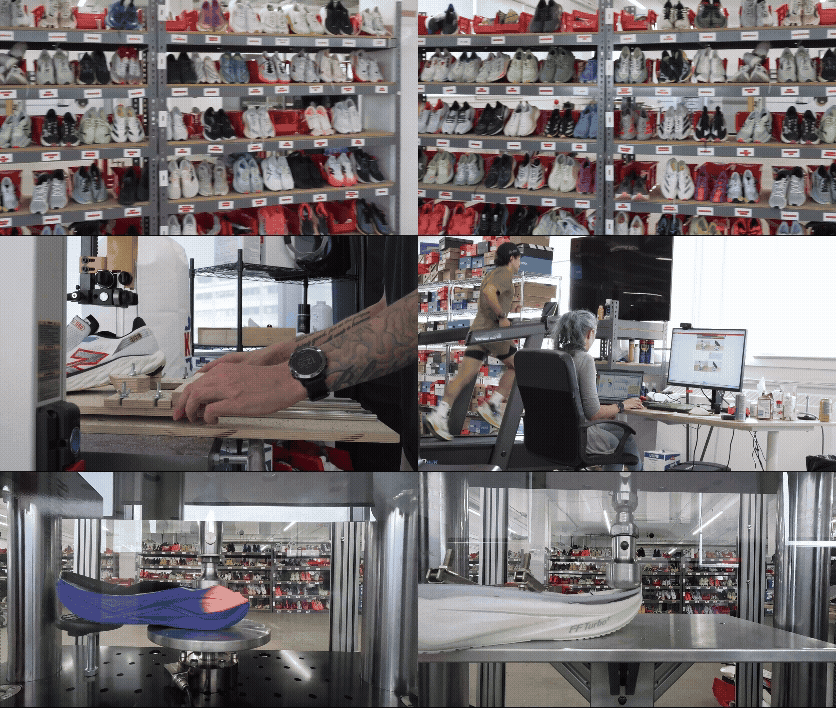
We've bought and tested more than 300 running shoes. Every pair purchased with our own money, never supplied or sponsored by brands. Our data-driven tests are designed to go beyond marketing claims, and since every shoe goes through the exact same methodology, you can directly compare results to find the right pair for your needs.
Test Results
Energy Return
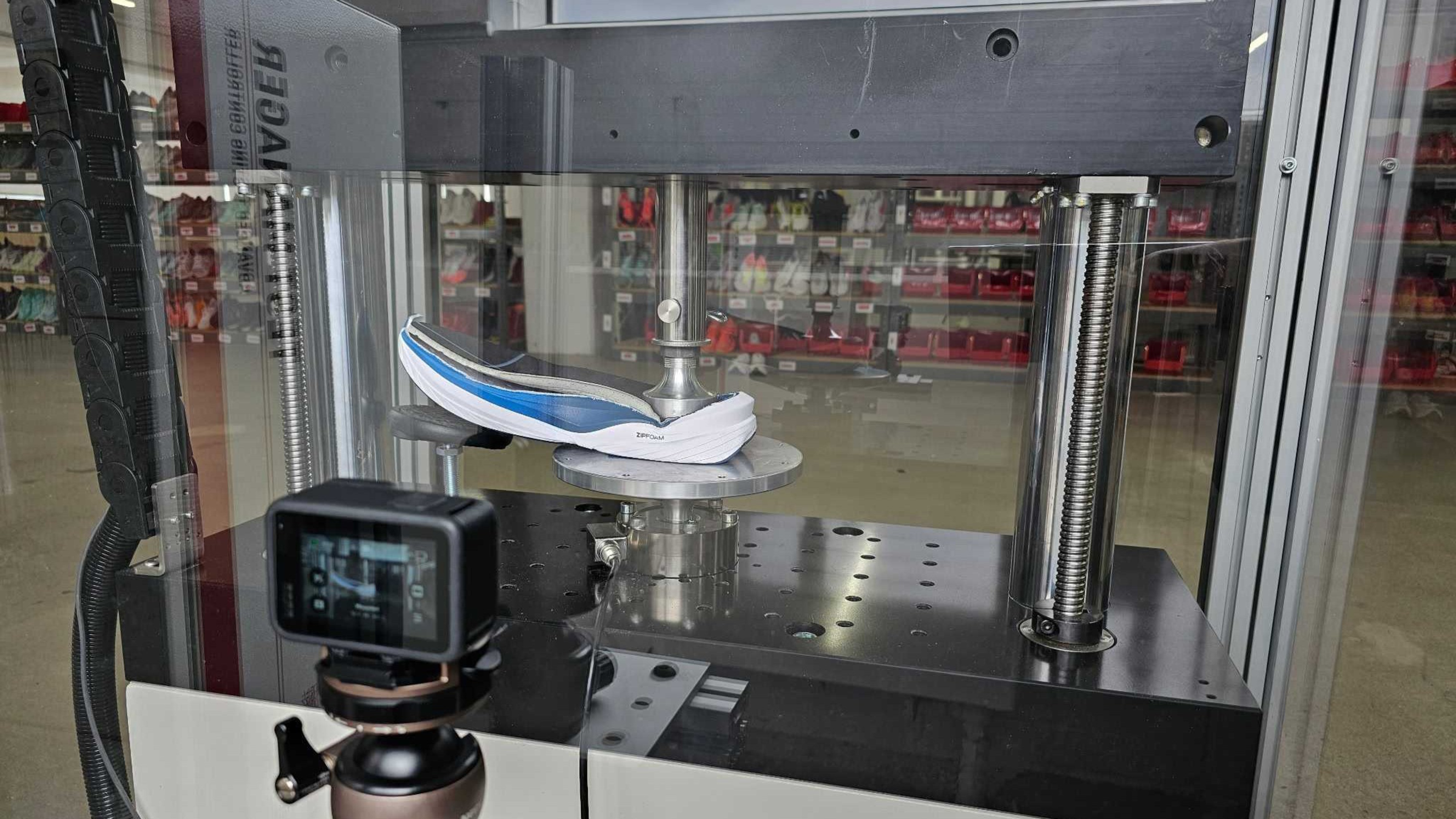
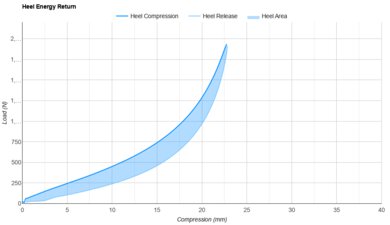
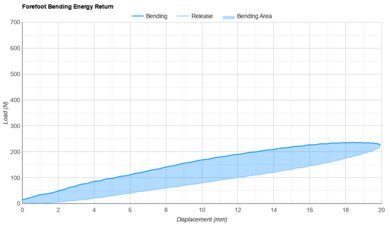
The Topo Phantom 4 has terrible energy return. The forefoot gives back very little of the energy stored when compressed, while the heel performs even worse.
Ride is very dull underfoot.
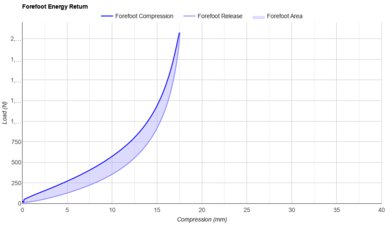
The energy return from the Topo Phantom 4's forefoot is better than the heel, but still rather poor. Nevertheless, it outperforms some legacy daily trainers, like the Brooks Ghost 17 or ASICS GEL-CUMULUS 27.
Stability
The Topo Phantom 4 has good lateral stability. The wide toe box and firm forefoot provide a stable, planted push-off with each step. Topo's unique outsole geometry provides the shoe with a wide platform, creating a solid and reliable base for every stride.
Wide toe box and outsole.
Very firm forefoot.
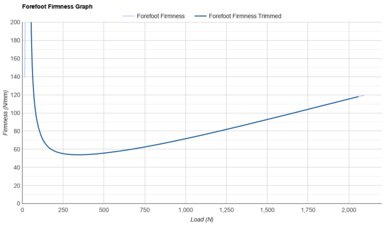
The forefoot starts out quite firm already and becomes even firmer as you push harder. This helps give the shoe a stable, grounded feeling, but could be too harsh for some.
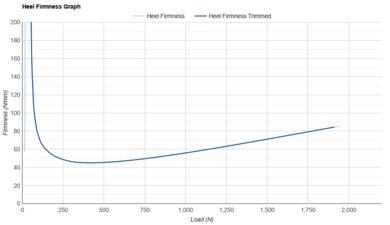
The heel of the Topo Phantom 4 is firm enough to feel secure underfoot for heel strikers, but not so firm as to feel overly harsh. At lower force levels, it's more malleable than the Brooks Ghost 17 or ASICS GEL-CUMULUS 27. At even a moderate level of force, though, it will feel firmer than these other shoes.
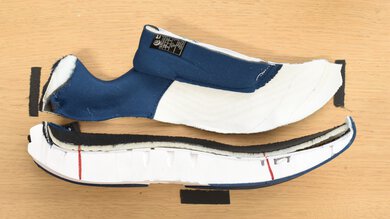
Cushioning
The Topo Phantom 4 has decent, well-balanced cushioning. Thanks to its relatively small heel-to-toe drop, the impact protection is fairly consistent between the heel and the forefoot. That said, the thinner midsole struggles to absorb heavier forces and isn't particularly resilient over long distances.
Even cushioning between forefoot and heel.
Cushioning struggles to keep up with higher impact forces.
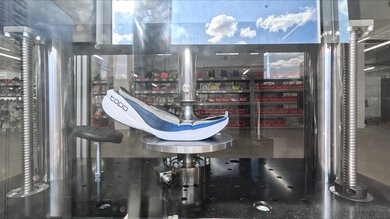
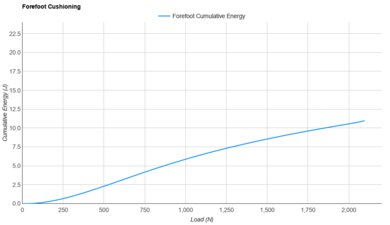
The forefoot of the Topo Phantom 4 is satisfactorily cushioned. The low drop means that there is still a decent stack under the forefoot, so it's better protected than in classic daily trainers like the Brooks Ghost 17, Nike Pegasus 41, or ASICS GEL-CUMULUS 27.

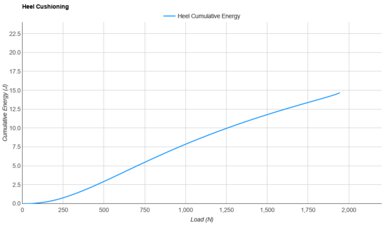
The Topo Phantom 4 provides a decent amount of cushioning in the heel. At walking or light running effort, it actually provides better protection than many other daily trainers, but at harder efforts, it lags behind.
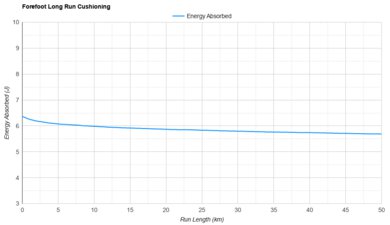
The Topo Phantom 4's cushioning is inadequate for long runs. The forefoot becomes much less absorbent after 10k, and steadily less thereafter. That said, it does actually hold up better than the Nike Pegasus 41 or Brooks Ghost 17.
Responsiveness
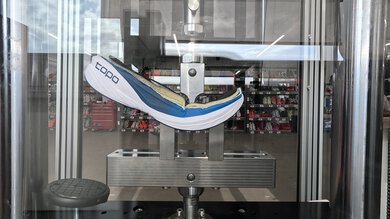
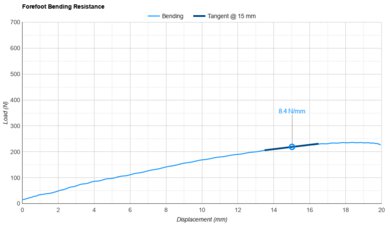
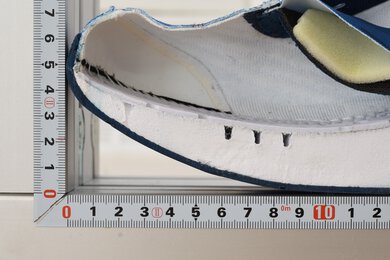
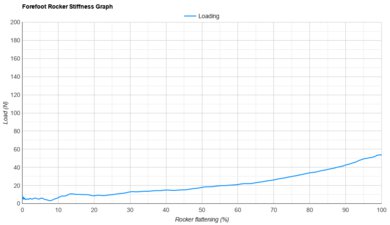
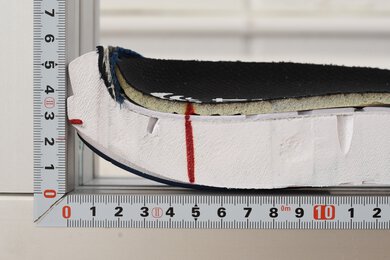
The Topo Phantom 4 has poor responsiveness. The Phantom 4 is a no-frills shoe trainer that's designed to stay out of your way rather than give an extra pep to your step, and that's evident in the ride. The EVA/TPU blend in the midsole leans much more toward stability than bounce, with the firmer EVA foam dulling impact forces more aggressively than the TPU can bounce them back. The shoe's midsole does have a rockered design, but it doesn't hold its shape under load, so it doesn't contribute much to forward motion.
Very minimal bounce.
True To Size
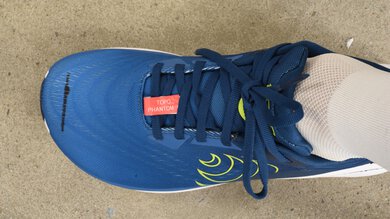
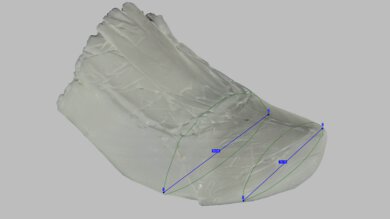
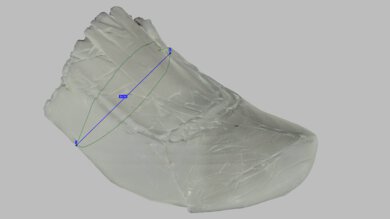
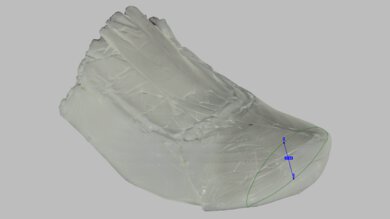
The Topo Phantom 4 has an accommodating fit that leaves plenty of room for your toes to splay. This can feel loose and even sloppy if you're accustomed to more snug, tapered toe boxes, but the snug fit in the arch helps keep your foot secure. The length is true to size, so most runners can stick with their normal size.
Length is true to size.
Spacious toe box.
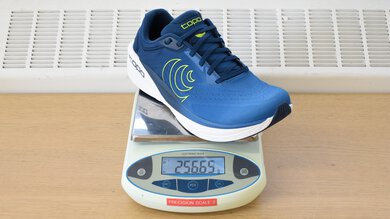
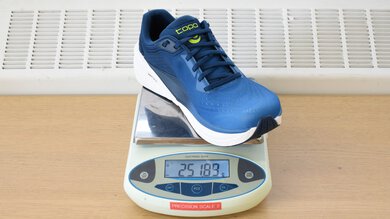
The Topo Phantom 4 manages to keep weight quite reasonable for a daily trainer, weighing in at less than the ASICS GEL-CUMULUS 27, Brooks Ghost 17, or New Balance Fresh Foam X 880v15.
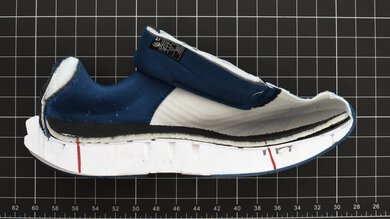
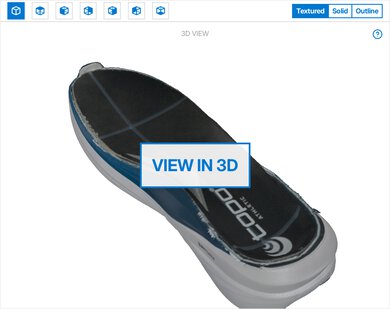
Topo's anatomical toe box is one of the brand's most distinctive elements. Runners who feel their toes pinched by most legacy brands will particularly appreciate the Topo's roomy interior. Because the shape is different than many brands' canoe-shaped forefoot, our measurements don't fully capture the extra width of the toe box.
Popular Running Shoe Comparisons
The Topo Phantom 4 is a newer brand's take on a classic daily trainer, and a reminder that innovation in running shoe design isn't just about making cutting-edge super shoes faster and lighter, but also about making daily trainers more comfortable and approachable. In terms of usages and performance, the Phantom 4 is comparable to legacy trainers like the Brooks Ghost 17 or ASICS GEL-CUMULUS 27, yet it looks and feels nothing like these more traditional running shoes. It also sits well above entry-level options like the Nike Downshifter 14, offering substantially more cushioning and responsiveness without sacrificing everyday usability. The most comparable shoe from another brand would be the Altra Experience Flow 2, which has a similarly wide toe box and footbed geometry, but lower stack height and less cushioned ride.
As a relatively new entrant to the market, Topo Athletic still offers a smaller selection of shoes. The Phantom 4 is the brand's most versatile shoe, suitable for walking and everyday running. The Topo Specter 3 is the all-out, lively super trainer. The Topo Cyclone 3 is a low-stack, lightweight trainer that feels closer to an old-school racing flat, but with the same wide toe box as the other Topo shoes. Finally, the Topo Atmos is the brand's newest shoe line, and it's the only max-cushioned model.
For more options, check out our recommendations for the best running shoes.
The Altra Torin 8 and Topo Phantom 4 are running shoes that appeal to runners who dislike tapered toe boxes and want space for their toes to spread, but they get there with different paths. The Torin 8 leans into Altra’s zero-drop approach, keeping your foot level and encouraging a flatter, more natural stance that can feel closer to a minimalist shoe. The Phantom 4 keeps the same roomy forefoot idea but pairs it with a moderate 5 mm drop, so it feels more like a conventional daily trainer in how it rolls through transitions, just with a more accommodating front end.
The Topo Phantom 4 and Topo Aura 2 are both impressively stable low-drop shoes with anatomical toe boxes, but the Aura 2 is the more aggressive support option. It’s much heavier and a bit more expensive, though it is slightly more stable and more deeply cushioned. The Phantom 4 is significantly lighter and a bit more versatile, making it better suited to faster running. Get the Aura 2 if you need the most support and don’t mind paying extra; get the Phantom 4 if you’re a neutral runner who still wants plenty of stability.
The Altra Torin 7 and Topo Phantom 4 are both daily trainers that share a similarly shaped, wide toe-box, which differentiates them from most other brands. While their footbed geometries are similar, the Altra shoe has zero heel-to-toe drop, whereas the Topo does at least have 5mm. The zero drop of the Altra, combined with its thin cushioning, makes it feel more like a last vestige of the minimalist trend, while the Topo shoe feels more like a classic daily trainer with a roomier forefoot.
The Topo Phantom 4 and Altra Experience Flow 2 are two similarly shaped running shoes that share an expansive toe box, designed to allow toes more room to splay. The Topo shoe is built on a taller platform, and it has significantly better cushioning, especially in the heel. The Experience Flow 2 is not as low to the ground as other Altra shoes, but it is still significantly lower than the Topo Phantom 4, and it is also much lighter. The combination of lower stack height and firmer midsole makes the Experience Flow 2 the more stable of the two shoes.
The Brooks Ghost 17 and Topo Phantom 4 are two daily workhorses that prioritise a smooth, predictable ride, but they cater to different runners. With its 10mm heel drop and dense midsole, the Brooks is a classic choice for heel strikers and is also a better choice for heavier runners, as its cushioning holds up better as force increases. The Topo has a much less pronounced heel drop, and its cushioning performs better at lower forces, so it will be better suited to lighter runners and mid- to forefoot strikers.
The Saucony Ride 18 and Topo Phantom 4 are two daily trainers that promise a smooth ride with minimal fuss or bells and whistles. The distinguishing feature of the Topo shoe is its wide toebox, which allows more room for toes to splay, so this shoe will be of interest to runners who like a roomier forefoot. On the other hand, the Saucony shoe is much more energetic and slightly better cushioned and more stable, so for runners whose toes don't get cramped, the Ride has more to offer.
The Topo Cyclone 3 and Topo Phantom 4 are two of the more established shoes in the relatively new brand's lineup. Both have Topo's distinctive wide toe box, and the same advertised 5mm heel-to-toe drop. But the Cyclone sits much lower to the ground, with 10mm less stack height under the heel. As such, the Cyclone is a nimbler, lighter, but noticeably less cushioned shoe that's good for shorter, faster workouts, while the Phantom provides better protection and has a bit more range.
Differences Between Sizes And Variants
We bought and tested the Topo Phantom 4 in men's US size 9, as noted on the label for our pair. The pair we purchased is the Blue/Lime colorway. The shoe is also available in numerous other colorways, depending on your region. Wide versions are available for both men and women.
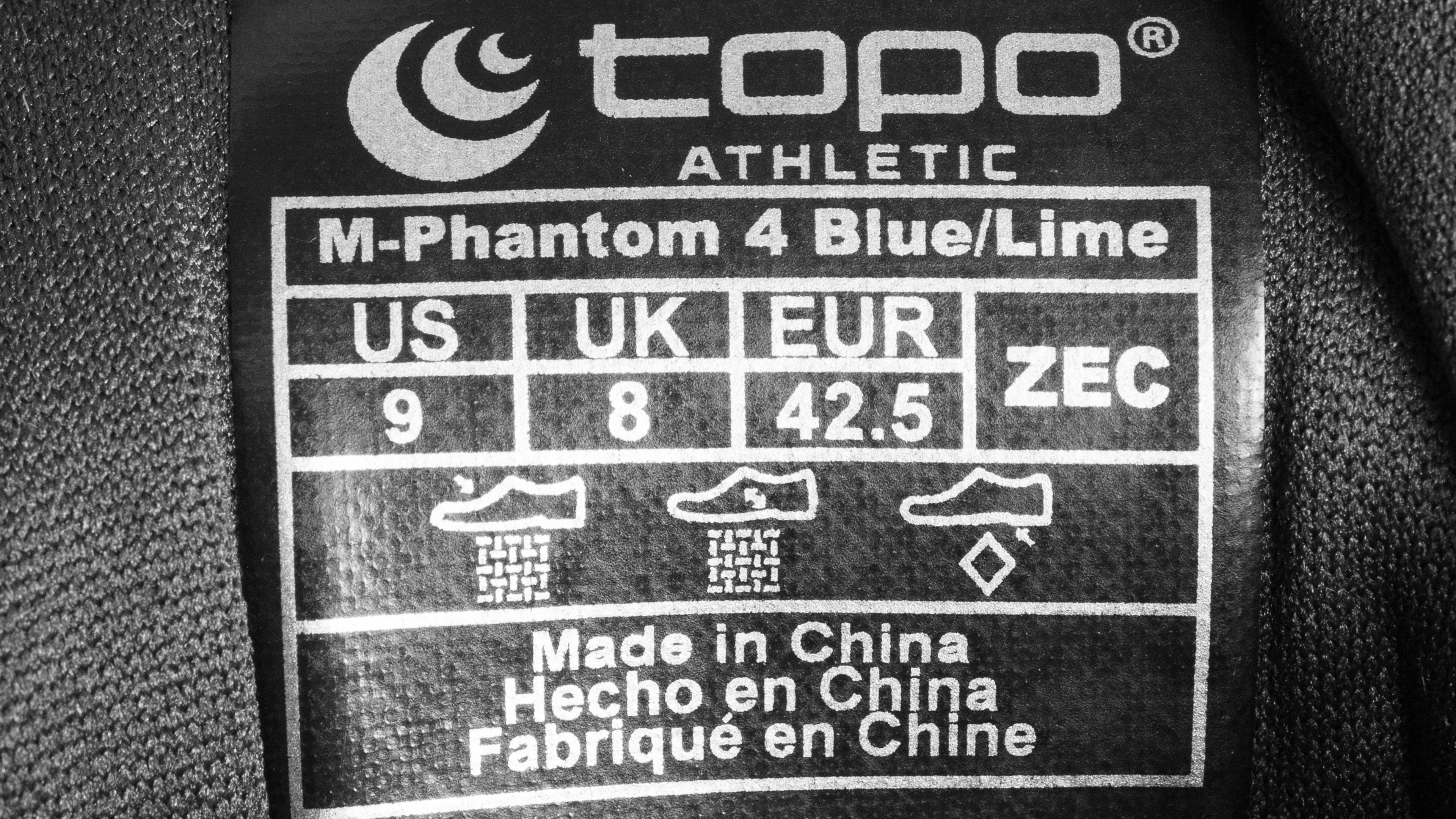
The design section applies only to the exact model we tested, but we expect other sizes and gender variants to perform similarly.