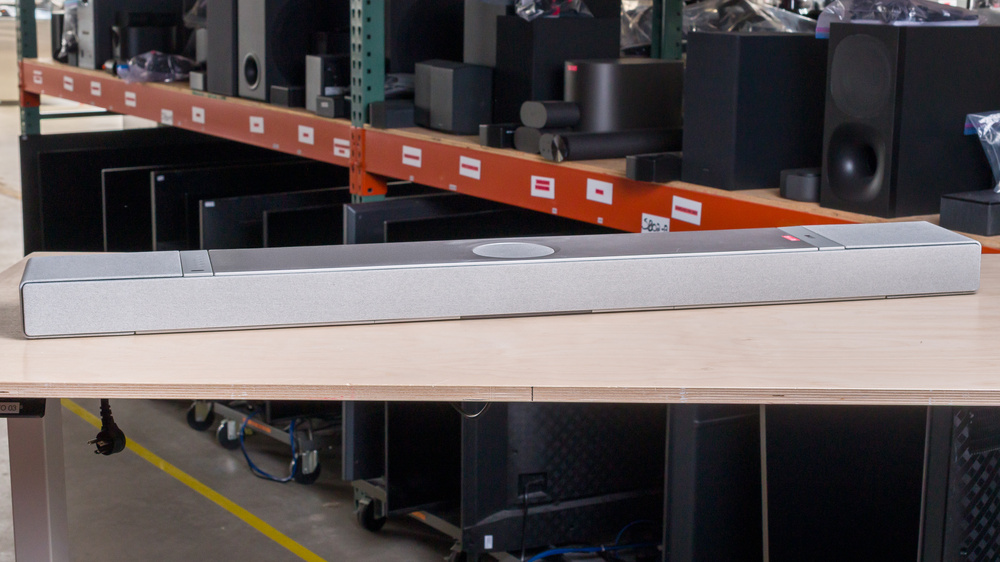
The KEF XIO is the company's first all-in-one soundbar, designed to deliver both cinematic immersion and hi-fi musicality in a single chassis. Its 5.1.2 design supports Dolby Atmos and Sony 360 Reality Audio, and the brand claims their Uni-Q driver technology ensures a wide, immersive soundstage. With its premium design and focus on clarity, it's positioned as a stylish centerpiece for your living room.
Our Verdict
The KEF XIO soundbar is good for mixed usage. Given the physical limitations of its all-in-one design, it offers a spacious stereo image thanks to its side-firing drivers that extend sound beyond the bar while ensuring objects still track accurately from left to right. Its balanced mid-range and treble mean voices, instruments, and effects are reproduced accurately and with plenty of details. Fans of rumbly sound effects or kick drums may want to add a dedicated subwoofer. However, while it does a reasonable job supporting Atmos via up-firing drivers, DTS:X support depends on your TV. The companion app offers many options for customizing the sound, including bass and treble controls, but there's no true room correction feature. KEF's Intelligent Placement Technology (IPT) instead corrects for the orientation in which you place the bar. Still, for an all-in-one solution, it performs well.
Gets loud with minimal compression.
Remarkably low latency via eARC.
Stylish, all-in-one design.
Atmos drivers offer a believable sense of height.
No traditional room correction.
No satellites means limited immersion.
Lack of a dedicated subwoofer means low bass is a touch quiet.
The KEF XIO soundbar is great for watching dialogue-heavy content like TV shows. Its flat mids and treble ensure voices sound accurate and true-to-life, though the boosted high bass can make deeper voices sound a bit boomy. There's a Dialogue Mode to bring added clarity to voices if needed, but the default Direct Mode keeps people sounding clear and intelligible regardless of the content. Additionally, there's a dedicated center channel, ensuring voices retain this clarity even when listening to surround sound content. There's also a Night Mode, which compresses your audio's dynamic range, so you can still hear quieter sounds like whispers without having loud explosions disturb your neighbors. Finally, for an all-in-one bar, the reasonably good Atmos performance is a nice addition.
Gets loud with minimal compression.
Remarkably low latency via eARC.
Stylish, all-in-one design.
Atmos drivers offer a believable sense of height.
No traditional room correction.
No satellites means limited immersion.
Lack of a dedicated subwoofer means low bass is a touch quiet.
The KEF XIO soundbar is good for listening to music. Despite lacking a dedicated subwoofer, it puts out a good amount of low-end, so basslines feel full and warm. That said, hip-hop heads may miss the lowest thump of 808 bass drums, but that's to be expected in an all-in-one setup like this. Still, the bar gets loud with minimal compression, so the low-end it does reproduce is clean and clear. The boosted high bass can make vocals sound slightly muddy, but since the mid-range and treble are both well-controlled, this isn't too much of an issue. Voices and instruments alike sound detailed, well-balanced, and accurately placed in the stereo field. In the Expert listening profile, you can also adjust the bass and treble levels to better suit your preferences.
Gets loud with minimal compression.
Remarkably low latency via eARC.
Stylish, all-in-one design.
Atmos drivers offer a believable sense of height.
No traditional room correction.
No satellites means limited immersion.
Lack of a dedicated subwoofer means low bass is a touch quiet.
The KEF XIO soundbar is good for watching movies. Its frequency response is decent enough and represents most kinds of audio content well, but since it lacks a dedicated subwoofer, you might miss a little thump and rumble in the bass. That said, dialogue is intelligible with most kinds of content due to the dedicated center channel, and the bar does a good job keeping objects accurately located in the stereo field. While it does an alright job playing back Atmos audio, DTS:X support depends on your specific TV. Of course, since it lacks rear satellites, the sense of spatial immersion this setup can produce is limited, regardless of the formats. You're also limited to eARC and Optical as wired inputs, and there's no true room correction. That said, the bar gets more than loud enough for the average-sized living room and does so with minimal compression.
Gets loud with minimal compression.
Remarkably low latency via eARC.
Stylish, all-in-one design.
Atmos drivers offer a believable sense of height.
No traditional room correction.
No satellites means limited immersion.
Lack of a dedicated subwoofer means low bass is a touch quiet.
Changelog
-
Updated Nov 18, 2025:
We updated the Audio Format Support: ARC/eARC section of this review to state that the soundbar does support DTS:X and DTS-HD MA. However, compatibility depends on your TV.
-
Updated Oct 31, 2025:
We updated the Pros and Cons section of this review.
- Updated Oct 24, 2025: Review published.
- Updated Oct 16, 2025: Early access published.
Check Price
Differences Between Sizes And Variants
The KEF XIO comes in two color variants: 'Silver Grey' and 'Slate Black.' We tested the 'Silver Grey' variant, and this is its label.
If you encounter another variant of this speaker, please let us know in the comments.
Popular Soundbar Comparisons
The KEF XIO is a premium all-in-one soundbar, placing it in fairly rarefied company in the world of home entertainment. The soundbar plus sub plus satellites setup has come to dominate the more expensive end of the market, as it provides superior surround performance and overall immersion. That said, all-in-ones offer benefits of their own: they save space and can be more discreetly placed in living rooms. To this extent, the stylish and compact KEF excels. Compared to more traditional-looking all-in-one soundbars like the Sennheiser AMBEO Soundbar MAX and the Sonos Arc Ultra, its design is both more pleasing and eye-catching, but its performance can't quite match its premium price. The Sennheiser offers a more controlled frequency response than the KEF without any large peaks, while the Sonos offers a wider-feeling soundstage. But the Klipsch Flexus Core 300 might be the best of the lot, offering low-end rumble and wide connectivity support in a compact package.
See our recommendations for the best soundbars, the best Dolby Atmos soundbars, and the best 5.1 soundbars.
The KEF XIO is a much more expensive soundbar than the Sonos Arc Ultra, and for most people, that extra outlay probably isn't worth it. The KEF's physical design is certainly more arresting, with a stylish, industrial-like look, making a welcome change from the all-black-bars that most soundbars take. But performance-wise, the Sonos offers a more accurate frequency response and wider-feeling soundstage. That said, the KEF does make Atmos content seem a bit more immersive, although since both bars lack dedicated satellites, there's only so much immersion you can expect from either setup. The KEF does have Optical built in, while the Sonos needs an adapter to support Optical, which uses up an eARC port. But for most people who just want a good-sounding bar, the Sonos is a better value.
The Klipsch Flexus Core 300 is a better all-in-one soundbar than the KEF XIO, with a couple of caveats. The Klipsch is able to put out more low-end rumble, which techno and action movie fans alike will appreciate. It also offers more sound enhancement features, including a room correction option, and a full graphic EQ and presets, where the KEF sticks to bass and treble controls. The KEF does pull ahead in a couple of places, though. First, it offers more immersive Atmos performance. Second, it has lower latency, although you're limited to eARC and Optical, where the Klipsch has a full HDMI In port, too.
The Sennheiser AMBEO Soundbar MAX and the KEF XIO are both premium all-in-one soundbars. The KEF has a fuller-sounding bass, with more mid and high bass, although the Sennheiser does have a deeper low-frequency extension, so it can reproduce the lowest notes in a Hans Zimmer score, although they're not especially loud. That said, the boost in the KEF's high bass can muddy up voices, and the Sennheiser is more controlled throughout its frequency response. Still, the deciding factor may be that the Sennheiser is very large and heavy, so it might be tricky for most to place, while the KEF has a sleek, stylish design and doesn't take up much more space than a regular soundbar. On the other hand, the Sennheiser is usually a little cheaper.
The KEF XIO and the Samsung HW-Q800F both promise surround and Atmos support in fairly compact formats. But other than that, they're quite different. The KEF is a premium all-in-one bar with a sleek, stylish design, while the Samsung is a fairly run-of-the-mill-looking bar but adds an external subwoofer, which lets it put out more thump and rumble than the KEF. The Samsung also has a more balanced sound throughout its entire frequency response and offers more sound enhancement features like room correction, a graphic EQ, and presets. That said, the KEF inches ahead in Atmos performance, which might be important to you. In the end, the Samsung is the better value purchase, but if you desire the sleek, all-in-one design of the KEF, that's not an itch the Samsung can scratch.
Test Results
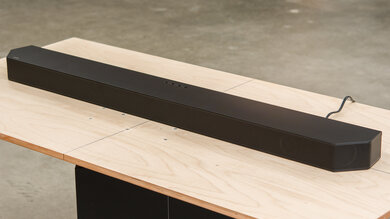
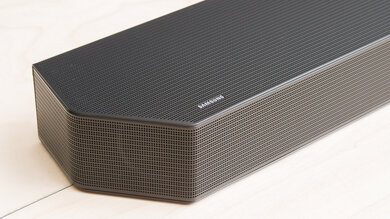
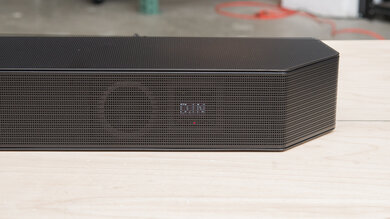
The KEF XIO has a solid, premium build that feels substantial and well-made. Its weighty chassis seems to be made mostly from metal, lending the bar plenty of heft. The top middle section features a powder-coated aluminum plate, while the rest of the soundbar is wrapped in a fabric grille that extends across the sides and top, covering both the front-facing and up-firing drivers. Touch controls with light indicators sit on the left side of the top plate, and a small KEF logo is positioned on the top right. You can also stand the soundbar vertically, though you’ll need to rotate it so that the stereo drivers face upward, as they double as the up-firing Atmos drivers when the bar is placed in the vertical orientation.
The KEF XIO soundbar has integrated dual subwoofers built into the chassis, with drivers positioned at the front and back. KEF also sells separate subwoofers, like the KEF KC62, which can be linked to XIO for increased low-end output. You can also purchase a wireless adapter from KEF to connect any external subwoofer to the XIO without running cables.
No satellites were available for this soundbar at the time of testing.
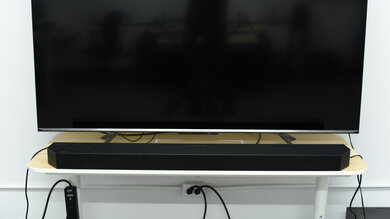
The KEF XIO soundbar is too wide to fit between the legs of most 65" TVs, but it's short enough to see over easily, unlike larger all-in-one soundbars like the Sennheiser AMBEO Soundbar MAX. That said, in its horizontal positioning, it's somewhat deep, so you'll need almost 7 inches of room in front of your TV if placing it on a table or similar surface.
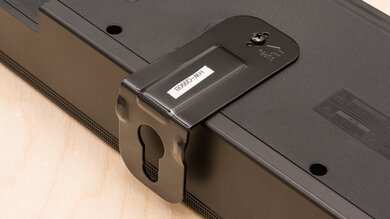
You can wall-mount the KEF XIO using the included mounting bar and brackets. If wall-mounted, it will be positioned vertically, so you'll want to rotate the stereo drivers to face upwards because they'll act as the up-firing Atmos drivers in that orientation.
This soundbar feels robust and well-built, with no noticeable flex anywhere on the chassis. Its materials feel premium, combining a sturdy metal frame with a soft fabric wrap that feels pleasant to the touch, though the fabric is thin and could be more prone to wear over time. The design has a clean, slightly industrial look, highlighted by the exposed aluminum slab on top, while the touch controls are neatly integrated into the upper panel for a minimalist finish.
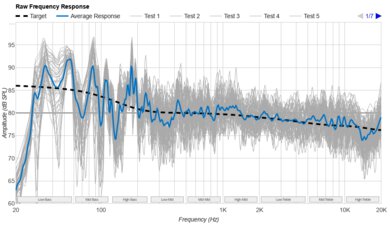
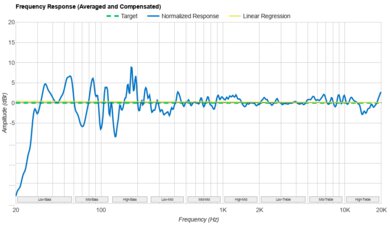
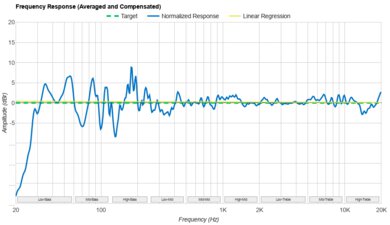
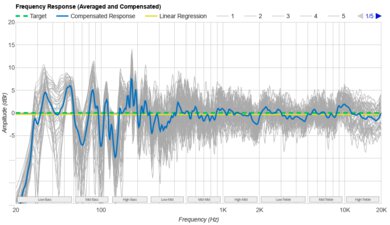
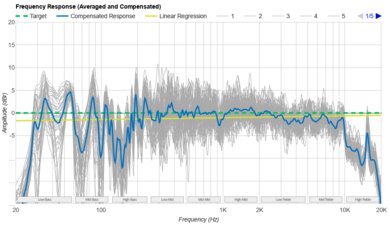
The KEF XIO soundbar has a decent stereo frequency response. In its Direct mode, the mid-range and treble are both virtually flat, ensuring voices and instruments alike sound clear and detailed. That said, a big boost in the high bass can make mixes sound muddy and voices boomy. Since the bar lacks a dedicated sub, it struggles to produce low-bass thump, but there's enough mid-bass punch to keep kick drums feeling exciting. In the vertical orientation, the treble is reduced, as this graph shows.
Switching to the Default sound mode widens the soundstage but reduces focus, making instruments sound less defined, while Movie mode makes voices sound slightly recessed, although it does offer a bit more low-end.
This soundbar also comes with a variety of sound profiles. This graph shows how each profile measures, and we also took a video that shows how to access them in the companion app. You can read more about them in the Sound Enhancement Features section of this review.
The Expert profile includes the same sound modes and IPT calibration as the Normal profile but replaces room and height inputs with more detailed tuning options, such as controls for soundbar gain, treble trim, and bass extension, along with finer adjustments for external subwoofers.
In Expert mode, we achieved the best results with the treble at 0 and the bass set to 'Extra' in the Expert profile.
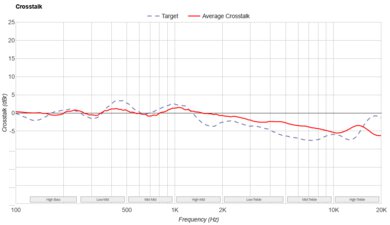
The KEF XIO soundbar has good stereo soundstage performance. In Direct mode, the soundstage extends just slightly beyond the physical edges of the bar, while Default mode (which uses upmixing to expand the stereo image) sounds noticeably wider, extending about a foot past each side of the bar. Lateral tracking is decent, but there's a slight gap between the center and side channels, causing objects to jump too quickly when panning from one side to the other.
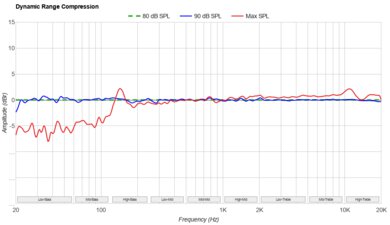
The KEF XIO has excellent dynamics performance. At max volume, this bar puts out more than enough level to fill medium- to large-sized rooms, and does so with little compression. Of course, lacking a dedicated subwoofer, it can't put out a huge amount of low bass in the first place, but the bass it does reproduce is clean and clear.
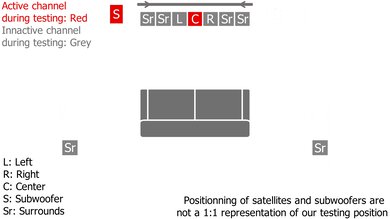
The KEF XIO has great center channel performance. The boost in the high bass can muddy up voices a touch, but since the mid-range and treble are well-balanced, it's not too much of an issue. In Direct mode in particular, voices are centered and intelligible even during busy action or quiet whispering scenes. That said, switching to the Default mode makes sound placement less precise: dialogue seems to come from the entire bar rather than a defined center, and vocals can sound slightly artificial.
It's also worth noting that the top-firing center driver doesn't output height channel signals. This makes sense because the driver serves as the center channel when the soundbar is used in a vertical orientation.
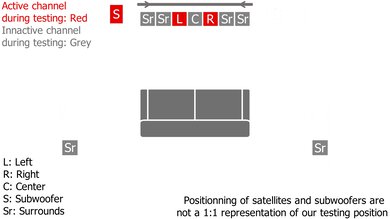
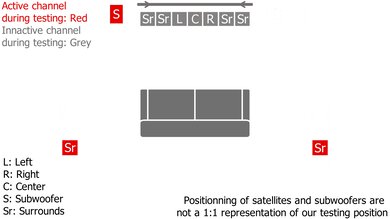
The KEF XIO has mediocre surround performance, which is to be expected since it lacks dedicated satellites. The side-firing drivers on the bar do an acceptable job of adding a sense of immersive width to your audio, but not to the extent that you'll forget you're sitting in front of a soundbar. The Surround drivers have virtually flat mids and treble, helping dialogue and effects sound accurate and present. But the drivers' bass reproduction is a bit uneven. There are noticeable peaks and dips across the low-end range, which can cause certain notes to sound louder or more forward than others. A pronounced rise in the high-bass region adds warmth to basslines but can also make the sound slightly muddy, reducing clarity in dense mixes.
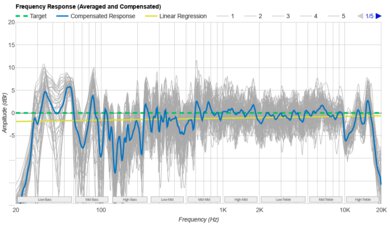
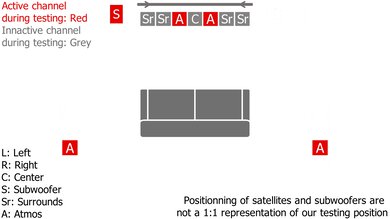
In Direct mode, the KEF XIO has alright height performance from the up-firing drivers in the bar. The height drivers have balanced mids and treble, though effects like explosions and debris lack low-end weight, causing loud moments to feel a bit thin and short-lived. The boost in the high bass mitigates this to some extent, but sometimes just makes basslines sound a bit boomy and muddy, rather than full and punchy.
That said, the soundbar delivers convincing spatial imaging with smooth and consistent object movement across the soundstage. Sounds track accurately from left to right and show a clear sense of elevation, with height cues extending several feet above the bar. Overhead effects are well defined, and transitions between channels feel cohesive, giving a believable impression of movement around the listener.
The KEF XIO has okay sound enhancement features. It offers a Dialogue Mode to boost speech intelligibility and a Night Mode so you can listen to action movies without disturbing your neighbors during late-night viewing sessions. It also offers a Virtual Surround mode, which can upmix stereo formats to sound more immersive, although whether you find this convincing is a matter of taste.
Within the KEF Connect app, you can choose between two main sound profiles. In addition to Dialogue and Night Mode, the Normal profile includes sound modes like Music, Movie, and Direct. It also lets you input your room's dimensions and the soundbar's height for use with the IPT (Intelligent Placement Technology) feature. You can also adjust the balance of any external subwoofer you've connected.
The Expert profile offers the same sound modes and IPT calibration option, but adds advanced tuning controls, including soundbar gain level, treble trim, and bass extension with three levels (Less, Standard, and Ultra, which is enabled by default). It also lets you fine-tune low and high pass frequencies, as well as the gain and polarity of any connected subwoofer.
It's worth noting that IPT isn't a room correction system. Instead, once turned on, it optimizes performance based on placement, automatically switching the up-firing and stereo drivers when the soundbar is positioned vertically. KEF also claims IPT can detect nearby objects to adjust output, but in testing, we couldn't measure any meaningful difference with this feature toggled on or off.
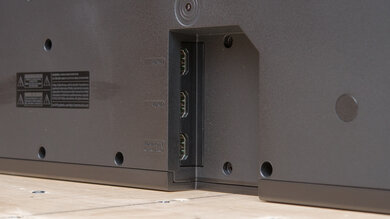
The KEF XIO has an eARC In port as well as an Optical In port. It also has an output for connecting external subwoofers and an Ethernet port. The ports section of the soundbar also houses the power, reset, and Bluetooth buttons, as well as the IPT switch. The USB-C port is only used for servicing the soundbar.
The KEF XIO's eARC port supports a wide range of audio formats, covering most of the common standards like Dolby Digital, Dolby Atmos, and DTS. It also supports less common surround formats such as Dolby Digital Plus. While advertised to support DTS:X, our testing showed that DTS:X and DTS-HD MA compatibility varies with the television used. For instance, in our testing, DTS:X worked perfectly with a Hisense U8N but not with a Hisense U7H, which appears to have a compatibility issue.
This soundbar doesn't have a full HDMI In port.
This soundbar has superb audio format support via Optical. It's compatible with DTS, Dolby Digital, and PCM, so you can use older playback devices with the bar.
This soundbar has superb latency performance via eARC. We don't expect you to experience lip-sync issues via this connection. That said, we were unable to obtain latency results for both PCM 2.0 and 5.1 tests due to an incompatibility with our test rig. If you're interested in seeing what the latency performance of those two formats looks like in practice, check out this video.
This soundbar doesn't have a full HDMI In port.
While this soundbar does have an Optical port and can play back both Dolby and PCM audio under normal conditions, we were unable to obtain latency results for it. Both PCM 2.0 and Dolby Digital 5.1 tests failed on our Murideo 4K and 8K generators: the test tone would play, but the click used to measure latency wouldn't register. We confirmed this issue isn't related to our equipment or cables by re-running the same tests on other soundbars, which worked as expected. For the A/V sync video test, only PCM 2.0 produced sound (no audio played back with Dolby Digital), which suggests there are compatibility issues between the XIO and our testing equipment.
This soundbar doesn't offer any support for video passthrough.
The KEF XIO offers superb wireless connectivity options, including Bluetooth 5.3, Chromecast, Apple AirPlay, and Spotify Connect. Through the KEF Connect app, it also supports TIDAL, QPlay, Amazon Music, and Qobuz. Additionally, it's compatible with the UPnP network protocol, allowing playback from local home media servers.
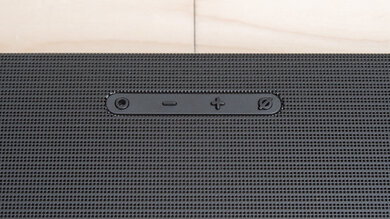
The KEF XIO features a backlit touch control panel on the top surface, with light indicators to show the active input source and a row of dots to represent volume level. However, the indicators are difficult to see from a distance. And since they're located on top of the bar, they're nearly invisible when the soundbar is placed flat on a table. A simple scrolling LED text display, like the one found on the Klipsch Flexus Core 300, would provide clearer feedback.
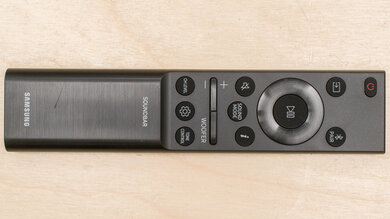
The remote is similar to the slim remotes shipped with most soundbars. It offers quick access to things like power, volume adjustment, and playback controls. By default, the EQ1 button activates Dialogue Mode while the EQ2 button activates Night Mode. You can customize what these buttons do in the fully featured companion app.
The app itself (which you can view a video of in action) offers a range of features, including access to music streaming services, internet radio and podcasts, and playback from a local media server. It also lets you switch inputs, adjust sound profiles (Default, Normal, and Expert), toggle standby mode, control the virtualizer, manage volume, schedule automatic power on/off times, update firmware, and perform a factory reset.
It's worth noting that during testing, we encountered some stability issues that appear to stem from the soundbar rather than the app itself. The unit sometimes defaulted to 2.0 PCM playback regardless of source format, requiring a factory reset to resolve, and on occasion, the volume would gradually drop on its own, which could be due to an HDMI-CEC handshake issue with certain streaming devices like Apple TV. Given its premium price, we expected a more polished and reliable user experience.