Most TV manufacturers announced their 2026 TV lineup at CES in Las Vegas, Nevada, in early January 2026. We were there, so we could bring you the latest news on what each brand has planned, from new OLEDs to the latest in LED technology, including new Mini RGB LED TVs. In this article, we'll break down the highlights from the show floor and go into the fine details of each brand's 2026 TV lineups. We'll update this article as new models are announced, so make sure to bookmark this page or hit the follow button at the top of the page to keep up to date with the latest news. Which model are you most excited for? Let us know in the comments below.
TV Market Trends
Now that CES 2026 is behind us, let's take a look at the major TV announcements and overall market trends. Skip ahead to the next section if you just want to see the brand lineups for 2026.
RGB Mini LED
The focus of 2026 TVs is clearly RGB Mini LED, and every major TV manufacturer is releasing at least one new TV powered by this next evolution in LED backlighting. This new technology aims to improve existing Mini LED backlights by replacing the blue LEDs and quantum dot materials with multiple diodes that produce red, green, and blue light separately. One of the main goals here is to increase color volume by improving the purity of each color channel.
In person, most of these TVs looked very good, but most manufacturers used specially chosen demo content that shows off the strengths of RGB Mini LED while minimizing the downsides, so it's difficult to give them a fair evaluation. One of the biggest potential downsides of this tech is color haloing, which occurs when you have a zone that only uses one channel next to a zone that uses a different channel (e.g., like a blue area next to a red one). While most brands at least mentioned this issue, they didn't say much about how they plan to tackle it.
The LED Brightness Wars Are Over
As LED TVs started taking over the world in the mid-2010s, a battle over peak brightness brewed amongst TV manufacturers. As new models were announced, brightness quickly became the main focus, and every year, LED TVs were pushed to increasingly higher peaks. With new TVs announced for 2026 pushing highlight details well over 4,000 nits, and some even advertised to hit up to 10,000 nits, the battle for brightness on LED TVs is largely over. Simply put, across all high-end TVs, you really don't even need to think about brightness anymore. They're all bright enough to display the vast majority of HDR content exactly as the content creator intended, with minimal need for tone mapping.
With the brightness wars largely behind us, TV manufacturers have found a new metric to focus on: HDR color volume. All major TV brands present at CES spoke about color volume, especially when talking about their RGB Mini LED models. There are some lofty claims here, with most brands claiming that their TVs hit at least 100% coverage of the BT.2020 color space. We won't know for sure if these claims are accurate until we're able to buy and test them, but for now, we remain skeptical. Even if the claims are true, the benefits for consumers are limited, as there's relatively little content mastered in the BT.2020 color space, and even less content that comes even close to requiring 100% of this very wide color space. So it's mainly a question of future-proofing your investment.
The brightness wars in general aren't completely done, though, as OLED technology still has a lot of catching up to do compared to LED TVs. While small highlights on the latest OLED models are starting to peak above the coveted 4,000-nit mark, very bright scenes still fall far short of that mark, so there's room for improvement there. We expect that metric to become the main target for OLED manufacturers for at least the next few years.
Format Wars
Unfortunately, the format wars are far from over as Dolby Vision 2 (DV2) and HDR10+ Advanced take the stage in 2026. Dolby Vision 2 seems to be taking an early lead in this round, though, as TCL, Hisense, and Philips have all announced that they'll support DV2 through firmware updates later this year, whereas so far, only Samsung supports the new HDR10+ format. On the content side of things, Peacock and Canal+ have both announced that they'll be adding support for DV2 this year as well. We were shown some demos of both DV2 and HDR10+ at separate events during CES, and DV2 showed the potential to significantly improve picture quality on any TV, but how impactful it'll be will largely depend on how much effort content creators decide to put into it.
AI Everywhere
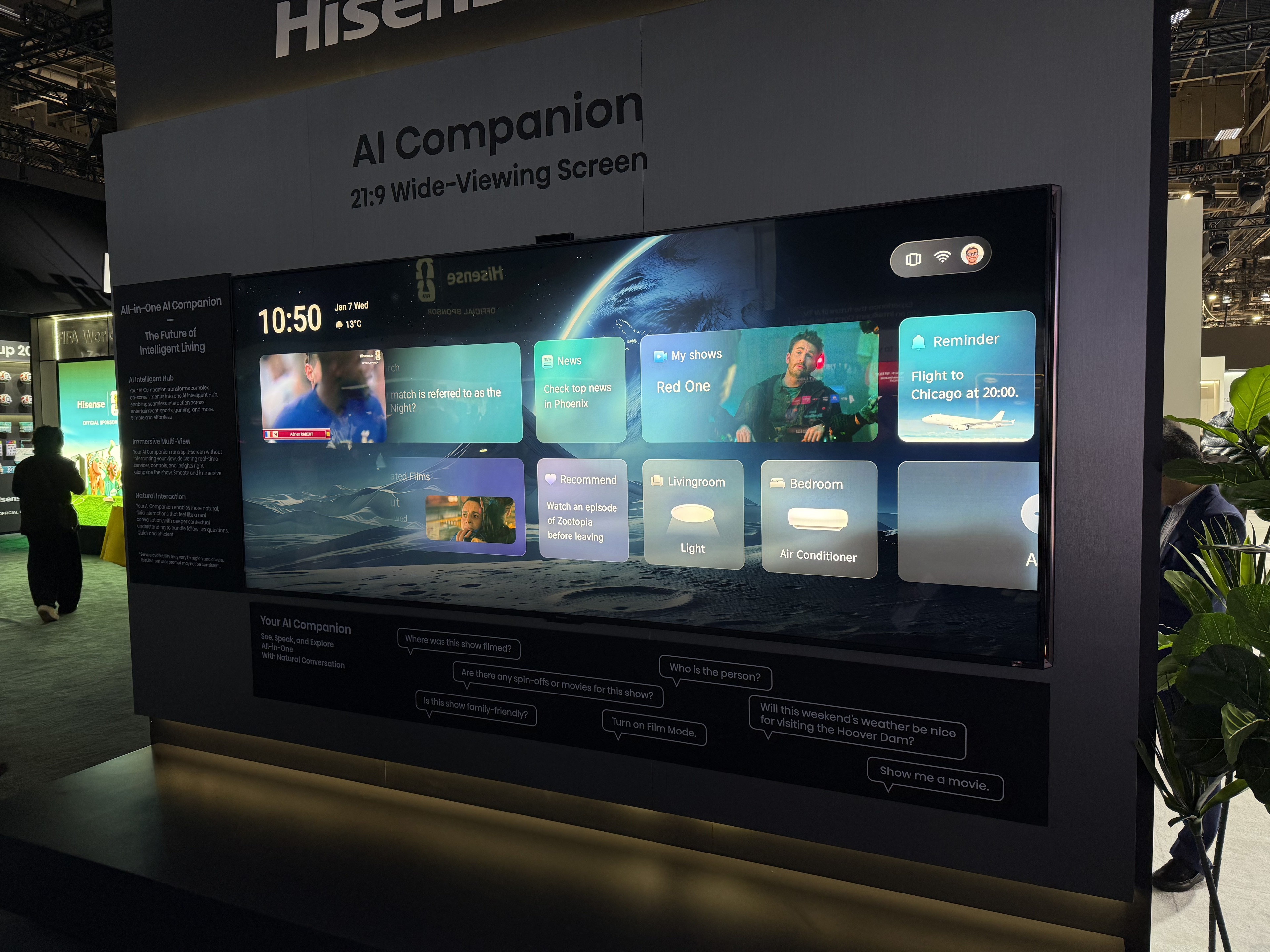
Whether you like it or not, AI is here to stay, and at CES 2026, it was absolutely everywhere. From AI-powered upscaling features to AI-assistants built into just about everything, you can't escape the AI bubble. Some brands showcased innovative new use cases for AI, like the prototype 21:9 Hisense TV shown above that features an AI companion on one side of the screen, while also giving you a more cinematic aspect ratio when watching widescreen content. Some approaches seemed slightly more gimmicky, like LG's decision to add a paid service that uses AI image generation to create background images for your user profile on your TV.
Many TVs also feature dedicated and increasingly powerful neural processing units (NPUs) designed to improve on-device AI performance. LG and Samsung also made a point of talking about security, which is nice to see as TVs become increasingly interconnected with other devices in our homes and store more personal information than ever before.
Brand Lineups
These lists are based on what has been announced so far. We'll update them as new details are confirmed and new models are announced throughout the year. If you notice anything we're missing, please let us know in the comments. This list mainly focuses on U.S. models; some lineups may differ in other countries.
Hisense
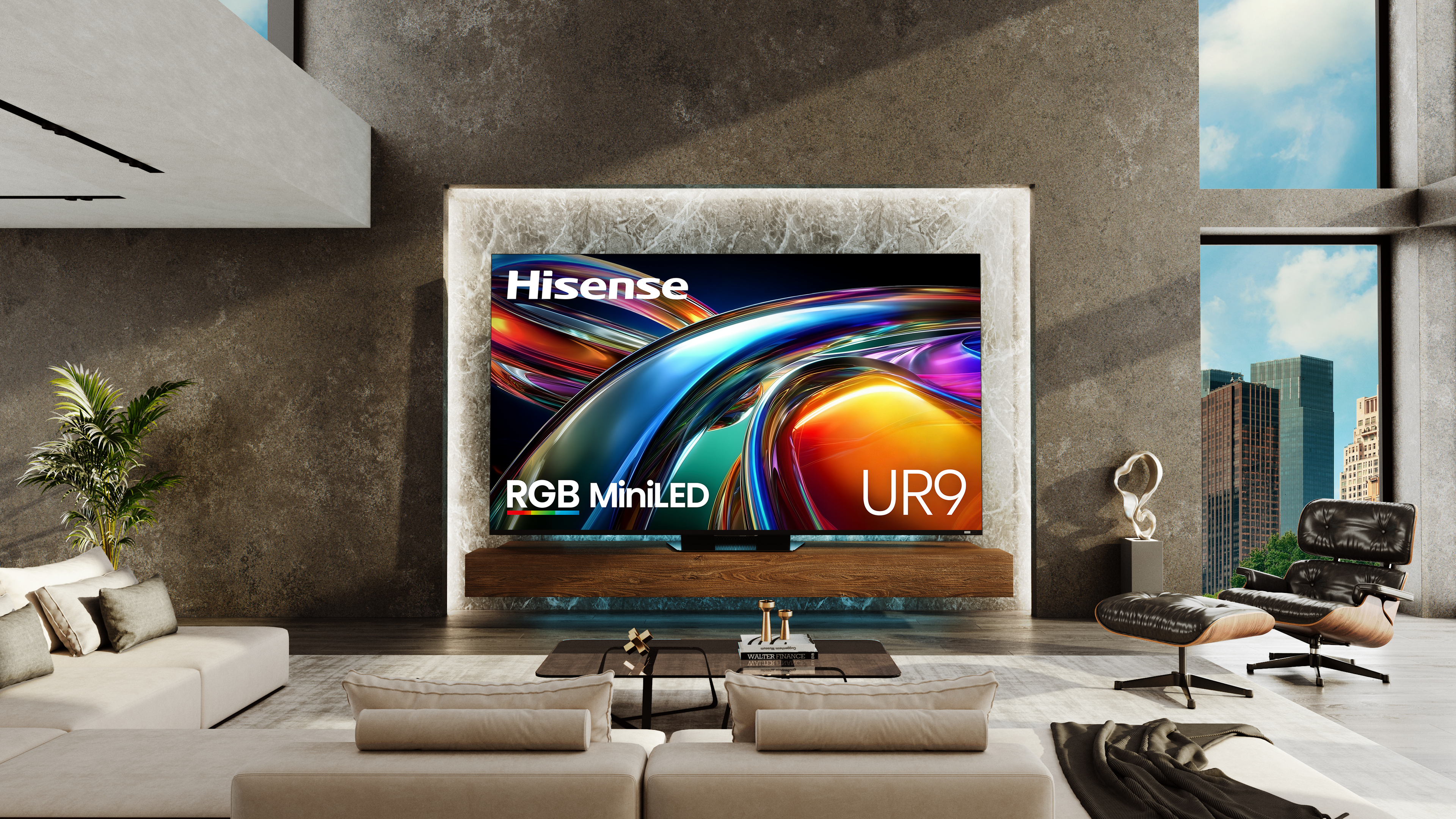
Hisense unveiled most of their 2026 U.S. lineup at CES 2026. Their high-end lineup mostly consists of RGB Mini LED models, including the UR9S and UR8S, both of which feature similar technology to the 2025 Hisense UX but are now available in much smaller sizes. Sitting above those two is the ultra-large Hisense 116UXS, which replaces the previously mentioned 2025 UX and adds a cyan subpixel. Hisense claims that this extra primary color enables the UXS to achieve 110% of the BT.2020 color space, although that has yet to be confirmed. When we spoke with Hisense about their claimed coverage, they told us that they're targeting specific areas of the color space, not the overall triangle. The cyan pixel, for example, will help it achieve better blue coverage, but it won't be symmetric across the entire BT.2020 gamut.
Hisense is also adjusting the specific wavelengths of light emitted by each color channel and reducing the width of the spectral peak, aiming to more precisely target specific color primaries. They're also trying to reduce the amount of blue light emitted in the harmful 415–455 nm band.
Hisense also briefly mentioned two new entry-level models, the UR7S and UR6S. These models use standard Mini LED backlights with quantum dots, but have a matte anti-reflective coating. We expect them to also support higher refresh rates, but the exact numbers haven't been confirmed yet.
| Model | Sizes | Backlight Type | Advertised Zones | Refresh Rate | Notes |
|---|---|---|---|---|---|
| 163MX | 163" | Micro LED | N/A | Unknown | Added yellow subpixel |
| 116UXS | 116" | RGB Mini LED | Unknown | Unknown | Added cyan subpixel |
| UR9S | 55–100" | RGB Mini LED | Unknown | 4k @ 180Hz, 1080p @ 300Hz | |
| UR8S | 55–100" | RGB Mini LED | Unknown | 4k @ 180Hz, 1080p @ 300Hz | |
| UR7S | Unknown | Mini LED | Unknown | Unknown | Matte coating |
| UR6S | Unknown | Mini LED | Unknown | Unknown | Matte coating |
LG
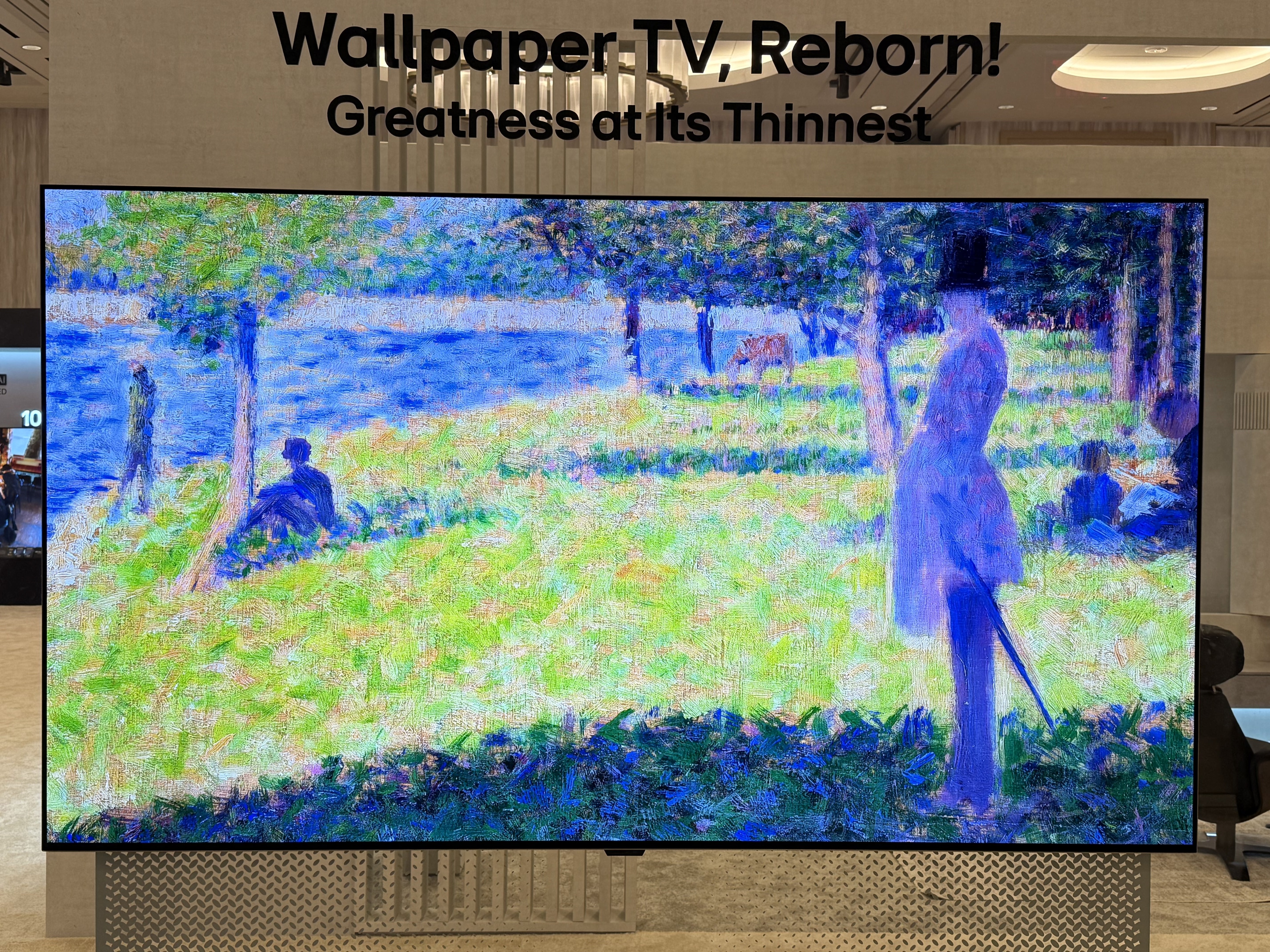
At CES 2026, LG announced one of the largest lineups in the company's history, with a large focus on both RGB Mini LED and OLED technology. The star of LG's show was undoubtedly the return of their Wallpaper TV, the W6 series. Coming in at about a third of an inch thick (~9.9mm), this incredibly thin TV can only be wall-mounted. When running the TV's built-in Gallery+ art mode, it's designed to look like a piece of art when you're not actively watching it. To keep the installation clean, only a sliver of a power cable is needed; the other inputs are all housed in LG's Wireless Zero Connect Box, which they claim can be placed up to 33' away (10 m).
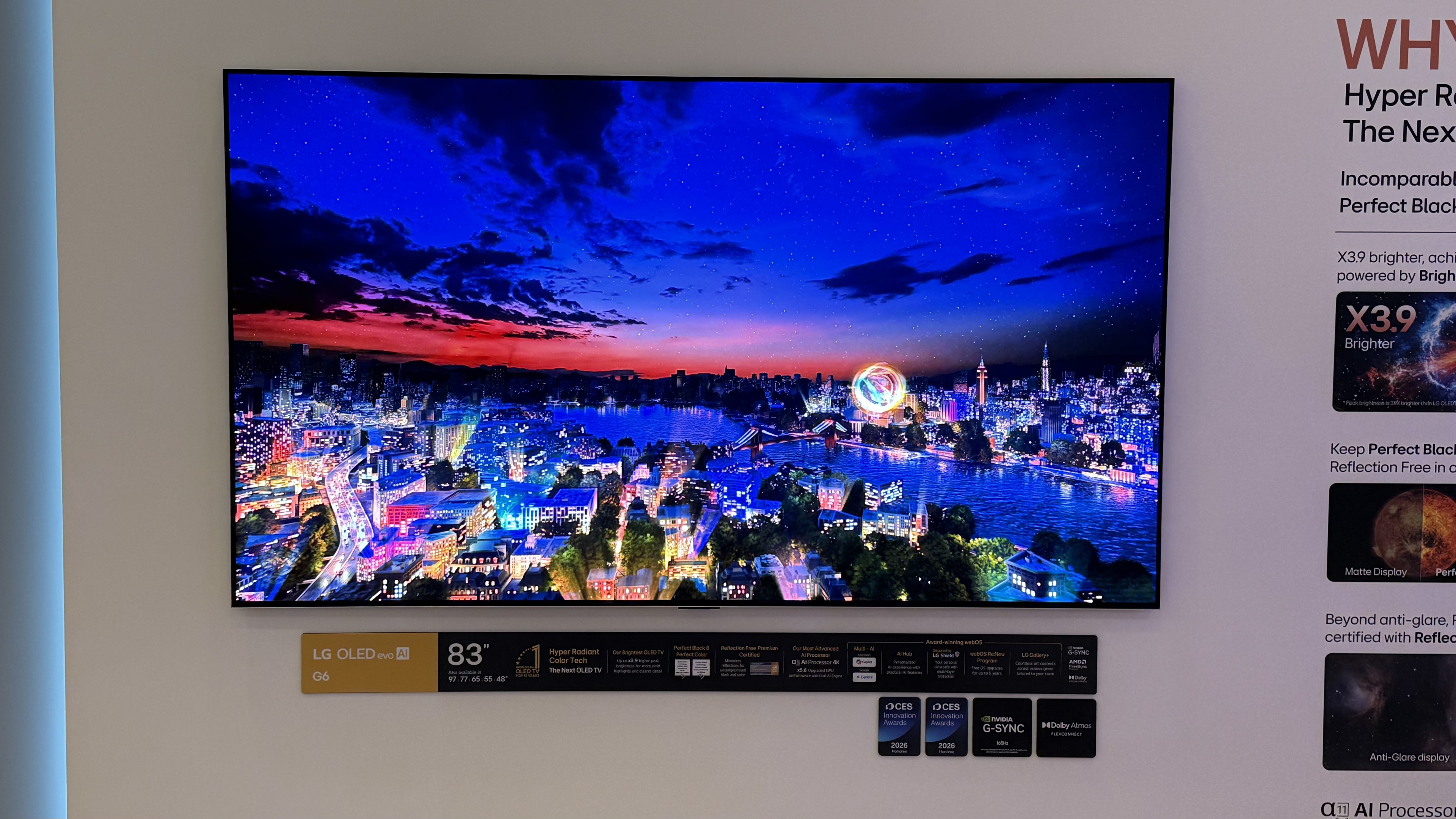
The OLED panels powering LG's 2026 lineup have also evolved this year, with an increase in brightness, colors, and a better anti-reflective screen coating that, combined, make up what LG is branding "Hyper Radiant Color Technology." This improved panel can be found on the LG W6 and LG G6 (except for the 97-inch variant) and on the 77- and 83-inch versions of the C6. LG claims that this new panel can deliver up to 3.9x the brightness of a conventional OLED with a 3% window (they use the LG B6 as a reference). They also sport improved anti-reflective capabilities, reducing glare when you're in a bright room.
Continuing in this year's trend of refinements, LG told us that most of the improvements in this panel come from processing tweaks and slight changes to the panel's internal structure, rather than a complete reinvention of the panel stack itself. Sorry, but it looks like you'll have to wait at least one more year for RGB OLED. Nonetheless, LG Display is still giving this panel a new name, dubbing it Primary RGB Tandem 2.0.
LG is also planning to release two new variants of the B- and C-Series OLED TVs, which they've dubbed "Special Edition." As first reported by FlatpanelsHD, these variants are being positioned as a more affordable entry-level version, similar to the previous A Series TVs. It's unclear what exactly is different about these models, but the marketing around them suggests they'll come in at a much lower peak brightness and may lack some of the advanced gaming features found on the higher-end models.
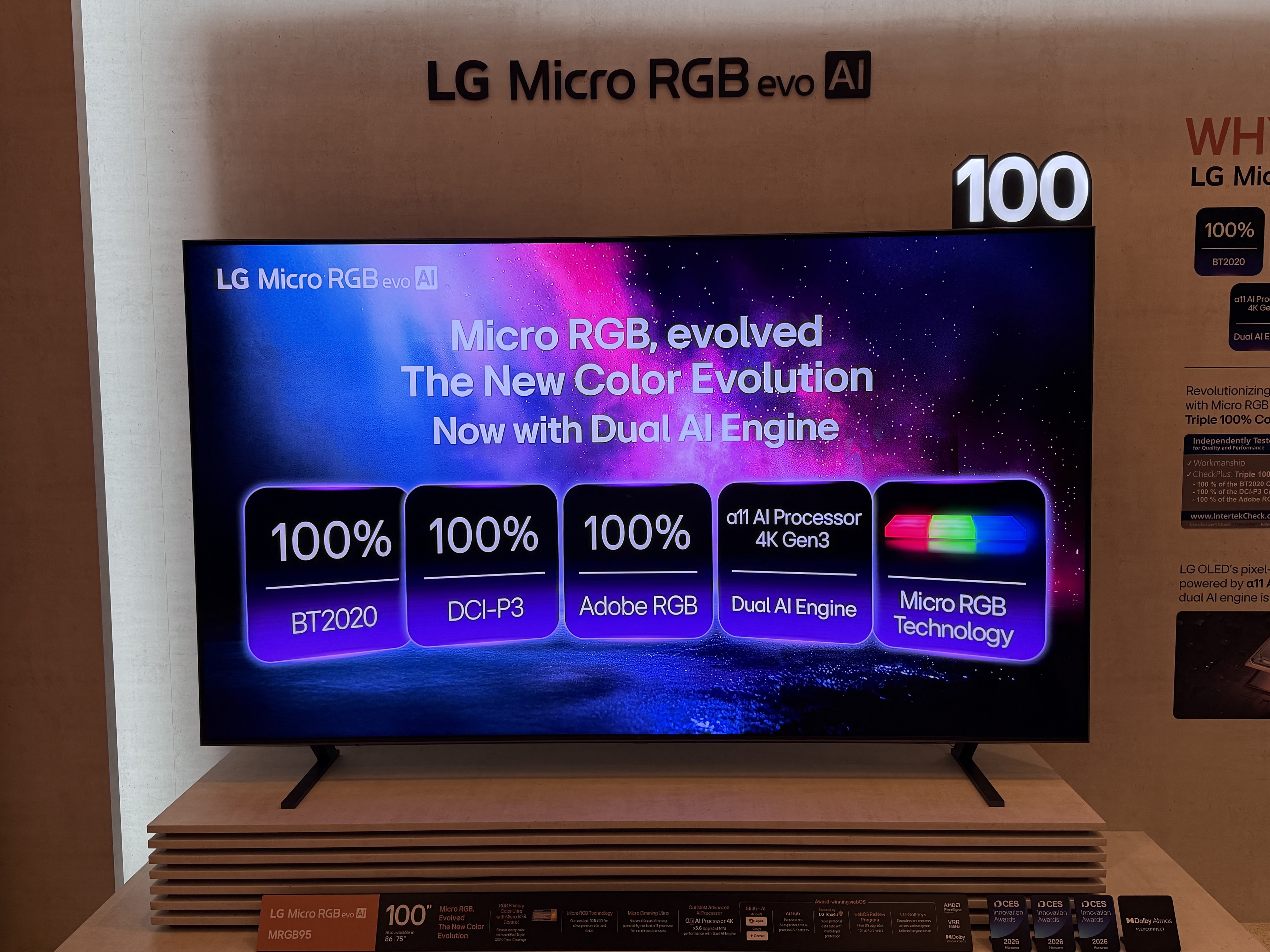
LG isn't ignoring RGB Mini LED, either, as they announced three new models powered by the latest evolution of Mini LED backlight. Unfortunately, the marketing around these models is a bit misleading, as only the highest-end LG MRGB95B, which they actually call Micro RGB, uses a full array of RGB Mini LEDs; the other two models in this lineup are edge-lit. While they may still use physically smaller RGB LEDs, we expect these lower-end models to perform much worse due to multiple known issues with the technology.
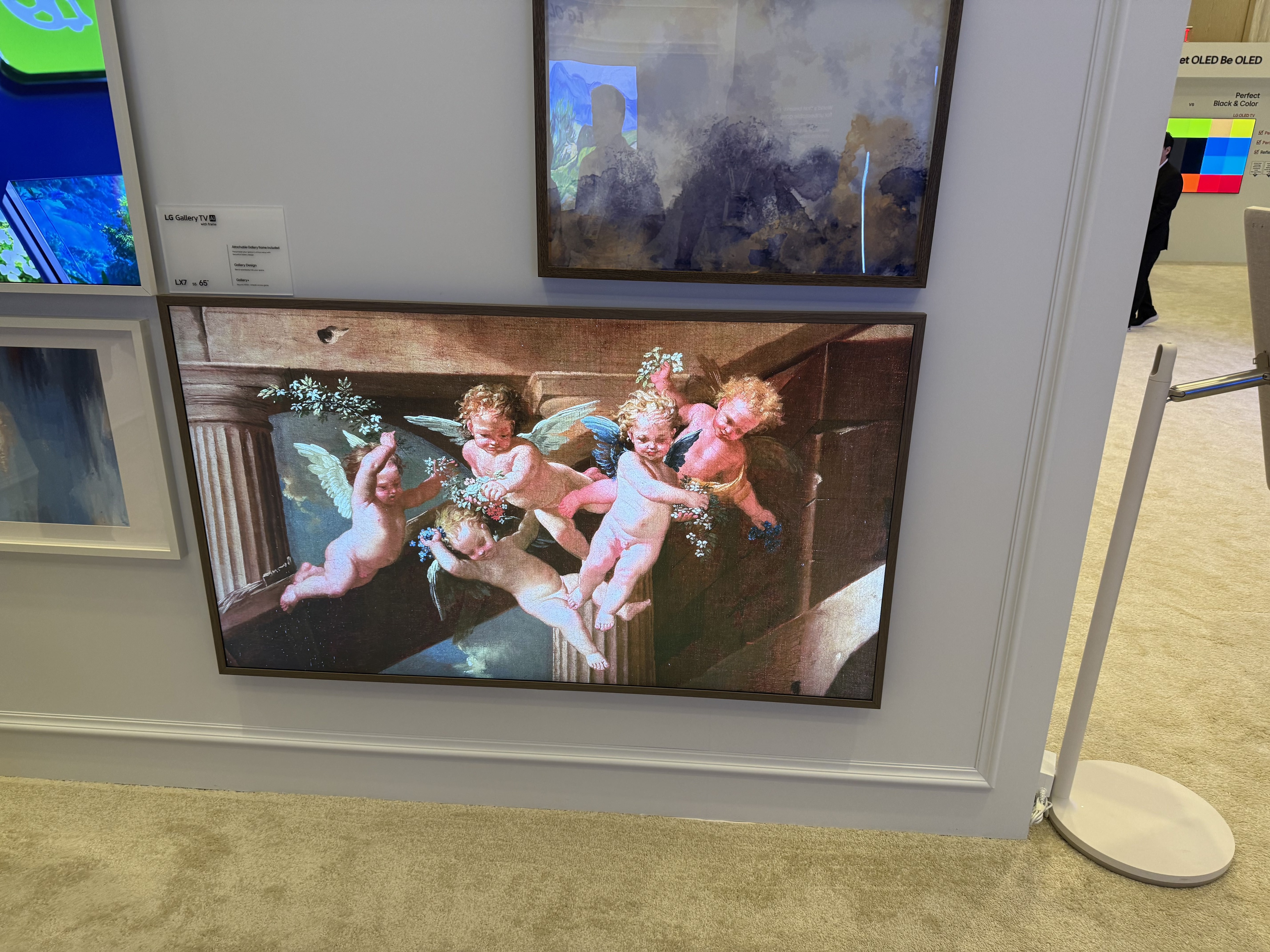
Finally, LG announced its answer to the Hisense CanvasTV and Samsung The Frame: the LG LX7 Gallery TV. Available in 55" and 65", this model features an anti-glare coating and Mini LED backlighting, though LG wouldn't confirm whether it's direct or edge-lit. Like competing models in this growing segment, there are multiple frame options that magnetically attach to the bezels, and it'll automatically switch to a dedicated art mode when you're not watching TV. It comes with a selection of free artwork, or you can subscribe to LG's new LG Gallery+ service, which offers over 4,500 works of art that rotate monthly.
| Model | Sizes | Backlight Type | Advertised Zones | Refresh Rate | Notes |
|---|---|---|---|---|---|
| W6 | 77", 83" | OLED | N/A | 165Hz | Wireless Zero Connect Box |
| G6 | 48", 55", 65", 77", 83", 97" | OLED | N/A | 165Hz | 97" doesn't have the Primary RGB Tandem 2.0 panel |
| C6H | 77", 83" | OLED | N/A | 165Hz | Primary RGB Tandem 2.0 panel |
| C6 | 42", 48", 55", 65" | OLED | N/A | 165Hz | 48" might use a Tandem 2.0 panel. |
| B6 | 48", 55", 65", 77", 83" | OLED | N/A | 120Hz | |
| MRGB95B | 75", 86", 100" | RGB LED | Unknown | Unknown | |
| MRGB9M | 65", 75", 86" | RGB LED | Unknown | 144Hz | Edge-Lit, Wireless Zero Connect Box |
| MRGB85B | 50", 55", 65", 75", 86" | RGB LED | Unknown | Unknown | Edge-lit |
| LX7 | 55", 65" | Mini LED | Unknown | Unknown | Gallery TV with magnetic frame |
Samsung
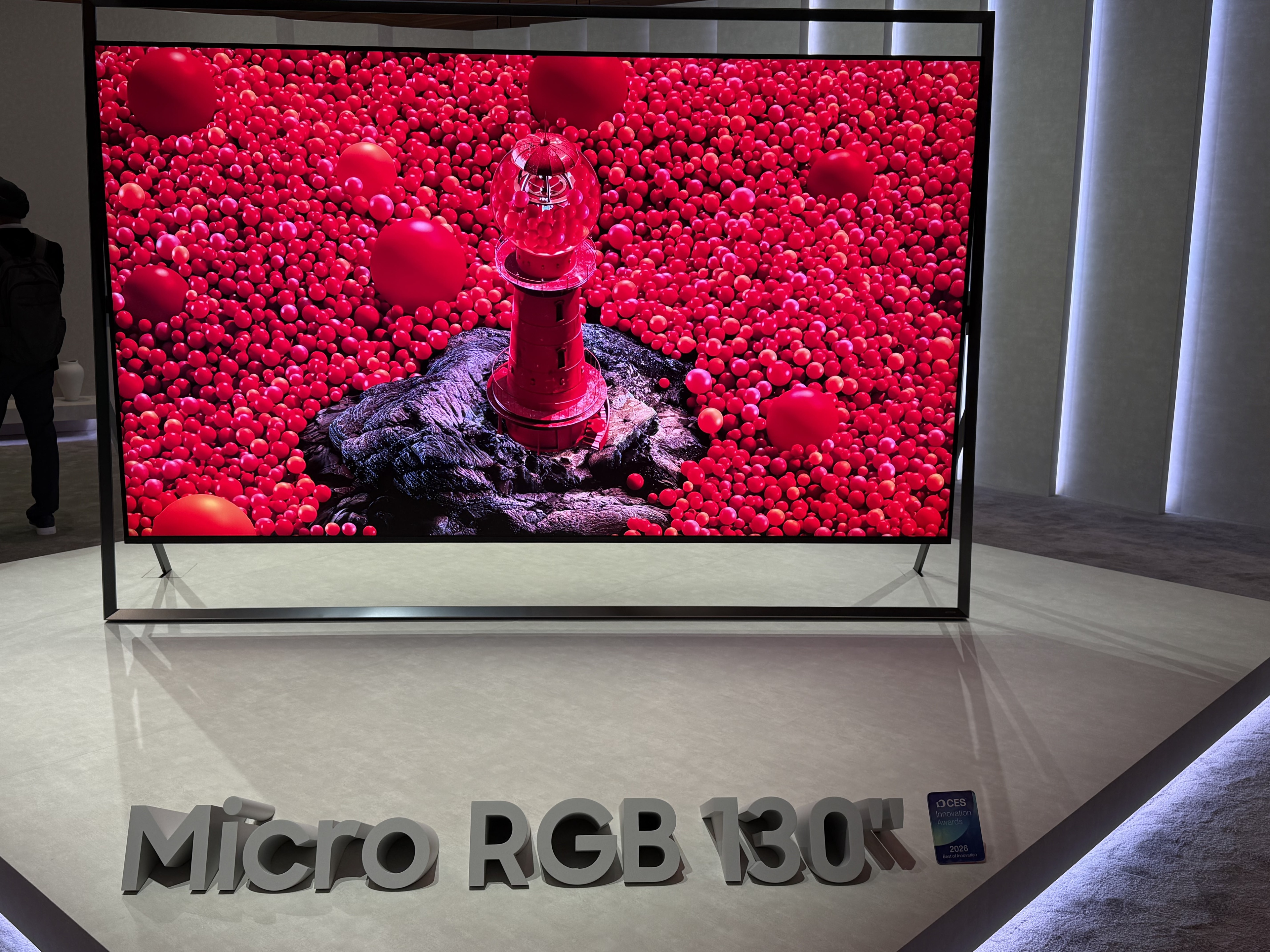
Samsung skipped the main CES stage at the Las Vegas Convention Center, hosting everything off-site instead. Although they showed two new TVs at their First Look event, full details of their full 2026 lineup were very sparse. Throughout the entire event, they only had a handful of demos to show us, so we don't know much about their 2026 lineup at this time.
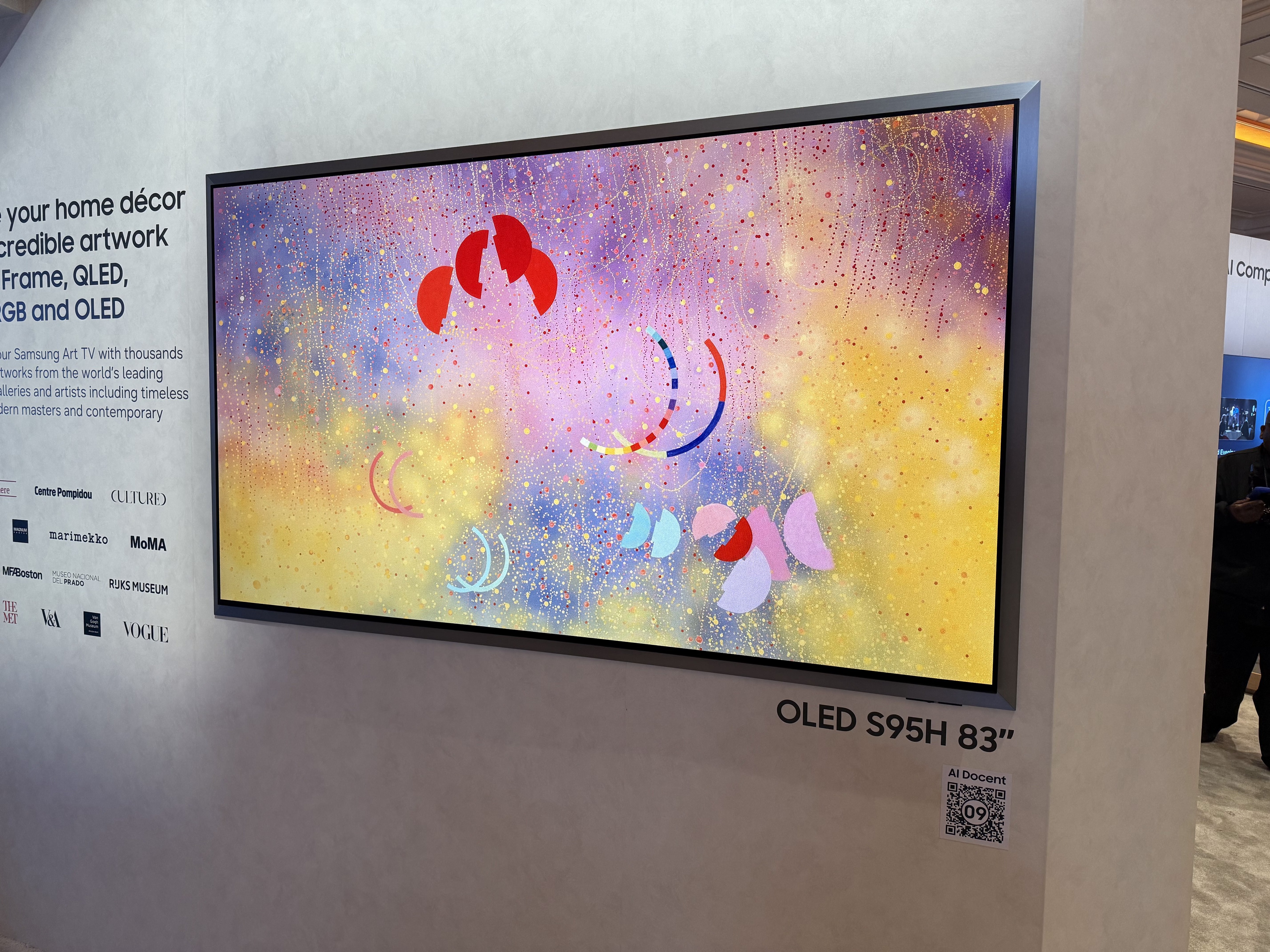
They showed us their new OLED flagship, the Samsung S95H, which features a new metal frame around the TV. Samsung claims that this new model is up to 30% brighter than the 2025 Samsung S95F OLED, and instead of shipping with the Wireless One Connect box, the inputs are now housed directly on the TV. The interesting twist here is that you can now buy Samsung's Wireless One Connect box if you want the extra flexibility. Adding the wireless box nets you an additional four HDMI 2.1 inputs, for a total of eight, a first in the TV industry.
Samsung also announced new RGB Mini LED models and new LED versions to replace the 2025 lineup, but very few details have been announced. We'll update this section as we learn more about the 2026 lineup.
Update March 24, 2026
Samsung has announced new models for its 2026 lineup. The new Mini LED lineup, consisting of the M70H, M80H, and M90H (releasing later), sits between the Neo QLED and Crystal UHD lineups. It's a bit unclear what these models actually are; since Samsung makes no mention of QLED, we expect them to use simpler color filters without quantum dots. The design of the M70H and M80H suggests they're direct-lit with Mini LED backlighting, but they don't have a local dimming feature.
Samsung also unveiled more details on the QN70H and QN80H models. These do mention Neo QLED in the marketing, so we expect these to be simple evolutions of the existing 2025 models. Samsung is also taking a page from TCL and Hisense's playbooks, adding a dual-mode refresh rate option it's calling DLG. This feature drops the resolution of the screen down to 1080p, but increases the maximum refresh rate to 120Hz or 240Hz, depending on the model. Although this wasn't part of their press release, they've also added a new entry-level model, the U8000H. It appears to be nearly identical to the M70H but with a different backlight stack.
| Model | Sizes | Panel Type | Advertised Zones | Refresh Rate | Notes |
|---|---|---|---|---|---|
| S99H | 48", 55", 65", 77", 83" | QD-OLED | N/A | 165Hz | 83" - WOLED, includes Wireless One Connect |
| S95H | 48", 55", 65", 77", 83" | QD-OLED | N/A | 165Hz | 83" - WOLED, Wireless One Connect available separately |
| S90H | 42", 48", 55", 65", 77", 83" | WOLED | N/A | 165Hz | |
| S85H | 48", 55", 65", 77", 83" | WOLED | N/A | 120Hz | |
| MR95H | 65", 75", 85", 130" | RGB LED | Unknown | 4k @ 165Hz, 1080p @ 240Hz | |
| MR90H | Unknown | RGB LED | Unknown | Unknown | |
| MR85H | Unknown | RGB LED | Unknown | 4k @ 144Hz, 1080p @ 240Hz | |
| QN80H | 55", 65", 75", 85", 100" | LED | Unknown | 4k @ 144Hz, 1080p @ 240Hz | |
| QN70H | 43", 50", 55", 65", 75", 85" | LED | Unknown | 4k @ 60Hz, 1080p @ 120Hz | |
| M90H | 100" | LED | Unknown | Unknown | |
| M80H | 55", 65", 75", 85" | LED | Unknown | 4k @ 144Hz, 1080p @ 240Hz | |
| M70H | 43", 50", 55", 65", 75", 85" | LED | Unknown | 4k @ 60Hz, 1080p @ 120Hz | |
| U8000H | 43", 50", 55", 65", 75", 85" | LED | None | 60Hz |
Sony
Sony wasn't present at CES 2026. They're planning multiple release announcements throughout the year. They announced two new models on March 25, 2026: the Sony BRAVIA 3 II and the Sony BRAVIA 2 II. These are two entry-level models with limited picture-enhancing features, so you won't find zone dimming on either model, but advanced gaming features are trickling down to the BRAVIA 3 II. This model is also advertised to feature support 4k @ 120Hz gaming on all four inputs, which suggests that it uses the new MediaTek Pentonic 800 chipset.
Sony started lifting the veil on their RGB Mini LED lineup, which they're calling "True RGB" instead, in early April 2026. Not much is known about the specific model(s) powered by this technology yet, but according to Sony, they're still on track for a spring 2026 release. We'll update this section with more details as soon as we know more.
Update May 27, 2026
Sony finally lifted the veil on the rest of their 2026 lineup through a YouTube video. As expected, their flagship lineup leans heavily on RGB Mini LED technology, which Sony calls True RGB. The new BRAVIA 9 and BRAVIA 7 mark 2s both feature RGB Mini LED backlight, and are powered by Sony's proprietary XR Processor. They both feature ATSC 3.0 tuners in North America, but, somewhat surprisingly, the specifications listed on Sony's product pages state that HDMI 2.1 bandwidth is only supported on two ports. Sony also advertises an improved anti-reflective coating and a wider viewing angle on the BRAVIA 9 Mark 2.
| Model | Sizes | Panel Type | Advertised Zones | Refresh Rate | Notes |
|---|---|---|---|---|---|
| BRAVIA 9 II | 65", 75", 85", 115" | RGB LED | Unknown | 120Hz | |
| BRAVIA 7 II | 50", 55", 65", 75", 85", 98" | RGB LED | Unknown | 120Hz | |
| BRAVIA 3 II | 43", 50", 55", 65", 75", 85", 100" | LED | No Local Dimming | 120Hz | |
| BRAVIA 2 II | 43", 50", 55", 65", 75" | LED | No Local Dimming | 60Hz |
TCL
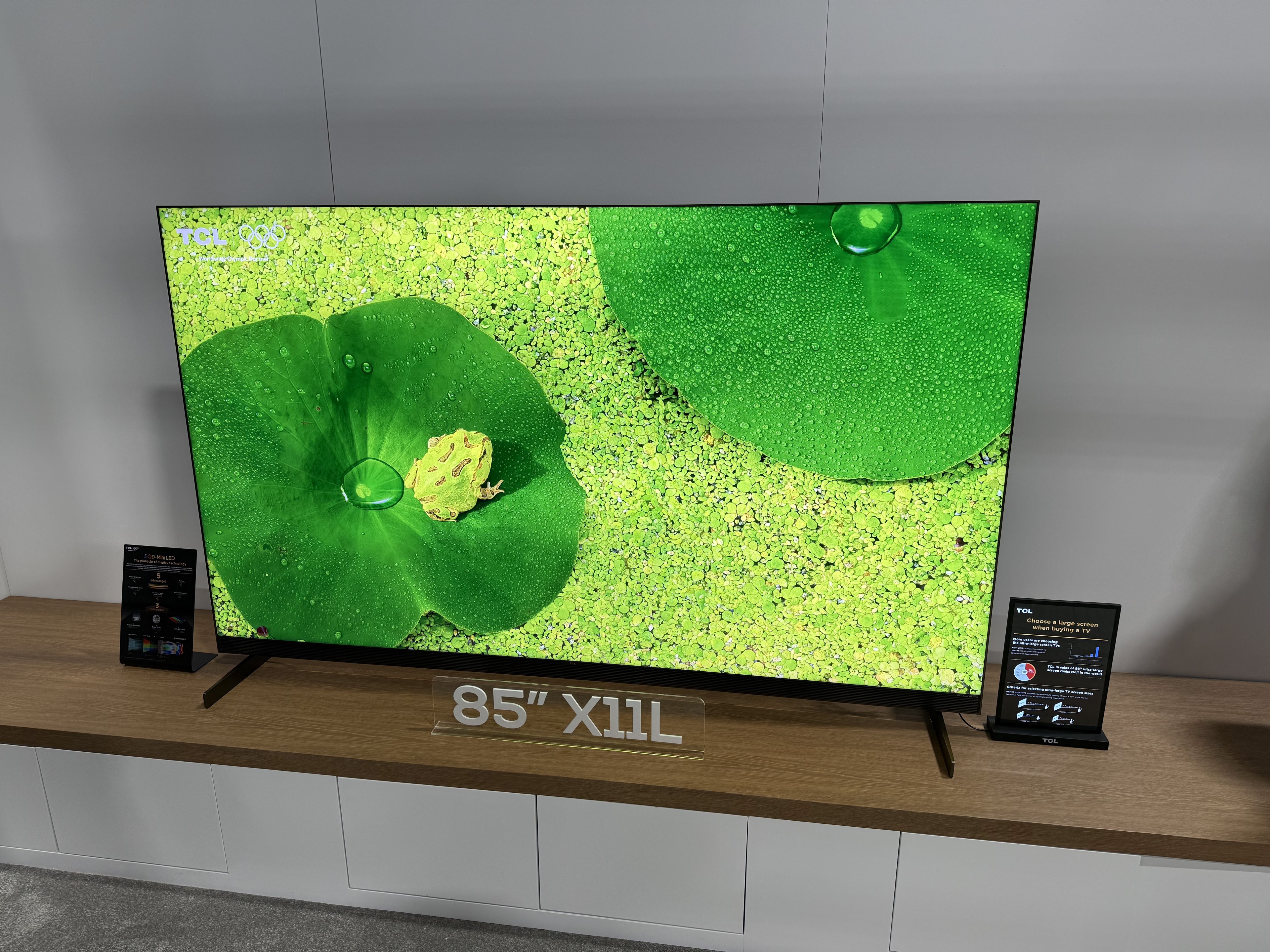
TCL is taking a rather different approach to their TV lineup this year. Unlike most other brands, TCL has decided not to focus their core lineup on RGB Mini LED. Recognizing the issues with this new technology, TCL has instead decided to focus their efforts on improving color volume by refining existing quantum dot technology. To achieve this, they've adjusted the wavelength of light produced by the red and green quantum dots, and they've improved their color filter to improve the purity of each primary color. They're calling these improved quantum dots "Super Quantum Dots," or SQD for short.
The first model to use SQD is the TCL X11L. This new TV is already available for preorder in an 85-inch size, and they have 75- and 98-inch versions coming later in the year. TCL claims that it can hit an impressive 10,000 nits, and it features up to a staggering 20,736 local dimming zones, so it's shaping up to be an impressive TV.
TCL isn't completely ignoring RGB Mini LED, though. They announced one new model powered by RGB Mini LED, the TCL RM9L. It'll be available later this year in 85, 98, and 115-inch sizes. TCL claims that it'll hit up to 9,000 nits and 100% coverage of the BT.2020 color space. Pricing and availability haven't been announced yet.
 |
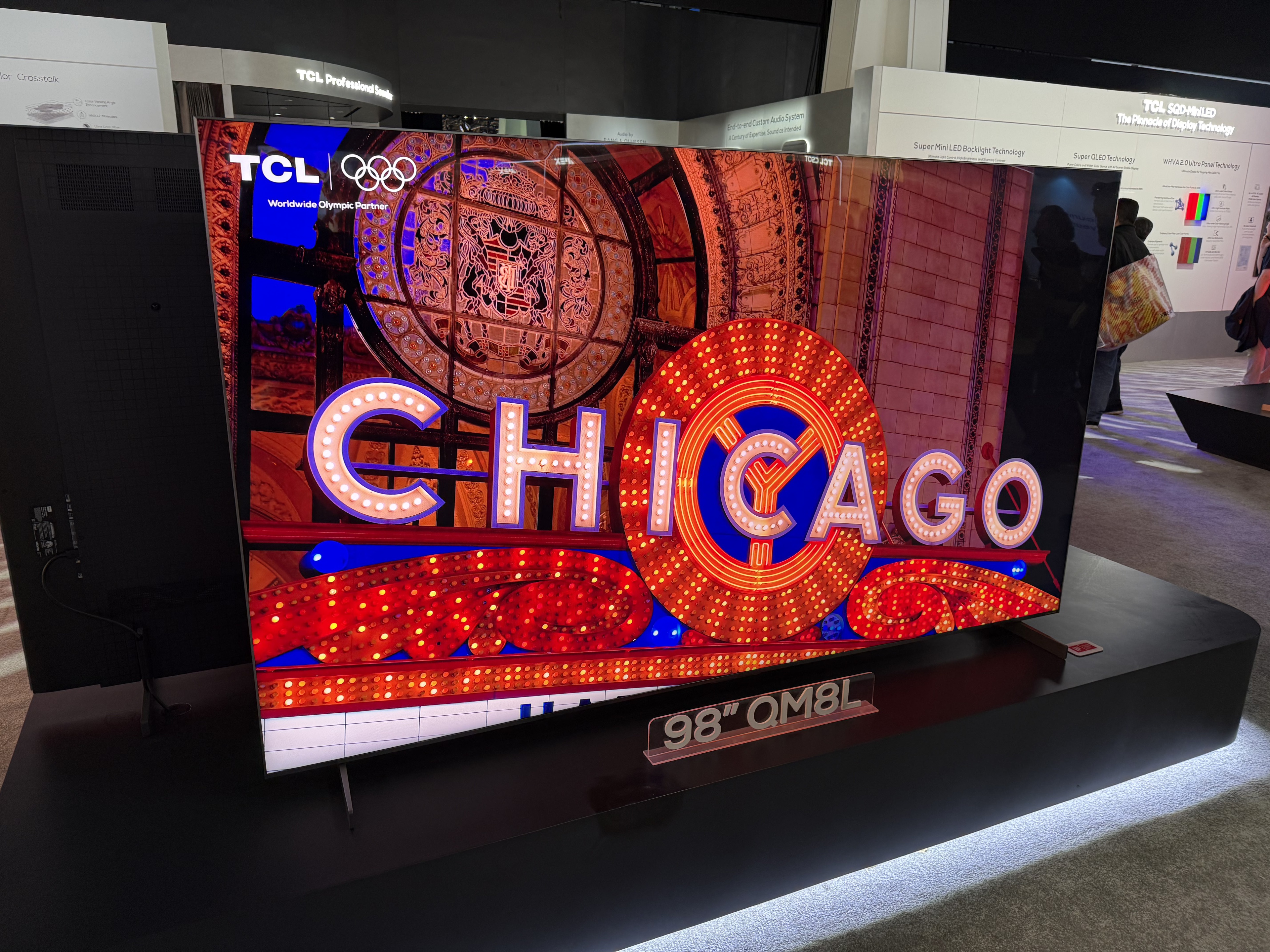 |
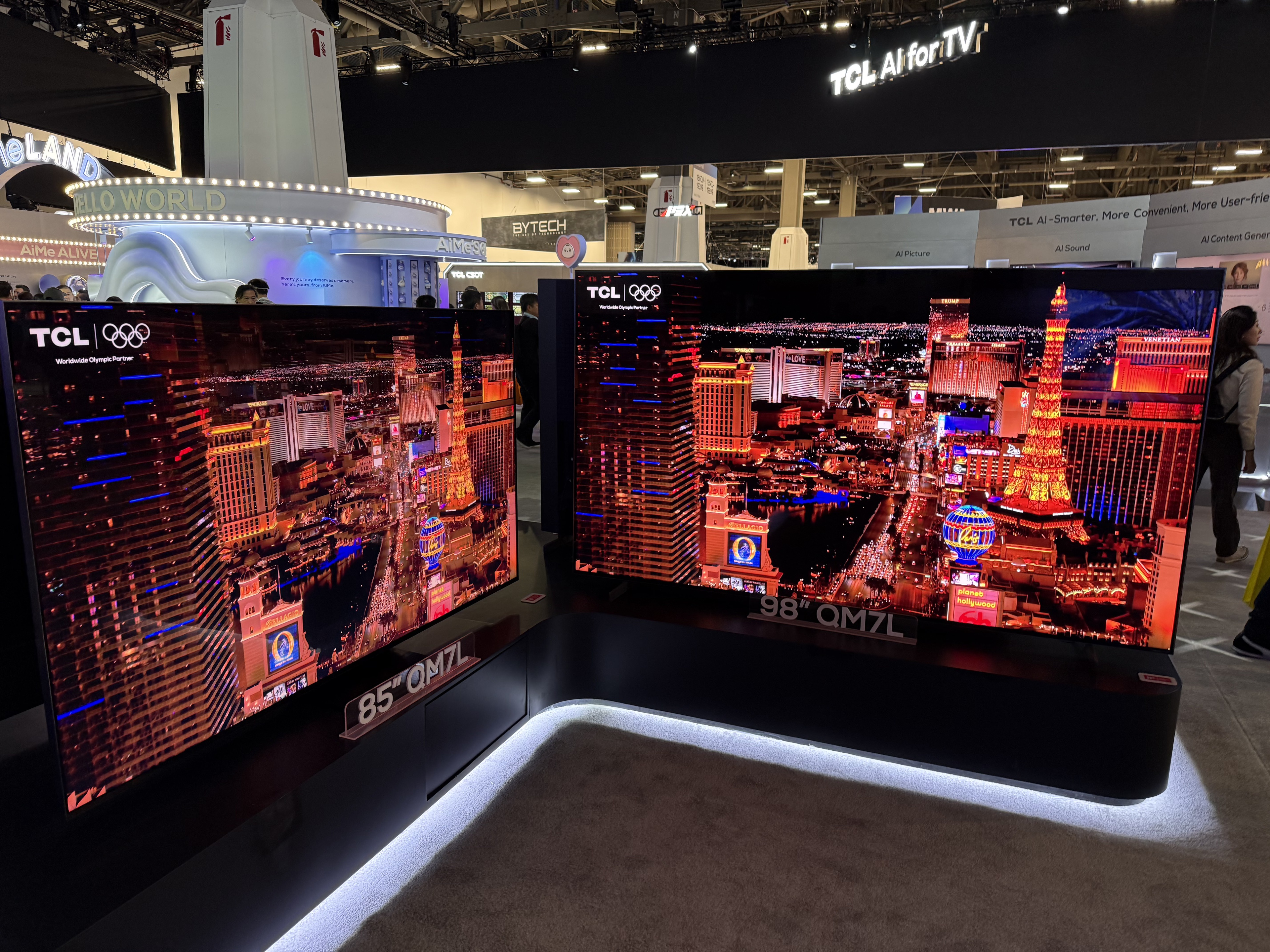
TCL also announced the new TCL QM7L and TCL QM8L. These TVs are direct replacements for the 2025 versions, and although they're not as bright as the X11L, they use the same SQD technology. TCL also mentioned a new budget model, the TCL QM6L, which will be revealed later this year.
| Model | Sizes | Backlight Type | Advertised Zones | Refresh Rate | Notes |
|---|---|---|---|---|---|
| X11L | 75", 85", 98" | Mini LED | Up to 20,736 | 4k @ 144Hz, 1080p @ 288Hz | SQD with WHVA 2.0 panel |
| RM9L | 85", 98", 115" | RGB Mini LED | Up to 16,848 | 4k @ 144Hz, 1080p @ 288Hz | WHVA 2.0 panel |
| QM8L | 65", 75", 85", 98" | Mini LED | Up to 4,000 | 4k @ 144Hz, 1080p @ 288Hz | SQD panel |
| QM7L | 55", 65", 75", 85", 98" | Mini LED | Up to 2,100 | 4k @ 144Hz, 1080p @ 288Hz | SQD panel |
| QM6L | Unknown | Mini LED | Unknown | Unknown |
When do new TVs come out?
LG and Samsung usually start releasing their new TVs in early March, and we expect the same thing in 2026. Based on what we've heard from manufacturers this year, we expect a more gradual rollout of TV lineups this year, with more announcements coming in early spring.
When's the best time to buy a new TV?
The best time to buy a new TV is late spring or early summer. As brands release new lineups, older models are generally heavily discounted as retailers clear out inventory to accommodate the new models. If you prefer to be more on the cutting edge and enjoy the latest models, the best time to buy is usually a few weeks before Black Friday. For a more detailed explanation, check out our article about when to buy a TV.