Dolby Vision 2 was a big focus of CES, with multiple manufacturers announcing support for the new format, but what is it, and how does it improve on the existing format? Since its introduction in 2014, Dolby Vision has quickly taken the TV world by storm. Now supported by almost all major TV manufacturers and most streaming services, not to mention physical media, many consumers view Dolby Vision support as a "must-have" for any TV purchase. TV technology has changed a lot in the 12 years since it was first announced, though, so to make sure it's ready for the future, Dolby Laboratories unveiled Dolby Vision 2 at an event in September 2025, as part of IFA Berlin.
We also got the chance to go hands-on with a few Dolby Vision 2 demos at CES 2026. In this article, we'll break down the key features of the new format and its advantages for both content creators and consumers. We'll focus on the key differences with Dolby Vision 2, so if you want to learn more about how older HDR technologies work, check out HDR10 vs Dolby Vision.
Dolby Vision 2's Core Features
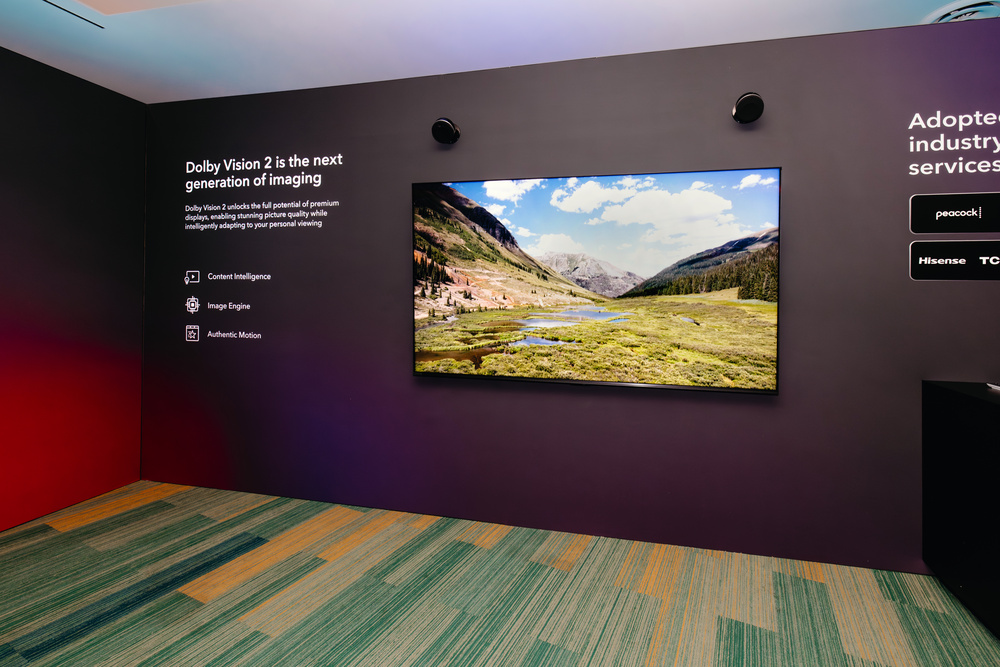
Dolby Vision 2 builds on the strengths of the original format, giving creators more control over their content. Rather than drastically redesigning the original format, Dolby instead decided to simply expand the existing Dolby Vision metadata, so videos mastered with the new format contain more information about the content and how it's meant to be enjoyed. It also incorporates and expands upon some of the features that were first rolled out in Dolby Vision IQ, including the use of a TV's ambient light sensor, to ensure a more consistent viewing experience regardless of your viewing environment.
Content intelligence
One of the core features of Dolby Vision 2 is the new content intelligence feature. At the heart of this feature is a new AI-driven image engine that's designed to improve the viewing experience based on the content you're watching and your viewing environment. By combining information from the scene itself with an ambient light sensor, Dolby Vision 2 adapts the image based on your viewing environment. A feature called Precision Black ensures the image retains all of the near-black details in very dark scenes without washing out the entire image. It does this by adjusting the scene based on the black levels and peak brightness of your display. This feature aims to directly address the common complaint that Dolby Vision content is too dark.
This feature also adds a new dedicated Sports and Gaming Optimization feature, which unlocks other picture mode changes to deliver the best image quality possible when watching that type of content. The exact implementation will depend on the source, but some options with this mode include automatically changing the color temperature and white point, or adjusting the TV's motion handling features to deliver a smoother, more realistic experience.
Authentic Motion
One of the most common complaints with modern TVs has to do with 24p playback. TV response times have gotten so quick that modern TVs exhibit stutter when watching movies and shows. The only remedy for stutter currently available to consumers is to enable motion interpolation. That solution doesn't work all the time, though, as different content stutters to a different degree, so if your motion interpolation settings are too low, you'll still see stutter in some scenes, and if they're too high, you'll get the soap opera effect.
To solve this issue, Dolby is moving motion interpolation controls into the hands of the content creator. Without actually increasing the content's frame rate, creators can now specify how much motion interpolation is needed to smooth out a scene. In typical Dolby Vision fashion, they can control this setting on a scene-by-scene or even frame-by-frame basis, giving content creators full control over the motion interpolation feature. When the TV receives this metadata, it automatically adjusts its internal motion processing to the level set by the content creator, while also accounting for the display's physical characteristics. This means that this feature won't behave the same on an OLED as it will on a low-end LCD, for example.
In theory, when implemented properly, this could result in a much smoother movie-watching experience, effectively eliminating stutter without adding any unneeded motion interpolation. In demos shown at CES, this feature was extremely effective and achieved the goal of reducing stutter without adding unnecessary soap opera effect.
Tiers
Unlike the original, Dolby Vision 2 is broken down into two separate tiers: Dolby Vision 2 and Dolby Vision 2 Max. Most budget and mid-tier TVs will be limited to the base Dolby Vision 2 tier, which supports all of the features under the Content Intelligence umbrella, but not the Authentic Motion feature. The latter is reserved for TVs that support the Dolby Vision 2 Max tier.
Dolby Vision 2 Max will be reserved for the highest-end TVs with a very wide color gamut and extremely high peak brightness. On top of Authentic Motion, these TVs will also support more advanced tone-mapping features, including bi-directional tone mapping. This new feature allows creators to adjust the tone mapping to higher brightness levels than the content was originally mastered at, to take full advantage of newer, brighter TVs.
Control
Dolby Vision 2 is designed to give content creators even more creative control, allowing them to adjust almost every aspect of their content and ensuring the end user sees it the way they intended. Not everyone wants that level of processing, though, so Dolby Vision 2 will also give end-users more control. Most of these features will be automatically disabled when you're using the most accurate Filmmaker Mode on your TV. They also mentioned that some TVs will allow you to fine-tune the Dolby Vision 2 experience through a new picture settings menu, but this is still a work in progress.
TVs
Unfortunately, Dolby Vision 2 requires new processing capabilities that likely can't be added to existing models. TVs powered by the MediaTek Pentonic 800 will be the first on the market to support Dolby Vision 2. This includes high-end 2026 models announced by TCL, Hisense, and Philips. Although LG and Sony have both supported Dolby Vision on their core lineups in the past, they haven't announced support for Dolby Vision 2 on their 2026 models.
Streaming Services
It'll take some time for streaming services to adopt the new format, but as of January 2026, NBCUniversal's Peacock and Canal+ in Europe have both announced support for DV2. It's not enough for the service to support it, though, as content will also need to be updated, and in the case of Peacock, they'll start with a larger rollout of Dolby Vision and Dolby Atmos support with live sports, including NFL, NBA, and MLB games, before eventually updating existing content for DV2.
Physical Media
Some movies and TV shows on UHD Blu-ray discs already support Dolby Vision, and some higher-end players, like the very popular Panasonic UB820, already support Dolby Vision playback. We asked Dolby about DV2 support on UHD discs, and they told us that the new DV2 extensions build on existing DV metadata, so it doesn't require any updates to the UHD Blu-ray specs. That said, it requires new hardware to interpret that metadata correctly, so you'll likely have to wait for new UHD Blu-ray players to come out.
Backwards Compatibility
The good news is, once content creators start upgrading to the new format, you won't be left behind if you're still running devices that only support the original format. Since this new format simply expands the original data, if you're playing content mastered in Dolby Vision 2 on a device that doesn't support it, it'll simply ignore the new metadata and play it back as if it were only mastered in Dolby Vision. Conversely, all Dolby Vision 2 devices will be able to play Dolby Vision 1 content perfectly. They won't be able to take advantage of the new features, but it'll play the same way it would on a device originally made for the original format.
Conclusion
Dolby Vision 2 has the potential to significantly improve your TV-watching experience, bringing the cinema home and delivering creative intent better than ever thought possible. Whether it succeeds or not will ultimately depend on whether TV manufacturers embrace it and, more importantly, how much effort content creators put into it.