Products
Tested using Methodology v2.2
Updated Mar 13, 2026 03:14 PM
SEE PRICE
Amazon
Tested using Methodology v2.0.1
Updated Jul 21, 2025 03:29 PM
SEE PRICE
Amazon


Resolution4k
Native Refresh Rate
144Hz
Panel TypeLCD
Sub-Type
VA
Dolby Vision
Yes
Screen Finish
Glossy
Resolution4k
Native Refresh Rate
144Hz
Panel TypeLCD
Sub-Type
IPS
Dolby Vision
Yes
Screen Finish
Glossy
Our Verdict
TCL QM851G
Hisense 75U8N
The TCL QM851G is mostly better than the Hisense 75U8N. The TCL uses a VA panel in all sizes, which helps it deliver much better contrast for deeper blacks, and it has less blooming. The TCL is also the brighter TV overall, so it displays brighter highlights in HDR content and overcomes more glare in a very bright room. When it comes to gaming motion, the TCL is better due to its faster pixel transitions. However, the 75U8N has the wider viewing angle, so it's better suited for watching TV with a large group of friends.
Variants
- 65QM851G (65")
- 75QM851G (75")
- 75U8N (75")
Check Price
65"
65QM851G
SEE PRICE
Amazon
65"
75"
75QM851G
SEE PRICE
Amazon
75"
75U8N
SEE PRICE
Amazon
85"
85QM851G
SEE PRICE
Walmart.com
85"
98"
98QM851G
SEARCH
Amazon
98"
Main Differences for
Mixed Usage
Mixed Usage
Threshold
Mixed Usage
Full Comparison
Brightness
HDR Brightness
HDR Hallway Photo

HDR Cityscape Photo

HDR Landscape Photo

Hallway Lights (~1950 cd/m²)
Yellow Skyscraper (~700 cd/m²)
Landscape Pool (~300 cd/m²)
Peak 2% Window
Peak 10% Window
Peak 25% Window
Peak 50% Window
Peak 100% Window
Sustained 2% Window
Sustained 10% Window
Sustained 25% Window
Sustained 50% Window
Sustained 100% Window
Automatic Brightness Limiting (ABL)
HDR Brightness In Game Mode
HDR Hallway Photo

HDR Cityscape Photo

HDR Landscape Photo

Hallway Lights (~1950 cd/m²)
Yellow Skyscraper (~700 cd/m²)
Landscape Pool (~300 cd/m²)
Peak 2% Window
Peak 10% Window
Peak 25% Window
Peak 50% Window
Peak 100% Window
Sustained 2% Window
Sustained 10% Window
Sustained 25% Window
Sustained 50% Window
Sustained 100% Window
Automatic Brightness Limiting (ABL)
SDR Brightness
Real Scene Peak Brightness
Peak 2% Window
Peak 10% Window
Peak 25% Window
Peak 50% Window
Peak 100% Window
Sustained 2% Window
Sustained 10% Window
Sustained 25% Window
Sustained 50% Window
Sustained 100% Window
Automatic Brightness Limiting (ABL)
Black Level
Contrast
Contrast Picture

Contrast
Native Contrast
Lighting Zone Precision
Lighting Zone Precision Picture

Lighting Zone Transitions
Preferred LD Video, Moving Object

Local Dimming
Backlight
Dimming Zone Count Of The Tested TV
Contrast And Dark Details In Game Mode
Lighting Zone Precision Photo In Game Mode

Preferred LD Video, Moving Object In Game Mode
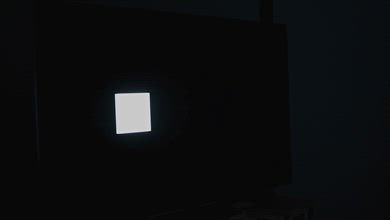
Game Transitions With VRR And Preferred LD

Black Uniformity
Black Uniformity Picture With Preferred Local Dimming

Std. Dev.
Native Black Uniformity Picture

Native Std. Dev.
Color
SDR Color Volume
DCI-P3 Gamut Rings

CIELAB DCI-P3 Coverage
BT.2020 Gamut Rings

CIELAB BT.2020 Coverage
HDR Color Volume
P3 Color Volume ITP Picture

1,000 cd/m² DCI P3 Coverage ITP
2020 Color Volume ITP Picture

10,000 cd/m² BT.2020 Coverage ITP
White Luminance
Red Luminance
Green Luminance
Blue Luminance
Cyan Luminance
Magenta Luminance
Yellow Luminance
SDR Pre-Calibration Color Accuracy
Pre White Balance Picture

Pre Gamma Curve Picture

Pre Color Picture

White Balance dE 2000
Color dE 2000
Gamma
Color Temperature
Picture Mode
Color Temp Setting
Gamma Setting
SDR Post-Calibration Color Accuracy
Post White Balance Picture

Post Gamma Curve Picture

Post Color Picture

White Balance dE 2000
Color dE 2000
Gamma
Color Temperature
White Balance Calibration
Color Calibration
HDR Pre-Calibration Color Accuracy
HDR Pre White Balance Picture

HDR Pre Color Picture

White Balance dE ITP
Color dE ITP
Color Temperature
Picture Mode
HDR Post-Calibration Color Accuracy
HDR Post White Balance Picture

HDR Post Color Picture

White Balance dE ITP
Color dE ITP
Color Temperature
Processing
PQ EOTF Tracking
PQ EOTF Graph

600 Nit Tracking Delta
1000 Nit Tracking Delta
4000 Nit Tracking Delta
Low-Quality Content Smoothing
Low-Quality Content Smoothing Picture

Smoothing
Detail Preservation
Upscaling: Sharpness Processing
Sharpness Picture - 480p

HDR Native Gradient
HDR Gradient Picture

100% Black To 50% Gray
50% Gray To 100% White
100% Black To 50% Red
50% Red To 100% Red
100% Black To 50% Green
50% Green To 100% Green
100% Black To 50% Blue
50% Blue To 100% Blue
Game Mode Responsiveness
Input Lag
1080p @ 60Hz
1080p @ 60Hz Outside Game Mode
1080p @ 120Hz
1080p @ Max Refresh Rate
4k @ 60Hz
4k @ 60Hz @ 4:4:4
4k @ 60Hz Outside Game Mode
4k @ 60Hz With Interpolation
4k @ 120Hz
4k @ Max Refresh Rate
8k @ 60Hz
Supported Resolutions
Resolution
480p @ 59.94Hz (Widescreen)
720p @ 59.94Hz
1080p @ 60Hz @ 4:4:4
1080p @ 120Hz
1080p Maximum Refresh Rate
4k @ 60Hz
4k @ 60Hz @ 4:4:4
4k @ 120Hz
4k @ 120Hz @ 4:4:4
4k Maximum Refresh Rate
8k @ 30Hz Or 24Hz
8k @ 60Hz
Variable Refresh Rate
Native Refresh Rate
Variable Refresh Rate
HDMI Forum VRR
FreeSync
G-SYNC Compatible
4k VRR Maximum
4k VRR Minimum
1080p VRR Maximum
1080p VRR Minimum
VRR + Local Dimming
CAD In Game Mode @ Max Refresh Rate
Pursuit Photo Max Refresh

CAD Heatmap Max Refresh

Transition At Max Refresh
Avg. CAD
Best 10% CAD
Worst 10% CAD
CAD In Game Mode @ 120Hz
Pursuit Photo 120Hz

CAD Heatmap 120Hz

Transition At 120Hz
Avg. CAD
Best 10% CAD
Worst 10% CAD
CAD In Game Mode @ 60Hz
Pursuit Photo 60Hz

CAD Heatmap 60Hz

Transition 60Hz
Avg. CAD
Best 10% CAD
Worst 10% CAD
PS5 Compatibility
PS5 Screenshot

Auto Low Latency Mode (ALLM)
4k @ 120Hz
1440p @ 120Hz
1080p @ 120Hz
HDR
VRR
Xbox Series X|S Compatibility
Xbox Series X Screenshot

Auto Low Latency Mode (ALLM)
4k @ 120Hz
1440p @ 120Hz
1080p @ 120Hz
HDR
VRR
Motion Handling
Stutter
Stutter Video
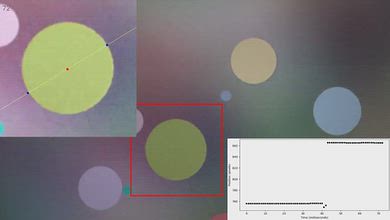

Stutter Image
Stutter Graph
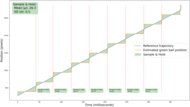
Sample And Hold
Frame Hold Time @ 24 fps
Frame Hold Time @ 60 fps
Stutter Reduction Via Interpolation
Stutter Reduction Via Interpolation Video
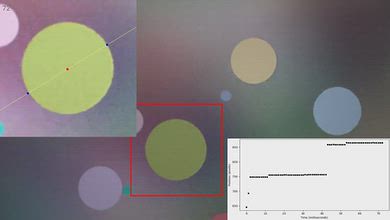
Stutter Reduction Via Interpolation Image
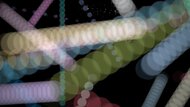
Stutter Reduction Via Interpolation Graph
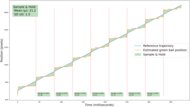
Sample And Hold (Interpolation)
Interpolation Consistency
Judder
Judder Video Picture
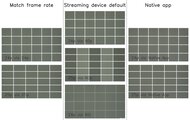
Judder 24p
Judder 25p
Judder 24p via 60p
Judder 25p via 60p
Judder 24p via 60i
Judder 24p via Native Apps
Judder 25p via Native Apps
Judder-Free 24p
Judder-Free 24p via 60p
Judder-Free 24p via 60i
Judder-Free 24p via Native Apps
Micro Judder
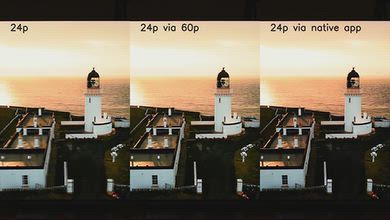
24p Clip
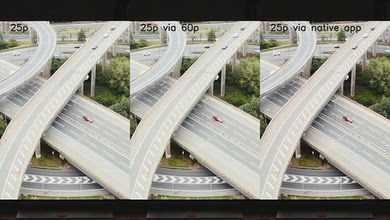
25p Clip
Micro Judder-Free 24p
Micro Judder-Free 25p
Micro Judder-Free 24p via 60p
Micro Judder-Free 25p via 60p
Micro Judder-Free 24p via Native Apps
Micro Judder-Free 25p via Native Apps
Response Time
Pursuit Photo 60Hz

Response Time Heatmap 60Hz

Transition At 60Hz
First Response Time
Total Response Time
Worst 10% Response Time
Transition Artifacts
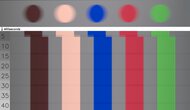
Color Transition Image
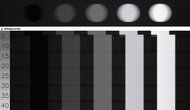
Edge Transition Image
Color Artifacts
Edge Artifacts
Flicker
Backlight chart

Flicker-Free
PWM Dimming Frequency
Black Frame Insertion (BFI)
BFI Picture

BFI Frequency Picture

Optional BFI
Min Flicker For 60 fps
60Hz For 60 fps
120Hz For 120 fps
Min Flicker For 60 fps In Game Mode
Motion Interpolation
Motion Interpolation (30 fps) Picture

Motion Interpolation (30 fps)
Motion Interpolation (60 fps) Picture

Motion Interpolation (60 fps)
Reflections
Direct Reflections
Ring Light Picture

Direct Reflections Graph

Peak Direct Reflection Intensity
Screen Finish
Ambient Black Level Raise
Black Level Raise Picture

Bright Room Black Level Raise Graph

Black Luminance @ 0 lx
Black Luminance @ 1000 lx
Total Reflected Light
Bright Room Off Picture

Ring Picture Total Reflection

Total Reflected Light Intensity
Diffraction Artifacts
Ambient Color Saturation
Bright Room Color Volume Graph

Low-Luminance Colors @ 1000 lx
Mid-Luminance Colors @ 1000 lx
High-Luminance Colors @ 1000 lx
Panel
Viewing Angle
Viewing Angle Video
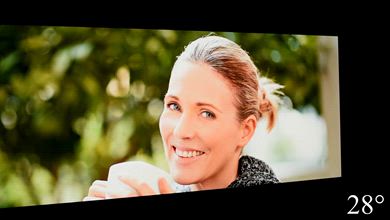
Chroma Graph

Color Washout
Hue Graph

Color Shift
Lightness Graph

Brightness Loss
Black Level Raise
Gamma Shift
Gray Uniformity
50% Uniformity Picture

50% Std. Dev.
50% DSE
5% Uniformity Picture

5% Std. Dev.
5% DSE
Panel Technology
Spectral Power Distribution

Pixels Picture

Panel Type
Sub-Type
Subpixel Layout
Inputs
Input Specifications
Side Inputs Picture

Rear Inputs Picture

HDMI
HDMI 2.1 Rated Speed
ATSC Tuner
USB Ports
USB 3.0
Audio Out 3.5mm
Wi-Fi
Ethernet Speed
Composite In
Digital Optical Audio Out
Audio Passthrough
ARC/eARC Port
eARC: Dolby Atmos Over Dolby Digital Plus
eARC: Dolby Digital Plus 7.1
eARC: LPCM 7.1 Over Dolby MAT
eARC: Dolby TrueHD 7.1
eARC: DTS:X Over DTS-HD MA
eARC: DTS-HD Master Audio 7.1
eARC: LPCM Channels (Bitstream)
ARC: Dolby Digital 5.1
ARC: DTS 5.1
Optical: Dolby Digital 5.1
Optical: DTS 5.1
HDR Format Support
HDR10
HDR10+
Dolby Vision
HLG
Design
Style
Design Picture

Curved
Stand
Stand Picture

Back
Back Picture

Wall Mount
Borders
Borders Picture

Borders
Thickness
Thickness Picture

Max Thickness
Build Quality
Build quality picture

Smart Features
Interface
Smart TV Picture

Smart OS
Version
Ad-Free
Ads Picture

Ads
Opt-out
Suggested Content in Home
Opt-out of Suggested Content
Remote
Remote Picture

Voice Control
TV Controls
Controls Picture

Mute Switch
In The Box
In The Box Picture

Misc
Power Consumption
Power Consumption (Max)
Firmware
Sound Quality
Frequency Response
Frequency Response

Low-Frequency Extension
Std. Dev. @ 70
Std. Dev. @ 80
Std. Dev. @ Max
Max
Dynamic Range Compression
Digital Room Correction
Check Price
65"
65QM851G
SEE PRICE
Amazon
65"
75"
75QM851G
SEE PRICE
Amazon
75"
75U8N
SEE PRICE
Amazon
85"
85QM851G
SEE PRICE
Walmart.com
85"
98"
98QM851G
SEARCH
Amazon
98"
TCL QM851G
Hisense 75U8N
Comments
TCL QM851G vs Hisense 75U8N: Main Discussion
What do you think of these products? Let us know below.
Looking for a personalized buying advice from the RTINGS.com experts? Members have direct access to buying advice on our member forum.
I just did the opposite.
QM8 You can’t do: game mode + local dimming + 4:4:4 Chroma Hum/buzz at brightness around 30 or higher, that gets louder the brighter you set the TV. (a lot of sets have this issue, but not all)
Just sold my 75U8N because I was disappointed to learn that the ADS Pro panel is nothing more than a fancy IPS panel. Although the TV had exceptional blacks with its impressive local dimming, both zones and algorithm, I could not get the fact that I own an IPS panel TV out of my head. The 75U8N is a great display especially with Color Volume, but the IPS had to go. Sorry, but IPS panels have their uses, just not in a TV display. Seriously, who is not watching their TVs head on anyway. I also don’t even notice major differences on viewing angles going from IPS to VA, this ADS Pro or even that Sony X-Wide Angle crap (or whatever Sony called it) to justify such a sacrifice in contrast ratio, or blacks.
Incoming is a new TCL 75QM851. Delivered and about to set it up and add it to the family. I will post “EyeTest” information on how these two TVs compare, without getting into the numbers (Thank you Rtings as you’ve already done this with such great precession as always)
While I actually expect the U8N to perform a tiny bit better when matching up the 65U8N to the 65QM851 or the 85U8N to the 85QM851, I expect the 75QM851 to outperform the 75U8N pretty handily do to their sub-panel differences.
After setup, I will give a full detailed review of this experiment and if it was worth the time and the hit to my wallet selling the 75U8N after only owning it for maybe five months. I did purchase the 75U8N the day it came out, so I also paid the full $1999 price as my Sony Z9D was just destroyed at the time in an accident with the kids.
For the record, the Sony Z9D is the perfect TV, even had 3D, but still had one exception that’s nice to have now on either the U8N or QM851. Having HDMI 2.1 (Z9D maxed out at 2.0) is amazing just to set up Dolby Atmos to its full potential and not using an optical connection and getting a downgraded sound.