The Samsung S95H is the flagship 4k OLED model in Samsung's 2026 lineup, sitting above the Samsung S90H. Also known as the Samsung S99H in some regions, this TV features an updated matte QD-OLED panel designed to push brightness even higher than in previous years, and a new design meant to add an artistic touch to your living room wall. The TV is powered by Samsung NQ4 AI Gen3 processor, and ships with the 2026 version of their proprietary One UI Tizen OS smart platform. It has four HDMI 2.1 ports capable of up to 4k @ 165Hz, and it can be paired with Samsung's Wireless One Connect box (sold separately) for an additional four ports. We bought and tested the 77-inch model, but it's also available in 55-, 65-, and 83-inch sizes.
Our Verdict
The Samsung S95H is an incredible TV for most uses. Its superb reflection handling and high peak brightness make it a fantastic choice for daytime TV in a bright room. It's just as superb in a dark room thanks to its nearly infinite contrast ratio and perfect uniformity, so movies look absolutely stunning. It has an incredibly wide viewing angle, making it a fantastic choice for watching sports or just for a wide seating area in general. Finally, it's a fantastic gaming TV thanks to its low input lag, nearly instantaneous response time, and wide selection of gaming features. Unfortunately, black levels are noticeably raised during the day, though, so it doesn't deliver the same fantastic picture quality when there's lots of ambient light.
Perfect blacks with no haloing around bright highlights.
Image remains incredibly consistent when viewed from the sides.
Fantastic peak brightness in SDR.
Colors are bright and vibrant.
Outstanding reflection handling.
Black levels are noticeably raised during the day.
The Samsung S95H is a superb TV for a home theater. It looks incredible in a dark room thanks to its deep, inky blacks with no haloing around bright highlights or subtitles. Colors are incredibly vibrant and lifelike, even in very bright scenes, resulting in a deeper, more vivid picture. The TV's processing does a great job upscaling lower-resolution content, but it can't do much to smooth out low-quality streaming content. There's also noticeable stutter, especially in slow panning shots, and it doesn't support Dolby Vision or DTS audio formats.
Perfect blacks with no haloing around bright highlights.
Fantastic peak brightness in SDR.
Colors are bright and vibrant.
Small specular highlights stand out incredibly well.
Very good upscaling.
Fantastic gradient handling.
Very noticeable stutter due to the TV's fast response time.
No Dolby Vision or DTS audio support.
Doesn't do much to smooth out low-quality content.
The Samsung S95H is a superb TV for a bright room. It gets incredibly bright, allowing it to easily overcome glare during the day, and its matte anti-reflective coating effectively eliminates direct reflections. Colors are bright and vibrant even during the day, and bright lights have almost no noticeable impact on color saturation. Ambient light does increase black levels, though, so it has noticeably worse contrast during the day.
Fantastic peak brightness in SDR.
Colors are bright and vibrant.
Outstanding reflection handling.
Black levels are noticeably raised during the day.
The Samsung S95H is a fantastic TV for watching sports. It's great for daytime viewing thanks to its high peak brightness and superb anti-reflective coating, so you don't have to deal with distracting glare. It also has an incredibly wide viewing angle, which is great if you're watching the big game with a large group of friends or just have a wide seating area. Fast action is incredibly clear thanks to its nearly instantaneous response time, and there are no distracting transition artifacts as the players move across the screen. Finally, it has great upscaling, but can't do much to clean up low-quality streaming sports.
Image remains incredibly consistent when viewed from the sides.
Colors are bright and vibrant.
Very good upscaling.
No distracting transition artifacts.
Doesn't do much to smooth out low-quality content.
The Samsung S95H is a fantastic TV for gaming. It supports up to 4k @ 165Hz on all four HDMI inputs, so you can take full advantage of multiple recent consoles or even a PC. It has incredibly low input lag in all supported modes, ensuring a smooth and responsive gaming experience, and fast action is crisp thanks to the nearly instantaneous response time. There's a great selection of extra gaming features, including full support for NVIDIA G-SYNC VRR, and you can skip the console entirely if you want, thanks to built-in game streaming support.
Perfect blacks with no haloing around bright highlights.
Low input lag.
Nearly instantaneous response time results in crystal clear motion.
165H refresh rate and an impressive selection of gaming features.
The Samsung S95H is an exceptionally bright TV. Small bright highlights in HDR stand out extremely well. It struggles to maintain bright highlights for very long, though, so extended bright scenes can sometimes appear to dim over time, although this is extremely rare with real content. In SDR, it easily overcomes glare, and combined with its matte anti-reflective coating, visibility during the day isn't an issue.
Fantastic peak brightness in SDR.
Small specular highlights stand out incredibly well.
Since the Samsung S95H is an OLED, it displays remarkably deep, inky blacks with no haloing around highlights or bright areas of the screen, such as subtitles.
Perfect blacks with no haloing around bright highlights.
The Samsung S95H has remarkable colors. Colors are incredibly bright and vibrant in both HDR and SDR, and dark scenes look amazing thanks to its nearly infinite contrast ratio. It's also extremely accurate out of the box in both SDR and HDR, so you don't even need to worry about getting it calibrated if you care about an accurate image.
Colors are bright and vibrant.
Incredibly accurate out of the box.
The Samsung S95H has great motion handling. It removes judder from most sources automatically, with no additional settings required. It has a nearly instantaneous response time, so motion is incredibly crisp and clean, with no blur around fast-moving objects and no distracting transition artifacts. Unfortunately, this same response time also causes noticeable stutter, especially in slow panning shots.
Nearly instantaneous response time results in crystal clear motion.
No distracting transition artifacts.
Automatically removes judder from most content.
No micro-judder.
Very noticeable stutter due to the TV's fast response time.
The Samsung S95H delivers an incredibly responsive gaming experience. It has extremely low input lag in all supported modes, so your actions are in sync with what you see on the screen. It has a high refresh rate and a nearly instantaneous response time, too, so motion is crisp with no distracting blur around fast-moving objects.
Low input lag.
Nearly instantaneous response time results in crystal clear motion.
165H refresh rate and an impressive selection of gaming features.
Note: We're in the process of improving our tests related to image processing, but this score should give you a general idea of how a TV performs overall with its image processing capabilities.
The Samsung S95H has great processing. It processes HDR streams well, with excellent PQ EOTF tracking and amazing gradient handling, with minimal banding in areas of similar color. It also has great upscaling, with no noticeable over-sharpening, but it can't do much to clean up low-quality streaming content.
Very good upscaling.
Fantastic gradient handling.
Excellent EOTF tracking.
Doesn't do much to smooth out low-quality content.
Performance Usages
Changelog
- Updated Sep 18, 2026: We converted this review to Test Bench 2.2.1, adding a new Dumb TV test for whether or not the TV can be used offline.
- Updated May 07, 2026: Review published.
- Updated May 05, 2026: Early access published.
- Updated Apr 22, 2026: Our testers have started testing this product.
Check Price
Differences Between Sizes And Variants
We bought and tested the 77-inch Samsung S95H, and these results also apply to the 55- and 65-inch models. The 83-inch model uses an RGB Tandem WOLED panel and performs differently. Outside of North America, this TV is instead sold as the Samsung S99H, and there are no other differences between the S95H we bought and the S99H sold elsewhere. The regions that carry the S99H also have an S95H, but it's slightly different, with a center-mounted pedestal stand and a more traditional design. Those models can be identified by an "HF" model code after the S95, i.e., "S95HF", and are available in 48, 55, 65, and 77-inch sizes.
| Size | US Model | Panel Type |
|---|---|---|
| 55" | QN55S95HAFXZA | QD-OLED |
| 65" | QN65S95HAFXZA | QD-OLED |
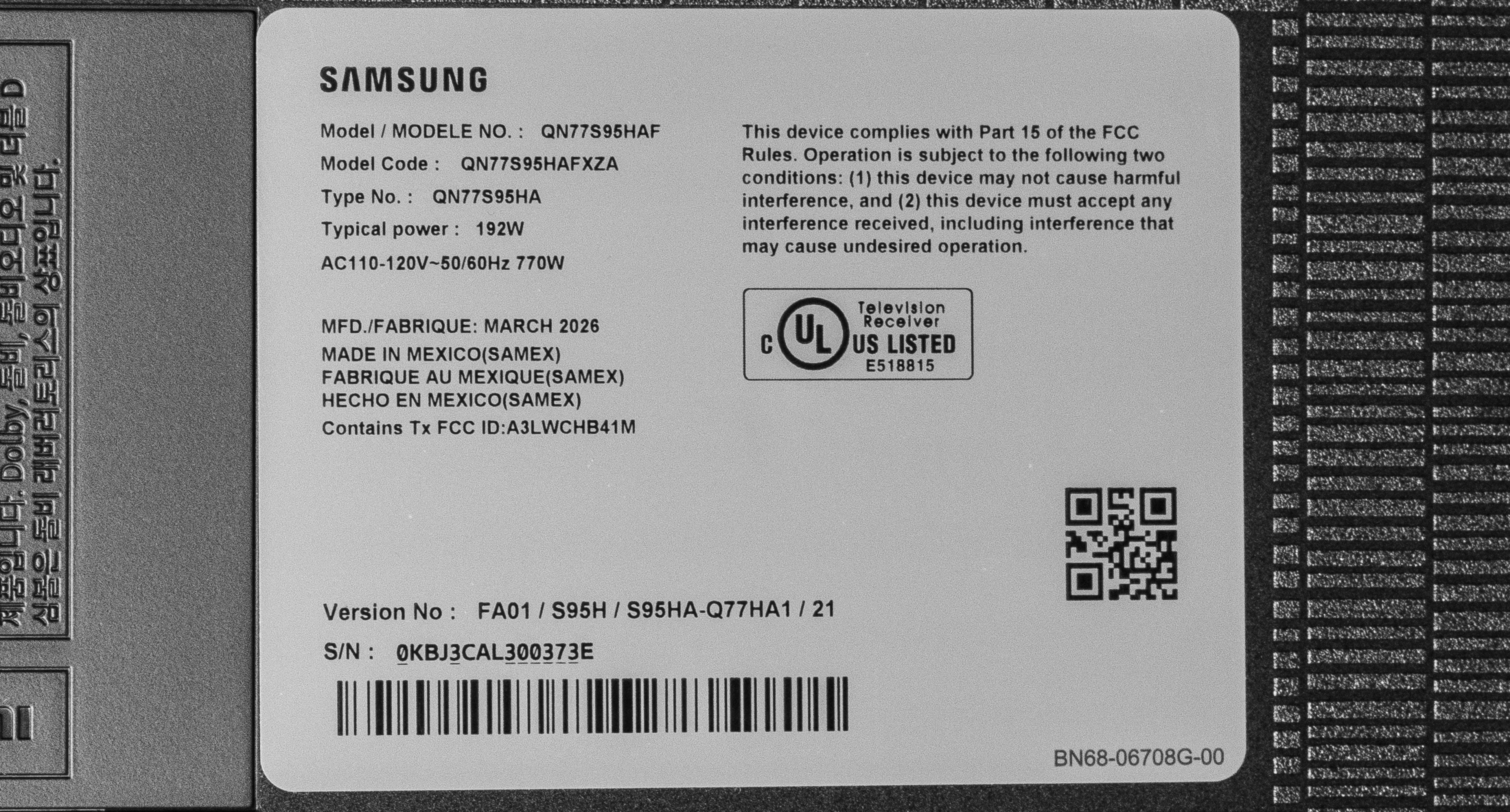
| 77" | QN77S95HAFXZA | QD-OLED |
| 83" | QN83S95HAEXZA | RGB Tandem WOLED |
Our unit was manufactured in Mexico in March 2026.
Popular TV Comparisons
The Samsung S95H OLED is one of the best TVs on the market in 2026, delivering a smoother, more polished experience than competing models like the LG G6 OLED. It remains to be seen how it'll stack up against RGB Mini LED models like the Samsung R95H or the TCL RM9L, though. It delivers unrivaled picture quality, with high peak brightness, vivid colors, and exceptional accuracy. It also has one of the widest selections of features, including a high refresh rate and the possibility of up to eight HDMI 2.1 ports if you buy the Wireless One Connect box. It's also incredibly polarizing, as both the matte coating and the design of the TV itself can be deal breakers for some potential buyers. If these two things don't bother you, though, it's an incredible TV for any situation.
For more options, check out our list of the best OLED TVs, the best TVs for bright rooms, and the best 77-inch TVs.
The Samsung S95H OLED is a slight improvement over the older Samsung S95F OLED that it replaces. The S95H is a bit brighter, especially when displaying small specular highlight details in HDR. The biggest difference between them is their design. The S95H houses all of its inputs directly on the TV, whereas the S95F uses the Slim One Connect box instead.
The Samsung S95H OLED is a bit better than the LG G6 OLED overall. Colors are brighter and more vibrant on the Samsung, resulting in a slightly more realistic HDR experience overall. The two TVs have similar brightness, but the LG can sustain bright highlights longer, though content that actually shows this difference is extremely rare. The Samsung's matte anti-reflective coating does a much better job of reducing glare during the day, but the LG maintains picture quality better, with less black level rise in a bright room. The LG also has better processing, especially when displaying low-quality content.
The Samsung S95H OLED is significantly better than the Samsung S90H OLED. The S95H gets a lot brighter, so small highlight details in HDR stand out better, and it can better overcome glare during the day in a bright room. Colors are also brighter and more vibrant on the S95H, giving HDR content a more lifelike appearance. On the other hand, the S90H maintains its picture quality better in a bright room, as black levels rise considerably on the S95H when there's more ambient light.
The Samsung S95H OLED and the Sony BRAVIA 9 II each excel in different areas, and the best one ultimately depends on your room setup and usage. The Samsung TV delivers the best dark-room experience, with deep, inky blacks and no trace of haloing around bright parts of the screen. The Sony, on the other hand, delivers a better bright room experience, with much higher peak brightness. This is especially noticeable when more of the screen is bright at once, like when watching bright content like sports.

We buy and test dozens of TVs yearly, taking an objective, data-driven approach to deliver results you can trust. Our testing process is complex, with hundreds of individual tests that take over a week to complete. Most of our tests use specially designed test patterns that mimic real content, but we also use the same sources you have at home to ensure our results match the real-world experience. We use two main tools for our testing: a Colorimetry Research CR-100 colorimeter and a CR-250 spectroradiometer.
Test Results
for pictures & test results

for pictures & test results

for pictures & test results

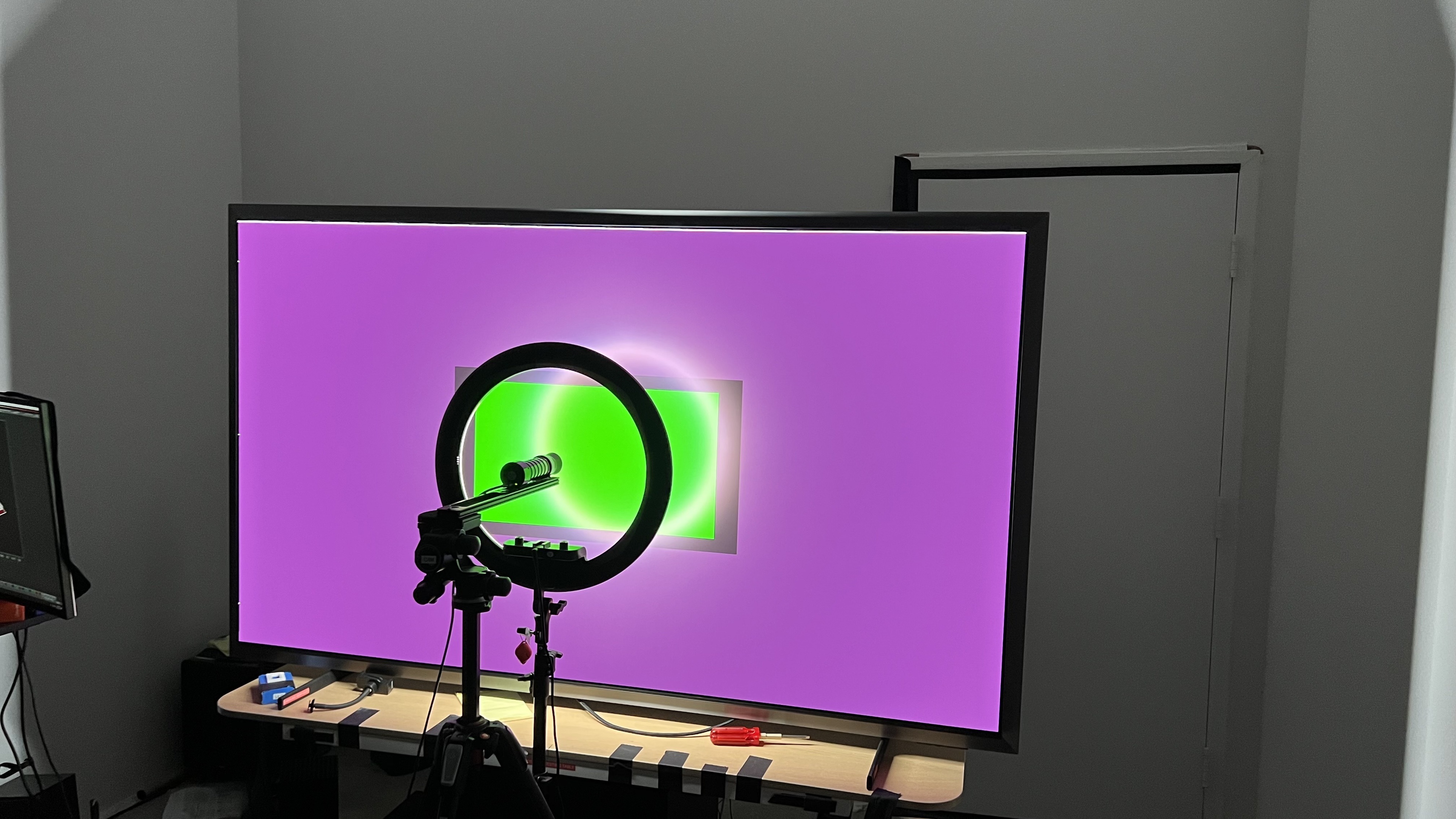
The Samsung S95H has fantastic peak brightness in HDR. Small specular highlight details get incredibly bright, delivering a very impressive HDR experience with most content. It's considerably dimmer when more of the scene is bright at once due to its aggressive automatic brightness limiter (ABL), but it's still bright enough to deliver an impactful HDR experience.
The TV can't sustain bright highlights for extended periods of time, as they're dimmed by the TV's automatic static brightness limiter (ASBL) feature. This is meant to protect the panel when displaying static content like our test slides; it's not an issue with real content.
The posted results are with the TV in its most accurate picture mode with 'HDR Tone Mapping' set to 'Static.' Below are the results with the setting set to 'Active', which significantly increases the brightness of most content but isn't as accurate.
- Hallway Lights: 2,071 cd/m²
- Yellow Skyscraper: 1,465 cd/m²
- Landscape Pool: 882 cd/m²
for pictures & test results

for pictures & test results

for pictures & test results

Switching to Game Mode has no significant impact on peak brightness. The TV processes some real scenes slightly differently, but the overall peak brightness is roughly the same.
The TV can't sustain bright highlights for extended periods of time, as they're dimmed by the TV's automatic static brightness limiter (ASBL) feature. This isn't an issue with real content.
The posted results are with the TV in Game Mode with 'HDR Tone Mapping' set to 'Static.' Below are the results with the setting set to 'Active', which noticeably increases the brightness of some content but isn't as accurate.
- Hallway Lights: 1,380 cd/m²
- Yellow Skyscraper: 1,080 cd/m²
- Landscape Pool: 392 cd/m²
The peak brightness in SDR is outstanding. It's bright enough to easily overcome glare in a very bright room. It dims considerably when more of the screen is bright at once, like when watching sports or in bright outdoor shots. It's still bright enough with that content to overcome most glare.
for pictures & test results

The Samsung S95H has a nearly infinite contrast ratio, giving it perfect contrast. Due to OLED's self-lit pixels, it displays bright highlights next to perfect inky blacks, making it very impressive in a dark room.
for pictures & test results

Since OLEDs don't use lighting zones and instead have individual pixels that can be lit up to their maximum brightness next to pixels that are turned off, there's no haloing when bright elements are surrounded by deep blacks.
for videos & test results

This TV is an OLED without a backlight, so its self-lit pixels give it the same performance as a TV with perfect local dimming and no zone transitions. We still film the zone transition video so you can see how it compares to an option with local dimming.


for pictures & test results

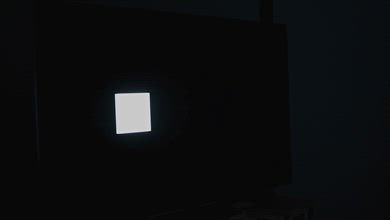
Because OLEDs can turn off individual pixels, the TV has perfect black uniformity with no haloing around bright objects.
for pictures & test results

for pictures & test results

The Samsung S95H has outstanding color volume in SDR. It has perfect coverage of the DCI-P3 color space, with no drop in color saturation in lighter scenes. It's coverage of the much wider BT.2020 color space is also excellent, with far more saturated, brighter colors than WOLED panels like the Samsung S90H or the LG C6H OLED are capable of.
| Volume ΔE³ | DCI-P3 Coverage |
BT.2020 Coverage |
|---|---|---|
| L10 | 99.99% | 83.39% |
| L20 | 99.98% | 83.25% |
| L30 | 99.98% | 83.62% |
| L40 | 99.96% | 85.72% |
| L50 | 99.95% | 86.87% |
| L60 | 99.95% | 87.19% |
| L70 | 100.00% | 83.37% |
| L80 | 100.00% | 80.94% |
| L90 | 100.00% | 81.72% |
| L100 | 100.00% | 98.19% |
| Total | 99.98% | 84.66% |
for pictures & test results

for pictures & test results

The color volume in HDR on this TV is superb. It has perfect color volume relative to a 1,000 nit TV, so colors in most HDR content are displayed perfectly. It can't fill out the full HDR color volume in a 10,000 nit gamut, but no TV can.
for pictures & test results

for pictures & test results

for pictures & test results

The Samsung S95H is exceptionally accurate in SDR before calibration. The color temperature is slightly warm, and there's a bit too much red in most shades, but it's extremely minor and not noticeable. Gamma is nearly perfect, and colors are extremely accurate.
for pictures & test results

for pictures & test results

for pictures & test results

This TV is easy to calibrate and delivers exceptional results after a full calibration. The perceived difference in accuracy is very minor, though, as this TV is already incredibly accurate out of the box.
See our full calibration settings.
for pictures & test results

for pictures & test results

The Samsung S95H OLED has superb HDR accuracy before calibration. The white balance is fantastic, with just a few minor issues in brighter shades and near blacks. The overall color temperature is nearly perfect, and color accuracy is excellent. Reds are a bit undersaturated, but they're not too bad.


for pictures & test results

The Samsung S95H OLED has excellent PQ EOTF tracking. Most HDR content is displayed extremely close to the brightness level intended by the content creator. Content mastered at 600 and 1,000 nits cuts off sharply at the mastering level. Content mastered at 4,000 nits rolls off more gradually, preserving fine details and gradation in extremely bright scenes.
for pictures & test results

This TV has good low-quality content smoothing. It does just a decent job smoothing out areas of macro blocking and posterization, but there's barely any loss of fine details.
for pictures & test results

The upscaling on this TV is great. Fine details are clear and easy to make out, and there's no obvious over sharpening.
for pictures & test results
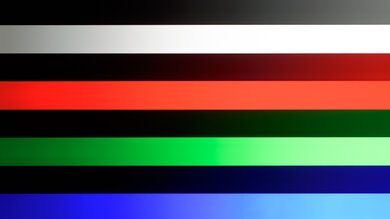
The Samsung S95H has fantastic gradient handling. There's some extremely minor banding in dark shades of gray and blue, and brighter shades of green, but it's barely noticeable.
The Samsung S95H has superb input lag, ensuring a very responsive gaming experience with any supported format. It supports low input lag motion interpolation, which Samsung calls Game Motion Plus. The results in the review are with it set to 'Level 2', the most aggressive setting. Setting it to 'Level 1' instead decreases the input lag to 13.8 ms.
This TV also supports virtual ultrawide aspect ratios. The input lag is a bit different in those modes, but still very low:
| Resolution | 60Hz | 120Hz | 165Hz |
|---|---|---|---|
| 3840x1600 | 13.1 ms | 7.1 ms | 5.3 ms |
| 3840x1080 | 16.6 ms | 8.8 ms | 6.6 ms |
This TV supports a wide range of resolutions and refresh rates up to a maximum of 165Hz. It also supports chroma 4:4:4, which helps with text clarity from a PC. Unlike Samsung's 2026 LED models, this TV doesn't support their Dual Line Gate (DLG) technology, which unlocks higher refresh rates by limiting the resolution.
The TV supports FreeSync, HDMI Forum VRR, and G-SYNC, ensuring a nearly tear-free gaming experience from any VRR-enabled source. It works well across the TV's entire refresh rate range and supports sources with Low Framerate Compensation (LFC), which ensures your games remain nearly tear-free even when your frame rate drops very low.
for pictures & test results
for pictures & test results

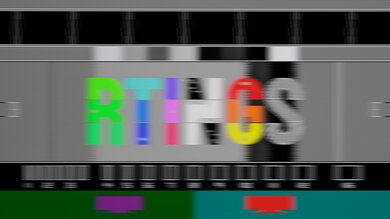
The TV's CAD at its maximum refresh rate of 165Hz is fantastic. Pixels transition to their target RGB level almost instantly, so fast motion is very sharp.


for pictures & test results

The TV is fully compatible with everything the PS5 offers, like 1440p @ 120Hz and 4k @ 120Hz, as well as HDMI Forum VRR. It also supports Auto Low Latency Mode, so you don't have to worry about switching to Game Mode to get the lowest input lag.
for pictures & test results

The TV is almost fully compatible with everything the Xbox Series X|S offers, including 1440p @ 120Hz, 4k @ 120Hz, HDMI Forum VRR, and FreeSync Premium Pro. It also supports Auto Low Latency Mode, so you don't have to worry about switching to Game Mode to get the lowest input lag. Dolby Vision isn't supported on the TV, so gaming in Dolby Vision isn't possible.

for videos & test results
for pictures & test results

for pictures & test results
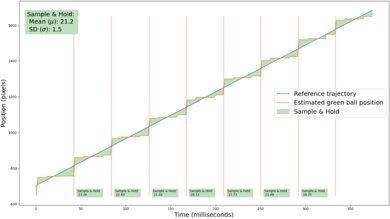
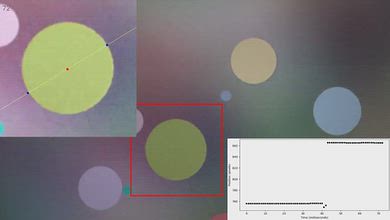
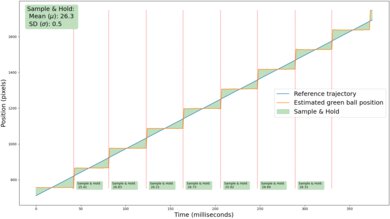
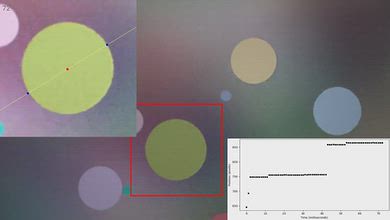
The motion interpolation feature does a mediocre job reducing stutter. It has decent consistency, but it does a poor job reducing the overall hold time, so there's still noticeable stutter.
for pictures & test results
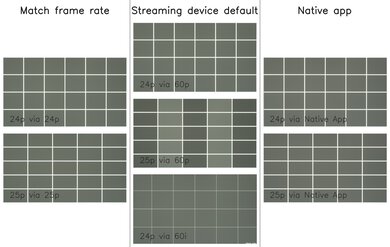
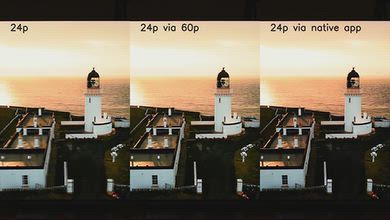
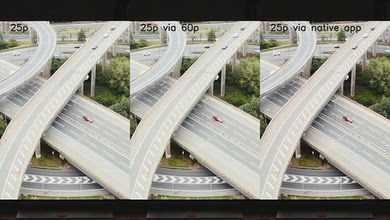
The vast majority of content is played perfectly, with no noticeable judder. The frame timing is slightly off with 25p content played from a 60p source, like an older cable box or a streaming stick that can't match the content frame rate.
for pictures & test results

for pictures & test results

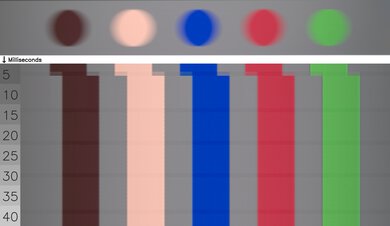
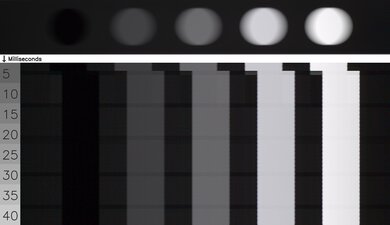
The Samsung S95H has a nearly instantaneous response time. Fast motion is incredibly crisp and clear, with no distracting artifacts like inverse ghosting. Due to the sample-and-hold nature of OLED technology, there's still some persistence blur at 60Hz, but it's not very noticeable when watching movies or shows.
for pictures & test results

This TV doesn't have a traditional backlight and doesn't use pulse-width modulation (PWM) to dim each pixel, but it's not completely flicker-free. There's a slight dip in brightness that corresponds to the TV's refresh rate. This is very different from the PWM flicker on TVs with LED backlights and occurs on every OLED we've tested.
for pictures & test results

for pictures & test results
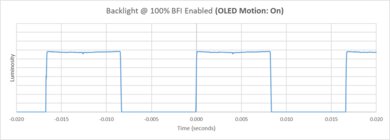
This TV has an optional black frame insertion (BFI) feature that reduces the appearance of persistence blur at 60Hz. Unfortunately, it can only insert black frames at a 60Hz refresh rate, and there's still some blur present.


for pictures & test results

for pictures & test results

Unfortunately, like all QD-OLED panels, black levels rise considerably when viewed in a bright room. This results in lower perceived contrast during the day, but doesn't impact picture quality in a dark room.
for pictures & test results

for pictures & test results

The total amount of reflected light is extremely low. There are no distracting diffraction artifacts, and lights and windows opposite the TV are barely noticeable.
for pictures & test results

The TV has fantastic color saturation overall in a bright room. Low-luminance colors do lose some perceived saturation in a bright room, but mid-luminance and high-luminance colors are barely affected by ambient lighting, so the image still looks vibrant.
for videos & test results
for pictures & test results

for pictures & test results

for pictures & test results

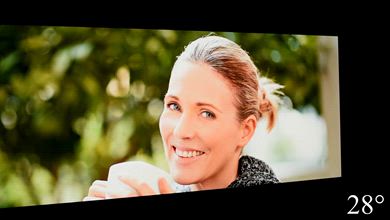
The Samsung S95H has an incredibly wide viewing angle. The image remains consistent even when viewed at an extremely wide angle. This makes it a fantastic choice for a wide seating arrangement.
for pictures & test results

for pictures & test results

The Samsung S95H has good gray uniformity. There's very little dirty screen effect in the center and almost no vignetting. There are some faint vertical lines visible in very dark content, though, but this is very common for TVs with OLED panels.
for pictures & test results

for pictures & test results

This TV uses a QD-OLED panel, with a triangular subpixel structure. This unique structure doesn't impact video content at all, but can affect text clarity when used as a PC monitor.
The TV uses quantum dots to achieve high color peaks with excellent separation between blues, greens, and reds. This gives it great color purity and allows it to display an incredibly wide range of colors.
for pictures & test results

for pictures & test results

Unlike the Samsung S95F OLED that this TV replaces, all of the inputs are directly on the TV. All four HDMI inputs support the full bandwidth of HDMI 2.1. It can also be paired with Samsung's Wireless One Connect box, which is sold separately. This option expands the number of available inputs, allowing you to connect up to eight HDMI 2.1 devices at once.
This TV supports many audio formats, including all Dolby Digital options. Unfortunately, it doesn't support DTS formats, which is disappointing, as many Blu-rays use DTS for their lossless audio tracks. Dolby Digital+ passthrough is also limited to 5.1 channels instead of the full 7.1 support.
7.1 channel LPCM only works with sources that allow you to manually override the EDID, like a PC. If you can't override the EDID, it's limited to 5.1.
Like all Samsung TVs, this model doesn't support Dolby Vision, but it does support the similar HDR10+.
for pictures & test results

The Samsung S95H has a unique design, with a large metallic bezel around the display portion of the screen that makes it look like it's floating. Similar to Samsung's Frame lineup of TVs, Samsung plans on offering additional frames that will snap on top of the metallic bezel to change the look of the TV to match your decor.
for pictures & test results

The stand consists of two blade-style feet placed at the ends of the TV. There's no alternative mounting position, and they're wide-set, so you'll need a wide media console if you're not planning on wall-mounting it.
Footprint of the 77-inch TV: 49.6" x 12.5" x 3.2"
for pictures & test results

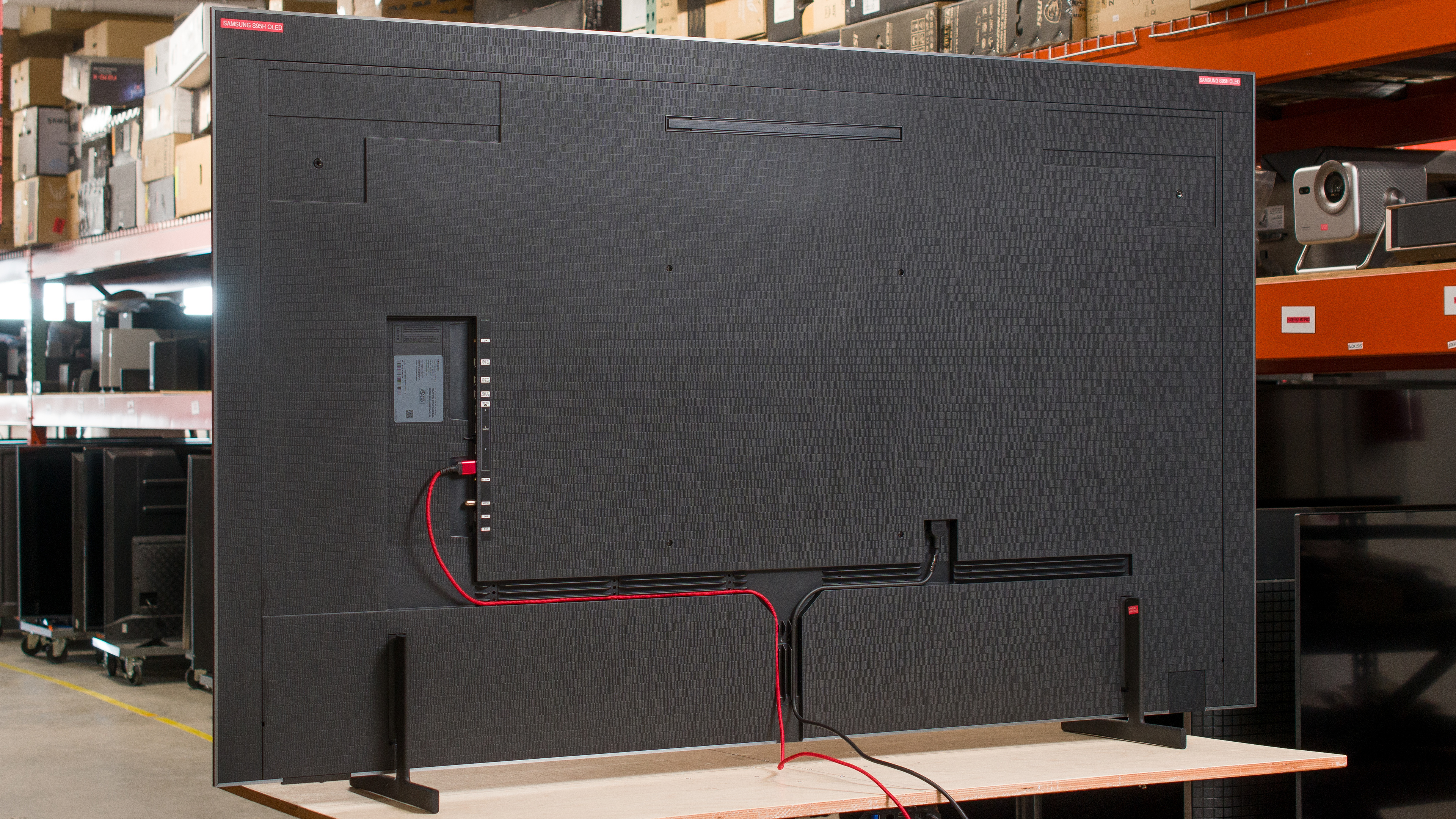
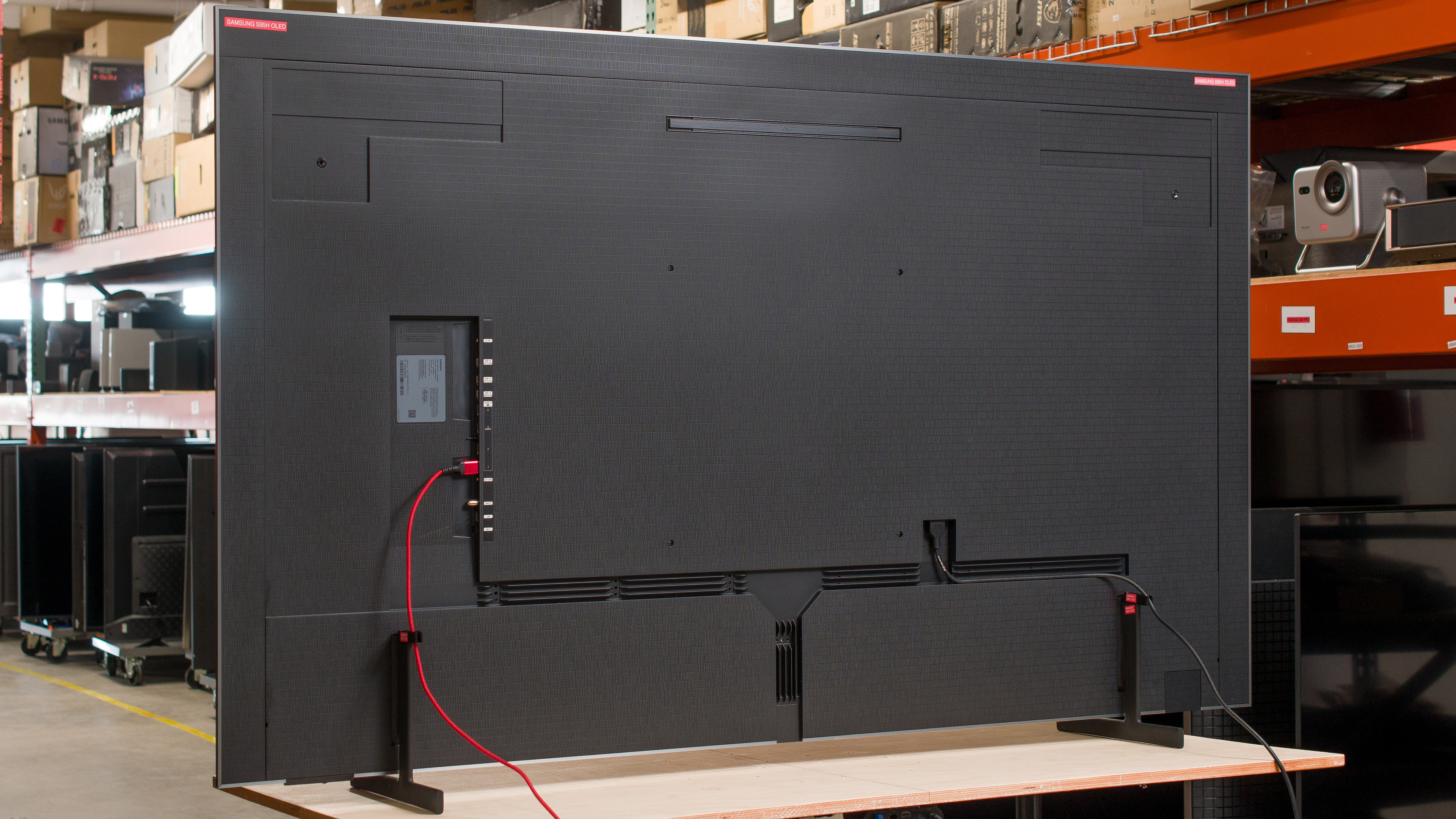
The back of the TV is fairly plain. The inputs are housed in a cutout on the right side (when facing the screen), and they're hard to access when it's wall-mounted. There are grooves in the back to help with cable management, or you can route them along the feet using the included clips.
for pictures & test results

The bezel around the screen itself measures 0.27 inches (0.7cm).

for pictures & test results

The Samsung S95H has excellent build quality. It's well-built with no obvious issues. The feet are made of a slightly less solid material than the pedestal stand of the Samsung S95F OLED, but they support the TV well.
for pictures & test results

The remote has a built-in rechargeable battery with a solar panel on the back of the remote. You can also recharge it via USB-C.
for pictures & test results

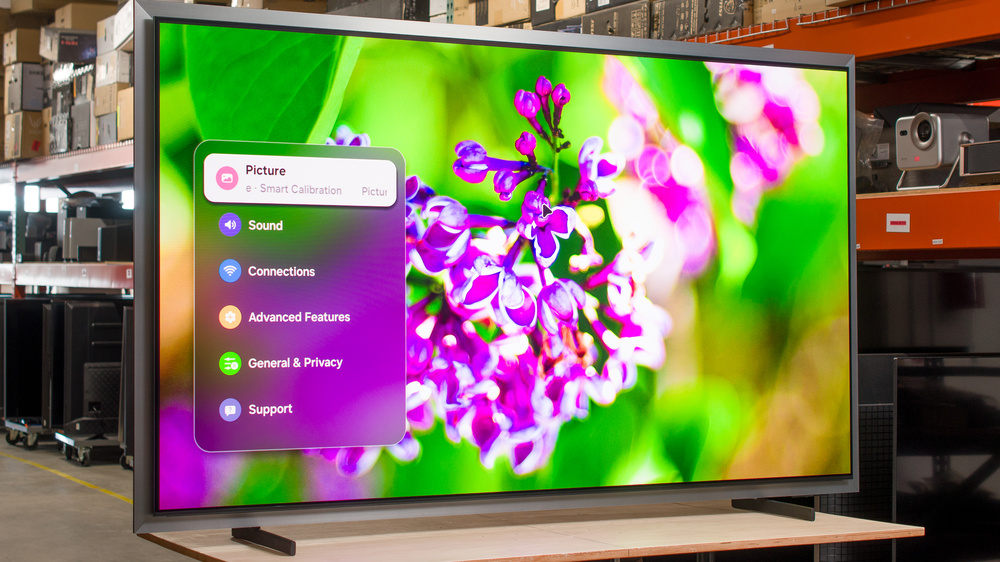
The Samsung S95H ships with the 2026 version of Samsung's One UI Tizen operating system, which feels noticeably snappier compared to older versions of the OS. Samsung also promises up to seven years of software updates for their TVs, so that version is expected to change. The Art Mode that was previously limited to Samsung's LED models is now available on the S95H.
for pictures & test results

Like most TVs on the market, it has ads throughout its interface, and although you can disable targeted ads, there's no option to disable them completely.

for pictures & test results

- Power cable
- Remote control
- Cable management clips
- User guide
for pictures & test results

The Samsung S95H has a good frequency response. While there's very little low bass, the sound profile is well balanced above that, so dialogue is clear and easy to understand. It gets very loud, but there are some compression artifacts at max volume.