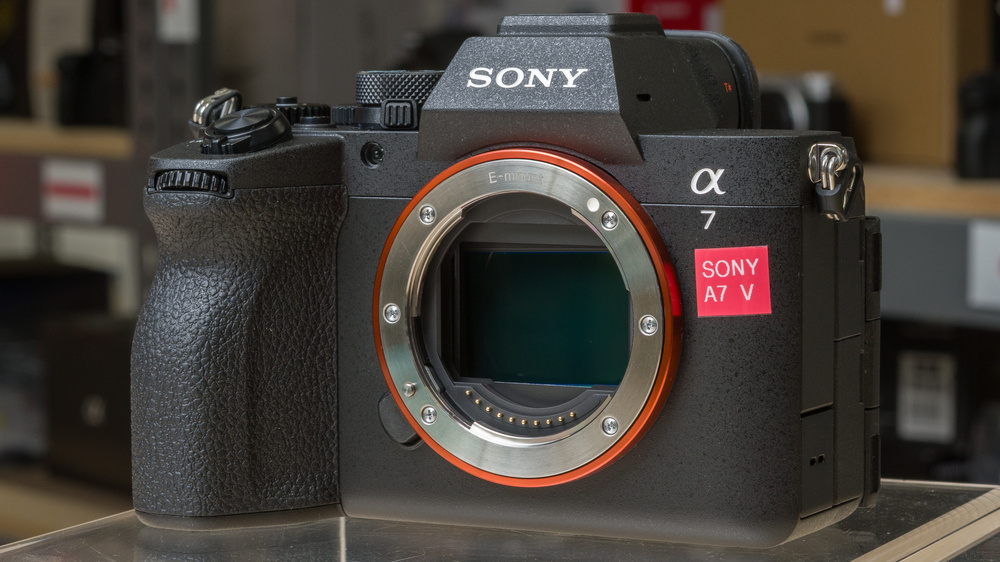
The Sony α7 V is the fifth iteration in this longstanding series of full-frame mirrorless hybrid cameras. It follows the Sony α7 IV and adds a few interesting additions to modernize the formula. While it still caps at 33 megapixels and has a very similar overall body, the new model now includes a partially stacked sensor and a new BIONZ XR2 processor. This translates to improved readout speeds for reduced rolling-shutter and blackout-free shooting using the electronic shutter. The burst rate has also seen a healthy uplift. It now caps at 30 fps with the electronic shutter, three times as fast as its predecessor. The new silicon comes with Sony's latest set of AI autofocus algorithms and pre-capture functions, which can be a real help for wildlife or sport photography. This means the camera can continuously loop and save a full second of action into its temporary buffer memory when you half-press the shutter button. To complete the package, the in-body image stabilization has also been upgraded. It's advertised to stabilize up to 7.5 stops, up from 5.5 stops on its predecessor.
Our Verdict
The Sony a7 V is a great choice for travel photography. Although it's a large and heavy camera, it offers excellent build quality, a comfortable design, and weather sealing, which can come in handy in more challenging conditions. The α7V's 33 MP full-frame sensor produces sharp, detailed images, even in low-light conditions. The in-body image stabilization system also means you'll be able to shoot at lower shutter speeds without introducing motion blur in your pictures. Its highly capable autofocus system can also track subjects reliably in a variety of situations. However, its size and extensive feature set may be overkill for travelers who simply want a small, lightweight camera that is easy to carry everywhere.
Impressive autofocus system.
Exceptional dynamic range.
Great overall image quality.
Well-built and comfortable to use.
Dual-hinged tilt-and-fully articulated screen mechanism is perfect for both video and photo.
in-body image stabilization system performs very well.
Very good weather-sealing.
Excellent battery life.
Quite large and heavy.
The Sony a7V is a great choice for landscape photography. It's very comfortable to use even with larger lenses, and since the body is dust and splash-resistant, you'll be confident using it even in more challenging weather conditions. The EVF is very sharp, and the excellent lens ecosystem means you'll be able to find the perfect tool for your needs. The a7V produces highly detailed RAW images thanks to its 33 MP sensor. This is also ideal if you want to crop your pictures in-post while keeping a good amount of detail. Its dynamic range performance is also outstanding, allowing you to capture a lot of detail even in high-contrast situations and low-light scenarios.
Exceptional dynamic range.
Great overall image quality.
Well-built and comfortable to use.
Very good weather-sealing.
Excellent battery life.
Quite large and heavy.
The Sony a7 V is excellent for sports and wildlife photography. Its sturdy, weather-sealed body can handle demanding shooting conditions, while two SD card slots and an integrated CFexpress Type A slot give you plenty of storage flexibility and the option to keep a backup ready for longer shoots. The mechanical shutter can capture bursts at up to 10 fps in full 14-bit RAW, while the electronic shutter can reach up to 30 fps. Sony also includes a pre-capture feature that continuously buffers up to one second of images when you half-press the shutter. This gives you a better chance of capturing unpredictable subjects and getting the exact moment you want, even when the action happens before you fully press the shutter.
Impressive autofocus system.
1-second pre-capture and 30 fps shooting speeds are outstanding additions for fast-moving subjects.
Excellent continuous shooting speed.
Great overall image quality.
Well-built and comfortable to use.
Dual-hinged tilt-and-fully articulated screen mechanism is perfect for both video and photo.
in-body image stabilization system performs very well.
Very good weather-sealing.
Excellent battery life.
Quite large and heavy.
Face tracking sometimes loses its target.
The Sony a7V is a capable vlogging camera, but it's large and heavy, which can be a dealbreaker for this use case. It can become tiring during extended handheld shoots. Its size also makes it less practical for walk-and-talk vlogging or situations where you want to travel light. That said, it includes several features that make recording yourself easier: its fully articulated screen lets you monitor yourself while shooting, while its excellent autofocus system uses the usual face and eye tracking and combines it with Sony's "human pose estimation technology" to also track "body and head position" to keep you in focus as you move. The in-body image stabilization also does a great job of reducing camera shake, helping produce smoother handheld footage. There is no recording time limit, which makes it well-suited to longer shooting sessions.
Impressive video autofocus.
Well-built and comfortable to use.
Excellent overall video quality.
Dual-hinged tilt-and-fully articulated screen mechanism is perfect for both video and photo.
in-body image stabilization system performs very well.
Very good weather-sealing.
Excellent battery life.
Quite large and heavy.
The Sony a7V is an outstanding choice for studio video thanks to its crisp video quality, reliable autofocus, and extensive connectivity. The camera can record 10-bit 4:2:2 video internally, capturing more color information and giving you greater flexibility for editing and color grading. It also forgoes support for S-log 2 in favor of S-log 3, allowing you to make better use of its excellent dynamic range. While it doesn't offer internal RAW recording and tops out at 4k/60 fps uncropped, these limitations may not matter for most studio setups. It includes a full range of inputs and outputs, including a microphone input, a headphone jack, and a full-size HDMI port, giving you plenty of options for monitoring and external equipment. The a7V also handles long recording sessions well. It has no recording time limit, and the camera didn't overheat in our testing. Battery life is excellent, and USB charging support lets you power the camera while recording, which is especially useful during long studio shoots. The camera has two USB-C ports, one of which is USB 3.2 for faster file transfers.
Impressive video autofocus.
Well-built and comfortable to use.
Excellent overall video quality.
Dual-hinged tilt-and-fully articulated screen mechanism is perfect for both video and photo.
No overheating issues even during long video shoots.
10-bit 4:2:2 recording with extensive Log picture profile options.
Excellent battery life.
No RAW video or 6k recording options.
The Sony a7V really isn't designed to be used as an action camera. It's large and heavy, which makes it difficult to shoot action-heavy scenarios. It isn't designed to mount on a helmet or other action-cam rig, and it isn't waterproof. That said, its video quality is impeccable, and it can shoot up to 120 fps at 1080p or 4k with a crop, making it a good fit for recording action from the sidelines. It also has a good in-body image stabilization and an outstanding focusing system, which are good when you're shooting on the go.
Impressive video autofocus.
Impressive autofocus system.
Not designed for action cam mounting.
The Sony a7V produces excellent RAW image quality, with its high-resolution sensor capturing an impressive amount of fine detail. This extra resolution also gives you some flexibility to crop your photos while retaining good image quality. The camera's outstanding dynamic range also allows you to preserve detail across both bright highlights and deep shadows. This makes the a7V particularly effective for high-contrast scenes where lighting can be difficult to balance.
Exceptional dynamic range.
Great overall image quality.
Great noise handling.
Performance Usages
Changelog
-
Updated Oct 02, 2026:
We added a reference to the Canon EOS R6 Mark III in the Video Features test box as an alternative that can shoot 7k open-gate videos.
- Updated Aug 21, 2026: Review published.
- Updated Aug 14, 2026: Early access published.
- Updated Aug 06, 2026: Our testers have started testing this product.
Check Price
Differences Between Sizes And Variants
The Sony a7V comes in one color variant: 'Black.' You can purchase the body only or bundle it with a Sony FE 28-70mm f/3.5-5.6 OSS lens. You can also find it paired with other lenses, depending on the retailer.
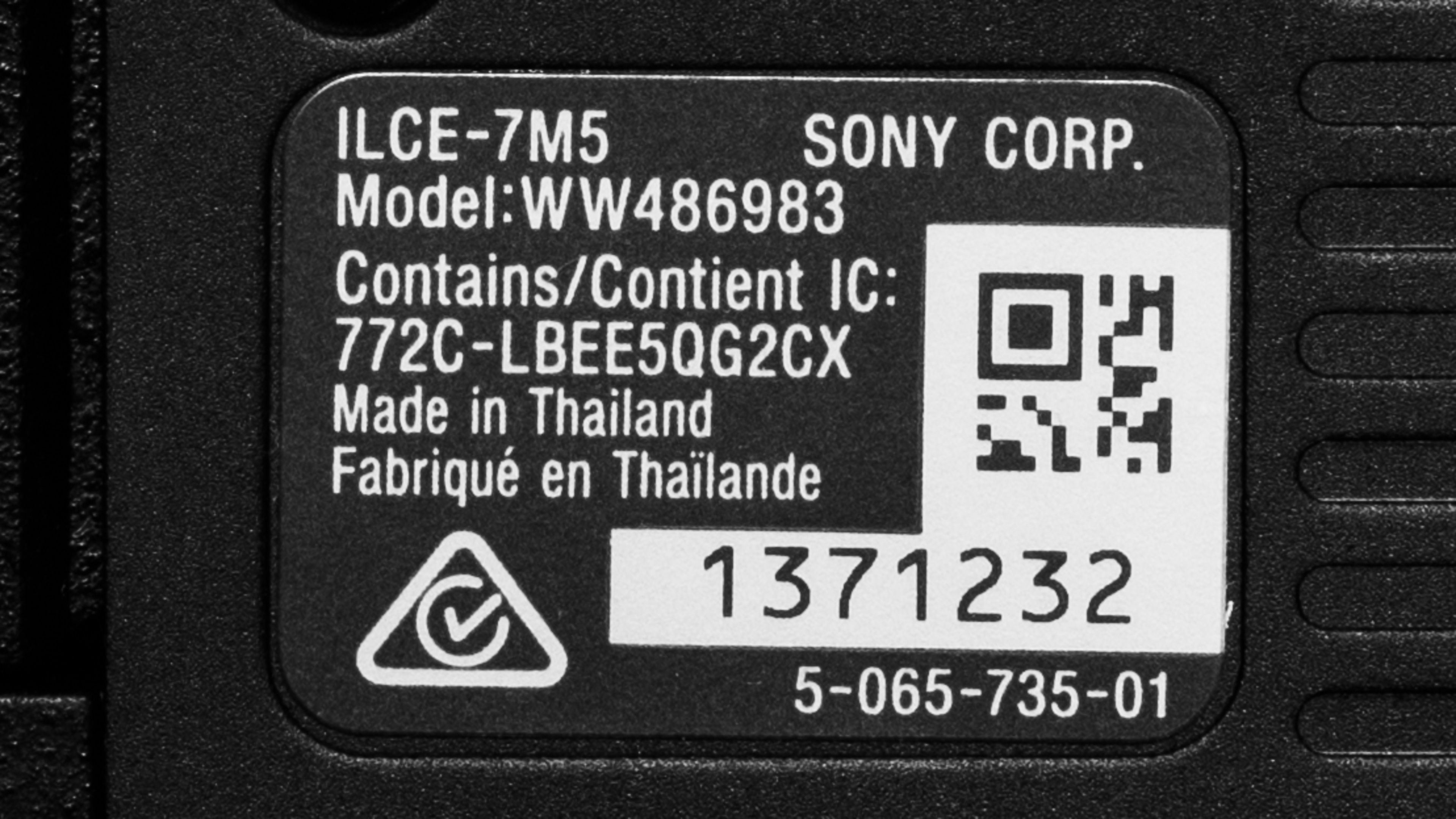
You can see a photo of our unit's label here.
Popular Camera Comparisons
The Sony a7V is a full-frame mirrorless camera aimed at enthusiast hybrid shooters. It includes a slew of interesting additions compared to its predecessor, such as an improved IBIS, a partially stacked sensor, higher burst rates, and an uncropped 4k/60 fsp mode. The camera is very well built and comfortable to use, thanks to its well-designed handgrip. The autofocus system remains one of the best on the market, and the addition of a pre-capture function helps ensure you don't miss key moments, even in very fast-moving scenarios.
These additions cement this line of cameras as an outstanding choice in an increasingly competitive segment that includes models like the Nikon Z 6III and Panasonic LUMIX S5 II. The a7V's newer partially stacked sensor outperforms Nikon's in terms of dynamic range. Its autofocus system is also a step ahead of Panasonic's. That said, these two competing models offer RAW video and 6k recording modes, which can come in handy to give you more editing margin in post-processing. The Panasonic LUMIX S5 II also features 6k Open Gate recording, which uses the camera's full 3:2 full-frame sensor height and width. This can come in handy if you want to shoot video for both short-form portrait and regular widescreen formats at once without losing quality. The Nikon can also shoot more quickly, and its autofocus system has made strides in a short time, putting it almost on par with Sony's offering. Nevertheless, you'll be hard-pressed to find a more versatile and reliable camera that you can count on in any condition than the a7V.
For more options, check out the best digital cameras we've tested, the best cameras for wildlife photography, or the best cameras for videography and filmmaking.
The Sony α7 V and the Canon EOS R6 Mark III are both excellent full-frame hybrid cameras with similar resolutions, and each has its own strengths. The Sony's partially stacked sensor has a wider dynamic range in photos, and the camera has a sturdier build and much longer battery life. Its dual-hinged screen also tilts as well as flips out to the side. The Canon, meanwhile, is more comfortable to hold, handles noise better, and shoots faster bursts with its electronic shutter. It's also better for video with more advanced features. It can record 4k at 120 fps without a crop and supports internal RAW video, which the Sony doesn't.
The Nikon Z 6III and the Sony α7 V are both full-frame cameras aimed at enthusiasts. Although they're both outstanding all-rounders, each model takes the edge for certain scenarios. Sony's sensor has a better dynamic range and slightly higher resolution, which can come in handy for landscape photography. Its battery also lasts way longer, and its autofocus system remains slightly ahead. The Nikon, on the other hand, has a slightly more complete video-shooting package. It can shoot 4k video at up to 120 fps, compared to Sony's 60 fps, and adds support for internal RAW video, giving you even more data to work with for color grading and post-processing.
The Sony α7 V is the successor to the Sony α7 IV. It builds on this solid platform, adding a bunch of new features that could prove useful if you shoot in high-speed scenarios. The α7 V can now shoot at 10 fps in full 14-bit RAW, compared to the α7 IV, which can only do so in JPEG. If you use an electronic shutter, the number goes up to blistering 30 fps. It also includes a pre-capture function that continuously buffers up to one second of images when you half-press the shutter. This can help capture key moments that can be difficult to predict. This is also aided by "Blackout-free" continuous shooting, which helps you track the action. Video has also been boosted with the addition of uncropped 4k up to 60p derived from 7k capture, 4k up to 120p with 1.5x crop. Overall, while not game-changing, these additions help round up its performance in many areas.
The Sony α6700 and Sony α7 V are hybrid cameras with great all-around performance. The α7 V uses a higher-resolution full-frame sensor that captures more detail and offers a noticeably wider dynamic range. It also has a bigger buffer and can reach a higher 30 fps using the e-shutter, which is ideal for fast-moving subjects. It also includes a pre-capture function that helps you avoid missing difficult-to-predict moments. The α6700 distinguishes itself with its much more compact design that better suited for travel photography or vlogging. Like the α7 V, it also includes weather-sealing and an in-body image stabilization system.
Test Results
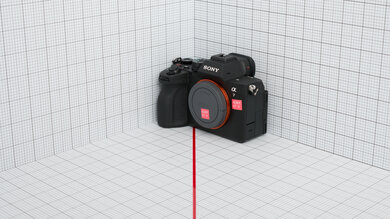
The Sony a7V is very similar to its predecessor. It weighs slightly more, and the new tilting/fully articulating display implementation makes it protrude ever so slightly more when it's closed. This makes for a large overall footprint, in line with other full-frame models in this segment.
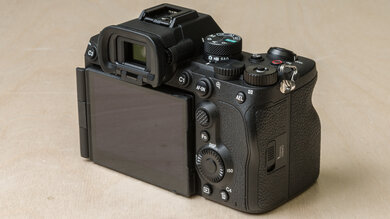
The Sony a7V is remarkably well built. The magnesium alloy body feels solid. Across the board, materials feel premium, with little to no play in the buttons, and the dials are firm enough to avoid accidental turns. All the doors are hinged and weather-sealed. The battery and memory card slots also include locking doors, which is reassuring. The shoulder strap attachment points also feel rigid and don't rattle around during video recording.
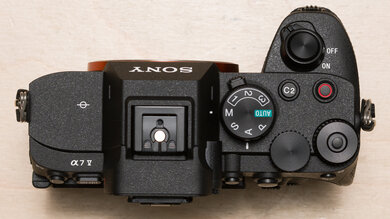
The Sony a7V gives you four customizable command dials for controlling and adjusting camera settings. The front dial controls the aperture by default, while the rear dial adjusts shutter speed. It also includes a locking exposure compensation dial. The fourth control is a rear wheel that you can assign to different settings. It also doubles as a directional pad, allowing you to navigate through the camera's menus and other options.
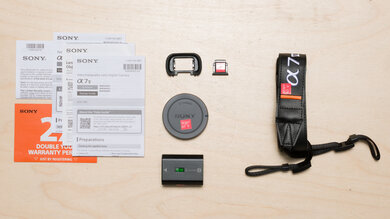
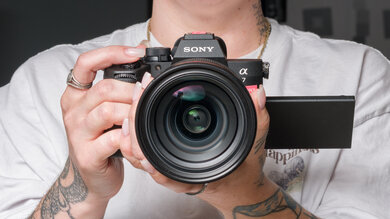
Like its predecessor, the Sony a7V offers excellent handling overall. The handgrip is deep and large enough to comfortably fit all your fingers, with an improved, grippy texture around it and a rear rest that should suit most hand sizes. It makes the camera comfortable to use for long periods and balanced, even with larger lenses. The buttons are also easily accessible while using the camera. The joystick makes it easy to navigate through the menus and move focus points, while the "Photo" to "Video" to "S&Q" toggle under the mode dial makes it very easy to switch between shooting modes. Since most of the buttons are customizable, you can really set the camera up to fit your shooting style.
That said, there are a few drawbacks. The viewfinder eyecup isn't the most comfortable, feeling a bit hard against the face. The shutter button has a rubbery feel and lacks strong feedback between half-press and full-press; the half-press feels shallow, with a fair amount of travel before actuation, which can feel awkward at times. The buttons and dials also feel somewhat rubbery overall, requiring a bit more force to register selections than on other cameras, which may take some getting used to.
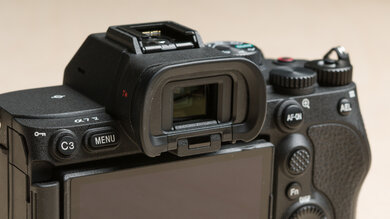
The EVF is large and fairly high-resolution. It can also reach up to a 120Hz refresh rate in "High" mode. This is ideal to reduce blur when you need to track fast-moving subjects. That said, switching to this high-refresh mode will reduce the viewfinder's resolution.
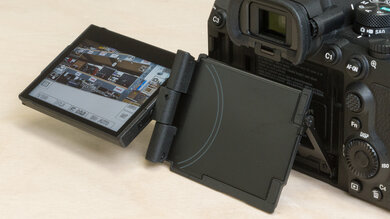
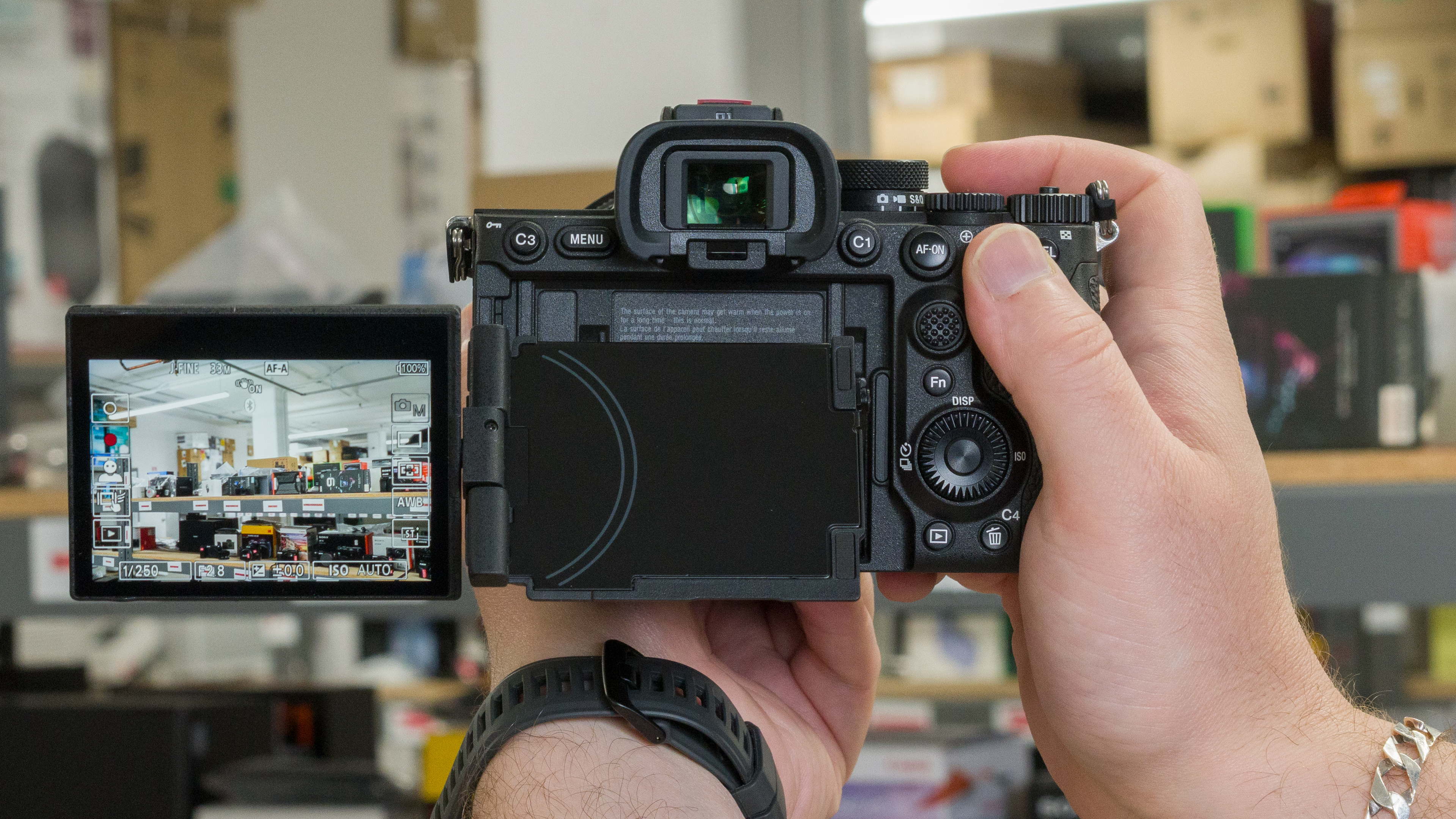
The Sony a7V has a dual-hinged tilt-and-fully articulating screen mechanism introduced with the a7R V, which should please both photo and video shooters. This makes it very convenient to shoot in pretty much any setup. The new model also doubled the resolution, to 2.1 million dots, which is ideal for checking focus when you can't rely on the EVF. That said, the screen brightness has taken a noticeable step back in this iteration, down from 800 nits on the a7 IV to 642 nits on this model. While it remains fully usable in most cases, very bright conditions could prove more challenging.
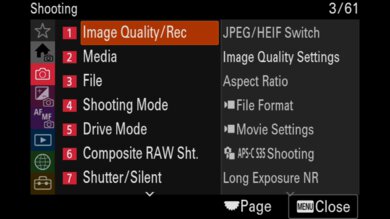
Sony's menu system makes it easy to find what you're looking for. You'll find plenty of customization options, including a custom "My Menu" page where you can add shortcuts to whatever settings you want most. A customizable quick "Fn" menu covers commonly used settings, and you can swipe on the screen to pull up even more options beyond that. You'll also have access to an automatically populated "Main Menu" that also serves as a sort of home page, giving you quick access to the most commonly used settings in both photo and video modes. Switching the camera from photo to video mode carries over settings like shutter speed and aperture by default, but you can customize exactly which settings carry over and which don't, so you can quickly jump from photo to video using the dial without stopping to readjust everything.
The Sony a7V works with Sony's Creators' App, which delivers the usual companion app features you'd expect: transferring files from your camera to your smartphone, live view, and remote operation. The app will notify you when new firmware updates become available, which is a nice touch. However, as with most camera companion apps, you'll encounter significant lag when using it for live-view shooting, making it useful only in situations where speed isn't of the essence.
Like its predecessor, the Sony a7 V features a 33MP sensor, but with extra circuitry to improve readout speeds. This partially stacked technology, which we also saw in the Nikon Z 6III, pairs with the new BIONZ XR2 processor to deliver a noticeable performance increase. Unlike the original BIONZ XR's multi-chip architecture, which separated the main CPU from the AI co-processor, the XR2 uses a monolithic design for faster processing and better power efficiency. This enables a slew of upgrades to the camera's overall speed, as well as additional functions that rely on the increased processing headroom. For example, the improved readout speed enables "Blackout-free" shooting at more than 30 fps with the e-shutter.
The battery life on the Sony a7V is outstanding. Even though it uses the same battery as its predecessor, it lasts up to 50% longer on a single charge. Advertised battery life is rated at 630 photos using the viewfinder and 750 using the LCD.
The Sony a7V can shoot at impressive speeds, which is helpful when shooting fast-moving sports or wildlife. While its predecessor can only reach the maximum 10 fps when shooting JPEG, the a7V can reach those speeds with full 14-bit RAW output. If you need even more speed, you can triple this burst rate by switching to the electronic shutter. With a sufficiently fast CFexpress Type A Memory Card, buffer size with the mechanical shutter is also virtually unlimited, which is ideal.
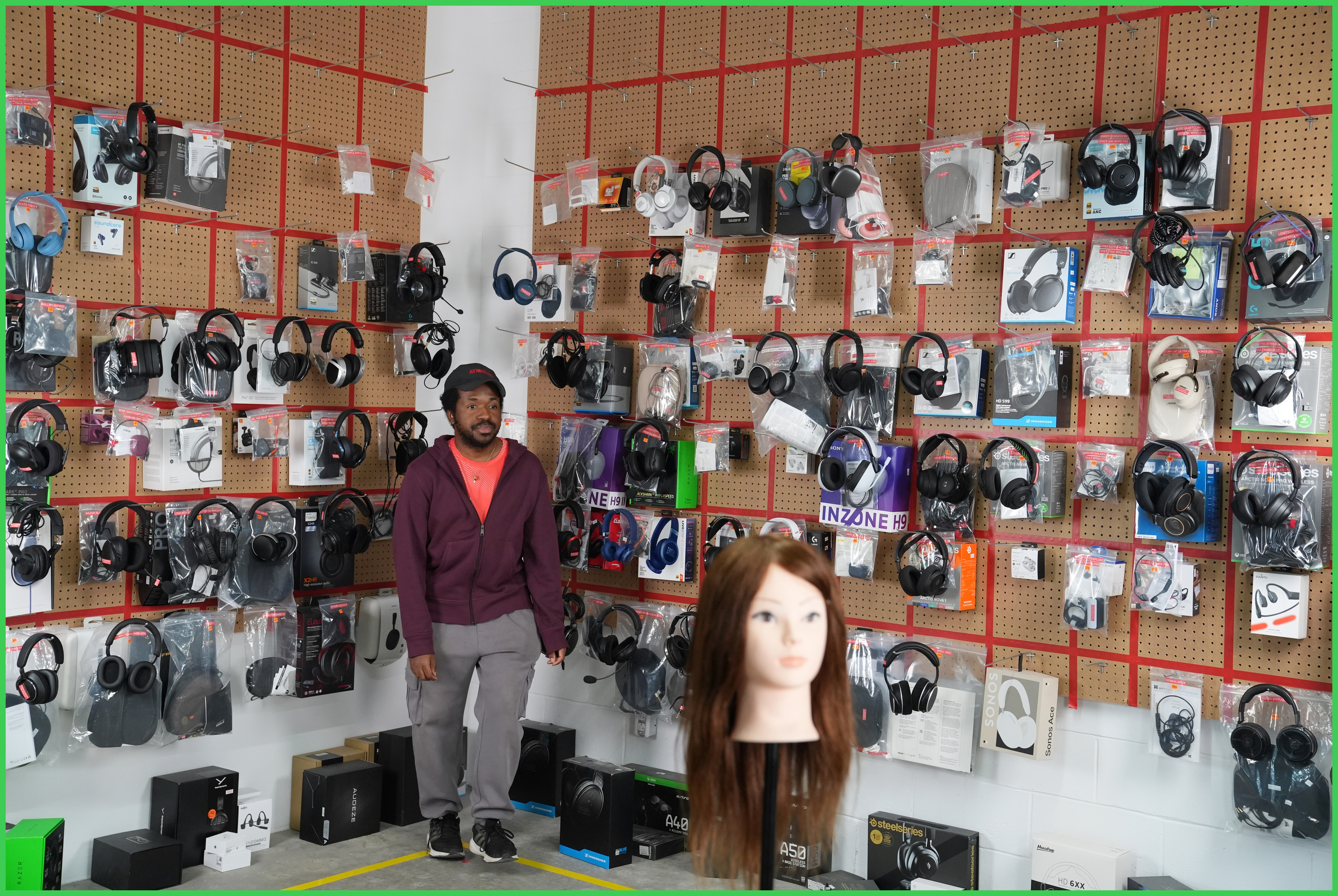
While the Sony α7 V has very good autofocus tracking, it performs slightly worse than we expected. The camera manages to lock onto the subject just fine at the beginning, but at some point during the movement, the tracking often switches to the background before returning to the correct target.
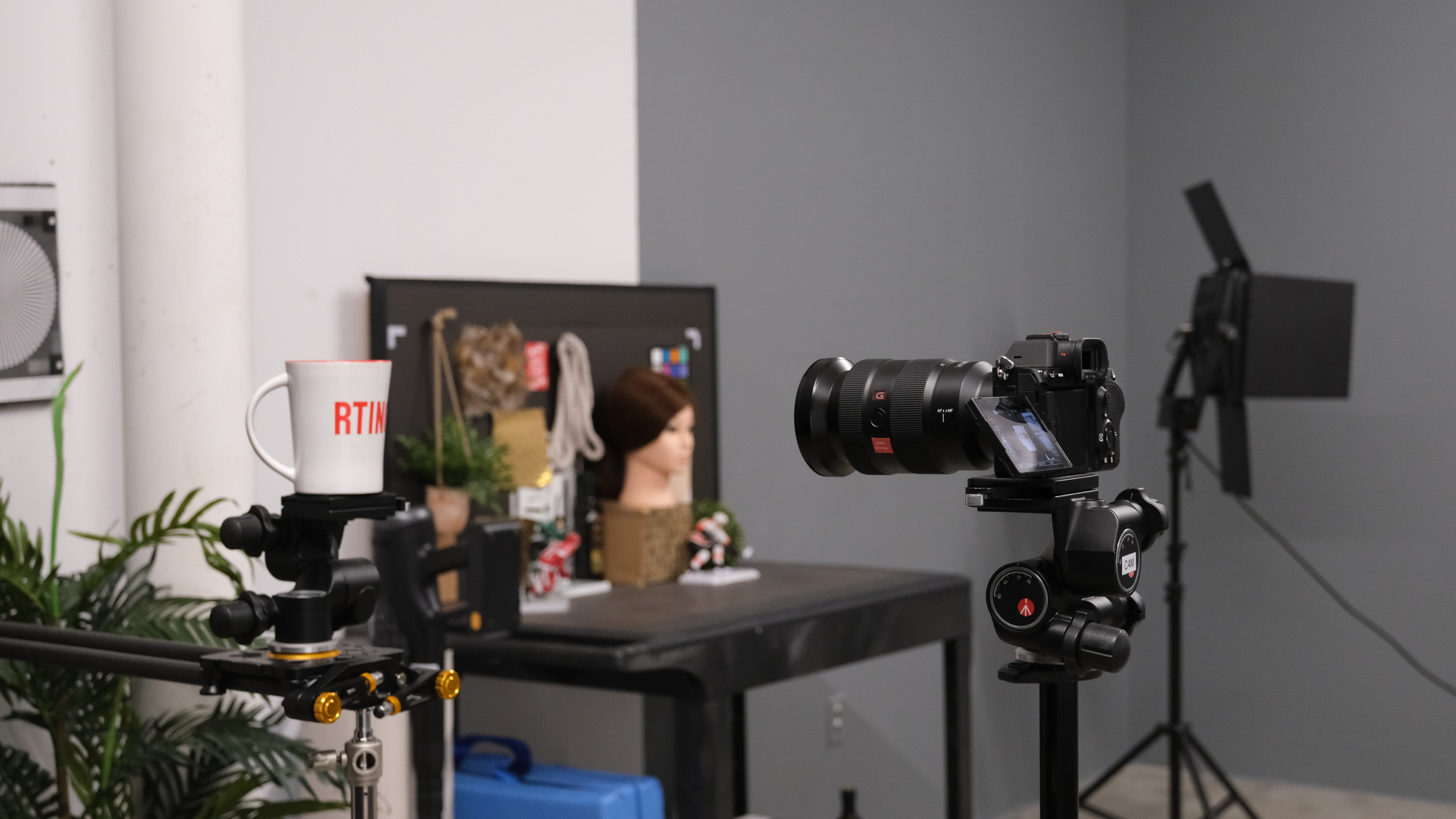
For the test, we used the Sony FE f2.8 24-70mm GM lens. We set the subject detection to Human and the tracking shift to Wide, allowing the focus to shift even if the subject moved far from the initial frame. AF-C priority was set to AF, and AF level for crossing subjects was set to Locked On, so the camera would continue focusing on the original subject even as something crossed between it and the camera. We left the AF speed in Standard mode, which is Sony's recommended setting. Despite this setup, the results fell short of Sony's standards. Detection struggled to keep up with the subject, frequently drifting back to the wall behind it, and slowing down slightly whenever it lost focus. Interestingly, it wasn't the mannequin in the scene that caused confusion, as it never switched to it even when it crossed the frame.
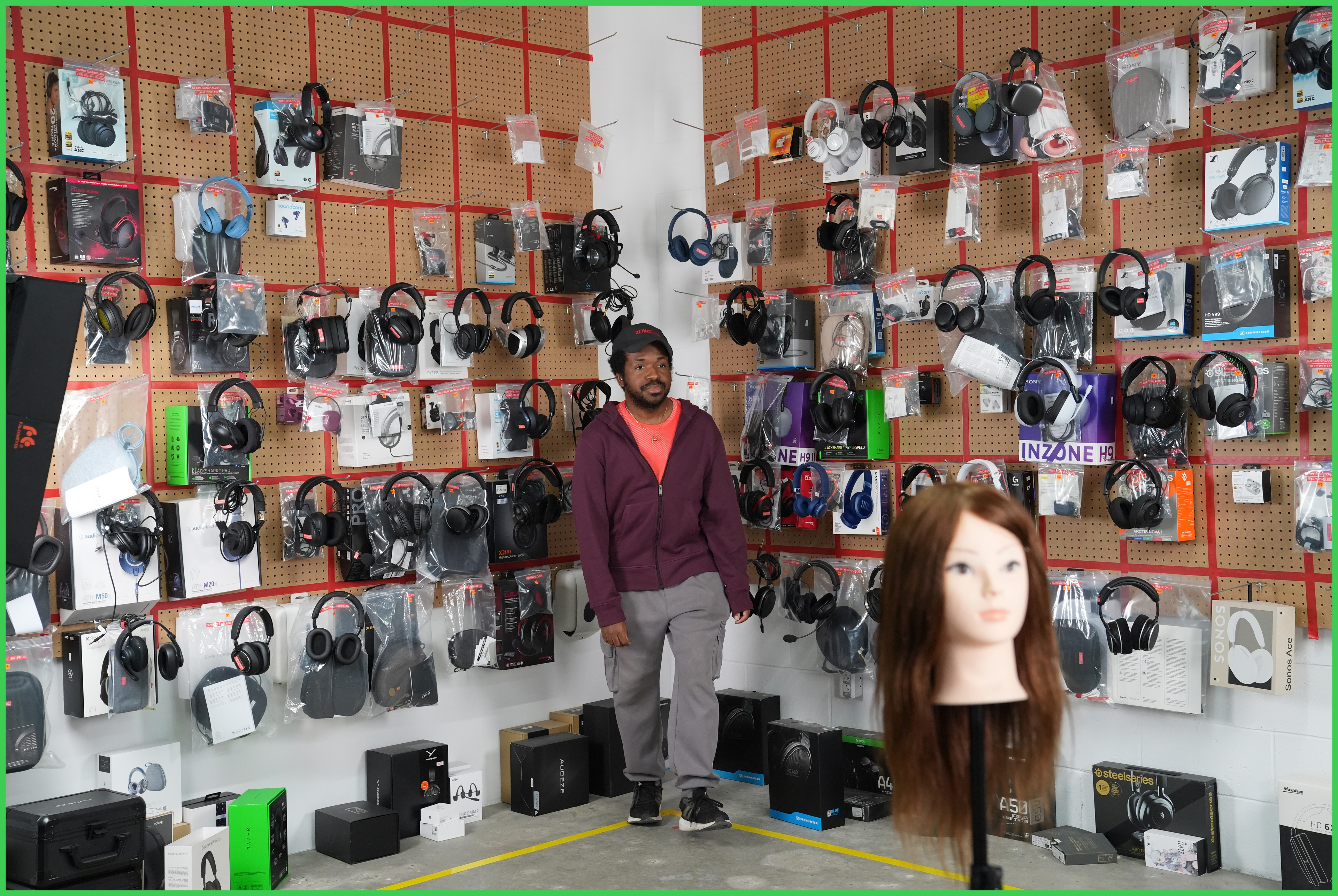
If you prefer not to rely on tracking and use center-point autofocus instead, the autofocus is outstanding when paired with a quick-focusing lens. It was virtually flawless during our testing, keeping the subject in focus throughout the run.
The Sony a7 V has excellent image stabilization. Sony advertises an improvement to its in-body image stabilization (IBIS) up to 7.5 stops. We got clear handheld images at shutter speeds as slow as 1/4s when using the Sony FE f2.8 24-70mm GM, which isn't stabilized.
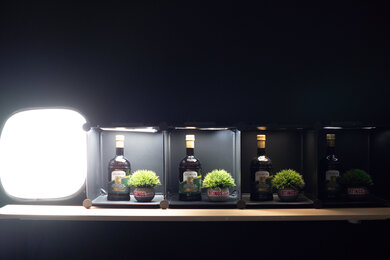
Unlike the Nikon Z 6III, the sensor performs admirably despite its use of partially stacked technology. Stacked sensors are usually associated with a decrease in dynamic range, but that's not the case here. Sony employs a dual-gain read in high-contrast scenes, and this camera really shines thanks to its fantastic RAW dynamic range. Shooting at base ISO, you can pull in a remarkably wide span of shadow and highlight detail, giving you far more room to work with in tricky lighting without sacrificing detail along the way.
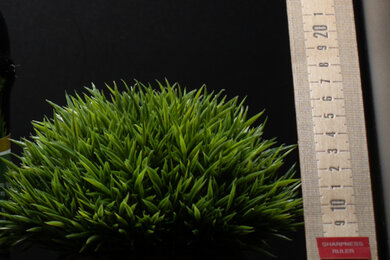
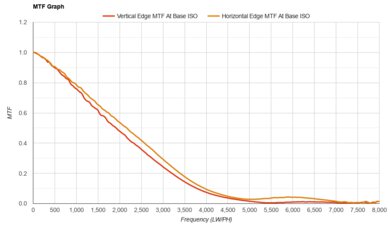
The Sony a7 V is amazing at resolving fine details. It performs very slightly worse than its predecessor despite having the same megapixel count, but it still produces very detailed photos, which can be very helpful for cropping.

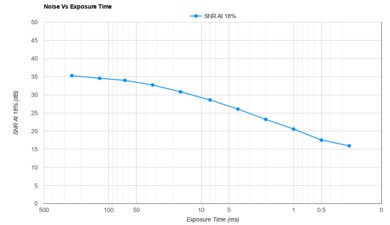
The Sony a7 V has very good RAW noise handling. This helps with low-light shooting, letting you push to higher ISO settings without introducing too much noise. Thanks to the higher megapixel count, individual pixels appear smaller, which translates to finer-looking noise even if you climb the ISO range.
Like its predecessor, the Sony a7 V supports Log recording for greater flexibility when color grading. This time around, it only supports S-Log 3, removing support for the older S-Log 2. Unlike much of its competition in this price range, such as the Nikon Z 6III, it still doesn't support RAW or 6k video recording, which can be disappointing. That said, its 4k video is oversampled from the sensor's full-width. You also get the option to shoot 4k/120p with a Super 35/APS-C crop.
If you're looking for a camera that can capture 7k 3:2 open-gate video, take a look at the Canon EOS R6 Mark III.
The Sony a7 V doesn't use AVCHD; instead, it relies exclusively on Sony's XAVC formats. These include XAVC S, which uses MPEG-4 AVC/H.264 compression for both 4k and Full HD recording, and XAVC HS, which uses the more efficient MPEG-H HEVC/H.265 codec with Long GOP compression, available in 4k. While it doesn't support RAW recording, the camera also supports XAVC S-I, an All-Intra recording format available in both 4k and Full HD, which should keep more detail and help editing at the cost of larger file sizes.
The Sony a7 V can record 4k video at up to 60 fps, uncropped, or 4k/120p with a Super 35/APS-C crop, which is useful for super-slow-motion shots. To get an uncropped shot, you need to enable the 4k angle-of-view priority mode, which also lowers the amount of noise reduction. Otherwise, you will have a slight 1.17x crop when shooting in 4k/60 fps.
The Sony a7 V offers outstanding internal recording capabilities. With a sufficiently quick CFexpress Type A card, it can record at bit rates of up to nearly 600Mbps using the XAVC S-I 4k format. It also supports internal 10-bit 4:2:2 recording, making it well-suited to color grading in post-production. During our testing, we experienced no overheating issues, and with no recording time limit, the a7 V is well-suited for extended video sessions.
The Sony a7 V offers an exceptional autofocus system for 4k video, combining fast subject detection with reliable tracking. Its built-in face and eye detection can identify humans, animals, and birds, and it generally does a great job of finding and maintaining focus on the intended subject. If you prefer to have greater control over what the camera focuses on, you can switch to a smaller AF zone or spot area. There are also options for adjusting the AF transition speed, letting you control how quickly the camera shifts focus when moving between subjects. Subject tracking is impressive. The A7 V can maintain focus on a moving subject even if they move around the frame or briefly disappears from view, and it rarely jumps to something else in the scene. When human detection is enabled, Sony says the camera's AI uses a skeleton-based recognition model, allowing it to detect and track a person even when their face or eyes aren't clearly visible.
Overall, the A7 V's autofocus is fast, versatile, and dependable, making it a particularly strong system for shooting video.
The rolling shutter effect when shooting 4k is noticeable but not too distracting. Sony's decision to upgrade the sensor to a partially stacked sensor does indeed help with this issue compared to the a7 IV, but it's still more noticeable than other cameras like the Nikon Z 6III.
The Sony a7 V offers a solid selection of frame rate options when shooting in 1080p. It can record at up to 120 fps, giving you plenty of flexibility for creating smooth slow-motion footage. Unfortunately, it can only record at 240 fps using the Slow and Quick (S&Q) motion mode.
The Sony A7 V offers outstanding internal recording capabilities in FHD, with high bit rates that preserve more detail and give you greater flexibility during editing. The trade-off is larger file sizes, which can take longer to transfer, store, and process. To achieve the camera's highest bit rate, you'll need to use the 'XAVC S-I' recording format, while the standard FHD recording mode tops out at around 46Mbps. Like its 4k recording, the A7 V also supports 10-bit 4:2:2 video capture in 1080p. This provides considerably more color information and gives you additional flexibility when adjusting color, exposure, and other aspects of your footage in post-production.
Autofocus in 1080p is remarkable, as we found it even stickier than in 4k mode. Focus transitions are pretty seamless, with little to no delay when a subject or object moves within the frame, and it keeps the subject tightly in focus whenever it's in frame.
The rolling shutter is much improved at 1080p, with the distortion much less visible than in 4k.
The Sony α7 V delivers excellent dynamic range when recording video. In S-Log3, it captures a broad range of detail above the background noise floor, while its usable dynamic range remains strong even when measured against a stricter signal-to-noise ratio threshold. This makes it well-suited to high-contrast scenes and challenging lighting conditions where preserving both highlights and shadows is important.
We also tested the camera's 4k angle-of-view priority mode, which eliminates the slight crop when recording at 4k/60 fps. However, enabling this feature lowers the amount of noise reduction applied to the footage. Here are the results:
At base ISO (800), ISO 2500, and ISO 3200, there were no real differences.
- At ISO6400:
- Turned off:
- Strict: 6.28 stops
- Lenient: 7.04 stops
- Background: 13.92 stops
- Turned on:
- Strict: 4.17 stops
- Lenient: 7.04 stops
- Background: 13.92 stops
- Turned off:
As ISO 6400, the camera loses about 2 stops of dynamic range when measured at a strict SNR threshold, and the image appears noticeably noisier. Here are the waveform videos at ISO 6400 with angle-of-view priority mode turned on and turned off.
Tested settings:
- Resolution: 4k
- Video Format: XAVCS-I, 422, 10 BIT, 300Mbps
- Frame Rate: 60 fps
- Log Format: S-Log3
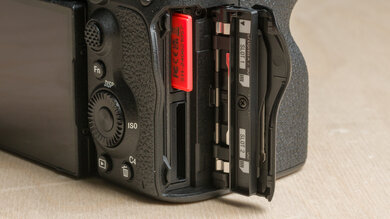
The Sony a7 V has two memory card slots: one CFexpress Type A/UHS-II combo slot, which is required for recording modes that require faster write speeds, and one SD card slot.
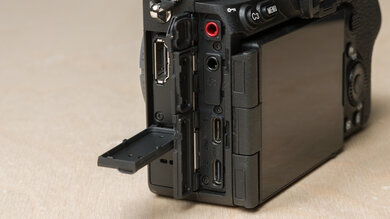
The Sony a7 V features two USB ports that support USB Power Delivery for charging: a top USB 3.2 Gen 2 port for high-speed 10Gbps data transfers, tethering, and streaming, and a bottom USB 2.0 port for slower 480Mbps accessory control and continuous power.