
Whether you're new to podcasts or a seasoned veteran, a good pair of headphones can make all the difference when recording or editing your next episode. Headphones allow you to monitor your audio during live sessions and hear your tracks the way your audience will. They should have a comfortable fit that won't cause fatigue over long periods of use. They should also block out ambient noise and have a balanced tuning that ensures clear and accurate dialogue reproduction.
Since many creators use a standalone mic to ensure a higher recording quality, we've mainly focused on headphones without a built-in mic. We also prioritize wired picks on this list, as a wireless Bluetooth connection can introduce additional latency that can interfere with live monitoring. To minimize the chances of your microphone picking up audio leakage, we recommend closed-backs.
We've tested over 900 pairs of headphones, and below, you'll find our recommendations for the best podcast headphones to buy. Also, check out our picks for the best studio headphones for mixing and recording, the best DJ headphones, and the best audiophile headphones.
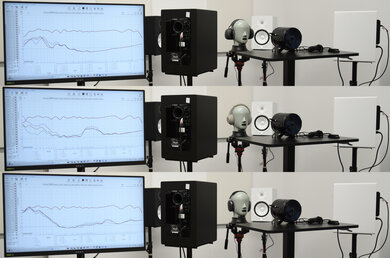
Our How We Test Headphones article takes you behind the scenes in our lab. You'll learn how we choose and purchase products and dive into the details of our review philosophy, from testing and scoring to writing and editing.
You can also discover how we produce recommendations like this one so that you can find the best headphones (or earbuds!) for your needs.
-
Best Headphones For Podcasting
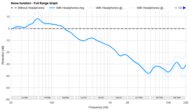
 Audio Reproduction AccuracyNoise IsolationSound SignatureBalancedPeaks/DipsFrequency Response ConsistencySee all our test resultsNoise Isolation - Common Scenarios
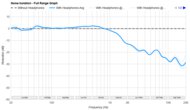
The Sennheiser HD 480 PRO are the best headphones for podcasting that we've tested. These closed-back over-ears have a sturdy, build that leans toward utility rather than a premium finish. Their construction features a mix of plastic, metal (in the headband), and faux leather for the earpads. The resulting fit is comfortable, and the headphones' closed-back design means they don't leak much audio. That said, you'll need to take some care when adjusting the fit, since they can be a bit inconsistent in audio delivery between wears.
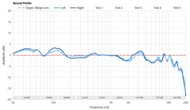
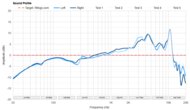
They have a balanced sound profile with flat mids and a slight roll-off in the treble that renders voices clear and well articulated while reducing airiness to ensure long-term listening remains comfortable. They also allow you to connect the cable on either side of the headphone, which gives you flexibility if your equipment is static or you don't want to move things around; they also don't need an amp, so you can plug them straight into a laptop if you're not working in your own studio.
-
Best Upper Mid-Range Podcast Headphones
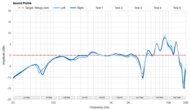
Audio Reproduction AccuracyNoise IsolationSound SignatureBrightPeaks/DipsFrequency Response ConsistencySee all our test resultsNoise Isolation - Common ScenariosIf you have many hosts on your podcast or want something less expensive, consider the Beyerdynamic DT 770 PRO. Even though they don't feel as comfortable as the Sennheiser HD 480 PRO, they still have an analytical sound, ensuring clear and accurate speech reproduction. Their balance of treble and bass leans more toward the upper frequencies than the Focal, so sibilants like S and T sounds can come across as a bit piercing. You may still prefer this sound signature as it highlights imperfections in your recordings, though.
If you opt for the 250-ohm pair, consider adding an amp to get the most out of these headphones. Alternatively, you can purchase them with a lower impedance of 32 or 80 ohms, allowing for direct connection to recording devices like a laptop. Unfortunately, they're prone to audio bleed at high volumes, which can leak into your recording. If that's an issue, you'll want to check out the Audio-Technica ATH-M50x instead. They bleed less audio at high volumes, and their treble response is flatter and less bright. However, our pair isn't as well matched between the L/R drivers.
-
Best Mid-Range Podcast Headphones
Audio Reproduction AccuracyNoise IsolationSound SignatureBrightPeaks/DipsFrequency Response ConsistencySee all our test resultsNoise Isolation - Common ScenariosIf you're willing to sacrifice a little noise isolation to keep costs down, the Sony MDR-7506 are the best mid-range headphones for podcasting that we've tested. These over-ears don't passively block out ambient sound as effectively as the Beyerdynamic models, which might be an issue if you want to reduce distractions to focus on your recording. However, they leak less audio than the previous pick, which is important to reduce the risk of audio bleed ruining your take. Their bright sound profile makes voices sound clear and detailed, making imperfections in the track easier to spot.
A 1/8 inch to 1/4 inch adapter is included in the box, making it easy to connect them to your audio equipment, and their spiral cable design can help prevent tangles if you tend to move the mic around. They're decently comfortable, so a couple of hours of recording won't cause much fatigue, but they aren't as well-built as the pricier options listed here. They also aren't very well padded, and the plastic tends to creak when you put the headphones on, which can be annoying, though they were designed to be repaired for greater longevity, so you can disassemble them without breaking them. If you want the reliability of removable cables or prefer more space and a bit more padding for your ears in the ear cups, consider the Audio-Technica ATH-M40x. That said, if you're mixing with your headphones, the Audio-Technica are less accurate in the bass range than the Sony.
-
Best Budget Podcast Headphones
If you're looking for inexpensive podcast headphones, the Audio-Technica ATH-M20x are a good option. Their build quality is a step down from the Sony MDR-7506 since the metal reinforcing the frame is thinner, and the design feels plasticky overall. Still, they offer a flat mid-range response that ensures voices sound clear and detailed. They have a decently comfortable, fairly breathable fit for long recording sessions. While they leak more audio than the Sony MDR-7506, it still isn't much, so audio bleed isn't a huge issue.
If you're less concerned about audio bleed during recording and want better sound for mixing and editing, you may prefer the Superlux HD 681. These over-ears have a semi-open design, which helps create a more natural-feeling soundstage compared to closed-backs. They also have a brighter treble response, which can help you spot imperfections in tracks. However, their semi-open design leaks more audio, and their sound can be sharp.
-
Best In-Ear Monitors For Podcasts
Audio Reproduction AccuracyNoise IsolationSound SignatureBalancedPeaks/DipsFrequency Response ConsistencySee all our test resultsNoise Isolation - Common ScenariosIf you don't like the fit and feel of over-ear headphones, consider in-ear monitors (IEMs) like the TRUTHEAR HEXA. They're a lot lighter than over-ears like the Sennheiser HD 480 Pro, which can be nice over long editing sessions. They can also block out more background noise than most over-ears on this list. They also leak less audio at high volumes and are less prone to inconsistencies in audio delivery, so you'll get the same sound each time you use them. They come with a range of silicone and foam tips to suit all ear shapes, too, so you can isolate yourself more or less.
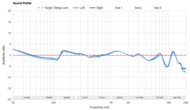
Their frequency response matches our target curve very well, so you can expect solid thump, rumble, and boom from the bass, while vocals and instruments sound natural and clear. That said, one downside of an in-ear design is that their passive soundstage tends to feel less immersive and spacious. But with voices recorded for a podcast, that's not necessarily a major detriment. Still, they have a well-built design, and their cables are swappable, which is great as connectors tend to be a weak link for most earbuds if you don't baby them. If you're in the market for something with less treble for longer sessions, the CrinEar Reference might be worth considering. They have a similarly balanced sound to the TRUTHEAR, but with a rolled-off mid- and high-treble. They're more expensive, though.






Notable Mentions
-
Sennheiser IE 200:
The Sennheiser IE 200 have a smooth sound profile that reproduces voices clearly without unwanted distortion. The earbuds sound slightly warmer than the TRUTHEAR HEXA. If your ears are small, the Sennheiser housings may fit you better than the larger TRUTHEAR.
See our review
Recent Updates
Aug 14, 2026:
We've replaced our top pick with the Sennheiser HD 480 Pro, which have a more approachable price point. We also trimmed some text and removed some Notable Mentions that didn't provide clear benefits compared to our picks.
Apr 02, 2026:
The Focal Azurys replace the Beyerdynamic DT 1770 PRO as our top pick for their well-controlled sound. We also removed the Beyerdynamic DT 1770 PRO MKII from our Notable Mentions because we haven't tested them.
Dec 01, 2025:
We've ensured our picks are up to date and reflect the current market, opting to include the CrinEar Daybreak as an alternative to the TRUTHEAR HEXA.
Jun 30, 2025:
The Sennheiser HD 280 Pro 2016 and Sennheiser IE 200 have been added to Notable Mentions. While the picks remain unchanged, the text was edited for greater clarity.
Mar 05, 2025:
We've added the AKG K361 and the Beyerdynamic DT 1770 PRO MKII to our Notable Mentions and updated the text throughout for accuracy.
All Reviews
Our recommendations above are what we think are currently the best headphones for podcasting to buy for most people in each price range. We factor in the price (cheaper headphones win over pricier ones if the difference isn't worth it), feedback from our visitors, and availability (no headphones that are difficult to find or almost out of stock everywhere).
If you would like to choose for yourself, here is the list of our reviews for headphones that are good for neutral sound. Be careful not to get caught up in the details. There are no perfect headphones. Personal taste, preference, and listening habits will matter more in your selection.


